Nadine Gordimer
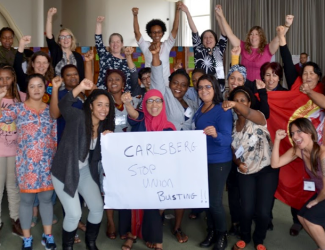
Defensoras de derechos humanos de todo el planeta defienden sus tierras, medios de subsistencia y sus comunidades ante las industrias extractivas y el poder corporativo. Ellas hacen frente a fuertes intereses económicos y políticos que promueven el robo de tierras, el desplazamiento de comunidades, la pérdida de los medios de subsistencia y la degradación del medioambiente.
El extractivismo es un modelo económico y político de desarrollo que mercantiliza la naturaleza y prioriza la ganancia por sobre los derechos humanos y el medioambiente. Arraigado en la historia colonial, refuerza las desigualdades sociales y económicas tanto a nivel local como global. Muchas veces, las mujeres negras, rurales e indígenas son las más afectadas por el extractivismo, y además son notablemente excluidas de la toma de decisiones. Desafiando estas fuerzas patriarcales y neocoloniales, las mujeres se alzan en defensa de los derechos, las tierras, las personas y la naturaleza.
Las defensoras que enfrentan a las industrias extractivas, experimentan una diversidad de riesgos, amenazas y violaciones, incluidas la criminalización, la estigmatización, la violencia y laintimidación. Sus historias dan cuenta de marcados aspectos de violencia sexual y de género. Entre los perpetradores se incluyen autoridades estatales y locales, las corporaciones, la policía, el ejército, las fuerzas paramilitares y de seguridad privada, y en algunos casos, sus propias comunidades.
AWID y la Coalición Internacional de Mujeres Defensoras de Derechos Humanos (WHRDIC por su sigla en inglés) tienen el placer de anunciar «Defensoras de derechos humanos confrontado al extractivismo y al poder corporativo»; un proyecto interregional de investigación que documenta las experiencias vividas por las defensoras de Asia, África y América Latina.
Alentamos a activistas, integrantes de movimientos sociales, la sociedad civil organizada, donantes y responsables de políticas públicas, a leer y utilizar estas producciones para el trabajo de incidencia, con fines educativos y como fuente de inspiración:
«Defensoras de derechos humanos confrontando a las industrias extractivas: un panorama de los riesgos críticos y las obligaciones en materia de derechos humanos» es un informe sobre políticas desde la perspectiva de género (en inglés, pronto disponible en español). Analiza las formas de violaciones y los tipos de perpetradores, hace referencia a las obligaciones relevantes en derechos humanos e incluye recomendaciones de políticas para los estados, corporaciones, la sociedad civil y donantes.
«Tejiendo la Resistencia a través de la Acción: Las Estrategias de las Defensoras de Derechos Humanos contra a las Industrias Extractivas» es una guía práctica que expone formas creativas y deliberadas de acción, tácticas exitosas e inspiradoras historias de resistencias.
El video «Defendiendo a las Personas y al Planeta: Mujeres Confrontando a las Industrias Extractivas» está protagonizado por defensoras de derechos humanos de África, Asia y América Latina, que comparten sus luchas por la tierra y la vida, y hablan de los riesgos y desafíos que enfrentan en su activismo.
«Desafiar al poder corporativo: Las luchas por los derechos de las mujeres, la justicia económica y de género» es un informe de investigación que explica los impactos del poder corporativo y ofrece ideas sobre estrategias de resistencia.
AWID reconoce con gratitud las invaluables contribuciones de cada Defensora de Derechos Humanos que ha sido parte de este proyecto. Esta guía ha sido posible gracias su generosidad y apertura al compartir sobre sus experiencias y lecciones. Su coraje, creatividad y resiliencia son una inspiración para todxs nosotrxs. ¡Muchas gracias!
By Alejandra Laprea
What a difficult task, that of condensing all the power and diversity of voices being raised in Latin America to tell the other stories emerging in this vast territory, to speak of the feminist realities we are building in our movement and other community-based organizations.
I spent a long time trying to establish parameters for the search and selection of these films, with the idea that they would enable you to get a little closer to so many dreams and projects that are slowly coming into being in the territories Nuestroamericanos, of our Americas, as we like to call them ourselves. It was a tough job trying to establish parameters, such as geographic location, linguistic justice, and representation of diverse communities — Indigenous, Afro-descendants, migrants — and the many causes and claims for which they raise their voices. I arrived at the conclusion that making such a compilation would be the work of years, one of those projects always under construction.
And so I decided to search for works that have emerged out of organizing and activism, as well as films that will perhaps spark major debates that we are yet to have.
In this selection of films you will find the voices of filmmakers who are not content with simply recording the feminist realities that palpitate in every corner of this vast and diverse territory. These are works that from their very conceptualization are questioning for what, by whom, and how films and videos are made. They understand film to be an instrument of struggle, something more than images to be enjoyed on a screen. These are individual or collective filmmakers who see film and video making as an instrument to promote discussion, open a debate, and thus serve as a resource for popular and feminist pedagogies.
Seen in this light, this small film selection is a journeythrough feminist realities on two levels; on one level are the stories you will see, and on another level, there is the experimentation of filmmakers who are seeking and creating other feminist realities through the ways in which they are making films and telling stories.
Enjoy this journey through films that Resist, Create, and Transform.
Direction: Giovana García Soto
Docu-fiction
Spanish with English subtitles
In Lima is Burning our work plays with documentary and fiction to take us into the life of Gía, a non-binary person, who uses performance art as a tool to denounce and transgress, as a vital manifesto against transfobia in every space, including gays spaces. With Gía we also take a look at transfeminism as a safe community in which Gía feels embraced, where she shares feelings and affections.
Giovana Garcia Sojo is a young peruvian audiovisual producer, specialized in low-budget production, creation for children and adolescents in cinema and cinematographic script by the International School of Cinema and Television - EICTV in San Antonio de Baños - Cuba. Giovana has developed her path as a director towards women and feminized identities, Lima is Burning is one of her first works.
Director: Patricia Ortega
Fiction
Spanish with English subtitles
Patricia Ortega, director of «Yo, Imposible» [“Being Impossible”] explores through the character of Ariel, a young girl whose intersex body was surgically violated as a child, the many ways that society attempts to normalize sexual and gender diversity.
The film tells the story of how Ariel discovers she was born intersex and subjected to several surgeries to normalize her genitals. This discovery leads the character to rediscover her body and reconstruct her identity. The audience is led to question a society dominated by heteronormativity which renders others invisible and condemns them to a life of unhappiness.
Patricia Ortega is a Venezuelan filmmaker living in Argentina who studied at the International School of Film and Television in Cuba, where she specialized in film directing. Patricia uses fiction to address extreme situations that women or feminized bodies go through, and how they overcome them.
«Yo, Imposible»' takes a position vis-à-vis the dominant conception of a world in which only the masculine and feminine exist, which makes others invisible. “They are not sick. They are just genetically different. Interventions are done on their genitals and bodies through hormones without their consent, which is a violation of their human rights and identity, forcing them to fit into established categories'' - Patricia Ortega
Director: Maria Torrellas Liebana
Documentary
Spanish with English subtitles
María Torrellas narrates the story of the Cuban Revolution through the women who brought it to life, Vilma Espín, Celia Sánchez, and Haydee Santamaría, among others.
For women, telling the story of the Cuban Revolution is not something of the past, but a daily struggle that Torrellas shows through the voices of Cuban rural women, professionals, students, and workers in the present. In “Cuban Women in Revolution” we encounter the current challenges facing Cuban women such as the persistence of old prejudices, new forms of violence, and the constant challenge of creating new feminist realities for themselves and the next generations in a territory besieged by USA imperialism for more than 70 years.
María Torrellas is a journalist and documentary filmmaker. She has a long trajectory of filmmaking and has won, among others, the Santiago Alvarez in Memoriam award for her documentary “Memoria de una hija de Oshun” [Memory of a Daughter of Oshun].
“In the documentary I have woven together the struggles of yesterday’s heroines with those of today’s women. The women tell their own stories and also describe those whose struggles they most admire. It made an impression on me to hear the words ‘The Revolution gave us everything’ or ‘What would have become of my family without the Revolution?’ from voices of compañeras who are poor, rural, or Black.” - María Torrellas
Directors: Gabriela Arnal and Marzel Ávila for Fondo de Acción Urgente - LAC
Ecuador 2019
Spanish with English subtitles
CUIDANDERAS joins the words cuidar (to care for) and curanderas (women healers) synthesizing the identities of a series of women in Latin American territories, women who put their bodies and all their energy into protecting the Commons, what Pachamama gives us, with the commitment that we use it as wisely as the rest of living beings doThis mini series of documentary films presents the stories of three collectives of Latin American women who are committed to caring for their territories, healing their bodies, and confronting extractivist and racist projects in Ecuador, Colombia, and Bolivia.
Province of Orellana, Ecuador. For centuries the Waorani women have been engaged in a struggle for their territory in the Amazon and the preservation of their Indigenous culture. Today they confront threats by the oil industry and their death-production model. From the jungle, leaders from the Waorani Women’s Association of the Ecuadoran Amazon (AMWAE, in Spanish) share the motivation behind their resistance and show their greatest power: their inexhaustible joy.
Buenaventura, Colombia. In the largest and most violent port city in Colombia, plagued by decades of armed conflict, racism, and machismo, a group of women refuse to give in to fear and continue to resist in the face of adversity. The Butterflies with New Wings network is made up of Black women from the Pacific coast of Colombia who work together to protect their territory, recuperate their ancestral traditions, and heal the wounds of systematic and structural violence.
Indigenous, rural, and regantes (women in charge of irrigation) in Bolivia are calling for the care and protection of bodies-earth-territories, as they are faced with an extractive production model which threatens their lives, health, physical and sexual integrity, and the survival of their communities and territories. The Network of Defenders of Mother Earth is made up of women from 12 Indigenous communities who are defending the right to water and denouncing mining companies’ violations of human rights and the rights of Nature while working to recuperate their ancestral ways of knowledge and practices of collective care.
“CUIDANDERAS, a combination of the words cuidar (to care for) and curanderas (women healers), presents the stories of Latin American women defenders who are caring for their territories and healing their bodies. The collective power of these women has changed the history of their communities in Ecuador, Colombia, and Bolivia as they confront extractivist and racist production models.”
Director: Carolina Reynoso
Argentina 2013
Spanish
If there is one thing that has marked feminist movements across the continent of Latin America that is the call for abortion to be made available, safe, and free. From North to South feminist movements are rising up and taking to the streets fighting for the liberation of our first territory, our bodies, which is why this selection must include a documentary on abortion to fully understand the power of the women of Nuestramérica.
Yo aborto, Tu Abortas, Todxs Callamos [I abort, you abort, we all keep silent] presents the stories of seven women from different social classes, including the director of the documentary herself, who reflect on something they have all experienced in their own bodies: clandestine abortion.
Through their stories, the film aims to bust myths regarding the voluntary interruption of pregnancy, de-stigmatize the topic, and show one of the most common forms of violence in the Americas in a new light.
Director, researcher, and producer of feminist films. She is also a feminist activist who organizes workshops on screenwriting from a gender perspective so that more films are made showing other counterhegemonic realities and stories. Carolina Reynoso strikes a balance between activism and creation in each one of her works.
“We are a group of filmmakers who make documentaries in order to continue fighting to make abortion available, safe, and free in Argentina. The film presents the testimonies of seven women from different social classes, including the director of the documentary herself, who reflect on something they have all experienced in their own bodies: clandestine abortion.” -The filmmaking team
Nosotras Audiovisuales, collective of Chilean women filmmakers
Chile 2020
Spanish
“Urgent Stories” is a series created by women to make their needs and important experiences visible to the people living in the territories that today comprise Chile. This film series aims to keep alive the flame ignited by the social uprising of October 2019, the flame ofChile in all its diversity that woke up and said, ‘Enough!’
«Resistencia en ollas comunes» [Resistance in the Soup Kitchens] is the first of these “Urgent Stories.” Through the voices of four women from Iquique, Valparaiso, Chillan and Santiago, it shows how by collectively assuming care work they are on the front lines of resistance, creating other feminist realities for themselves and the communities where Latin American women live.
Nosotras audiovisuales
This organization was formed in 2017 to link together women involved in the Chilean filmmaking scene. It helps women filmmakers to network, collaborate, and share information along with their works and perspectives on the field.
Nosotras Audiovisuales contributes to the Chilean uprising by documenting it and collectively generating new material.
Micol Metzner
Argentina 2019
Spanish
Based on her personal experience, director Micol Metzner presents a film mixing documentary with fiction, aligning her filmmaker’s voice with that of thousands of women who have been victims of trafficking across the continent and showing how solidarity among women is the best form of protection.
Filmmaker trained at the Instituto de Arte Cinematográfico de Avellaneda [Avellaneda Institute of Film Arts]. Art director and editor. Metzner belongs to the Video Cluster of the City of Buenos Aires, a community space and multisectorial cooperative for independent projects.
She facilitates filmmaking workshops in working class neighbourhoods and spaces of enclosure (youth group homes and women’s prisons). She is a member of the film production house MVM.
“The production house MVM was born out of the necessity to express a lot of things that we regularly protest on the streets about while also doing it in a creative way through drawing, film, and photography.The production house MVM is a place that interrogates language, image, film from a feminist perspective. It is also a place for processing everything we have gone through and using art to make things sometimes to heal, sometimes to generate public debate as happened with this short film…I didn’t imagine that was going to happen, but when we showed it, a lot of things were set in motion. Discussions happen that are even more enriching than the short film itself. That this can happen based on something we made is so good…” - Micol Metzner
Facebook: @AWIDWomensRights
Instagram: @awidwomensrights
Twitter ENG: @awid
Twitter ES: @awid_es
Twitter FR: @awid_fr
LinkedIn: Association for Women's Rights in Development (AWID)
Cette édition du journal, en partenariat avec Kohl : a Journal for Body and Gender Research (Kohl : une revue pour la recherche sur le corps et le genre) explorera les solutions, propositions et réalités féministes afin de transformer notre monde actuel, nos corps et nos sexualités.

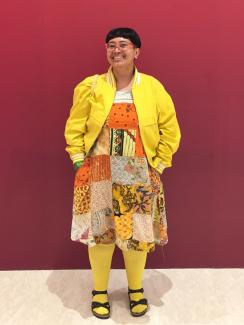
En Indonesia, la bunga [flor] está a menudo asociada a las mujeres. Esto significa que una flor también puede ser asociada a las mujeres transgénero, porque las mujeres transgénero son mujeres. Son igual de bellas, igual de fuertes, y tanto las flores como las mujeres trans no viven solo esperando ser «recogidas», sino que crecen y florecen y mueren como quieren. Esta obra es un tributo a mis amigas mujeres transgénero, en el Día Internacional de la Visibilidad Transgénero.
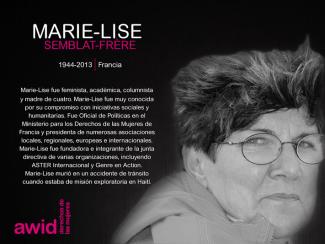
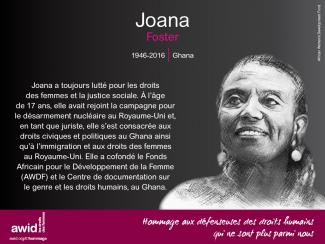
AWID, the Center for Women’s Global Leadership (CWGL), and the African Women's Development and Communication Network (FEMNET), offers this think piece to challenge mainstream understandings of development and put forward initial propositions for a feminist agenda for development, economic and gender justice.
Learn more about where this project comes from
These propositions are intended to be just that - proposals, to be discussed, debated, added to, taken apart, adapted, adopted, and even to inspire others.
par Esra Özban
Dans un monde obsédé par le produit final, donner la priorité au processus est une méthode fondamentalement féministe. Les processus sont importants, et la sélection d’œuvres artistiques n’y fait pas exception. Alors que nous décidions quels films de la région d’Asie du Sud-Ouest et Afrique du Nord (SWANA) représenteraient et s’inscriraient le mieux dans le thème des Réalités féministes, la pandémie à laquelle nous sommes toujours confronté·e·s continue à transformer radicalement nos vies. Le simple fait de penser, d’écrire ou de m’exprimer est devenu un combat de tous les jours. Je n’arrivais à respecter aucune de mes échéances, j’envoyais les uns après les autres des courriels d’excuses à Kamee Abrahamian avec qui je travaillais en tant que commissaire indépendante pour le projet de Ciné-Club Féministe de l’AWID. Le soutien indéfectible de Kamee, sa compréhension et ses précieuses suggestions me rappelaient que, même dans deux parties différentes du monde, en tant que collègues qui ne se côtoient jamais en chair et en os, nous pouvons cocréer des microversions des Réalités féministes pour lesquelles nous vivons et auxquelles nous aspirons.
Pour moi, les Réalités féministes ont beaucoup à voir avec les sororités. Des sororités qui aident les femmes à déminer la région d’Artsakh/Haut-Karabakh. Des sororités nourries dans le Vegan Inclusive Trans Cake préparé par de jeunes féministes trans à Ankara, qui rappellent aux cis-ta qu’elles ne sont pas les bienvenues pour la génération Z. Des sororités qui poussent parmi les brins de menthe sur le toit de Dragica Alafandi dans le camp de réfugié·e·s de Dheisheh en Palestine occupée, dans Sowing Seeds of Resistance. Des sororités qui englobent et accueillent des proximités intimes, sexuelles et révolutionnaires dans le parc Gezi avec #resistayol. Des sororités qui mettent à jour une rencontre imaginée entre deux générations de femmes en exil, dans les rues de Haïfa, avec Your father was born 100 years old and so was the Nakba. Des sororités entre espèces qui construisent un (courageux) espace fictif, créé par Mounia Akl dans son Submarine, où la rebelle Hala, qui refuse de quitter une ville qui croule sous les déchets, est abandonnée à son sort avec un chien pour seul ami.
Cette sélection regroupe des petits morceaux de nombreuses Réalités féministes réalisées dans la région de SWANA ces dernières années. Nous continuerons à imaginer, apprendre et partager des incarnations féministes d’espoir et de pouvoir. En attendant, continuons à nous plonger dans les puissantes alternatives auxquelles ces cinéastes et personnages donnent vie dans ces films. Nous pouvons cocréer chacune des étapes, chacun des gestes et chacune des tentatives, en continuant de cohabiter dans ce monde avec d’autres qui vivent des Réalités féministes et continuent à donner vie à leurs rêves.
De Emily Mkrtichian et Jesse Soursourian
« Avec de beaux visuels associés à des scènes de vérité convaincantes, Motherland est une démonstration de camaraderie et de force entre femmes… Ce film est un témoignage de femmes du monde entier qui sont prêtes à travailler plus dur pour surmonter les obstacles qu'elles rencontrent. »
- Nosarieme Garrick, réalisatrice primée
« Motherland est une visualisation inspirante de solidarité, de courage et de cran… »
- Collectif Hers is Ours (La sienne est nôtre), organisateur du Festival Outsider Moving Art & Film
Motherland from jesse soursourian on Vimeo.
Emily Mkrtichian, à propos des Réalités féministes et d’Artsakh/HK
Nous avons filmé le court-métrage Motherland en République d’Artsakh, en 2018. Chacune de ces femmes me fascinait, par sa force, sa résilience et son humour – malgré le contexte dans lequel elles vivent. Ce contexte, en 2018, était celui du lendemain de la guerre brutale des années 1990, suite à laquelle leur pays est demeuré un territoire non reconnu (ou contesté, aux yeux de la communauté internationale), qui n’a pas reçu l’autonomie et l’indépendance dont bénéficient de très nombreux autres pays. L’Artsakh a également fortement souffert des conséquences visibles dans tous les lieux ayant subi de violents affrontements, et qui frappent bien souvent sur les femmes : troubles de stress post-traumatiques (TSPT), taux élevés d’alcoolisme, taux élevés de violence conjugale, une moindre égalité et moins de libertés pour les femmes, peu – voire pas – de représentation des femmes en politique et aux fonctions publiques. Face à tous ces défis, ce film tente de saisir et rendre compte du feu et du pouvoir des femmes d’Artsakh, qui pourraient ne pas correspondre au paradigme du féminisme occidental traditionnel mais qu’elles ont créé pour elles-mêmes grâce à des liens communautaires forts, l’attention pour leur famille, un dur labeur et la capacité à en rire ensemble. La République d’Artsakh est aujourd’hui à nouveau ravagée par une autre guerre qui lui a arraché 70 % des terres que ces femmes avaient fait grandir en les considérant leurs. Mais je peux vous promettre que ces femmes, et des milliers d’autres, continuent à tenir leurs familles, leurs communautés et leur culture debout avec les mêmes réseaux de soins, d’engagement à travailler dur et d’éclats de rire révoltés face à un avenir incertain.
De Baladi-Rooted Resistance
« Un film opportun à voir après avoir été témoin du dernier bombardement de Gaza par les forces de défense israéliennes. Un aperçu de la manière dont les femmes des communautés palestiniennes survivent à l'oppression structurelle, à travers l'histoire d'une bibliothèque de semences traditionnelles... et des femmes qui les maintiennent comme une forme de rébellion florissante. »
- Jessica Horn, stratège féministe panafricain·e, écrivain·e et cocréateur·rice de The temple of her skin (Le temple de sa peau)
« Regarder des femmes se rassembler et travailler collectivement pour l'autonomie alimentaire est, à mes yeux, à la fois thérapeutique et autonomisant. »
- Collectif Hers is Ours (La sienne est nôtre), organisateur du Festival Outsider Moving Art & Film
L’équipe de Baladi-Rooted Resistance, à propos des Réalités féministes
« Comment parler de Résistances féministes quand on vit à Deheisheh, un camp de réfugié·e·s palestinien·ne·s construit il y a 70 ans en Cisjordanie occupée pour abriter 3 000 réfugié·e·s, et qui en compte aujourd’hui 15 000?Ou quand la terre que l’on cultive est constamment menacée par des colons illégaux?
Quand on est une femme en Palestine occupée, on doit se battre non seulement contre le patriarcat mais également contre le colonialisme et une occupation militaire brutale. »
Dragiča et Vivien se battent contre ces multiples systèmes de domination, à leur manière.
Vivien se sert de semences indigènes pour aider les Palestinien·ne·s à préserver leur identité. Cultiver les aliments traditionnels, selon des méthodes traditionnelles, est porteur de sens : « Si on n’est plus productrice, on reste consommatrice, et quelle meilleure manière de réduire quelqu’une en esclavage qu’en en faisant sa consommatrice? Cela a lieu dans le monde entier, mais ici c’est doublé de l’occupation militaire. »
En Cisjordanie, 31,5 % des ménages souffrent d’insécurité alimentaire. Grâce à son jardin de comestibles sur son toit, Dragiča est parvenue à renforcer l’autonomie alimentaire de sa famille. Dans le camp bondé, où l’armée israélienne fait régulièrement des incursions la nuit pour arrêter et harceler les résident·e·s, le toit de Dragiča nourrit non seulement sa famille, mais nourrit surtout son âme. »
De Rüzgâr Buşki
Rüzgâr Buşki, à propos des Réalités féministes
« Je ne sais pas quoi dire à propos des Réalités féministes, mais en tant qu’artiste trans, en tant qu’activiste en Turquie, je sais que nos réalités sont rudes. Nous vivons dans la violence : physique, psychologique, économique et sexuelle! C’est la raison pour laquelle nous devons construire nos propres réseaux, et cocréer des microréalités les unes pour les autres est une Réalité féministe pour moi. #resistayol est mon premier film. Au début, je prévoyais de faire un film par/avec/pour des personnes trans qui ne tente pas de convaincre quiconque du fait que les personnes trans sont des personnes humaines, et qui ne soit pas centré sur la sensibilisation aux questions trans. Mais le soulèvement de Gezi, l’un des plus gros soulèvements de l’histoire de la Turquie, a eu lieu et le film s’est transformé en autre chose.
Je crois que le processus de production influence vraiment le devenir d’un film. Nous avons véritablement essayé de faire travailler des femmes, des personnes trans et non binaires à chacune des étapes du film. Le film est fait par des personnes qui se sont rassemblées dans un esprit de camaraderie, par amitié. Kanka Productions est fondé sur un esprit de camaraderie transféministe. Je veux que ce film donne espoir, qu’il soigne parce que nous portons toutes et tous de nombreux traumatismes dans nos corps; c’est ce qui nous constitue et ce qui nous relie. La guérison est un processus interminable et nous devons créer des espaces où respirer. #resistayol est une heure de respiration collective. »
Boysan Yakar dans #resistayol
« Alors, des lubunyas (queer) étaient assis·es dans le parc, et tout à coup, des bulldozers sont arrivés et tout le monde s’est senti frustré. Bref, c’est ce qui s’est passé. C’est le parc des Lubunyas et nous avions trente jours pour expliquer cela à cette immense ville. Tout le monde a reconnu que la nuit, des ibnes (pédés) baisent dans ce parc... Le Bloc LGBTI y a déplacé notre communauté. Nous ne faisions déjà absolument pas confiance à l’État, ni à la police, et ne disposions d’aucune sécurité. Nous avons défini nos propres manières de faire les choses, nos propres lois et coutumes pour survivre... Nous avons rapidement instauré la loi à Gezi... dans le souci de créer une langue et une compréhension communes entre tous ces groupes. La langue LGBTI du vivre-ensemble s’est propagée dans tout le parc. C’était la marche des Fiertés tous les jours, tout le monde lançait sans cesse des « ayol ». Nous avons égayé la langue nauséabonde et obsolète de la gauche. Je pense que nous avons eu une telle influence parce qu’on nous a renié·e·s pendant tant d’années. Des plus radicaux·ales aux plus conservateur·trice·s et nationalistes, tout le monde avait besoin de nous parce que tout le monde s’est habitué à se confronter à tout, tout le temps. Ils et elles n’avaient pas l’habitude de voir tant d’énergie, notre énergie. C’est pour ça que c’était un espace politique génial pour nous. Chaque jour,nous nous faisions un devoir de reprendre notre plus gros combat là-bas, le principal, qui est notre combat pour la visibilité et la reconnaissance. C’est pour cela que nous avons eu si mal de devoir quitter Gezi. »
De Pembe Hayat
« ... une déclaration variée, montrant la joie qui existe dans les amitiés au sein de la communauté queer en Turquie comme manifestation de rébellion et de résistance. »
- Nosarieme Garrick, réalisatrice primée
«... amusant, léger et aléatoire. Dans un monde constamment marqué et meurtri par la violence contre la communauté trans, rien, aucune action n'est (malheureusement) privée de sens. Il en va aussi de la joie, de l'amour et du hasard signifiant! »
- Collectif Hers is Ours (La sienne est nôtre), organisateur du Festival Outsider Moving Art & Film
Cayan Azadi dans Vegan Inclusive Trans Cake
« Salut les Barbie, les Ken, les poupées en porcelaine, les Craquinoux. Les copines de Chucky, les sœurs de Chucky, les beaux-frères de Chucky, et sans oublier les beaux-frères amants.
Alors, pourquoi avons-nous fait ce gâteau?
Nous avons entendu dire qu’une travailleuse du sexe trans avait tenté de se suicider, suite à des violences de gardiens et de policiers dans la rue. Elle est toujours au poste de police, et c’est la raison même pour laquelle nous avons fait ce gâteau. Ce gâteau travesti a été préparé pour montrer que nous existons à tous les moments de la vie, que nous persistons à exister, et ce gâteau illustre que cela ne sera pas effacé ou ignoré par la société.
Oui, il y a de la violence dans nos vies. Oui, il y a aussi beaucoup d’ombres, mais malgré cela, nous pouvons quand même nous amuser et profiter de la vie autant que possible. Bon appétit, sœurette! »
De Razan AlSalah
De Mounia Akl
« Il est réalisé comme un poème qu’on écrit… simple, un peu abstrait et émouvant. »
- Collectif Hers is Ours (La sienne est nôtre), organisateur du Festival Outsider Moving Art & Film
Esra Ozban:
Esra Ozban est programmateur·rice et réalisateur·rice de films originaire de Turquie. Son travail artistique, curatorial et universitaire se trouve à la croisée entre autres des pratiques archivistiques critiques, du travail du sexe, de la pornographie et des cultures cinématographiques féministes/queer.
Sí, por favor. El mundo ha cambiado desde 2021, y te invitamos a proponer una actividad que refleje tus realidades y prioridades actuales.
Alors que les fondamentalismes, les fascismes et autres systèmes d’oppression se métamorphosent et trouvent de nouvelles tactiques et stratégies pour consolider leur pouvoir et influence, les mouvements féministes persévèrent et célèbrent leurs victoires nationales, régionales et internationales.
La reconnaissance en 2019 par le Conseil des droits de l’Homme du droit à l’intégrité et à l’autonomie corporelles, par exemple, a marqué une étape cruciale. Des résolutions du Conseil sur la discrimination envers les femmes et les filles admettent cependant un recul lié à des groupes de pression rétrogrades, des conceptions idéologiques ou un détournement de la culture ou la religion pour s’opposer à l’égalité de leurs droits. Des avancées féministes sont aussi notées dans le travail des Procédures spéciales, qui soulignent notamment l’obligation des États de contrer les doctrines de l’idéologie du genre, rappellent à l’ordre les antidroits qui détournent des références à la « culture », et signalent que les convictions religieuses ne peuvent pas servir à justifier la violence ou la discrimination.
Margarita Salas, AWID
Nazik Abylgaziva, Labrys
Amaranta Gómez Regalado, Secretariado Internacional de Pueblos Indígenas frente al VIH/sida, la Sexualidad y los Derechos Humanos
Cindy Weisner, Grassroots Global Justice Alliance
Lucineia Freitas, Movimento Sem Terra