AWID es un organización feminista internacional de membresía, que brinda apoyo a los movimientos que trabajan para lograr la justicia de género y los derechos de las mujeres en todo el mundo.
Confrontando al extractivismo y al poder corporativo
Defensoras de derechos humanos de todo el planeta defienden sus tierras, medios de subsistencia y sus comunidades ante las industrias extractivas y el poder corporativo. Ellas hacen frente a fuertes intereses económicos y políticos que promueven el robo de tierras, el desplazamiento de comunidades, la pérdida de los medios de subsistencia y la degradación del medioambiente.
¿Por qué resistir a las industrias extractivas?
El extractivismo es un modelo económico y político de desarrollo que mercantiliza la naturaleza y prioriza la ganancia por sobre los derechos humanos y el medioambiente. Arraigado en la historia colonial, refuerza las desigualdades sociales y económicas tanto a nivel local como global. Muchas veces, las mujeres negras, rurales e indígenas son las más afectadas por el extractivismo, y además son notablemente excluidas de la toma de decisiones. Desafiando estas fuerzas patriarcales y neocoloniales, las mujeres se alzan en defensa de los derechos, las tierras, las personas y la naturaleza.
Riegos críticos y violencia específica de género
Las defensoras que enfrentan a las industrias extractivas, experimentan una diversidad de riesgos, amenazas y violaciones, incluidas la criminalización, la estigmatización, la violencia y laintimidación. Sus historias dan cuenta de marcados aspectos de violencia sexual y de género. Entre los perpetradores se incluyen autoridades estatales y locales, las corporaciones, la policía, el ejército, las fuerzas paramilitares y de seguridad privada, y en algunos casos, sus propias comunidades.
Actuar juntxs
AWID y la Coalición Internacional de Mujeres Defensoras de Derechos Humanos (WHRDIC por su sigla en inglés) tienen el placer de anunciar «Defensoras de derechos humanos confrontado al extractivismo y al poder corporativo»; un proyecto interregional de investigación que documenta las experiencias vividas por las defensoras de Asia, África y América Latina.
Alentamos a activistas, integrantes de movimientos sociales, la sociedad civil organizada, donantes y responsables de políticas públicas, a leer y utilizar estas producciones para el trabajo de incidencia, con fines educativos y como fuente de inspiración:
AWID reconoce con gratitud las invaluables contribuciones de cada Defensora de Derechos Humanos que ha sido parte de este proyecto. Esta guía ha sido posible gracias su generosidad y apertura al compartir sobre sus experiencias y lecciones. Su coraje, creatividad y resiliencia son una inspiración para todxs nosotrxs. ¡Muchas gracias!
Contenido relacionado
Les membres de l’AWID s’engagent à la CSW61
Les Etats membres et les défenseur-e-s et organisations des droits des femmes se réuniront au siège des Nations Unies à New York du 13 au 24 mars pour la 61ème édtion de la Commission de la condition de la femme, afin d’aborder le thème de l’« autonomisation économique des femmes » dans le cadre de l'objectif 5 pour le développement durable.
Alors que nous avons hâte de retrouver quelques un-e-s d'entre vous à New-York, nous souhaitons aussi impliquer celles et ceux qui ne peuvent pas être présent-e-s à la CSW et être votre porte-voix dans les espaces pertinents.
Poursuivez votre lecture pour savoir comment participer à la CSW aux côtés de l’AWID, que vous soyez sur place ou non.
Participez à une prise de contrôle artistique !
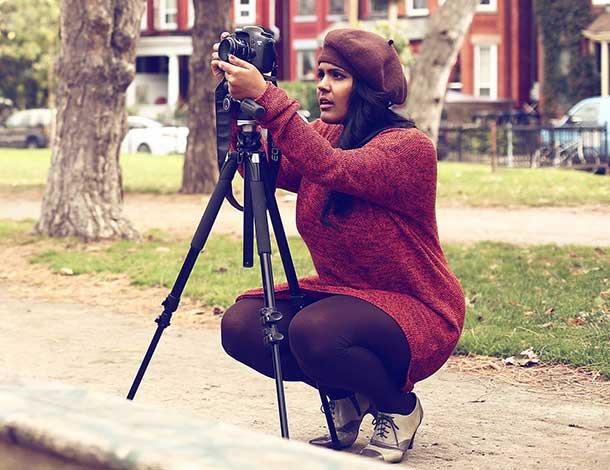
C'es un plaisir pour nous que Nayani Thiyagarajah, membre de l’AWID, assistera à la CSW cette année et qu’elle sera en charge du compte Instagram de l’AWID.
Là-bas, elle sera disponible pour rencontrer d’autres membres qui pourront éventuellement figurer sur notre Instagram. Elle explorera par ailleurs les possibilités d’inclure certain-e-s membres de l’AWID dans un court-métrage sur le thème ‘le privé est politique’, qui retracera l’histoire de la participation de Nayani à la CSW de cette année.
Nayani Thiyagarajah
Qui est Nayani?
Nayani Thiyagarajah est une directrice, productrice et écrivaine qui se consacre à porter des histoires à l’écran. Fille de la diaspora tamoule, elle appelle désormais Toronto sa ville. Pendant plus de 10 ans, Nayani a travaillé dans l’industrie des arts et de la culture. Son premier long-métrage documentaire indépendant, Shadeism: Digging Deeper (2015), fut présenté en première au Festival international du film de Zanzibar, où il obtint le Prix spécial du jury. Avec son partenaire de production Camaro West, Nayani a récemment lancé [RE]FRAME, une compagnie de production basée à Atlanta et à Toronto qui s’attache à reformuler les récits concernant les noir-e-s, les autochtones et d’autres personnes de couleur à travers des narrations portées à l’écran.
Plus sérieusement, il convient de mentionner que Nayani a un rire étrange, qu’elle est assez maladroite et qu’elle a toujours la tête dans les nuages. Pour elle, c’est une chance incroyable d’inventer des histoires pour l’écran et de s’amuser à faire croire, et de pouvoir en vivre. Elle croit en l’amour par-dessus tout.
Vous avez envie de rencontrer Nayani et d’être pris-e en compte pour figurer dans son film ?
Envoyez un e-mail à membership@awid.org en précisant dans la ligne d’objet « CSW: Prise de contrôle artistique »
Avant le 13 mars 2017
Merci d’inclure votre nom complet et votre lieu de résidence.
Vous ne pouvez pas assister à la CSW ? Exprimez-le !
Si vous êtes dans l’incapacité d’assister à la CSW61 en raison d’une interdiction de voyager, qu’elle ait été imposée par l’administration Trump ou par votre propre gouvernement, n’hésitez pas à nous faire part de votre histoire.
Envoyez-nous les messages que vous voulez voir diffusés dans les espaces des Nations Unies autour du financement, de l’impact du rétablissement de la règle du bâillon mondiale (Global Gag Rule) et de la nécessité de rejeter les fondamentalismes religieux. Vous pouvez adresser vos messages sous les formats suivants :
vidéo : elle ne devra pas durer plus de deux minutes et devra être envoyée via un partage de fichier en ligne (par exemple dropbox, google drive)
audio : il ne durera pas plus de deux minutes et sera envoyé via un partage de fichier en ligne (par exemple dropbox, google drive)
image : vous pouvez partager une photo ou une affiche de votre message
texte : il ne pourra pas faire plus de 200 mots et devra être intégré dans le corps d’un e-mail ou dans un document word
Envoyez-nous votre message !
Envoyez un e-mail à membership@awid.org, en précisant en ligne d’objet « CSW: Exprimez-le ! »
Avant le 15 mars 2017
Rencontrez d’autres membres à la CSW61
Les membres de l’AWID nous disent combien les rencontres qui se font entre membres à la CSW sont précieuses. Dans un lieu de plaidoyer tellement immense, il est utile de rencontrer et d’échanger avec les autres, y compris avec des activistes travaillant sur des questions semblables, ou venant du même pays ou de la même région. Nous reconnaissons que les rencontres sont fondamentales dans la construction des mouvements.
Vous souhaitez être mis-e-s en contact avec d’autres membres à la CSW61 ?
Envoyez un e-mail à membership@awid.org, en précisant en ligne d’objet « CSW: Membres de l’AWID »
NOTE : Veuillez nous transmettre vos coordonnées complètes (nom, pays) et nous indiquer si vous nous autorisez à communiquer votre adresse mail aux autres membres qui souhaiteraient entrer en contact à la CSW.
Prenez une photo !
Si vous participez à la CSW, partagez-nous ce que vous y voyez ! Montrez-le nous en capturant un instant qui reflète l'energie de l'espace de la CSW, que ce soit lors d'une conférence ou en dehors. Nous avons l'intention de publier vos images usr nos réseaux sociaux et de les partager sur notre site.
Vous pouvez nous envoyer :
des photographies en couleur ou en noir & blanc
avec leur titre (si vous souhaitez)
et une légende (pas plus de 100 mots) qui raconter l'histoire de votre photo.
Veuillez aussi inclure :
votre nom complet et votre pays d'origine
faites-nous aussi savoir si vous nous autorisez à partager tout ou partie de ces informations
Partagez vos images !
Envoyez un e-mail à membership@awid.org en précisant en ligne d’objet « CSW: Prenez une photo ! »
Pendant toute la CSW ou rapidement après, jusqu'au jeudi 28 mars 2017.
Carmen encabezaba el Construction Resource and Development Collective (CRDC, Colectivo de recursos para la construcción y el desarrollo) y fue fundamental para apoyar la participación de las mujeres en la industria de la construcción en Jamaica.
También trabajó con mujeres rurales y urbanas en temas relacionados a la preparación para afrontar desastres naturales. Trabajó de manera cercana con mujeres (especialmente madres solteras) enseñándoles cómo usar los cinturones para huracanes y otras tecnologías para poner sus hogares a resguardo. Trabajó en el área de agua y obras sanitarias y fue una fuerte defensora del manejo y desarrollo ambientalmente sustentable.
Fue parte de la Comisión Huairou y realizó incidencia en favor de las mujeres de base en temas vinculados a refugio, energía y medios de vida sustentables.
Seven feminist policy recommendations to curb illicit financial flows
The growing dominance of international financial markets and institutions in defining global economic policies has resulted in the capture of people’s power in the interest of global elites and big corporations.
Our policy brief on Illicit Financial Flows explores their disproportional gender impact and unveils the current legal and political frameworks that allow multinational corporations to benefit from tax abuse to the detriment of people and planet.
The brief concludes with these seven feminist policy recommendations to demand transparency and corporate accountability in order to curb illicit financial flows.
Our recommendations for advocacy
Illicit financial flows are gaining unprecedented attention: whether in development negotiations, like those leading to Agenda 2030 and the Addis Ababa Financing for Development Conference in 2015; or making headlines in mainstream media with the release of leaked documents on offshore finance known as the ‘Panama Papers’. In another example, the Ecuadorean people voted to bar politicians and civil servants from having assets, companies or capital in tax havens, in a referendum in February 2017. The Ecuadorian government is now a leading voice within the group of G77, in the United Nations, to create a UN global tax body to end tax havens.
This public attention potentially builds momentum for feminists, social movements and tax justice advocates to pressure for the transformation of the global financial system, which entrenches global inequalities, including gendered inequalities.
We offer below a set of seven policy asks as a contribution to growing advocacy efforts from social justice, feminist, women’s rights and gender equality actors:
1. Address IFFs as a violation of human rights and women’s rights:
Illicit financial flows are hindering the fulfillment of the obligation of States to mobilise the maximum available resources for the realisation of human rights, including long agreed commitments on women’s rights and gender equality.
Strengthening corporate accountability is a possibility on the table at the UN Human Rights Council. An open-ended intergovernmental working group is in place to elaborate an international legally binding instrument to regulate, in international human rights law, the activities of transnational corporations and other business enterprises. This process has the potential to address corporate tax evasion as a violation of human rights, including women’s rights, and should be greater supported by countries in the global North and South.
2. Ensure multinational corporations pay their share of taxes:
Develop international mechanisms that curb abusive tax practices and prevent corporate tax exemptions. UN member states should initiate negotiations to draft a UN convention to combat abusive tax practices. The convention should adopt a consolidation and apportionment system for taxing global corporate profits.
Revise specifically national regulations in wealthy countries that demand MNCs pay taxes only in the resident country, rather than in the countries of economic activity. This practice hinders developing countries the most, as they increasingly lose taxable base to low and zero tax jurisdictions. Proposals like the Unitary Taxation approach should be considered in this regard.
3. Support the establishment of a United Nations intergovernmental tax body:
A UN tax body with equal voting rights and universal membership should have the power to review national, regional and global tax policy and ensure states comply with long agreed commitments on human rights, including women’s rights and gender equality.
4. Promote transparency and gender-sensitive data gathering:
Greater efforts must be made at the global level to refine comparable data on tax abuse, for example with gender disaggregated data that shows the gender biases of certain tax systems.
Countries must ensure a framework for automatic information exchange, which guarantees public and global access to key data that affects the resources available for the realization of human rights.
Implement country-by-country reporting obligations for multinational corporations to publicly disclose, as part of annual reports, profits made and taxes paid for each country in which they operate.
Among other financial information, there must be greater cooperation from governments to share their national public registries that disclose beneficial owners of companies, trusts, foundations and similar legal structures.
5. Promote tax justice through progressive fiscal policies at the national level:
Promote tax justice through progressive fiscal policies. This requires increasing the weight of direct taxes on income capital and highly profitable sectors of society, while reducing and removing the burden on women and poor people. Poor segments of society, of which women are overrepresented, should not end up paying more taxes, in relation to their income, than the richest segments that often benefit from government tax subsidies, tax holidays and reductions.
Governments must critically review the harmful trade and investment agreements that grant tax incentives and exemptions that perpetuate inequality and gender biases.
6. Ensure participation of women’s rights organisations, social movements and progressive civil society broadly:
Economic and fiscal policy decisions often lack a gender sensitive perspective. Engagement between the ministries of Gender and Finance, and both with civil society and women human rights defenders, is key to better understand the impact that revenue decisions are having on women’s rights and gender equality.
An enabling environment should be in place to protect women human rights defenders and others (including whistle-blowers, tax justice activists) that expose tax abuse and report corruption.
7. Stop the impunity of criminal activities associated with IFFs and ensure accountability:
Establish a global coordinated mechanism across national tax authorities, human rights and gender equality machineries, and intelligence units, to ensure criminal activities associated with IFFs do not continue with impunity.
Strengthen national and global justice systems to be able to hold individuals and entities to account for funding criminal activities through IFFs.
تتواجد الحركات النسوية، حركات حقوق النساء، حركات العدالة الجندرية، حركات مجتمع الميم - عين وحلفاءها/ يفاتها في مفترق شديد الأهمية وتواجه هجمات عصيبة على حقوق وحريات حصلت عليها. فتصاعد الاستبداد في الأعوام الأخيرة، وكذلك القمع العنيف للمجتمع المدني وتجريم النساء والأشخاص المتنوعين/ات جندرياً المدافعين عن حقوق الإنسان، تصاعد الحروب والأزمات في الكثير من أنحاء العالم، استمرار الظلم الاقتصادي والتقاطع بين الصحة، البيئة والأزمة المناخية.
Active dans l’organisation Peacebuild, en passant par l'Alliance canadienne féministe pour l'action internationale, Amnesty International et au Centre canadien de politiques alternatives (CCPA), Kate était une passionnée des droits des femmes et de l'égalité de genre qui a consacré sa carrière à lutter contre les inégalités et à faire du monde un lieu plus empathique.
Kate a été membre du comité de coordination de Social Watch et a contribué aux rapports nationaux canadiens de Social Watch. En tant que chercheuse principale du CCPA, Kate a été saluée dans son pays pour ses travaux de recherche, ses écrits et la production du rapport annuel intitulé « Les meilleures et les pires endroits du Canada où vivre en tant que femme ».
Entourée de sa famille, Kate est décédée paisiblement après trois ans de lutte contre le cancer du côlon. Ses proches la décrivent comme une « féministe drôle, sans peur et sans complexes ».
Oficina Administrativa
Para asuntos adminsitrativos puede contactar con nuestra oficina:
+1 416 594 3773
192 Spadina Avenue, Suite 300 |Toronto, ON, M5T 2C2 | Canadá
An expert on social development and anthropologist by training, Mary was best known as a pioneer in the battle against Female Genital Mutilation (FGM).
Born in Cairo Egypt in 1922, Mary’s work in development started early, as she joined the Youth Women’s Christians’ Association (YWCA). Mary was a member of the World Council of Churches and became increasingly concerned with issues regarding women’s health. Her long struggle against FGM proved fruitful in 2008, when Egypt finally criminalized the practice.
She is remembered as a mentor to many Egyptian feminists and activists.
Idées de financement
Cette page vous fournira des idées pour financer votre participation au 14ème Forum de l’AWID.
En planifiant l’activité que vous voulez présenter au Forum, pensez aussi à la façon dont vous financerez votre participation. Prenez en compte : l’hébergement, le voyage, le visa, les frais d’inscription au forum, etc.
Veuillez noter que ce Forum offrira de nombreux « espaces ouverts » et moments d’apprentissage et d’échange entre mouvements, mais aussi moins de sessions formelles. (Consultez la section « Comment décrire le Forum pour votre levée de fonds » ci-dessous concernant le langage à adopter dans votre demande).
Travaillez avec vos bailleurs actuels :
Votre meilleure option sera toujours de faire appel à vos bailleurs de fonds actuels : Si votre groupe bénéficie de l'appui d'organismes donateurs, dites-leur que vous souhaitez participer au Forum de l’AWID pour apprendre, expérimenter, échanger et travailler en réseau, et ce même si votre activité n'est pas sélectionnée dans le programme final.
Pour soutenir votre participation, vos bailleurs de fonds devront en être informés longtemps à l'avance, alors n’attendez pas pour leur en parler déjà tout de suite ! (Ils sont déjà en train de décider des fonds qu’ils vont distribuer en 2020. Nous vous recommandons de les contacter au plus tard début 2020.) Bon nombre de donateurs qui soutiennent les organisations féministes disposent de budgets alloués au déplacement pour le Forum.
D’autres pourraient les inclure dans des renouvellements de subventions ou dans d’autres financements permettant de couvrir les frais de déplacements.
Trouver de nouveaux donateurs :
Si vous ne disposez pas actuellement d’un soutien financier, ou que vous ne pouvez garantir de subventions dédiées au déplacement pour le Forum, vous pouvez envisager de contacter de nouveaux donateurs.
Explorez les réseaux de donateurs, comme Candid et le Centre Européen des Fondations (EFC) (liens en anglais), pour obtenir une liste de donateurs et d’opportunités dans votre région
Les délais et exigences varient d’un donateur à l’autre, et la procédure d’octroi de financement peut prendre plusieurs mois. Si vous envisagez d’effectuer de nouvelles demandes de financement, nous vous encourageons à le faire au plus tôt.
Inspirations créatives :
Les mouvements féministes ont depuis longtemps fait preuve de créativité lorsque s’agissait de financer leur propre militantisme. Voici quelques idées que nous avons été en mesure de rassembler afin d’inspirer des modes alternatifs de financement.
Mobilisez votre communauté pour soutenir la participation : réalisez des levées de fonds grâce à de légères contributions de membres à travers des dîners et des soirées dansantes communautaires, ainsi que des spectacles, des évènements et des excursions au niveau local.
Mobilisez votre réseau en organisant des cercles de donateurs·trices et du crowdsourcing (appel au grand public) via une variété d’outils en ligne comme gofundme, indiegogo, plumfund ou kickstarter (liens en anglais).
Développez des sources locales de revenus, y compris les dons individuels et les cotisations de membres.
Envisagez le cofinancement et initiez des partenariats stratégiques avec d’autres communautés et groupes œuvrant pour la justice sociale.
Le Fonds d’accès de l’AWID : l’AWID s'efforce de faire du Forum un véritable rassemblement mondial avec la participation de divers mouvements, régions et générations. A cette fin, l'AWID mobilise des ressources pour constituer un Fonds d'accès limité (AF, selon son sigle anglais) afin d'aider les participant-e-s à couvrir leurs frais de participation.
Vous pouvez indiquer dans votre candidature si vous souhaitez soumettre une demande de financement au Fonds d'accès de l’AWID.
N'oubliez pas que ces ressources sont très limitées et que nous ne serons pas en mesure de soutenir tou.te.s les candidat.e.s. Même si vous faites une demande pour le Fonds d'accès de l’AWID, nous vous encourageons à continuer à explorer d'autres options pour financer votre participation au Forum. Les décisions relatives au Fonds d'accès seront confirmées d'ici la fin du mois de juin 2020.
Comment décrire le Forum pour votre levée de fonds :
Voici quelques extraits de messages qui peuvent vous aider à prendre contact avec vos donateurs ou votre réseau. N’hésitez pas à les adapter de la façon que vous jugerez la plus utile à vos yeux !
Le Forum de l’AWID est un espace cocréé par des mouvements féministes qui stimule les participant·e·s dans leur propre activisme, et renforce les connexions entre divers mouvements de droits et de justice. Les participant·e·s en tirent des sources d’espoir, d’énergie et d’imagination débridée, tout en approfondissant leurs analyses partagées et leurs apprentissages. C’est aussi un lieu de renforcement de la solidarité entre mouvements qui permet de développer des programmes d’action intégrés et de faire avancer des stratégies communes.
Notre organisation est à la recherche de fonds pour participer à ce Forum afin de se connecter à d’autres activistes et mouvements du monde entier, de consolider nos stratégies et de partager notre travail. Les participant·e·s des années précédentes nous inspirent, notamment lorsque ces personnes décrivent le pouvoir de ce rassemblement mondial féministe :
« Pendant quelques jours… les voix se sont tissées en une perspective mondiale sur l’état de l’égalité de genre. Et lorsque je dis mondiale, je fais référence à des traductions simultanées en sept langues… »
« Nous nous sommes rappelé·e·s que nous n’étions pas seul·e·s. Le Forum est un moyen pour traduire le collectif dans nos mouvements. En dépit des idéologies, des identités ou des frontières, notre force réside dans notre vision et notre soutien les un·e·s pour les autres. »
Veuillez noter que ce Forum offrira de nombreux « espaces ouverts » et moments d’apprentissage et d’échange entre mouvements, mais aussi moins de sessions formelles.
Même si beaucoup de participant·e·s ne feront pas de présentation aux sessions formelles, le Forum offrira cependant un espace précieux d’apprentissage, de réflexion stratégique et d’expérimentation du pouvoir collectif en action des mouvements féministes.
Considérations budgétaires :
Lors du calcul de vos coûts et du montant nécessaire à financer, il est important de prendre en compte certaines dépenses qui peuvent survenir. Voici des exemples d’éléments clés à considérer :
Le prix du vol
Les frais d’inscription au Forum (veuillez noter que même si vous obtenez un soutien de l’AWID via le Fonds d’accès, vous devez régler vous-même vos frais d’inscription)
Les frais de visa
L’assurance santé voyage
Les transports locaux depuis et vers l’aéroport (taxis ou autres moyens de transport)
Les frais d’escale, tels que l'hôtel et les repas, si votre voyage en avion comprend une longue correspondance
L’hébergement, comprenant un jour de repos si vous avez parcouru une grande distance
La technologie, comprenant l’accès WiFi et les frais de communication internationale si requis pendant le voyage (l’AWID fournira le WiFi pendant le Forum)
Les coûts matériels pour tout support (visuels, rapports, travaux artistiques!) que vous souhaitez apporter, partager ou échanger durant le Forum
Les frais accessoires et/ou per diems pour couvrir les repas et d’autres besoins qui peuvent survenir (tous les déjeuners et pauses-café/thé, ainsi qu’un dîner seront fournis par l’AWID durant le Forum)
L’accessibilité, par exemple toute aide supplémentaire pouvant être jugée nécessaire pour que votre voyage soit confortable, sûr et sécurisant
Au plaisir de vous voir au Forum !
Le Forum est un processus collaboratif
Le 14ème Forum de l'AWID aura lieu du 11 au 14 janvier 2021 à Taipei, Taiwan.
C'est bien plus qu’un événement de quatre jours. C’est un arrêt de plus dans un parcours de renforcement de mouvement autour des réalités féministes, lequel a déjà commencé et continuera bien au-delà des dates du Forum.
هنالك العديد من الأسباب لتعبئة الاستطلاع منها أنه لديك الفرصة لمشاركة تجربتك المعاشة المتعلقة بحشد الموارد لدعم تنظيمك، أن تعمل/ين من منطلق قوة كخبير/ة بما يتعلق بالأموال ولأين تتحرك ولأين تصل وبذلك المشاركة بالجهد المشترك والمناصرة لتحريك التمويلات الأكبر والأفضل. لقد أثبت استطلاع "أين المال" في العشرين عام الأخيرة أنه مصدر أساسي للشركاء/ الشريكات وكذلك للممولين/ات. ندعوك من كل قلبنا للمشاركة بالنسخة الثالثة لتسليط الضوء على الوضع الفعلي للموارد، وتحد الحلول الخاطئة، والإشارة إلى كيفية تغيير التمويل حتى تزدهر الحركات وتواجه التحديات المعقدة في عصرنا.