
Leyla Yıldızhan (Deniz Fırat)
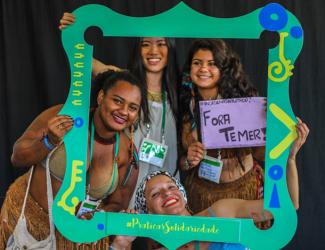
Young feminist activists play a critical role in women’s rights organizations and movements worldwide by bringing up new issues that feminists face today. Their strength, creativity and adaptability are vital to the sustainability of feminist organizing.
At the same time, they face specific impediments to their activism such as limited access to funding and support, lack of capacity-building opportunities, and a significant increase of attacks on young women human rights defenders. This creates a lack of visibility that makes more difficult their inclusion and effective participation within women’s rights movements.
AWID’s young feminist activism program was created to make sure the voices of young women are heard and reflected in feminist discourse. We want to ensure that young feminists have better access to funding, capacity-building opportunities and international processes. In addition to supporting young feminists directly, we are also working with women’s rights activists of all ages on practical models and strategies for effective multigenerational organizing.
We want young feminist activists to play a role in decision-making affecting their rights by:
Fostering community and sharing information through the Young Feminist Wire. Recognizing the importance of online media for the work of young feminists, our team launched the Young Feminist Wire in May 2010 to share information, build capacity through online webinars and e-discussions, and encourage community building.
Researching and building knowledge on young feminist activism, to increase the visibility and impact of young feminist activism within and across women’s rights movements and other key actors such as donors.
Promoting more effective multigenerational organizing, exploring better ways to work together.
Supporting young feminists to engage in global development processes such as those within the United Nations
Collaboration across all of AWID’s priority areas, including the Forum, to ensure young feminists’ key contributions, perspectives, needs and activism are reflected in debates, policies and programs affecting them.
Non, nous reconnaissons l’importance cruciale de votre travail, mais nous ne collectons pas les participations de fonds féministes et de femmes à l’heure actuelle. Nous vous encourageons néanmoins à transmettre cette enquête à vos partenaires bénéficiaires et vos réseaux féministes.
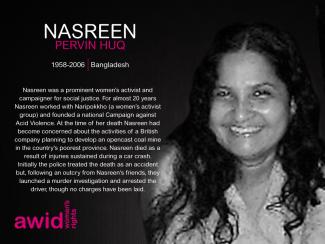
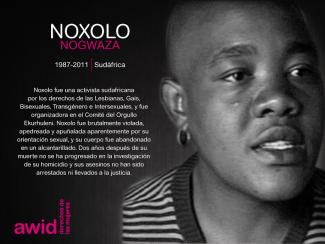
Ces femmes transgenres ont été assassinées en raison de leur activisme et de leur identité de genre. Les lois reconnaissant les droits des personnes trans* sont insuffisantes et, lorsqu’elles existent, les mesures prises pour protéger les droits de ces personnes sont quasi inexistantes. Nous vous invitons à vous joindre à nous pour honorer la mémoire de ces défenseuses, leur activisme et l’héritage qu’elles nous ont laissé. Faites circuler ces mèmes auprès de vos collègues et amis ainsi que dans vos réseaux et twittez en utilisant les hashtags #WHRDTribute et #16Jours.
S'il vous plaît cliquez sur chaque image ci-dessous pour voir une version plus grande et pour télécharger comme un fichier


Listen to the story here:
For now, the survey on KOBO is available in Arabic, English, French, Portuguese, Russian and Spanish. You will have the chance to select your language of choice at the beginning of the survey.
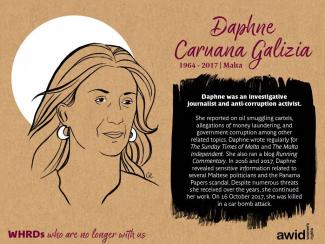
Cette section présente les principales ressources que l’AWID recommande afin que vous puissiez mener votre propre recherche WITM.
Dans cette section
Outils en ligne
Quand vous aurez rassemblé ces ressources, vous pourrez estimer les coûts de votre recherche à l’aide de notre Fiche de travail « Êtes-vous prêts-es ? »
Dado que la encuesta ¿Dónde está el dinero? se centra en las realidades de la dotación de recursos para las organizaciones feministas, la mayoría de las preguntas indagan acerca del financiamiento de tu agrupación entre 2021 y 2023. Para responder la encuesta, necesitarás tener a mano cierta información como, por ejemplo, presupuestos anuales y las fuentes clave de financiamiento.

Les interviews génèrent des renseignements détaillés que vous aurez du mal à obtenir à travers un sondage. Le sondage est surtout axé sur les données quantifiables et les questions fermées,par contre les interviews permettent d’obtenir les opinions d’expert-e-s comme des activistes et des donateurs, tout en utilisant des questions ouvertes qui précisent le contexte entourant les données résultant du sondage.
Dans cette section
- Conseils d’ordre général
1. Avant de mener vos interviews
2. Pendant les interviews- Interviews spécialisées
1. Interviews auprès des donateurs
2. Interviews auprès des activistes et des organisations de droits des femmes- Résultats préliminaires
Envoyez aux personnes que vous allez interviewer une note de synthèse qui décrit les objectifs des interviews et de l’ensemble de votre recherche, en plus d’une liste de questions.
Ces personnes pourront ainsi préparer leurs réponses aux questions plus complexes et obtenir les renseignements qu’elles n’ont peut-être pas sous la main.
Ne fondez pas vos questions sur des hypothèses au sujet des connaissances de la personne interviewée.
Tentez plutôt de préciser ce qu’elle sait, ce qui produit également des informations
- NE DEMANDEZ PAS : « Compte tenu des tendances actuelles de financement en Suisse, est-ce que vous êtes au courant de certaines occasions de collaboration ? » Cette question présume que la personne interviewée connaît les tendances de financement et que sa compréhension de ces tendances est identique à la vôtre.
- DEMANDEZ : En premier lieu, « Quelle est votre compréhension des tendances de financement actuelles en Suisse ? », suivie de « Est-ce que vous êtes au courant de certaines occasions de collaboration ? » Ceci révèlera ce que la personne comprend, vous donnant encore plus d’informations que la première question.
Les interviews auprès des donateurs vous permettront d’approfondir vos relations avec eux, ce qui sera utile lorsque vous entreprendrez les activités de plaidoyer qui succèderont à votre recherche. Vous en tirerez également une connaissance plus poussée des processus de prises de décisions adoptés par les bailleurs de fonds.
Suggestions de thèmes à aborder lors des interviews avec les donateurs :
Les interviews auprès d’activistes et d’organisations de droits des femmes vous renseigneront sur leurs réalités sur le terrain. Ici encore, ces interviews vous permettront d’approfondir vos relations qui peuvent être intégrées aux plaidoyers, particulièrement en vue de favoriser la collaboration entre donateurs et activistes.
Suggestions de thèmes à aborder lors des interviews avec les activistes et les organisations de droits des femmes :
Pendant votre recherche WITM, nous vous recommandons de procéder à l’analyse des résultats préliminaires. La présentation de vos résultats préliminaires offre l’occasion de mener d’autres interviews et de recueillir des réactions sur votre processus de recherche et sur les résultats initiaux. Ces réactions peuvent être intégrées à votre recherche finale.
L’AWID organise des « rencontres WITM » pour partager les résultats préliminaires issus des données de sondage et des interviews. Ces rencontres permettent aux personnes qui y prennent part (activistes, organisations de droits des femmes et donateurs) de débattre et de discuter des résultats, de préciser le contexte, de rehausser le sentiment d’appropriation parmi les membres du mouvement et de fournir plus de commentaires en vue de la recherche finale.
Par exemple, l’AWID a profité du Pôle de mobilisation des ressources (RMH) pour les droits des femmes autochtones, dans le cadre du World Summit on Indigenous Philanthropy (Sommet mondial sur la philanthropie autochtone) pour lancer une présentation de ses résultats préliminaires.
Voir la présentation donnée lors du RMH (en anglais)
4. Recueillez et analysez vos données

• 1,5 - 3 mois
• 1 personne (ou plus) chargée de la recherche
• Liste d’organisations, de donateurs et d’activistes agissant à titre consultatif
• Questions d'interview que vous aurez préparées
• Note conceptuelle (Vous pouvez utiliser de cadre de référence que vous avez déjà préparé)
• Exemples d’interviews auprès des donateurs
• Exemples d’interviews auprès d’activistes et d’organisations de droits des femmes
4. Recueillez et analysez vos données
6. Menez une recherche documentaire
Tout à fait. Vos réponses seront supprimées à la fin du processus de traitement et d’analyse des données. Elles ne seront utilisées qu’à des fins de recherche. Les données ne seront JAMAIS partagées en dehors de l’AWID et ne seront traitées que par le personnel de l’AWID et des consultant·es qui collaborent avec nous à la recherche WITM.
La confidentialité de votre vie privée et votre anonymat sont nos priorités. Notre politique de confidentialité est disponible ici.
