
Elisabeth Blanche Olofio
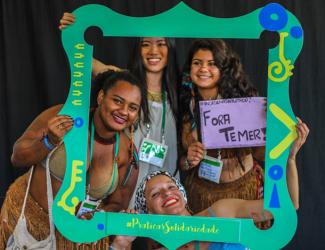
Young feminist activists play a critical role in women’s rights organizations and movements worldwide by bringing up new issues that feminists face today. Their strength, creativity and adaptability are vital to the sustainability of feminist organizing.
At the same time, they face specific impediments to their activism such as limited access to funding and support, lack of capacity-building opportunities, and a significant increase of attacks on young women human rights defenders. This creates a lack of visibility that makes more difficult their inclusion and effective participation within women’s rights movements.
AWID’s young feminist activism program was created to make sure the voices of young women are heard and reflected in feminist discourse. We want to ensure that young feminists have better access to funding, capacity-building opportunities and international processes. In addition to supporting young feminists directly, we are also working with women’s rights activists of all ages on practical models and strategies for effective multigenerational organizing.
We want young feminist activists to play a role in decision-making affecting their rights by:
Fostering community and sharing information through the Young Feminist Wire. Recognizing the importance of online media for the work of young feminists, our team launched the Young Feminist Wire in May 2010 to share information, build capacity through online webinars and e-discussions, and encourage community building.
Researching and building knowledge on young feminist activism, to increase the visibility and impact of young feminist activism within and across women’s rights movements and other key actors such as donors.
Promoting more effective multigenerational organizing, exploring better ways to work together.
Supporting young feminists to engage in global development processes such as those within the United Nations
Collaboration across all of AWID’s priority areas, including the Forum, to ensure young feminists’ key contributions, perspectives, needs and activism are reflected in debates, policies and programs affecting them.

Kasia has been supporting the work of feminist and social justice movements for the last 15 years. Before joining AWID, Kasia used to lead policy and advocacy for ActionAid and Amnesty International while organizing with feminists and social justice groups in Poland for access to abortion and against violence on the European borders. Kasia is passionate about resourcing feminist organizing in all their boldness, richness and diversity. She shares her time between Warsaw and her DIY community village in the forest. She loves saunas and is crazy about her dog named Wooly.
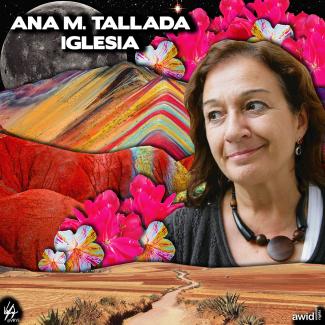
Ana était un ardente défenseure des droits des femmes et travaillait avec un large éventail de femmes au sein d’organisations de terrain ainsi que dans le secteur privé.
Elle croyait en la construction de ponts entre les secteurs. Ana était membre du Réseau national de promotion de la femme (RNPM) et participait activement à l'élaboration de nombreux programmes sociaux traitant de questions telles que la santé et les droits sexuels et reproductifs.
Faye es una apasionada feminista panafricana, que trabaja activamente en diversos movimientos por los derechos de las mujeres, la justicia racial, los derechos de las personas migrantes y los derechos laborales, y por la justicia ambiental. Su activismo se basa en el legado de la lucha contra el apartheid en Sudáfrica y las consecuencias de la era del apartheid en Zimbabue.
En 2019, Faye se sumó a AWID como Directora de Finanzas, Operaciones y Desarrollo y dedicó sus esfuerzos a garantizar que AWID defienda los principios y valores feministas en todas sus operaciones. Aporta más de 20 años de experiencia en liderazgo y estrategias feministas y en todos los aspectos de las finanzas y el desarrollo institucional.
Faye es una comprometida integrante de la Junta de Urgent Action Fund Africa (UAF- Fondo de Acción Urgente África) y otras organizaciones por los derechos de las mujeres. Anteriormente, desempeñó funciones de Directora de Finanzas y Operaciones en Paediatric Adolescent Treatment for Africa (Tratamiento Pediátrico y Adolescente para África) y JASS - Just Associates Inc., en Sudáfrica. Asimismo, ocupó roles directivos en International Computer Driving Licence (ICDL), en África central y meridional. Posee una licenciatura en Ciencias Contables de la Universidad de Sudáfrica y forma parte del Instituto Sudafricano de Gestión Contable Empresarial.
Just like women have learned to avoid dark streets for their safety, women journalists are forced to avoid reporting certain stories as a result of online harassment.
Harassment is not part of the job description and should be called out and challenged at every turn to ensure these important voices are not silenced.
This tribute to journalists was made on behalf of IFEX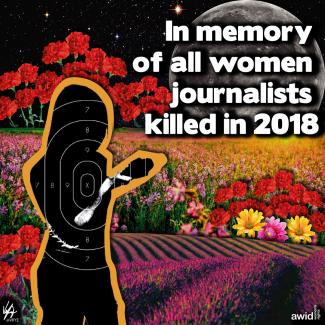
“Now might be a good time to rethink what a revolution can look like. Perhaps it doesn’t look like a march of angry, abled bodies in the streets. Perhaps it looks something more like the world standing still because all the bodies in it are exhausted—because care has to be prioritized before it’s too late.”
- Johanna Hedva (https://getwellsoon.labr.io/)
Hospitals are institutions, living sites of capitalism, and what gets played out when somebody is supposed to be resting is a microcosm of the larger system itself.
Institutions are set out to separate us from our care systems – we find ourselves isolated in structures that are rigidly hierarchical, and it often feels as if care is something done to us rather than given/taken as part of a conversation. Institutional care, because of its integration into capitalist demand, is silo-ed: one person is treating your leg and only your leg, another is treating your blood pressure, etc.
Photographer Mariam Mekiwi had to have surgery last month and documented the process. Her portraits of sanitized environments – neon white lights, rows after rows of repetitive structures – in a washed-out color palette reflect a place that was drained of life and movement. This was one of the ways Mariam kept her own spirit alive. It was a form of protest from within the confines of an institution she had to engage with.
The photos form a portrait of something incredibly vulnerable, because watching someone live through their own body’s breakdown is always a sacred reminder of our own fragility. It is also a reminder of the fragility of these care systems, which can be denied to us for a variety of reasons – from not having money to not being in a body that’s considered valuable enough, one that’s maybe too feminine, too queer or too brown.
Care experienced as disembodied and solitary, that is subject to revocation at any moment, doesn’t help us thrive. And it is very different from how human beings actually behave when they take care of each other. How different would our world look like if we committed to dismantling the current capitalist structures around our health? What would it look like if we radically reimagined it?
Juhi est passionnée de technologie, titulaire d'une licence en génie informatique de l'Université Technologique du Gujarat et d'une formation de troisième cycle en télécommunications sans fil et en gestion de projet du Humber College. Passionnée par la résolution de problèmes et aimant garder une longueur d'avance dans un paysage technologique en constante évolution, Juhi s'est retrouvée à naviguer dans divers secteurs en tant que technicienne informatique. Grâce à l'environnement stimulant de la School Board, Juhi a eu l'occasion d'appliquer ses compétences techniques dans divers contextes, relevant toujours de nouveaux défis avec enthousiasme. Au-delà du code et des circuits, Juhi aime les aventures de la vie. Explorer de nouveaux lieux et cultures constitue pour elle une bouffée d’air frais. Qu'il s'agisse de découvrir des trésors cachés de la ville, d'essayer des cuisines exotiques ou de se lancer dans des sports d'aventure palpitants, Juhi est toujours partante pour de nouvelles expériences.
“[She] was a person who was characterized by her hard work in favor of the defense of human rights and the construction of peace in Nariño, especially in the municipality of Samaniego-Nariño.”
- Jorge Luis Congacha Yunda for Página10
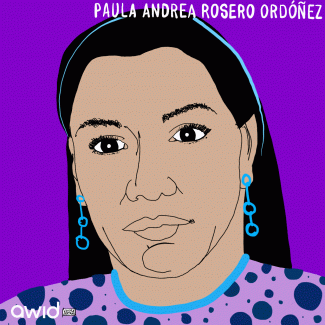
She focused on civil and political rights, issues of impunity and justice, and contributed to uncovering the abuse of power, including corruption. She also participated in peacebuilding projects in her hometown Samaniego, such as the Municipal Peace Council and the Municipal Women’s Board.
Paula received death threats after exposing the irregular handling of resources and complaining about acts of corruption at the Lorencita Villegas Hospital in the Nariñense municipality. She was murdered on 20 May 2019, when two men approached and shot her at close range.
|
Editorial Team Design and Illustration Communications Strategist
Translation Manager AWID’s Team |
Arabic Translators English to Spanish Proofreaders Proofreaders Portuguese to English Proofreader |
Patience is a global human resources professional with over a decade of experience in human resources (HR) management in the not-for-profit sector. Patience previously worked at Mercy Corps as the Global HR Officer for Africa supporting the full employee life cycle for expatriates in the Eastern and Southern African region and provided HR technical guidance to Human Resources leaders in country offices within the African region. Before joining the global people team, she was the Country Human Resources and Safeguarding Focal Point, she was part of the senior management team leading on all human resources and safeguarding matters. Prior to Mercy Corps she led the HR and Operations department at SNV Netherlands Development Organization and was a member of the country management team. She also has HR Consultancy experience which she gained while she was still studying for her BSc Honors degree in Human Resource Management. She has a passion for HR, loves working with people and she takes wellbeing and safeguarding as her core values and in her professional work. As someone who loves sports, you can also find Patience at the basketball court, the tennis court or on the soccer field.
"Pero, ¿ fue el maestro alguna vez
seducido por el poder?
¿Alguna vez se rompió
un sistema con aceptación ?
¿Cuándo el JEFE te entregará el poder con amor?
¿En Jo'Burg, en Cancún o en la ONU? - Molara Ogundipe
A través de los diferentes continentes y países, la profesora Ogundipe enseñó literatura comparada, escritura, género y filología inglesa, y utilizó la literatura como vehículo para la transformación social y el replanteamiento de las relaciones de género.
Molara Ogundipe, como pensadora, escritora, editora, crítica social, poeta y activista feminista, logró combinar el trabajo teórico con la creatividad y la acción práctica. Se la considera una de las principales voces críticas de los feminismos africanos, los estudios de género y la teoría literaria.
Molara acuñó el concepto de "estiwanismo" a partir de las siglas STIWA (Social Transformations in Africa Including Women) [Transformaciones Sociales en África Incluyendo a las Mujeres], con el fin de reconocer la necesidad de “alejar la definición del feminismo y los feminismos en relación con Euro-América u otro lugar, y declamar lealtades o deslealtades". Con su obra fundamental, "Recreándonos Nosotras Mismas", de 1994, Molara Ogundipe (publicada bajo el nombre de Molara Ogundipe-Leslie) dejó tras de sí un inmenso cuerpo de conocimientos que descolonizó el discurso feminista y "re-centró a las mujeres africanas en sus completas y complejas narrativas... guiadas por una exploración de la liberación económica, política y social de las mujeres africanas y la restauración de la agencia femenina en las diferentes culturas de África".
Comentando los retos a los que se enfrentó como joven académica, dijo:
"Cuando empecé a hablar y escribir sobre el feminismo a finales de los años sesenta y en los setenta, se me veía como una chica buena y admirable que se había extraviado, una mujer cuya cabeza se había arruinado con un exceso de aprendizaje".
Molara Ogundipe se destacó por su liderazgo a la hora de combinar el activismo con el mundo académico; en 1977 fue una de las fundadoras de la Asociación de Mujeres en la Investigación y el Desarrollo, AAWORD (por sus siglas en inglés),. En 1982 fundó Mujeres en Nigeria, WIN (por sus siglas en inglés), con el fin de abogar por un acceso pleno a los "derechos económicos, sociales y políticos" para las mujeres nigerianas. Posteriormente, estableció y dirigió la Fundación Internacional para la Educación y el Monitoreo y pasó muchos años en el consejo editorial del periódico The Guardian.
Luego de haber crecido con el pueblo yoruba, sus tradiciones, cultura e idioma, dijo una vez:
"Creo que la celebración de la vida, de las personas que mueren después de una vida llena de logros, es uno de los aspectos más hermosos de la cultura yoruba".
El nombre de alabanza yoruba 'Oiki' de Molara era Ayike. Molara nació el 27 de diciembre de 1940 y falleció el 18 de junio de 2019 a la edad de 78 años, en Ijebu-Igbo, Estado de Ogun, Nigeria.
مع استمرار الرأسمالية الأبوية الغيريّة في دَفعِنا نحو الاستهلاكية والرضوخ، نجد نضالاتنا تُعزَل وتُفصَل عن بعضها الآخر من خلال الحدود المادّية والحدود الافتراضية على حدٍّ سواء.
Durante sus 38 años de carrera, Debbie Stothard ha trabajado con diferentes comunidades y activistas para involucrar en los derechos humanos y la justicia a los Estados, organizaciones intergubernamentales y otras partes interesadas a lo largo de Asia, África, Europa y las Américas. Su trabajo está enfocado en las prioridades temáticas de las empresas y en los derechos humanos, en la prevención de las atrocidades y en el liderazgo de las mujeres. Por ello, ha sido facilitadora o persona de referencia en casi 300 eventos de capacitación durante los últimos 15 años. La mayoría fueron talleres orientados a las bases, desarrollados en el terreno, centrados en la incidencia en derechos humanos, alfabetización económica, en empresas y derechos humanos, y en justicia transicional y prevención de las atrocidades. Su trabajo en justicia transicional y prevención de las atrocidades ha estado enfocado principalmente en Burma/Myanmar, aunque también ha proveído asesoramiento para responder a situaciones de otros países alrededor del mundo.
Entre 1981 y 1996, Debbie trabajó como periodista especializada en crímenes, activista estudiantil, analista política, académica, consejera de gobierno y proveedora de comida en Malasia y Australia, mientras era voluntaria en causas de derechos humanos. En 1996, fundó ALTSEAN-Burma, que encabezó una variedad de programas de innovación y empoderamiento en derechos humanos. Entre ellos, el programa intensivo permanente de liderazgo de ALTSEAN para diferentes mujeres jóvenes de Burma, que, durante los últimos 22 años, ha ayudado a fortalecer y ampliar el liderazgo de las mujeres en las zonas afectadas por el conflicto. Se desempeñó como integrante de la Junta de la Federación Internacional de Derechos Humanos (FIDH) durante 9 años como secretaria general adjunta (2010-2013) y secretaria general (2013-2019), durante los cuales promovió la misión y el perfil de la FIDH en, aproximadamente, 100 reuniones y conferencias por año.
Ces informations sont disponibles dans notre Appel à activités, et notamment sa section intitulée « Ce qu’il faut savoir ».
Yamile Guerra était une avocate bien connue, leader communautaire et activiste politique dans la région de Santander en Colombie.
Activement impliquée dans la résolution de litiges entre les communautés locales et les promoteurs immobiliers, elle s’est battue contre l’appropriation des terres illégale. Yamile a occupé plusieurs fonctions politiques, dont celle de secrétaire générale du gouvernement de Santander à Bogota, et s’était également présentée comme candidate à la mairie de Bucaramanga. Au cours des dernières années de sa vie, Yamile s’était de plus en plus impliquée dans les causes environnementales, et particulièrement celle de la défense de la biodiversité des zones humides de Santurbán, une région qui approvisionnait près de deux millions de personnes en eau potable, contre les promoteurs du développement économique.
D’après sa famille et ses ami·e·s, Yamile recevait quotidiennement des menaces de mort et avait demandé la protection des autorités.
« Elle était tout à fait consciente de la question [du litige foncier] et avait à plusieurs reprises mentionné qu’elle se sentait en danger. » - Alixon Navarro Muñoz, journaliste et amie de la famille Guerra
Le 20 juillet 2019, Yamile a été tuée par balles par deux hommes à Floridablanca, Santander. Elle venait de clore une discussion avec eux en lien avec le litige foncier. Un suspect a ensuite été arrêté pour son meurtre, lequel a admis avoir été payé pour organiser son assassinat. Selon des rapports, Yamile est la troisième membre de sa famille a avoir été assassinée, en lien avec des litiges fonciers. Son père, Hernando Guerra, avait lui aussi été assassiné plusieurs années auparavant.
L’assassinat de Yamile s’inscrit dans une vague de violences et de meurtres systématiques de centaines d’activistes sociaux et défenseur·e·s des droits humains en Colombie. L’Institut d’études sur le développement et la paix (INDEPAZ) rapporte qu’au moment du décès de Yamile, plus de 700 leaders communautaires et activistes pour les droits humains ont été tué·e·s depuis la signature en août 2016 d’un traité de paix par la Colombie. La plupart furent assassiné·e·s pour s’être opposé·e·s à des trafics de drogue et des opérations minières; y compris les peuples autochtones, les Afro-Colombiens et les défenseures des droits humains étant les plus exposé·e·s.
Moins d’une semaine après le décès de Yamile, des milliers de Colombien·ne·s ont manifesté dans les petites et grandes villes, brandissant des photos en noir et blanc d’activistes tué·e·s, et sur lesquelles était écrit : « Il ne peut y avoir de paix sans leaders » et « Fini les bains de sang ».
Yamile Guerra n’avait que 42 ans au moment de son assassinat.