Esperanza Brito

WHRDs are self-identified women and lesbian, bisexual, transgender, queer and intersex (LBTQI) people and others who defend rights and are subject to gender-specific risks and threats due to their human rights work and/or as a direct consequence of their gender identity or sexual orientation.
WHRDs are subject to systematic violence and discrimination due to their identities and unyielding struggles for rights, equality and justice.
The WHRD Program collaborates with international and regional partners as well as the AWID membership to raise awareness about these risks and threats, advocate for feminist and holistic measures of protection and safety, and actively promote a culture of self-care and collective well being in our movements.
WHRDs are exposed to the same types of risks that all other defenders who defend human rights, communities, and the environment face. However, they are also exposed to gender-based violence and gender-specific risks because they challenge existing gender norms within their communities and societies.
We work collaboratively with international and regional networks and our membership
We aim to contribute to a safer world for WHRDs, their families and communities. We believe that action for rights and justice should not put WHRDs at risk; it should be appreciated and celebrated.
Promoting collaboration and coordination among human rights and women’s rights organizations at the international level to strengthen responses concerning safety and wellbeing of WHRDs.
Supporting regional networks of WHRDs and their organizations, such as the Mesoamerican Initiative for WHRDs and the WHRD Middle East and North Africa Coalition, in promoting and strengthening collective action for protection - emphasizing the establishment of solidarity and protection networks, the promotion of self-care, and advocacy and mobilization for the safety of WHRDs;
Increasing the visibility and recognition of WHRDs and their struggles, as well as the risks that they encounter by documenting the attacks that they face, and researching, producing, and disseminating information on their struggles, strategies, and challenges:
Mobilizing urgent responses of international solidarity for WHRDs at risk through our international and regional networks, and our active membership.

Seul·es 18 % des trans et travestis en Argentine ont accès à un emploi formel.
 Na última década, os financiadores investiram significativamente mais dinheiro na igualdade de género; no entanto, apenas 1% do financiamento filantrópico e de desenvolvimento foi efetivamente direcionado para apoiar diretamente mudanças sociais lideradas por feministas
Na busca da abundância, e para acabar com esta escassez crónica, o inquérito WITM é um convite para os defensores do feminismo e da justiça de género se envolverem no percurso da recolha coletiva de testemunhos e de casos para mobilizar mais recursos financeiros de melhor qualidade e recuperar o poder no ecossistema de financiamento neste momento. Em solidariedade com os movimentos que continuam invisibilizados, marginalizados e sem acesso a financiamento central, de longo prazo, flexível e baseado em fundos fiduciários, o inquérito WITM destaca o estado efetivo dos recursos, desafia soluções falsas e aponta.
Today, many community knowledge systems are at risk.
Fast-paced economic, political, and cultural changes are bulldozing environments, practices and livelihoods. Various forms of knowledge are being erased from practice, commodified and colonized in the massive swallow of globalisation and in the promise of short-term gains or band aid solutions.
Buen Vivir, a concept adapted from Andean Indigenous peoples’ knowledges, is described as the collective achievement of a life in fulfillment, based on harmonic and balanced relations among human beings and all living beings, in reciprocity and complementarity. It means acknowledging that human beings are a part of nature, we depend on nature and are inter-dependent among ourselves.
Inherent in Buen Vivir is a vision that integrates production and reproduction as inseparable processes of the economy, of wealth production and living conditions.
In this sense, a broad understanding of Buen vivir from a feminist lens values relationships and resources mobilized in production and reproduction cycles—favouring equilibrium of not just the market kind—to guarantee continuity and changes as long as they are compatible with economic justice and life sustainability.
From a feminist perspective there have also been criticisms of the binary conceptions of gender and complementary of men and women. Binary conceptions leave little space for a deeper discussion on heteropatriarchy and non-conforming gender relationships.
Nevertheless, one of the main contributions of centralizing the principle of Buen Vivir to political, economic and social frameworks, is that equality is no longer the paradigm of individual rights, but the transformation of society as a whole.

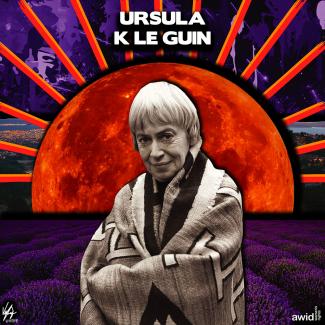
Ursula fue una novelista estadounidense que trabajó principalmente con los géneros de fantasía y ciencia ficción.
Encontró la fama con La mano izquierda de la oscuridad, novela en la cual imagina una sociedad futura donde la gente es ambisexual: no tienen un sexo fijo. Indaga en los efectos del género y el sexo en la sociedad, y fue uno de los primeros grandes libros feministas de ciencia ficción. Ursula fue una inspiración por su escritura subversiva y original y también por los temas sobre feminismo y libertad a los que les daba tanta importancia.
En un discurso que pronunció en 1983 en el Mills College, en California, les dijo a las graduadas: «¿Por qué una mujer libre con formación universitaria debería o luchar contra el macho o servirlo? ¿Por qué ella debería vivir su vida en los términos de él? Espero que ustedes vivan sin la necesidad de dominar y sin la necesidad de ser dominadas».
THE TRANS EMPLOYMENT QUOTA
sanctioned by law is not being respected by companies and employers
Ключевая цель исследования – осветить финансовое положение различных феминистских движений, инициатив за права женщин, гендерную справедливость, ЛГБТКИ+ и смежных движений по всему миру и, основываясь на этом, еще больше усилить аргументы в пользу увеличения объема денежных средств и передачи власти феминистским движениям.

As feminists many of us feel frustrated as we lurch from one political ‘moment’ to another; our work constrained by the parameters of organisational mandates, funding trends or political agendas, our time spent arguing over the need for gender analysis rather than building alliances for change.
The Gender & Development Network’s project on Feminist Alternatives provides space to consider what is important, to listen deeply to others and to accept challenges to our assumptions. Transformative progress towards feminist societies requires fundamental change that is context-specific, recognising intersectionality, the multiplicity of feminism, and the pivotal role of women’s collective action.

Rather than attempt to write a single paper, we have therefore produced a collection of thought pieces from academics, activists and practitioners around the world – not to suggest that we have the answers, but rather to encourage and provoke debate with the hope that more articles can be added in the future.
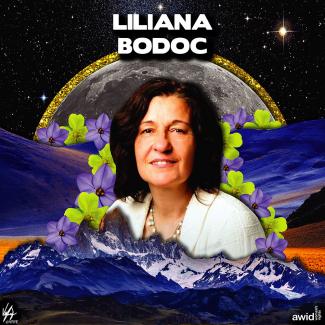
Liliana était enseignante argentine, tisseuse et également une écrivaine reconnue.
Sa trilogie « La saga des confins » a reçu plusieurs prix. Son œuvre est la seule dans le domaine littéraire fantastique à avoir eu recours et ré-imaginé la mythologie autochtone sud-américaine.
L’engagement de Liliana envers le féminisme s’est exprimé à travers les voix féminines diverses, riches et fortes de ses écrits, et en particulier dans le cadre de ceux à destination du jeune public. Elle a également pris position publiquement en faveur de l'avortement, de la justice économique et de l’égalité de genre.
“Mis sueños y objetivos siempre han sido los mismos que los de Lohana Berkins: que la cooperativa siga de pie y no cierre. Seguir dándole este lugar a nuestras compañeras travesti, darles trabajo y un lugar de apoyo”
Brisa Escobar,
presidenta de la Cooperativa
كلا. نطلب فقط تعبئة استطلاع واحد لكل مجموعة.
Estamos presenciando un nivel de participación sin precedentes de actores anti-derechos en los espacios internacionales de derechos humanos. Para reforzar su impacto y amplificar sus voces, estxs actores se dedican cada vez más a la construcción de alianzas tácticas que atraviesan sectores, fronteras regionales y nacionales y credos religiosos.
Esta «alianza non-santa» conformada por actores conservadores de tradición religiosa católica, evangélica, mormona, ortodoxa rusa y musulmana, ha encontrado una causa común en una serie de discursos compartidos y acciones de incidencia que intentan hacer retroceder los logros de lxs feministas y del movimiento de derechos sexuales a nivel internacional.
Actividades principales: La «Santa Sede», como gobierno de la iglesia católica romana, utiliza su condición singular de estado Observador Permanente en la ONU para ejercer presión a favor de nociones conservadoras, patriarcales y heteronormativas de la feminidad, las identidades de género o «la familia» y para difundir políticas contra el aborto y la anticoncepción.
Sede: Ciudad del Vaticano, Roma, Italia.
Afiliación religiosa: Católica
Actividades principales: Se describe a sí misma como la «voz colectiva del mundo musulmán» y actúa como un bloque de estados en los escenarios de la ONU. La OIC intenta crear lagunas en la protección de los derechos humanos a partir de referencias a la religión, la cultura o la soberanía nacional. También propaga el concepto de «familia tradicional», y contribuye a un régimen de derechos humanos paralelo pero restrictivo (ver como ejemplos la Declaración de los Derechos Humanos en el Islam o la Declaración de El Cairo de 1990).
Sede: Yeda, Arabia Saudita
Afiliación religiosa: Musulmana
Conexiones con otrxs actores anti-derechos: Representaciones de estados ultra conservadores (como Rusia) ante la ONU.
Actividades principales: Conferencias internacionales y regionales; investigación, producción y difusión de conocimiento; cabildeo en las Naciones Unidas «para defender la vida, la fe y la familia»
Sede: Rockford, Illinois, Estados Unidos
Afiliación religiosa: Predominantemente católica y cristiana evangélica
Conexiones con otrxs actores anti-derechos: Sutherland Institute, un grupo de expertxs conservador; Iglesia de los Santos de los Últimos Días; Departamento para la Familia y la Vida de la iglesia ortodoxa rusa; Sacerdotes por la Vida (anti-abortistas); Foundation for African Culture and Heritage [Fundación para la Cultura y el Patrimonio Africano]; Polish Federation of Pro-Life Movements [Federación Polaca de Movimientos Pro-vida]; European Federation of Catholic Family Associations [Federación Europea de Asociaciones de Familias Católicas]; Comité de las organizaciones no gubernamentales sobre la familia ante Naciones Unidas; Red Política por los Valores; Georgian Demographic Society [Sociedad Demográfica Georgiana]; parlamentarioxs de Polonia, Moldavia y otros países; FamilyPolicy [Instituto de Políticas de la Familia]; Russian Institute for Strategic Studies [Instituto Ruso de Estudios Estratégicos]; Hatze Oír y C-Fam; entre otrxs.
Actividades principales: Cabildeo en las Naciones Unidas, en particular ante la Comisión de la Condición Jurídica y Social de las Mujeres, para «defender la vida y la familia»; difusión de información en medios (boletín Friday Fax); construcción de movimientos; formación para activistas conservadorxs.
Sede: Nueva York y Washington D.C., Estados Unidos
Afiliación religiosa: Católica
Conexiones con otrxs actores anti-derechos: International Youth Coalition [Coalición Internacional de Jóvenes]; Alianza Mundial de la Juventud; Human Life Internacional [Vida Humana internacional]; Santa Sede; Sociedad Civil para la Familia (la coordina); Family Research Council (Estados Unidos) [Comité de investigación sobre la familia] y otras OSC cristianas/católicas anti-derechos; delegación de los Estados Unidos ante la CSW.

Actividades principales: Cabildeo en favor de políticas por «la familia», anti-LGBTQ y anti-ESI (educación sexual integral) en escenarios internacionales de derechos humanos; capacitación para sociedad civil y representantes de Estados (por ejemplo, una guía de recursos sobre lenguaje consensuado de las Naciones Unidas en torno a la familia); difusión de información; producción y análisis de conocimiento; campañas en línea.
Sede: Gilbert, Arizona, Estados Unidos.
Afiliación religiosa: Mormón
Conexiones con otrxs actores anti-derechos: líder del UN Family Rights Caucus [Grupo de incidencia por los derechos de la familia ante la ONU]; C - Fam; Jews Offering New Alternatives to Homosexuality [Judíos ofreciendo nuevas alternativas a la homosexualidad, JONAH]; National Association for Research and Therapy of Homosexuality [Asociación Nacional de Investigación y Terapia de la Homosexualidad, NARTH]; Congreso Mundial de las Familias; CitizenGo; Magdalen Institute [Instituto Magdalena]; Asociación La Familia Importa; Group of Friends of the Family [Grupo de Amigos de la Familia], que es un bloque de 25 Estados.
Actividades principales: Incidencia en espacios políticos internacionales, entre ellos Naciones Unidas, la Unión Europea y la Organización de Estados Americanos por «la familia», y contra los derechos sexuales y los derechos reproductivos; capacitación a sus jóvenes integrantes en el uso de la diplomacia y la negociación, relaciones internacionales, actividades de grupos de base y creación de mensajes; programa de pasantías para fomentar la participación de lxs jóvenes en su trabajo; Emerging Leaders Conference [Conferencia de Líderes Emergentes] que tiene lugar en forma regular; producción y difusión de conocimiento.
Sede: Nueva York (Estados Unidos) y oficinas regionales en Nairobi (Kenia), Quezon City (Filipinas), Bruselas (Bélgica), Ciudad de México (México) y Beirut (Líbano).
Afiliaciones religiosas: Principalmente católica pero tiene como objetivo lograr una membresía pluriconfesional.
Conexiones con otrxs actores anti-derechos: C-Fam; Vida Humana Internacional; Santa Sede; Campaign Life coalition [Coalición Campaña por la Vida].
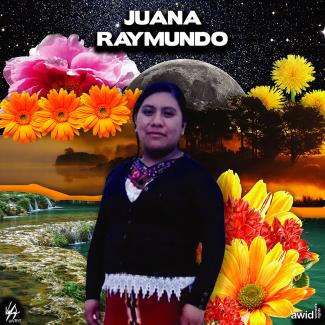
Juana was an Indigenous Mayan Ixil, professional nurse and coordinator of the Farmers’ Development Committee (Comité de Desarrollo Campesino – CODECA).
CODECA is a human rights organisation of Indigenous farmers dedicated to promoting land rights and rural development for Indigenous families) in the Nebaj Quiché micro-region. She first joined CODECA as a member of its youth branch (Juventud de CODECA). At the time of her death had been elected to be part of the Executive Committee of the Movement for the Liberation of Peoples (MLP).
Juana’s body was found by neighbours by a small river on the road near Nebaj and Acambalam Village, Guatemala. According to CODECA, her body showed signs of torture.