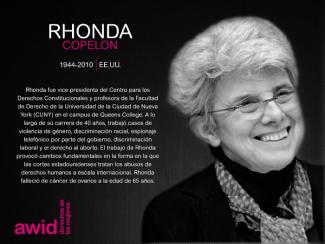
Rhonda Copelon
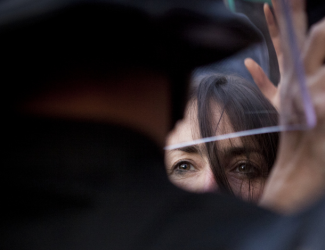
WHRDs are self-identified women and lesbian, bisexual, transgender, queer and intersex (LBTQI) people and others who defend rights and are subject to gender-specific risks and threats due to their human rights work and/or as a direct consequence of their gender identity or sexual orientation.
WHRDs are subject to systematic violence and discrimination due to their identities and unyielding struggles for rights, equality and justice.
The WHRD Program collaborates with international and regional partners as well as the AWID membership to raise awareness about these risks and threats, advocate for feminist and holistic measures of protection and safety, and actively promote a culture of self-care and collective well being in our movements.
WHRDs are exposed to the same types of risks that all other defenders who defend human rights, communities, and the environment face. However, they are also exposed to gender-based violence and gender-specific risks because they challenge existing gender norms within their communities and societies.
We work collaboratively with international and regional networks and our membership
We aim to contribute to a safer world for WHRDs, their families and communities. We believe that action for rights and justice should not put WHRDs at risk; it should be appreciated and celebrated.
Promoting collaboration and coordination among human rights and women’s rights organizations at the international level to strengthen responses concerning safety and wellbeing of WHRDs.
Supporting regional networks of WHRDs and their organizations, such as the Mesoamerican Initiative for WHRDs and the WHRD Middle East and North Africa Coalition, in promoting and strengthening collective action for protection - emphasizing the establishment of solidarity and protection networks, the promotion of self-care, and advocacy and mobilization for the safety of WHRDs;
Increasing the visibility and recognition of WHRDs and their struggles, as well as the risks that they encounter by documenting the attacks that they face, and researching, producing, and disseminating information on their struggles, strategies, and challenges:
Mobilizing urgent responses of international solidarity for WHRDs at risk through our international and regional networks, and our active membership.
La mayoría de los Estados miembros de la Unión Europea tienen leyes y prácticas que penalizan o controlan a las trabajadoras sexuales de formas inaceptables para ellas. La criminalización de las trabajadoras sexuales y/o sus clientes solo contribuye a aumentar la vulnerabilidad de las trabajadoras sexuales, que ya enfrentan el estigma, la discriminación y la exclusión por parte del Estado y de la sociedad a diario, especialmente las mujeres trabajadoras, lxs trabajadorxs trans, migrantes y/o racializadxs. En España por ejemplo, el gobierno esta actualmente intentando pasar una Ley Orgánica para la Abolición de la Prostitución, que resultara en mas clandestinidad y violencia. Ven a conocer las historias de trabajadoras sexuales y organizadores sindicales que luchan para decriminilizar el trabajo sexual y promover derechos laborales y condiciones de trabajo digno para lxs trabajadxs sexuales.
Sostenemos la completa aplicación del principio de derechos, incluidos aquellos consagrados en leyes internacionales, y afirmamos la convicción de que todos los derechos humanos están interrelacionados y son interdependientes e indivisibles. Estamos comprometidxs a trabajar por la erradicación de todas las discriminaciones basadas en el género, la sexualidad, la religión, la edad, la capacidad, la etnia, la raza, la nacionalidad, la clase, u otros factores.
Um total de 47 perguntas, das quais 27 são obrigatórias* e 20 são opcionais. A maioria das perguntas no inquérito é de escolha múltipla. Encorajamo-lo a responder a todas as perguntas.
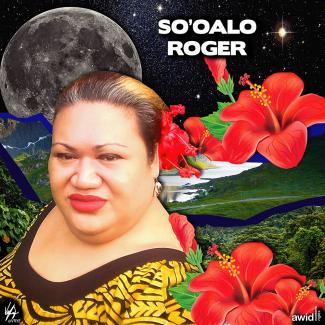
So'oalo was a fervent human rights advocate, especially pertaining to the rights of the LGBTQI community in the Pacific.
She was a member of the Samoa Fa’afafine Association (SFA) and a passionate advocate for the acknowledgement of a third gender in the island country. Under her leadership, the SFA pushed for the recognition of the validity and rights of the fa’afafine community.
She was also a pioneer in articulating the links between human rights, exploitation of fa’afafines in Samoa and the Pacific, and the health, wellbeing and security of the LGBTQI community.
She was an inspiration, a visionary and her dedication to the pursuit of rights for her community is admirable and will be remembered.
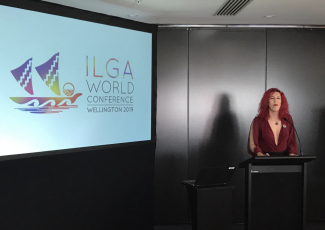
En participant à une activité exclusive pour les membres, j'ai été particulièrement touchée de voir que chacun·e y avait sa place et qu’il n’y avait pas le moindre jugement. Toute la session a été dynamique et vivante.- Kirthi Jayakumar, Fondatrice, The Gender Security Project, Inde

Bunga or flower in English is something that is often associated with women in Indonesia. Meaning, a flower can also be associated with transgender women. Because transgender women are women. As beautiful, as strong, and they both lived not only waiting to be 'picked' but instead grew and bloom and died as they pleased. This work is a tribute to my transgender women friends on The International Transgender Day of Visibility.
يمكنكم/ن حفظ اجوبتكم/ن والعودة للاستطلاع متى أردتم/ن ذلك. KOBO بحفظ مسودات إجاباتك في الزاوية العلوية اليسرى من صفحة الاستطلاع وإعادة تحميل سجلك عند العودة إلى الاستطلاع.