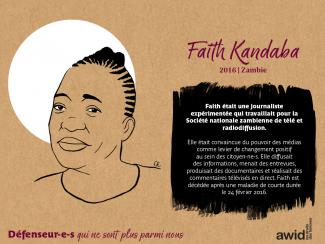
Faith Kandaba
WHRDs are self-identified women and lesbian, bisexual, transgender, queer and intersex (LBTQI) people and others who defend rights and are subject to gender-specific risks and threats due to their human rights work and/or as a direct consequence of their gender identity or sexual orientation.
WHRDs are subject to systematic violence and discrimination due to their identities and unyielding struggles for rights, equality and justice.
The WHRD Program collaborates with international and regional partners as well as the AWID membership to raise awareness about these risks and threats, advocate for feminist and holistic measures of protection and safety, and actively promote a culture of self-care and collective well being in our movements.
WHRDs are exposed to the same types of risks that all other defenders who defend human rights, communities, and the environment face. However, they are also exposed to gender-based violence and gender-specific risks because they challenge existing gender norms within their communities and societies.
We work collaboratively with international and regional networks and our membership
We aim to contribute to a safer world for WHRDs, their families and communities. We believe that action for rights and justice should not put WHRDs at risk; it should be appreciated and celebrated.
Promoting collaboration and coordination among human rights and women’s rights organizations at the international level to strengthen responses concerning safety and wellbeing of WHRDs.
Supporting regional networks of WHRDs and their organizations, such as the Mesoamerican Initiative for WHRDs and the WHRD Middle East and North Africa Coalition, in promoting and strengthening collective action for protection - emphasizing the establishment of solidarity and protection networks, the promotion of self-care, and advocacy and mobilization for the safety of WHRDs;
Increasing the visibility and recognition of WHRDs and their struggles, as well as the risks that they encounter by documenting the attacks that they face, and researching, producing, and disseminating information on their struggles, strategies, and challenges:
Mobilizing urgent responses of international solidarity for WHRDs at risk through our international and regional networks, and our active membership.
L’AWID rend hommage aux féministes et défenseur-e-s des droits humains qui ne sont plus parmi nous, et dont les contributions à l’avancement des droits humains nous font cruellement défaut.
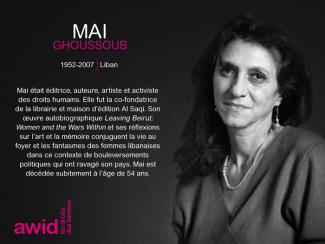
L’hommage se présente sous forme d’une exposition de portraits d’activistes du monde entier qui ne sont plus parmi nous qui ont lutté pour les droits des femmes et la justice sociale.
Célébré en 2012 à l’occasion du lancement du 12e Forum international de l’AWID en Turquie, le premier hommage aux défenseur-e-s des droits humains a pris la forme d’une exposition de portraits et de biographies de féministes et d’activistes disparu-e-s. Des participant-e-s au Forum ont décrit cette initiative comme « une manière à la fois unique, émouvante et vivifiante de célébrer notre histoire collective ».
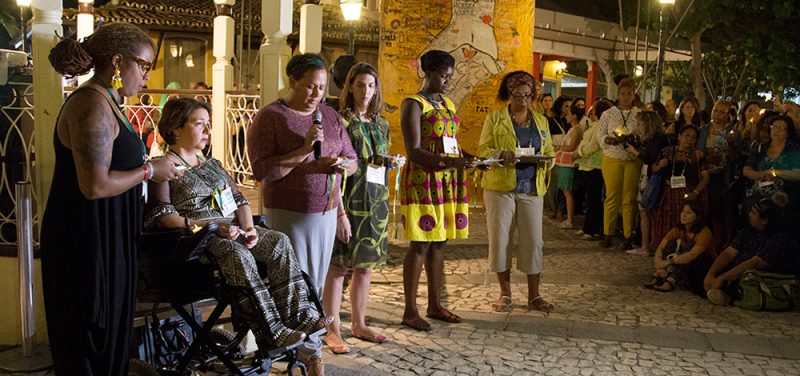
Lors du 13e Forum international au Brésil, nous avons célébré les activistes féministes et les défenseur-e-s des droits humains qui nous ont quitté-e-s ou qui ont été assassiné-e-s avec une cérémonie de dévoilement d’une peinture murale, un spectacle de danse et un rituel brésilien.
Entre la tenue de ces différents événements, l’hommage continue sous forme d’une galerie en ligne, mise à jour chaque année à l’occasion de la campagne de 16 jours d’action contre la violence basée sur le genre (25 novembre-10 décembre).
Depuis 2012, plus de 400 féministes et défenseur-e-s des droits humains issues de 11 régions et 80 pays ont été incluses dans notre Hommage.
L’AWID tient à remercier les familles et les organisations qui ont partagé leurs histoires personnelles et contribué à cette commémoration. Nous nous engageons auprès d’elles à poursuivre le travail remarquable de ces militant-e-s et nous ne ménagerons aucun effort pour que justice soit faite dans les cas qui demeurent impunis.
Visitez l’expo de l’hommage en ligne
Outre l’hommage rendu à ces incroyables activistes, nous souhaitons faire la lumière sur le sort de ces défenseur-e-s des droits humains qui ont disparu ou ont été assassin-é-es.
Un tiers des activistes présenté-e-s dans cet hommage ont été assassiné-e-s ou sont disparu-e-s dans des circonstances obscures. Iels ont été visé-e-s personnellement, en raison du travail qu’iels réalisaient afin de défier :
Ce fut notamment le cas d’Agnes Torres, du Mexique, assassinée en raison de son identité de genre et de son orientation sexuelle, de Cheryl Ananayo, une militante écologiste originaire des Philippines, assassinée alors qu’elle luttait contre une société minière, ou encore de Ruqia Hassan, une journaliste indépendante et bloggeuse syrienne, assassinée pour avoir critiqué l’Etat. Et de très nombreu-x-ses autres.
Avec cet hommage aux défenseur-e-s des droits humains, nous inscrivons tou-s-tes ces activistes dans notre mémoire collective et portons l’héritage de leurs luttes comme le flambeau qui éclaire les actions de nos mouvements féministes et en faveur des droits des femmes. Nous reconnaissons que la sécurité, la sûreté et le souci de soi doivent être des priorités dans l’ensemble de nos programmes politiques, et appelons ainsi tous les gouvernements et les organes internationaux à lutter contre la violence contre les féministes et les défenseur-e-s des droits humains.
Votre participation à l’enquête WITM est importante à plusieurs égards. Vous aurez, notamment, l’occasion de faire part de votre expérience vécue de la mobilisation de fonds pour soutenir votre organisation, de réclamer votre autorité en tant qu’experte sur la manière dont l’argent est transféré et qui il atteint réellement, et de contribuer à un plaidoyer collectif et cohérent auprès de financeurs afin que les fonds circulent davantage et soient de meilleure qualité. Au cours des deux dernières décennies, la recherche WITM de l’AWID s’est révélée être une ressource clé pour les activistes et les financeurs. Nous vous invitons chaleureusement à participer à sa troisième édition pour souligner la situation actuelle des ressources, remettre en question les fausses solutions, et identifier les modifications nécessaires dans le financement afin que les mouvements s’épanouissent et relèvent les défis complexes de notre époque.
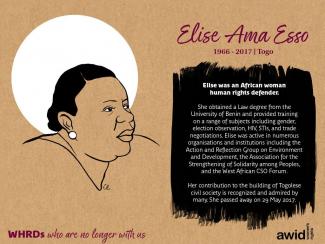
Ces défenseuses ont fait campagne pour les droits fonciers et ont lutté pour les droits des femmes et des peuples autochtones. Elles se sont opposées aux industries extractives, ont écrit de la poésie et se sont battues pour que l'amour prévale. L'une d'entre elles nous a quitté il y a dix-neuf ans. Nous vous invitons à vous joindre à nous pour rendre hommage à ces défenseuses, à leur travail et à l’héritage qu’elles nous ont laissé. Faites circuler ces mèmes auprès de vos collègues et amis ainsi que dans vos réseaux et twittez en utilisant les hashtags #WHRDTribute et #16Jours.
S'il vous plaît cliquez sur chaque image ci-dessous pour voir une version plus grande et pour télécharger comme un fichier


Nous Sommes la Solution eleva y multiplica el liderazgo de las mujeres rurales que trabajan por soluciones realmente africanas para la soberanía alimentaria.
Yes! We recognize and appreciate different reasons why feminists, in their respective contexts, don’t have external funding: from being ineligible to apply for grants and/or receive money from abroad, to relying on resources generated autonomously as a political strategy in its own right. We want to hear from you regardless of your experience with external funding.
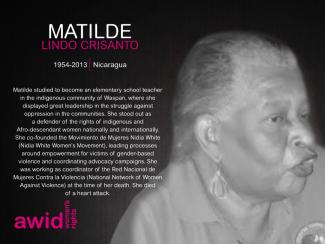
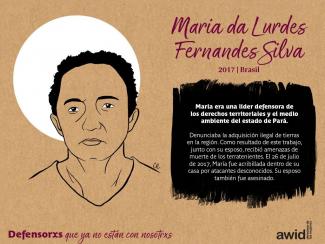
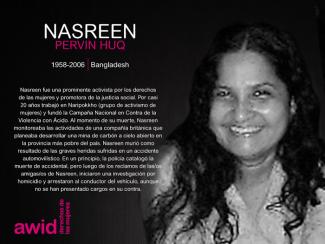
Cette année, notre hommage en ligne met à l’honneur 7 défenseuses des droits humains originaires de différents pays d'Asie du Sud et du Sud-Est. Ces défenseuses ont grandement contribué aux progrès accomplis dans le domaine des droits des peuples autochtones, des droits des femmes et du droit à l'éducation. Ces défenseuses étaient des avocates, des activistes des droits des femmes, des universitaires ou des responsables politiques. Nous vous invitons à vous joindre à nous pour commémorer la vie de ces femmes, leur travail et l’héritage qu’elles nous ont laissé. Faites circuler ces mèmes auprès de vos collègues et amis ainsi que dans vos réseaux et twittez en utilisant les hashtags #WHRDTribute et #16Jours.
S'il vous plaît cliquez sur chaque image ci-dessous pour voir une version plus grande et pour télécharger comme un fichier


Coopérative Textile Nadia Echazú
Por el momento, la encuesta en KOBO está disponible en árabe, español, francés, inglés, portugués y ruso. Tendrás oportunidad de seleccionar el idioma de preferencia al inicio de la encuesta.
Avant d’aborder la méthodologie de recherche WITM, il est important que vous connaissiez les données de base et que vous sachiez à quoi vous attendre.
En ce qui concerne la méthodologie de recherche WITM de l’AWID, nous recommandons d’étudier toute la boîte à outils.
Bien que cette boîte à outils ait été conçue pour démocratiser la recherche WITM, il existe des contraintes en termes de capacités liées à l’expérience de votre organisation dans le domaine des ressources et de la recherche qui pourraient influencer son aptitude à utiliser cette méthodologie.
Utilisez la Fiche de travail « Êtes-vous prêts-tes ? » pour évaluer votre niveau de préparation à mener votre propre recherche WITM. Plus vos réponses aux questions de cette fiche de travail seront nombreuses, plus vous serez capable d’entreprendre votre recherche.
Avant de commencer toute recherche, nous vous recommandons de procéder à l’évaluation des liens que votre organisation a établis avec votre communauté et de la confiance qu’elle inspire.
Dans de nombreux contextes, les organisations pourraient hésiter à partager ouvertement leurs données financières avec d’autres pour des raisons diverses allant des inquiétudes que suscite la façon dont les données seront utilisées, à la crainte de la concurrence pour le financement en passant par les préoccupations au sujet des restrictions gouvernementales croissantes imposées aux organisations de la société civile.
Lorsque vous établirez des relations et que vous mènerez des recherches informelles pendant la période précédant le lancement de votre initiative, la clarté des objectifs fixés contribuera à instaurer la confiance. La transparence permettra aux personnes qui participent à la recherche de comprendre pourquoi vous recueillez des données et en quoi cela profitera à l’ensemble de la communauté.
Nous vous recommandons vivement de faire en sorte que les données soient recueillies de manière confidentielle et partagées anonymement. Cela permettra aux personnes qui participent à votre recherche de partager plus facilement avec vous des informations sensibles.
Nous vous invitons à consulter notre Fiche de travail « Êtes-vous prêts-tes ? » pour mesurer vos propres progrès.