WHRDs are self-identified women and lesbian, bisexual, transgender, queer and intersex (LBTQI) people and others who defend rights and are subject to gender-specific risks and threats due to their human rights work and/or as a direct consequence of their gender identity or sexual orientation.
WHRDs are subject to systematic violence and discrimination due to their identities and unyielding struggles for rights, equality and justice.
The WHRD Program collaborates with international and regional partners as well as the AWID membership to raise awareness about these risks and threats, advocate for feminist and holistic measures of protection and safety, and actively promote a culture of self-care and collective well being in our movements.
Risks and threats targeting WHRDs
WHRDs are exposed to the same types of risks that all other defenders who defend human rights, communities, and the environment face. However, they are also exposed to gender-based violence and gender-specific risks because they challenge existing gender norms within their communities and societies.
By defending rights, WHRDs are at risk of:
Physical assault and death
Intimidation and harassment, including in online spaces
Judicial harassment and criminalization
Burnout
A collaborative, holistic approach to safety
We work collaboratively with international and regional networks and our membership
to raise awareness about human rights abuses and violations against WHRDs and the systemic violence and discrimination they experience
to strengthen protection mechanisms and ensure more effective and timely responses to WHRDs at risk
We work to promote a holistic approach to protection which includes:
emphasizing the importance of self-care and collective well being, and recognizing that what care and wellbeing mean may differ across cultures
documenting the violations targeting WHRDs using a feminist intersectional perspective;
promoting the social recognition and celebration of the work and resilience of WHRDs ; and
building civic spaces that are conducive to dismantling structural inequalities without restrictions or obstacles
Our Actions
We aim to contribute to a safer world for WHRDs, their families and communities. We believe that action for rights and justice should not put WHRDs at risk; it should be appreciated and celebrated.
Promoting collaboration and coordination among human rights and women’s rights organizations at the international level to strengthen responses concerning safety and wellbeing of WHRDs.
Supporting regional networks of WHRDs and their organizations, such as the Mesoamerican Initiative for WHRDs and the WHRD Middle East and North Africa Coalition, in promoting and strengthening collective action for protection - emphasizing the establishment of solidarity and protection networks, the promotion of self-care, and advocacy and mobilization for the safety of WHRDs;
Increasing the visibility and recognition of WHRDs and their struggles, as well as the risks that they encounter by documenting the attacks that they face, and researching, producing, and disseminating information on their struggles, strategies, and challenges:
Mobilizing urgent responses of international solidarity for WHRDs at risk through our international and regional networks, and our active membership.
Related Content
Ika Vantiani
Bunga-Transgirl are girl, Analog collage, 2020
Bunga or flower in English is something that is often associated with women in Indonesia. Meaning, a flower can also be associated with transgender women. Because transgender women are women. As beautiful, as strong, and they both lived not only waiting to be 'picked' but instead grew and bloom and died as they pleased. This work is a tribute to my transgender women friends on The International Transgender Day of Visibility.
About Ika Vantiani
Ika Vantiani is an Indonesian artist, curator and crafter based in Jakarta. Her works explores the idea of being a woman in today’s society with the intertwined between media and consumption. Ika uses the discipline of collage and expands it into workshop, installation, and street art. Ika is the member of artist collectives including Micro Galleries, The Collage Club and It’s In Your Hands Collective.
Our values - Justice and systemic change
Justice et changement systémique
Nous œuvrons en faveur d’un monde fondé sur la justice sociale, environnementale et économique, ainsi que sur l'interdépendance, la solidarité et le respect. Nous travaillons au démantèlement des systèmes de pouvoir oppressif et contre toutes ses manifestations, y compris tout forme de patriarcat, de fondamentalisme, de militarisme et de fascisme, et le pouvoir des entreprises qui menacent nos vies et notre monde. Nous voulons un monde juste où le partage des ressources et celui du pouvoir permettront à chacun·e de s'épanouir.
Rocky mostró un liderazgo y una dirección inspiradoras en su trabajo con jóvenes lesbianas, gays, bisexuales, transgénero, intersex, queer, y personas transgénero indígenas de Australia (LGBTIQBBSG) en riesgo.
Rocky comenzó su carrera con el Servicio de Policía de Queensland como Oficial de Policía de Enlace. Para ella, hacer una diferencia era algo importante. Desarrolló una carrera impresionante trabajando con jóvenes LGBTIQBBSG como Gerente del Servicio Juvenil de Puertas Abiertas.
Rocky trabajó con lxs beneficiarixs en situaciones complejas, específicamente relacionadas con la identidad sexual y de género. Esta línea de trabajo le resultaba propia: era una líder comunitaria fuerte, una triunfadora discreta, una amiga leal, una persona que apoyaba compasivamente a lxs demás, alguien que producía el cambio. Rocky fue una de lxs fundadorxs de IndigiLez Leadership y de Support Groes.
En 2016, en la Corte Suprema de Brisbane, Michael Kirby, ex juez del Tribunal Supremo de Apelaciones, mencionó por su nombre a Rocky al elogiar el trabajo que el Servicio Legal LGBTI había desarrollado a lo largo de los años. Rocky luchó de forma extraordinariamente tenaz por los derechos humanos de la comunidad LGBTIQBBSG, corrió los límites y produjo cambios de una forma respetuosa y amorosa.
Esta comunidad es un lugar para las conexiones, para entender nuestras luchas individuales como parte de las luchas globales y, a veces, ¡también para bailar! En línea, no existen otros lugares como este, en el que puedes encontrarte con auténtiques activistas de base de todo el mundo y forjar lazos de solidaridad y sororidad..- Paz Romero, Argentina
Snippet FEA Sabrina Sanchez Bio (EN)
Meet Sabrina Sanchez, remarkable trans migrant woman, sex worker, organizer, transfeminist and one of the founders of the union OTRAS.
Originally from Mexico City, she migrated to Spain 17 years ago after getting a degree in communications and started working as a sex worker.
It didn’t take long before she became involved with trans activism and sex worker activism in Barcelona. After joining the collective Asociación de Profesionales del Sexo (Association of Sex Workers, Aprosex), she started working in its secretariat and founded the Spanish sex workers union OTRAS.
Fun fact: she’s also a car mechanic and serious runner!
Corporizaciones feministas de esperanza y poder
Una serie de películas sobre realidades feministas de la región del Sudoeste Asiático y África del Norte
por Esra Ozban
En un mundo obsesionado con los productos, el proceso de priorización es un método feminista fundamental. Los procesos importan, y la curaduría no es una excepción. Mientras trataba de determinar cuáles de las películas de la región del Sudoeste Asiático y África del Norte (SWANA, por su sigla en inglés) serían más relevantes para el tema de las realidades feministas, la pandemia global, que todavía estamos enfrentando, modificó tremendamente nuestras vidas cotidianas. Incluso pensar, escribir o expresarme se ha convertido en una lucha diaria. Se me pasaban constantemente las fechas límites, y mandaba correos de disculpas a Kamee Abrahamian, con quien estaba trabajando como curadora independiente para el proyecto de la Club de Cine Feminista de AWID. El invalorable apoyo de Kamee, su comprensión y sus sugerencias, me recordaron que, incluso en dos lugares diferentes del mundo, como colegas que nunca se han encontrado personalmente, podemos crear conjuntamente micro versiones de las realidades feministas que anhelamos y para las cuales vivimos.
Para mí, las realidades feministas tienen mucho que ver con las sororidades. Sororidades que ayudan a lxs mujerxs que se ocupan de la remoción de minas en Artsaj/Alto Karabaj. Sororidades horneadas en Vegan Inclusive Trans Cake [Torta Trans Vegana Inclusiva] de feministas trans jóvenes de Ankara, que les recuerdan que no están siendo bienvenidas por la generación Z a las hermanas cis. Sororidades que están creciendo entre la menta de la azotea de Dragiča Alafandi, en el campamento de refugiadxs de Dheisheh de la Palestina ocupada, en Sowing seeds of resistance [Sembrando semillas de resistencia]. Sororidades que asumen proximidades íntimas, sexuales y revolucionarias en el Parque Gezi en #resistayol. Sororidades que sacan a la luz un encuentro imaginado entre dos generaciones de mujerxs exiliadxs en las calles de Haifa, en Your father was born 100 years old and so was the Nakba [Tu padre nació teniendo 100 años, igual que la Nakba]. Sororidades interespecies que se desarrollan en un espacio ficticio (y valiente) creado por Mounia Akl en Submarine [Submarino] para su personaje rebelde Hala, quien se rehúsa a ser evacuada de una ciudad llena de basura y es abandonada con su amigx perrx.
Esta selección reúne trozos y fragmentos de muchas realidades feministas que se han producido en la región del Sudoeste Asiático y África del Norte durante los últimos años. Continuaremos imaginando, aprendiendo y compartiendo corporizaciones feministas de esperanza y poder. Mientras tanto, sumerjámonos en las potentes alternativas a las que lxs cineastas y lxs protagonistas de estas películas han dado vida. Podemos crear conjuntamente cada paso, cada acto y cada intento, mientras seguimos cohabitando este mundo con otrxs que están viviendo realidades feministas y que persisten en sus sueños para dar vida a más de estas realidades.
MOTHERLAND [MADRE PATRIA]
por Emily Mkrtichian y Jesse Soursourian
«Con una belleza visual y atractivas escenas de la realidad, Motherland es un espectáculo de camaradería y fortaleza femeninas... La película es un testimonio de mujeres de todo el mundo que están dispuestas a trabajar más aún, para superar cualquier obstáculo que encuentren.»
- Nosarieme Garrick, cineasta galardonada
«Motherland es una inspiradora visualización de solidaridad, valentía, y agallas...»
Emily Mkrtichian sobre las realidades feministas y Artsaj/Alto Karabaj
Filmamos el cortometraje Motherland en la República de Artsaj en 2018. Cada una de estas mujeres me atrajo por su fortaleza, su resiliencia y su humor, a pesar del contexto en el que vivían. En 2018, ese contexto era el del período posterior a una guerra brutal que había tenido lugar en la década de 1990, después de la cual su país se convirtió en un territorio no reconocido (o disputado, para la comunidad internacional) que no recibía la autonomía y la independencia de las que gozan tantos otros países. Artsaj estaba también profundamente afectada por las consecuencias que vemos en casi todos los lugares que atraviesan conflictos violentos, -consecuencias que tan a menudo recaen sobre las mujeres-: trastornos de estrés postraumático, altas tasas de alcoholismo, altas tasas de violencia doméstica, menos igualdades y libertades otorgadas a las mujeres, poca o ninguna representación de las mujeres en la política y la administración pública. Frente a estos desafíos, esta película trata de captar el fuego y el poder de las mujeres de Artsaj, algo que podría no ajustarse al paradigma feminista occidental tradicional, pero que ha sido creado por y para ellas mismas a través de los profundos lazos comunitarios, el cuidado de sus familias, el trabajo duro, y la capacidad de reírse juntas a lo largo de todo este proceso. Hoy, la República de Artsaj ha sido devastada nuevamente por otra guerra, que la dejó sin el 70% de las tierras que estas mujeres consideraron como propias durante toda sus vidas. Sin embargo, puedo prometerles que estas mujeres, y miles de otras, continúan sosteniendo a sus familias, sus comunidades y su cultura a través de las mismas redes de cuidado, del mismo compromiso con el trabajo duro y de las mismas carcajadas revoltosas, de cara a un futuro incierto.
SOWING SEEDS OF RESISTANCE [SEMBRANDO SEMILLAS DE RESISTENCIA]
por Baladi-Rooted Resistance
«Una película oportuna para mirar después de ser testigxs del último bombardeo de Gaza por parte de las Fuerzas de Defensa de Israel. Una mirada sobre el modo en que las mujeres de las comunidades palestinas sobreviven a la opresión estructural, a través de la historia de un banco de semillas tradicionales... y de las mujeres que lo sostienen como forma de alimentar la rebelión.»
- Jessica Horn, activista feminista panafricana, escritora y co-creadora del sitio web the temple of her skin
«Ver mujeres que se reúnen y trabajan colectivamente por la autonomía alimentaria es, para mí, terapéutico y empoderante.»
Equipo Baladi-Rooted Resistance sobre las realidades feministas«¿Cómo hablar sobre realidades feministas cuando vives en Deheisheh, un campamento de refugiadxs palestino, construido hace setenta años para contener a tres mil refugiadxs, pero que es ahora el hogar de quince mil personas, en la Cisjordania ocupada? ¿O cuando la tierra que cultivas está amenazada constantemente por los colonizadores ilegales?
Si eres mujer en Palestina ocupada, tienes que luchar no solo contra el patriarcado, sino también contra el colonialismo y contra una ocupación militar brutal.
Dragiča y Vivien están peleando contra estos múltiples sistemas de dominación, a su propio modo.
Vivien utiliza semillas nativas para ayudar a lxs palestinxs a mantener su identidad. Cultivar alimentos tradicionales de forma tradicional es sumamente significativo: «Si ya no eres unx productorx, eres unx consumidorx, y qué mejor manera de esclavizar a alguien que convertirlx en tu consumidxr . Esto está sucediendo en todo el mundo, pero aquí se duplica con la ocupación militar.»
El 31,5% de los hogares de Cisjordania no tiene seguridad alimentaria. Mediante un huerto de azotea, Dragiča logró incrementar la autonomía alimentaria de su familia. En el hacinado campamento, al que el ejército israelí realiza incursiones nocturnas de forma regular para arrestar y acosar a lxs residentes, el huerto de azotea de Dragiča no solamente nutre a su familia, sino que, en especial, nutre su alma.»
#RESISTAYOL
por Ruzgar Buski
Ruzgar Buski sobre las realidades feministas
«No sé qué decir sobre las realidades feministas, pero, como artista trans, como activista de Turquía, sé que nuestras realidades son duras. Vivimos con violencias: ¡físicas, emocionales, económicas, sexuales!. Por eso es que tenemos que construir nuestras propias redes, y crear conjuntamente microrrealidades recíprocas es, para mí, una realidad feminista. #resistayol es mi primera película, y al comienzo planeaba hacer una película por/para/con personas trans que no tratara de convencer a nadie del hecho de que las personas trans son humanas, ni que se centrara en crear consciencia sobre los temas trans. Sin embargo, sucedieron las protestas del Parque Gezi, que se convirtieron en una de las sublevaciones más grandes de la historia de Turquía, y la película resultó ser algo diferente.
Creo que el proceso de producción afecta realmente lo que la película termina siendo. Nos esforzamos mucho para que trabajaran mujeres y personas trans y no binarias en cada etapa de la filmación. Esta película está hecha por gente que se reunió con camaradería y amistad. Kanka Productions está basada en el compañerismo transfeminista. Quiero que la película aporte esperanza, que sane, porque acarreamos muchos traumas en nuestros cuerpos: esto es lo que nos constituye y lo que nos conecta. La sanación es un proceso que nunca termina, y tenemos que crear espacios para respirar. #resistayol es una hora de respiración colectiva.»
Boysan Yakar en #resistayol
«Bueno, lxs lubunyas (queers) estábamos sentadxs en el parque, y de pronto llegaron topadoras y todxs nos enojamos. En realidad, en resumen, eso fue suficiente . Es el parque de lxs lubunyas, y teníamos treinta días para explicar eso a esta ciudad enorme. Todxs reconocen que a la noche los ibnes (putos) cogen en ese parque... El bloque LGBTI llevó a nuestra comunidad ahí. Ya no confiábamos en el Estado s y la policía, y no teníamos seguridad; hemos establecido nuestras propias formas de hacer las cosas, nuestras propias leyes y costumbres para sobrevivir... Rápidamente, llevamos nuestra ley a Gezi. En un esfuerzo por establecer un lenguaje y un entendimiento comunes entre todos estos grupos, el lenguaje LGBT de unión y solidaridad se propagó por todo el parque. Todos los días había una Marcha del Orgullo, todxs decían continuamente “ayol”. Embellecimos el lenguaje apestoso y polvoriento de la izquierda. Supongo que tuvimos este nivel de impacto porque hemos sido repudiadxs todos estos años. Desde lxs más radicales hasta lxs más conservadorxs y nacionalistas, todxs nos necesitaban, porque todxs nos habituamos a ser confrontadxs por todo. Ellxs no estaban acostumbradxs a tanta energía, a nuestra energía. Por eso esta fue una gran arena política para nosotrxs. Todos los días hacíamos realidad aquí nuestra mayor y principal lucha, o sea, una lucha por la visibilidad y el reconocimiento. Por eso dejamos Gezi con una gran victoria.»
VEGAN INCLUSIVE TRANS CAKE [TORTA TRANS VEGANA INCLUSIVA]
por Pembe Hayat
«... un manifiesto multifacético que muestra la alegría que existe en las amistades dentro de la comunidad queer de Turquía, como despliegues de rebelión y resistencia.»
- Nosarieme Garrick, cineasta galardonada
«... diversión, luz, y azar. En un mundo constantemente marcado por las cicatrices de la violencia contra la comunidad trans, nada, ninguna acción, está (desafortunadamente) privada de significado. De modo que ¡por más alegría, más amor, y más azar significativo!»
«Hola Barbies, Kens, muñecas de porcelana, Olivia Olivo, muñecas Pimpollo. Novias de Chucky, hermanas de Chucky, cuñados de Chucky y, por último pero no menos importante, estimados amantes de los cuñados.
Entonces, por qué hicimos esta torta.
Ahora recibimos la noticia de que una trabajadora sexual trans ha intentado suicidarse debido a la violencia de los vigilantes y la policía en las calles. En este momento, está siendo retenida en un puesto de policía y es exactamente por eso que hicimos esta torta. Esta torta travesti es horneada para mostrar que existimos en todas las partes de la vida, que existimos persistentemente, y esta torta muestra que no seremos erradicadas o ignoradas en esta sociedad.
Sí, hay violencia en nuestras vidas y sí, también hay mucha falta de respeto [shade], pero a pesar de todo eso igual podemos divertirnos, disfrutando de la vida todo lo que podemos. ¡Buen provecho, hermana!»
YOUR FATHER WAS BORN 100 YEARS OLD AND SO WAS THE NAKBA [TU PADRE NACIÓ TENIENDO 100 AÑOS, IGUAL QUE LA NAKBA] ابوكي خلق عمره ١٠٠ سنة، زي النكبة
por Razan AlSalah
SUBMARINE [SUBMARINO]
por Mounia Akl
«Este film está dirigido como se escribe un poema: es simple, un poco abstracto, y conmovedor.»
Esra Ozban es unx programadorx y cineasta turcx. Su trabajo artístico, curatorial y académico se cruza con las prácticas críticas de archivo, el trabajo sexual, la pornografía y las culturas cinematográficas feministas/queer, entre otras.
Síguenos en las redes sociales para recibir noticias sobre futuros eventos y proyecciones:
Facebook: @AWIDWomensRights
Instagram: @awidwomensrights
Twitter ENG: @awid
Twitter FR: @awid_fr
Twitter ES: @awid_es
LinkedIn: Association for Women's Rights in Development (AWID)
Forum Theme (Forum page)
Forum Theme
The theme of the 14th AWID International Forum is: “Feminist Realities: our power in action”.
In this Forum, we will celebrate and amplify powerful propositions that are around us, in all stages of development.
Diakite s'est activement impliquée dans la défense des femmes dans la vie politique et publique au Mali.
Elle a travaillé pour soutenir la formation des candidates aux élections et s'est élevée contre les mutilations génitales féminines (MGF). Elle était un ardente défenseure de la santé et des droits reproductifs.
In the 30 years since the adoption of the Beijing Declaration & Platform for Action, a rising tide of fascisms is exerting significant power and influence within multilateral spaces, backpedalling gender justice gains and human rights protections globally.
Around CSW69, we're co-organizing horizontal, brave spaces on-ground and online, to share strategies and build feminist power beyond Beijing+30. Our collective presence disrupts institutional practices of exclusion in such spaces while supporting movements to organize around feminist alternatives to systems of oppression.
Join the conversations from March 10-21, 2025, as we collectively transform CSW69 into spaces for and about resistance and solidarity.
Snippet FEA Principles of Work Antiracism (ES)
ANTI RACISMO
Les discours antidroits
Chapitre 3
Les discours antidroits continuent à évoluer. Outre le recours à des arguments religieux, culturels et traditionnels, les acteur·rice·s antidroits s’approprient le langage de la justice sociale et des droits humains pour travestir leurs véritables programmes et gagner ainsi en légitimité.
Il y a trente ans, un télévangéliste américain candidat républicain décrivait le féminisme comme « un mouvement politique antifamille qui encourage les femmes à quitter leur mari, tuer leurs enfants, pratiquer la sorcellerie, détruire le capitalisme et devenir lesbiennes ». Cette idée progresse et acquiert aujourd’hui une légitimité insoupçonnée sous les apparats de l’« idéologie du genre » – une espèce de croque-mitaine polyvalent créé par les antidroits dans le seul but de s’y opposer.
Un thème revient sans cesse dans leurs discours teintés d’« impérialisme culturel », de « colonisation idéologique », de « génocide prénatal » et d’appel à la « clause de conscience » : la prise de contrôle. Les antidroits s’approprient des questions d’intérêt légitime, qu’ils et elles déforment pour servir leurs programmes oppressifs.
Sommaire
L’idéologie du genre
L’impérialisme culturel et la colonisation idéologique
L’avortement : la clause de conscience
L’avortement : un génocide prénatal
Exercice : ressaisissons-nous du discours
Histoire du mouvement de la résistance. Les Principes de Nairobi : les engagements intermouvements en faveur du handicap et de la SDSR
Enciende tu fuego feminista leyendo nuestras investigaciones y publicaciones varias sobre financiamiento, defensoras de derechos humanos, construcción de movimientos, fundamentalismos, justicia económica, seguimiento y evaluación feminista y más
« Andaiye » signifie « une fille revient à la maison » en swahili. Née Sandra Williams le 11 septembre 1942 à Georgetown, Guyane, Andaiye adopte ce nouveau nom en 1970 alors que le mouvement des Black Panthers balaie son pays et toute la région des Caraïbes.
Perçue comme une figure transformatrice sur les fronts de la lutte pour la libération et pour la liberté, Andaiye a été l’une des premières membres de l’Alliance du peuple travailleur (WPA), un parti socialiste en Guyane de lutte contre le régime autoritaire et participait activement à sa direction. Tout au long de sa vie, Andaiye a placé la justice pour la classe ouvrière et les droits des femmes vivant en milieu rural au centre de son action militante, et s’est battue pour l’élimination des obstacles ethniques entre les femmes indo-guyaniennes et celles afro-guyaniennes.
Andaiye fut l’une des membres fondatrices des Red Thread Women, une organisation de défense pour la juste rémunération du travail en soins réalisé par les femmes, en plus d’avoir travaillé à l’Université des Indes occidentales et avec l’organisation CARICOM. N’hésitant jamais à défier les gouvernements, elle a pointé du doigt les déséquilibres en matière de genre dans les conseils de l’État, les lois discriminatoires à l’égard des travailleur·euse·s du sexe, réclamé le droit à l’avortement en Jamaïque et s’est érigée contre les accords commerciaux, tels que le Marché unique des Caraïbes (CSME) qui permettait la libre circulation des travailleuses domestiques migrantes mais n’octroyait pas ce même droit à leurs enfants.
Elle a publié plusieurs essais universitaires, rédigé des articles d’opinion et révisé les derniers ouvrages de Walter Rodney, l’activiste politique guyanien et coleader du WPA assassiné en 1980. Survivante du cancer, Andaiye a été l’une des fondatrices de la Ligue guyanienne contre le cancer et du Groupe d’action des survivant·e·s du cancer. Elle a également siégé au conseil exécutif de l’Association caribéenne pour la recherche et l’action féministes (CAFRA), dirigé le Help and Shelter et été membre du conseil de la Commission nationale guyanienne pour les femmes. Elle a par ailleurs reçu de nombreux prix, dont le prestigieux Golden Arrow of Achievement (quatrième prix le plus important du Guyana).
Andaiye est décédée le 31 mai 2019, à l’âge de 77 ans. Les nombreux hommages que lui ont rendus des activistes, ami·e·s et celles et ceux que sa vie aura inspiré·e·s ont parlé avec éloquence de son incroyable héritage et de la grandeur de son humanité.
En voici quelques-uns :
“« Andaiye m’a profondément marquée... elle représenttait tellement de choses pour moi : une éducatrice, une combattante, elle m’a appris l’autocritique, à réfléchir plus clairement, elle m’a enseigné la survie, ce qu’est le courage sans limite, la compassion, à dépasser les apparences et traiter les gens comme des gens, sans se laisser impressionner par le statut, la classe, la race... rien de tout ça. » Peggy Antrobus, activiste féministe, auteure, universitaire, La Barbade
« Le genre d’idéalisme confiant que démontrait Andaiye, cette disposition à affronter le monde et une croyance tenace qu’on pouvait vraiment le changer... Cette politique de l’espoir... Comment honorer sa vie, son héritage et sa mémoire autrement qu’en poursuivant le travail éthiquement et en continuant à s’autocritiquer? Et de faire en sorte de placer le travail de soins des femmes au centre. » - Tonya Haynes, La Barbade
« Je peux l’entendre se moquer de notre engouement collectif. Donc, je ris tout en pleurant. Chapeau bas, chère Andaiye, et merci pour tout. Que le voyage de ton esprit soit aimant et lumineux. Passe le bonjour à Walter et aux ancêtres. » - Carol Narcisse, La Jamaïque
✉️ Requiere inscripción previa para grandes grupos. Entrada libre para grupos reducidos. Reserven aquí
📅Martes 11 de marzo de 2025
🕒 de 12:00 a 02:00 p.m. y de 04:00 a 06:00 p.m., EST
🏢 Chef's Kitchen Loft with Terrace, 216 East 45th St 13th Floor New York
Hind et Hind étaient le premier couple queer documenté dans l’histoire arabe. Dans le monde d’aujourd’hui, iel est un·e artiste queer du Liban.
Séquence 1.
À l’âge de six ans, j’appris que mon grand-père avait un cinéma. Ma mère me raconta comment il l’avait ouvert au début des années 1960, quand elle avait également à peu près six ans. Elle se rappelait qu’il avait projeté La Mélodie du bonheur le soir de l’ouverture.
Je passais au cinéma tous les week-ends et regardais mon grand-père jouer au backgammon avec ses amis. Je ne savais pas qu’il vivait là, dans une pièce située juste en dessous de la cabine de projection. J’appris plus tard qu’il y avait emménagé à la suite de la séparation d’avec grand-mère, et de la fermeture du cinéma dans les années 1990, peu après la fin de la guerre civile libanaise.
Pendant des années et jusqu’à son décès, je voyais généralement mon grand-père jouer au backgammon à l’accueil du cinéma, qui n’était plus du tout entretenu. Ces scènes à répétition sont mes seuls souvenirs de lui. Je n’ai jamais vraiment appris à le connaître – on ne parlait jamais de cinéma, malgré qu’il ait passé tout son temps dans un cinéma en déperdition. Je ne lui ai jamais demandé ce que ça faisait de vivre dans un lieu comme celui-là. Il est mort quand j’avais 12 ans, le soir de Noël, d’une chute dans l’escalier en colimaçon qui montait jusqu’à la cabine de projection. C’est presque poétique qu’il soit mort en mouvement, dans une maison où les images en mouvement sont perpétuellement suspendues dans le temps.
Séquence 2.
Au printemps 2020, mon cousin m’a appelée pour me dire qu’il avait nettoyé le cinéma de mon grand-père et me demandait de le retrouver là-bas. Tous les deux, nous avions toujours rêvé de remettre le cinéma sur pied. J’arrivai sur place avant lui. À la réception, des cadres d’affiches étaient toujours accrochés aux murs… mais les affiches avaient disparu. Je savais qu’il devait rester des souches de places de ciné quelque part. Je les ai toutes trouvées dans une petite boîte en fer, sur une étagère derrière le bureau de l’accueil, et j’en ai profité pour en glisser quelques-unes dans ma poche.
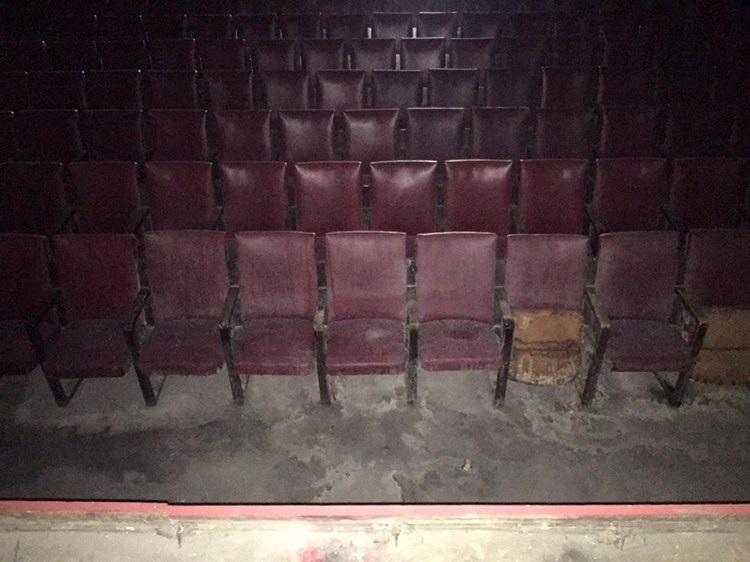
Je commençai à me promener dans le ciné. Sur la scène principale, l’écran de projection était plutôt sale et quelque peu abîmé sur les côtés. Je passai mon index sur l’écran pour enlever une couche de poussière, et remarquai qu’il était toujours bien blanc en dessous. La toile semblait également en bon état. Je levai la tête pour voir si les rideaux de ma grand-mère, faits de satin blanc et arborant un petit emblème en lisière à l’effigie du cinéma, étaient toujours en place. Dans la pièce, il y avait une salle basse, une salle principale et un balcon. Les chaises semblaient vraiment très usées.
Je remarquai le projecteur qui dépassait d’une petite fenêtre à l’extrémité des places au balcon. Je gravis les marches en colimaçon jusqu’à la cabine de projection.
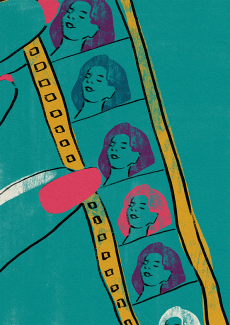
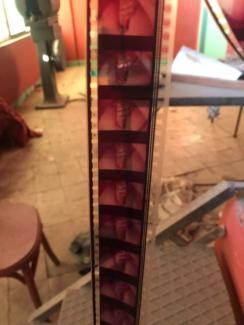
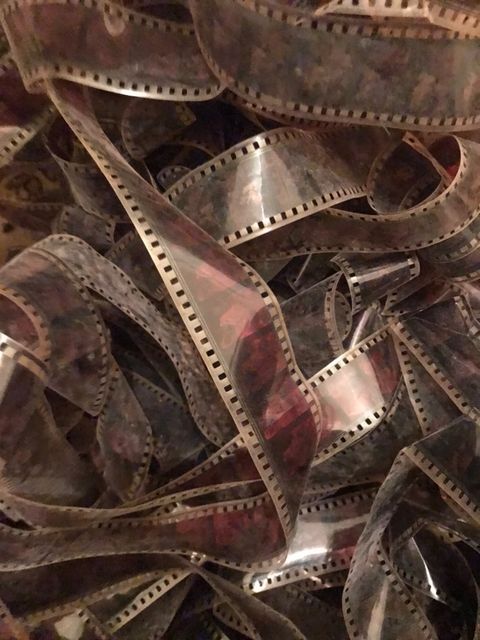
La pièce était sombre mais une source de lumière provenant des fenêtres poussiéreuses tombait sur une pile de bobines de films dans un coin. Des bandes de celluloïde sans vie gisaient emmêlées au pied du projecteur. Les bobines poussiéreuses étaient toutes des westerns, des films de Bollywood et de science-fiction, avec des titres horribles comme La Météorite qui détruisit la Terre, ou d’autres du même genre. Certaines d’entre elles attirèrent mon attention, et notamment de petites bandes de pellicule. Une par une, les bandes montraient différentes scènes de baisers, des danses suggestives, une vague scène de rassemblement, un gros plan d’une femme allongée bouche ouverte, le générique de début d’un film de Bollywood, et une étiquette « Actuellement à l’affiche » répétée sur plusieurs images.
Les génériques des films de Bollywood me rappelaient ma mère. Elle me racontait qu’on distribuait des mouchoirs aux spectateurs et spectatrices à la fin des projections. Je conservai les bandes avec les scènes de baisers et de danses suggestives, supposant qu’elles avaient été coupées pour des raisons de censure. Le gros plan sur la femme me rappela un extrait du film Visible Man de Béla Balázs, ou The Culture of Film, The Spirit of Film ou encore The Theory of the Film. Mon grand-père disait que les gros plans dans un film étaient comme un
soliloque silencieux, dans lequel un visage peut parler avec des nuances de sens les plus subtiles, sans sembler artificielles ni rappeler la distance des spectateurs. Dans ce monologue silencieux, l’âme humaine solitaire peut trouver une langue plus candide et désinhibée que tout soliloque parlé, car elle s’exprime instinctivement, subconsciemment.
Balázs décrivait surtout les gros plans de Jeanne dans le film muet La Passion de Jeanne d’Arc. Il remarquait combien « … dans le (cinéma) muet, l’expression faciale, isolée de son environnement, semble pénétrer une étrange nouvelle dimension de l’âme ».
J’examinai plus précisément la bande de pellicule. La femme semblait morte, son visage semblable à un masque. Cela me fit penser à l’Ophélie du peintre John Everett Millais. Dans son livre On Photography, Susan Sontag dit que la photographie est « une trace, quelque chose de marqué directement sur la bobine, comme une empreinte ou un masque mortuaire ». Ces masques mortuaires sont comme une présence qui rappelle une absence.
Je me souviens de ma rencontre avec un discours sur la mort et la photographie dans le film The Machine that Kills Bad People de Roberto Rossellini, tombé dans l’oubli. Dans ce film, un cameraman prend des photos de gens, qui sont alors figés, puis suspendus dans le temps. Le critique de cinéma français André Bazin disait que la photographie capture les corps hors du flux de l’amour et les conserve en les embaumant. Il décrivait cette momification photographique comme étant « la préservation de la vie par une représentation de la vie ».
Cette cabine de projection, sa disposition et toutes les choses qui semblaient avoir été déplacées, y compris les bandes de pellicules sur le sol, tout ce sur quoi mon grand-père avait laissé sa marque – je voulais absolument tout protéger.
Sous les bandes de pellicule reposait une bobine de film poussiéreuse intacte. On aurait dit que quelqu’un avait regardé le film en faisant dérouler la pellicule à la main. C’est à ce moment que mon cousin arriva en haut de l’escalier en colimaçon et me trouva en train de l’examiner. Se frottant le menton du bout des doigts, de manière très factuelle, il me dit : « Tu as trouvé le porno ».
Séquence 3.
J’observai la bande de film dans ma main et réalisai que ce n’était pas une scène de décès. La bande avait été coupée de la bobine d’un porno. La femme gémissait d’extase. Les gros plans servent à communiquer des sentiments d’intensité, d’extase, mais je n’avais jamais vraiment utilisé les théories de Balázs pour décrire une scène porno. Il écrivait « le paroxysme dramatique entre deux personnes sera toujours présenté comme un dialogue d’expression faciale en gros plan ». Je fourrai les bandes de films dans ma poche et donnai à la femme le nom d’Ishtar. Elle vit dans mon portefeuille depuis. Il semble étrange de comparer la représentation détaillée des peurs et du courage de Jeanne avec l’expression faciale orgasmique d’Ishtar.
D’après mon cousin, le frère de mon grand-père attendait que ce dernier ait quitté le cinéma et, au lieu de le fermer, il invitait ses amis à des projections privées. Je n’en pensais pas grand-chose. C’était une pratique courante, surtout pendant et après la guerre civile au Liban. Après la guerre, il y avait des téléviseurs dans presque tous les foyers libanais. Je me souviens même en avoir un dans ma chambre à la fin des années 1990, quand j’avais à peu près six ans. On m’avait dit que c’était courant d’acheter des films porno en cassette VHS à l’époque. Mohammed Soueid, un écrivain et réalisateur libanais, m’a dit un jour que les cinémas projetaient des films d’art et d’essai et de pornographie de la moitié des années 1980 à la moitié des années 1990, pour survivre. J’ai aussi entendu dire que les projectionnistes découpaient les bobines de films porno pour modifier les montages et pouvoir projeter quelque chose de différent chaque soir. Les gens sont finalement restés confortablement chez eux à regarder des cassettes VHS sur leur téléviseur, et les cinémas ont commencé à décliner.
Séquence 4.
Mon cousin redescendit pour consulter les archives administratives dans le bureau.
Je restai dans la cabine et commençai à faire glisser la bande entre mon index et mon majeur, la relevant avec les pouces pour faire lentement défiler les images entre mes mains. Je levai les mains pour capter la lumière de la fenêtre poussiéreuse et plissai les yeux pour tenter de deviner ce que cachaient les vignettes monochromes. Dans cette série d’images figurait un gros plan exagéré d’une bite plantée dans un vagin. L’image se répétait sur plusieurs cadres, jusqu’à ce que j’arrive à un nœud dans la bande, et que j’imagine le reste.
Séquence 5.
Hank exhibe son érection devant Veronika, couchée sur un lit à côté d’un faux secrétaire Louis XIV. Elle se lève lentement et fait glisser la fine bretelle de sa nuisette transparente de son épaule gauche. Hank dénoue sa robe de voile, la retourne, lui donne une claque sur les fesses et la pousse contre le secrétaire. Il enfonce sa bite dans sa chatte de manière répétée, alors que l’arrière du meuble frappe contre le mur tapissé.
Séquence 6.
Je fais toujours attention aux décorations intérieures depuis que mon enseignante en Études des femmes dans le porno m’a dit que les plus grandes archives de porno d’Amérique du Nord sont utilisées, de manière intéressante, pour examiner le mobilier de la classe moyenne de l’époque. Donc, alors que Veronika se penche et se fait prendre par derrière par Hank, une assistante en recherche universitaire pourrait tout aussi bien tenter de deviner le design du motif doré sur le secrétaire, ou étudier le relief rococo d’une chaise en bois dans un coin.
Pendant un moment, la cabine est devenue un espace d’imagination sexuelle féminine, perturbant un espace généralement promis à la liberté de la sexualité masculine. J’étais sûre que seuls les hommes pouvaient accéder aux cinémas qui diffusaient des films porno. La bobine de film était trop emmêlée pour pouvoir être démêlée dans une cabine de projection où la poussière s’accumulait depuis une décennie, donc je la fourrai dans mon sac de sport et sortis du cinéma.
Je ne sais pas ce qui m’a pris, mais je me suis sentie obligée de la garder. Je voulais ressentir l’excitation de garder quelque chose de mystérieux, quelque chose de non orthodoxe. Dans mon esprit, j’étais sûre que les gens savaient que je cachais quelque chose pendant que je descendais la rue. J’étais prise d’un sentiment de culpabilité mêlée de plaisir. Je me sentais perverse.
Séquence 7.
J’entrai dans la maison, préoccupée par le fait d’avoir une bobine de porno dans mon sac de sport et le fil de mes pensées qui s’était déroulé sur la route du retour à la maison. Je me dirigeai immédiatement vers ma chambre. Dans un coin un peu éloigné de mon esprit, je me suis rappelée que derrière mon mur se trouvait la chambre de Layla. Elle n’était probablement pas à la maison, mais la possibilité d’être entendue m’excitait. Je fermai la porte de ma chambre et sortis la bobine du film d’Ishtar.
Je l’imaginais habillée d’une légère robe en voile verte, dansant de manière suggestive devant moi, balançant ses hanches et me souriant du regard. Je m’allongeai sur mon lit et glissai mes doigts dans ma culotte. Soulevant mes hanches, je fis descendre ma main entre mes cuisses pour les écarter et glisser deux doigts à l’intérieur. Je me tendis en caressant mes plis chauds. Je gémis avant même de pouvoir m’arrêter. Je haletai et remuai mes reins. Les rayons de soleil qui entraient par la fenêtre me plaquaient des baisers sur la peau sans le vouloir. Je retenais mon souffle et mes membres tremblaient. J’avalai un cri et reposai à plat sur le matelas.
Séquence 8.
Quand j’étais en premier cycle à l’université, je suivais un cours d’Introduction au cinéma et la professeure, Erika Balsom, avait prévu une projection du Variety de Bette Gordon. J’étais excitée à l’idée de regarder le premier film de la productrice Christine Vachon, avant qu’elle ne se mette à produire des films qui font maintenant partie du mouvement du Nouveau cinéma queer. Variety était décrit comme un film féministe sur Christine, une femme qui commence à travailler à la billetterie d’un cinéma porno de New York appelé The Variety Theater. Christine peut entendre le son des films au cinéma, mais ne pénètre jamais dans les salles. Elle finit par s’intéresser à un client régulier, qu’elle observe de près. Elle le suit dans une boutique pour adultes où elle se tient à l’écart et feuillette des magazines pour adultes pour la toute première fois.
Le voyeurisme de Christine est affiché de différentes manières tout au long du film. Le script est également très chargé et contient des monologues érotiques qui seraient aujourd’hui considérés obscènes ou vulgaires.
Dans une scène qui se déroule dans une salle de jeux, elle lit de la littérature érotique à son copain. La caméra fait des allers-retours entre des gros plans des fesses de son copain Marc qui joue au flipper, faisant des mouvements de va-et-vient avec ses hanches contre le flipper, et un gros plan du visage de Christine qui lui récite son monologue.
Séquence 9.
« Sky fait du stop et est pris par une femme qui conduit une camionnette. Il est tard et il a besoin d’un endroit où dormir, elle lui propose donc de dormir chez elle.
Elle lui montre sa chambre et lui propose un verre. Ils boivent en discutant, puis décident d’aller se coucher. Ne parvenant pas à dormir, il remet son pantalon et traverse le hall jusqu’au salon. Il s’arrête avant de pouvoir être vu, mais il peut voir la scène. La femme est allongée nue sur la table basse, dont seules les jambes dépassent. Tout son corps est d’une blancheur excitante, comme s’il n’avait jamais été exposé au soleil. Ses mamelons sont d’un rose brillant, en feu, presque des néons. Ses lèvres sont entrouvertes. Sa longue chevelure de couleur châtain touche le sol; au bout de ses bras tendus, ses doigts caressent l’air. Son corps huilé est tout en rondeurs, sans angle ni os saillants. Glissant sur sa poitrine, un gros serpent entoure un de ses seins et descend contre le second. La langue du serpent lui lèche la chatte, si ouverte, si rouge dans la lumière de la lampe. Chaud et confus, l’homme retourne à sa chambre et, avec beaucoup de difficulté, parvient à s’endormir. Le lendemain matin, autour d’un bol de fraises, la femme lui demande de rester une autre nuit. Une fois encore, il ne parvient pas à dormir […] »
Séquence 10.
Quand j’avais 23 ans, Lynn, la fille de mon cours de cinéma avec qui je sortais, m’a prise par surprise en m’emmenant regarder des court-métrages érotiques le jour de la Saint-Valentin. L’événement avait lieu au Mayfair Theater, un vieux cinéma indépendant. L’architecture du cinéma rappelait les Nickelodéons d’Amérique du Nord, mais en plus vieillot. Ses balcons étaient décorés avec des cartons de Swamp Thing et d’Alien en taille réelle.
Cette année-là, le jury du festival était présidé par la star de cinéma pour adultes Kacie May, et le programme composé de court-métrages d’une heure et demie. Le contenu allait de courts-métrages soft sans machisme à des films scato fétichistes. Nous avons regardé quelques minutes de ce qui semblait être un porno hétérosexuel soft. Le film suivait un couple qui commence à faire l’amour dans un salon moderne, puis passe à la chambre. Il s’agissait surtout de scènes des deux en train de s’embrasser, se toucher et faire l’amour en position du missionnaire. Puis une femme avec un bob châtain entre dans leur lit, se léchant le dos de la main à petits coups de langue. Elle miaule et grimpe sur le couple, qui ne semblait pas y faire attention. Le couple continue à faire l’amour. Elle va alors jusqu’à la cuisine, ramasse son bol vide avec les dents et le dépose sur un coussin. Elle continue à faire des aller-retours jusqu’au couple pendant tout le reste du film. Cela semblait plutôt absurde. J’ai commencé à rire, mais Lynn avait l’air un peu mal à l’aise. J’ai alors regardé sur notre gauche et vu d’autres spectateurs et spectatrices se passer des bières et se gaver de pop-corn, tout en riant hystériquement. Leur rire ininterrompu et leurs commentaires à haute voix donnèrent le ton du festival. Regarder les spectatrices et les spectateurs est devenu plus intéressant que de regarder les films érotiques. Le Mayfair Theater projetait souvent des films culte, et regarder des films culte est une expérience de communion.
Ce n’est pas exactement la manière dont j’imaginais que l’oncle de ma mère regardait du porno au cinéma de mon grand-père. Les cinémas projetaient de manière évidente des films porno à l’époque, mais je ne pouvais imaginer cela se dérouler dans la ville de naissance de ma mère. Je l’imaginais regarder le film depuis le projecteur dans la cabine afin de pouvoir rapidement arrêter la projection en cas d’arrivée inopinée d’autres personnes. Ses amis prenaient place au balcon à l’arrière. Personne ne pouvait entrer à moins d’avoir la clé, donc ils étaient en sécurité. Ils devaient penser à tout. C’était un quartier chrétien conservateur et ils ne voulaient surtout pas causer d’ennuis. Ils étaient probablement dépassés par des sentiments d’excitation et de culpabilité. Les voix fortes de plaisanteries homoérotiques se mélangeaient à des gémissements et des râles, mais ils se rappelaient mutuellement de baisser le ton toutes les quelques minutes. Ils se relayaient à la fenêtre pour vérifier que les bruits ne pouvaient pas interpeller les voisins. Ils éteignaient parfois les haut-parleurs et regardaient sans le son.
Séquence 11.
Après une manifestation politique en 2019, je suis tombée sur un bouquiniste sur la rue Riad El Solh, près de la Place des martyrs dans le centre de Beyrouth. Au bout d’une des tables, passés les exemplaires d’Hugo et de Beauvoir, je trouvai une pile de romans érotiques et de magazines pour adultes. C’étaient des traductions de publications occidentales. J’en pris une vraiment au hasard; tout ce que je voulais, c’était détenir un exemplaire, juste pour le frisson. J’ai cherché celui avec la couverture la plus artistique.
En me rendant ma monnaie, le vendeur me demanda : « Je ne t’ai pas déjà vue quelque part? ». Il se mit à observer ma poitrine, descendant le regard plus bas. Il supposait probablement que je travaillais dans l’industrie du sexe ou du porno. Je le regardai bien dans les yeux et lui répondis que « Non ». Je fis demi-tour, prête à m’éloigner avec mon magazine. Il m’arrêta alors pour me dire qu’il avait beaucoup d’archives dans son sous-sol, et qu’il vendait régulièrement des collections et des publications de porno sur eBay, vers l’Europe et les États-Unis. J’aurais bien été intéressée à fouiller dans ses archives, mais je n’étais pas à l’aise et déclinai son offre. Je ne me sentais pas en sécurité. Je lui demandai où il trouvait ses romans. À ma grande surprise, ils étaient publiés au Liban.
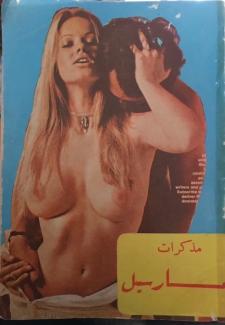
En me dirigeant vers la statue de Riad El Solh, je parcourus la publication que j’avais achetée et trouvai le format du texte quelque peu démodé; les caractères de police étaient un peu flous, rendant le texte illisible. Les photographies à l’intérieur étaient faites de collages pornographiques aux couleurs passées. Ça paraissait assez cru; ça me plaisait. Le roman avait pour titre Les journaux intimes de Marcel.
La couverture était de manière évidente un découpage de magazines collés sur une feuille bleue. Sur l’image, une femme torse nu attrape la tête de son amant, enfonçant ses doigts dans ses cheveux, pendant qu’il lui embrasse le cou par derrière. La fermeture de sa jupe est entièrement descendue. Son amant à la main sur le bas de sa hanche droite. Sa main à elle est sur la sienne. Ses lèvres sont retroussées et entrouvertes, comme si elle gémissait de plaisir, ses cheveux blonds et raides à la mode des années 1970 descendant sur sa poitrine et couvrant partiellement ses mamelons.
J’ouvris la première page. La préface indiquait
شهوات”
“وشذوذ
ce qui se traduit par
« Désir
et débauche »
ou par
« Désir
et perversion »
Je lus le premier chapitre et réalisai que la personne qui avait traduit le texte avait changé le prénom du personnage principal en Fouad, un prénom arabe. Je supposai que l’idée était que le lectorat masculin libanais s’identifie à l’histoire. En continuant ma lecture, je réalisai que toutes ses amantes portaient des noms étrangers comme Hanna, Marla, Marcel, Marta.
Séquence 12.
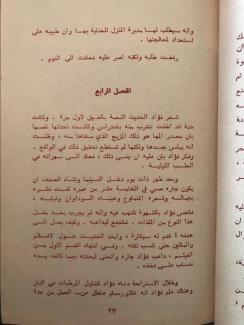
Je réalisai à la page 27, chapitre quatre, que Marcel était un des amants de Fouad.
Séquence 13.
La scène avait lieu dans un cinéma. Les cinémas étaient souvent des espaces de liberté sexuelle en Amérique du Nord, et particulièrement depuis les années 1970, suite à la révolution sexuelle.
Je supposais également que tous les noms étrangers avaient été conservés pour donner une touche exotique au texte et le rendre moins tabou. La pornographie et l’érotisme étaient attribués à Hollywood, bien que le monde arabe ait de tout temps produit des textes érotiques. L’érotisme est devenu tabou, et la seule manière d’en produire sans danger est de le commercialiser comme un produit étranger, exotique.
Il est intéressant de noter comment l’exotique couvre l’érotique. La différence entre les deux adjectifs remonte à leur étymologie grecque respective : exotique vient de exo, « extérieur », qui signifie également autre, étranger; tandis qu’érotique est dérivé d’Éros, le dieu de l’amour sexuel. Donc, ce qui est exotique est mystérieux étranger – et ce qui est érotique est sexy.
Au Liban, la distinction entre l’exotique et l’érotique au cinéma est très ténue, tout comme la frontière entre films d’art et films porno. En 2015, lors d’une conversation avec la réalisatrice Jocelyne Saab dans un restaurant vietnamien de Paris, j’appris qu’elle avait dû tourner son film Dunia une deuxième fois pour modifier le dialecte égyptien en dialecte libanais. Elle me dit que ses acteurs et actrices étaient égyptiennes et égyptiens, et qu’elle n’était pas très stricte quant au script. Elle n’avait cependant pas le droit d’utiliser le dialecte égyptien. Le film devait être en libanais parce que les producteurs s’inquiétaient des scènes érotiques un peu limites dans le film. Ils en ont donc fait un film étranger.
FRMag - Anatomy of a survivor's story
Anatomie de l'histoire d’une survivante
par Maryum Saifee
Lorsqu’on effectue une recherche en ligne sur les « Mutilations génitales féminines » ou « MGF », un schéma en quatre parties sur l’anatomie des femmes apparaît à côté d’une page Wikipédia dédiée. (...)