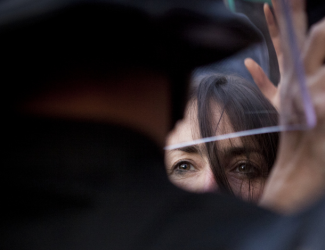
Philippe Leroyer | Flickr (CC BY-NC-ND 2.0)

Women Human Rights Defenders

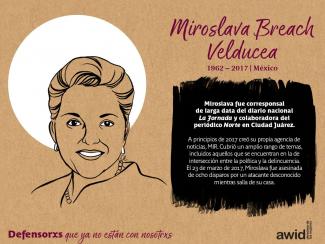
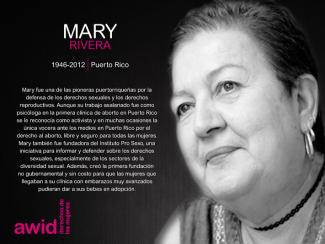
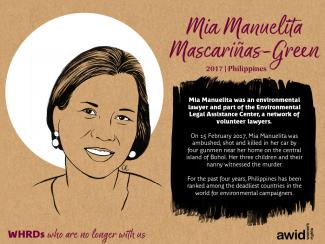
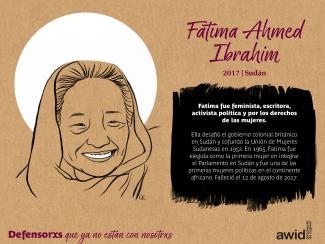
WHRDs are self-identified women and lesbian, bisexual, transgender, queer and intersex (LBTQI) people and others who defend rights and are subject to gender-specific risks and threats due to their human rights work and/or as a direct consequence of their gender identity or sexual orientation.

WHRDs are subject to systematic violence and discrimination due to their identities and unyielding struggles for rights, equality and justice.

The WHRD Program collaborates with international and regional partners as well as the AWID membership to raise awareness about these risks and threats, advocate for feminist and holistic measures of protection and safety, and actively promote a culture of self-care and collective well being in our movements.


Risks and threats targeting WHRDs  

WHRDs are exposed to the same types of risks that all other defenders who defend human rights, communities, and the environment face. However, they are also exposed to gender-based violence and gender-specific risks because they challenge existing gender norms within their communities and societies.

By defending rights, WHRDs are at risk of:

  • Physical assault and death
  • Intimidation and harassment, including in online spaces
  • Judicial harassment and criminalization
  • Burnout

A collaborative, holistic approach to safety

We work collaboratively with international and regional networks and our membership

  • to raise awareness about human rights abuses and violations against WHRDs and the systemic violence and discrimination they experience
  • to strengthen protection mechanisms and ensure more effective and timely responses to WHRDs at risk

We work to promote a holistic approach to protection which includes:

  • emphasizing the importance of self-care and collective well being, and recognizing that what care and wellbeing mean may differ across cultures
  • documenting the violations targeting WHRDs using a feminist intersectional perspective;
  • promoting the social recognition and celebration of the work and resilience of WHRDs ; and
  • building civic spaces that are conducive to dismantling structural inequalities without restrictions or obstacles

Our Actions

We aim to contribute to a safer world for WHRDs, their families and communities. We believe that action for rights and justice should not put WHRDs at risk; it should be appreciated and celebrated.

  • Promoting collaboration and coordination among human rights and women’s rights organizations at the international level to  strengthen  responses concerning safety and wellbeing of WHRDs.

  • Supporting regional networks of WHRDs and their organizations, such as the Mesoamerican Initiative for WHRDs and the WHRD Middle East and North Africa  Coalition, in promoting and strengthening collective action for protection - emphasizing the establishment of solidarity and protection networks, the promotion of self-care, and advocacy and mobilization for the safety of WHRDs;

  • Increasing the visibility and recognition of  WHRDs and their struggles, as well as the risks that they encounter by documenting the attacks that they face, and researching, producing, and disseminating information on their struggles, strategies, and challenges:

  • Mobilizing urgent responses of international solidarity for WHRDs at risk through our international and regional networks, and our active membership.

Related Content

CFA 2023 - breadcrumbs Menu _ FAQ-thai

What is at stake for women’s rights?

Development financing has specific threats and opportunities for women's and all people’s human rights. Transformative development financing and policies can make an important contribution to the systemic changes that are needed to ensure the respect, protection and fulfillment of women’s human rights.

2015 is an important year for the FfD process. The Third International Conference on FfD took place from 13-16 July 2015 in Addis Ababa, Ethiopia and governments are finalising the post-2015 development agenda including agreements on how the new Sustainable Development Goals will be financed

The current stage of the FfD process is an important opportunity to establish a financing framework that will ensure effective financing for the implementation of the post 2015 agenda and the Sustainable Development Goals (SDGs). It is also an opportunity to address the structural conditions, and systemic changes needed, for the full implementation of other agendas and commitments such as Human Rights Conventions, and the Beijing Platform for Action.

Over the last 13 years, women’s rights and feminist organizations have actively engaged in the FfD process.

Snippet FEA Tanta Gente sem casa (FR)

A graphic with green feather patterns on a beige background, text on it in Portuguese says “Tanta Gente sem casa. tanta casa sem gente” which means "So many people without a home,  so many homes without people"

« Tant de gens sans maison, tant de maisons sans personne. »

Snippet - CSW68 - March 12 - EN

Day 2

12th March

什麼時候/如何提交會議場次提案?

論壇活動提案現已截止。

我們於2019年11月19日開放論壇活動提案,提案的截止日期是2020年2月14日。

認識其他參與論壇的方法 (In English)

Snippet FEA Occupation’s kitchen Instagram (EN)

Occupation’s kitchen campaign:

Photo of Cozinha Ocupação 9 de Julho team in aprons
Yellow square that says "As mulheres sustentam o cuidado" or Women sustain care in Portuguese.
Yellow square that says "O cuidado sustenta a vida" or "Care sustains life" in Portuguese.
Yellow square that says "A vida sustenta a economia" or "Life sustains the economy" in Portuguese.
Yellow square that says: "Mas quen cuida das mulheres?" or "But who is taking care of women?" in Portuguese.
A yellow square that says "Nenhuma a menos" which translates to "Not another woman less"
Yellow square that says "Juntas, Juntos, Juntes" which translates to "Together, together, together"
Yellow square announcing Sunday Lunch at the Occupation's Kitchen

Women sustain Care | Care Sustains Life | Life Sustains Economy | Who takes care of women?  | Not one less1 | Together | Sunday lunch

1Nenhuna a menos literally translates as “not one woman less” or “ni una menos” in Spanish - a famous feminist slogan in Latin America that emerged in Argentina as a response to increasing gender-based violence.

Snippet - CSW68 - Challenging Corporate Power - ES

Desafiar el poder empresarial

para reducir la pobreza y fortalecer los derechos humanos

📅 Miércoles 13 de marzo
🕒 10:30 a. m. - 12:00 p. m. EST

Organizan: AWID, Red-DESC, Franciscan International y Womankind Worldwide como parte de Feministas por un Tratado Vinculante
🏢 Church Center de las Naciones Unidas, 777 United Nations Plaza, piso 11, Nueva York

我什麼時候可以註冊論壇?

我們會盡快宣布。敬請關注!

Snippet FEA LINES OF ACTION (ES)

¿Cuál es su línea de trabajo?
Illustration of a hand with a pencil writing on white paper

Derechos humanos y etnico-territoriales

Asegurar la defensa de los derechos humanos y los derechos de la Naturaleza a través de la construcción de alianzas con actores y organizaciones locales, nacionales, regionales y globales.

A person holding a plant in a pink pot in their hands

Desarrollo Sostenible

Garantizar que todas las actividades económicas, culturales y ambientales contribuyan al desarrollo sostenible, la seguridad alimentaria y la generación de ingresos, respetando la libre determinación y el autogobierno de las comunidades afrodescendientes.

Three women sitting next to each other

Educación y formación

Capacitar y empoderar mujeres para que defiendan sus derechos en diferentes espacios políticos, sociales y económicos.

¡Para obtener más información, puedes ver más aquí!

Snippet - Centers activists - EN

Centers activists’ voices and experiences to analyze how money moves and who it is reaching

我必須成為AWID會員才能參加論壇嗎?

您不必成為AWID會員即可參加,但是AWID會員可以獲得折扣的註冊費以及許多其他好處。

詳細瞭解如何成為AWID成員 (in English)

About the AWID International Forum

More than an event!

The AWID International Forum is both a global community event and a space of radical personal transformation. A one-of-a-kind convening, the Forum brings together feminist, women’s rights, gender justice, LBTQI+ and allied movements, in all our diversity and humanity, to connect, heal and thrive.

About the 15th AWID International Forum

Rising Together: Connect, Heal, Thrive

The Forum theme – Rising Together – is an invitation to engage with our whole selves, to connect with each other in focused, caring and brave ways, so that we can feel the heartbeat of global movements and rise together to meet the challenges of these times.

A Hybrid Experience

For the first time, the AWID Forum offered three modes of participation:

In Person

at the Queen Sirikit National Convention Centre in Bangkok, Thailand.

Online

in Virtual Space (Capacity: 3000 participants).

Hubs

Connected in Cross Border Space.

With over 4,000 participants, 15th AWID International Forum in 2024 created a sweeping force to resist oppression towards collective healing and liberation. Keep watching this space for more forum stories and future forums updates!


A post shared by AWID (@awidwomensrights)


The past Forums

2021 - Feminist Realities. 

In December 2020, the AWID board took the difficult decision to cancel the 14th AWID International Forum which had been scheduled to take place from September 20-23, 2021, in the City of Taipei. 

Learn more here


2016 - Feminist Futures: Building Collective Power for Rights and Justice (Costa de Sauipe, Brazil)

Participants at the Black Feminisms Forum in Brazil, 2016

Given the complex world that we face today, the 2016 AWID Forum did not focus on a particular “issue”, but rather on creating more effective ways of working together!

Despite the challenging contexts in which the 2016 Forum took place (the Zika epidemic, a strike by Brazilian foreign-service workers, the impeachment of President Dilma Rousseff and subsequent turmoil), it succeeded in bringing together over 1800 participants from 120 countries and territories across all regions of the world.

What happened at the 13th AWID international Forum:

  • For 96% of participants who responded to the post Forum evaluation survey, the Forum was a major source of inspiration and energy.

  • 98% of participants considered it an important convening space for feminist movements and expressed hope that AWID continues to organize forums.

  • 59% of Forum evaluation survey respondents declared to be very satisfied with the Forum and 34% somewhat satisfied.

  • Over 150 sessions were delivered in different formats on a variety of topics ranging from bodily integrity and freedoms, to gender-based violence in the workplace, to strategies for building collective power.

  • The first-time Black Feminisms Forum (BFF), held just before the main AWID Forum, brought together 250 Black feminists from all over the world to co-create a powerful space to build and strengthen ongoing, intergenerational, transnational connections

Read more about what the 2016 AWID Forum achieved:

Download the Forum evaluation report


2012 - Transforming Economic Power to Advance Women's Rights and Justice (Istambul, Turkey)

AWID International Forum, in Cape Town, South Africa, 2008

The 12th AWID Forum was the largest and most diverse AWID Forum to date, bringing together 2239 women’s rights activists from 141 countries. Of these participants, around 65% were from the Global South and close to 15% were young women under 30, and 75% attended an AWID Forum for their first time.

The Forum program focused on transforming economic power to advance women’s rights and justice and featured over 170 different kinds of sessions including feminist economics toolbox skills-building sessions, breakout sessions representing all 10 Forum themes, in-depth sessions, and solidarity roundtables. 

Building on the momentum of the 2012 Forum, we transformed the website into a resource and learning Hub, which builds on the content generated by participants by featuring multi-media resources on all Forum components. 

Visit the 2012 Forum web archive


All AWID Forums

  • 2016: Feminist Futures: Building Collective Power for Rights and Justice (Costa de Sauipe, Brazil). Read the 2016 Forum Evaluation report
  • 2012: Transforming Economic Power to Advance Women's Rights and Justice (Istanbul, Turkey)
  • 2008: The Power of Movements (Cape Town, South Africa). Read our 2008 Forum Report
  • 2005: How does change happen? (Bangkok, Thailand)
  • 2002: Reinventing Globalization (Guadalajara, Mexico)
  • 1999: Leading Solutions for Equality and Justice (US)
  • 1996: Beyond Beijing From Words to Action (US)
  • 1993: Joining Forces to Further Shared Visions (US)
  • 1991: Working Together/Learning Together: A South North Dialogue (US)
  • 1989/1990: Global Em-Powerment for Women (US)
  • 1987: Moving Forward: Innovations in Development Policy, Action and Research (US)
  • 1985: Women Creating Wealth; Transforming Economic Development (US)
  • 1983: ‘Women in Development’ (Washington D.C, US)

What is the AWID International Forum?

Every three to four years, AWID hosts its flagship international event. It is the world’s largest event that wholeheartedly centers feminist and gender justice movements in all their diversity. It is a global gathering of feminist activists, allied movements, scholars, funders and policymakers. The Forums rotate between different regions and countries in the global South.

Snippet FEA Metzineres (FR)

Metzineres

En vous promenant dans le quartier du Raval à Barcelone, vous croiserez peut-être Metzineres, une coopérative féministe par et pour les femmes et personnes trans et non-binaires qui consomment de la drogue.

Imaginez un endroit sans stigmatisation, où les femmes et personnes trans et non-binaires peuvent consommer des drogues en toute sécurité. Un lieu qui offre sécurité, soutien et accompagnement aux femmes et personnes trans et non-binaires dont les droits sont systématiquement bafoués par la guerre contre la drogue et qui subissent violence, stigmatisation et répression en conséquence.

Juste à l'extérieur de l'entrée, les passant·es et les visiteur·euses sont accueilli·e·s par un immense tableau noir où figurent des conseils, des astuces, des souhaits et des dessins de personnes qui consomment de la drogue. Il existe également un calendrier qui présente une série d'activités auto-organisées par la communauté Metzineres. Qu'il s'agisse d'ateliers coiffure et cosmétique, des émissions radio, des pièces de théâtre, de repas communs offerts à la communauté ou des cours d'autodéfense, il y a toujours quelque chose à faire!

La coopérative offre des sites de consommation sûrs ainsi que des services qui couvrent les besoins de base des gens. Il y a des lits, des casiers, des douches, des toilettes, des machines à laver et une petite terrasse extérieure où les gens peuvent se détendre ou jardiner.

Metzineres opère dans un cadre de réduction des méfaits, qui tente de réduire les conséquences négatives de la consommation de drogue. Mais la réduction des méfaits est bien plus qu'un ensemble de pratiques: c'est une politique ancrée dans la justice sociale, la dignité et les droits des personnes qui consomment des drogues.