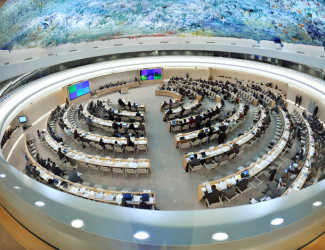
Jean-Marc Ferré | Flickr (CC BY-NC-ND 2.0)
A general view of participants at the 16th session of the Human Rights Council in Geneva, Switzerland.

Human Rights Council (HRC)

The Human Rights Council (HRC) is the key intergovernmental body within the United Nations system responsible for the promotion and protection of all human rights around the globe. It holds three regular sessions a year: in March, June and September. The Office of the UN High Commissioner for Human Rights (OHCHR) is the secretariat for the HRC.

The HRC works by:

  • Debating and passing resolutions on global human rights issues and human rights situations in particular countries

  • Examining complaints from victims of human rights violations or activist organizations on behalf of victims of human rights violations

  • Appointing independent experts (known as “Special Procedures”) to review human rights violations in specific countries and examine and further global human rights issues

  • Engaging in discussions with experts and governments on human rights issues

  • Assessing the human rights records of all UN Member States every four and a half years through the Universal Periodic Review

Learn more about the HRC


AWID works with feminist, progressive and human rights partners to share key knowledge, convene civil society dialogues and events, and influence negotiations and outcomes of the session.

With our partners, our work will:

◾️ Monitor, track and analyze anti-rights actors, discourses and strategies and their impact on resolutions

◾️ Raise awareness of the findings of the 2017 and 2021 OURs Trends Reports.

◾️Support the work of feminist UN experts in the face of backlash and pressure

◾️Advocate for state accountability
 
◾️ Work with feminist movements and civil society organizations to advance rights related to gender and sexuality.
 

Related Content

ما هي لغات المنتدى؟

لغات العمل في جمعية حقوق المرأة في التنمية هي الإنجليزية والفرنسية والإسبانية. ستتم إضافة اللغة التايلاندية كلغة محلية، بالإضافة إلى لغة الإشارة وإجراءات الاتصال الأخرى. يمكن إضافة لغات أخرى إذا سمح التمويل بذلك، لذا تحقق/ي مرة أخرى بانتظام للحصول على التحديثات. نحن نهتم بالعدالة اللغوية وسنحاول تضمين أكبر عدد ممكن من اللغات بقدر ما تسمح به مواردنا. نأمل في خلق فرص متعددة للكثيرين/ات منا للتواجد بلغاتنا والتواصل مع بعضنا البعض.

Mereani Naisua Senibici

Mereani Naisua Senebici, que l’on appelait aussi « Sua », a été membre de l’Association des jeunes femmes chrétiennes (YWCA) des Fidji pendant de longues années.

En plus d’avoir travaillé avec divers groupes de femmes dans des contextes multiraciaux, ruraux et urbains, elle s’est impliquée dans le soutien et la promotion des droits des femmes et des jeunes femmes.

Au YWCA de Lautoka, elle travaillait avec des femmes d’origine indienne et comptait parmi les pionnières du développement de la pratique sportive et la participation des femmes et athlètes trans localement.

« Les membres du YWCA des Fidji ont profondément aimé Sua pour son dévouement et son soutien inébranlable envers tous les efforts déployés par l’organisation » – Tupou Vere

Mereani faisait partie de la House of Sarah (HoS), une initiative de l’Association of Anglican Women (AAW) lancée en 2009, un organisme de sensibilisation autour des violences basées sur le genre et de soutien des femmes victimes de violence. Ayant commencé sa pratique en tant que bénévole dévouée, elle offrait notamment son soutien aux femmes dans tout le Pacifique.
Mereani s’est éteinte en 2019.

« Une personne qui aimait les gens, qui était présente sur tous les fronts de l’autonomisation des femmes et du travail du mouvement au niveau communautaire. Repose en paix, Sua. » – Tupou Vere
Snippet Elimination of Discrimination_Fest (FR)

Éliminer la discrimination à l’égard des travailleurs·ses du sexe

Kay Thi Win, Asia Pacific Network of Sex Workers (APNSW)
Thin Pa Pa Htun, Aye Myanmar Association
Xiao Shuang, Northeast Transgender Support Network
Cathy Ketepa, Friends Frangipani Inc. PNG
Rajeshwari Prajapati, Society for Women Awareness Nepal (SWAN)

regardez la vidéo (anglais)

Estoy viviendo una situación de violencia en una o más de mis relaciones, ¿AWID puede abogar en mi nombre?

AWID no es una organización que brinde servicios directos ni que defienda casos individuales

Te recomendamos buscar asesoría legal y ponerte en contacto con un refugio para mujeres o un centro de referencia en tu área.

Las "HotPeachPages" son un recurso en línea que ofrece enlaces a albergues para mujeres en todo el mundo. AWID no puede dar fe de la exactitud o la calidad de las instituciones que aparecen en esos listados, pero podría ser un buen lugar por donde empezar si no conoces organizaciones en tu zona.

كم تكلفة المشاركة؟

يرجى حساب تكاليف السفر إلى بانكوك، والإقامة والبدل اليومي، والتأشيرة، وأي احتياجات خاصة بإمكانية الوصول، والنفقات الطارئة، بالإضافة إلى رسوم التسجيل التي سيتم الإعلان عنها قريبًا. تتراوح أسعار الفنادق في منطقة سوكومفيت في بانكوك ما بين 50 دولارًا أمريكيًا إلى 200 دولار أمريكي في الليلة الواحدة في حالة حجز غرفة مزدوجة.

يحصل أعضاء جمعية حقوق المرأة في التنمية على خصم عند التسجيل، لذلك إذا لم تكن عضوًا/ة بعد، فإننا ندعوك إلى التفكير في أن تصبح عضوًا/ة والانضمام إلى مجتمعنا النسوي العالمي.

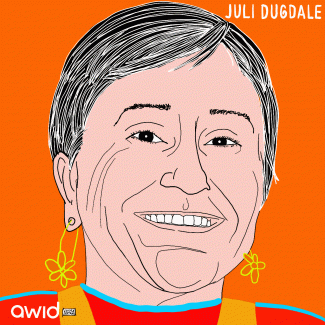
Juli Dugdale

Juli Dugdale was an Australian feminist who practiced intergenerational leadership rooted in principles of feminism, inclusion and equality. She was a leader, peer and mentor for many women and especially young women around the world. 

Juli was a dedicated staff member, volunteer and fervent advocate for young women’s leadership with the Young Women's Christian Association (YWCA) movement for over 30 years.

She offered a strong link between the Australian movement and the World YWCA Office. Her trust in the leadership capacity of young women led to a multi-year partnership with the Australian Department of Foreign Affairs and Trade and the creation of the Rise Up manual, a global guide for young women’s transformative leadership, launched in 2018.

Juli passed away in Geneva on 12 August 2019.


Tributes:

“For those who got to work with Juli, it was a privilege. For those who didn’t, be assured that her legacy continues in the work we do every day and in the mission of the YWCA movement.” - YWCA Australia

“Juli Dugdale will forever hold a deep place in many people's hearts in the YWCA movement, especially here in Aotearoa and across the Pacific. Juli had a special relationship with the Pacific and was an incredible supporter of the young women there. She was humble, gracious, loving, caring, dedicated, passionate and had a generous heart. She embodied the YWCA's vision of 'transformative leadership' with extraordinary vision and foresight, and helped empower generations of young women leaders around the world.” - YWCA New Zealand

Snippet Festival Artwork_fest (EN)

Festival Art!

Featuring artwork by Upasana Agarwal, Ika Vantiani, & Naadira Patel.

Click on the images to enlarge

By artist Upasana Agarwal

WebsiteInstagram

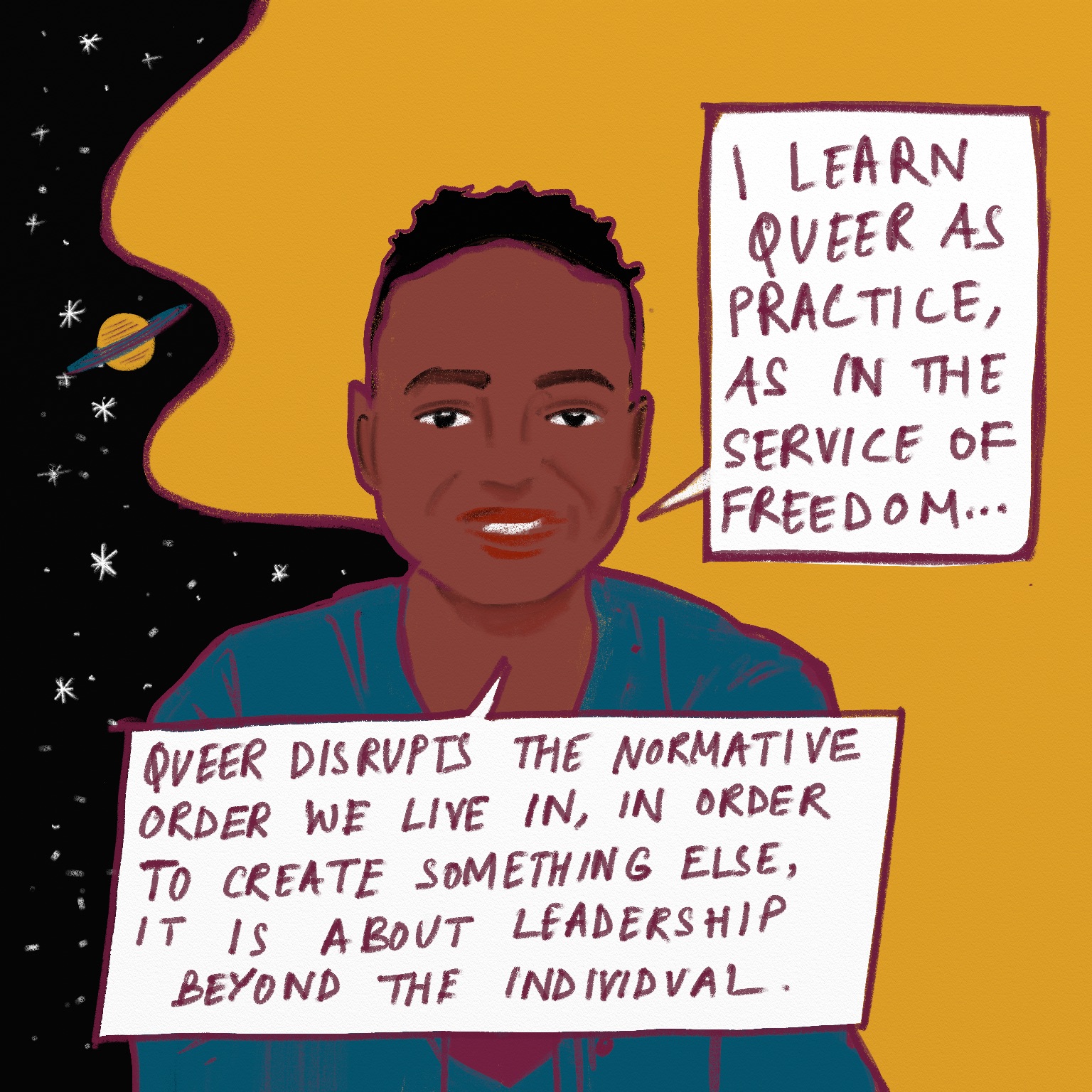
Illustrated portrait of Anima Adjepong saying I learn queer as practice, as in the service of freedom… Queer disrupts the normative order we live in, in order to create something else, it is about leadership beyond the individual
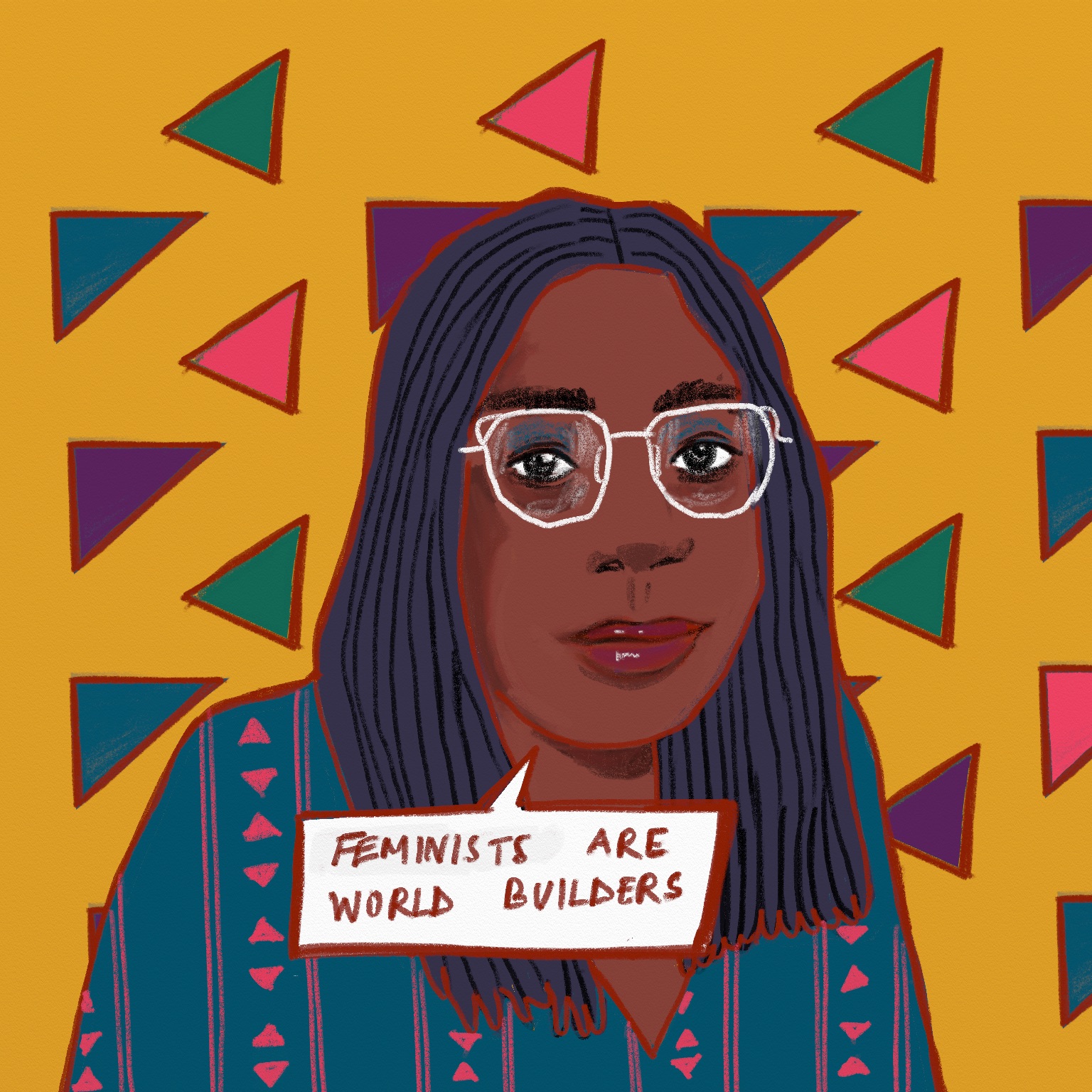
Illustrated portrait of Anwulika Okonjo that says: Feminists are World Builders
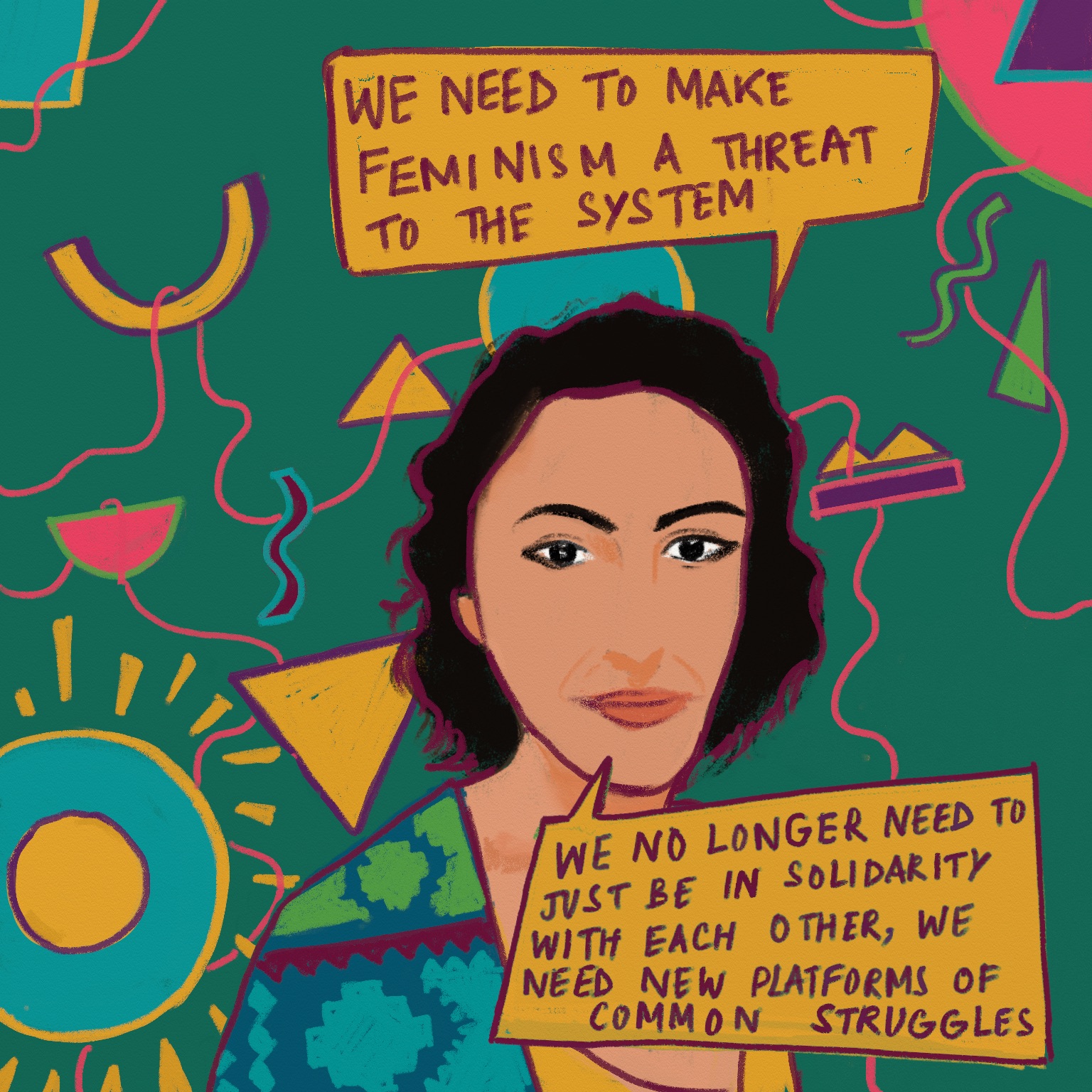
Portrait of Dilar Dirik saying: “We need to make sure that feminism is a threat to the system”  "We no longer need to just be in solidarity with each other, we need new platforms of common struggles"
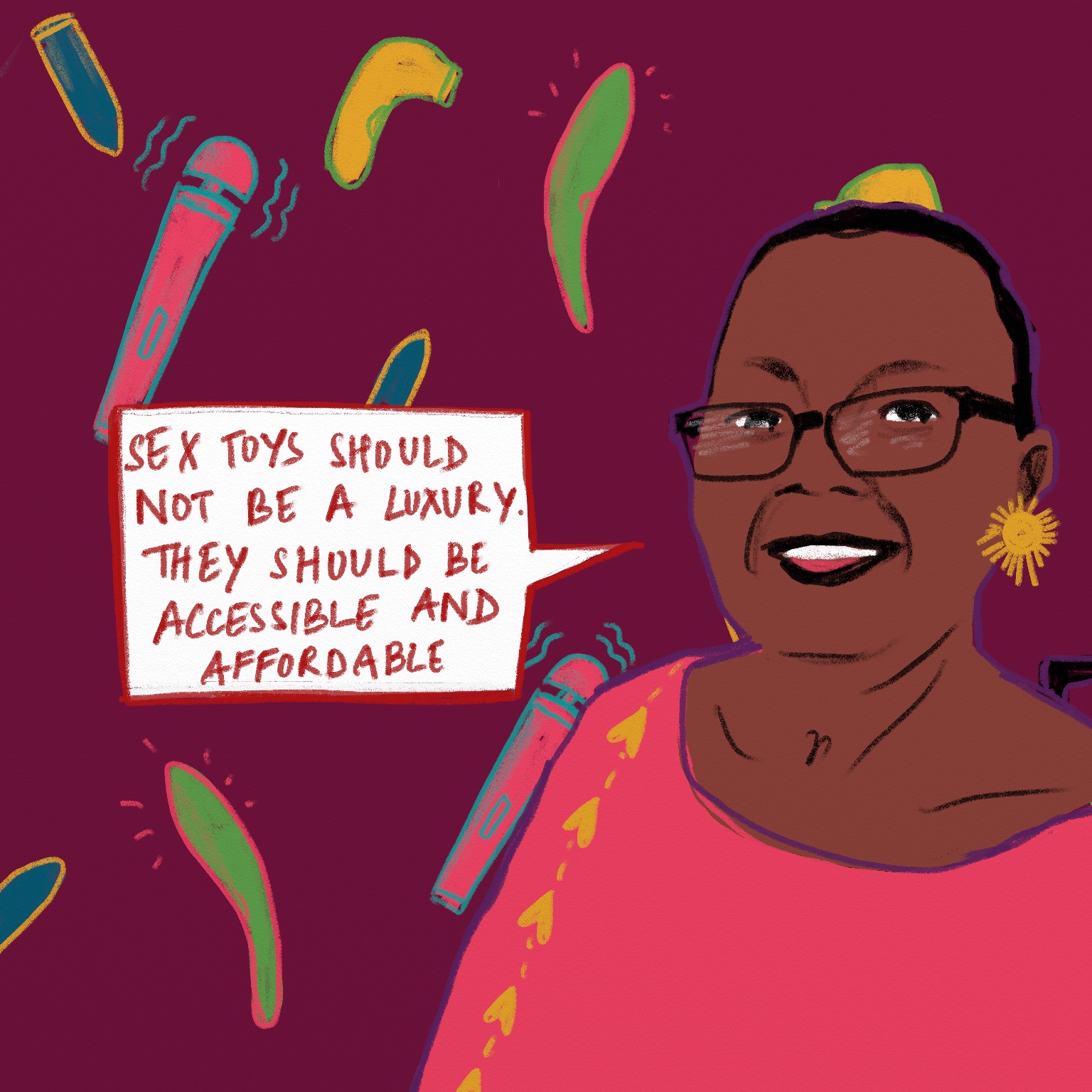
Illustrated portrait of Makgosi Letimile saying: Sex toys should not be a luxury. They should be accessible and affordable
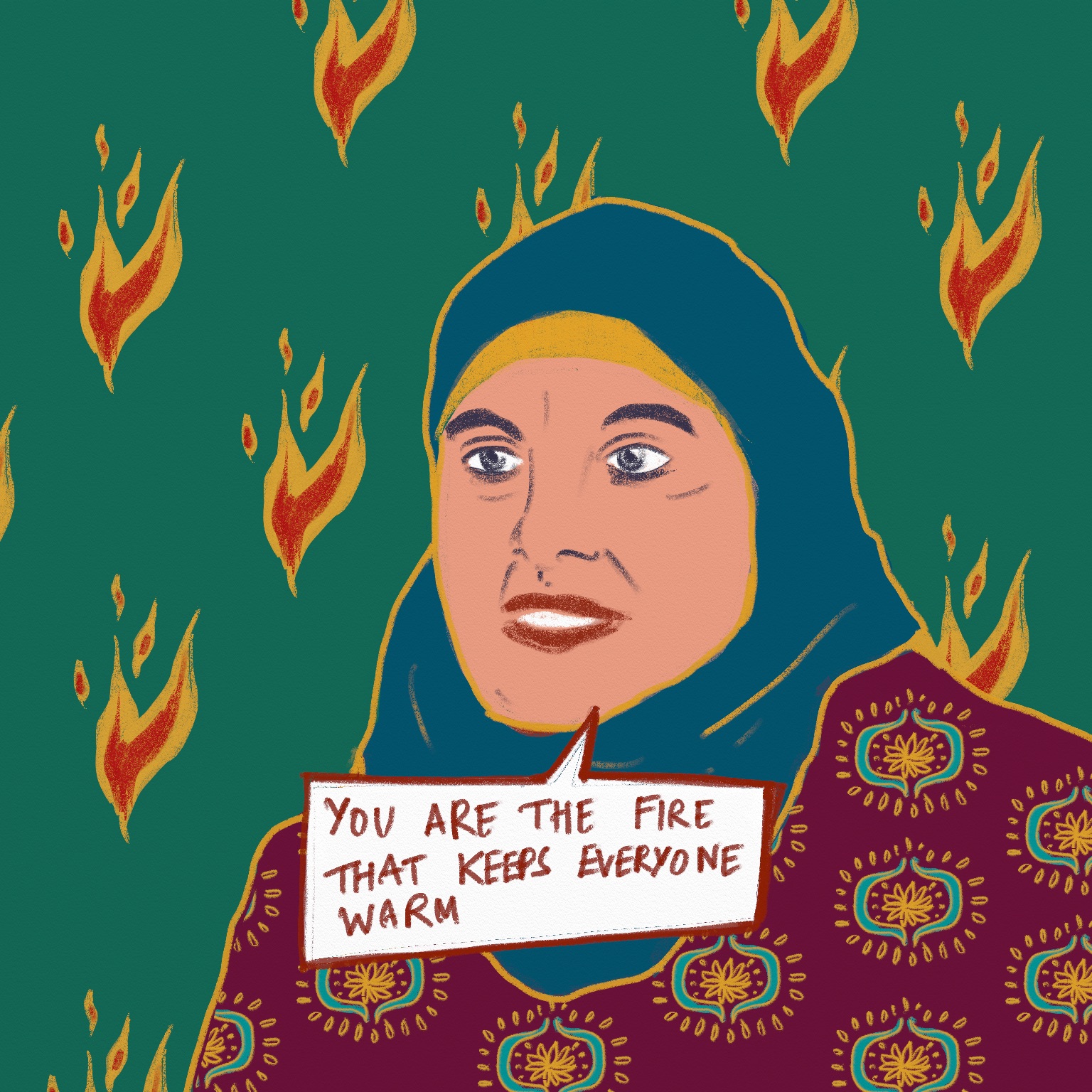
Illustrated portrait of Manal Tamimi that says: “You are the fire that keeps everyone warm"
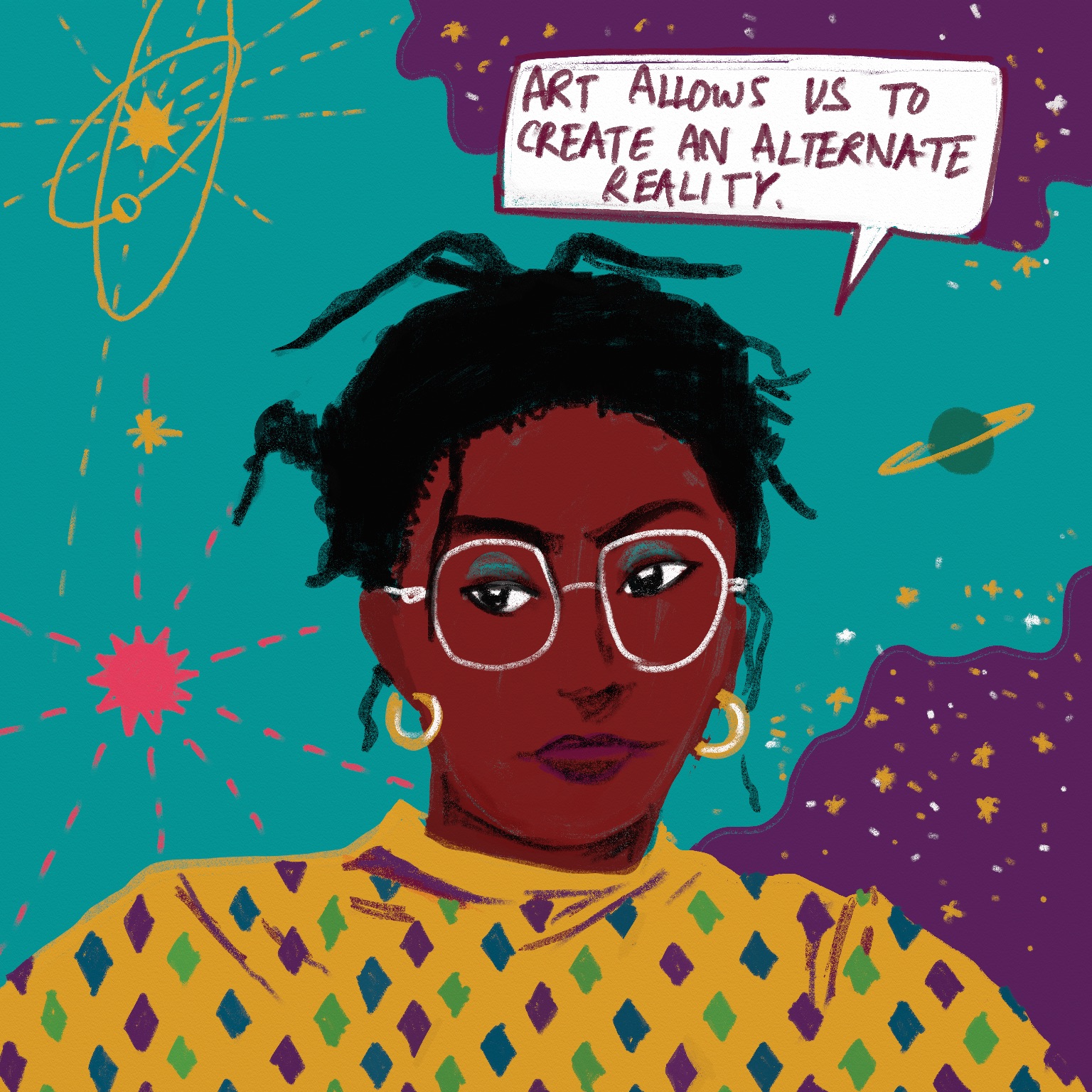
Illustrated portrait of Nana Akosua Hanson that says: "Art allows us to create an alternate reality"
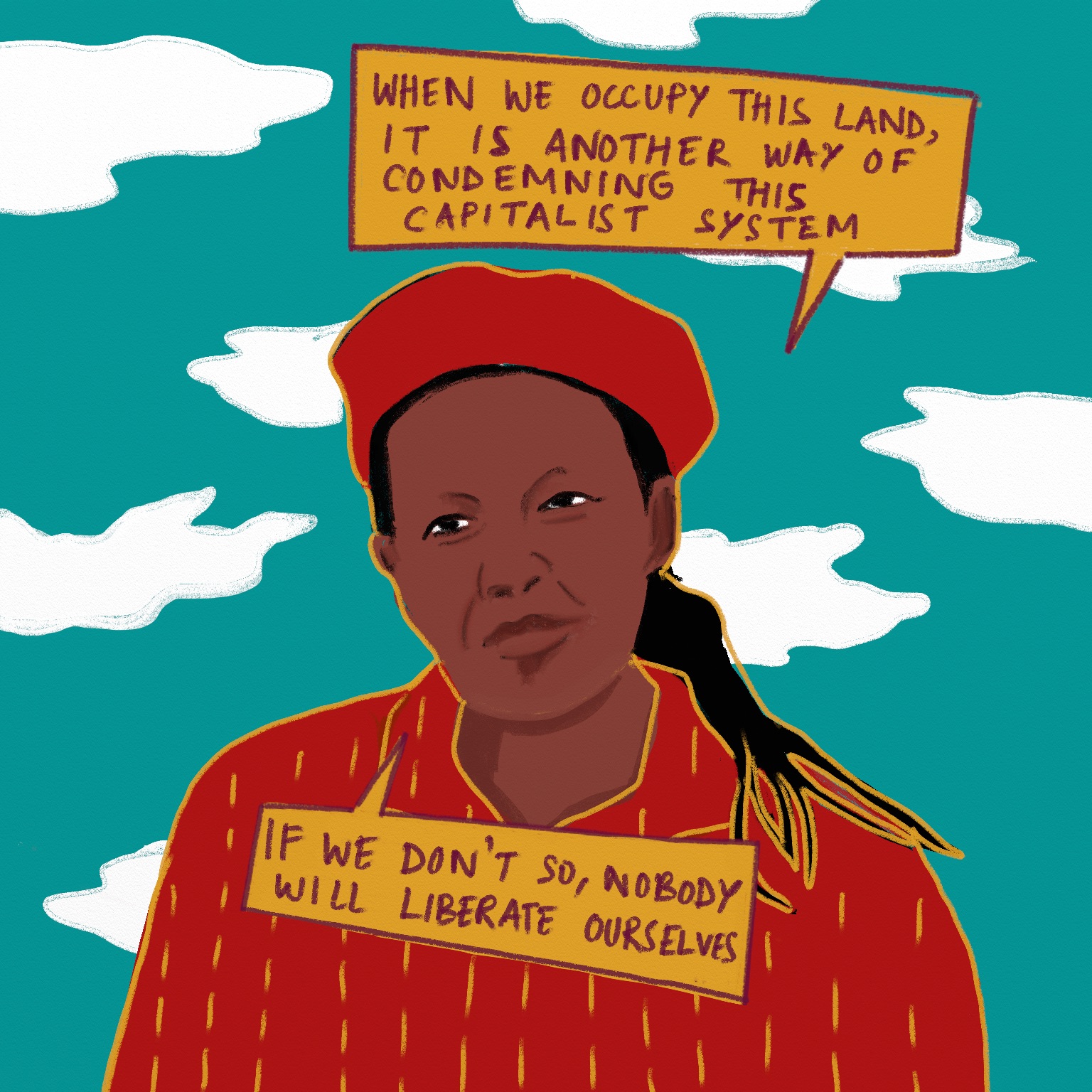
Illustrated portrait of Nomsa Sizani, over a white and turquise background, that says: “When we occupy this land, it is another way of condemning this capitalist system”  “If we don’t so, nobody will liberate ourselves”
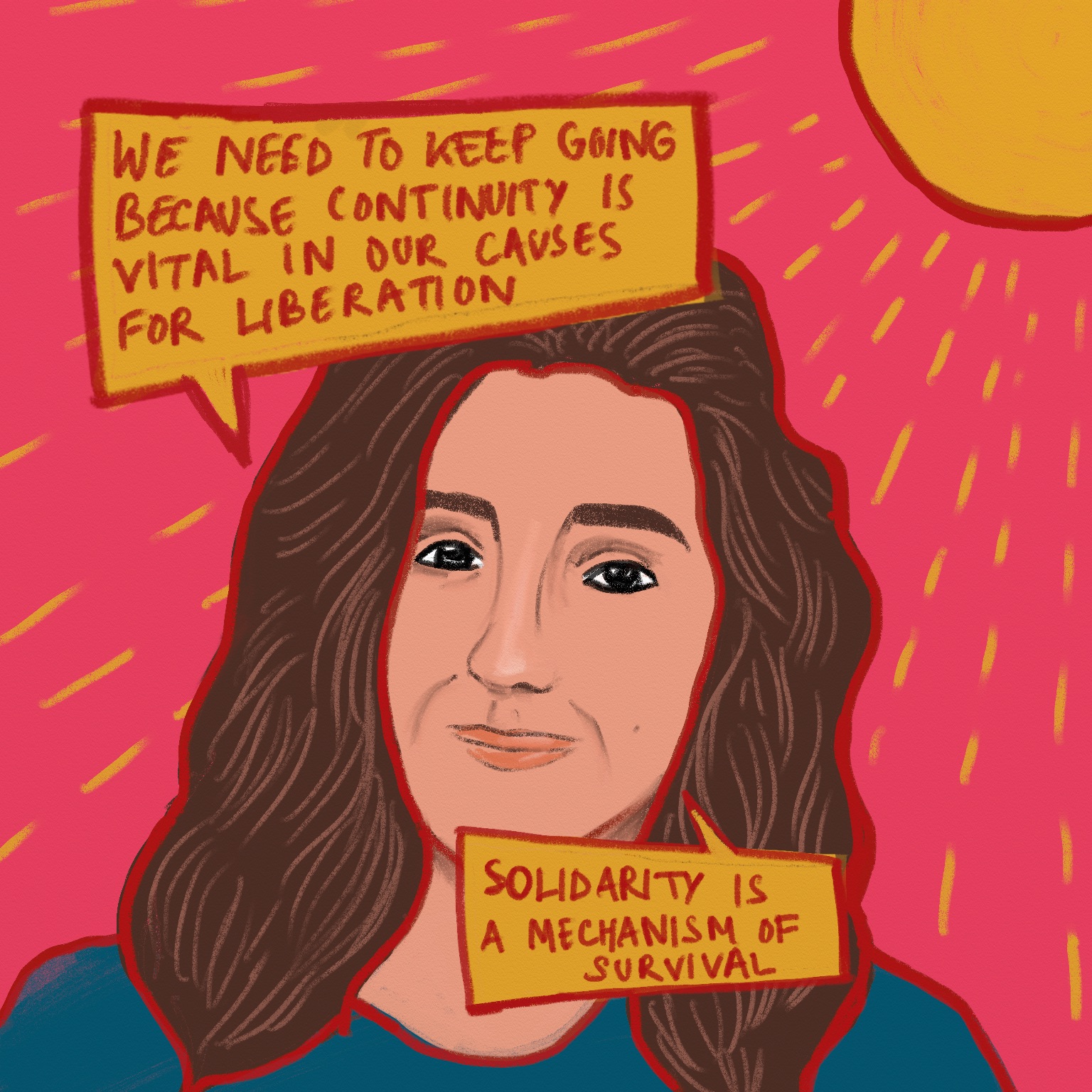
Illustrated portrait of Sandie Hanna that says: “Solidarity is a mechanism of survival”  “We need to keep going because continuity is vital in our causes for liberation”
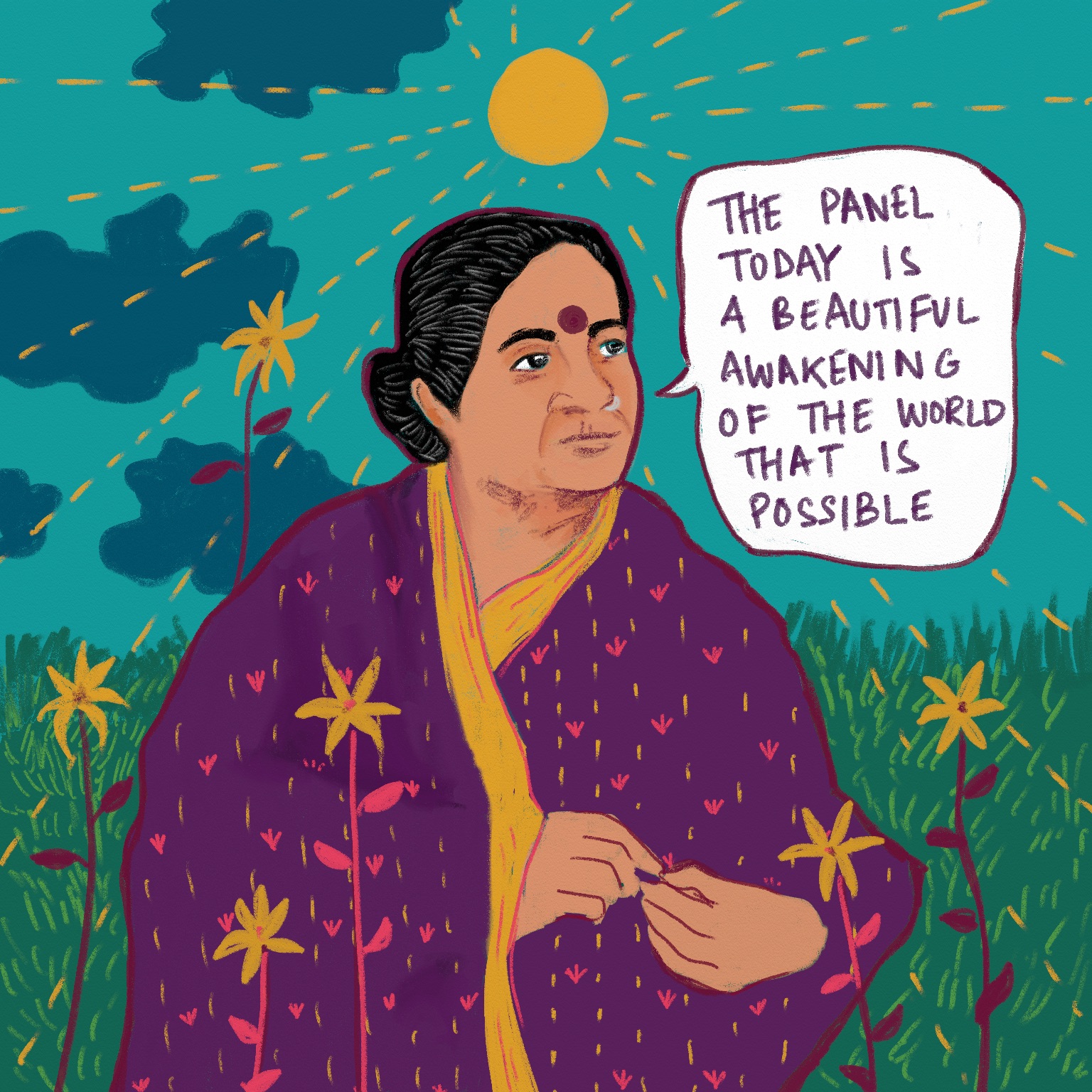
Illustrated portrait of Doctor Vandana Shiva that says: “The panel today is a beautiful awakening of the world that is possible”
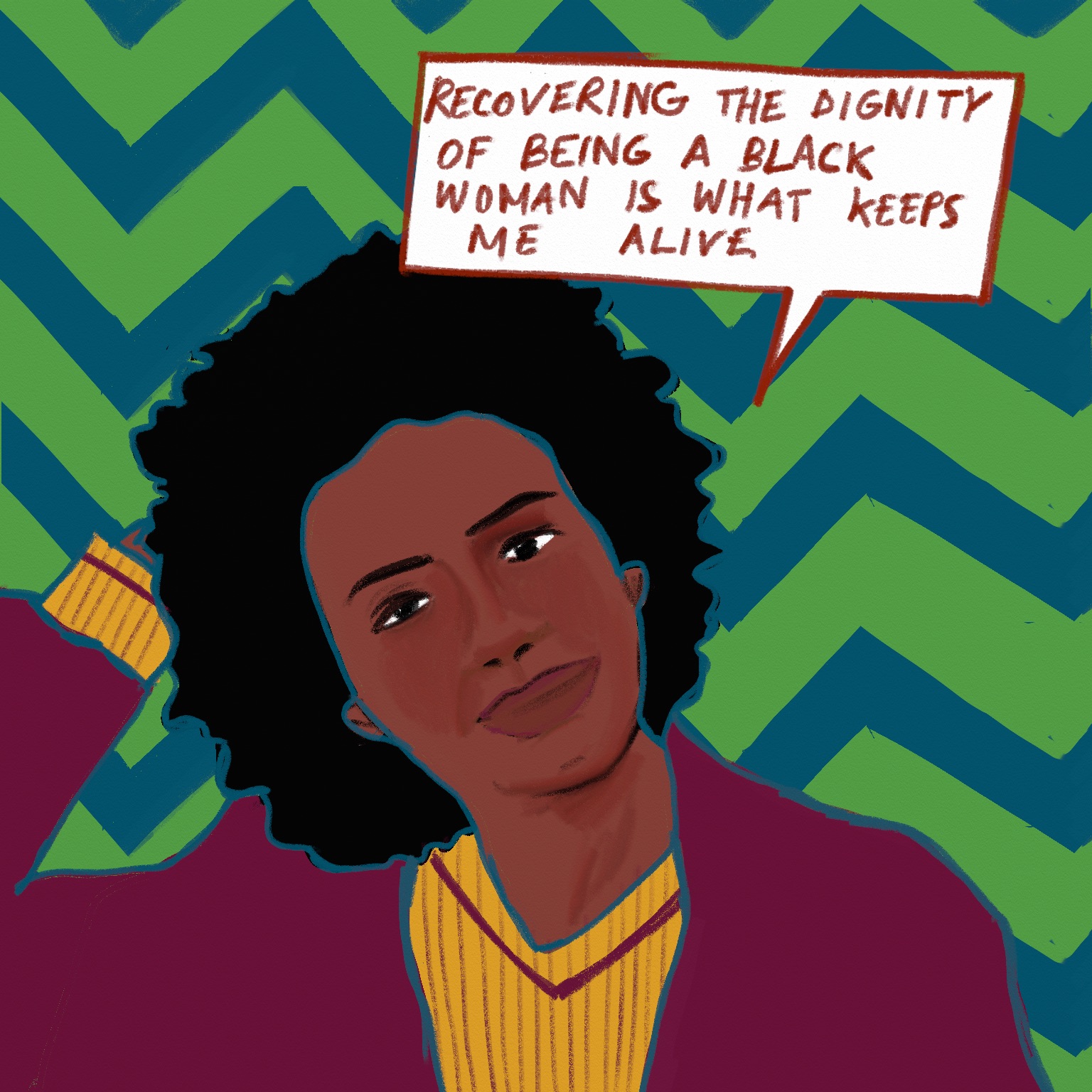
Illustrated portrait of Yannia S. Garzón that says: “Recovering the dignity of being a black woman is what keeps me alive”
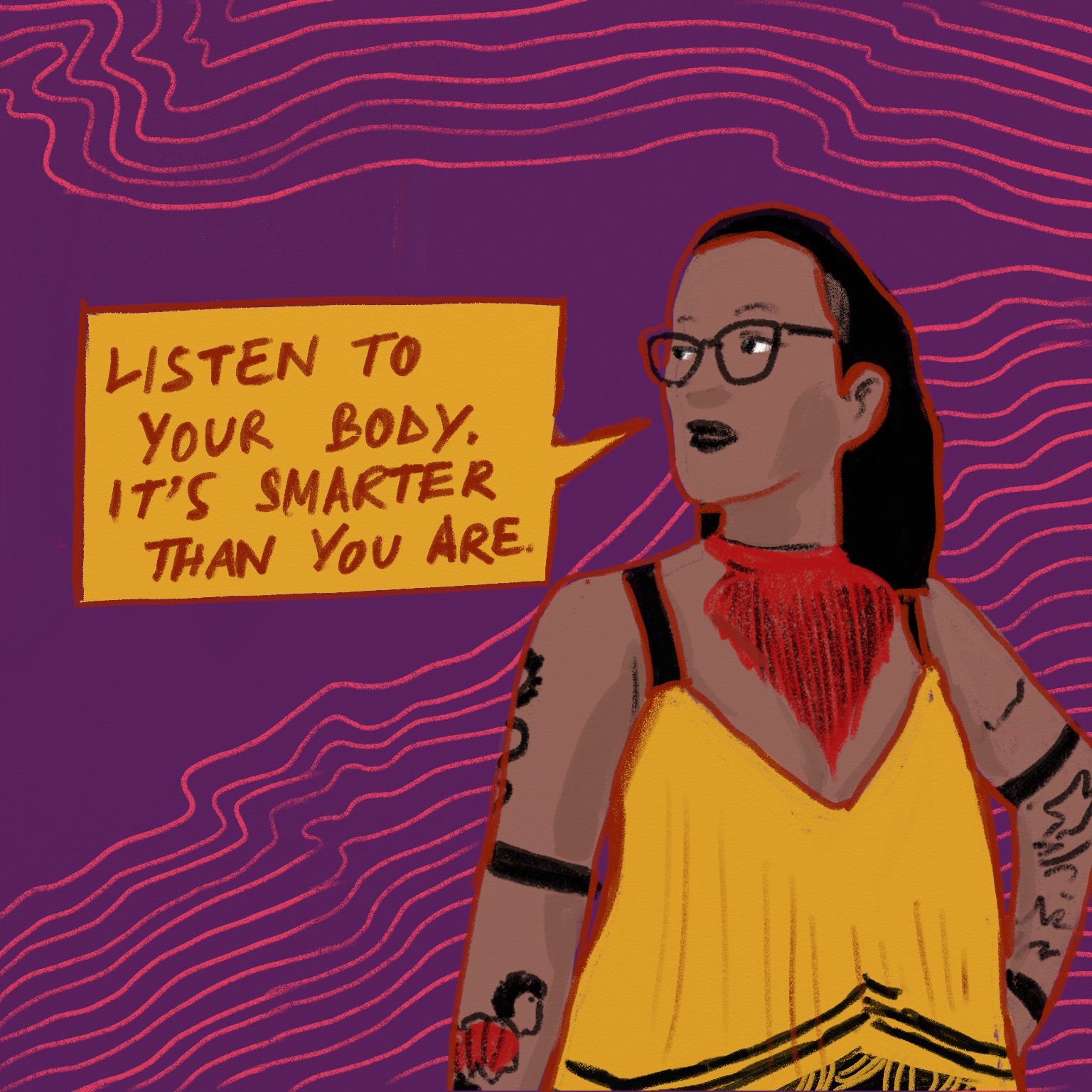
Illustrated portrait of Dr. Angelique V. Nixon that says: “Listen to your body. It’s smarter than you are.”
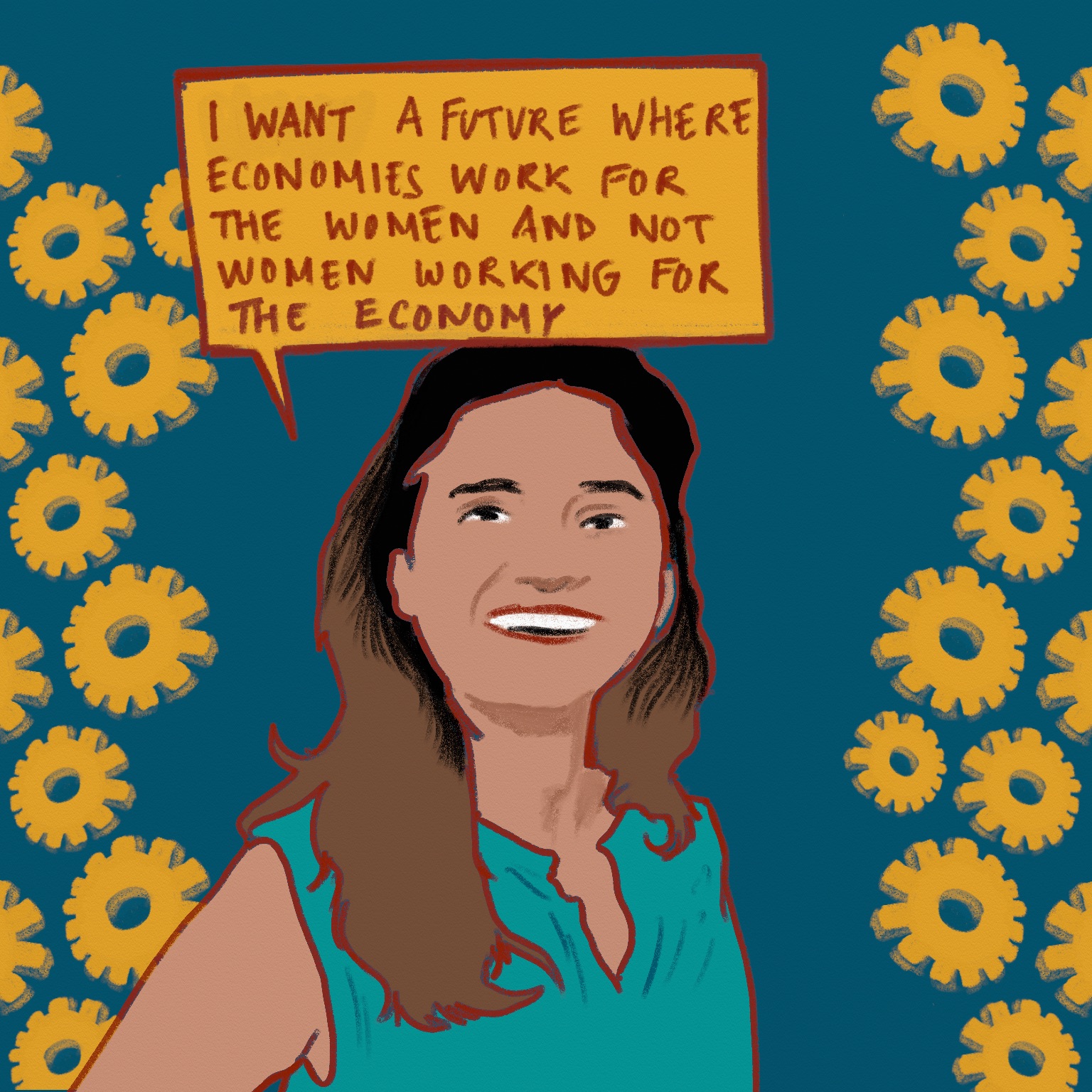
 Patricia Wattimena : I want a future where economies work for the women and not women working the economy

By artist Ika Vantiani

Facebook | TwitterInstagram

 
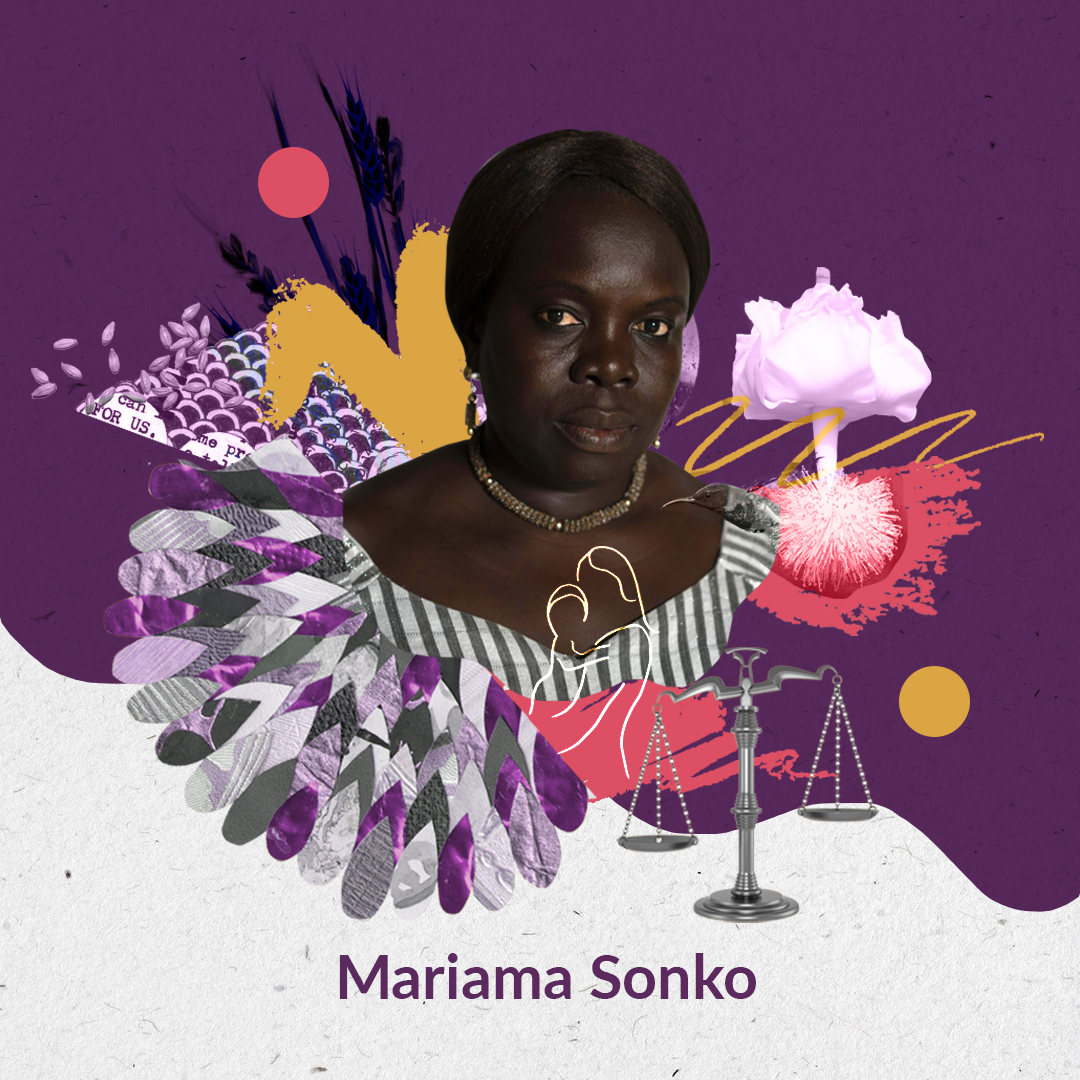
Collage of Mariama Sonko
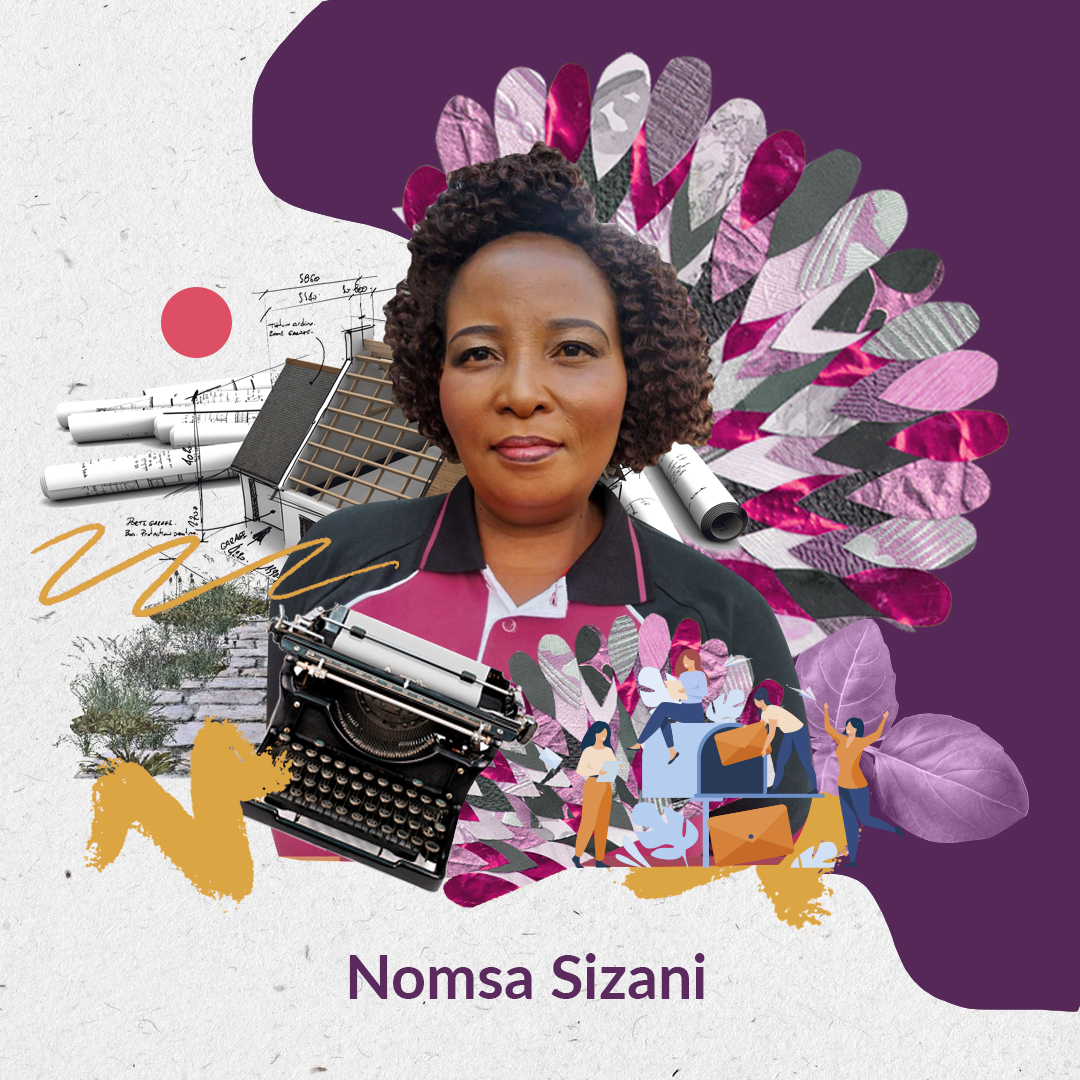
Collage of Nomsa Sizani
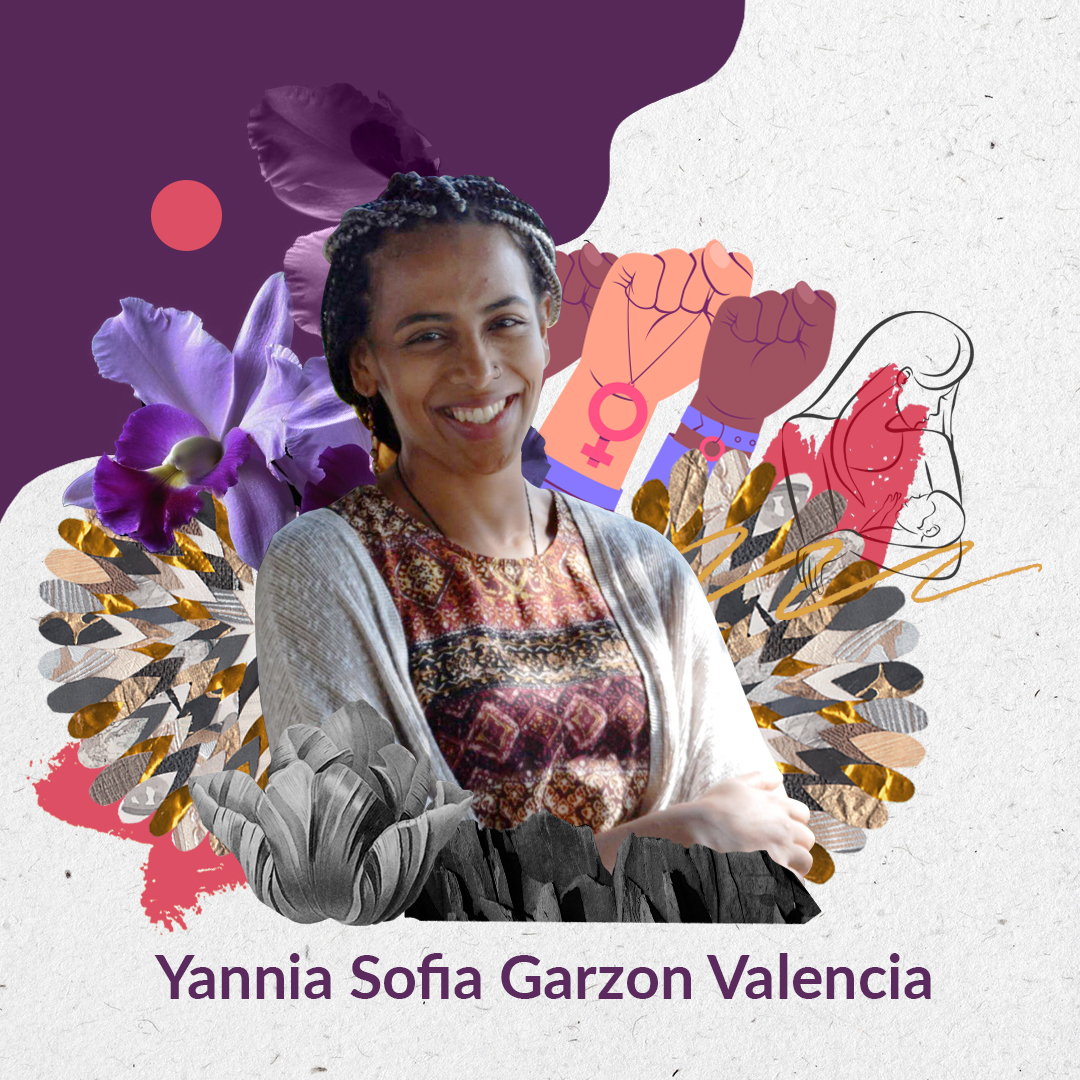
Artistic collage featuring Yania Sofia

By artist Naadira Patel 

Website | Facebook | Instagram

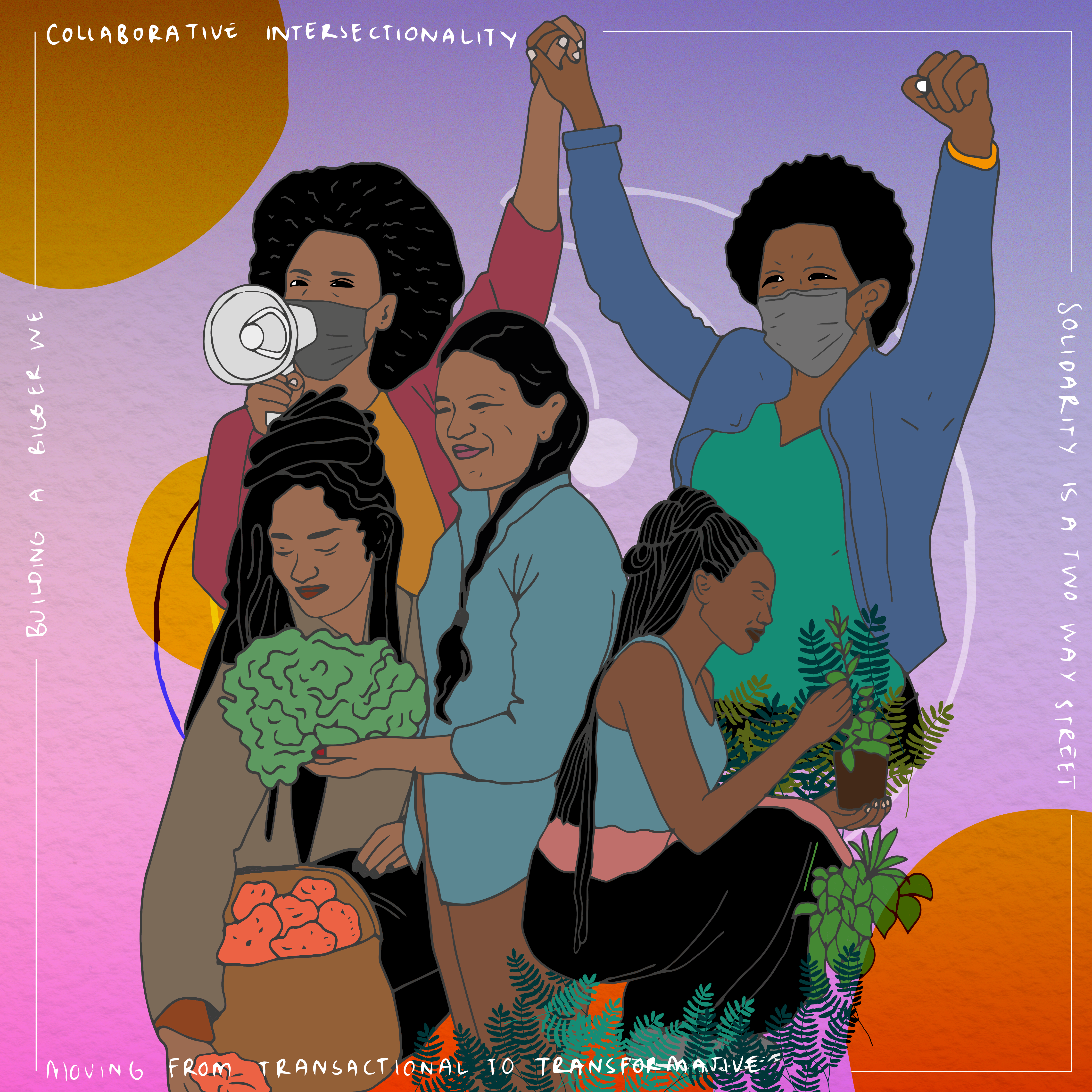
Illustration of several women of color with text that says: Moving from Transactional to Transformative
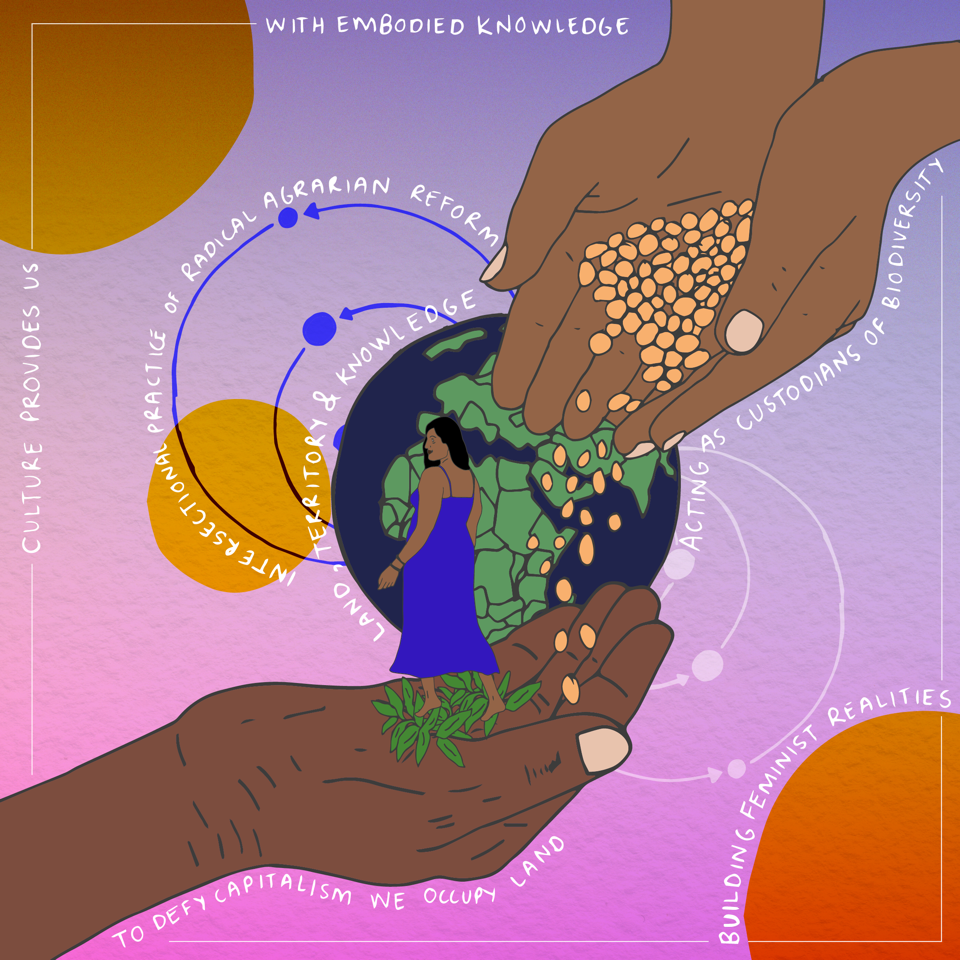
Illustration of three hand outstretched. Two are spilling seeds into the other. In the center there is planet Earth and a woman walking over plants. The text reads "To defy capitalism we occupy land acting as custodians of diversity"

2007: la participation de la société civile est renforcée par la création du WWG sur le FdD

Le Groupe de travail des femmes sur le financement du développement   (Women's Working Group on Financing for Development – WWG on FfD) , une alliance composée d’organisations et de réseaux de défense des droits des femmes,  a été créée en octobre 2007 pour mener, dans le cadre des processus des Nations Unies sur le FdD, des activités de plaidoyer en faveur de l’égalité de genre, de l’autonomisation des femmes et des droits humains.

Troisième Dialogue de haut niveau sur le financement du développement, 23-25 octobre 2007

  • Le troisième Dialogue de haut niveau sur le financement du développement a été l’occasion d’un regain de participation de la société civile. En plus des six tables rondes, des audiences ont été consacrées à la société civile et au secteur privé.
  • Lors de la séance plénière, l’AWID a prononcé une déclaration au nom de la société civile  appelant les gouvernements à accorder une attention plus soutenue au rôle important en tant qu’agentes de développement que jouent les organisations de défense des droits des femmes et à la nécessité de favoriser la mise en œuvre de nouveaux mécanismes de financement destinés aux femmes dans les pays en développement et dans les pays les moins avancés. Cette déclaration exhortait les gouvernements à apporter un soutien plus important à l’architecture de genre des Nations Unies, de façon à ce que le système,  dans son ensemble,  puisse progresser dans son engagement en faveur de l’égalité des genres, de l’autonomisation des femmes et des droits humains, en ce qui concerne notamment  les droits économiques, sociaux, culturels et environnementaux de toutes les personnes.

هل هناك مواضيع ذات الخطوط الحمراء التي يجب علينا تجنب تقديمها؟

لقد كان منتدى جمعية حقوق المرأة في التنمية دائمًا مساحة لا تخجل من النقاشات الصعبة والمطلوبة بشدة. نحن نرحب بهذه المشاركات عندما يتمكن المنظمون/ات بعناية من توفير الاحترام والأمان في المساحة للمشاركين/ات.

Sarah Maldoror

«No adhiero al concepto de “Tercer Mundo”. Hago películas para que las personas (no importa de qué raza o color sean) puedan entenderlas. Para mí, solamente existen explotadores y explotadxs, eso es todo. Hacer una película significa tomar una posición.» - Sarah Maldoror

Sarah Maldoror, una cineasta francesa descendiente de una familia de las Indias Occidentales, fue una pionera del cine panafricano. Sus inquietudes políticas ocupaban el centro de su trabajo, junto con su permanente involucramiento en los movimientos de descolonialización.

La innovadora Sambizanga (1972), su «película revolucionaria», sigue la lucha de liberación anticolonial de lxs militantes de Angola y capta la perspectiva de una mujer en el momento histórico en que se encuentra.

«Para muchxs cineastas africanxs, el cine es una herramienta revolucionaria, una educación política para crear consciencia. Se inscribe en la evolución de un Tercer Cine,  que se orienta a descolonizar el pensamiento y promover cambios radicales en la sociedad.» - Sarah Maldoror

A lo largo de su carrera, Sarah (junto con otrxs artistas africanxs y caribeñxs) cofundó, en 1956, la primera troupe de teatro negra de Francia. Realizó alrededor de cuarenta películas, incluidos importantes documentales que difundieron la vida y la obra de artistas negrxs, entre lxs cuales se encuentra su amigo y poeta, Aimé Césaire, quien le escribió:

«A Sarah Maldo
que, cámara en mano,
lucha contra la opresión, la alienación
y se planta de cara
frente a la estupidez humana.»

Sarah estaba también dedicada a lograr que las mujeres africanas se apropiaran más del proceso de filmación. En una entrevista, señaló:

«Las mujeres africanas deben estar en todos lados. Deben estar en las imágenes, detrás de la cámara, en la sala de edición, y participar en todas las etapas de la realización de una película. Ellas deben ser quienes hablen sobre sus problemas.»

Sarah dejó un legado formidable para que sea continuado.

Nacida el 19 de julio de 1929, Sarah falleció el 13 de abril de 2020 debido a complicaciones por el coronavirus.


Mira Sambizanga y lee una reseña de la película en un artículo del New York Times de 1973 (solo en ingles)
 

Snippet Art Gift_Fest (EN)

Download our zoom background & printable postcard!

by Ellena Ekarahendy. 

Download here

2014: Intergovernmental preparatory process for the 3rd FfD Conference is launched

Launch of the Intergovernmental preparatory process for the 3rd Financing for Development Conference, October 2014

  • A preparatory process, co-facilitated by Ambassador George Wilfred Talbot of Guyana and Ambassador Geir O. Pedersen of Norway, was put in place to lead discussions ahead of the 3rd FfD conference to be held in Addis Ababa, Ethiopia in July 2015.
  • As part of the preparations, two rounds of substantive informal sessions were held at the UN headquarters in New York to provide input to the drafting sessions of the outcome document.
  • The WWG on FfD was re-activated with the aim of bringing feminist and women’s rights perspectives to the discussions and deliberations ahead of and during the 3rd International FfD Conference. AWID, Development Alternatives with Women for a New Era (DAWN) and the Feminist Task Force (FTF) are currently acting as co-facilitators of the group.
  • The WWG on FfD’s submitted two oral statements during the first round, and written input to the second round of substantive informal sessions, which highlighted that gender inequality was not visible, nor was the inclusion of other types of discrimination and inequalities. The WWG’s submission highlights gender power relations and the intersections with other categories such as race, disability, ethnicity, age, wealth and sexual identity, which underpin the unequal distribution of opportunities and resources in societies around the world.
  • Civil society organizations raised concerns about the space for their engagement in the two substantive informal sessions, including the risk that civil society space to engage in negotiations on the outcome document in January 2015 might be constricted. 

ماذا عن التأشيرات؟

نحن ندرك تمامًا العقبات العملية والضغوط العاطفية المرتبطة بالسفر الدولي، وخاصة من الجنوب العالمي. تعمل جمعية حقوق المرأة في التنمية مع TCEB (مكتب تايلاند للمؤتمرات والمعارض) لدعم المشاركين/ات في المنتدى في الحصول على التأشيرات. سيتم توفير المزيد من المعلومات حول هذه المساعدة للحصول على التأشيرة عند التسجيل، بما في ذلك معلومات الاتصال الخاصة بمكان وكيفية التقديم.

María Digna Montero

María Digna Montero était une défenseuse Garifuna (d’origine africaine et autochtone) du droit à la terre et membre de l’Organisation fraternelle noire hondurienne (OFRANEH), une organisation communautaire oeuvrant à protéger les communautés Garifunas, leurs droits, leur culture, leurs ressources et leur territoire ancestraux.

María a également enseigné dans l'école locale et été membre du groupe de travail sur l'éducation bilingue interculturelle de l'OFRANEH.

Le 12 octobre 2019, jour de la Résistance autochtone, des inconnus ont tiré à plusieurs reprises sur María, alors qu’elle se trouvait dans l’arrière-cour de sa maison. 

Elle est l'une des six défenseuses Garifunas à avoir été assassinées entre septembre et octobre 2019 et selon OFRANEH, ces crimes n’ont fait l’objet d’aucune enquête de la part des autorités. Dans une déclaration officielle, l'organisation a également souligné le lien entre la violence à l’encontre des dirigeants Garifunas et le développement des industries extractives qui exploitent les ressources naturelles de leurs communautés, affirmant que cette violence s’inscrivait dans une "stratégie d'intimidation et d'expulsion systématique" menée par l'État hondurien. 

“La tension accrue et les risques croissants pour la sécurité et les droits humains des dirigeants des communautés et des territoires ancestraux sont le résultat de la dépossession, du déplacement et de la criminalisation des communautés et des mégaprojets d'extraction promus par l'État en collaboration avec les entreprises nationales et internationales". - Communiqué de l'OFRANEH, 12 octobre 2019 

Snippet Love Letters Intro (ES)

Cartas de Amor a los Movimientos Feministas

Como podrás o no saber, AWID está celebrando su 40º aniversario en 2022 y, para festejarlo, se eligieron los lemas «Reunir, sembrar e irrumpir». En honor a esta ocasión, hemos invitado a lxs afiliadxs, aliadxs y al personal de AWID a escribir sus propias «Cartas de Amor a los Movimientos Feministas». En conjunto, hemos encendido una constelación de movimientos feministas. Nos mantengamos cerca mientras forjamos el viaje y seguimos reuniéndonos, sembrando y desmantelando.

Nota sobre nuestra Colección de Cartas de Amor

Todas estas cartas de amor fueron escritas por activistas que están compartiendo sus diversas experiencias en los movimientos feministas. Algunas pueden incluir contenido delicado o complejo sobre abuso sexual, violencia sexual, conflictos, exclusión, entre otras piezas potencialmente perturbadoras o provocadoras. Aunque las cartas están llenas de amor, cuídate al leerlas.

Junio 2015

Sesiones adicionales para redactar el Documento Final de Adís Abeba

  • Del 1 al 5 de junio de 2015 se realizaron sesiones adicionales para continuar avanzando en la redacción del Documento Final.
  • Del 15 al 19 de junio, en la sede de la ONU tuvo lugar la ya planificada Tercera Sesión Redactora del Documento Final de la Conferencia.

Para saber más sobre este proceso, puedes consultar la CSO Hitchhiker’s Guide (en inglés).