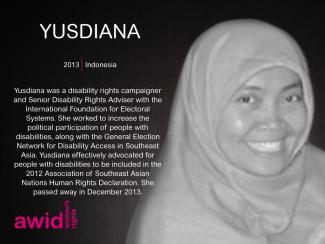
Yusdiana
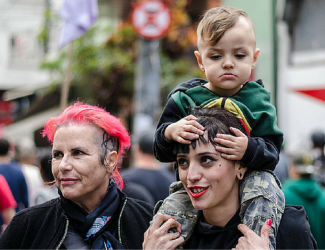
Over the past few years, a troubling new trend at the international human rights level is being observed, where discourses on ‘protecting the family’ are being employed to defend violations committed against family members, to bolster and justify impunity, and to restrict equal rights within and to family life.
The campaign to "Protect the Family" is driven by ultra-conservative efforts to impose "traditional" and patriarchal interpretations of the family, and to move rights out of the hands of family members and into the institution of ‘the family’.
Since 2014, a group of states have been operating as a bloc in human rights spaces under the name “Group of Friends of the Family”, and resolutions on “Protection of the Family” have been successfully passed every year since 2014.
This agenda has spread beyond the Human Rights Council. We have seen regressive language on “the family” being introduced at the Commission on the Status of Women, and attempts made to introduce it in negotiations on the Sustainable Development Goals.
AWID works with partners and allies to jointly resist “Protection of the Family” and other regressive agendas, and to uphold the universality of human rights.
In response to the increased influence of regressive actors in human rights spaces, AWID joined allies to form the Observatory on the Universality of Rights (OURs). OURs is a collaborative project that monitors, analyzes, and shares information on anti-rights initiatives like “Protection of the Family”.
Rights at Risk, the first OURs report, charts a map of the actors making up the global anti-rights lobby, identifies their key discourses and strategies, and the effect they are having on our human rights.
The report outlines “Protection of the Family” as an agenda that has fostered collaboration across a broad range of regressive actors at the UN. It describes it as: “a strategic framework that houses “multiple patriarchal and anti-rights positions, where the framework, in turn, aims to justify and institutionalize these positions.”
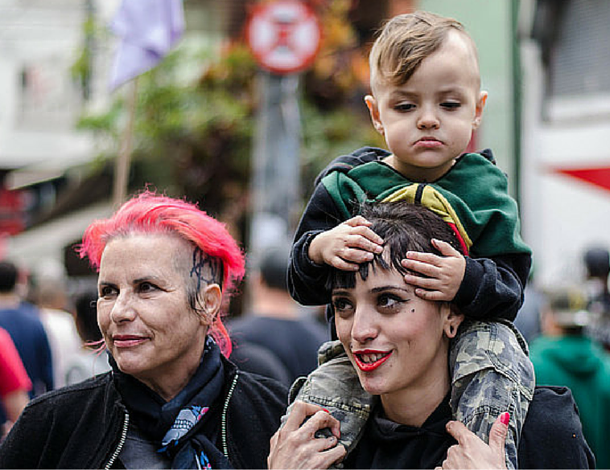
Ven a conocer a Aura Roig, activista feminista visionaria, antropologa y directora-fundadora de la cooperativa Metzineres.
Dedicó las últimas dos décadas a la investigación, el diseño y la implementación de políticas con perspectivas de reducción de daños, derechos humanos y feminismo interseccional.
Después de experimentar y aprender de comunidades que usan drogas a través del mundo, volvió a Barcelona y creó la Xarxa de Dones que Usen Drogues (la Red de Mujeres que Usan Drogas, XADUD). XADUD era un espacio de apoyo mutuo y de solidaridad con la lucha por los derechos de los grupos marginalizados que, más tarde, se convirtió en la cooperativa Metzineres.
Actualmente, Aura está trabajando para expandir el modelo Metzineres y brindar apoyo a grupos más grandes, al mismo tiempo que documenta ampliamente su prolífico viaje y aprendizaje.
Le 11 juillet 2024, nous avons eu une conversation étonnante avec de grandes féministes sur l'état de l'écosystème du financement et le pouvoir du recherche « Où est l'argent ? ».
Un merci spécial à Cindy Clark (Thousand Currents), Sachini Perera (RESURJ), Vanessa Thomas (Black Feminist Fund), Lisa Mossberg (SIDA) et Althea Anderson (Fondation Hewlett).
N'oubliez pas que l'enquête restera ouverte jusqu'au 31 août 2024 !
2009 UN Conference on the World Financial and Economic Crisis and its Impacts on Development
En vigueur à compter du 25 avril 2023.
Veuillez cliquer ici pour consulter la version précédente de notre politique de confidentialité.
La présente politique de confidentialité présente la manière dont l'Association pour les droits des femmes dans le développement et nos filiales et sociétés affiliées (« AWID », « nous » ou « notre ») traitent les données personnelles que nous recueillons via notre site Web, renvoyant à la présente politique de confidentialité (le « site »), ainsi que via les réseaux sociaux, nos activités de marketing, nos événements en direct et autres activités décrites dans la présente politique de confidentialité (le « Service »).
Index
Les données personnelles que nous recueillons
Comment nous utilisons vos données personnelles
Comment nous partageons vos données personnelles
Vos choix
Autres sites et services
Sécurité
Transferts internationaux de données
Personnes mineures
Modifications de la politique de confidentialité
Comment nous contacter
Avis aux utilisateurs·trices européen·ne·s
Les données que vous nous communiquez. Les données personnelles que vous êtes susceptibles de nous fournir par l'intermédiaire du Service ou d'une autre manière comprennent :
Données de communication basées sur nos échanges avec vous, y compris lorsque vous nous contactez par le biais du Service, des médias sociaux ou autrement.
Collecte automatique de données. Nous, nos fournisseurs de services et nos partenaires commerciaux pouvons enregistrer automatiquement certaines informations vous concernant, concernant votre ordinateur ou appareil mobile, et votre interaction au fil du temps avec le Service, nos communications et autres services en ligne, telles que :
Cookies et technologies apparentées. Une partie de la collecte automatique décrite ci-dessus est facilitée par les cookies, qui sont de petits fichiers texte que les sites Internet stockent sur les appareils des utilisateurs·trices et qui permettent aux serveurs Web d'enregistrer les activités de navigation Web des utilisateurs·trices et de se souvenir de leurs informations, de leurs préférences et de leur statut de connexion lorsqu'ils naviguent sur un site. Les cookies utilisés sur nos sites comprennent à la fois des « cookies de session » qui sont supprimés lorsqu'une session se termine, des « cookies persistants » qui restent plus longtemps, des cookies de « première partie » que nous plaçons et des cookies de « tierce partie » placés par nos partenaires commerciaux et nos fournisseurs de services de tiers.
Vos données personnelles pourront être utilisées aux fins suivantes ou selon les modalités décrites au moment de la collecte :
Prestation de services et exploitation commerciale. Nous sommes susceptibles d’utiliser vos données personnelles pour :
Recherche et développement. Nous sommes susceptibles d'utiliser vos données personnelles à des fins de recherche et de développement, notamment pour analyser et améliorer le Service. Dans le cadre de ces activités, nous pouvons créer des données agrégées, dépersonnalisées et/ou anonymisées à partir des données personnelles que nous recueillons. Nous transformons les données personnelles en données dépersonnalisées ou anonymes en supprimant les informations qui permettent de vous identifier personnellement. Nous pouvons utiliser ces données agrégées, dépersonnalisées ou autrement anonymisées et les partager avec des tiers à nos fins commerciales légales, y compris pour analyser et améliorer le Service et promouvoir nos activités.
Publicité. Nos fournisseurs de services et nous-mêmes pouvons recueillir et utiliser vos données personnelles pour vous envoyer des communications de marketing direct. Vous pouvez demander à ne plus recevoir de communications promotionnelles comme décrit dans la section Désengagement du marketing ci-dessous.
Conformité et protection. Nous sommes susceptibles d’utiliser vos données personnelles pour :
Avec votre consentement. Dans certains cas, nous pourrons vous demander expressément votre accord avant de collecter, utiliser ou partager vos données personnelles, notamment lorsque la loi l'exige.
Cookies et technologies apparentées. En plus des autres utilisations incluses dans cette section, nous sommes susceptibles d’utiliser les Cookies et technologies apparentées décrites ci-dessus aux fins suivantes :
Conservation. Nous conservons généralement les données personnelles pour atteindre les fins pour lesquelles nous les avons recueillies, y compris pour satisfaire à toute exigence légale, comptable ou de déclaration, pour établir ou défendre des réclamations légales, ou à des fins de prévention de la fraude. Pour déterminer la période de conservation appropriée des données personnelles, nous pouvons prendre en compte des facteurs tels que la quantité, la nature et la sensibilité des données personnelles, le risque potentiel de préjudice lié à l'utilisation ou à la divulgation non autorisée de vos données personnelles, les fins auxquelles nous traitons vos données personnelles et si nous pouvons atteindre ces fins par d'autres moyens, ainsi que les exigences légales applicables.
Une fois que nous n'avons plus besoin des informations personnelles que nous avons collectées à votre sujet, nous pouvons soit les supprimer, soit les rendre anonymes, soit les exclure de tout traitement ultérieur.
Nous sommes susceptibles de partager vos données personnelles avec les parties suivantes et comme décrit par ailleurs dans la présente politique de confidentialité ou au moment de la collecte :
Sociétés affiliées. Notre société mère, nos filiales et nos sociétés affiliées, à des fins compatibles avec la présente politique de confidentialité.
Fournisseurs de services. Les tiers qui fournissent des services en notre nom ou qui nous aident à exploiter le Service ou notre entreprise (tels que l'hébergement, la technologie de l'information, l'assistance à la clientèle, la livraison de courriels, le marketing, la recherche sur les consommateurs·trices et l'analyse de sites Internet).
Processeurs de paiement. Toute information de carte de paiement que vous utilisez pour effectuer un achat sur le Service est collectée et traitée directement par nos processeurs de paiement, tels que Stripe. Stripe se réserve le droit d'utiliser ces données de paiement conformément à sa politique de confidentialité, à l'adresse https://stripe.com/fr/privacy. Vous pouvez également demander à être facturé·e par votre fournisseur de communications mobiles, qui utilisera vos données de paiement conformément à sa propre politique de confidentialité.
Tiers désignés par vous. Nous nous réservons le droit de partager vos données personnelles avec des tiers dès lors que vous nous en avez donné l'instruction ou que vous nous avez donné votre accord pour le faire. Nous partagerons les informations personnelles requises pour que ces autres entreprises puissent fournir les services que vous aurez sollicités. De plus, vous pouvez choisir de traduire le contenu généré par les utilisateurs·trices à l'aide de Google Translate. Google se réserve le droit d’utiliser ce contenu conformément à sa politique de confidentialité, https://policies.google.com.
Conseillers·ères professionnel·le·s. Les conseillers·ères professionnel·le·s, tel·le·s que les avocat·e·s, les auditeurs·trices, les banquiers·ières et les compagnies d'assurance or asureur·e·s, lorsque cela est nécessaire dans le cadre des services professionnels qu'ils·elles nous fournissent.
Autorités et autres. Les forces de l'ordre, les autorités gouvernementales et les parties privées, si nous estimons de bonne foi que cela est nécessaire ou approprié aux fins de conformité et de protection décrites ci-dessus.
Autres utilisateurs·trices. Votre profil et les autres données de contenu généré par les utilisateurs·trices (à l'exception des messages) sont potentiellement visibles par d'autres utilisateurs·trices du Service. Par exemple, d'autres utilisateurs·trices du Service peuvent avoir accès à vos informations si vous avez choisi de mettre votre profil ou d'autres données personnelles à leur disposition par le biais du Service, par exemple lorsque vous publiez des commentaires, des critiques, des réponses à des sondages ou que vous partagez d'autres contenus. Ces informations peuvent être vues, collectées et utilisées par d'autres, y compris être mises en cache, copiées, capturées à l'écran ou stockées ailleurs par d'autres (par exemple, les moteurs de recherche), et nous ne prenons pas la responsabilité d'une telle utilisation de ces informations.
Dans cette section, nous décrivons les droits et les choix disponibles pour tous les utilisateurs·trices. Les utilisateurs·trices qui se trouvent au Royaume-Uni, en Suisse et dans l’Espace économique européen peuvent trouver des informations supplémentaires sur leurs droits ci-dessous.
Refus des communications publicitaires. Vous pouvez renoncer à recevoir des courriels à caractère commercial en suivant les instructions d’opposition ou de désabonnement figurant au bas du courriel, ou en nous contactant. Notez que si vous choisissez de vous désabonner des courriels à caractère publicitaire, vous continuerez peut-être à recevoir des courriels liés au Service et d'autres courriels à caractère non publicitaire.
Refuser de fournir des informations. Il nous est nécessaire de collecter des données personnelles pour fournir certains services. Si vous ne fournissez pas les informations que nous jugeons requises ou obligatoires, nous pourrions ne pas être en mesure de fournir ces services.
Supprimer votre contenu ou mettre fin à votre adhésion. Vous pouvez choisir de supprimer certains contenus que vous nous avez fournis. Si vous souhaitez faire la demande de mettre fin à votre adhésion, veuillez nous contacter.
Le Service est susceptible de contenir des liens vers des sites Internet, des applications mobiles et d'autres services en ligne exploités par des tiers. En outre, il peut arriver que notre contenu soit intégré à des pages Internet ou à d'autres services en ligne qui ne nous sont pas associés. Ces liens et intégrations ne constituent pas une approbation de notre part, ni ne signifient que nous sommes affiliés à une tierce partie. Nous ne contrôlons pas les sites Internet, les applications mobiles ou les services en ligne exploités par des tiers, et nous ne sommes pas responsables de leurs actions. Nous vous encourageons à lire les politiques de confidentialité des autres sites Internet, applications mobiles et services en ligne que vous utilisez.
Nous employons un certain nombre de mesures de protection techniques, organisationnelles et physiques conçues pour protéger les données personnelles que nous recueillons. Cependant, le risque de sécurité est inhérent à toutes les technologies de l'Internet et de l'information et nous ne pouvons pas garantir la sécurité de vos données personnelles.
Notre siège social se trouve aux États-Unis mais nous nous réservons le droit de faire appel à des fournisseurs de services exerçant leurs activités dans d'autres pays. Vos données personnelles sont susceptibles d'être transférées aux États-Unis ou à d'autres endroits où les lois sur la protection de la vie privée pourraient ne pas être aussi protectrices que celles en vigueur dans votre État, votre province ou votre pays.
Il est recommandé aux utilisateurs·trices du Royaume-Uni, de la Suisse et de l'Espace économique européen de lire les informations importantes fournies ci-dessous concernant le transfert de données personnelles effectué en dehors de l'Union européenne.
Le Service n'est pas destiné à être utilisé par des personnes âgées de moins de 18 ans. Si vous êtes le parent ou un·e tuteur·trice d'un enfant auprès duquel vous pensez que nous avons recueilli des données personnelles de manière illégale, veuillez nous contacter. Si nous apprenons que nous avons recueilli des données personnelles par le biais du Service auprès d'une personne mineure sans le consentement de son parent ou de tuteur·trice tel que l'exige la loi, nous nous conformerons aux exigences légales applicables pour supprimer ces informations.
Nous nous réservons le droit de modifier cette politique de confidentialité à tout moment. Si nous y apportons des modifications importantes, nous vous en informerons en mettant à jour la date de cette politique de confidentialité et en l'affichant sur le Service ou par d'autres moyens appropriés. Toute modification de la présente politique de confidentialité entrera en vigueur dès que nous aurons publié la version modifiée (ou comme indiqué autrement au moment de la publication). Dans tous les cas, l'utilisation du Service après la date d'entrée en vigueur de toute politique de confidentialité modifiée indique que vous reconnaissez que la politique de confidentialité modifiée s'applique à vos interactions avec le Service et notre entreprise.
Avis aux utilisateurs·trices européen·ne·s
Domaines d’application du présent avis aux utilisateurs·trices européen·ne·s. Les informations fournies dans cette section « Avis aux utilisateurs·trices européen·ne·s » ne s'appliquent qu'aux personnes situées dans l'EEE ou au Royaume-Uni (les juridictions de l'EEE et du Royaume-Uni sont ensemble désignées par le terme « Europe »).
Données personnelles. Les références aux « données personnelles » dans la présente politique de confidentialité doivent être comprises comme incluant une référence aux « données personnelles » (telles que définies dans le RGPD) - c'est-à-dire les informations sur les individus à partir desquelles ils sont soit directement identifiés, soit identifiables. Elles n'incluent pas les « données anonymes » (c'est-à-dire les informations se rapportant à l'identité d’un individu ayant été définitivement supprimée). Les données personnelles que nous recueillons auprès de vous sont identifiées et décrites plus en détail dans la section « Informations personnelles que nous recueillons ».
Responsable du traitement. L’AWID est responsable du traitement de vos données personnelles couvertes par la présente politique de confidentialité aux fins de la législation européenne sur la protection des données (c'est-à-dire le RGPD de l'UE et le dénommé « RGPD du Royaume-Uni » (le « RGPD », le cas échéant)). Voir la section Comment nous contacter ci-dessus pour obtenir nos coordonnées.
Nos bases légales en matière de traitement de l'information. Le RGPD exige que nous nous assurions de disposer d'une « base légale » permettant l’utilisation de vos données personnelles pour toute raison que ce soit.
Nos bases légales pour le traitement de vos données personnelles décrites dans la présente politique de confidentialité sont énumérées ci-dessous.
Nous avons présenté ci-dessous, sous forme de tableau, les bases légales sur lesquelles nous nous appuyons en ce qui concerne lesdites Finalités justifiant l'utilisation de vos données personnelles - pour plus d'informations sur ces Finalités et les types de données concernés, voir Comment nous utilisons vos données personnelles ci-dessus.
|
|
|
|
|
|
|
|
|
|
|
|
|
|
|
|
|
|
|
|
Conservation. Nous conservons les données personnelles aussi longtemps que nécessaire pour atteindre l’objectif pour lequel nous les avons recueillies, y compris pour satisfaire à toute exigence légale, comptable ou de déclaration, pour établir ou défendre des réclamations légales, ou à des fins de conformité et de protection, à moins qu'il ne soit spécifiquement autorisé de les conserver plus longtemps.
Pour déterminer la période de conservation appropriée des données personnelles, nous tenons compte de la quantité, de la nature et de la sensibilité des données personnelles, du risque potentiel de préjudice lié à l'utilisation ou à la divulgation non autorisée de vos données personnelles, des fins auxquelles nous traitons vos données personnelles et de la possibilité d'atteindre ces objectifs par d'autres moyens, ainsi que des exigences légales applicables.
Une fois que nous n'aurons plus besoin des données personnelles que nous avons recueillies à votre sujet, nous les supprimerons ou les rendrons anonymes ou, si cela n'est pas possible (par exemple, parce que vos données personnelles ont été stockées dans des archives de sauvegarde), nous conserverons vos données personnelles en toute sécurité et les exclurons de tout traitement ultérieur jusqu'à ce qu'il soit possible de les effacer. Dans le cas où nous rendons anonymes vos données personnelles (afin qu'elles ne puissent plus vous être associées), nous sommes en droit d'utiliser ces informations indéfiniment sans vous en informer davantage.
Informations complémentaires
Pas d’obligation de fournir des données personnelles. Vous n'êtes pas obligé·e de nous fournir des données personnelles. Cependant, dans le cas où nous devrions traiter vos données personnelles soit pour nous conformer à la loi applicable, soit pour vous fournir nos Services, et que vous ne nous communiqueriez pas ces données personnelles lorsque nous vous le demandons, nous pourrions ne pas être en mesure de vous fournir une partie ou la totalité de nos Services. Nous vous en informerons, si c'est le cas à ce moment-là.
Pas de prise de décision automatisée ni de profilage. Dans le cadre des Services, nous n'effectuons pas de prise de décision automatisée ni/ou de profilage entraînant des effets juridiques ou des effets significatifs similaires. Nous ne manquerons pas de vous faire savoir si la mise à jour de la présente politique de confidentialité entraîne quelque changement que ce soit.
Sécurité. Nous avons mis en place des procédures conçues pour faire face aux violations de données personnelles. Dans le cas de telles violations, nous avons adopté des procédures qui nous permettent de travailler avec les organismes de réglementation applicables. En outre, dans certaines circonstances (y compris lorsque nous sommes légalement tenu·e·s de le faire), nous pouvons vous avertir des violations affectant vos données personnelles.
Vos droits
Généralités. Les lois européennes sur la protection des données garantissent certains droits concernant vos données personnelles. Si vous résidez en Europe, vous pouvez nous demander de prendre l'une des mesures suivantes en ce qui concerne les données personnelles que nous détenons :
Comment faire valoir ses droits. Vous pouvez soumettre ces demandes par courrier électronique. Voir la section Comment nous contacter ci-dessus pour nos coordonnées. Nous sommes susceptibles de vous demander des informations spécifiques pour nous aider à confirmer votre identité et à traiter votre demande. Le fait que nous soyons tenu·e·s ou non de répondre à votre demande dépendra d'un certain nombre de facteurs (par exemple, pourquoi et comment nous traitons vos données personnelles), si nous rejetons une demande que vous pourriez faire (que ce soit en totalité ou en partie), nous vous communiquerons alors les raisons de cette décision, sous réserve de toute restriction légale. En règle générale, vous n'aurez pas de frais à payer pour exercer vos droits; cependant, nous pouvons exiger des frais raisonnables si votre demande est manifestement infondée, répétitive ou excessive. Nous essayons de répondre à toutes les demandes légitimes dans un délai d'un mois. Cela peut nous prendre plus d'un mois si votre requête est particulièrement complexe ou si vous en avez déposé plusieurs; dans ce cas, nous vous en informerons et vous tiendrons au courant.
Le droit de déposer une plainte auprès de votre autorité de surveillance. Outre les droits qui vous sont conférés ci-dessus, vous pouvez, si notre réponse à une demande que vous nous avez adressée ou la façon dont nous traitons vos données personnelles ne vous satisfont pas, déposer une plainte auprès de l'autorité de contrôle de la protection des données de votre lieu de résidence habituel.
The Information Commissioner’s Office
Water Lane, Wycliffe House
Wilmslow - Cheshire SK9 5AF
Tel. +44 303 123 1113
Site Internet : https://ico.org.uk/make-a-complaint/
Traitement des données en dehors de l'Europe; nous sommes une société basée aux États-Unis et nombre de nos prestataires de services, conseillers·ères, partenaires ou autres destinataires de données sont également basé·e·s aux États-Unis. Cela veut dire que vos données personnelles seront nécessairement consultées et traitées aux États-Unis si vous utilisez les Services. Elles peuvent également être fournies à des destinataires dans d'autres pays en dehors de l'Europe.
Pour rappel, les États-Unis ne font pas l'objet d'une « décision d'adéquation » au titre du RGPD - ce qui signifie, en substance, que le régime juridique américain n'est pas considéré par les organismes européens compétents comme offrant un niveau de protection des données personnelles adéquat et équivalent à celui fourni par les lois européennes en vigueur.
Lorsque nous partageons vos données personnelles avec des tiers qui sont basés en dehors de l'Europe, nous nous efforçons de garantir un degré de protection similaire conformément aux lois applicables en matière de protection de la vie privée en nous assurant que l'un des mécanismes suivants est bien mis en œuvre :
Pour plus d'informations concernant le mécanisme spécifique utilisé lors du transfert de vos données personnelles en dehors de l'Europe, n'hésitez pas à nous contacter.
Si vous êtes de passage à Sao Paulo, au Brésil, visitez l'Occupation 9 de Julho et prenez un repas collaboratif. Vous pouvez aussi acheter leurs produits dans leur boutique en ligne depuis l'étranger.
Visitez la boutique en ligne de l'Association des Femmes Afro-Descendantes du Cauca du Nord où vous pouvez trouver de superbes produits faits à la main.
Il existe plusieurs façons de soutenir Metzineres : vous pouvez faire un don financier, offrir du matériel et des services, proposer une formation, un atelier ou une activité (pour plus d'informations, cliquez ici).

Octubre de 2014: Inicio del proceso preparatorio intergubernamental para la tercera Conferencia Internacional sobre la Financiación para el Desarrollo

Estas 20 Defensoras de derechos humanos (WHRDs, por las siglas en inglés) trabajaron como periodistas, y de manera más amplia, en los medios comunicación de México, Colombia, Fiji, Libia, Nepal, Estados Unidos de Norteamérica, Nicaragua, Filipinas, Rusia, Alemania, Francia, Afganistán, y el Reino Unido. De ellas, 16 han sido asesinadas, y la causa de muerte en uno de los casos sigue sin ser esclarecida. Por esto, en este Día Mundial de la Libertad de Prensa, por favor únete a nosotrxs para conmemorar la vida y el trabajo de estas mujeres, compartiendo las memes aquí incluidas con tus colegas, amistades y redes, utilizando los hashtags #LibertadDePrensa y #WHRDs.
Los aportes del trabajo realizado por estas mujeres fueron celebrados y honrados en nuestro Tributo virtual para defensoras que ya no están con nosotrxs.
Por favor, haz click en cada imagen de abajo para ver una versión más grande y para descargar como un archivo.




Tout à fait, nous souhaitons connaître votre opinion et votre expérience du financement.
Tenue des autres sessions de rédaction du document final d’Addis-Abeba
Pour plus d’informations, voir le « guide du routard des OSC » (le CSO Hitchhiker’s Guide – en anglais).

Les données que nous avons recueillies pour élaborer notre hommage montrent à quel point le Mexique est un pays dangereux pour les défenseuses. Sur les 12 femmes mexicaines défenseuses des droits humains que nous commémorons cette année, 11 ont été assassinées. Elles étaient des journalistes ou des activistes, des défenseuses des droits des femmes ou de ceux des personnes trans*. Nous vous invitons à vous joindre à nous pour rendre hommage à ces défenseuses, à leur travail et à l’héritage qu’elles nous ont laissé. Faites circuler ces mèmes auprès de vos collègues et amis ainsi que dans vos réseaux et twittez en utilisant les hashtags #WHRDTribute et #16Jours.
S'il vous plaît cliquez sur chaque image ci-dessous pour voir une version plus grande et pour télécharger comme un fichier


NOUS SOMMES LA SOLUTION
We are the Solution