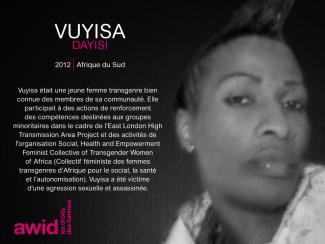
Vuyisa Dayisi
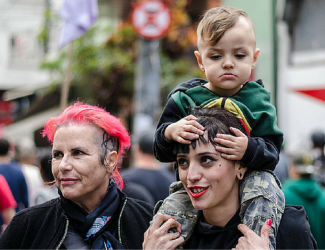
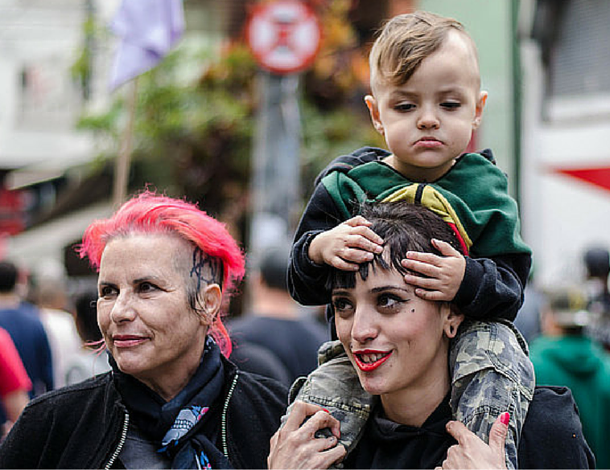
Over the past few years, a troubling new trend at the international human rights level is being observed, where discourses on ‘protecting the family’ are being employed to defend violations committed against family members, to bolster and justify impunity, and to restrict equal rights within and to family life.
The campaign to "Protect the Family" is driven by ultra-conservative efforts to impose "traditional" and patriarchal interpretations of the family, and to move rights out of the hands of family members and into the institution of ‘the family’.
Since 2014, a group of states have been operating as a bloc in human rights spaces under the name “Group of Friends of the Family”, and resolutions on “Protection of the Family” have been successfully passed every year since 2014.
This agenda has spread beyond the Human Rights Council. We have seen regressive language on “the family” being introduced at the Commission on the Status of Women, and attempts made to introduce it in negotiations on the Sustainable Development Goals.
AWID works with partners and allies to jointly resist “Protection of the Family” and other regressive agendas, and to uphold the universality of human rights.
In response to the increased influence of regressive actors in human rights spaces, AWID joined allies to form the Observatory on the Universality of Rights (OURs). OURs is a collaborative project that monitors, analyzes, and shares information on anti-rights initiatives like “Protection of the Family”.
Rights at Risk, the first OURs report, charts a map of the actors making up the global anti-rights lobby, identifies their key discourses and strategies, and the effect they are having on our human rights.
The report outlines “Protection of the Family” as an agenda that has fostered collaboration across a broad range of regressive actors at the UN. It describes it as: “a strategic framework that houses “multiple patriarchal and anti-rights positions, where the framework, in turn, aims to justify and institutionalize these positions.”
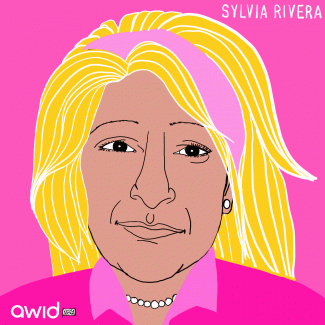
Known as the New York Drag queen of color, Silvia was fierce and tireless in her advocacy, in defense of those who were marginalized and excluded as the “gay rights” movement mainstreamed in the United States in the early 1970’s.
In a well-known speech on Christopher Street Day in 1973, Sylvia, shouted through a crowd of LGBT community members:
“You all tell me, go and hide my tail between my legs.
I will no longer put up with this shit.
I have been beaten.
I have had my nose broken.
I have been thrown in jail.
I have lost my job.
I have lost my apartment.
For gay liberation, and you all treat me this way?
What the fuck’s wrong with you all?
Think about that!”
In 1969, at age 17, Silvia took part in the iconic Stonewall Riots by allegedly throwing the second Molotov cocktail to protest the police raid of the gay bar in Manhattan. She continued to be a central figure in the uprisings that followed, organizing rallies and fighting back police brutality.
In 1970, Sylvia worked together with Marsha P. Johnson to establish Street Transvestite Action Revolutionaries (S.T.A.R.), a political collective and organisation that would set up projects of mutual support for trans people living on the streets, those struggling with drug addiction and in prisons and in particular for trans people of color and those living in poverty.
Defiant of labels, Silvia lived life in a way that challenged people in the gay liberation movement to think differently. She said:
“I left home at age 10 in 1961. I hustled on 42nd Street. The early 60s was not a good time for drag queens, effeminate boys or boys that wore makeup like we did. Back then we were beat up by the police, by everybody. I didn't really come out as a drag queen until the late 60s. when drag queens were arrested, what degradation there was. I remember the first time I got arrested, I wasn't even in full drag. I was walking down the street and the cops just snatched me. People now want to call me a lesbian because I'm with Julia, and I say, "No. I'm just me. I'm not a lesbian." I'm tired of being labeled. I don't even like the label transgender. I'm tired of living with labels. I just want to be who I am. I am Sylvia Rivera.
Through her activism and courage, Sylvia offered a mirror that reflected all that was wrong within society, but also the possibility of transformation. Sylvia was born in 1951 and passed away in 2002.
L’année 2022 marque les 40 ans de la fondation de AWID. Nous profitons de ce moment pour nous pencher sur les années passées et apprendre du chemin parcouru, tout en nous préparant à l’avenir et au travail qui nous attend. À mesure de notre progression entre les cycles de progrès et de repli , nous avons appris que les luttes pour les droits des femmes et la justice de genre sont itératives et non linéaires. En collaboration avec l'artiste Naadira Patel, nous avons créé un album qui met en lumière une sélection de moments marquants, représentatifs des quatre décennies de soutien de AWID aux mouvements féministes.
Nous n’avons pas fait tout cela toutes seules. Nous vous faisons part de cela avec une profonde reconnaissance envers la myriade d’activistes et de groupes féministes qui ont rendu ce travail possible. Dans ce contexte de si nombreuses crises convergentes, nous accueillons l’occasion de célébrer le pouvoir et la résilience des mouvements féministes autour du monde…
Vous pouvez ouvrir en plein écran si vous le souhaitez.
Télécharger l'album ici
by Karina Ocampo
In a hidden corner of Chiapas, Mexico, women and sexual dissidents have come to organize our actions. (...)
< artwork by Sonia Carolina Madrigal Loyola
✉️ Les inscriptions en personne sont closes. Inscrivez-vous au livestream ici
Événement en anglais
📅 Mercredi 12 mars 2025
🕒 12.00h-13.30h EST
🏢 PNUD, 304 E 45th St. Doha Room, 11th Floor (FF Building)
Organisé par : PNUD, Femena, SRI et AWID
Cynthia Cockburn fue una socióloga feminista, escritora, académica, fotógrafa y activista por la paz.
Estudió los aspectos relacionados con el género en la violencia y el conflicto e hizo importantes contribuciones al movimiento por la paz gracias a sus investigaciones sobre masculinidad y violencia, así como gracias a su activismo local e internacional.
Cynthia aportó un análisis feminista potente sobre la militarización y la guerra, y fue una de las académicas cuyos escritos y estudios demostraron claramente cómo la violencia de género desempeñaba un papel clave en la perpetuación de la guerra. Al trabajar en estrecha colaboración con activistas por la paz en distintos países en conflicto, sus conclusiones abarcaron diversos contextos, entre ellos: Irlanda del Norte, Bosnia y Herzegovina, Israel/Palestina, Corea del Sur, Japón, España y el Reino Unido. También logró incluir en sus investigaciones y escritos académicos una interpretación sobre cómo la violencia se experimenta como un continuo de tiempo y escala y cómo se percibe de forma muy diferente cuando se analiza desde la perspectiva de género.
En sus propias palabras: "El género nos ayuda a ver la continuidad, la conexión entre los casos de violencia".
Cynthia conectó su trabajo de investigación con el activismo que sostuvo a nivel local e internacional con los movimientos por la desmilitarización, el desarme y la paz. Ayudó a iniciar el campamento de paz de las mujeres de Greenham Common, que defendía el desarme nuclear universal en Gran Bretaña, y formó parte también de la creación del capítulo londinense de Women in Black [Mujeres de Negro]. A lo largo de las décadas, Cynthia organizó y participó en vigilias semanales locales y en el coro político Raised Voices [Elevar las Voces], para el que, además de cantar, escribió varias letras de canciones que forman parte de su repertorio.
Su activismo la llevó a apoyar también el trabajo de la Women’s International League for Peace and Freedom [Liga Internacional de Mujeres por la Paz y la Libertad] (WILPF, por su siglas en inglés), el European Forum of Socialist Feminists [Foro Europeo de Feministas Socialistas] y Women Against Fundamentalism [Mujeres contra el Fundamentalismo].
"Cynthia arrojó claridad feminista, tejió comunidades feministas, cantó canciones de paz, escuchó, escuchó, escuchó, observó los pájaros - y detuvo el tráfico. Siempre estaré agradecida y en deuda con ella, la otra 'Cynthia'" - Cynthia Enloe.
Cynthia nació en julio de 1934 y falleció en septiembre de 2019, a la edad de 85 años.
Incluso en tiempos de crisis climática, los gobiernos continúan alentando el crecimiento de las industrias agrícolas a gran escala. Estas actividades envenenan la tierra, amenazan la biodiversidad y destruyen la producción de alimentos y los medios de vida locales. Mientras tanto, aunque las mujeres producen la mayoría de nuestros alimentos en el mundo, casi no poseen tierra.
¿Qué pasaría si percibiéramos la tierra y la Naturaleza no como una propiedad privada para ser explotada, sino como una totalidad con la cual aprender y coexistir en armonía? ¿Y si repararíamos nuestras relaciones con la tierra y adoptaríamos alternativas más sostenibles que nutran tanto al planeta como a sus comunidades?
Nous Sommes la Solution (Somos la Solución, NSS) es uno de los muchos movimientos liderados por mujeres que se esfuerzan por lograr este objetivo.
Esta es su historia.
Dear Feminist Movements,
On behalf of the AWID Board of Directors, I am proud to introduce AWID’s next Co-Executive Directors: Faye Macheke and Inna Michaeli!
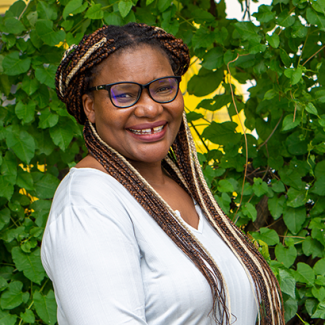 |
Faye Macheke is a passionate Pan-African feminist, active in movements for women's rights, racial justice, migrant and labor rights, and environmental justice. Her activism builds on the legacy of the struggle against apartheid in South Africa and the aftermath of the apartheid era in Zimbabwe. In 2019, Faye joined AWID as the Director of Finance, Operations and Development. She brings extensive experience in feminist leadership, strategy, and all aspects of organisational development. Faye is a committed Board Member of UAF-Africa and other women's rights organizations. She is based in Cape Town, South Africa. |
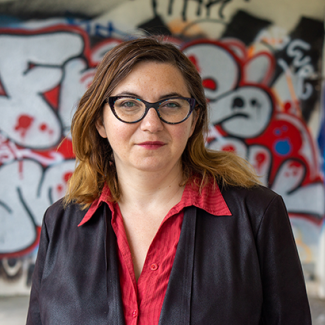 |
Inna Michaeli is a feminist lesbian queer activist and sociologist with many years of deep engagement in feminist and LGBTQI+ struggles, political education and organizing by and for migrant women, and Palestine liberation and solidarity. Inna joined AWID in 2016 and served in different roles, most recently as the Director of Programs. She brings extensive experience in research and knowledge building, policy advocacy and organizational development. Inna serves on the Board of the Jewish Voice for Peace - Germany. She is based in Berlin, Germany. |
This decision is the result of a rigorous process with full participation of the Board and the staff of AWID. The Board recognised and honoured the skills and talents of AWID staff by opening an internal hiring search. As a result, we had two brilliant candidates, who embody the integrity, ethic of care, and feminist intersectional values that drive AWID’s work, apply together as a team. Faye and Inna brought forward a brave and exciting vision to meet the challenges of this moment: building a global feminist community, resisting and disrupting systems of oppression, and supporting feminist movements to thrive.
As AWID celebrates 40 years we are excited for Inna and Faye to co-lead AWID into our next strategy and a new phase of evolving, pushing boundaries, and supporting feminist movements worldwide.
Appointing and supporting AWID’s Co-Executive Directors to lead the organisation is a fiduciary responsibility we take seriously as a Board. How we engage those processes is also a reflection of AWID’s brilliant and diverse membership, which elects AWID’s Board.
As we say good-bye to Cindy and Hakima, we, the Board, unanimously and enthusiastically welcome Faye and Inna as our next Co-EDs as of September 5, 2022. Stay tuned for more updates about our leadership transition in the months ahead.
Most of all, thank you for your ongoing support!
In feminist solidarity and love,
Margo Okazawa-Rey
President, AWID Board
por Alejandra Laprea
Vivo en un país de lo imposible, donde no caen bombas pero padecemos una guerra. (...)
arte: «Entretejidas», Surmercé >
✉️ By registration for larger groups. Drop-ins for smaller groups. Register here
📅 Wednesday, March 12, 2025
🕒 2.00-4.00pm EST
🏢 Chef's Kitchen Loft with Terrace, 216 East 45th St 13th Floor New York
Organizer: AWID
Hevrin Khalaf était une grande dirigeante politique kurde de Syrie dans la région autonome du Rojava, où les femmes kurdes risquent leur vie pour résister aux offensives turques et pour bâtir un système féministe.
Elle a travaillé en tant que secrétaire-générale du Parti du Futur de la Syrie, un groupe qui souhaitait construire des ponts, réconcilier les différents groupes ethniques et mettre sur pied une « Syrie démocratique, pluraliste et décentralisée ».
Véritable symbole de cet effort de réconciliation, elle a également oeuvré à la promotion de l’égalité entre les femmes et les hommes et fut représentante auprès des journalistes en visite, des humanitaires et des diplomates.
Hevrin a de plus été diplômée en tant qu’ingénieure civile, à la ville de Derik, ainsi que l’une des fondatrices de la Fondation pour la Science et la Libre pensée en 2012.
Elle a été torturée et assassinée le 12 octobre 2019 par la milice Ahrar al-Sharqiya, soutenue par la Turquie, lors d’une opération militaire contre les Forces démocratiques syriennes dans le Rojava.
« L’assassinat de Khalaf est un tournant majeur dans l’histoire moderne de la Syrie, celui-ci ayant une fois de plus confirmé la validité du vieux proverbe kurde qui dit : « Il n’y a de véritable ami·e que la montagne ». Je serai toujours ami avec Khalaf et sa vision d’un monde meilleur. » – Ahed Al Hendi
Gender Impact Investing (GII) is now trending as a solution to gender inequality. Yet, as our report indicates, it is actually part of the problem. Public and private institutions marketing GII equate it with promotion of gender equality and with increased resources for women and girls.
Rather, GII is another expression of subjecting our lives and societies to the same financial logic that has shaped, and continues shaping, the profound inequalities in our world.
With this report, AWID offers the readers - feminists, gender justice advocates and stakeholders in gender impact investing - a critical analysis and substantiated evidence to understand GII, its narratives, and economic and political implications for feminist movements.
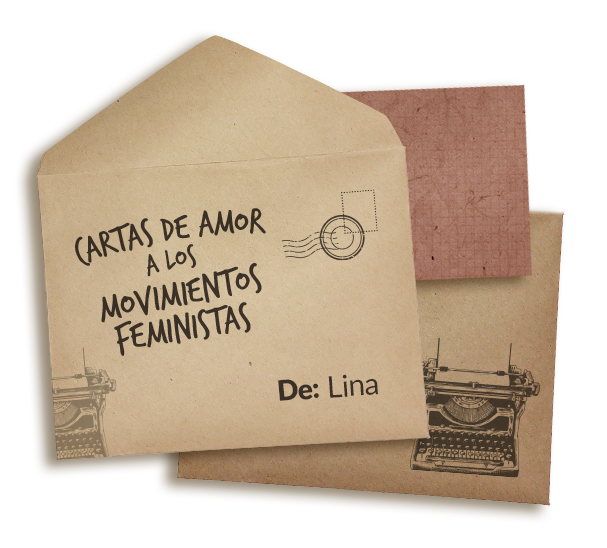
La integro desde que tengo uso de razón. De jovencita, no sabía que existía una palabra — «feminista» — para nosotrxs, quienes aspiramos a superar y desmantelar el patriarcado; quienes buscamos refugio en los brazos de la inclusión y la interseccionalidad; quienes tratamos a las personas como iguales independientemente de su género, raza, sexualidad, religión y etnia; quienes estamos continuamente aprendiendo a obrar mejor, a ser mejores y a usar nuestros privilegios para que otras personas mejoren.
Cuando tenía 14 años, mi profesor de francés de la escuela secundaria, un hombre de 1,80 metros de altura y 30 años de edad, agredió a una alumna de mi clase delante de todxs nosotrxs. La alumna, que era amiga mía desde la infancia, y varias chicas más fuimos a la dirección para denunciarlo, madres y padres se involucraron y toda la clase, treinta alumnxs, expresó su apoyo a la chica. Pero todos nuestros intentos para que el profesor rindiera cuentas por lo que había hecho fracasaron: la administración ocultóó la denunciaa y el profesor nunca fue despedido ni perseguido. Mis compañeras y yo estábamos indignadas, así que hicimos lo que toda joven feminista furiosa haría: LE TIRAMOS HUEVOS A SU AUTO. Si bien los huevos se lavaron con facilidad, costó más sacar la pintura que usamos para escribir las palabras «Cerdo» y «Khamaj» (basura). Nunca olvidaré cómo nos hizo sentir eso: liberadas, enfurecidas, felices, muy unidas y con poder. La misma emoción se repite en todos los ámbitos feministas en los que he estado desde entonces. La feminista adolescente que hay en mí creció y participó en Women Deliver, AWID, Unootha, facilitó talleres feministas en la universidad, e incluso fue perseguida por su filiación feminista a los 19 años, pero esa es otra historia para otra carta.
Los movimientos y espacios feministas me brindan seguridad y empoderamiento. Son las madres que hubiéramos deseado tener y los vínculos que necesitábamos para conectarnos y organizarnos, a pesar de nuestras diferencias, contra un enemigo común, el patriarcado, que nos ha estado perjudicando a todxs. Con ustedes aprendí a ser resiliente y a reunir mis fuerzas y habilidades para estimular a otras personas, para sacar a la luz la situación de las personas marginadas, y dar voz a quienes no la tienen.
Lo que más me gusta de ustedes, movimientos feministas, es que a veces hacen mal las cosas, desprecian y también marginan, tienen prejuicios como cualquier otro movimiento, pero lo que los diferencia es que siempre se esfuerzan por ser mejores. La rendición de cuentas no es algo a lo que le teman, y son un colectivo en constante cambio que refleja cómo el altruismo y la filantropía que se proponen lograr la equidad de género también cambian con el paso del tiempo.
Que crezcan siempre, que obren mejor, que siempre se enfurezcan, que siempre rujan, que siempre amen, que siempre hablen distintas lenguas y que siempre sientan su poder.
Amor, luz y rabia,
Lina
par Sophia Armen
Que cela vous plaise ou non, les ungerhouis font partie intégrante de nos histoires de résistance et elles ne disparaîtront pas de sitôt. (...)
Don't know where to start? Let's try understanding the filters.