Protection of the Family
The Issue
Over the past few years, a troubling new trend at the international human rights level is being observed, where discourses on ‘protecting the family’ are being employed to defend violations committed against family members, to bolster and justify impunity, and to restrict equal rights within and to family life.
The campaign to "Protect the Family" is driven by ultra-conservative efforts to impose "traditional" and patriarchal interpretations of the family, and to move rights out of the hands of family members and into the institution of ‘the family’.
“Protection of the Family” efforts stem from:
- rising traditionalism,
- rising cultural, social and religious conservatism and
- sentiment hostile to women’s human rights, sexual rights, child rights and the rights of persons with non-normative gender identities and sexual orientations.
Since 2014, a group of states have been operating as a bloc in human rights spaces under the name “Group of Friends of the Family”, and resolutions on “Protection of the Family” have been successfully passed every year since 2014.
This agenda has spread beyond the Human Rights Council. We have seen regressive language on “the family” being introduced at the Commission on the Status of Women, and attempts made to introduce it in negotiations on the Sustainable Development Goals.
Our Approach
AWID works with partners and allies to jointly resist “Protection of the Family” and other regressive agendas, and to uphold the universality of human rights.
In response to the increased influence of regressive actors in human rights spaces, AWID joined allies to form the Observatory on the Universality of Rights (OURs). OURs is a collaborative project that monitors, analyzes, and shares information on anti-rights initiatives like “Protection of the Family”.
Rights at Risk, the first OURs report, charts a map of the actors making up the global anti-rights lobby, identifies their key discourses and strategies, and the effect they are having on our human rights.
The report outlines “Protection of the Family” as an agenda that has fostered collaboration across a broad range of regressive actors at the UN. It describes it as: “a strategic framework that houses “multiple patriarchal and anti-rights positions, where the framework, in turn, aims to justify and institutionalize these positions.”
Related Content
การเข้าร่วมมีราคาเท่าไร
กรุณาคำนวณค่าใช้จ่ายโดยรวมถึงค่าเดินทางมายังกรุงเทพมหานคร ค่าที่พัก ค่าเบี้ยเลี้ยง ค่าวีซ่า ค่าสนับสนุนในการเข้าถึงต่างๆ และอื่นๆ ยังไม่รวมถึงค่าลงทะเบียนที่จะมีการประกาศเร็วๆนี้ โรงแรมในบริเวณสุขุมวิท กรุงเทพฯ มีราคาตั้งแต่ 1,700-6,800 บาทต่อคืน สำหรับการพักสองคน
โดยหากเป็นสมาชิก AWID จะได้รับส่วนลดค่าลงทะเบียน หากคุณยังไม่ได้เป็นสมาชิก เราขอเชิญชวนให้คุณสมัครสมาชิกและเข้าร่วมชุมชนเฟมินิสต์ระดับโลก
Les savoirs communautaires pour bâtir des futurs justes
Le contexte
Aujourd'hui, de nombreux systèmes de savoirs communautaires sont en danger.
Les changements qui surviennent à une vitesse effrénée sur le plan économique, politique et culturel détruisent les environnements, les pratiques et les moyens de subsistance. Diverses formes de connaissances sombrent dans l’oubli, sont marchandées et colonisées dans le cadre de la mondialisation massive, de la promesse de gains à court terme, ou encore contre des solutions de fortune.
Définition
Le Buen Vivir (le bien-vivre), un concept adapté à partir des connaissances des peuples autochtones andins, est décrit comme la réalisation collective d'une vie d'accomplissement fondée sur des relations harmonieuses et équilibrées entre les êtres humains et tous les êtres vivants, dans la réciprocité et la complémentarité. Cela implique de reconnaître que les êtres humains sont une partie intégrante de la nature, que nous dépendons de la nature et que nous sommes interdépendant-e-s entre nous.
La vision inhérente à la notion de Buen Vivir intègre la production et la reproduction comme processus indissociables de l'économie, de la production de richesse et des conditions de vie.
Perspective féministe
D’une perspective féministe, le Buen Vivir valorise les relations et les ressources mobilisées dans les cycles de production et de reproduction, favorisant l’équilibre (non seulement celui des marchés) afin de garantir la continuité et les changements, tant qu'ils sont compatibles avec la justice économique et la pérennité de la vie.
Certaines conceptions binaires liées au genre et à la complémentarité entre les hommes et les femmes ont été critiquées par les féministes puisqu’elles laissent peu de place à une discussion plus approfondie sur le patriarcat hétérocentrique et les relations de genre ‘non conformes’.
Cela dit, l'une des principales contributions de l’application du principe Buen Vivir aux cadres politiques, économiques et sociaux, consiste à ce que l'égalité ne représente plus le paradigme des droits individuels, ayant plutôt pour objet la transformation de l’ensemble de la société.

Pour en savoir plus sur cette proposition :
- Buen Vivir: An introduction from a women’s rights perspective in Bolivia (Une perspective des droits des femmes sur le Buen Vivir en Bolivie : Une introduction, disponible en anglais). Dans son article, Martha Lanza conteste l'idée que le Buen Vivir est neutre en matière de genre et réclame le démantèlement des structures de pouvoir patriarcales qui persistent. Dans la même publication, Magdalena León analyse d’une perspective de genre la façon dont la cosmovision du Buen Vivir cherche à vaincre les idéaux d'expansion et de croissance permanentes, en plus de mettre en lumière les préjugés sexistes qui doivent être pris en compte.
- Buen Vivir: Today’s Tomorrows (Les lendemains d’aujourd’hui) par Eduardo Gudynas (en anglais).
- Indigenous Women's Visions of an Inclusive Feminism (Visions de femmes autochtones pour un féminisme inclusif), par Myrna Cunningham (en anglais). Un document qui met en évidence les contributions essentielles des femmes autochtones à la construction d'un mouvement féministe plus diversifié, inclusif et fort.
Snippet FEA This is the story of the Nadia Echazú (EN)
A workplace does not have to operate on competition and profit. It does not have to exploit people for the benefit of the owner and a small elite either.
Instead, communities on the margins of formal economies are building cooperative models based on autonomy, cooperation, shared responsibility, self-management and solidarity.
Worker-controlled cooperatives and workplaces have always offered alternative ways of generating employment opportunities, income, social security and savings - while distributing revenues in more communal, sustainable and safer ways.
But it is more than an employment opportunity: it is the making of dreams into a reality, and the building of feminist economies based on solidarity and care for each other. It is about creating a world where our lives, our labor and our communities matter.
This is the story of the Nadia Echazú Textile Cooperative, the first social enterprise managed by and for travesti and trans people in Argentina.
Puis-je soumettre une proposition de session ?
L'appel à propositions est maintenant fermé.
Nous avons lancé un Appel à activités le 19 novembre 2019 et la date limite de réception des propositions était le14 février 2020.
Trouvez d'autres moyens de vous engager sur le chemin du Forum
Regina Martínez
มีหัวข้อที่เราควรหลีกเลี่ยงที่จะส่งเป็นกิจกรรมหรือไม่
AWID ฟอรัม ตลอดมาเป็นพื้นที่ที่ไม่กลัวการสนทนาที่จำเป็น หรือหัวข้อที่ท้าทาย เรายินดีรับข้อเสนอเหล่านี้เมื่อผู้จัดกิจกรรมสามารถรักษาพื้นที่สำหรับผู้เข้าร่วมด้วยความเคารพ ปลอดภัย และอย่างระมัดระวัง
Protection of the Family - Opposition Views
New conservative alliance:
Conservative organizing and policy
State supporters
Snippet FEA 1 of 3 trans and travesti people (ES)

1 de cada 3 personas trans y travesti en Argentina vive en un hogar de bajos ingresos.
Quand pourrai-je m’inscrire au Forum ?
Nous vous fournirons cette information sous peu. Restez à l’écoute !
Micaela García
Related content
TeleSUR: Outrage Shakes Argentina After Murder of Anti-Femicide Activist
Helen Bamber
เกี่ยวกับวีซ่า
เราตระหนักดีถึงอุปสรรคในทางปฏิบัติและความทุกข์ทางอารมณ์ในการเดินทางระหว่างประเทศ โดยเฉพาะอย่างยิ่งจากซีกโลกใต้ โดย AWID กำลังทำงานร่วมกับ TCEB (สำนักงานส่งเสริมการจัดประชุมและนิทรรศการของประเทศไทย) เพื่อสนับสนุนผู้เข้าร่วมฟอรัมในการขอวีซ่า ข้อมูลอื่นๆเกี่ยวกับการขอวีซ่าจะถูกนำเสนอในช่วงที่เปิดให้ลงทะเบียน รวมถึงสถานที่และวิธีการขอวีซ่า
TEST - MAP
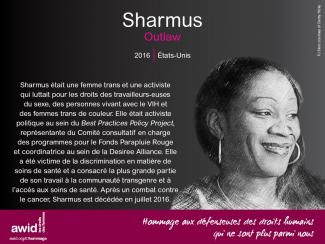
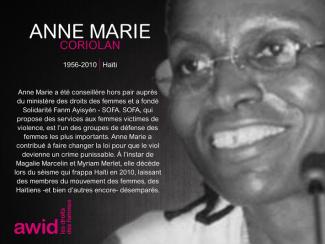
WHRD Tribute - 2017
We can have an intro here
And maybe a little bit more text here
Snippet FEA Trans and Travesti people (FR)

LE QUOTA D'EMPLOI TRANS
n'est pas respecté par les entreprises
Faut-il être membre de l’AWID pour participer au Forum ?
Non, vous n’avez pas besoin d’être membre de l’AWID pour participer, mais les membres de l’AWID bénéficient d’une réduction sur les frais d’inscription ainsi qu’un certain nombre d’autres avantages.
Apprenez-en davantage sur la façon de devenir membre de l’AWID
Leonela Tapdasan Pesadilla
Florita Nang Flor Caya
CFA 2023 - breadcrumbs Menu _ FAQ_en
The Devil is in the Details
Free ebook on Women's rights and Religious fundamentalisms
Religious fundamentalisms have particularly high costs for women and girls
In a global picture of rising religious fundamentalisms, this ebook details the grave human rights violations, and violations of women’s rights in particular, caused by state-sponsored fundamentalism, as well as by fundamentalist non-state actors such as militias, religious community organizations, and individuals.
It is vital to promote intersectional feminist understandings of power and privilege, and to apply these to questions of religion and culture.