Contenido relacionado
Huffington Post: Muere Kate Millett, activista y referente feminista
TeleSUR: Muere la autora feminista Kate Millett a los 82 años

Over the past few years, a troubling new trend at the international human rights level is being observed, where discourses on ‘protecting the family’ are being employed to defend violations committed against family members, to bolster and justify impunity, and to restrict equal rights within and to family life.
The campaign to "Protect the Family" is driven by ultra-conservative efforts to impose "traditional" and patriarchal interpretations of the family, and to move rights out of the hands of family members and into the institution of ‘the family’.
Since 2014, a group of states have been operating as a bloc in human rights spaces under the name “Group of Friends of the Family”, and resolutions on “Protection of the Family” have been successfully passed every year since 2014.
This agenda has spread beyond the Human Rights Council. We have seen regressive language on “the family” being introduced at the Commission on the Status of Women, and attempts made to introduce it in negotiations on the Sustainable Development Goals.
AWID works with partners and allies to jointly resist “Protection of the Family” and other regressive agendas, and to uphold the universality of human rights.
In response to the increased influence of regressive actors in human rights spaces, AWID joined allies to form the Observatory on the Universality of Rights (OURs). OURs is a collaborative project that monitors, analyzes, and shares information on anti-rights initiatives like “Protection of the Family”.
Rights at Risk, the first OURs report, charts a map of the actors making up the global anti-rights lobby, identifies their key discourses and strategies, and the effect they are having on our human rights.
The report outlines “Protection of the Family” as an agenda that has fostered collaboration across a broad range of regressive actors at the UN. It describes it as: “a strategic framework that houses “multiple patriarchal and anti-rights positions, where the framework, in turn, aims to justify and institutionalize these positions.”
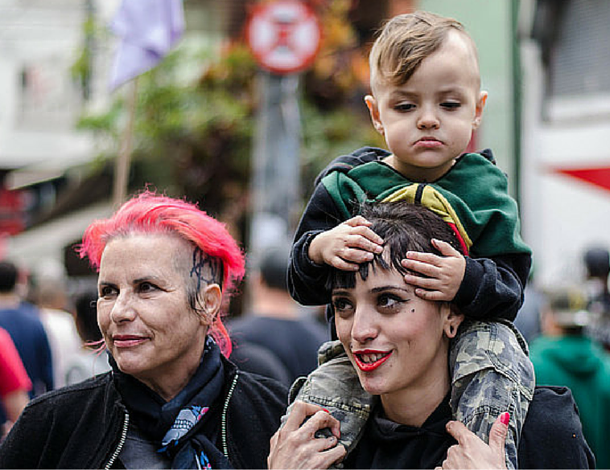
La integro desde que tengo uso de razón. De jovencita, no sabía que existía una palabra — «feminista» — para nosotrxs, quienes aspiramos a superar y desmantelar el patriarcado; quienes buscamos refugio en los brazos de la inclusión y la interseccionalidad; quienes tratamos a las personas como iguales independientemente de su género, raza, sexualidad, religión y etnia; quienes estamos continuamente aprendiendo a obrar mejor, a ser mejores y a usar nuestros privilegios para que otras personas mejoren.
Cuando tenía 14 años, mi profesor de francés de la escuela secundaria, un hombre de 1,80 metros de altura y 30 años de edad, agredió a una alumna de mi clase delante de todxs nosotrxs. La alumna, que era amiga mía desde la infancia, y varias chicas más fuimos a la dirección para denunciarlo, madres y padres se involucraron y toda la clase, treinta alumnxs, expresó su apoyo a la chica. Pero todos nuestros intentos para que el profesor rindiera cuentas por lo que había hecho fracasaron: la administración ocultóó la denunciaa y el profesor nunca fue despedido ni perseguido. Mis compañeras y yo estábamos indignadas, así que hicimos lo que toda joven feminista furiosa haría: LE TIRAMOS HUEVOS A SU AUTO. Si bien los huevos se lavaron con facilidad, costó más sacar la pintura que usamos para escribir las palabras «Cerdo» y «Khamaj» (basura). Nunca olvidaré cómo nos hizo sentir eso: liberadas, enfurecidas, felices, muy unidas y con poder. La misma emoción se repite en todos los ámbitos feministas en los que he estado desde entonces. La feminista adolescente que hay en mí creció y participó en Women Deliver, AWID, Unootha, facilitó talleres feministas en la universidad, e incluso fue perseguida por su filiación feminista a los 19 años, pero esa es otra historia para otra carta.
Los movimientos y espacios feministas me brindan seguridad y empoderamiento. Son las madres que hubiéramos deseado tener y los vínculos que necesitábamos para conectarnos y organizarnos, a pesar de nuestras diferencias, contra un enemigo común, el patriarcado, que nos ha estado perjudicando a todxs. Con ustedes aprendí a ser resiliente y a reunir mis fuerzas y habilidades para estimular a otras personas, para sacar a la luz la situación de las personas marginadas, y dar voz a quienes no la tienen.
Lo que más me gusta de ustedes, movimientos feministas, es que a veces hacen mal las cosas, desprecian y también marginan, tienen prejuicios como cualquier otro movimiento, pero lo que los diferencia es que siempre se esfuerzan por ser mejores. La rendición de cuentas no es algo a lo que le teman, y son un colectivo en constante cambio que refleja cómo el altruismo y la filantropía que se proponen lograr la equidad de género también cambian con el paso del tiempo.
Que crezcan siempre, que obren mejor, que siempre se enfurezcan, que siempre rujan, que siempre amen, que siempre hablen distintas lenguas y que siempre sientan su poder.
Amor, luz y rabia,
Lina
Contenido relacionado
Huffington Post: Muere Kate Millett, activista y referente feminista
TeleSUR: Muere la autora feminista Kate Millett a los 82 años
par Rode Wanimbo
Seigneur, nous sommes indignes. C’est nous qui avons péché car Ève a mangé le fruit dans le jardin d’Eden. (...)
< illustration : « Offrandes pour les vies Noires » par Sokari Ekine

Создать ориентированную на феминистские реалии доказательную базу движения денег их получателей
Hello again, and again, and again. I have known and loved you my entire adult life, since I first met you meaningfully, after graduating from university. I’d seen you one time before then. That was you appearing as Betty Friedan on a local TV talk show in the US Midwest, in the late-1960s. At the time, Mrs. Wells, my other mother, and I commented on what wild, far-fetched ideas this woman was trying to convince us about. Decade after decade since then I have fallen more deeply in love with you, Beloved, and understand and witness your political and theoretical brilliance, ethical and moral authority, creativity, joy, and love, above all. Nearly 60 years later, I know we are partners forever.
The early years of our acquaintanceship was ok. I was quite self-involved--figuring racial, gender, and sexual identity; getting clear on my core politics, values, and ethics; completing my formal education--and you provided numerous settings, intellectual drop-in centers, and comforting holding environments where and through which I was able to craft the young-adult building blocks of the feminist and human being whom I would become.
The predominantly white women’s movement of Cambridge and Boston, including Daughters of Bilitis, was my starting place. That suited me at the time but soon realized I desired something more. Poof! Like magic (serendipity), I connected with a small group of radical, anti-imperialist, Black, socialist lesbian women and we soon became the Combahee River Collective.
That early Combahee experience, combined with critical life lessons and particular African-American/Korean immigrant racial politics of early-1990s in the US, prepared me for the journey that has led me to identify and work as a transnational feminist to address militarism and to dedicate myself to imagining other worlds where all living beings will thrive.
The next two critical women’s-movement moments were decades after Combahee years but deeply linked. First was meeting and being invited into the Korean feminist movement organizing against US military bases and supporting the “kijichon women” the Korean women whose lives, including for some, their mixed-race children, revolved around servicing US military personnel in numerous ways in villages and towns adjacent to the bases. Korean Beloved Feminists, especially Kim Yon-Ja and Ahn Il-Soon, the first sisters I met and traveled with, made me see and understand the critical importance of nation as an analytical and organizing principle. The “capstone” was living, working in occupied Palestine. The late Maha Abu-Dayyeh introduced me to the Palestinian women’s movement, with a profound comment, “you can leave Palestine but Palestine will never leave you.” So true. And, all my work and experiences across many borders brought me to AWID--my second home.
As you know, Beloved, being with you has not been easy or simple. Indeed, you are demanding, consistently riddled with contradictions, and sometimes even hurtful. Nonetheless, you continue to grow and develop, as you are supporting my political, emotional, and spiritual growth and development. I guess we are growing each other--a very profound process to which I will dedicate the rest of my time in my current form.
The through-line of being with you all these decades is this:
Feminists Collectively Engaging the Heads, Hearts, Hands, and Spirits to transform our worlds
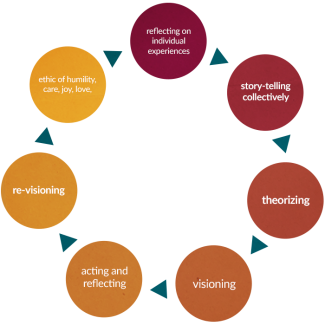
So much love, Feminist Movements!
Your Margo
AKA DJ MOR Love and Joy
Wellfleet Massachusetts USA
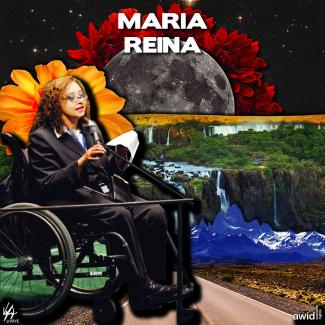
Elle a représenté l'International Disability and Development Consortium (consortium international sur le développement et le handicap) lors de la négociation de la Convention des Nations Unies relative aux droits des personnes handicapées (2001-2006). Son travail a été consacré à la réalisation de l'objectif de la Convention, à savoir la réalisation des droits humains universels par, pour et avec les personnes handicapées pour un monde inclusif, accessible et durable.
Selon ses propres mots, son leadership consistait à « … servir la communauté des personnes handicapées, en commençant par de petites tâches que d'autres pourraient ne pas vouloir faire».
Elle est décédée le 27 octobre 2017 dans sa ville natale de Rosario, en Argentine.
Pour en savoir plus sur María Verónica Reina, retrouvez son témoignage.
by Fatima B. Derby
In 2017, the AWID #PracticeSolidarity campaign highlighted how young feminists could build feminist futures by showing up for one another, being in cross-regional conversations with one another, marching in solidarity with other activists and collaborating between movements. (...)
< artwork: “Let it Grow” by Gucora Andu
Os movimentos feministas, de direitos das mulheres, de justiça de género, de LBTQI+ e de aliados em todo do mundo encontram-se num momento crítico, e enfrentam uma forte retaliação contra direitos e liberdades conquistados anteriormente. Os últimos anos trouxeram o crescimento rápido do autoritarismo, a violenta repressão da sociedade civil e a criminalização dos defensores dos direitos humanos das mulheres e de pessoas de género diverso, o aumento da guerra e do conflito em várias partes do nosso mundo, a perpetuação contínua de injustiças económicas e crises de saúde, da ecologia e do clima interligadas.
El cuerpo es una entidad poderosa. Por ser mujeres, nuestros cuerpos son controlados, oprimidos y vigilados desde que estamos en el útero. Nuestro aspecto, la forma en que nos movemos, nos vestimos, caminamos, hablamos, gesticulamos, reímos. A menudo me he preguntado qué es lo que genera los temores patriarcales respecto del poder de los cuerpos femeninos.
En el lugar de donde provengo, se murmuraba sobre el trabajo sexual y lxs trabajadorxs sexuales con desprecio, asco, fascinación, lástima y condena, todo en simultáneo.
Descubrí el trabajo sexual y a lxs trabajadorxs sexuales cuando tenía 22 años. En conversaciones sencillas, sentadxs en círculo, charlando mientras tomábamos café y té, explorábamos nuestras vidas, experiencias, pensamientos y sentimientos.
Para lxs trabajadorxs sexuales, el trabajo sexual era la opción más conveniente de todas, para pagar las cuentas, para sostener a la familia, para tener un horario laboral más flexible, para tener sexo. Así elegí mi trabajo, como el más conveniente, para pagar las cuentas, para sostener a la familia, para tener un horario laboral más flexible.
Estas personas, mujeres y hombres, me enseñaron que yo tomaba mis propias decisiones sobre mi cuerpo: dónde focalizo su vida y su energía, si lo uso para el placer o para el dolor, si lo comercializo o lo ofrezco en forma gratuita, y cómo quiero sentirme en relación con mi cuerpo. Esta conciencia fue tan excitante como empoderadora.
Crear | Résister | Transform: un festival para movimientos feministas – 2021… ustedes me acompañaron a lo largo de una serie de momentos que cambiaron mi vida (¡!¡!¡!)
Los llamamos «eventos», pero en verdad, para mí, sus espacios de aprendizaje feministas son el lugar adonde llevo un poco de lo que tengo adentro, y de donde me llevo un poco de lo que dicen sus disertantes y algo de las discusiones que penetran más profundamente en nuestra comprensión.
Compartir... Participar... Sumergirse...
en la fortaleza, en la vulnerabilidad, en el placer.
Simplemente siendo la feminista transformadora que soy, sin pretensiones, sin recelos...
Apreciando a la feminista transformadora que siempre he sido, sin siquiera conocer la palabra ni reconocerla de esa manera o en esos términos...
Encontrar un hogar para la feminista ferozmente transformadora que vive dentro de mí...
A pesar de la ira, la rabia y la frustración por no ser tratada como una igual y ser tratada como alguien «menos _ que».
No siempre me consideré feminista ni me reconocí a mí misma dentro del movimiento feminista o del discurso feminista. De verdad, aprecio que las puertas me fueran abiertas, que se me acercaran sillas para sentarme, el reconocimiento como mujer, el reconocimiento de mi feminidad.
Algunas veces desestimé al patriarcado con fastidio, otras veces respondí con frustración y enojo, pero no lo enfrenté... no notaba su toxicidad siniestra e insidiosa... era lo suficientemente privilegiada como para poder trabajar a través de él, para sobrevivir a él, para superarlo, para destacarme a pesar de él... no lo cuestionaba lo suficiente, no lo desafiaba lo suficiente, no sobrepasaba mis límites lo suficiente... no hacía lo suficiente...
…conectándome con trabajadorxs sexuales, explorando la sexualidad y las mujeres para tener paz y seguridad…
Hasta que fui plenamente consciente y comprendí las implicancias tanto del privilegio como de la opresión que eran interseccionales.
Hasta que me di cuenta de lo que significaba pelear por la justicia de género y no simplemente por la «igualdad para todxs».
Ya no más practicante y facilitadora: soy una practicante y facilitadora feminista transformadora.
Ser feminista significa que voy a actuar
Zambulléndome en un futuro incierto, frágil, complejo (y posiblemente bastante violento)…
Estoy profundamente agradecida por tenerlxs a ustedes y les prometo continuar siendo implacable al enfrentar y reparar los temas problemáticos relacionados con el género, la raza, la etnia, la clase social, la orientación sexual y la capacidad, y seguir estando presente y siendo fiel a la lucha por la inclusión, la equidad y la justicia.
- Khin Khin
Que représentent les Forums de l’AWID pour celles et ceux qui y ont assisté ? Quelle est cette magie qui opère lorsque des féministes du monde entier se rassemblent pour célébrer, élaborer des stratégies, apprendre et partager leurs joies ?
L’AWID s’est entretenue avec plus de quarante participant·es aux Forums pour connaître le récit de leur transformation personnelle en tant qu’activistes, celle de leur organisation et des mouvements auxquels elles et ils appartiennent. Elles et ils nous ont également dit ce que nous devrions conserver et renforcer pour les prochains Forums, ce qui distingue les Forums de l’AWID, et ce que nous pouvons améliorer.
Ce rapport contient des enseignements et d’inestimables conseils pour toute personne prévoyant d’organiser des rassemblements régionaux et thématiques en personne, et pour nous-mêmes alors que nous planifions le 15e Forum international de l’AWID.
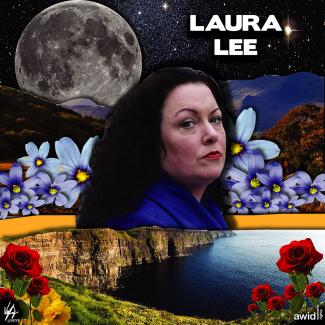
Laura was a leading activist and lawyer who campaigned fearlessly for the decriminalisation of sex work in Ireland.
She is remembered as “a freedom fighter for sex workers, a feminist, a mother to a daughter and a needed friend to many.”
Laura advocated for individuals in the sex industry to be recognised as workers deserving of rights. She advanced demands for decriminalisation, including initiating a judicial review at Belfast’s high court in respect of the provisions criminalising the purchase of sex. Laura stated that her intention was to bring the case to the European Court of Human Rights.
por Gabriela Estefanía Riera Robles
Juliana. ¡Cómo quisiera llamarme Juliana! Es un nombre lleno de poder y presencia, lleno de fuerza y vehemencia. (...)
< arte: «Born Fighters», Borislava Madeit y Stalker Since 1993
(Доступно на английском языке)
Comment réagir quand on sent que le monde nous tombe dessus ? Pour Tidinha, ça a été l’occasion de sentir qu’on pouvait l’écouter lorsqu’elle questionnait le choix du lieu, de découvrir qu’elle partageait des visions et des rêves avec d’autres participantes et de réaliser qu’elle n’était pas seule.
Découvrez toutes les histoires Télécharger le rapport complet