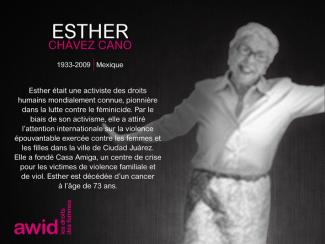
Esther Chávez Cano
Over the past few years, a troubling new trend at the international human rights level is being observed, where discourses on ‘protecting the family’ are being employed to defend violations committed against family members, to bolster and justify impunity, and to restrict equal rights within and to family life.
The campaign to "Protect the Family" is driven by ultra-conservative efforts to impose "traditional" and patriarchal interpretations of the family, and to move rights out of the hands of family members and into the institution of ‘the family’.
Since 2014, a group of states have been operating as a bloc in human rights spaces under the name “Group of Friends of the Family”, and resolutions on “Protection of the Family” have been successfully passed every year since 2014.
This agenda has spread beyond the Human Rights Council. We have seen regressive language on “the family” being introduced at the Commission on the Status of Women, and attempts made to introduce it in negotiations on the Sustainable Development Goals.
AWID works with partners and allies to jointly resist “Protection of the Family” and other regressive agendas, and to uphold the universality of human rights.
In response to the increased influence of regressive actors in human rights spaces, AWID joined allies to form the Observatory on the Universality of Rights (OURs). OURs is a collaborative project that monitors, analyzes, and shares information on anti-rights initiatives like “Protection of the Family”.
Rights at Risk, the first OURs report, charts a map of the actors making up the global anti-rights lobby, identifies their key discourses and strategies, and the effect they are having on our human rights.
The report outlines “Protection of the Family” as an agenda that has fostered collaboration across a broad range of regressive actors at the UN. It describes it as: “a strategic framework that houses “multiple patriarchal and anti-rights positions, where the framework, in turn, aims to justify and institutionalize these positions.”
(متوفرة باللغة الإنجليزية)
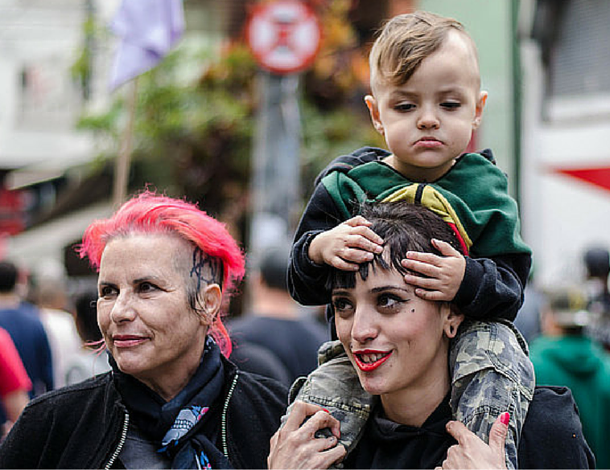
Liliana fue una maestra argentina, una tejedora y una escritora muy reconocida.
Su trilogía La saga de los confines recibió varios premios y es única en el género fantástico por su uso y reimaginación de la mitología de los pueblos indígenas de América del Sur.
El compromiso de Liliana con el feminismo se expresaba en las diversas, ricas y fuertes voces de mujeres en su escritura y especialmente en su extensa obra para lectorxs jóvenes. También tomó posición públicamente en favor del aborto, la justicia económica y la equidad de género.
Les ultraconservateurs ont développé un certain nombre d’arguments relatifs aux droits humains sur le plan international, lesquels instrumentalisent la religion, la culture, la tradition et la souveraineté nationale dans le but de porter atteinte aux droits liés au genre et à la sexualité. Les acteurs anti-droits s’éloignent de plus en plus d’un langage explicitement religieux.
Nous constatons de plus en plus fréquemment que des acteurs rétrogrades – qui dénigraient auparavant le concept des droits humains – tentent désormais de le récupérer et de le manipuler pour atteindre leurs objectifs.
Ce discours émergent qui prospère actuellement semble inoffensif, mais il fonctionne comme un cadre général abritant de multiples positions patriarcales et anti-droits.
Le thème de la « protection de la famille » est donc un exemple particulièrement parlant de l’évolution de la stratégie de certains acteurs rétrogrades que utilisent désormais un plaidoyer holistique et intégré.
L’argumentaire sur la « protection de la famille » est utilisé pour déplacer le sujet de droits humains de l’individu vers des institutions déjà puissantes.
Il prône également une conception unitaire, hiérarchique et patriarcale de la famille qui suppose une discrimination à l’égard des formes familiales situées en dehors de ces limites rigides. Il tente également d’atténuer l’importance actuellement accordée à la reconnaissance et à la protection des droits des membres vulnérables de la famille pour privilégier la non-discrimination, l’autonomie et l’absence de violence dans le contexte des rapports familiaux.
Le Saint-Siège et un certain nombre de groupes chrétiens de défense des droits cherchent à s’approprier la notion de droit à la vie pour servir leur lutte contre l’avortement. En introduisant la doctrine religieuse conservatrice dans le langage des droits humains, ils soutiennent l’idée qui veut que le droit à la vie, tel qu’énoncé dans la Déclaration universelle des droits de l’homme et dans le Pacte international relatif aux droits civils et politiques, s’applique dès le moment de la conception.
Aucun des instruments universels relatifs aux droits humains ne vient étayer ce discours. Pourtant, c’est une stratégie attrayante pour les acteurs anti-droits dans la mesure où le droit à la vie ne peut être violé en aucune circonstance et qu’il constitue une norme juridiquement contraignante.
Les acteurs anti-droits utilisent un certain nombre d’arguments dans leur campagne pour porter atteinte aux droits sexuels. Ils soutiennent que les droits sexuels n’existent pas ou qu’il s’agit de « droits nouveaux » nuisibles aux enfants et à la société et/ou que ces droits sont en opposition avec la culture, la tradition ou le droit national.
Dans le cadre onusien, les conservateurs plaident contre le droit à une éducation sexuelle complète (ESC) en attaquant ce concept à plusieurs niveaux. Ils prétendent que l’ESC viole les « droits parentaux », qu’elle nuit aux enfants et qu’il s’agit d’un endoctrinement idéologique plutôt que d’une forme d’éducation. Ils affirment également que cette éducation sexuelle complète est imposée aux enfants, aux parents et aux Nations Unies par de puissants lobbyistes qui cherchent à tirer profit des services qu’ils fournissent aux enfants et aux jeunes.
Les tentatives visant à invalider les droits relatifs à l’orientation sexuelle et à l’identité de genre prolifèrent. Les ultraconservateurs font valoir le fait que l’application des principes et du droit relatifs aux droits humains – qui existent pourtant depuis longtemps – consiste en fait à créer de « nouveaux droits ». Ils prétendent enfin que le contenu des droits devrait varier radicalement parce que ceux-ci devraient être interprétés à l’aune de la « culture » ou des « particularismes nationaux ».

Les organisations de la droite chrétienne se mobilisent depuis longtemps contre les droits reproductifs, aux côtés du Saint-Siège et d’autres alliés anti-droits. Elles affirment souvent que les droits reproductifs sont en fait une forme de contrôle de la population imposée par l’Occident aux pays du Sud global. Paradoxalement, ce discours émane le plus souvent d’acteurs issus des États-Unis et de l’Europe occidentale, dont beaucoup travaillent activement pour exporter leur rhétorique et leurs politiques fondamentalistes.
Ces acteurs rétrogrades reprennent également des arguments « scientifiques » élaborés par des groupes de réflexion ultraconservateurs et citent des sources usant de méthodologies de recherche peu fiables pour montrer que l’avortement a de nombreux effets secondaires psychologiques, sexuels, physiques et relationnels.
Les acteurs anti-droits visent à promouvoir le concept de « protection de la famille », mais ils tentent également de créer une nouvelle catégorie de « droits parentaux » à laquelle les normes existantes relatives aux droits humains ne donnent aucun fondement.
Paradoxalement, ce discours tente de dévoyer les systèmes de protection des droits dont les enfants jouissent par principe, tels qu’énoncés dans la Convention relative aux droits de l’enfant, pour renforcer les droits des parents à exercer un contrôle sur leurs enfants et à limiter leurs droits.
Les acteurs anti-droits tentent de plus en plus fréquemment de s’approprier et de subvertir les références et les arguments défendus par les défenseuses des droits humains, et notamment la notion de violence contre les femmes (VCF).
Dans le cadre de la Commission sur la condition de la femme ainsi que dans d’autres espaces, ces acteurs utilisent notamment la technique rhétorique suivante : ils abordent la violence contre les femmes comme un cadre dans lequel il est possible d’intégrer des arguments hostiles aux droits reproductifs et de nature patriarcale.
Les ultraconservateurs, par exemple, défendent l’idée qui veut que les relations intimes entre partenaires qui ne sont ni hétéronormatives ni traditionnelles constituent un facteur de risque de violence. Ils soulignent que les pères sont nécessaires à la protection des familles contre la violence.
Le Saint-Siège se livre à une critique incessante du genre, de l’« idéologie du genre », des « radicaux du genre » et de la théorie du genre. Les acteurs anti-droits interprètent souvent le terme « genre » comme un code caché pour parler des droits des personnes LGBT*Q. La droite religieuse utilise le concept de genre comme un outil transversal qui relie beaucoup de ses thèmes de prédilection. De plus en plus souvent, les opposant-e-s acharné-e-s à ces notions de genre se braque sur les questions relatives à l’identité de genre et aux droits des personnes trans*.
À l’heure actuelle, un certain nombre d’ultraconservateur utilisent la rhétorique de la complémentarité des sexes. Leur argumentaire est structuré autour de l’hypothèse de la différence entre les sexes : les hommes et les femmes sont censés jouer des rôles différents mais complémentaires dans le mariage et la vie familiale, mais aussi dans leur engagement dans la vie communautaire, politique et économique.
La référence aux rôles « naturels » vise à rejeter fondamentalement le caractère universel des droits humains en matière d’égalité et de non-discrimination.
Cet argument est également utilisé pour justifier les violations de ces droits par les États et les acteurs non étatiques. Il contribue en outre au non-respect de l’obligation faite aux États de lutter contre les préjugés et les pratiques fondés sur des rôles stéréotypés attribués aux hommes et aux femmes.
Ce discours suggère que les gouvernements nationaux sont injustement ciblés par les organes des Nations Unies ou par d’autres États agissant par l’intermédiaire de l’ONU. Il s’agit d’une tentative de déplacer le sujet des droits humains de l’individu ou de la communauté marginalisée qui subit une violation de ses droits vers une institution puissante et/ou rétrograde, à savoir l’État, dans le but de justifier des exceptions nationales aux droits universels, voire de soutenir l’impunité des États.
Les acteurs anti-droits ont récupéré la rhétorique de la liberté de culte pour justifier les violations des droits humains. Mais les ultraconservateurs se réfèrent à la liberté de culte d’une manière qui contredit frontalement l’objectif de ce droit humain et est en opposition fondamentale avec le principe de l’universalité des droits.
Le raisonnement avancé est que la liberté de culte est menacée et compromise par la protection des droits humains, en particulier de ceux liés au genre et à la sexualité.
Selon l’argument central des conservateurs, le droit à la liberté de culte est destiné à protéger une religion plutôt que la liberté des personnes d’avoir ou de ne pas avoir de croyances religieuses.
Pourtant, en vertu du droit international relatif aux droits humains, le droit protège les croyants plutôt que les croyances, et le droit à la liberté de religion, de pensée et de conscience comprend le droit de ne pratiquer aucune religion ou de ne pas adhérer à une croyance, mais aussi celui de changer de religion ou de conviction.
Les acteurs anti-droits utilisent communément des tactiques fondées sur les références à la culture et aux traditions pour saper les droits humains, dont le droit à l’égalité. Présentée comme monolithique, statique et immuable, la culture apparaît souvent comme une réalité en totale contradiction avec les « normes occidentales ».
Dans les débats politiques internationaux, les acteurs anti-droits font allusion à la culture pour saper l’universalité des droits : ils préconisent un relativisme culturel qui éclipse ou limite les revendications en matière de droits. Ces acteurs font également un usage rétrograde de la notion de droits culturels, qui repose sur une représentation volontairement faussée du concept de droit humain. Les États doivent veiller à ce que les pratiques traditionnelles ou culturelles ne soient pas détournées pour justifier certaines violations du droit à l’égalité.
Le droit relatif aux droits humains prévoit en effet l’égalité d’accès, de participation et de contribution à tous les aspects de la vie culturelle pour tous et toutes, y compris les femmes, les minorités raciales et religieuses ainsi que les personnes dont le genre et la sexualité sont non conformes.
Les acteurs anti-droits engagés dans les espaces politiques internationaux manipulent de plus en plus fréquemment les références à l’universalité des droits humains fondamentaux pour inverser le sens de l’universalité des droits.
Plutôt que d’utiliser le terme universel pour décrire l’ensemble des droits humains indivisibles et interdépendants, les ultraconservateurs délimitent et décrivent un sous-ensemble de droits humains « véritablement fondamentaux ».
Les autres droits considérés comme des « droits nouveaux » et facultatifs, seraient donc laissés à la discrétion des États. Cette rhétorique est particulièrement efficace dans la mesure où le contenu de la catégorie des droits véritablement universels reste implicite, ouvrant ainsi la porte à des variations dans l’interprétation.
Télécharger le chapitre complet (en anglais)
Un an seulement après sa fondation, les membres de Nadia Echazú ont commencé à travailler dans la haute couture et ont organisé un défilé de mode dans l'historique hôtel Bauen.
Elles ont montré cinq modèles et quelques travailleuses de la coopérative textile ont même défilé avec leurs propres créations.
C'était révolutionnaire non seulement parce qu'elles concevaient des alternatives à la mode grand public, mais aussi parce qu'elles créaient des vêtements accessibles et inclusifs pour les corps trans et travesti.
Il n'y a pas d'économies féministes sans vêtements qui nous font nous sentir incroyables et confortables!
المجموعات، المنظمات والحركات التي تعمل خصوصاً وبالأساس على حقوق النساء، حقوق الفتيات، العدالة الجندرية، حقوق مجتمعات الميم - عين وحلفائها/يفاتها في جميع المناطق وعلى جميع المستويات، إن كانت مجموعات جديدة أو قديمة.
Anna a grandi à Lewes, dans le Sussex (Royaume-Uni). Après avoir décidé de ne pas poursuivre sa licence d’anglais à l'Université de Sheffield, elle a déménagé à Bristol et est devenue plombière.
Elle a passé une grande partie de son temps à défendre les personnes marginalisées et défavorisées, à assister à des rassemblements antifascistes et à offrir son soutien aux femmes de la Dale Farm lorsqu'elles furent menacées d'expulsion. Végétalienne et amie des animaux, elle a participé à des missions de sabotage de chasses et son nom est honoré sur le monument commémoratif « Arbre de vie » de l’organisation PETA. Anna s'est rendue à Rojava en mai 2017 pour lutter en faveur du renforcement du pouvoir des femmes, de la pleine représentation de toutes les ethnies et de la protection de l'environnement.
Anna est décédée le 15 mars 2018, après avoir été atteinte par une frappe aérienne turque dans la ville d'Afrin, dans le nord de la Syrie. Anna se battait auprès des forces de protection des femmes (YPJ) quand elle a été tuée.

News compilation regarding AWID's work and organization.
Press kits and statements
| Impunity for violence against women defenders of territory, common goods, and nature in Latin America March 16, 2018 |
Rural women's resistance to closing civic space March 15, 2018 |
|
| Empowering rural women in mining affected environments March 13, 2018 |
Feminist Perspectives on Accountability March 13, 2018 |
Gender Perspectives on Corporate Accountability March 12, 2018 |
Solidarity Network
Внешнее финансирование включает гранты и другие формы финансирования от благотворительных фондов, правительств, двусторонних, многосторонних или корпоративных спонсоров и индивидуальных доноров – как внутри вашей страны, так и из-за рубежа. Сюда не входят ресурсы, которые группы, организации и/или движения генерируют самостоятельно, такие как, например, членские взносы, добровольные взносы "сотрудниц(-ков), участниц(-ков) и/или сторонниц(-ков), сборы через сообщество, сдача помещений в аренду или продажа услуг. Для удобства в опрос включены определения различных видов финансирования и краткие описания различных доноров.
Kagendo is remembered fondly by family and friends as a fierce African feminist activist, artist, and filmmaker.
She dedicated over 20 years to advocate for the rights and dignity of African LGBTIQ and gender non conforming people.
Kagendo’s colleagues remember her as someone with a jovial personality, fierce conviction, and love for life. Kagendo died due to natural causes at her home in Harlem on December 27th, 2017.
On Kagendo’s passing Kenyan writer and activist Shailja Patel noted “Kagendo's lifelong commitment to connecting the dots between all oppressions, showing how colonialism fostered homophobia on the African continent, making Kenya a country where queer Kenyans and free women could live and thrive.”

En savoir plus sur les réalités féministes
N'hésitez pas à nous contacter.

