Dolorosa Mubvumbi
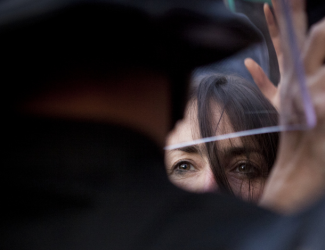
Les défenseuses des droits humains s’auto-identifient comme des femmes ou des personnes lesbiennes, bisexuelles, transgenres, queer, intersexes (LBT*QI) ou autres qui défendent les droits. Elles sont exposées à des risques et à des menaces de nature genrée à cause du travail qu’elles accomplissent en faveur des droits humains et/ou en conséquence directe de leur identité de genre ou de leur orientation sexuelle.
Les défenseuses des droits humains subissent une violence et une discrimination systématique du fait de leur identité, mais aussi à cause de la lutte indéfectible qu’elles mènent en faveur des droits, de l’égalité et de la justice.
Le programme Défenseuses des droits humains collabore avec des partenaires internationaux et régionaux ainsi qu’avec les membres de l’AWID pour éveiller les consciences à propos de ces risques et menaces, pour plaider en faveur de mesures féministes et holistiques de protection et de sécurité et enfin pour promouvoir activement une culture du souci de soi et du bien-être collectif au sein de nos mouvements.
Les défenseuses des droits humains sont exposées aux mêmes types de risques que toutes les autres personnes qui défendent les droits humains, les communautés et l’environnement. Mais elles se heurtent également à des violences fondées sur le genre et à des risques spécifiques de nature genrée parce qu’elles remettent en cause les normes de genre en vigueur au sein de leur culture et de leur société.
En défendant les droits, les défenseuses des droits humains sont exposées aux risques suivants :
Nous travaillons en collaboration avec des réseaux internationaux et régionaux ainsi qu’avec nos membres pour :
Nous travaillons à la promotion d’une approche holistique de la protection des défenseuses, qui suppose notamment :
Nous souhaitons contribuer à l’avènement d’un monde plus sûr pour les défenseuses des droits humains, leurs familles et leurs communautés. Nous pensons que le fait que les défenseuses œuvrent en faveur des droits et de la justice ne devrait pas leur faire courir de risques ; leur action devrait être appréciée et célébrée.
Promouvoir la collaboration et la coordination entre organisations de défense des droits humains et des droits des femmes au niveau international, et ce dans le but de d’apporter des réponses plus efficaces dans le domaine de la sureté et du bien-être des défenseuses des droits humains ;
Soutenir les réseaux régionaux de défenseur-es et les organisations, parmi lesquels l’Initiative mésoaméricaine des défenseuses des droits humains et la Coalition des défenseuses des droits humains du Moyen-Orient et d’Afrique du Nord, dans leur travail de promotion et de renforcement de l’action collective en faveur de la protection des défenseuses – en mettant en avant l’importance de la création de réseaux de solidarité et de protection, de la promotion du souci de soi ainsi que du plaidoyer et de la mobilisation en faveur de la sécurité des défenseuses ;
Faire en sorte que les défenseur-e-s des droits humains et les risques qui les menacent soient plus visibles et mieux reconnus, en rassemblant des informations sur les agressions dont elles sont victimes et en produisant et diffusant des documents sur leurs luttes, leurs stratégies et les difficultés qu’elles rencontrent ;
Organiser des réponses urgentes fondées sur la solidarité internationale dès que des défenseuses des droits humains sont en danger, par le biais de nos réseaux internationaux et régionaux mais aussi grâce à nos membres.
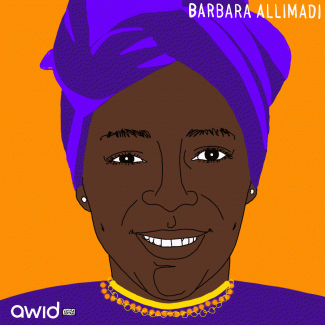
Barbara Allimadi était une militante politique et des droits humains originaire d’Ouganda. En 2012, elle a coorganisé une manifestation contre l’agression policière télévisée d’Ingrid Turinawe, opposante politique dont le sein a été pressé par un officier de police. Durant la manifestation, Barbara et d’autres activistes se sont déshabillées et n’ont gardé que leur soutien-gorge devant le poste central de police de Kampala. Cet épisode fut par la suite désigné par la tristement célèbre « manifestation en soutien-gorge » en Ouganda.
« Nous avons opté pour une manifestation en soutien-gorge. Nous avons pensé qu’elle serait la plus appropriée par rapport aux faits. Ce n’est pas comme si nous étions en train de dire que nous ne nous respections pas. Nous étions dégoûtées par les actes commis. » - Barbara Allimadi, 2013 (Daily Monitor)
Diplômée en électronique et en ingénierie des communications de l’Université métropolitaine de Londres, Barbara était ingénieure réseau au Royaume-Uni et une fervente amatrice de musique reggae. Elle retourna en Ouganda en 2007, au moment du décès de sa mère.
En 2019, elle fut désignée Coordonnatrice pour les affaires internationales et la diaspora de l’Alliance for National Transformation (alliance pour la transformation nationale, ANT), un parti politique lancé la même année par un leader d’opposition.
« Nous voulons disposer d’une vie sûre et de biens, sans souffrance, sans blessure ni même de mort aux mains des forces de sécurité, qui sont censées nous protéger. Nous voulons surtout un environnement stable et propice dans lequel nous pourrons réaliser nos rêves et nos ambitions. » - Barbara Allimadi, vidéo de l’ANT
Barbara est décédée le 27 avril 2020.
« J’étais tellement fière de ma sœur pour plein de raisons, mais surtout pour sa recherche téméraire de la paix, de la démocratie, de la justice et de l’égalité en Ouganda. Au summum de son activisme, elle conduisait de nombreuses marches dans les rues de Kampala, jusqu’aux postes de police et au Parlement. » - Doris Allimadi, sœur de Barbara
« C’est avec une tristesse profonde que nous avons appris le décès précoce de Barbara Allimadi. Elle était une force vaillante, infatigable et courageuse pour le mouvement de libération en Ouganda. Nous adressons nos sincères condoléances à sa famille. Elle nous manquera terriblement. » - Akina Mama wa Afrika (tweet du 28 avril 2020)
« Le décès de Barbara est extrêmement triste pour nous, et pour toute sa famille. Elle s’est dévouée entièrement à lutter pour la justice, la liberté et les droits des autres, tout en servant la société civile jusqu’à sa récente adhésion au parti. » Maj Gen Mugisha Muntu, coordonnateur national de l’ANT
« Une soeur magnifique, charmante, drôle, charismatique et inspirante. Mes enfants ont perdu leur tante. L’Ouganda a perdu une combattante pour les libertés, brave et courageuse. Barbara disait autrefois “tant que vous pouvez respirer, continuez à agir pour atteindre vos rêves” » - Doris Allimadi, sœur de Barbara
Asking ourselves the same question, we believe there are no simple answers. For many participants the AWID Forum might be one of the few international trips they undertake in their life. The pandemic taught us the possibilities but also the limitations of virtual spaces for movement-building: there is nothing like in-person connection. Movements need cross-border connections to build our collective power in the face of the threats we face, notably the climate crisis. We believe that the upcoming AWID Forum can be a strategic space to hold these conversations and to explore alternatives to international travel. The hybrid element of the Forum is an important part of this exploration.
Modèles de gouvernance alternative comme moyens de sortir de la crise climatique.
📅 Mercredi 12 novembre 2025
📍 Seminario Mar Nossa Sra Da Assunção, Pará, Brésil
Site web en anglais
Ghiwa Sayegh es una anarcoescritora queer, editora independiente y archivista. Es la editora fundadora de Kohl, una revista para la investigación sobre cuerpo y género, y la cofundadora de Intersectional Knowledge Publishers. Posee una maestría en estudios de género de Université Paris 8 Vincennes, Saint-Denis. Le apasionan la teoría queer, las circulaciones transnacionales y las historias imaginadas o desconocidas. Sus influencias son Audre Lorde y Sara Ahmed.
We know feminists still need and deserve more and better resources! We have revised our funder database.
The Who Can Fund Me? Database is an easy-to-use, practical tool for movements looking for funders from philanthropic foundations, multilateral funders to women’s and feminist funds to support vital lifesaving efforts.
avec Luam Kidane, Mariama Sonko, Yannia Sofia Garzon Valencia et Nomsa Sizani.
Le Forum a été un espace clé pour le Mouvement des femmes autochtones (Indigenous Women’s Movement, IWM) dans son rapport au féminisme. Aux Forums de l’AWID, elles ont appliqué la même stratégie que celle utilisée pour les Nations Unies. Au cours de ce processus, les deux mouvements ont été transformés : de nouvelles voix et questions ont émergé au sein de l’IWM, et les féministes ont commencé à changer leurs discours et leurs pratiques autour des droits fonciers et de la spiritualité, elles ont mieux compris les droits collectifs et ont inclus l’IWM dans leurs événements et leurs programmes. Mónica Alemán et María Manuela Sequeira, de l’IWM, nous ont raconté cette histoire.

“My mission in life is not merely to survive, but to thrive; and to do so with some passion, some compassion, some humor, and some style.” - Maya Angelou
The International AWID Forum is both a global community event and a space of radical personal transformation. A one-of-a-kind convening, the Forum brings together feminist, women’s rights, gender justice, LBTQI+ and allied movements, in all our diversity and humanity, to connect, heal and thrive. The Forum is a place where Global South feminists and historically marginalized communities take center stage, strategizing with each other and social justice movements, in order to shift power, make strategic alliances, and usher in a different, better world. When people come together on a global scale, as individuals and movements, we generate a sweeping force. Join us in Bangkok, Thailand in 2024. Come dance, sing, dream and rise with us.
Expose corporate capture. Understand false solutions. Build alternatives. Everything you need to run your own "Whose COP Is It?" campaign.

Notre rapport annuel 2012 fournit les points saillants de notre travail durant l'année pour contribuer de manière hardie, créative et efficace à la promotion des droits des femmes et l'égalité de genre dans le monde entier.
Amusez-vous en regardant des vidéos, des photos et des histoires sur nos contributions !
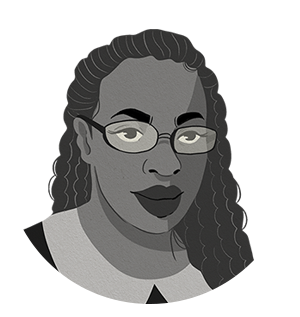
Chinelo Onwualu est une conseillère éditoriale ayant près de 10 ans d’expérience dans l’élaboration de communications stratégiques pour des organisations à but non lucratif du monde entier. Elle a notamment travaillé pour ActionAid Nigeria, The BBC World Trust, Open Society Initiative for West Africa (OSIWA) et l’AWID. Elle est titulaire d’un master en journalisme de l’Université de Syracuse et a travaillé comme rédactrice, éditrice et chercheuse au Nigeria, au Canada et aux États-Unis. Elle est également l’éditrice non-romanesque du magazine Anathema et cofondatrice d’Omenana, un magazine de fiction spéculative africaine. Ses nouvelles ont été publiées dans plusieurs anthologies primées et elle a été nominée pour les British Science Fiction Awards, les Nommo Awards for African Speculative Fiction et le Short Story Day Africa Award. Elle est originaire du Nigeria mais vit à Toronto avec son compagnon et son enfant.
Les agradecemos su interés por visitar el sitio web de AWID. Para obtener más información sobre nuestro trabajo, visiten https://www.awid.org/es