Jean-Marc Ferré | Flickr (CC BY-NC-ND 2.0)
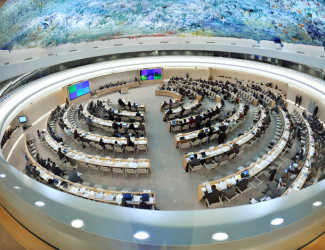
A general view of participants at the 16th session of the Human Rights Council in Geneva, Switzerland.

Analyses Spéciales

L´AWID est une organisation féministe mondiale qui consacre ses efforts à la justice de genre, au développement durable et aux droits humains des femmes

Conseil des Droits de l'Homme (CDH)

​​​​​​Le Conseil des droits de l'homme (CDH) est un organe intergouvernemental clé du système des Nations Unies, responsable de la promotion et la protection des droits humains autour du globe. Il se réunit  trois fois par an en session ordinaire, en Mars, Juin et Septembre. Le Bureau du Haut-Commissariat des Nations Unies aux Droits de l’Homme (HCDH) constitue le secrétariat pour le CDH.

Le CDH :

  • Débat et adopte des résolutions sur les questions globales des droits humains ainsi que sur la situation des droits humains dans des pays particuliers

  • Examine les plaintes des victimes de violations des droits humains et des organisations activistes, au nom des victimes de violations des droits humains

  • Nomme des experts indépendants (que l'on connaît sous le nom de « Procédures Spéciales ») pour réviser les cas de violation des droits humains dans des pays spécifiques, ainsi que pour examiner et suivre des questions globales relatives aux droits humains

  • Prend part à des discussions avec les experts et les gouvernements sur les questions de droits humains

  • Évalue les bilans des États membres de l'ONU en matière de droits humains tous les quatre ans et demi, dans le cadre de l'examen périodique universel.

En savoir plus sur le CDH


Session actuelle: CDH 44

La prochaine session du CDH a lieu à Genève, en Suisse, du 30 juin au 17 juillet 2020.

AWID travaille avec des partenaires féministes, progressistes et du domaine des droits humains pour partager nos connaissances clé, convoquer dialogues et évènements avec la société civile, et influencer les négociations et les résultats de la session.

Avec nos partenaires, notre travail consiste à :


◾️ Suivre, surveiller et analyser les acteurs, discours et stratégies anti-droits et leur impact sur les résolutions du CDH.

◾️ Co-développer un plaidoyer collectif pour contrer les acteurs anti-droits et discuter plus en détails les résultats du Rapport de tendances 2017 du OURs

◾️ Soutenir, coordoner et développer de manière collaborative le Caucus féministe qui émerge au CDH.


Contenu lié

هل يمكن للفرد أو المؤسسة إرسال مقترحات متعددة؟

أنتم/ن مدعوون/ات لتقديم ما يصل إلى نشاطين كمنظم/ة. لا يزال بإمكانك أن تكون شريكًا/ة في المقترحات الأخرى.

Snippet Caribbean Feminist Spaces_Fest (FR)

Espaces féministes caribéens, expressions créatives et pratiques spirituelles pour le renforcement communautaire

Tonya Haynes, CAISO
Angelique V. Nixon, CAISO

divider

Laurie Carlos

Laurie Carlos était une comédienne, réalisatrice, danseuse, dramaturge et poétesse aux États-Unis. Artiste hors pair et visionnaire, c’est avec de puissants modes de communication qu’elle a su transmettre son art. 

« Laurie entrait dans la pièce (n’importe quelle pièce/toutes les pièces) avec une perspicacité déroutante, un génie artistique, une rigueur incarnée, une féroce réalité – et une détermination à être libre... et à libérer les autres. Une faiseuse de magie. Une devineresse. Une métamorphe. Laurie m’a dit un jour qu’elle entrait dans le corps des gens pour trouver ce dont ils et elles avaient besoin. » - Sharon Bridgforth

Elle a employé plusieurs styles de performance alliant les gestes rythmiques au texte. Laurie encadrait les nouveaux·elles comédien·ne·s, performeur·euse·s et dramaturges, et a contribué à développer leur travail dans le cadre de la bourse Naked Stages pour les artistes émergent·e·s. Associée artistique au Penumbra Theatre, elle a participé à la sélection de scripts à produire, dans l’objectif « d’intégrer des voix plus féminines dans le théâtre ». Laurie faisait également partie des Urban Bush Women, une compagnie de danse contemporaine reconnue qui contait les histoires de femmes de la diaspora africaine.

Elle fit ses débuts à Broadway dans le rôle de Lady in Blue, en 1976, dans la production originale et primée du drame poétique For colored girls who have considered suicide / when the rainbow is enuf de Ntozake Shange. L’oeuvre de Laurie inclut White Chocolate, The Cooking Show et Organdy Falsetto

« Je raconte les histoires à travers le mouvement – les danses intérieures qui se produisent spontanément, comme dans la vie – la musique et le texte. Si j’écris une ligne, ce n’est pas forcément une ligne qui sera dite ; ce peut être une ligne qui sera bougée. Une ligne à partir de laquelle de la musique est créée. Le geste devient phrase. Tant de ce que nous sommes en tant que femmes, en tant qu’êtres, tient aux gestes que nous exprimons les un·e·s par rapport aux autres, tout le temps, et particulièrement dans les moments d’émotion. Le geste devient une phrase, ou un état de fait. Si j’écris “quatre gestes” dans un script, cela ne signifie pas que je ne dis rien;cela veut dire que j’ai ouvert la voie à ce que quelque chose soit dit physiquement. » Laurie Carlos

Laurie est née et a grandi à New York, a travaillé et vécu à Minneapolis-Saint-Paul. Elle est décédée le 29 décembre 2016, à l’âge de 67 ans, après un combat contre le cancer du côlon. 


Hommages :

« Je pense que c’était exactement l’intention de Laurie. De nous sauver. De la médiocrité. De l’ego. De la paresse. De la création artistique inaboutie. De la paralysie par la peur.
Laurie voulait nous aider à briller pleinement.
Dans notre expression artistique.
Dans nos vies. » - Sharon Bridgforth pour le Pillsbury House Theatre

« Quiconque connaissait Laurie aurait dit que c’était une personne singulière. Elle était sa propre personne. Elle était sa propre personne, sa propre artiste ; elle mettait en scène le monde tel qu’elle le connaissait avec un vrai style et une compréhension fine, et elle habitait son art. » – Lou Bellamy, Fondatrice de la Penumbra Theatre Company, pour le Star Tribune 

Lire un hommage complet par Sharon Bridgforth (seulement en anglais)

Comprendre le contexte des menaces antidroits

Chapitre 2

Bien plus de la moitié de la population mondiale est aujourd’hui dirigée par l’extrême droite. C’est sur cette toile de fond que défenseur·e·s des droits humains et féministes luttent pour « tenir bon », protéger le multilatéralisme et le système international des droits humains, alors que leurs engagements les exposent à de violentes répressions. Ces institutions sont cependant de plus en plus soumises aux intérêts du secteur privé. Les grandes entreprises, surtout les sociétés transnationales, siègent à la table des négociations et occupent des fonctions de leadership dans plusieurs institutions multilatérales, l’ONU notamment. Le lien entre ultranationalisme, restriction de l’espace civique et emprise des entreprises a un impact considérable sur la réalisation ou non des droits humains pour tout le monde.

Protester holding a flyer that reads "Danger - Trump and the Far Right."
© Alisdare Hickson / Flickr
Danger - Trump and the Far Right.

Sommaire

  • Nationalisme et ultranationalisme
  • Emprise des entreprises : le pouvoir débridé des entreprises met nos droits en danger
  • Répression et restriction des espaces civiques pour les activistes féministes et les défenseur·e·s des droits humains des femmes et des personnes LGBTIQ+
  • Histoire du mouvement de la résistance. L’Article 16 de la CEDAW : vers une réforme des codes de la famille discriminatoires dans les contextes musulmans
     

Lire le chapitre complet >

هل يمكن تغيير المتحدثين/ات أو تفاصيل النشاط الأخرى خلال عام 2024؟

(نظرًا لأننا نقدم الطلب قبل عام تقريبًا من الحدث الفعلي.)
نعم! يطلب النموذج حاليًا إدراج مقدمي/ات المقترح حتى لو لم يتم تأكيدهم/ن بعد. نحن ندرك أنه من المحتمل أن تحدث التغييرات في غضون عام.

Snippet Festival Days 8-13_Fest (EN)

Day, jour, día 8 festival - Sept. 16, 2021
Panel
Body Pleasure for Fat Girls 

Amy Lin

watch panel


Workshop
Broadening Pleasure

Hedone

watch workshop 


Workshop
#EmptyChairs campaign

Caroline Tagny, Coalition of African Lesbians
Carrie Shelver, Sexual Rights Initiative
Emeline Dupuis, Sexual Rights Initiative
Pooja Badarinath, Sexual Rights Initiative
Pooja Patel, International Service for Human Rights
Antje Schupp


Workshop
Feminist Realities:
Breathing & Healing Houses for Defenders

Ana María Hernández Cárdenas, Consorcio Oaxaca
Nallely Tello Méndez, Red Nacional de Defensoras de Derechos Humanos en México
Jelena Dordevic Liana Funes, National Network of Women Human Rights Defenders in Honduras
Rebeca Girón
Tania Lopes Muri, Movimento de Mulheres da Região dos Lagos
Rogéria Peixinho


Fem Movement
Members Dance Party Extravaganza

DJ Cozmic Cat


Day, jour, día 9 festival - Sept. 17, 2021
Storytelling
Unfettered Education:
Fatoumata's Story

Lina Baaziz

watch video


Instagram Live:

Sex Education

Oloricoitus

watch video


Workshop
Voices from the frontlines:
Bolstering collective power to end the incarceration of women worldwide
 

Claudia A. Cardona, Mujeres Libres Colombia
Phyllis Hardy, National Council for Incarcerated and Formerly Incarcerated Women and Girls
Grace Natalia, Womxn’s Voice and Women and Harm Reduction International Network
Mónica Marginet Flinch, Metzineres
Kenya Cuevas, Casa de las Muñecas Tiresias A.C.
Dawn Harrington, Free Hearts

watch workshop


Workshop
Movement as Healing,
Healing for Movements


Kimalee Phillip
Luz Stella Uspina Murillo, Fondo Acción Urgente para América Latina y el Caribe
Sara Munarriz-Awad, Fondo Acción Urgente para América Latina y el Caribe
Tai Pelli
Everdith (Evie) Landrau


Workshop
Emergent feminist leadership:
Lifting as we climb

Deborah A, Black LGBTQ Migrant Project (BLMP)
Anima Adjepong, Silent Majority
Maame Adwoa Marfo, FRIDA
Debbie Owusu-Akyeeah, Canadian Centre for Gender and Sexual Diversity


Day, jour, día 10 festival
Panel
Pleasure Across Borders

Lindiwe Rasekoala
Lizzie Kiama
Jovana Drodevic
Malaka Grant

watch video


Panel
Abortion realities:
strategies to fight reproductive injustice

Lindiwe Rasekoala
Lizzie Kiama
Jovana Drodevic
Malaka Grant


Day, jour, día 11, festival
Workshop
Networking and Solidarity Building Among Young Feminist Organizers

Nino Ugrekhelidze, AWID
Anwulika Ngozi
Okonjo Pooja Singh


Panel
Surviving the war on drugs

Ganna Dovbakh, Eurasian Harm Reduction Association (EHRA)
Priscila Gadelha, Rede Nacional de Feministas Antiproibicionistas (RENFA)
Veronica Russo, Red Latinoamericana y del Caribe de Personas que Usan Drogas (LANPUD)
Diana Edem, Heartland Alliance International
Judy Chang, International Network of People who Use Drugs (INPUD)
Louise Vincent, NC Urban Survivors Union
Aura Roig, Metzineres
Malicia, Live Artist

watch panel


Panel
Young Climate Feminists Building Radical Futures:
Video Launch and Conversation

Sanam Amin, Asia Pacific Forum on Women, Law and Development
Maggie Mapondera, Womin African Alliance
Maria Alejandra Escalente, FRIDA
Patricia Miranda Wattimena, Asia Indigenous Peoples Pact
Mara Dolan, WEDO
Andrea Vega Troncoso, WEDO

watch panel


Workshop
Antal: Non-binary Universe

Malicia Sabina, Resistencia No Binarix
Andras Yareth Hernández, Resistencia No Binarix

watch workshop


Day, jour, día 12, festival
Panel
Thank you, I can make my decision

Grace Chang, Taiwan Association for Disability Rights
Angel Hsu, Taiwan Association for Disability Rights
Joyann Peng, Taiwan Association for Disability Rights
Amy Wu, Taiwan Association for Disability Rights

watch panel


Panel
Feminist learnings on digital security in times of socio political and sanitary crisis

Paul Nail Ojeda
Paola Moss


Workshop
The current state of forests:
what’s the issue and why is it so important?

Camila Romero, VientoSur
Kanta Marathe, Navrachna Samaj Sevi Sansthan
Jeanette Sequeira, Global Forest Coalition

Download Resources  Descargar Recursos  Télécharger Les Ressourceses

Visit the AWID Members Lounge

Jessica Whitbread, AWID


Day, jour, día 13 festival
Workshop
Supporting the self-managed:
abortion doulas, acompanantes and radical networks of support

Aditi Pinto, Inroads
Daniela Tellez Del Valle, Di RAMONA
Sandra Cardona, Necesito Abortar México
Mickreen Adhiambo, Aunty Jane Hotline and MAMA Network
Zachi Brewster, Dopo Abortion Support
Ika Ayi, Samsara

watch panel


Workshop
Young Feminist Skill-Share:
How to Fund Your Idea

Nino Ugrekhelidze, AWID
Cassie Denbow
Nida Mushtaq


"Yo Imposible"
Watch Party & Discussion with Latin American Filmmakers from AWID's Feminist Film Club

Alejandra Laprea
Patricia Ortega
Alejandra Henriquez
Maria Torrellas
Carolina Reynoso
Camila Rodó
Micol Mtzener
Giovana Garcia

Roxana Reyes Rivas

Roxana Reyes Rivas, philosopher, feminist, lesbian, poet, politician and LGBT and women’s rights activist from Costa Rica. Owner of a sharp pen and incisive humour, a laugh a minute. She was born in 1960 and raised in San Ramón of Alajuela, when it was a rural town, and her whole life she would break away from the mandates of what it meant to be a woman.   

With El Reguero (Costa Rican lesbian group) she organized lesbian festivals for over a decade, fun-filled formative spaces to come together at a time when the Costa Rican government and society persecuted and criminalized the lesbian existence. For hundreds of women the lesbian festivals where the only place they could be themselves and come together with others like them.  

Roxana would often say founding political parties was one of her hobbies. “It’s important for people to understand there are other ways to do politics, that many issues need to be solved collectively”. She was one of the founders of the New Feminist League and VAMOS, a human rights focused political party.

“The philosophical trade is meant to jab, to help people ask themselves questions. A philosopher who doesn’t irritate anyone is not doing her job”. For 30 years Roxana taught philosophy at several Costa Rican public universities. Through her guidance, generations of students reflected about the ethical dilemmas in science and technology.  

Roxana’s favourite tool was humour, she created the Glowing Pumpkin award, an acknowledgement to ignorance that she would bestow upon public figures, through her social media channels, mocking their anti-rights expressions and statements.  

An aggressive cancer took Roxana at the end of 2019, before she could publish a compilation of her poems, a departing gift from the creative mind of a feminist who always raised her voice against injustice.

The Crear, Résister, Transform Story by Coumba Toure

A magical experience of feminist story telling led by pan-African feminist Coumba Toure, performing in the age old tradition of West African griots.

And we gathered again 
We gathered our stories our strength 
our songs
our tears 
our rage 
our dreams 
our success
our failures
And we pull them all together 
In one big bowl to share 
for a moon of thoughts 
And we stay in touch 
We shake each others minds 
we caress each other souls
While our hands still are tied 
And our kisses and hugs are banned 
Yet we grow stronger by the hour 
Weaving together our voices
Crossing the sound barriers 
as we speak in tongues 

We are getting louder and louder 
We know about differences from others 
and from each other so we are stitching our beauties into patchwork or thoughts
From our deepest learnings from our powers 
Sometimes we are surrounded by terror 
by confusions by dishonesty
But we wash out in the Ocean of love 
We are weavers of dreams 
To clothes or new world 
Thread after thread
As small as we are
Like little ants building our movement
Llike little drops building our rivers
 We take steps forward and steps backward 
Dancing our way back to sanity 
Sustain to the rhythm of our hearts keep 
Beating please don't not stop
And we are here transmitter of forgotten generosity 
drop after drop growing like the ocean 
growing like the river flowing from our souls .
showing our strength  to be  the  water 
that will clean this world
and we are gathering again can you feel us 
I would lie if I say I said I am 
Ok not to see you I do miss my people 
I miss your touch and
You unfiltered and unrecorded voices 
I miss our whispers and our screams 
Our cries of the aborted revolution 
We only want to give birth to new worlds 
 So fight to erase the borders between us 


And we gathered again 
We gathered our stories our strength 
our songs
our tears 
our rage 
our dreams 
our success
our failures
And we pull them all together In one big bowl to share 
For a moon of thoughts 
And we stay in touch 
We shake each others minds 
we caress each other souls
While our hands still are tied 
And our kisses and hugs are banned 
Yet we grow stronger by the hour 
Weaving together our voices
Crossing the sound barriers 
as we speak in tongues 
We are getting louder and louder 
We know about differences from others 
and from each other so we are stitching our beauties into patchwork or thoughts
From our deepest learnings from our powers Sometimes we are surrounded by terror by Confusions by dishonesty
But we watch out in the Ocean of love 
We are weavers of dreams 
To clothes or new world 
Thread after thread 
As small as we are like little ants building our movements
 like little drops building our rivers We take steps forward and steps backward 
dancing our way back to sanity 
Sustain to the rhythm of our hearts
keep beating please don't not stop
And we are here transmitter of forgotten generosity 
Drop after drop growing like the ocean 
growing like the river flowing from our souls 
showing our strength to be  the  water 
that will clean this world  
and we are gathering again can you feel us 
I would lie if I I said I am Ok
not to see you
I do miss my people
I miss your touch and
You unfiltered and unrecorded voices  
I miss  our  whispers  and  our screams 
Our cries over the aborted revolutions 
We only want to give birth to new worlds 
So fight to erase the borders between us 
Please don’’t stop

แล้วความยุติธรรมด้านสภาพอากาศละ นี่เป็นเวลาที่เหมาะสำหรับเที่ยวบินระหว่างประเทศจำนวนมากจริงหรือ?

เมื่อ AWID ถามตัวเองด้วยคำถามเดียวกัน เราเชื่อว่าไม่มีคำตอบง่ายๆสำหรับเรื่องนี้ สำหรับผู้เข้าร่วมจำนวนมาก AWID ฟอรัม อาจเป็นหนึ่งในการเดินทางระหว่างประเทศไม่กี่ทริปที่พวกเขาเคยทำในชีวิต การระบาของโรคโควิด19ได้ให้บทเรียนเราถึงความเป็นไปได้ต่างๆในการพบเจอกันรูปแบบอื่นๆที่ไม่ใช่ทางกายภาพ แต่ก็ให้บทเรียนเราถึงข้อจำกัดของพื้นที่เสมือนจริงสำหรับการสร้างการขบวนการด้วย ไม่มีรูปแบบใดที่เหมือนกับการเชื่อมต่อแบบตัวต่อตัว ขบวนการจำเป็นต้องมีการเชื่อมโยงข้ามพรมแดนเพื่อสร้างพลังร่วมในการเผชิญกับภัยคุกคามที่เรากำลังเผชิญหน้าอยู่ โดยเฉพาะอย่างยิ่งวิกฤตสภาพภูมิอากาศ เราเชื่อว่า AWID ฟอรัม ที่กำลังจะมาถึงสามารถเป็นพื้นที่เชิงกลยุทธ์ในการก่อให้เกิดพื้นที่สำหรับการสนทนาเหล่านี้ และทำให้เราได้สำรวจทางเลือกอื่นนอกเหนือจากการเดินทางระหว่างประเทศ การประชุมแบบผสม(ออนไลน์และกายภาพ)ของฟอรัมเป็นส่วนสำคัญของการสำรวจนี้

Club de Cine Feminista: Leitis in Waiting & programa de América Latina y Centroamérica

En esta selección de películas encontrarán las voces de realizadoras que no solo se contentan con plasmar las realidades feministas que palpitan en cada rincón de este vasto y diverso territorio sino también trabajos que desde su gestación misma están cuestionando el para qué, quién y cómo se hace cine o audiovisual. Realizadoras o colectivos que entienden al cine como una herramienta de lucha, como algo más que imágenes que se disfrutan en una pantalla, que ven al cine y al audiovisual como instrumentos para potenciar una discusión o abrir un debate; en fin, como un recurso para la pedagogía popular y feminista.

Dorothy Masuka

«Yo no planeaba ser una cantante, el canto planeó estar en mí.» - Dorothy Masuka (entrevista de Mail & Guardian)

Dorothy Masuka, nacida en 1935 en Bulawayo (en ese momento Rodesia del Sur, ahora Zimbabue), creció en Sudáfrica, y se convirtió en una reconocida compositora, cantante de jazz, activista, y defensora ferviente de  la lucha contra el apartheid. Definida como «una arquitecta del discurso de la música popular africana de liberación», Dorothy a menudo cantaba sobre política en lenguas indígenas africanas y, a través de todo su trabajo, confrontó las políticas racistas del gobierno sudafricano.

Una de estas canciones, titulada «Dr. Malan» (por el político pro-apartheid D.F. Malan) fue prohibida. Luego, en 1961, grabó «Lumumba», una canción sobre el asesinato del líder anticolonial Patrice Lumumba. El trabajo y el activismo de Dorothy atrajeron la atención de la División Especial de la policía sudafricana, y fue forzada a un exilio político que se prolongaría durante tres décadas. Durante ese tiempo, trabajó con grupos independentistas, incluido el Congreso Nacional Africano. En 1992, cuando el apartheid comenzó a desmoronarse y Nelson Mandela fue liberado de prisión, Dorothy regresó a Sudáfrica.

Su trabajo incluye la primera canción que grabó, en 1953, titulada «Hamba Notsokolo», que fue un éxito durante la década de 1950, y hoy es un clásico muy valorado. También escribió «El Yow Phata Phata», una canción que fue adaptada por Miriam Makeba, quien hizo de «Pata, Pata» un hit internacional.

Arraigados en la resistencia, la música y el activismo de Dorothy (popularmente conocida como «Auntie Dot» [«Tía Dot»]) estaban entretejidos, y dejaron un legado magnífico e inspirador.

Dorothy falleció en Johannesburgo el 23 de febrero de 2019 a la edad de 83 años, por problemas de salud.


Entrevista a Dorothy Masuka de Mail & Guardian (en inglés)

Escucha su música:

Hamba Nontsokolo
El Yow Phata Phata
 

استنارة بضوء البدر: تجربة “بي دي إس إم” أفريقية

ترجمة مارينا سمير

Akosua Hanson portrait

أكوسوا هانسون، فنانة وناشطة مقيمة في أكرا في غانا. تشمل أعمالها على ميادين الإذاعة والتلفزيون ووسائل الإعلام المطبوعة والمسرح والأفلام ومعارض القصص المصورة والأعمال الفنية ثُلاثية الأبعاد والروايات المصورة. تتمحور نشاطية أكوسوا حول قضايا الوحدة الأفريقية والنسوية، مع اهتمام خاص بتقاطع الفن مع الثقافة الشعبية والنشاطية. حائزة على ماجستير في الفلسفة في الدراسات الأفريقية، مع التركيز على الدراسات الجندرية والفكر الفلسفي الأفريقي. أكوسوا مبتكرة مود جيرلز، وهي سلسلة روايات مصورة، تتابع مغامرات أربعة أبطال خارقين يقاتلون من أجل إفريقيا خالية من الفساد والاستعمار الجديد والأصولية الدينية، وثقافة الاغتصاب ورهاب المثلية الجنسية وغير ذلك. تعمل كمذيعة في Y 107.9 FM، غانا.

هل اختبرتم من قبل لحظات من الصفاء الذهني العميق أثناء أو بعد ممارسة الجنس؟


في هذه الرسومات، تنخرط فتاة القمر وادجيت في ممارسة حميمية مع شيطان ثنائي الجندر. من بين فتيات القمر الأربعة، وادجيت هي المُعالِجة والفيلسوفة ووسيطة العرّافة. هي تقوم بذلك من أجل إطلاق عملية علمية وروحية، تُطلِق عليها تسمية «الاستنارة بضوء البدر». خلال هذه العملية، تشكّل تسلسلاً زمنياً حيّاً بين ذكرياتها وحواسها ومشاعرها ورؤاها وخيالاتها. إنّها أحد أشكال السفر عبر الزمن من خلال الذبذبات، من أجل اكتشاف ما تُسميه «تجلّيات الحقيقة». أثناء التجربة، تتضمّن إحدى رؤى وادجيت الضبابية اقتراب نهاية العالم نتيجة تدمير الناس للبيئة في خدمة الرأسمالية الشرهة؛ وذكرى طفولة حول دخول المستشفى بعد التشخيص بمرض نفسي؛ ورؤية لأصل قصّة فتيات القمر يظهر فيها الرمز التوراتي نوح، كفتاة قمر سوداء من عصر قديم تحذّر من أخطار التلوث البيئي. 

تمتدّ ممارسات الـ»بي دي إس إم» إلى أبعد من كونها كينك مرح يقود لاستكشافات حسّية، فبإمكانها أن تكون طريقة للتعامل مع الألم العاطفي والصدمات. لقد كانت وسيلةً للتعافي الجنسي بالنسبة لي، بتقديمها نمط للتحرّر الجذري. تطهيرٌ ما، يحدث، عند وقوع ألمٍ مادّي على الجسد. يقع هذا الألم في وجود تراضٍ، فيستخرج ألمًا عاطفيًا، كما لو كان «يستدعيه». نزول السوط على جسدي يسمح لي بتحرير مشاعر مكبوتة: توتّر، اكتئاب، شعوري بغياب دفاعاتي في وجه ضغوطاتٍ تُغرقني أحيانًا. عند الانخراط في الـ»بي دي إس إم» كسبيل للتعافي، على العشّاق أن يتعلّموا كيف يكونون شديدي الوعي ببعضهم البعض، ومسؤولين عن بعضهم البعض. فحتى لو كانت الموافقة قد أُعطيت في البداية، علينا أن نكون منتبهين لأيّ تغيّرات قد تطرأ أثناء الممارسة، خاصةً مع احتدام المشاعر. أتعامل مع الـ»بي دي إس إم» بفهمٍ لأنه ينبغي أن يكون الحبّ والتعاطف أساسًا لعملية الاستسلام للألم، وبذلك أخلق مساحة أو أنفتح للحبّ.

إن الاهتمام برعاية ما بعد وقوع الألم يُعَدّ استكمالًا للعملية. يمكن لذلك أن يحدث بطُرُقٍ بسيطة جدًا مثل الاحتضان، التأكّد ممّا إذا كان الآخر يرغب في شرب الماء، مشاهدة فيلمٍ معًا، مشاركة عناق أو حتى مشاركة سيجارة حشيش. يمكن لهذه الرعاية أن تمتثل لأيّ ما كانت عليه لغة حبّك المُختارة. مع إدراك أنّ جروحًا قد فُتِحَت، تُعَدّ هذه المساحة من الاحتواء ضرورية من أجل استكمال عملية التعافي. إنّه أكبر درسٍ في ممارسة التعاطف وتعلّم كيف تحتوي شريكك/ شريكتك حقًا، نظرًا لحساسية تمييع الحدود الفاصلة بين الألم والمتعة. بهذه الطريقة، يصبح الـ»بي دي إس إم» أحد أشكال أعمال الرعاية بالنسبة لي.

بعد ممارسة جنسية فيها ممارسات «بي دي إس إم»، أشعر بصفاء ذهني وهدوء يَضَعاني في مساحة إبداعية عظيمة ويمكّناني روحيًا. مشاهدة الألم يتحوّل آنيّاً لشيء آخر هي أشبه بتجربة سحرية. وبالمثل، تجربة الـ»بي دي إس إم» المحرِّرة على المستوى الشخصي تسمح لوادجيت بالوصول إلى المعرفة المُسبَقة والحكمة والصفاء الذهني مما يساعدها في واجباتها كفتاة قمر في مواجهة الأبوية الأفريقية.


وُلِدَت «فتيات القمر» أثناء عملي كمديرة لـ»دراما كوينز»، وهي منظمة فنّية شبابية ناشطة في غانا. منذ تأسيسنا في 2016، استخدمنا وسائط فنّية مختلفة كجزءٍ من عملنا الناشطي النسوي والبيئي والعموم- أفريقي. استخدمنا الشِعر والقصص القصيرة والمسرح والأفلام والموسيقى لمناقشة قضايا مثل الفساد والأبوية والتدهور البيئي ورهاب المثلية الجنسية. ناقَشَت أعمالنا المسرحية الافتتاحية مثل «خَيّاطة شارع سان فرانسيس» و»حتى يفيق أحدهم» مشكلة ثقافة الاغتصاب في مجتمعاتنا. كما يُزعم أن «مثلنا تمامًا» كانت من أوائل الانتاجات المسرحية في غانا التي تناقش بشكل مباشر قضية رهاب المثلية الجنسية المتغلغلة في البلد. كما ساهمت «جامعات غانا الكويرية»، وهي ورشة لصناعة الأفلام الكويرية لتدريب صنّاع الأفلام الأفارقة، في تدريب صنّاع أفلام من غانا ونيجيريا وجنوب أفريقيا وأوغاندا. وعُرِضَت الأفلام المصنوعة في الورشة في مهرجانات، مثل فيلم «فتاة رضيعة: قصة شخص بيني الجنس». ولذلك، فإنّ الانتقال إلى وسيط الروايات المصوّرة هو تطوّر طبيعي.

منذ حوالي سبع سنوات، بدأتُ بكتابة رواية لم أكملها أبدًا عن حياة أربع نساء. في عام 2018، فتحت «مبادرة المجتمع المفتوح لغرب إفريقيا» (OSIWA) فرصة مِنحة أطلقت إنتاج المشروع وتحوّلت روايتي غير المكتملة إلى فتيات القمر. هناك جزءان من فتيات القمر، يتكوّن كلّ منهما من ستّة فصول. الكُتّاب والمحرّرون المساهمون في الموسم الأول هم سوهايدا دراماني، وتسيدي كان تاماكلوي، وجورج هانسون، ووانلوف كوبولور. كتّاب الموسم الثاني هم يابا أرما ونادية أهيدجو وأنا. قام الفنان الغاني كيسوا وستوديو «أنيماكس إف واي بي»، وهو ستوديو رسوم متحرّكة وتصميمات وتأثيرات بصرية، بالرسوم التوضيحية للشخصيات وصياغتها مفاهيميًا.


لقد كانت كتابة فتيات القمر، بين 2018 و2022، عملَ حبٍّ بالنسبة لي، بل بالأحرى، عمل من أجل التحرّر. أهدف أن أكون مجدِّدة في الشكل والأسلوب: لقد اهتممت بتحويل أنماطٍ أخرى من الكتابة، مثل القصص القصيرة والشِعر، لتلائم بنية القصص المصوّرة. تستهدف فتيات القمر مناقشة القضايا الكبرى وتكريم النشطاء الموجودين في الحياة الحقيقية، من خلال إدماج الرسومات والنصوص، كما يحدث في القصص المصوّرة عادةً. قراري بمركزة النساء الكوير كبطلات خارقات، وهو أمر نادر الحدوث في هذا النوع من الفن، أصبح له معنى أكبر بكثير عندما بدأ يتطوّر أمر خطير في غانا في عام 2021. 

شهد العام الماضي تصاعد في وتيرة العنف ضد مجتمع الميم عين في غانا، والتي بدأت بإغلاق أحد مراكز مجتمع الميم عين. أعقب ذلك اعتقالات تعسفية وسجن أشخاص مشكوك في انتمائهم للطيف الكويري، كذلك أشخاص متّهمين بالدفع بـ»أجندة مثلية». تُوِّج ذلك بتقديم مشروع قانون ضد الميم عين في البرلمان الغاني تحت إسم «حقوق الإنسان الجنسية اللائقة وقِيَم الأسرة الغانية». يُزعم أن هذا المشروع هو أكثر مشاريع القوانين توحشًا ضد الميم عين كان قد صيغ في المنطقة، وقد أتى لاحقًا على محاولات سابقة في بلاد مثل نيجيريا وأوغندا وكينيا. 

Cover Illumination by the Light of the Full Moon

أتذكّر بمنتهى الوضوح أول مرّة قرأت فيها مسودة مشروع القانون. لقد كانت ليلة جمعة، والتي عادةً ما أستريح أو أحتفل فيها بعد أسبوع عمل طويل. لحسن الحظ، سُرِّبت المسودّة وتمّت مشاركتها معي على مجموعة واتساب. أثناء القراءة، تسلّل إليّ شعور عميق بالخوف والتوجّس مما أفسد ليلة استراحتي. 

اقترح المشروع معاقبة أيّة مناصرة للميم عين بالسجن من خمس لعشرة سنوات، وبتغريم وحبس أي شخص يُعرّف نفسه باعتباره مثلي أو مثلية أو عابر أو عابرة جنسيًا أو ينتمي لأية فئات جنسية أو/وجندرية غير نمطية، إلا إذا «تراجع» وقَبِل الخضوع لعلاج تصحيحي. في مسودة مشروع القانون، حتى اللاجنسيين جُرِّموا. انقضّ مشروع القانون على جميع الحرّيات الأساسية: حرّية الفكر وحرّية الوجود وحرّية أن يتمسّك الشخص بحقيقته ويعيش بها. انقضّ مشروع القانون أيضًا على منصّات التواصل الاجتماعي والفنّ. لو مُرِّر هذا المشروع، ستصبح فتيات القمر عملاً أدبياً محظوراً. ما تقدّم به مشروع القانون كان شرًا خالصًا وبعيد المدى، لقد صُدِمت لدرجة الاكتئاب من عمق الكراهية التي صُنِع منها هذا المشروع. أثناء تصفّحي موقع «تويتر» تلك الليلة، وجدتُ انعكاسًا للرعب الذي شعرت به بداخلي. لقد كان هناك بثًا مباشرًا للمشاعر، حيثُ كان يتفاعل الناس فوريًا مع ما يقرأونه: من عدم تصديق إلى رعب إلى خيبة أمل شديدة وشعور بالأسف عندما أدركنا المدى الواسع الذي رغب المشروع في الانقضاض عليه. البعض غرّدوا عن استعدادهم لجمع ما لديهم والرحيل عن البلاد. بعدها، وكعادة الغانيين، تحوّل الأسف والخوف لدعابة. ومن الدعابة أتى الحماس لتصعيد المقاومة. 

لذلك، فالعمل مستمرّ. لقد صنعتُ فتيات القمر لتوفير شكلٍ بديلٍ من التعليم، ولتوفير المعرفة حيثُ قمَعَتها أبوية عنيفة، ولخلق مساحة ظهور لمجتمع الميم عين حيثُ تمّ محوه. من الضروري أيضًا أن يحصل الـ»بي دي إس إم» الأفريقي على منصّة لإظهاره حيثُ أنّ الكثير من الـ»بي دي إس إم» المُمثَّل أبيض. إن المتعة الجنسية، سواء من خلال الـ»بي دي إس إم» أو غيره، مثلها مثل أنماط الحبّ اللامغاير جنسيًا، تتخطى العرق والقارّة، فالمتعة الجنسية وتنوّع خبراتها قديمة بقِدَم الزمن.

Cover image for Communicating Desire
 
Explore Transnational Embodiments

This journal edition in partnership with Kohl: a Journal for Body and Gender Research, will explore feminist solutions, proposals and realities for transforming our current world, our bodies and our sexualities.

Explore

Cover image, woman biting a fruit
 

التجسيدات العابرة للحدود

نصدر النسخة هذه من المجلة بالشراكة مع «كحل: مجلة لأبحاث الجسد والجندر»، وسنستكشف عبرها الحلول والاقتراحات وأنواع الواقع النسوية لتغيير عالمنا الحالي وكذلك أجسادنا وجنسانياتنا.

استكشف المجلة

Snippet CSW68 - AWID at CSW Logo

AWID at CSW68