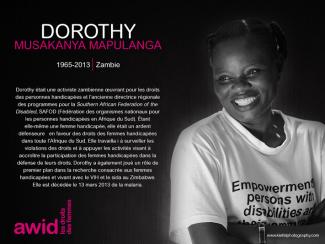
Dorothy Musakanya Mapulanga
Esta sección de análisis especial ofrece un análisis feminista crítico y acceso a los recursos clave relacionados con la «protección de la familia» en los espacios internacionales de derechos humanos.
Durante los últimos años, venimos observando una nueva y preocupante tendencia en el ámbito internacional de derechos humanos, donde se están empleando discursos sobre la «protección de la familia» para defender violaciones cometidas contra miembros de la familia, de modo de reforzar y justificar la impunidad y para coartar la igualdad de derechos en el seno de la familia y la vida familiar.
La campaña para «proteger a la familia» es impulsada por proyectos conservadores que tienen como fin imponer interpretaciones «tradicionales» y patriarcales de familia; quitando los derechos de las manos de sus miembros para ponerlos en las de la institución «familia».
Desde 2014 un grupo de estados opera como bloque en espacios de derechos humanos, bajo el nombre «Group of Friends of the Family» [Grupo de amigos de la familia], y a partir de entonces se han aprobado resoluciones sobre la «Protección de la familia» todos los años.
Esta agenda se ha extendido más allá del Consejo de Derechos Humanos (HRC, por sus siglas en inglés). Hemos visto cómo el lenguaje regresivo sobre «la familia» se ha introducido en la Comisión de la Condición Jurídica y Social de las Mujeres (CSW, por sus siglas en inglés), y hemos asistido a intentos por incluir este lenguaje en las negociaciones sobre los Objetivos de Desarrollo Sostenible.
AWID trabaja con asociadxs y aliadxs para resistir conjuntamente las agendas regresivas de «Protección de la familia» y otras, y para defender la universalidad de los derechos humanos.
En respuesta a la creciente influencia de actores regresivos en los espacios de derechos humanos, AWID se ha unido con aliadxs para formar el Observatorio de la Universalidad de los Derechos (OURs, por sus siglas en inglés). OURs es un proyecto colaborativo que monitorea, analiza y comparte información sobre iniciativas anti-derechos tales como la «Protección de la familia».
Derechos en Riesgo, el primer informe de OURs, traza un mapa de los actores que conforman el cabildeo global anti-derechos e identifica sus discursos y estrategias principales, señalando los efectos que estos discursos y estrategias están teniendo sobre nuestros derechos humanos.
El informe expone a la «Protección de la familia» como una agenda que ha promovido la colaboración entre una amplia gama de actores regresivos en las Naciones Unidas. La describe como un marco estratégico que aloja «múltiples posiciones patriarcales y anti-derechos, cuyo marco, a su vez, apunta a justificar e institucionalizar estas posiciones».
The co-creation of our feminist realities starts with ourselves and how we treat each other. We are dedicated to creating and protecting safe and supportive spaces for our communities both online and in person. We also consider that safe and welcoming spaces are co-owned and co-created.
We expect our members to act in a manner that is ethical, responsible and consistent with the values of AWID and assume collective responsibility to ensure an atmosphere of mutual respect and solidarity.
Connect with others, help break isolation and further solidarity. It’s easy to feel lost and alone, and a little friendliness and responsiveness goes a long way.
Interact and engage peacefully. Differences in opinion will naturally arise, so please think of these differences as useful for expanding your thinking and ways of seeing the world.
Help build a space that recognizes and validates multiple lived experiences and diversities of bodies and gender expressions. Recognize that we all carry intersectional identities.
Use inclusive language. Be respectful of how people want to be referred to in terms of gender identity or expression (like pronouns), and practice inclusive language.
Listen and make adjustments in your behavior and ways of engaging if someone says they feel uncomfortable. Don’t ask others questions that you wouldn't want to be asked yourself.
Help challenge oppressive behavior, which includes harassment, verbal or physical violence, violation of consent, and any action that perpetuates classism, ageism, ableism, racism, misogyny, heterosexism, transphobia and other oppressions. If needed, please reach out to AWID staff.
Practice speaking and listening with an open mind and heart and without judgement.
Be honest, open and heartfelt. Speak and share authentically about your experiences, your challenges, your hopes and dreams, and your vision for your own life and your community.
Practice active listening and self-awareness. Be aware of how much time and space you are taking up- leave room for others, practice active listening and learning.
Be mindful and credit others for their work and activism. Remember that we are all working collectively to contribute to change-- Ensure that you recognize the contribution of others and credit them when appropriate e.g. in discussions, or in articles, pictures etc.
Stay safe! We encourage you to take measures to protect yourself online and in person, especially if you have reason to believe that speaking out will put you in danger. Members may use aliases or profile images that conceal their identity. For more information please refer to the “Digital Security First Aid Kit for Human Rights Defenders” produced by APC - Association for Progressive Communications.
Respect the privacy needs of others! Do not share or forward any information without explicit permission.
We take a position in solidarity with each other and diverse struggles for justice and freedoms. We strive to mobilize and strengthen collective action and practice meaningful ways of working with each other.
We believe in a full application of the principle of rights including those enshrined in international laws and affirm the belief that all human rights are interrelated, interdependent and indivisible. We are committed to working towards the eradication of all discriminations based on gender, sexuality, religion, age, ability, ethnicity, race, nationality, class or other factors.
We strive for transparency, responsible use of our resources, fairness in our collaborations and accountability and integrity with our members, partners, funders and the movements with(in) which we work. We are committed to reflecting on our experiences, sharing our learnings openly, and striving to change our practices accordingly.
We believe that for feminist movements to be transformative and strong we must continue to work across our similarities and differences. We also must interrogate power and privilege both within and outside our movements.
We celebrate everyone's right to choose their identities, relationships, goals, work, dreams and pleasures, and what they do with their mind, body and spirit. We believe in working towards access to resources, information and safe and enabling environments that allow this to happen.
We work towards a world based on social, environmental, and economic justice; and interdependence, solidarity, and respect. We work towards dismantling systems of oppressive power and against all its manifestations, including patriarchy, fundamentalisms, militarisms, fascisms and corporate power that threaten our lives and our world. We want a just world where resources and power are shared in ways that enable everyone to thrive.
Please note:
AWID reserves the right to delete comments, suspend or revoke membership when our community guidelines have been violated. AWID members are not authorised to represent AWID in any official capacity unless stipulated in writing. Members cannot use AWID spaces to proselytize or recruit members to join a religious faith or organisation. Members cannot use AWID spaces to request funds for personal use although links to external fundraising efforts or activism campaigns are permissible.
Dans cette sélection de films, vous découvrirez les voix de réalisatrices qui ne se contentent pas de restituer les réalités féministes palpitant dans chaque recoin de ce territoire vaste et divers, mais explorerez aussi des oeuvres qui, dans leur conception même, s'interrogent sur le pourquoi, le qui et le comment du cinéma ou de l'audiovisuel. Ces femmes comprennent le cinéma comme un outil de lutte, comme quelque chose de plus que de simples images à apprécier sur un écran. Pour ces réalisatrices ou collectifs de cinéastes, le cinéma et l'audiovisuel constituent un outil capable de promouvoir la discussion, d'ouvrir un débat, bref, une ressource pour la pédagogie populaire et féministe.
เราตระหนักดีถึงอุปสรรคในทางปฏิบัติและความทุกข์ทางอารมณ์ในการเดินทางระหว่างประเทศ โดยเฉพาะอย่างยิ่งจากซีกโลกใต้ โดย AWID กำลังทำงานร่วมกับ TCEB (สำนักงานส่งเสริมการจัดประชุมและนิทรรศการของประเทศไทย) เพื่อสนับสนุนผู้เข้าร่วมฟอรัมในการขอวีซ่า ข้อมูลอื่นๆเกี่ยวกับการขอวีซ่าจะถูกนำเสนอในช่วงที่เปิดให้ลงทะเบียน รวมถึงสถานที่และวิธีการขอวีซ่า
Consultez notre guide : « Un tout petit guide pour l’organisation de festivals féministes internationaux et d’événements en ligne. »
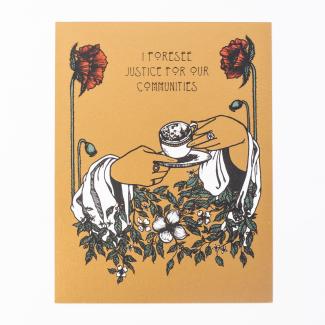
La tasséomancie est une méthode de divination qui interprète les motifs dans les feuilles de thé et/ou le marc de café. Il s’agit d’une pratique qui se transmet par les femmes de mon côté arménien et qui m’a été enseignée par ma mère, qui elle-même l’a apprise de sa mère, et ainsi de suite. Lorsque je regardais ma grand-mère lire le marc de café du café arménien préparé pour la famille et les amis, je remarquais que, souvent, elle voyait ce qu'elle avait envie de dire. Ces gravures disent certaines des choses que j’ai envie de voir dans le monde ; j'espère que vous aussi.
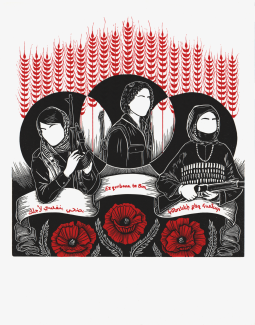
Cette gravure célèbre la résilience, le sacrifice et la force des combattant·e·s de la liberté de l’Asie du Sud-Ouest et de l’Afrique du Nord à travers l'histoire et la solidarité qui existe. Elle a été inspirée à l'origine par un article que j'ai lu sur une exposition organisée à Tatvan, un district de Bitlis, qui mettait en lumière la présence arménienne dans la région. Mes ancêtres sont originaires de Bitlis, se situant aujourd'hui sur le territoire de la Turquie actuelle.
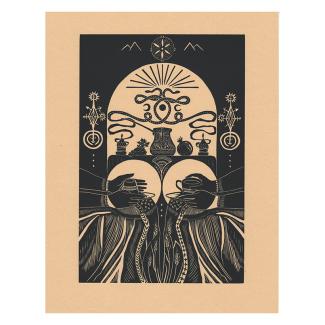
La tasséomancie (la lecture du marc de café) est une pratique culturelle utilisée par les femmes arméniennes depuis des siècles pour se parler entre elles et les unes aux autres, un langage codé permettant d'entamer des conversations, d'établir des relations et de tisser des liens.
![]Ali Chavez Leeds portrait](/sites/default/files/styles/max_325x325/public/2021-10/portrait.jpeg?itok=0yU3PqLe)
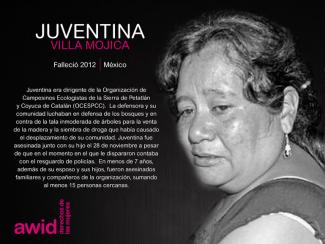
CARING ECONOMIESLAND AND AGROECOLOGYFEMINIST COOPERATIVISMFEMINIST UNION ORGANIZING
📅Lunes 11 de marzo
🕒4:30 p. m. - 6:00 p. m. EST
Organizan:AWID, IJSC y NAWI
🏢 Church Center de las Naciones Unidas, 777 United Nations Plaza, piso 11, Nueva York.
(Interpretación disponible en francés y español)

Nuestro informe anual 2012 destaca los momentos clave de nuestro trabajo durante el año para contribuir al avance de los derechos de las mujeres y la igualdad de género de manera audaz, creativa y efectiva en todo el mundo.
by Esra Ozban
In a product-obsessed world, prioritizing process is a fundamental feminist method. Processes matter, and curation is no exception. While figuring out which of the films from the SWANA region would speak the loudest to the Feminist Realities theme, the global pandemic we are still facing shifted our everyday lives tremendously. Even to think, write, or express myself has become an everyday struggle. I kept missing all of my deadlines and sending apology emails to Kamee Abrahamian, whom I was working with as an independent curator for AWID’s Feminist Film Club. Kamee’s invaluable support, understanding, and suggestions reminded me that even in two different parts of the world, as colleagues who never met in person, we can co-create micro versions of the Feminist Realities for which we live and yearn.
Feminist Realities for me have a lot to do with sisterhoods. Sisterhoods that help womxn clearing mines in Artsakh/Nagorno-Karabakh. Sisterhoods baked in Vegan Inclusive Trans Cake by young trans feminists in Ankara that remind cis-ters that they are not welcomed by the Z generation. Sisterhoods that are growing into the mint on Dragica Alafandi’s rooftop in the Dheisheh Refugee Camp in Occupied Palestine in Sowing seeds of resistance. Sisterhoods that embrace intimate, sexual, and revolutionary proximities in Gezi Park in #resistayol. Sisterhoods that unearth an imagined encounter between two generations of womxn in exile in the streets of Haifa in Your father was born 100 years old and so was the Nakba. Cross-species sisterhoods that build in a fictional (brave) space created by Mounia Akl in Submarine for her rebel character Hala, who refuses to evacuate from a city full of garbage and is left behind with a dog friend.
This selection gathers bits and pieces of many Feminist Realities that have been realized in the SWANA region over the last couple of years. We will continue to imagine, learn, and share feminist embodiments of hope and power. In the meantime, let’s immerse ourselves in the powerful alternatives brought to life by the filmmakers and protagonists of these films. We may co-create every step, every act, and every attempt as we continue to cohabitate this world with others who are living Feminist Realities and continue to dream more of them into existence.
By Emily Mkrtichian& Jesse Soursourian
“With beautiful visuals paired with compelling verité scenes, Motherland is a show of female camaraderie and strength… The film is a testament of women around the world who are willing to work harder to overcome any obstacle they meet.”
- Nosarieme Garrick, award winning filmmaker
“Motherland is an inspiring visualization of solidarity, courage, and grit…”
- Hers is Ours Collective, organizers of the Outsider Moving Art & Film Festival
Motherland from jesse soursourian on Vimeo.
Emily Mkrtichian on Feminist Realities and Artsakh/NKR:
We shot the short film, Motherland, in the Republic of Artsakh in 2018. I was drawn to each of these women for their strength, their resilience and their humor -- despite the context in which they lived. In 2018, that context was the aftermath of a brutal war in the 1990’s, after which their country remained an unrecognized (or, in the international community, disputed) territory that was not given the autonomy and independence so many other countries enjoy. Artsakh was also deeply affected by the consequences we see in almost all places that go through violent conflict -- consequences that so often fall on women to bear: PTSD, high rates of alcoholism, high rates of domestic abuse, less equality and freedoms granted to women, little to no representation of women in politics and civil service. In the face of all these challenges, this film tries to capture the fire and power of the women of Artsakh, one that might not fit the traditional Western feminist paradigm, but one they have created for themselves through deep community ties, care for their families, hard work, and the ability to laugh with eachother through it all. Today, the Republic of Artsakh has been newly devastated by another war that left it without 70% of the lands these women grew up understanding were theirs. Yet, I can promise you that these women, and thousands of others, continue to pull their families, communities, and culture together through the same networks of care, commitment to hard work, and deep riotous laughter in the face of an uncertain future.
By Baladi-Rooted Resistance
“A timely film to watch after having born witness to the latest bombardment of Gaza by Israeli Defence Forces. A glimpse into the way that women in Palestinian communities survive structural oppression, through the story of a library of traditional seeds.. and the women that sustain them as a form of nourishing rebellion.”
- Jessica Horn, PanAfrican feminst strategist, writer and co-creator of the temple of her skin
“Watching women coming together and working collectively for food autonomy is both therapeutic and empowering for me.”
- Hers is Ours Collective, organizers of the Outsider Moving Art & Film Festival
Baladi-Rooted Resistance Team on Feminist Realities:
How to talk about Feminist Realities when you live in Deheisheh, a Palestinian refugee camp, built 70 years ago to serve 3000 refugees, but now home to 15000 people, in the occupied West Bank? Or when the land you farm is under constant threat by illegal settlers.
If you’re a woman in occupied Palestine you will have to struggle not only against patriarchy but also against colonialism and a brutal military occupation.
Dragiča and Vivien are fighting these multiple systems of domination in their own way.
Vivien uses native seeds to help Palestinians maintain their identity. Growing traditional food in traditional ways has great significance: “If you’re not a producer anymore, you’re a consumer, and what better way to enslave someone than turning them into your consumer. This is happening all around the world, but here you have it doubled with the military occupation.”
31.5% of households in the West Bank are food insecure. Through a rooftop edible garden, Dragiča managed to increase her family’s food autonomy. In the crowded camp, where the Israeli army conducts regular nighttime incursions to arrest and harass residents, Dragiča’s rooftop garden not only nourishes her family, but it especially nourishes her soul.
By Ruzgar Buski
Ruzgar Buski on Feminist Realities:
I don’t know what to say about Feminist Realities but as a trans artist, an activist from Turkey, I know our realities are harsh. We live with violences- physical, emotional, economical, sexual! That is why we have to build our own networks, and co-creating micro realities for each other is a Feminist Reality for me. #resistayol is my first film, and at the beginning I was planning to make a film by/for/with trans people that does not try to convince anyone to the fact that trans people are human or focuses on raising awareness on trans issues. However, Gezi Uprising, one of the biggest uprising in the history of Turkey, happened and the film became something different.
I believe the production process really affects what the film is. We tried very hard for women, trans and non-binary people to work on every step of the film. This film is made by people who gathered with camaraderie and friendship. Kanka Productions is founded on transfeminist comradeship. I want the film to give hope, to heal because we carry a lot of traumas in our bodies- this is what makes us and what bonds us. Healing is a never-ending process and we have to create spaces to breath. #resistayol is an hour of breathing collectively.
Boysan Yakar in #resistayol:
Well lubunyas (queers) were sitting in the park, all of a sudden bulldozers arrived and everyone got pissed off. Actually in summary this is it. It's Lubunya's park,and we had thirty days to explain that to this huge city. Everyone acknowledged that at night ibnes (faggots) fuck in that park...LGBTI Block carried our commune there. We already didn't trust the state and police and didn't have any security, we've established our own ways of doing things, our own laws and customs to survive... We carried our law to Gezi rapidly...With an effort to establish some common language and understanding among all these groups, the LGBT language of togetherness spread all through the park. Every day was a Pride march, everyone was continuously saying ‘ayol’. We spruced up the stinky, fusty language of the left. I guess we had such an impact because we've been disowned for all these years. From the most radical ones to the most conservative and nationalist ones, they all needed us, because everyone got used to being confronted with everything. Τhey were not used to such energy, our energy. That’s why it was a great political space for us. Every day, we actualized our biggest and main struggle there, that is, a struggle for visibility and recognition. That’s why we left Gezi with a huge gain.
By Pembe Hayat
“...a multifaceted statement, showing the joy that exists in the friendships within the queer community in Turkey as a display of rebellion and resistance.”
- Nosarieme Garrick, award winning filmmaker
“...fun, light, and random. In a world constantly marked and scarred by violence against the trans community, nothing, no action, is (unfortunately) deprived of meaning. So to more joy, love, and meaningful randomness!”
- Hers is Ours Collective, organizers of the Outsider Moving Art & Film Festival
Cayan Azadi in Vegan Inclusive Trans Cake:
Hello Barbies, Kens, porcelain dolls, Olive Oyls, cabbage dolls. Brides of Chucky, sisters of Chucky, brother-in-laws of Chucky and last but not least, esteemed brother-in-law lovers.
So why did we make this cake.
Now we got the news that a trans woman sex worker has attempted suicide due to the violence from street-guards and police on the street. She’s being kept at a police station now and that’s exactly why we made this cake. This transvestite cake is baked to show that we exist in every part of life, that we exist persistently and this cake shows that won’t be wiped off or ignored in this society.
Yes, there is violence in our lives, yes there is a lot of shade as well but despite all of that, we can still have fun, enjoying life as much as we can. Bon appetit, sis!
By Razan AlSalah
By Mounia Akl
“It is directed as a poem is written… simple, a touch abstract, and moving.”
- Hers is Ours Collective, organizers of the Outsider Moving Art & Film Festival
Esra Ozban:
Esra Ozban is a film programmer and filmmaker from Turkey. Their artistic, curatorial, and scholarly work intersects critical archival practices, sex work, pornography, feminist/queer film cultures among others.
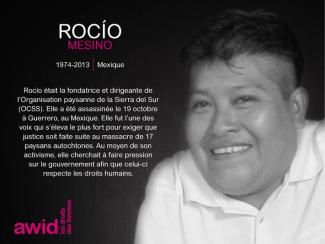
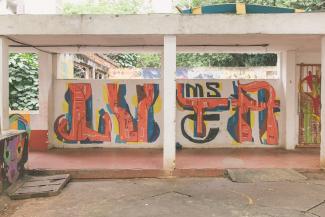 |
 |
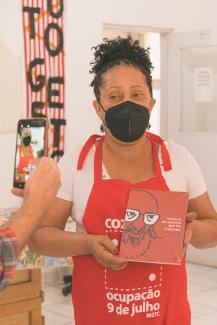 |
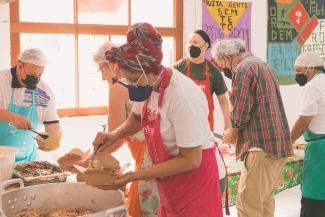
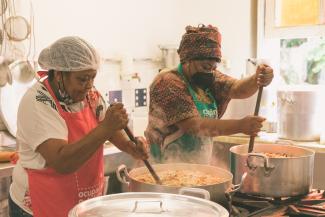
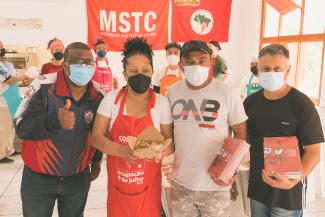 Mujeres y colaboradorxs en la cocina de Ocupação 9 de Julho |
 |
Día 3

En 2016, nous nous sommes réuni-e-s pour le 13e forum international de l’AWID, à Bahia au Brésil, qui a accueilli 1 800 participant-e-s venu-e-s de 120 pays et territoires à travers le monde. Le Forum a servi d’espace essentiel pour la mise en place de stratégies et la constitution d’alliances au sein des mouvements féministes et d’autres mouvement de justice.
Nous savons que les droits des femmes et les mouvements féministes sont des éléments moteurs pour l’instauration d’un changement transformateur durable. Au sein de nos mouvements, l’organisation, la résistance et la réponse au difficile contexte se précisent, et dans ce monde de plus en plus connecté, le potentiel des actions collectives de mouvements divers s’est fortement accru. C’est précisément là le travail essentiel que l’AWID cherche à amplifier et à soutenir.
Nous cherchons à informer et outiller les organisations et mouvements de droits des femmes afin de les aider à être en mesure de répondre aux opportunités qui se présentent et de contrecarrer les menaces. Nous appuyons une visibilité accrue et une meilleure compréhension des initiatives pour les droits des femmes et les menaces auxquelles elles font face, et nous oeuvrons également à influer sur les acteur-trice-s et les institutions qui façonnent le devenir des droits de la personne et du développement.
Le 13e forum international innovant de l’AWID s’est tenu du 8 au 11 septembre 2016 à Bahia, au Brésil, sur le thème : « Horizons féministes ; Construire un
pouvoir collectif pour les droits et la justice ».
Bien qu’une grande partie de l’énergie de l’AWID ait été investie en 2016 dans la tenue du Forum, la réflexion et l’énergie de près de 500 partenaires, intervenant-e-s, animateur-trice-s, artivistes, facilitateur-trice-s, écrivain-e-s, innovateur-trice-s en TI, performeur-euse-s, dont beaucoup sont des meneur-euse-s dans leur domaine, ont été mises à profit. Et en reconnaissance du passé et du combat de Bahia, nous avons accueilli deux jours de Forum des Féminismes Noirs , à l’initiative d’un groupe de travail de féministes Noires du monde entier.
À propos du défi au pouvoir corporatif : Nous avons publié Contester le pouvoir corporatif : Les luttes pour les droits des femmes, la justice économique et la justice de genre avec le Solidarity Center, qui dévoile la portée et l’ampleur du pouvoir corporatif et souligne comment la collusion qu’entretiennent les entreprises nationales et transnationales avec les élites et autres puissant- e-s acteur-trice-s influence les vies des femmes et des peuples opprimés. Ce rapport présente des clés de stratégies de résistances, en soulignant cinq combats qui se sont saisis de la collaboration entre mouvements pour contester le pouvoir corporatif.
Sur les économies féministes : Nous avons publié Propositions féministes pour une économie juste avec le Centre pour le leadership mondial des femmes (CWGL en anglais) et le Réseau de Développement et de Communication des Femmes Africaines FEMNET.
Sur l’opposition aux fondamentalismes : Le Diable est dans les détails : à la croisée du développement, des droits des femmes et des fondamentalismes religieux détaille la façon dont les fondamentalismes religieux entravent le développement et les droits des femmes en particulier, et offre des recommandations aux acteur-trice-s du développement pour le renforcement des droits des femmes.
Sur le thème de l’activisme des jeunes féministes : Avec FRIDA, nous avons lancé Courageuses, créatives, résilientes : les organisations de jeunes féministes dans le monde : un état de lieux à l’occasion du Pôle d’activisme des jeunes féministes lors du Forum de l’AWID. Ce projet de cartographie des jeunes féministes s’appuie sur les données collectées dans 1 360 demandes de subventions reçues par FRIDA entre 2012 et 2014, qui incluaient 694 interlocutrices issues de 118 pays différents !
l’AWID, en partenariat avec d’autres organisations féministes et de droits des femmes, a lancé des actions de plaidoyer et de dialogue afin de rechercher de meilleures solutions pour les programmes de droits des femmes, dont le travail avec le consortium .Count Me In!
Les expériences des femmes en situation de handicap, les femmes Noires et Afro-descendantes, les travailleuses du sexe, les femmes Autochtones, les personnes trans et intersexes, les travailleuses domestiques, et la manière dont leurs vies sont impactées par les nombreuses oppressions et la violence ont été placées au centre et au premier plan du processus du Forum.
Au cours des 16 jours d’activisme, et grâce aux contributions de nos incroyables membres, nous avons lancé l’Hommage aux défenseur-e-s des droits humains des femmes 2016 pour honorer la mémoire des défenseur-e-s qui nous ont quitté- e-s.
Notre partenariat avec The Guardian et Cash Mama : la section sur les droits des femmes et l’égalité de genre (en anglais) sur le portail du développement dans le monde du Guardian a permis d’attirer davantage d’attention sur les groupes et les problématiques qui ne font généralement pas l’objet d’une couverture médiatique adéquate.

Los discursos anti-derechos continúan evolucionando. Además de utilizar argumentos relacionados con la religión, la cultura y la tradición, los actores antiderechos cooptan el lenguaje de la justicia social y los derechos humanos para ocultar sus verdaderas agendas y ganar legitimidad.
Hace tres décadas, un evangelista televisivo estadounidense candidato del Partido Republicano dijo una célebre frase: el feminismo es «un movimiento político antifamilia que alienta a las mujeres a dejar a sus maridos, matar a sus hijos, practicar brujería, destruir el capitalismo y convertirse en lesbianas». Hoy en día, esta idea conspirativa ha logrado un alcance y una legitimidad sin precedentes bajo la forma del discurso de la «ideología de género», un término genérico que, cual enemigo imaginario, ha sido creado por los actores antiderechos para oponerse a él.
Dentro de la serie de discursos empleados por los actores antiderechos (que incluyen nociones de «imperialismo cultural» y «colonización ecológica», apelaciones a la «objeción de conciencia» y la idea de un «genocidio prenatal»), un tema clave es la cooptación. Los actores antiderechos se apropian de problemáticas legítimas, o seleccionan partes de estas, y las distorsionan al servicio de sus agendas opresivas.