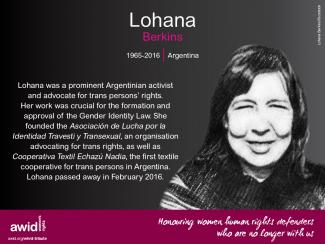
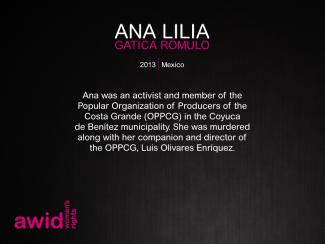
Lohana Berkins
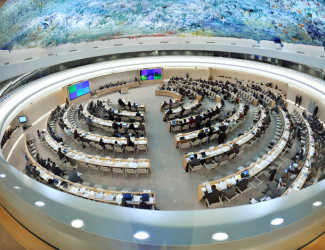
El Consejo de Derechos Humanos (CDH) es el cuerpo intergubernamental del sistema de las Naciones Unidas responsable de la promoción y protección de todos los derechos humanos en todo el mundo. El HRC se reúne en sesión ordinaria tres veces al año, en marzo, junio y septiembre. La La Oficina del Alto Comisionado para los Derechos Humanos (ACNUDH) es la secretaría del Consejo de Derechos Humanos.
Debate y aprueba resoluciones sobre cuestiones mundiales de derechos humanos y el estado de los derechos humanos en determinados países
Examina las denuncias de víctimas de violaciones a los derechos humanos o las de organizaciones activistas, quienes interponen estas denuncias representando a lxs víctimas.
Nombra a expertos independientes que ejecutarán los «Procedimientos Especiales» revisando y presentado informes sobre las violaciones a los derechos humanos desde una perspectiva temática o en relación a un país específico
Participa en discusiones con expertos y gobiernos respecto a cuestiones de derechos humanos.
A través del Examen Periódico Universal, cada cuatro años y medio, se evalúan los expedientes de derechos humanos de todos los Estados Miembro de las Naciones Unidas
Se está llevarando a cabo en Ginebra, Suiza del 30 de junio al 17 de julio de 2020.
AWID trabaja con socios feministas, progresistas y de derechos humanos para compartir conocimientos clave, convocar diálogos y eventos de la sociedad civil, e influir en las negociaciones y los resultados de la sesión.
Alors que le capitalisme hétéropatriarcal s’acharne à nous contraindre au consumérisme et à la conformité, nous constatons que nos luttes sont cloisonnées et séparées par des frontières aussi bien physiques que virtuelles.
Avec les défis supplémentaires d’une pandémie mondiale à surmonter, cette stratégie du « diviser pour mieux régner » a favorisé l’expansion de l’exploitation dans de nombreux domaines.
Malgré tout, du 1er au 30 septembre 2021, le festival Crear | Résister | Transform : un festival dédié aux mouvements féministes ! de l’AWID nous a emmené·e·s à la découverte de ce que cela signifiait d’incarner nos réalités dans des espaces virtuels. Lors du festival, des activistes féministes du monde entier se sont réuni·e·s non seulement pour partager des expériences de libertés, de résistances et de solidarités transfrontalières durement gagnées, mais aussi pour exprimer ce à quoi pourrait ressembler une forme transnationale d’unité.
C’est précisément cette unité qui a le potentiel de dépasser les frontières, permettant de tisser une vision de l’avenir qui est transformatrice parce qu’abolitionniste et anticapitaliste. À travers des infrastructures numériques que nous avons investies avec notre queerness, notre résistance et nos imaginaires, le festival a présenté un moyen de se détourner des systèmes qui nous rendent complices de l’oppression des autres et de nous-mêmes.
Si Audre Lorde nous a appris que « les outils du maître ne détruiront jamais la maison du maître », Sara Ahmed nous a montré en revanche que nous pouvons en faire mauvais usage. Le fait d’avoir à créer un espace de rassemblement, en dépit de toutes les autres contraintes pesant sur nos emplois du temps, nous a permis d’imaginer une façon de rompre avec la réalité du capitalisme hétéropatriarcal.
Maintenant, si nous comprenons le rassemblement comme une forme de plaisir, il devient alors possible de faire le lien entre le plaisir transgressif et la résistance transnationale/transdigitale; entre les types de plaisir qui bousculent les frontières d’une part, et la queerness, la théâtralité, la lutte pour la terre et les autochtones, l’anticapitalisme et l’organisation anticoloniale d’autre part.
La présente édition a tenté de donner une idée de la manière dont l’exercice de rassemblement du festival a revêtu de multiples formes et imaginations. Au-delà des collaborations directes avec certain·e·s de ses orateurices et rêveur·se·s, nous avons fait appel à une pléthore d’autres voix du Sud mondial pour aborder plusieurs de ces sujets et thématiques. Vous trouverez ci-dessous une carte de certains des panels du festival qui nous ont le plus inspiré·e·s.
Expose corporate capture. Understand false solutions. Build alternatives. Everything you need to run your own "Whose COP Is It?" campaign.
En tant que mouvements féministes et mouvements pour les droits des travailleur·euses, nous articulons en solidarité les points suivants dans le cadre d’une vision collective des économies des soins qui plaçant les travailleuses domestiques au centre
Le travail domestique et des soins est sur le devant de la scène depuis la pandémie de COVID-19, car il a permis à tout le monde de continuer à fonctionner pendant les crises mondiales. La Banque Mondiale, le Fond Monétaire International et autres institutions multilatérales reconnaissent également l’importance du travail des soins et domestique dans la pérennisation de l’économie. Cette attention répond cependant généralement à une approche instrumentale - dans laquelle le travail des soins soutient l’économie « productive » - centrée sur la réalisation de profits, qui ne reconnaît pas les soins comme un droit humain et un bien public et ne prend pas en compte les travailleuses qui assurent une grande partie du labeur.

“My mission in life is not merely to survive, but to thrive; and to do so with some passion, some compassion, some humor, and some style.” - Maya Angelou
The AWID International Forum is both a global community event and a space of radical personal transformation. A one-of-a-kind convening, the Forum brings together feminist, women’s rights, gender justice, LBTQI+ and allied movements, in all our diversity and humanity, to connect, heal and thrive. The Forum is a place where Global South feminists and historically marginalized communities take center stage, strategizing with each other and allied movements, funders and policy-makers, in order to shift power, make alliances, and usher in a different, better world.
When people come together on a global scale, as individuals and movements, we generate a sweeping force. Join us in Bangkok, Thailand in 2024. Come dance, sing, dream and rise with us.
When: 2–5 December 2024
Where: Bangkok, Thailand; and online
Who: Approximately 2,500 feminists from all over the world participating in-person, and 3,000 participating virtually
Learn more about the forum:
Read our Frequently Asked Questions
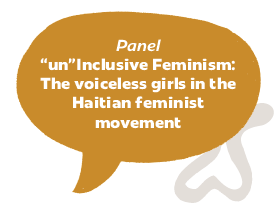
with Naike Ledan and Fédorah Pierre-Louis.

La Construcción de Economías Feministas se trata de crear un mundo con aire limpio para respirar y agua limpia para beber, con trabajo significativo y cuidado para nosotrxs y nuestras comunidades, donde todxs podamos disfrutar de nuestra autonomía económica, sexual y política.
En el mundo en que vivimos hoy, la economía sigue dependiendo del trabajo de cuidado no remunerado o subvalorado que realizan las mujeres para ganancia de otrxs. La búsqueda del «crecimiento» solo expande el extractivismo, un modelo de desarrollo basado en la extracción y explotación masiva de los recursos naturales que sigue destruyendo a las personas y al planeta mientras concentra la riqueza en manos de las elites globales. Mientras tanto, el acceso a la salud, a la educación, a un salario digno y a la seguridad social se están convirtiendo en el privilegio de pocxs. Este modelo económico se asienta sobre la supremacía blanca, el colonialismo y el patriarcado.
Adoptar solamente un «enfoque de empoderamiento económico de las mujeres» es solo integrar aún más a las mujeres a este sistema. Ese ‘empoderamiento’ puede ser un medio temporal de supervivencia, pero debemos plantar las semillas que hagan que otro mundo sea posible mientras derribamos los muros del que ya existe.
Creemos en la capacidad de los movimientos feministas de trabajar para el cambio con alianzas amplias que atraviesen distintos movimientos sociales. Al amplificar las propuestas y visiones feministas, nuestro objetivo es construir nuevos paradigmas para economías justas.
Nuestro enfoque debe ser interconectado e interseccional, porque la autonomía sexual y corporal no será posible hasta que todxs y cada unx de nosotrxs disfrute de sus derechos e independencia económicos. Queremos trabajar con quienes resisten y enfrentan el auge mundial de la derecha conservadora y de los fundamentalismos religiosos, porque no es posible ninguna economía justa hasta que no hagamos crujir las bases del actual sistema.
Promovemos agendas feministas: Enfrentamos al poder corporativo y su impunidad por los abusos de derechos humanos trabajando con aliadxs. Así nos asegurarnos de llevar a los espacios de decisión política las perspectivas feministas, de derechos de las mujeres y de justicia de género. Un ejemplo sobre el que puedes leer más es nuestro trabajo sobre el futuro instrumento legalmente vinculante sobre las «corporaciones transnacionales y otras empresas comerciales con respecto a los derechos humanos», en el Consejo de Derechos Humanos de las Naciones Unidas.
Movilizamos acciones solidarias: Trabajamos para fortalecer los vínculos entre los movimientos feministas y por la justicia impositiva, incluyendo el reclamo de que los recursos públicos perdidos a través de los flujos financieros ilícitos (IFFs, por sus siglas en inglés) sean usados para asegurar la justicia social y de género.
Construimos conocimiento: Brindamos a las defensoras de derechos humanos información estratégica que es vital para enfrentar el poder corporativo y el extractivismo. Contribuiremos a construir conocimiento acerca del financiamiento local y global para el extractivismo,y los mecanismos de inversión que lo sostienen.
Creamos y difundimos alternativas: Movilizamos a nuestra membresía y a los movimientos imaginando de manera colectiva economías feministas, y compartiendo conocimientos, prácticas y agendas feministas por la justicia económica.
«La revolución corporativa va a colapsar si nos rehusamos a comprar lo que están vendiendo: sus ideas, su versión de la historia, sus guerras, sus armas, su idea de inevitabilidad. Otro mundo no solo es posible, sino que está en camino. En los días tranquilos, puedo oírlo respirar».
Arundhati Roy, War Talk.
The Forum theme––Rising Together––is an invitation to engage with our whole selves, to connect with each other in focused, caring and brave ways, so that we can feel the heartbeat of global movements and rise together to meet the challenges of these times.
Feminist, women’s rights, gender justice, LBTQI+ and allied movements around the world are at a critical juncture, facing a powerful backlash on previously-won rights and freedoms. Recent years have brought the rapid rise of authoritarianisms, the violent repression of civil society and criminalization of women and gender-diverse human rights defenders, escalating war and conflict in many parts of our world, the continued perpetuation of economic injustices, and the intersecting health, ecological and climate crises.
Our movements are reeling and, at the same time, seeking to build and maintain the strength and fortitude required for the work ahead. We can't do this work alone, in our silos. Connection and healing are essential to transforming persistent power imbalances and fault lines within our own movements. We must work and strategize in interconnected ways, so that we can thrive together. The AWID Forum fosters that vital ingredient of interconnectedness in the staying power, growth and transformative influence of feminist organizing globally.
On September 2nd, 2021, the amazing feminist and social justice activists of AWID’s Crear | Résister | Transform festival came together not only to share resistance strategies, co-create, and transform the world, but also to talk dirty on Twitter.
The exercise was led by Nana Darkoa Sekyiamah, co-founder of the blog Adventures From The Bedrooms of African Women and author of The Sex Lives of African Women, who paired up with the Pan-Africanist digital queer womanist platform AfroFemHub, to ask the question: How can we safely and consensually explore our pleasure, desires, and fantasies via text?
I believe this is a critically important question because it looks at the larger issue of how one navigates the online world with a feminist understanding. Under capitalism, discourse around bodies and sex can be dehumanizing and distorting, and navigating sexual pleasure in virtual spaces can feel performative. So seeking out avenues where we can explore how we share our desire in ways that are affirming and enthusiastic can push back against dominant models of presentation and consumption to reclaim these spaces as sites for authentic engagement, proving that all sexting should be just that: feminist.
Plus, allowing feminist discourse to embody its playful side in online discourse helps reframe a popular narrative that feminist engagement is joyless and dour. But as we know, having fun is part of our politics, and an inherent part of what it means to be feminist.
Using the hashtag #SextLikeAFeminist, scholars and activists from all over the world chimed in with their thirstiest feminist tweets, and here are my top ten.
As these tweets show, it turns out that sexting like a feminist is sexy, funny – and horny. Yet, it never loses sight of its commitment to equity and justice.
.
The 61st Human Right Council takes place amid, what has been called by the UN Secretary-General, an ‘imminent financial collapse.’ Powerful member states’ refuse to pay up their contributions to the UN: the United States alone accounts for 95% of the USD 1.6 billion shortfall in the UN’s 2025 budget. This continues to erode the Council’s ability to deliver on its mandate, limiting its capacity to support human rights mechanisms, monitor accountability, and respond to global crises.
This lack of accountability is starkly obvious with the global surge of military spending and ongoing genocides in Gaza, Sudan and Myanmar. From the farcical “Gaza Peace Plan,” and unbridled imperial intervention in Venezuela, led by the US, the mask that “there is just no money” for people- social support, healthcare, education is off.
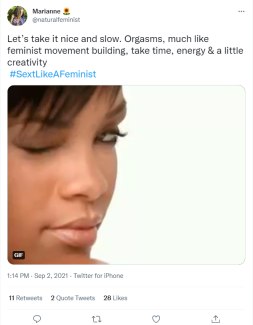
Vamos despacio y con amabilidad. Los orgasmos, como la construcción de los movimientos feministas, llevan tiempo, energía y un poquito de creatividad.