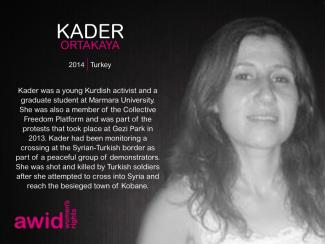
Kader Ortakaya
Defensoras de derechos humanos de todo el planeta defienden sus tierras, medios de subsistencia y sus comunidades ante las industrias extractivas y el poder corporativo. Ellas hacen frente a fuertes intereses económicos y políticos que promueven el robo de tierras, el desplazamiento de comunidades, la pérdida de los medios de subsistencia y la degradación del medioambiente.
El extractivismo es un modelo económico y político de desarrollo que mercantiliza la naturaleza y prioriza la ganancia por sobre los derechos humanos y el medioambiente. Arraigado en la historia colonial, refuerza las desigualdades sociales y económicas tanto a nivel local como global. Muchas veces, las mujeres negras, rurales e indígenas son las más afectadas por el extractivismo, y además son notablemente excluidas de la toma de decisiones. Desafiando estas fuerzas patriarcales y neocoloniales, las mujeres se alzan en defensa de los derechos, las tierras, las personas y la naturaleza.
Las defensoras que enfrentan a las industrias extractivas, experimentan una diversidad de riesgos, amenazas y violaciones, incluidas la criminalización, la estigmatización, la violencia y laintimidación. Sus historias dan cuenta de marcados aspectos de violencia sexual y de género. Entre los perpetradores se incluyen autoridades estatales y locales, las corporaciones, la policía, el ejército, las fuerzas paramilitares y de seguridad privada, y en algunos casos, sus propias comunidades.
AWID y la Coalición Internacional de Mujeres Defensoras de Derechos Humanos (WHRDIC por su sigla en inglés) tienen el placer de anunciar «Defensoras de derechos humanos confrontado al extractivismo y al poder corporativo»; un proyecto interregional de investigación que documenta las experiencias vividas por las defensoras de Asia, África y América Latina.
Alentamos a activistas, integrantes de movimientos sociales, la sociedad civil organizada, donantes y responsables de políticas públicas, a leer y utilizar estas producciones para el trabajo de incidencia, con fines educativos y como fuente de inspiración:
«Defensoras de derechos humanos confrontando a las industrias extractivas: un panorama de los riesgos críticos y las obligaciones en materia de derechos humanos» es un informe sobre políticas desde la perspectiva de género (en inglés, pronto disponible en español). Analiza las formas de violaciones y los tipos de perpetradores, hace referencia a las obligaciones relevantes en derechos humanos e incluye recomendaciones de políticas para los estados, corporaciones, la sociedad civil y donantes.
«Tejiendo la Resistencia a través de la Acción: Las Estrategias de las Defensoras de Derechos Humanos contra a las Industrias Extractivas» es una guía práctica que expone formas creativas y deliberadas de acción, tácticas exitosas e inspiradoras historias de resistencias.
El video «Defendiendo a las Personas y al Planeta: Mujeres Confrontando a las Industrias Extractivas» está protagonizado por defensoras de derechos humanos de África, Asia y América Latina, que comparten sus luchas por la tierra y la vida, y hablan de los riesgos y desafíos que enfrentan en su activismo.
«Desafiar al poder corporativo: Las luchas por los derechos de las mujeres, la justicia económica y de género» es un informe de investigación que explica los impactos del poder corporativo y ofrece ideas sobre estrategias de resistencia.
AWID reconoce con gratitud las invaluables contribuciones de cada Defensora de Derechos Humanos que ha sido parte de este proyecto. Esta guía ha sido posible gracias su generosidad y apertura al compartir sobre sus experiencias y lecciones. Su coraje, creatividad y resiliencia son una inspiración para todxs nosotrxs. ¡Muchas gracias!
"Nous savons que tout est contre nous et il y a très peu de chances de changer cela. Mais nous croyons en l'intervention et je pense que nous avons une opportunité et nous devrions l'utiliser. C'est pourquoi nous faisons tout ce que nous faisons. Nous sommes prêt·e·s à pousser pour des choses inouïes."
Sopo Japaridze dans OpenDemocracy
Photo @სოლიდარობის ქსელი / Solidarity Network
Participez au Forum international de l'AWID - un rassemblement féministe mondial majeur - et bénéficiez de réductions spéciales et de points d'entrée pour le dialogue virtuel réservés aux membres de l'AWID. Co-créé par des mouvements féministes, le Forum est un espace unique de discussion profonde et d'imagination où nous remettons en question et renforçons notre organisation, et joignons nos luttes et nos réalités féministes.
I believe empowered women empower women and that is why I’ve had an incredible time being an AWID member. My knowledge and understanding of Feminism and intersectionality has been broadened by the exposure I received being part of the AWID Community Street Team. I hope more women join and share topics and ideas that will help other women.
- Loyiso Lindani, South Africa.
Nadine fue un ejemplo para muchxs por su trabajo en apoyo de las mujeres y lxs más vulnerables de su comunidad. Estaba comprometida con ayudar a l pobres, especialmente a las personas sin techo.
Aunque su muerte se informó como accidente, la familia Ramaroson, encabezada por su padre, André Ramaroson, llevó adelante una investigación que arrojó evidencias de que había sido asesinada. Se informó que había muerto en un accidente fatal ocurrido entre Soanierano - Ivongo y Ste Marie, una historia que fue desmentida por su familia. Ella había recibido numerosas amenazas de muerte por sus audaces posiciones políticas. Su caso todavía está en la corte de Antananarivo (la capital de Madagascar).

La creación conjunta de nuestras realidades feministas comienza con nosotrxs mismxs y con cómo nos tratamos mutuamente. Nos esforzamos por crear y proteger espacios seguros para nuestras comunidades, tanto en línea como en forma presencial.
También creemos que los espacios seguros y amigables son de propiedad y creación conjuntas. Esperamos que nuestrxs integrantes actúen de manera ética, responsable y consistente con los valores de AWID, y asuman la responsabilidad colectiva de garantizar una atmósfera de respeto y solidaridad recíprocos.
Conéctate con otrxs, ayuda a romper el aislamiento y a promover la solidaridad. Es muy fácil sentirse perdidx y solx, y ser tratadx en forma amable y receptiva resulta de suma ayuda.
Interactúa y conéctate de forma pacífica. Surgirán diferencias de opinión, naturalmente: por favor, considera que estas diferencias son útiles para expandir tu pensamiento y tu modo de ver el mundo.
Ayuda a construir un espacio que reconozca y valide las múltiples experiencias de vida y las diversidades corporales y de expresiones de género. Reconoce que todxs tenemos identidades interseccionales.
Utiliza lenguaje inclusivo. Respeta la forma en que las personas quieren ser nombradas en términos de identidad o expresión de género (como los pronombres), y practica el uso del lenguaje inclusivo.
Escucha y modifica tu comportamiento y tu forma de interactuar si alguien dice que se siente incómodx. No preguntes a otras personas cosas que no te gustaría que te pregunten a ti.
Ayuda a combatir comportamientos opresivos, como, por ejemplo, acoso, violencia verbal o física, violación de consentimiento, y cualquier acción que perpetúe el clasismo, la discriminación por edad y/o capacidad, el racismo, la misoginia, el heterosexismo, la transfobia y otras opresiones. Si fuera necesario, por favor, contacta al personal de AWID.
Habla y escucha con la mente y el corazón abiertos, y sin juzgar.
Sé honestx, abierto y sincerx. Comparte y habla en forma auténtica sobre tus esperanzas y tus sueños, y tus ideas para tu propia vida y tu comunidad.
Practica la escucha activa y la autoconsciencia. Préstale atención a cuánto tiempo y espacio estás ocupando: deja lugar para lxs demás, practica la escucha activa y la enseñanza orientada a la acción.
Sé consideradx y reconoce a lxs otrxs por su trabajo y activismo. Recuerda que todxs estamos trabajando colectivamente para contribuir al cambio. Asegúrate de reconocer las contribuciones de otras personas y de dar crédito a su trabajo cuando sea apropiado, por ejemplo, en conversaciones, artículos, imágenes, etc.
¡Cuídate! Por favor, toma medidas para protegerte, en línea y en persona, en especial si tienes motivos para creer que hablar en público te pone en peligro. Lxs integrantes pueden utilizar alias o imágenes de perfil que escondan su identidad. Para más información, por favor, consulta el «Kit digital de primeros auxilios para defensores/as de derechos humanos» elaborado por la Asociación para el Progreso de las Comunicaciones (APC).
¡Respeta las necesidades de privacidad de las otras personas! No compartas ni reenvíes ninguna información sin permiso explícito
Por favor, tener en cuenta:
AWID se reserva el derecho de eliminar comentarios, y de suspender o revocar la membresía cuando nuestras pautas comunitarias no sean respetadas. Lxs integrantes de AWID no están autorizadxs a representar a AWID en forma oficial, a menos que esto sea estipulado por escrito. Lxs integrantes de AWID no pueden utilizar los espacios de AWID para hacer proselitismo, ni para reclutar a otrxs integrantes a unirse a alguna congregación u organización religiosa. Lxs integrantes no pueden utilizar los espacios de AWID para solicitar fondos para uso personal, pero los enlaces a iniciativas externas de recaudación de fondos o campañas activistas están permitidos.
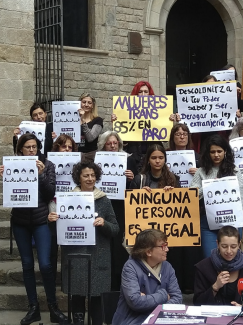
We work towards a world based on social, environmental, and economic justice; and interdependence, solidarity, and respect. We work towards dismantling systems of oppressive power and against all its manifestations, including patriarchy, fundamentalisms, militarisms, fascisms and corporate power that threaten our lives and our world. We want a just world where resources and power are shared in ways that enable everyone to thrive.

#FreezeFascisms
Depuis l’adoption de la Déclaration et du programme d’action de Beijing il y a 30 ans, les groupes fascistes exercent un pouvoir et une influence croissantes dans les espaces multilatéraux, faisant reculer les acquis en matière d’égalité de genre et de protection des droits humains dans le monde.
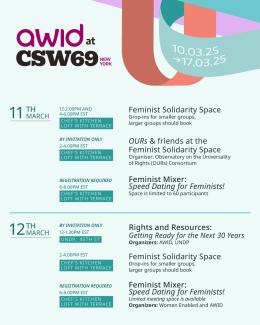
À l’approche de la CSW69, nous co-organisons de courageuses initiatives horizontales, sur le terrain et en ligne, pour échanger des stratégies et bâtir un pouvoir féministe au-delà de Beijing+30. Notre présence collective perturbe les mécanismes d’exclusion des institutions dans ces espaces tout en soutenant les mouvements qui s’organisent autour d’alternatives féministes aux systèmes d’oppression.
Participez aux conversations du 10 au 21 mars 2025 pour, collectivement, faire de la CSW69 un espace de résistance et de solidarité.
"He dado testimonio de la discriminación que vi en las calles, he sufrido burlas y abusos verbales ahí. También he hecho numerosas amistades y he conocido a mucha gente. Puede que haya peligros ahí fuera, pero soy una sobreviviente y aquí es donde estaré por ahora." - Sainimili Naivalu
Exigió a las autoridades políticas y a otras partes interesadas que proporcionaran políticas y servicios favorables a la movilidad de las personas con discapacidad, como la construcción de rampas en pueblos y ciudades para aumentar su accesibilidad. Sin embargo, las barreras físicas no fueron las únicas que Sainimili se esforzó por cambiar. Por experiencia propia, sabía que era necesario que se produjeran cambios más complejos en las esferas sociales y económicas. Muchos de los retos a los que se enfrentan las personas con discapacidad tienen su origen en actitudes que llevan a la discriminación y al estigma.
Como sobreviviente y luchadora, Sainimili contribuyó a la creación conjunta de realidades feministas que fomentasen la inclusión y cambiasen las actitudes hacia las personas con discapacidad. Como afiliada a la Asociación de Lesiones de la Espina Dorsal de Fiji (SIA, por sus siglas en inglés) y a través del proyecto del Foro para Personas con Discapacidades del Pacífico “Pacífico Habilita”, Sainimili asistió a la formación de la Organización Internacional del Trabajo "Inicie su Negocio" en Suva, lo que le permitió transformar sus ideas en su propio negocio. Fue emprendedora en el puesto 7 del mercado de Suva, donde ofrecía servicios de manicura, y también se encargaba del puesto del mercado de las mujeres de SIA, donde vendía artesanías, sulus y otros objetos. El plan de Sainimili era expandir su negocio y convertirse en una importante empleadora de personas con discapacidad.
Además de su activismo, también fue medallista y campeona juvenil de tenis de mesa.
Sainimili era única, con una personalidad vivaz. Siempre podías saber si Sainimili estaba en una habitación porque su risa y sus historias eran los primero que notabas. - Michelle Reddy
Sainimili falleció en 2019.
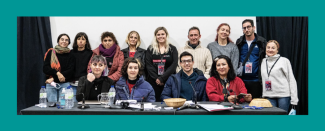
Este Foro de AWID celebrará y difundirá las realidades feministas que nos rodean en diferentes etapas de desarrollo.

Connue comme la drag queen de couleur de New York, Sylvia était une infatigable et féroce défenseure des marginalisé·e·s et exclu·e·s au début des années 1970, alors que le mouvement pour les « droits des gays » prenait de l’ampleur aux États-Unis.
Dans un discours bien connu prononcé pour Chistopher Street Day en 1973, Sylvia s’est exclamée, parmi une foule de membres de la communauté LGBT :
« Vous me dites tous d’aller me cacher, la queue entre les jambes.
Je ne supporterai plus ces conneries.
On m’a battue.
On m’a cassé le nez.
On m’a jetée en prison.
J’ai perdu mon travail.
J’ai perdu mon appartement.
Tout ça pour la libération gay, et vous me traitez de la sorte?
C’est quoi votre putain de problème à tous?
Réfléchissez à ça! »
En 1969, à l’âge de 17 ans, Sylvia a participé aux célèbres émeutes de Stonewall en jetant, paraît-il, le deuxième cocktail molotov en signe de protestation contre la descente de la police dans le bar gay de Manhattan. Elle a continué à être une figure centrale des soulèvements qui ont suivi, organisant des rassemblements et ripostant aux brutalités policières.
En 1970, Sylvia a collaboré avec Marsha P. Johnson à la création de Street Transvestite Action Revolutionaries (S.T.A.R.), collectif et organisation politique qui mettait sur pied des projets de soutien mutuel pour les personnes trans vivant dans la rue, celles et ceux aux prises avec la toxicomanie ou en détention, et spécialement pour les personnes trans de couleur et celles et ceux vivant dans la pauvreté.
Refusant les étiquettes, Sylvia a incité les personnes du mouvement de libération gay à penser différemment, et ce, tout au long de sa vie. Elle a déclaré :
« J’ai quitté ma maison en 1961, à l’âge de 10 ans. Je me suis démenée sur la 42e rue. Le début des années 1960 n’était pas génial pour les drag queens, les garçons efféminés ou les garçons qui se maquillaient comme on le faisait. À l’époque, on se faisait battre par la police, par tout le monde. Je n’ai pas vraiment fait mon coming out en tant que drag queen avant la fin des années 1960. C’était vraiment la débandade lorsque des drag queens se faisaient arrêter. Je me rappelle la première fois où je me suis fait arrêter, je n’étais même pas habillée entièrement en drag. Je marchais dans la rue et les flics m’ont tout simplement attrapée. Les gens maintenant prétendent que je suis une lesbienne, parce que je suis avec Julia, ce à quoi je leur je réponds : « Non, je suis juste moi. Je ne suis pas une lesbienne. » J’en ai marre d’être étiquetée. Je ne suis même pas en faveur de l’étiquette de transgenre. J’en ai marre de vivre avec des étiquettes. Je veux juste être qui je suis. Je suis Sylvia Rivera »
Par son activisme et son courage, Sylvia Rivera a présenté un miroir où se reflétait tout ce qui n’allait pas dans la société, mais aussi la possibilité d’une transformation. Sylvia est née en 1951 et décédée en 2002.