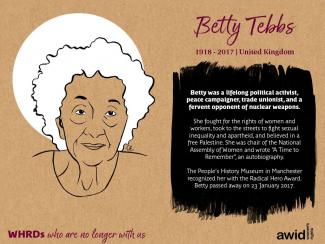
Betty Tebbs
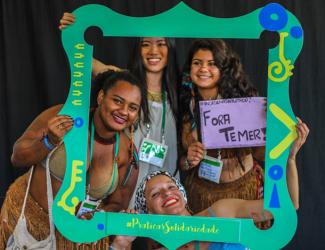
El activismo joven feminista juega un papel fundamental en las organizaciones y los movimientos por los derechos de las mujeres a nivel mundial, ya que aborda los nuevos problemas a los que las feministas se enfrentan en la actualidad. Esta fuerza, creatividad y adaptabilidad son esenciales para la sostenibilidad de la organización feminista.
A la vez, enfrentan obstáculos específicos para ejercer su activismo, como acceso limitado al financiamiento y al apoyo, falta de oportunidades de capacitación, un incremento considerable de los ataques contra las jóvenes defensoras de los derechos humanos. Esto crea una falta de visibilidad que hace más complicada su inclusión y participación efectiva en los movimientos por los derechos de las mujeres.
El programa de activismo joven feminista fue creado para garantizar que las voces de las jóvenes sean escuchadas y se vean reflejadas en el discurso feminista. Queremos garantizar que las jóvenes feministas tengan un mejor acceso al financiamiento, a las oportunidades de desarrollo de las capacidades y a los procesos internacionales.
Además de apoyar directamente a las jóvenes feministas, estamos trabajando con activistas por los derechos de las mujeres de todas las edades, con modelos y estrategias prácticas para procesos efectivos de organización intergeneracionales.
Queremos que las activistas jóvenes feministas jueguen un papel en el proceso de toma de decisiones que afectan sus derechos a través de:
Fomento de la comunidad e intercambio de información a través de la Conexión Joven Feminista. Dada la importancia de los medios virtuales para el trabajo de las jóvenes feministas, nuestro equipo lanzó la Conexión Joven Feminista en mayo de 2010 para compartir información, construir capacidades a través de seminarios web y discusiones electrónicas y para alentar la construcción de la comunidad.
Investigación y generación de conocimientos sobre el activismo joven feminista, que aumenten la visibilidad y el impacto del activismo joven feminista en los movimientos por los derechos de las mujeres y otros actores clave, como los donantes.
Promoción de procesos más efectivos de organización intergeneracional, explorando mejores formas de trabajar en conjunto.
Apoyo a la participación de las jóvenes feministas en los procesos globales de desarrollo, por ejemplo en los procesos de Naciones Unidas.
Colaboración con todas las áreas prioritarias de AWID, incluyendo el Foro, para garantizar así que las contribuciones clave de las jóvenes feministas, así como sus perspectivas, necesidades y activismo se reflejen en los debates, políticas y programas que las afectan.
Nos esforzamos por ser transparentes, por utilizar nuestros recursos en forma responsable, por ser equitativxs en nuestras colaboraciones, y por ser responsables e íntegrxs con nuestrxs afiliadxs, contrapartes y donantes, y con los movimientos con los que trabajamos y en los que participamos. Estamos comprometidxs a reflejar nuestras experiencias, a compartir abiertamente nuestrxs aprendizajes, y a esforzarnos por cambiar nuestras prácticas en consecuencia.

Pour revendiquer votre pouvoir en tant qu’experte sur la situation du financement des mouvements féministes.
While fundamentalisms, fascisms and other systems of oppression shapeshift and find new tactics and strategies to consolidate power and influence, feminist movements continue to persevere and celebrate gains nationally and The rising power of anti-rights actors is not happening in a vacuum. Understanding the rise of ultra-nationalism, unchecked corporate power, growing repression, and diminishing civic space is key to contextualize the anti-rights threats we face today.
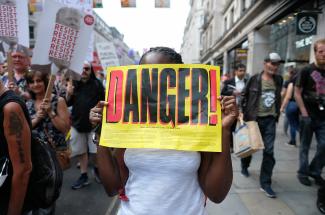
Today, considerably more than half of the world’s population is governed by far-right leaders. Against this backdrop, human rights defenders and feminists are working hard to “hold the line” and protect multilateralism and the international human rights system. They also face the risk that their engagement may bring with it violent reprisals. At the same time, these institutions are increasingly subject to private sector interests. Large businesses, particularly transnational corporations, are occupying seats at the negotiating table and leadership positions in a number of multilateral institutions, including the UN. This nexus of ultra-nationalism, closing civic space, and corporate capture is having a tremendous impact on whether human rights for all can ever be achieved.
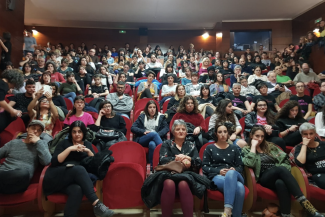
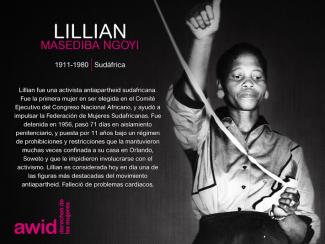
Étant donnée la situation mondiale, notre Conseil d’administration a pris la décision difficile d’annuler le Forum, qui devait avoir lieu en 2021 à Taipei.
 La dotación de recursos de los movimientos feministas es fundamental para garantizar una presencia más justa y pacífica y un futuro en libertad. En las últimas décadas, los donantes comprometieron una cantidad más considerable de dinero para la igualdad de género; sin embargo, apenas el 1% del financiamiento filantrópico y para el desarrollo se ha destinado real y directamente a dotar de recursos al cambio social encabezado por los feminismos.
Para luchar por la abundancia y acabar con esta escasez crónica, la encuesta ¿Dónde está el dinero? es una invitación a lxs promotorxs feministas y por la justicia de género a sumarse al proceso de la construcción colectiva de razones fundadas y evidencias para movilizar más y mejores fondos y recobrar el poder en el ecosistema de financiamiento de hoy. En solidaridad con los movimientos que continúan invisibilizados, marginados y sin acceso a financiamiento básico, a largo plazo, flexible y fiduciario, la encuesta ¿Dónde está el dinero? pone de relieve el estado real de la dotación de recursos, impugna las falsas soluciones y señala cómo los modelos de financiamiento necesitan modificarse para que los movimientos prosperen y puedan hacer frente a los complejos desafíos de nuestro tiempo.

Mientras los fundamentalismos, los fascismos y otros sistemas de opresión cambian de forma y encuentran nuevas tácticas y estrategias para consolidar su poder e influencia, los movimientos feministas siguen perseverando y celebrando logros a nivel nacional y en espacios regionales e internacionales.
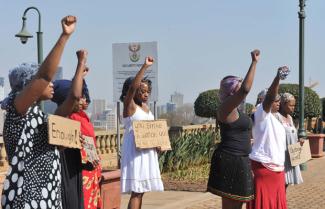
Por ejemplo, en 2019, se dio un paso significativo en el Consejo de Derechos Humanos, cuando la ONU reconoció por primera vez el derecho a la integridad y autonomía corporal. Varias resoluciones del Consejo sobre la discriminación contra mujeres y niñas también reconocen que la reacción está vinculada con grupos de presión regresivos, con perspectivas ideológicas o con el uso inapropiado de la cultura o la religión para oponerse a los derechos igualitarios de mujeres y niñas. También hemos visto progresos feministas en el trabajo de Procedimientos Especiales de la ONU (funcionarixs independientes), tales como enfatizar la obligación de los Estados de oponerse a las narrativas de ideología de género, denunciar el uso inapropiado por parte de los actores antiderechos de referencias a la «cultura», y enfatizar que las creencias religiosas no pueden ser utilizadas como justificación de la violencia o la discriminación.

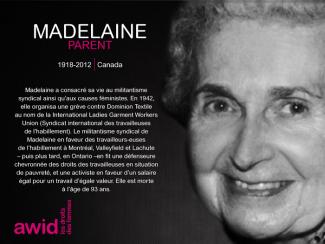
Identify and demonstrate opportunities to shift more and better funding for feminist organizing, expose false solutions and disrupt trends that make funding miss and/or move against gender justice and intersectional feminist agendas.
 |
Akosua Hanson es una artista activista radicada en Accra (Ghana). Su trabajo abarca la radio, televisión, medios impresos, teatro, cine, muestras de arte del cómic, instalaciones artísticas y la novela gráfica. El activismo de Akosua ha girado en torno al panafricanismo y el feminismo, con interés en la intersección del arte, la cultura pop y el activismo. Posee una maestría en Filosofía y Estudios Africanos con especialización en Género y Pensamiento Filosófico Africano. Akosua Hanson es la creadora de Moongirls, una serie de novelas gráficas que sigue las aventuras de cuatro superheroínas que luchan por un África libre de corrupción, neocolonialismo, fundamentalismos religiosos, cultura de la violación, homofobia y más. Trabaja como conductora radial en Y 107.9 FM en Ghana. |
En estas placas, Moongirl Wadjet hace el amor practicando BDSM con un demonio de dos géneros. De las cuatro Moongirls, Wadjet es la sanadora y filósofa, el vehículo del Oráculo. Su propósito es iniciar un proceso científico y espiritual, un experimento que denomina «Luz de plenilunio» y mediante el cual recorre un arco de tiempo vibracional por sus recuerdos, sensaciones, emociones, visiones e imaginación. Es una forma de viajar en el tiempo con vibraciones para descubrir lo que ella denomina «revelaciones-verdades».
En esa experiencia, algunas de las visiones difusas de Wadjet incluyen un apocalipsis inminente derivado de la destrucción ambiental a manos de lxs humanos y al servicio de un capitalismo voraz; un recuerdo de la infancia cuando estuvo hospitalizada luego de recibir un diagnóstico de salud mental, y la visión de una historia del origen de Moongirls en la que la figura bíblica de Noé como una anciana Moongirl negra que advierte sobre los peligros de la contaminación ambiental.
Más que una divertida excentricidad para explorar las sensaciones, el BDSM puede ser una forma de abordar el dolor y el trauma emocionales. Ha sido un medio de sanación sexual para mí, pues me ha permitido una forma radical de liberación. Cuando se inflige dolor físico en el cuerpo, se produce una depuración. Cuando se lo inflige con consentimiento, ese dolor extirpa el padecimiento emocional, casi como si lo «llamara» a retirarse. Los azotes sobre el cuerpo me permiten liberar emociones contenidas: ansiedad, depresión, una sensación de indefensión ante el estrés que me abruma ciertas veces.
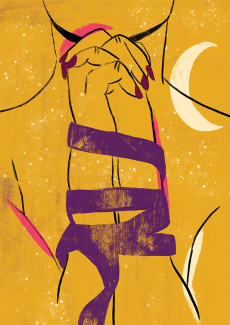
Cuando practican BDSM como un camino de sanación, lxs amantes deben prestar mucha atención y hacerse responsables de su compañerx.. Porque si bien se puede haber consentido al principio, debemos estar atentxs a cualquier cambio que pudiera surgir en el proceso, sobre todo cuando las sensaciones aumentan. Me acerco al BDSM a sabiendas de que, para entregarme al dolor, el amor y la empatía tienen que ser la base del proceso y así puedo crear un espacio para el amor o abrirme a él
Los cuidados posteriores al dolor infligido completan el proceso. Pueden brindarse de forma muy simple como dando caricias, preguntando si tu compañerx necesita beber agua, viendo una película juntxs, compartiendo un abrazo o simplemente un porro. Pueden ser expresados en cualquier idioma amoroso que escojas. Ese espacio de contención, en el que se sabe que se han abierto las heridas, es necesario para completar el proceso de sanación. Debido a lo delicado que es desdibujar la frontera entre dolor y placer, ese espacio te enseña mucho sobre cómo poner en práctica la empatía y sostener verdaderamente a tu compañerx. Por eso para mí, el BDSM es una forma de trabajo de cuidados.
Luego de una experiencia sexual BDSM, me sobrevienen una claridad y una calma que me colocan en un espacio de enorme creatividad y me empoderan espiritualmente. Es casi mágico ver cómo el dolor se transforma en otra cosa en tiempo real. De manera similar, esa experiencia liberadora del BDSM en el plano personal le permite a Wadjet acceder a una suerte de clarividencia, sabiduría y claridad que la ayudan en sus responsabilidades como moongirl que lucha contra el patriarcado africano.
Moongirls nació cuando yo dirigía Drama Queens, una organización de artistas activistas jóvenes radicada en Ghana. Desde nuestros inicios en 2016, hemos empleado distintos medios artísticos como parte de nuestro activismo feminista, panafricanista y ambientalista. Usamos poesía, cuentos, teatro, cine y música para abordar cuestiones como la corrupción, el patriarcado, la degradación del medio ambiente y la homofobia.
Nuestras primeras producciones teatrales, «The Seamstress of St. Francis Street» (La costurera de la calle San Francisco) y «Until Someone Wakes Up» (Hasta que alguien despierte) hablan del problema de la cultura de la violación en nuestras comunidades. Otra obra, «Just Like Us» (Igual que nosotrxs), podría decirse que fue una de las primeras producciones teatrales de Ghana en tratar directamente el arraigadísimo problema de la homofobia en el país. En Queer Universities Ghana, nuestro taller de cine queer para realizadorxs africanxs, se han capacitado cineastas de Ghana, Nigeria, Sudáfrica y Uganda. Cintas que nacieron durante el taller, como «Baby Girl: An Intersex Story» (Una beba: Un relato intersex) de Selassie Djamey, se han proyectado en pantallas de distintos festivales cinematográficos. Por lo tanto, pasar al medio de la novela gráfica fue una evolución natural para nosotrxs
Hace como siete años, había comenzado a escribir una novela que nunca acabé acerca de la vida de cuatro mujeres. En 2018, Open Society Initiative for West Africa (OSIWA) ofreció la oportunidad de un financiamiento que nos permitió producir este proyecto y mi novela inconclusa se convirtió en Moongirls.
Hubo dos temporadas de Moongirls, cada una de seis capítulos. Entre lxs escritorxs y editorxs que participaron en la primera temporada estuvieron Suhaida Dramani, Tsiddi Can-Tamakloe, George Hanson y Wanlov the Kubolor. Yaba Armah, Nadia Ahidjo, y yo escribimos para la segunda temporada. Kissiwa, artista ghanesx, estuvo a cargo de la ilustración y la conceptualización de los personajes, mientras que AnimaxFYB Studio, un estudio de animación, diseño y efectos visuales de primer orden, se encarga de las ilustraciones.
Escribir Moongirls entre 2018 y 2022 ha sido una obra de amor para mí, incluso un trabajo liberador. Aspiro a explorar intensamente formas y estilos: he incursionado en convertir otras formas de composición, como los cuentos y la poesía, al formato de la novela gráfica. Al conjugar ilustración y texto, como hacen las novelas gráficas, Moongirls busca abordar los grandes temas y honrar a lxs activistas de la vida real. La decisión de centrarme en superheroínas queer, lo cual es muy raro de ver en este canon, cobró un significado mucho mayor cuando en 2021 el contexto en Ghana comenzó a tornarse peligroso.
El año pasado hubo un abrupto incremento de la violencia contra la comunidad LGBT+ ghanesa que se originó con el cierre de un centro comunitario LGBT+. A ello le siguieron arrestos y detenciones arbitrarias de personas sospechosas de pertenecer al espectro queer, así como de otras acusadas de propiciar una «agenda LGBT». Como colofón, en el Parlamento ghanés se presentó un proyecto de ley anti-LGBT denominado «Los derechos sexuales humanos apropiados y los valores de la familia ghanesa». Este proyecto probablemente sea el más severo jamás redactado en la región, y sigue a intentos similares en países como Nigeria, Uganda y Kenia.
Recuerdo muy vívidamente la primera vez que leí ese proyecto de ley.
Fue un viernes por la noche, momento que en general me reservo para descansar o ir de fiesta luego de una larga semana de trabajo. Por puro azar, el texto me llegó a través de un grupo de WhatsApp, como una filtración. Mientras lo leía, una profunda sensación de temor y alarma me aguó la noche de descanso del viernes. En el proyecto se proponía castigar todo actoo de incidencia LGBT+ con una sentencia de entre cinco y diez años de prisión, y encarcelar a toda persona que se identificara como LGBT+, salvo que se «retractara» y aceptara someterse a una terapia de conversión. En el borrador del proyecto se penalizaba hasta a las personas asexuales. El proyecto atacaba todas las libertades fundamentales: libertad de pensamiento, de ser, de tener tu propia verdad y elegir tu forma de vida en función de ella. Incluso iba en contra del arte y las redes sociales. De haberse aprobado, Moongirls se hubiera convertido en literatura prohibida. Lo que el proyecto se proponía hacer era tan malicioso y tenía tal alcance que me postró en una depresión al comprobar la intensidad de odio con que había sido redactado.
Al repasar mi línea de tiempo en Twitter aquella noche, vi reflejado el terror que sentía en mi interior. Mi línea de tiempo transmitía en vivo las emociones de las personas que reaccionaban en tiempo real a lo que estaban leyendo, pasando de la incredulidad al terror, seguido por una profunda decepción y tristeza cuando tomamos conciencia de cuán lejos quería llegar con ese proyecto de ley. Algunxs decían en Twitter que estaban dispuestxs a dar vuelta la página y abandonar el país. Luego, al mejor estilo ghanés, la tristeza y el temor se convirtieron en humor. Del humor surgió el ánimo para redoblar la lucha.
Entonces, el trabajo continúa. Creé Moongirls para ofrecer una forma alternativa de educación, para brindar conocimiento allí donde el patriarcado violento lo suprimió, y para crear visibilidad allí donde habían borrado a la comunidad LGBT+. También es importante que la práctica BDSM africana tenga esta plataforma de representación dado que buena parte de lo que se ve del BDSM está encarnado por personas blancas. El placer sexual, a través del BDSM u otras prácticas, así como el amor no heterosexual, trascienden razas y continentes porque el placer sexual y sus experiencias diversas son tan antiguos como el tiempo.
Esta edición en alianza con Kohl: una publicación para Body and Gender Research analizará soluciones, propuestas y realidades feministas para transformar nuestro mundo actual, nuestros cuerpos y nuestras sexualidades.

نصدر النسخة هذه من المجلة بالشراكة مع «كحل: مجلة لأبحاث الجسد والجندر»، وسنستكشف عبرها الحلول والاقتراحات وأنواع الواقع النسوية لتغيير عالمنا الحالي وكذلك أجسادنا وجنسانياتنا.

por Karina Ocampo
A un rincón escondido de Chiapas, México, llegamos mujeres y disidencias sexuales para organizar nuestras acciones. (...)
< arte: «Proyecto fotográfico: La muerte sale por el Oriente», de Sonia MadrigalAgrupaciones, organizaciones y movimientos que trabajan específica o primordialmente por los derechos de las mujeres, las niñas, la justicia de género, las personas LBTQI+ y demás personas aliadas en todas las regiones y en todos los ámbitos, ya sean estas de nueva creación o de larga data.