AWID es un organización feminista internacional de membresía, que brinda apoyo a los movimientos que trabajan para lograr la justicia de género y los derechos de las mujeres en todo el mundo.
Una organización creativa, frente a una creciente amenaza
El activismo joven feminista juega un papel fundamental en las organizaciones y los movimientos por los derechos de las mujeres a nivel mundial, ya que aborda los nuevos problemas a los que las feministas se enfrentan en la actualidad. Esta fuerza, creatividad y adaptabilidad son esenciales para la sostenibilidad de la organización feminista.
A la vez, enfrentan obstáculos específicos para ejercer su activismo, como acceso limitado al financiamiento y al apoyo, falta de oportunidades de capacitación, un incremento considerable de los ataques contra las jóvenes defensoras de los derechos humanos. Esto crea una falta de visibilidad que hace más complicada su inclusión y participación efectiva en los movimientos por los derechos de las mujeres.
Un enfoque multigeneracional
El programa de activismo joven feminista fue creado para garantizar que las voces de las jóvenes sean escuchadas y se vean reflejadas en el discurso feminista. Queremos garantizar que las jóvenes feministas tengan un mejor acceso al financiamiento, a las oportunidades de desarrollo de las capacidades y a los procesos internacionales.
Además de apoyar directamente a las jóvenes feministas, estamos trabajando con activistas por los derechos de las mujeres de todas las edades, con modelos y estrategias prácticas para procesos efectivos de organización intergeneracionales.
Nuestras acciones
Queremos que las activistas jóvenes feministas jueguen un papel en el proceso de toma de decisiones que afectan sus derechos a través de:
Fomento de la comunidad e intercambio de información a través de la Conexión Joven Feminista. Dada la importancia de los medios virtuales para el trabajo de las jóvenes feministas, nuestro equipo lanzó la Conexión Joven Feminista en mayo de 2010 para compartir información, construir capacidades a través de seminarios web y discusiones electrónicas y para alentar la construcción de la comunidad.
Investigación y generación de conocimientos sobre el activismo joven feminista, que aumenten la visibilidad y el impacto del activismo joven feminista en los movimientos por los derechos de las mujeres y otros actores clave, como los donantes.
Promoción de procesos más efectivos de organización intergeneracional, explorando mejores formas de trabajar en conjunto.
Apoyo a la participación de las jóvenes feministas en los procesos globales de desarrollo, por ejemplo en los procesos de Naciones Unidas.
Colaboración con todas las áreas prioritarias de AWID, incluyendo el Foro, para garantizar así que las contribuciones clave de las jóvenes feministas, así como sus perspectivas, necesidades y activismo se reflejen en los debates, políticas y programas que las afectan.
Contenido relacionado
Должен ли я отвечать на все вопросы сразу или я могу делать это с перерывами?
При необходимости, вы можете сохранить свои ответы и вернуться к опросу позже. Eсли Вы хотите сохранить ответы и вернуться к опросу позже, это можно сделать при условии, что Вы продолжите работу на том же устройстве. KOBO сохранит Ваши ответы в левом верхнем углу страницы опросника и подгрузит Ваш черновик, когда Вы вернетесь к опросу.
Snippet FEA Wage Parity (EN)
WAGE PARITY
Reason to join 2
Find and create connections. There are over 9,000 AWID members, all working to address complementary, interconnected issues. This diversity supports the sustainability of feminist movements and actors.
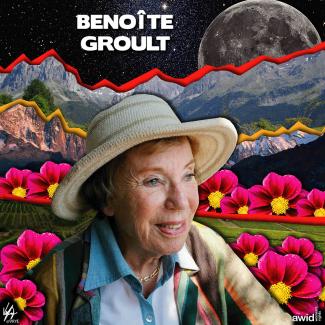
Benoîte était une journaliste, écrivaine et militante féministe française.
Elle a publié plus de 20 romans et de nombreux essais sur le féminisme
Son premier livre « Ainsi Soit-Elle » a été publié en 1975. Le livre explore l’histoire des droits des femmes ainsi que la misogynie et la violence à l’égard des femmes.
Son dernier livre, « Ainsi Soit Olympe de Gouges», a exploré la question des droits des femmes pendant la Révolution française, se concentrant sur la figure de l’ancienne féministe française Olympe de Gouges. De Gouges fut guillotinée en 1793 pour avoir défié l'autorité des hommes et publié la « Déclaration des droits de la femme et de la citoyenne » deux ans auparavant.
AWID dedicó casi dos años al trabajo de identificar una sede para el Foro en la región Asia-Pacífico (la ubicación del Foro rota entre las distintas regiones).
Sobre la base de una investigación documental inicial y de consultas con aliadxs (que nos llevaron a eliminar muchas otras opciones de la región), organizamos una serie de visitas exhaustivas a Nepal, Malasia, Sri Lanka, Tailandia, Indonesia y, más tarde, Taiwán.
Cada visita incluyó, no solo la evaluación de la infraestructura logística, sino también encuentros con grupos y activistas feministas locales para entender mejor el contexto y conocer su percepción de las oportunidades y los riesgos potenciales de organizar un Foro de AWID en sus contextos.
En nuestras visitas encontramos movimientos feministas locales impresionantemente vibrantes y diversos.
Estos movimientos expresaron, en varias ocasiones, sentimientos encontrados respecto de las oportunidades y los riesgos que podría acarrearles la visibilidad de un evento como el Foro. En una de las visitas, durante los primeros treinta minutos de la reunión, escuchamos a lxs activistas presentes decir, en forma unánime, que un Foro de AWID sufriría una enorme reacción, que los derechos LGBTQ son un asunto particularmente candente, y que los grupos fundamentalistas aparecerían con toda su fuerza a interrumpir el evento.
Cuando respondimos, «De acuerdo, entonces ustedes no creen que sea una buena idea», nuevamente la respuesta unánime fue «Por supuesto que es una buena idea, ¡queremos cambiar la narrativa!». En algunos de estos lugares nos resultó difícil oír y ver que muchxs activistas feministas querían aprovechar la oportunidad de un evento grande y visible, y que estaban preparadxs a enfrentar los riesgos locales; pero nuestras consideraciones, como anfitrionxs de casi dos mil personas de todo el mundo, nos imponen un cálculo distinto del riesgo y la factibilidad.
También tuvimos que analizar qué significa organizar un foro feminista que a sea coherente con los principios de inclusión, reciprocidad y autodeterminación, en aquellos casos en que la política y la práctica de Estado son, en general, contrarias a estos principios (aunque lxs funcionarixs de los ministerios de turismo hayan trabajado arduamente para atenuar estas características).
Sopesamos las consideraciones de infraestructura con la oportunidad potencial de impulsar algunas agendas feministas a nivel nacional, y el contexto político nacional.
En muchos de estos lugares, monitorear el contexto nos resultó un ejercicio pendular: de un momento abierto y seguro para los debates feministas podíamos pasar a otro de brutal represión y xenofobia, capaz de sacrificar las prioridades feministas como piezas de negociación política para tranquilizar a las fuerzas antiderechos del ala derechista.
El proceso ha sido una reflexión aleccionadora sobre el contexto increíblemente complicado para el activismo por los derechos de las mujeres y la justicia de género en todo el mundo.
Nuestras dificultades en la región Asia-Pacífico nos llevaron a preguntarnos si no sería más fácil mover el Foro a una región distinta. Sin embargo, hoy en día no podríamos organizar un Foro de AWID en Estambul como lo hicimos en 2012, ni podríamos hacerlo en Brasil como lo hicimos en 2016.
Teniendo en cuenta toda esta complejidad, AWID seleccionó Taipéi como ubicación para el Foro porque:
ofrece un cierto grado de estabilidad y seguridad para la diversidad de participantes que convocamos al Foro;
tiene también un alto nivel de capacidad logística, y resulta accesible para muchxs viajerxs (con la facilitación de un trámite de visa electrónico para conferencias internacionales); y
el Foro es bien recibido por el movimiento feminista local, que está muy interesado en interactuar con feministas de todo el mundo.
Al organizar el Foro de AWID, estamos tratando de construir y sostener, de la mejor manera posible, un espacio para las diversas expresiones de solidaridad, indignación, esperanza e inspiración que son el núcleo de los movimientos feministas.
En este momento, creemos que Taipéi es la sede, dentro de la región Asia-Pacífico, que mejor nos permitirá construir ese espacio seguro y rebelde para nuestra comunidad feminista global.
De hecho, en el mundo contemporáneo no existe una ubicación ideal para un Foro centrado en las Realidades Feministas. Donde sea que vayamos, ¡debemos construir ese espacio juntxs!
Respondi ao inquérito, mas mudei de ideias e quero que a nossa resposta seja eliminada. Como devo proceder?
Tem o direito de eliminar a sua resposta, por qualquer motivo e se assim o desejar. Queira entrar em contacto connosco através deste formulário, ao indicar "WITM Survey" ("Inquérito WITM") no título da sua mensagem, e iremos proceder à eliminação da sua resposta.
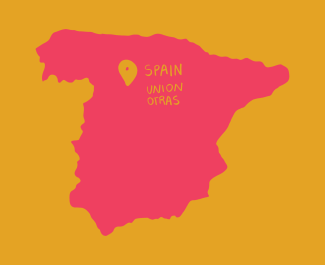
Snippet FEA Map of Spain Union Otras (ES)
Solidarity: membership why page
Solidaridad
Nos solidarizamos unxs con otrxs, y con las distintas luchas por la justicia y las libertades. Procuramos movilizar y fortalecer la acción colectiva, y practicamos formas significativas de trabajar en conjunto.
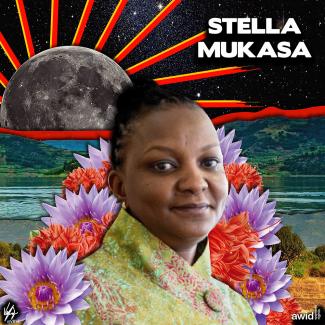
Stella began her career at the Ministry of Gender and Community Development in Uganda engaging with policymakers for law reform, including the 1995 Ugandan Constitution, which established some of the most progressive reforms for women in the region.
She is revered throughout the region for her tireless efforts to create and enforce gender-responsive laws and policies. She played a key role in drafting Uganda’s Domestic Violence Act and in mobilizing support for gender-responsive constitutions in both Uganda and in Rwanda.
Through her work with International Center for Research on Women (ICRW), she worked on violence against children, and worked to strengthen the capacities of grassroots organizations addressing gender-based violence. She was a lecturer on gender rights and the law at Makerere University and served on the boards of Akina Mama wa Afrika, ActionAid International Uganda and the Open Society Initiative for Eastern Africa.
When you do a search for “Female Genital Mutilation” or “FGM” online, an image of four line-drawings of the female anatomy pop up next to its Wikipedia entry. It illustrates four types of violence. The first being a partial cut to the clitoris. The second, a more invasive cut with the entire clitoris removed. The third is progressively worse with the removal of the clitoris, labia majora and minora. And the fourth box illustrates a series of hash marks to symbolize stitches over the vaginal opening to allow only for urination and menstruation.
As a survivor of FGM, most questions about my story fixate on the physical. The first question I usually get asked is what type of FGM I underwent. When I told a journalist once that I went through Type 1, she said “oh, that’s not so bad. It’s not like type three which is far worse.” She was technically right. I had the least invasive form. And for many years, I gaslighted myself into feeling a sense of relief that I was one of the lucky ones. I comforted myself noting that I could have been less fortunate with all of my genitalia gouged out, not just the clitoral tip. Or worse I could have been one of the ones who didn’t survive at all. Like Nada Hassan Abdel-Maqsoud, a twelve year old, who bled to death on a doctor’s operating table earlier this year in Upper Egypt. Nada is a reminder to me that for every data point -- 200 million women and girls who live with the consequences of FGM globally -- there is a story. Nada will never be able to tell hers.
As much as I find the label “survivor” suffocating at times -- I also realize there is privilege embedded in the word. By surviving, you are alive. You have the ability to tell your story, process the trauma, activate others in your community and gain insights and a new language and lens to see yourself through.
The act of storytelling can be cathartic and liberating, but it can also shatter the storyteller in the process.
Without integrating the psychosocial support of trained clinicians into storytelling and healing retreats, well-intentioned interventions can result in more trauma. This is all the more important as FGM survivors navigate the double pandemic of their own PTSD from childhood trauma, and the indefinite COVID-19 global shutdown.
In many anti-FGM advocacy spaces, I have seen this insatiable hunger to unearth stories -- whatever the cost to the storyteller. The stories help activate funding and serve as a data point
for measuring impact.
Survivor stories then become commodities fueling a storytelling industrial complex. Storytellers, if not provided proper mental health support in the process, can become collateral damage.
My motivation in writing this piece is to flip the script on how we view FGM survivors, prioritizing the storyteller over the story itself.
FGM survivors are more than the four boxes describing how the pieces of our anatomy were cut, pricked, carved, or gouged out. In this essay, I’ll break down the anatomy of an FGM survivor’s story into four parts: stories that break, stories that remake, stories that heal, and stories that reveal.
Type 1: Stories that break
I was sitting in the heart of Appalachia with a group of FGM survivors, meeting many for the first time. As they shared their traumas, I realized we all belonged in some way or another to the same unenviable club. A white Christian survivor from Kentucky - who I don’t think I would have ever met if we didn’t have FGM survivorship connecting us - told the contours of her story.
There were so many parallels. We were both cut at seven. She was bribed with cake after her cut. I was bribed with a jumbo-sized Toblerone chocolate bar when mine was over. Absorbing her trauma overwhelmed me. And I imagine when I shared my story, others in the circle may also have been silently unraveling. We didn’t have a clinician or mental health professional in a facilitation role and that absence was felt. The first night, I was sharing a room with six other survivors and tried hard to keep the sounds of my own tears muffled. By the last day, I reached breaking point. Before leaving for the airport, my stomach contracted and I convulsively vomited. I felt like I was purging not only my pain, but the pain of the others I’d absorbed that week. We all dutifully produced our stories into 90 second social media friendly soundbites with narration and photos. But at what cost?
Type 2: Stories that remake
On February 6, 2016, the Guardian published my story as a survivor. The second it was released, I was remade. My identity transformed from nondescript, relatively invisible mid-level Foreign Service Officer to FGM survivor under a public microscope. That same day, then-U.S. Ambassador to the United Nations Samantha Power tweeted my story with the introduction: “I was seven years old” before linking to the article. The tweet symbolized a moment for me where my personal and professional worlds collided. Since then, they have been forever intertwined.
Even though I spent ten years of my career as a diplomat focused on other issues -- I lived in Cairo during the early days of the Arab Spring in 2011 and served in Baghdad and Erbil when the Syrian revolution turned from an uprising to civil war -- all of those past experiences that began to make mefeel erased. When I spoke on panels, my identity would be reduced to “survivor.” Like other survivors, I have worked hard to rewrite the script on how others see me.
I reinsert pieces of my other identities when speaking to underscore to the broader public that while yes, I am a survivor of childhood trauma and while my FGM story may have remade a part of my identity, it doesn’t define me.
Type 3: Stories that heal
With the guidance of a mental health expert, I have spent the last few months doing a deep dive into my FGM survivor story. I have told and retold my story over dozens of times in public venues. My goal is to break the culture of silence and inspire action. At this point, the telling of my story has almost become mechanized, as though I am reciting a verse from the Quran I memorized as a kid. I would always start with: “I was sitting an anthropology class when a fellow student described her research project on Female Genital Mutilation. And that’s when I had the memory jolt. A memory I had suppressed since childhood came flooding to the foreground.” I go into the details of what happened in granular detail -- the color of the floor, the feelings of confusion and betrayal in the hazy aftermath. And then I go on to talk about the afternoon I confronted my mother about the summer she and my father shipped my brother and off to India to stay with my aunt. The summer it happened. I later found out my aunt cut me without my parents’ consent. In my years of telling and retelling this story, I would have moments I felt nothing, moments I would break down, and moments of relief. It was a mixed bag, often contradictory emotions happening all at once.
When I began to take apart the story, I discovered the core moment where I felt most gutted. It wasn’t the cut itself. It was the aftermath. I remember sitting in a corner alone, feeling confused and ashamed. When I looked at my aunt on the other side of the room, she was whispering to my cousin and they both pointed and laughed at me. Unearthing the moment of shame - the laughter - has haunted me since childhood. The piece that was carved out of me is called “haram ki boti” which translates into sinful flesh. Over time, the physical scar healed. But for many FGM survivors, the psychological wounds remain
Type 4: Stories that reveal
Last year, I decided to take a sabbatical from the Foreign Service. I was burning out on both ends -- I had just completed a really tough assignment in Pakistan and was also doing anti-FGM
advocacy in my personal capacity. When I came home, an acquaintance from graduate school approached me to capture my story on film. As part of the process, she would send a camera
crew to shadow me. Sometimes while giving speeches, other times filming mundane interactions with friends and family. On a visit to my home in Texas, I’ll never forget the moment where my mom told me her story of survival. As part of the film, we went on a roadtrip to Austin to visit the university where I first had the memory jolt. My mom is patiently waiting for the cameraman to set up his tripod. My father is standing next to her.
In the end, we eventually had the conversation I never had the courage to have with either of my parents face to face. Looking them both in the eye, retelling my story with a camera as witness, we discussed how FGM ripped our family apart (specifically my dad’s relationship with his sister). For the first time, I heard my mom talking about her own experience and the feeling of betrayal when she discovered my aunt cut me without her consent. When I later told her that FGM was actually indigenous to the U.S. and Europe and that it was a cure for hysteria (prescribed by doctors) up until the 19th century, my mother exclaimed “that’s crazy to me, this was a cure for hysteria. I’m going to educate other doctors to speak out.” And in that moment, my mother, a survivor who had never shared her story before, became an activist.
My story, intertwined with her story, revealed a tightly woven fabric of resistance. With our voices, we were able to break the cycle of intergenerational structural violence. We were able to rewrite the stories of future generations of girls in our own family and hopefully one day, the world.
This is a woman breaking free from her mundane reality, devoid of color. She dreams in a colorful, "nonsensical" way that people in her life would not understand. She could be considered insane, yet her dreams are more vivid and imaginative than actual life. This is frequently how schizophrenia occurs to me, more engaging and exciting than real life.
نعم! الرجاء القيام بذلك! نشجعكم/ن على مشاركة رابط الاستطلاع في شبكاتكم/ن. سيسمح لنا جمع وجهات النظر أكثر تنوعاً، فهم البيئة التمويلية للحركات النسوية بشكل أكبر.
Snippet FEA Union Otras Photo 1 (FR)
Our values - Justice and systemic change
Justice et changement systémique
Nous œuvrons en faveur d’un monde fondé sur la justice sociale, environnementale et économique, ainsi que sur l'interdépendance, la solidarité et le respect. Nous travaillons au démantèlement des systèmes de pouvoir oppressif et contre toutes ses manifestations, y compris tout forme de patriarcat, de fondamentalisme, de militarisme et de fascisme, et le pouvoir des entreprises qui menacent nos vies et notre monde. Nous voulons un monde juste où le partage des ressources et celui du pouvoir permettront à chacun·e de s'épanouir.
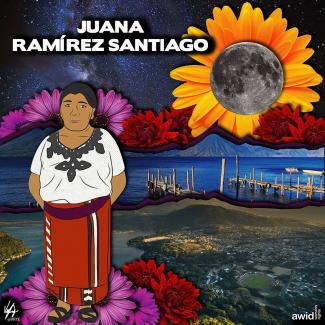
Juana fue una de las fundadoras y era actualmente integrante de la junta directiva de la Red de Mujeres Ixiles de Nebaj, una organización por los derechos de las mujeres indígenas que es parte de la Iniciativa Mesoamericana de Mujeres Defensoras de Derechos Humanos (IM-Defensoras).
También era partera y madre de siete hijxs. Había recibido amenazas de muerte que fueron denunciadas ante la Fiscalía. Juana es la tercera defensora de derechos humanos indígena asesinada en el área durante 2018. El Ombudsman de Guatemala informa que un total de 20 defensorxs de derechos humanos fueron asesinadxs este año en el país.
Juana Ramírez Santiago fue baleada de muerte por atacantes desconocidos mientras cruzaba un puente en Nebak, Quiché, Guatemala. Están en curso las investigaciones para identificar a los perpetradores.
Welcome to Crear | Résister | Transform: a festival for feminist movements!
Principles of Engagement
AWID is committed to creating an online space that invites and challenges us all to operate from a place of courage, curiosity, generosity and shared responsibility.
We invite you to co-create spaces with us that are free of harassment and violence, where everyone is respected in their gender identity and expression, race, ability, class, religion, language, ethnicity, age, occupation, type of education, sexuality, body size, and physical appearance. Spaces where we recognize inequalities in our world and strive to transform them in our own interactions with each other.
We want to create a space where ...
we can all be present
This means that we are able to listen, understand and relate to each other. To feel close, in spite of it all being virtual. For this, we will make interpretation available and open channels (like chat and other tools) for you to react and share. To hear each other better, we invite you to wear headphones during the conversation. If it is possible for you , we suggest that you close your email and any other likely source of distraction while you are in the conversation.
all forms of knowledge are valued
Let us celebrate the multiple ways in which knowledge shows up in our lives. We invite you to approach the conversation with curiosity and openness to learn from others, allowing ourselves to unlearn and relearn through the exchange, as a way to start collectively building knowledge.
all of us feel welcome
We are committed to holistically approaching accessibility by being mindful of different physical, language, mental and safety needs. We want a space that is welcoming of folks from various backgrounds, beliefs, abilities and experiences. We will be proactive but we also ask that you communicate your needs with us, and we will do our best within our capacity to address these needs.
all of us feel safe and respected:
We all commit individually and collectively to respect each other’s privacy and to seek people’s consent before sharing any images or content generated during the conversation that involves them.
Creating a safer, respectful and enjoyable environment for the conversations, is everybody's responsibility.
Reporting
If you notice that someone is behaving in a discriminatory or offensive manner, please contact the reference person who will be indicated at the beginning of the session.
Any participants that express oppressive language or images, will be removed from the call and will not be readmitted. We will not engage with them in any way.