Organizing creatively, facing an increasing threat
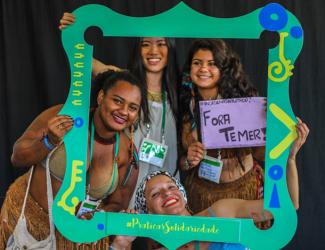
Young feminist activists play a critical role in women’s rights organizations and movements worldwide by bringing up new issues that feminists face today. Their strength, creativity and adaptability are vital to the sustainability of feminist organizing.
At the same time, they face specific impediments to their activism such as limited access to funding and support, lack of capacity-building opportunities, and a significant increase of attacks on young women human rights defenders. This creates a lack of visibility that makes more difficult their inclusion and effective participation within women’s rights movements.
A multigenerational approach
AWID’s young feminist activism program was created to make sure the voices of young women are heard and reflected in feminist discourse. We want to ensure that young feminists have better access to funding, capacity-building opportunities and international processes. In addition to supporting young feminists directly, we are also working with women’s rights activists of all ages on practical models and strategies for effective multigenerational organizing.
Our Actions
We want young feminist activists to play a role in decision-making affecting their rights by:
Fostering community and sharing information through the Young Feminist Wire. Recognizing the importance of online media for the work of young feminists, our team launched the Young Feminist Wire in May 2010 to share information, build capacity through online webinars and e-discussions, and encourage community building.
Researching and building knowledge on young feminist activism, to increase the visibility and impact of young feminist activism within and across women’s rights movements and other key actors such as donors.
Promoting more effective multigenerational organizing, exploring better ways to work together.
Supporting young feminists to engage in global development processes such as those within the United Nations
Collaboration across all of AWID’s priority areas, including the Forum, to ensure young feminists’ key contributions, perspectives, needs and activism are reflected in debates, policies and programs affecting them.
Related Content
Snippet - Blog post Quote_EN
"We believe that this is the time for us to continue to organize from a place of solidarity, hope and radical imaginations."
- Beijing+30 & CSW: Feminist meaning-making at a time of polycrisis
Originaire de la cordillère des Andes, Brenda Salas est un·e stratège féministe queer. Iel œuvre à changer les discours et mobiliser les ressources pour soutenir les mouvements de justice raciale et climatique dans le monde entier. Brenda a produit de nombreux projets de communication pour exalter le pouvoir des migrant·e·s et dénoncer les interventions militaires américaines en Amérique latine avec Deep Dish TV et le Portland Central America Solidarity Committee (Comité de Solidarité avec l’Amérique centrale de Portland). Fier·ère d’être membre de l’Audre Lorde Project, iel est titulaire d’un diplôme du mouvement United World Colleges (UWC).
"She was not a person. She was a power."
- a fellow activist remembering Navleen Kumar
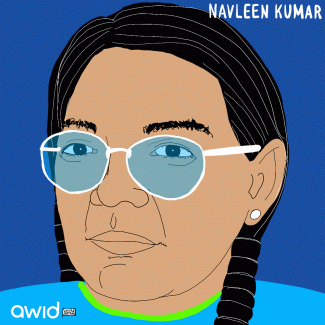
Navleen Kumar was a fervent land rights and social justice activist in India.
With commitment and integrity, she worked for more than a decade to protect and restore the lands of Indigenous people (adivasi) in Thane district, an area taken away by property and land developers using such means as coercion and intimidation. She fought this injustice and crime through legal interventions at different courts, realizing that manipulation of land records was a recurrent feature in most cases of land acquisition. In one of the cases, that of the Wartha (a tribal family), Navleen found out that the family had been cheated with the complicity of government officials.
Through her work, she helped restore the land back to the Wartha family and continued to pursue other cases of adivasi land transfers.
“Her paper on the impact of land alienation on adivasi women and children traces the history and complexities of tribal alienation from the 1970s, when middle class families began to move to the extended suburbs of Mumbai as the real estate value in the city spiralled.
Housing complexes mushroomed in these suburbs, and the illiterate tribals paid the price for this. Prime land near the railway lines fetched a high price and builders swooped down on this belt like vultures, to grab land from tribals and other local residents by illegal means.” -Jaya Menon, Justice and Peace Commission
During the course of her activism, Navleen received numerous threats and survived several attempts on her life. Despite these, she continued working on what was not only important to her but contributed to changing the lives and realities of many she supported in the struggle for social justice.
Navleen was stabbed to death on 19 June 2002 in her apartment building. Two local gangsters were arrested for her murder.
Tactiques, stratégies et impacts des antidroits
Chapitre 5
Les antidroits ont adopté une double stratégie : outre leurs attaques ouvertes sur le système multilatéral, ils et elles sapent les droits humains depuis l’intérieur. Leur implication vise à prendre le contrôle des processus, instaurer des normes régressives et fragiliser la redevabilité.
Leur implication dans les sphères des droits humains a un but essentiel : saper le système et sa capacité à respecter, protéger et assurer les droits humains de tout un chacun, et à tenir les États membres pour responsables de leurs enfreintes. Certaines tactiques antidroits en dehors de l’ONU visent à la délégitimer, exercer des pressions politiques pour limiter son financement ou se retirer d’accords internationaux sur les droits humains. Les acteur·rice·s antidroits gagnent cependant en influence au sein même de l’ONU. Leurs tactiques de l’intérieur incluent la formation de délégué·e·s, la dénaturation de cadres relatifs aux droits humains, la dilution de la substance d’accords sur les droits humains, l’infiltration de comités d’ONG, la demande du statut ECOSOC sous un nom neutre, l’infiltration des espaces des jeunes et la pression pour que des acteur·rice·s antidroits occupent des postes clés.
Sommaire
L’institutionnalisation des antidroits dans les mécanismes de l’ONU
Le retrait et la délégitimation
L’appauvrissement des standards relatifs aux droits humains
La prise de contrôle : création d’un cadre des droits humains parallèle
Exercice : Oui, ils et elles sont fort·e·s, mais nous aussi!
Exercice : Tenir les gouvernements pour responsables
Rachel est une experte en finance, avec plus de vingt ans d’expérience. Elle a supervisé des opérations financières et des projets pour des entités privées et publiques, des organisations à but non lucratif et des organisations non gouvernementales internationales. Comptable agréée et titulaire d’un master global en administration des affaires, elle est également membre de l’Institut sud-africain des comptables agréés. Pendant son temps libre, Rachel conçoit des œuvres d’art typographiques, elle aime voyager et passer du temps avec ses proches autour d’une bouteille de vin.
Lo personal es político, y la apasionada y valiente Nadyn Jouny personificó este mantra feminista. Nadyn experimentó de primera mano el dolor de la violencia estructural de los sistemas legales que despojan a las mujeres de sus derechos.
Cuando Nadyn decidió solicitar el divorcio, los tribunales religiosos chiítas, bajo las Leyes de Estatuto Personal Libanesas, le negaron la custodia de su joven hijo Karam. Nadyn, como tantas otras mujeres del Líbano y de otros países, se vio atrapada entre el dolor imposible de dejar una relación no deseada y abusiva y de perder a la vez los derechos sobre su hijo. Sin embargo, Nadyn se defendió, y lo habría de hacerlo hasta el último día.
Nadyn utilizó su habilidad con los medios de comunicación para convertirse en una voz franca a favor de las mujeres que luchan contra la discriminación en la legislación familiar, en el Líbano y a nivel internacional. Nadyn cofundó el grupo autofinanciado "Protecting Lebanese Women" [Protegiendo a las Mujeres Libanesas] (PLW, por sus siglas en inglés) y se unió a muchas otras madres libanesas que se enfrentaban a problemas similares de custodia. Juntas, trabajaron para crear conciencia sobre las injusticias extremas a las que se enfrentaban, a nivel nacional, protestaron ante los tribunales religiosos por sus derechos y, a nivel internacional, llamaron la atención de los medios de comunicación.
Nadyn también trabajó con ABAAD - Resource Center for Gender Equality [Centro de Recursos para la Igualdad de Género], otra organización por los derechos de las mujeres en el Líbano, para realizar campañas en favor de los derechos de las mujeres, la igualdad en la legislación familiar y relativa a las custodias y contra los matrimonios forzados y precoces.
Para muchxs de sus colegas, Nadyn llegó a "simbolizar la lucha de una madre libanesa contra la supresión y la misoginia de todo tipo" (en inglés), al utilizar "su experiencia personal y trayectoria individual de empoderamiento, dio a otras mujeres esperanza para que ellas también pudieran ser un catalizador para el cambio positivo" - ABAAD - Centro de Recursos para la Igualdad entre los Géneros, Líbano.
El 6 de octubre de 2019, Nadyn murió trágicamente en un accidente de automóvil cuando se dirigía a protestar por los injustos aumentos de impuestos en un país que ya se enfrentaba a una espiral de crisis financiera. Nadyn Jouny tenía solo 29 años en el momento de su muerte.
Join our mailing lists
Snippet FEA We are living in a world right (ES)
Incluso en tiempos de crisis climática, los gobiernos continúan alentando el crecimiento de las industrias agrícolas a gran escala. Estas actividades envenenan la tierra, amenazan la biodiversidad y destruyen la producción de alimentos y los medios de vida locales. Mientras tanto, aunque las mujeres producen la mayoría de nuestros alimentos en el mundo, casi no poseen tierra.
¿Qué pasaría si percibiéramos la tierra y la Naturaleza no como una propiedad privada para ser explotada, sino como una totalidad con la cual aprender y coexistir en armonía? ¿Y si repararíamos nuestras relaciones con la tierra y adoptaríamos alternativas más sostenibles que nutran tanto al planeta como a sus comunidades?
Nous Sommes la Solution (Somos la Solución, NSS) es uno de los muchos movimientos liderados por mujeres que se esfuerzan por lograr este objetivo.
Doris Valenzuela Angulo était une activiste sociale, leader et défenseure des droits humains afrodescendante de Buenaventura, en Colombie. Elle faisait partie du réseau national Comunidades Construyendo Paz en Colombia (CONPAZ, Communautés construisant la paix en Colombie) composé d’organisations présentes dans les communautés affectées par le conflit armé œuvrant en faveur de la non-violence et la justice socio-environnementale.
Doris s’opposait à la violence paramilitaire continue, aux pressions incessantes des mégaprojets cherchant à déplacer sa communauté, et à la complicité de l’État. Confrontée à l’un des contextes les plus difficiles de son pays, elle joua un rôle de premier plan dans l’initiative de résistance non-violente sans précédent Espacio Humanitario Puente Nayero, un lieu urbain conçu pour assurer la cohésion communautaire, la sécurité, la créativité et l’action collective.
Ce combat non-violent unique en son genre des familles de l’Espacio Humanitario Puente Nayero attira l’attention et le soutien des agences tant locales qu’internationales. En septembre 2014, la Commission interaméricaine des droits de l’Homme accorda des mesures de protection préventives à la communauté, ordonnant au gouvernement colombien d’adopter des mesures nécessaires en vue de protéger la vie et l’intégrité physique des habitant·e·s. Les menaces et la violence des paramilitaires se poursuivirent néanmoins. Malgré l’assassinat de son fils Cristian Dainer Aragón Valenzuela en juillet 2015,Doris continua à mettre toute son énergie à éviter le recrutement forcé des enfants et des jeunes par les néo-militaires. Elle devint alors également une cible, recevant constamment des menaces pour son activisme et le travail qu’elle accomplissait.
Les incessantes agressions et menaces de mort dont elle était l’objet forcèrent Doris à quitter la Colombie. Elle vécut en Espagne de février 2017 à février 2018, dans le cadre du programme de protection temporaire d’Amnesty International pour les défenseur·e·s des droits humains en danger.
Doris a été assassinée en avril 2018 à Murcie, en Espagne, par son ex-compagnon. Elle n’avait que 39 ans.
Hommages :
« Doris, cette année passée avec toi nous a montré combien une personne peut avoir la capacité de transformer et créer de l’espoir en dépit des événements profondément négatifs et dévastateurs qui jalonnent sa vie... Nous poursuivons notre engagement à défendre tous les droits humains. Ton courage et ta lumière nous guideront toujours. » - Montserrat Román, Amnesty International, Groupe de La Palma, Espagne
Extrait de « Mots pour Doris Valenzuela Angulo », d’Elsa López
« ... Tu le savais. Tu l’as toujours su. Et malgré tout cela, tu as résisté sans faillir à tant d’injustice, de misère, de persécution. Tu t’es élevée, fière et acharnée, contre ceux qui continuaient à vouloir que tu abandonnes tout espoir, que tu t’abaisses, que tu te rendes. Debout, tu as réclamé haut et fort ta liberté et la nôtre, qui était la tienne. Rien ni personne n’est parvenu à paralyser tes efforts pour changer le monde et le rendre plus généreux et plus vivable. Tu vis parmi nous, aujourd’hui plus vivante que jamais malgré la mort. Tu vis encore par tes actes, par ton courage, par ta grandeur lorsque tu pleurais pour cette terre promise que tu invoquais à chacun de tes cris, pour tous ces déserts que tu as habités. Toi. Toujours en vie. Doris Valenzuela Angulo.
Ce ne sont que des mots. Je sais. Je le sais, moi aussi. Mais les mots nous unissent, nous protègent, nous donnent la force et le soutien nécessaires pour continuer à aller vers la lumière que tu défendais tant... »
Mangue
Jurema Araújo est une enseignante-poète originaire de Rio de Janeiro. Elle a contribué au magazine Urbana, édité par les poètes Brasil Barreto et Samaral (paix à son âme) et au livre Amor e outras revoluções (L’amour et autres révolutions) avec plusieurs autres écrivain·e·s. En collaboration avec Angélica Ferrarez et Fabiana Pereira, elle a coédité O livro negro dos sentidos (Le livre noir des sens), une anthologie créative sur la sexualité des femmes noires au Brésil. Jurema a 54 ans ; elle a une fille, trois chiens, un chat et beaucoup d’ami·e·s.
Tu la suces avec moi?
La mangue est mon fruit préféré.
J’ouvre ma bouche
et l’avale toute entière,
sa chair est prise entre mes dents
qui se font tendres pour ne pas la blesser
et entre ma langue et mon palais, je la serre
puis je la retire pour en lécher tous les côtés
alors que son jus coule dans ma bouche
et que je m’arrose de ce nectar délicieux
avant de l’introduire de nouveau dans ma bouche
car la mangue est semence et miel;
elle est fibre et saveur.
Et je suis ivre lorsque je termine,
toute miellée et sucrée,
mes lèvres trempées.
Mmmmm, quel est l’intérêt de la mangue, si ce n’est pour l’étaler?
Nous vous présentons le Black Book of Senses (Le livre noir des sens)
Je vais être honnête : lorsque Angélica et Fabi m’ont proposé de créer une collection de textes érotiques écrits par des femmes noires, j’ignorais ce que c’était que de produire un recueil. Je maîtrisais le thème de l’érotisme, mais créer un recueil… J’ai souri, timide et flattée. Je crois que je les ai remerciées – du moins je l’espère! – et je me suis dit : mais qu’est-ce que c’est que ce truc, putain?! C’est quoi ce mot pompeux que je vais devoir intégrer tout en le mettant en pratique?
Aujourd’hui, je sais ce que c’est que de créer un recueil : c’est faire l’amour avec les écrits de quelqu’un d’autre, avec l’art de quelqu’un d’autre dans le but d’en faire un livre. Et c’est exactement ce que j’ai fait. J’ai dévêtu le texte de chaque autrice avec une lascivité littéraire. J’ai eu un rapport avec les mots et les sens d’autres personnes. J’ai été pénétrée par des poèmes que je n’avais pas écrits; des contes que je n’aurais jamais osé imaginer m’ont retournée, ont chamboulé mes sentiments, ma libido. Et c’était un orgasme inhabituel et merveilleux : éthéré, corporel, sublime, à la fois intellectuel et sensitif.
Ces textes pulsaient comme un clito durci par le désir, trempé, dégoulinant de joie à chaque lecture. Des mots dont la grivoiserie m’aspirait, me faisant plonger plus profondément dans cet univers humide.
Ces femmes noires sont allées au fond de leur excitation et ont transformé leurs fantasmes érotiques les plus profonds en art. Ces œuvres sont imprégnées de la manière dont chaque autrice vit la sexualité : libre, noire, individuelle, la sienne, son pouvoir retrouvé.
J’ai choisi de classer les textes en différentes parties dans le livre, chacune étant organisée en fonction du contenu le plus délicat, explosif, évident ou implicite qu’elle renfermait.
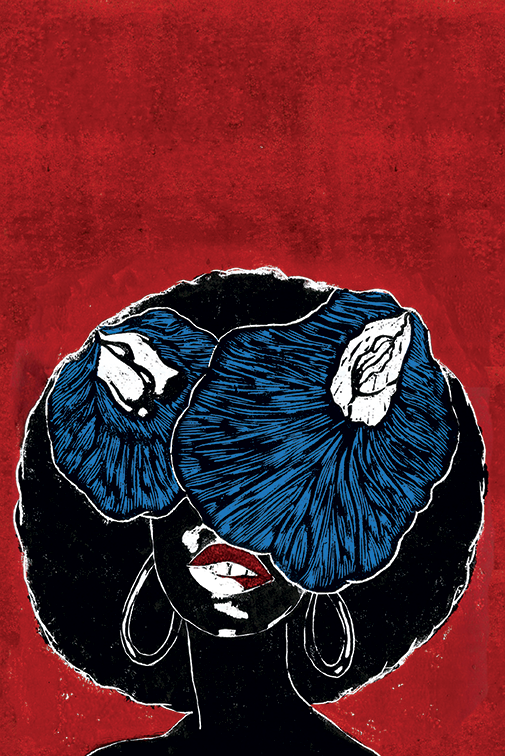
Pour ouvrir la porte à cette « envulvée noiressence », nous proposons la section Préliminaires, avec des textes qui introduisent le lecteur dans ce monde de délices. Il s’agit d’une caresse plus générale et délicate afin d’accueillir les sujets que les textes aborderont dans le reste du livre.
Puis vient la chaleur du Toucher, qui évoque les ressentis de la peau. Cette énergie qui brûle ou transite nos corps, fait bouillir nos hormones et éveille à leur tour nos autres sens. Et même si nous sommes nombreux·ses à être voyeurs·euses, le contact de la peau sur une bouche humide et chaude est excitant, comme si vous naviguiez dans la douceur de la personne qui se trouve avec vous. On est séduit par le contact ferme ou doux qui nous fait frissonner et ce picotement délicieux qui nous traverse du cou au bas du dos et qui ne disparaît que le lendemain. Et la chaleur des lèvres, la bouche, la langue humide sur la peau – ah! la langue dans l’oreille, mmmm – ou peau contre peau, les vêtements glissant sur les corps, comme s’ils se voulaient une extension de la main de l’autre. S’il n’y a pas d’urgence, l’excitation absolument sauvage d’une étreinte ferme, un peu de douleur – ou pourquoi pas, beaucoup?
La section Son – ou mélodie? – nous montre que l’attirance pour une personne passe également par l’ouïe : c’est la voix, les chuchotements, cette musique qui permet la connexion des corps et peut constituer la trame même du désir. Pour certain·e·s d’entre nous, la seule voix d’une personne ayant un joli timbre, qu’il soit rauque, traînant ou mélodieux, suffirait à nous donner un orgasme auditif. Elle n’aurait qu’à jurer grossièrement ou nous murmurer des mots doux à l’oreille pour nous faire frissonner du cou au coccyx.
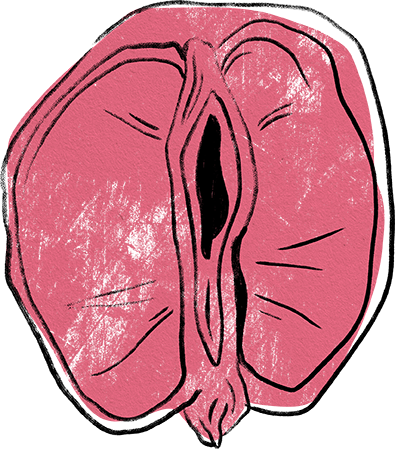
Dans Saveur, nous confirmons que la langue est imbattable lorsqu’il s’agit d’aller goûter les endroits les plus enfouis et parcourir les corps pour se faire plaisir. Parfois, on l’utilise audacieusement pour goûter le nectar de l’autre. L’idée d’offrir sa fraise ou sa mangue délicieuse et juteuse à des morsures ou des coups de langue – ou des coups de langue et des morsures – nous désarme. Mais rien n’est plus délicieux que de goûter aux grottes et collines de la personne avec laquelle on est. Enfoncez votre langue bien profond pour goûter à ce bout de fruit… ou passez des heures à goûter le gland d’une queue dans votre bouche, passez votre langue sur des seins gourmands pour en goûter leurs tétons. Il s’agit de se souvenir d’une personne par la Saveur qu’elle nous a laissée.
Il y a aussi les textes où c’est le nez qui déclenche le désir. L’Odeur, mes chers·ères lecteurs·trices, est capable de nous éveiller aux délices du désir. Parfois, nous rencontrons des gens qui sentent si bon que nous voudrions les aspirer par le nez. Lorsque vous sillonnez le corps de l’autre avec le nez en commençant par le cou, sentez ce frisson délicieusement inconfortable qui parcourt votre colonne vertébrale et déshabille votre âme! Ce nez impudent se déplace ensuite vers la nuque où il capture le parfum de l’autre de telle sorte qu’en l’absence de cette personne, ce même parfum évoque, voire se répand en nous dans des souvenirs olfactifs qui ressuscitent l’odeur affolante de cette dernière.
Nous en venons au Regard – le plus traître des sens selon moi – où nous percevons le désir à partir d’un point de « vue ». Les textes présentent le désir et l’excitation par le biais de la vue, qui à son tour provoque les autres sens. Il suffit parfois d’un sourire pour nous rendre dingues. L’échange de regards? Celui qui dit : « J’ai envie de toi, là, maintenant ». Ce regard possédé qui s’éteint quand vous avez fini de baiser, ou pas. Celui-là est très particulier; il attire à lui l’autre qui ne pourra en détourner ses yeux très longtemps. Ou les regards du coin de l’œil – quand on détourne le regard au moment où l’autre va tourner la tête, comme un jeu du chat et de la souris? Pris·e·s en flagrant délit, il ne nous reste plus qu’à lui décocher un large sourire.
Pour finir, l’explosion. En se promenant à travers Tous les sens, les textes mêlent des sentiments qui prennent des allures d’alarme et nous entraînent vers le plaisir suprême : l’orgasme.
Bien sûr, ces différents contes et poèmes ne diffèrent d’aucune façon explicite. Certains sont subtils. L’excitation fait appel à tous nos sens et, plus fondamentalement, à notre tête. C’est là que ça se passe, c’est là que se fait la connexion à tout notre corps. J’ai organisé les poèmes selon la façon dont je les sentais à chaque lecture. Libre à vous de ne pas être d’accord! Mais pour moi, il existe un sens particulier par lequel le désir passe et puis explose. Et il y a quelque chose de délicieux à découvrir duquel il s’agit.
Pour pouvoir transformer l’excitation en art, nous devons nous libérer de tous nos préjugés, de nos prisons et des stigmates dans lesquels cette société centrée sur les Blancs nous a enfermé·e·s.
Chaque fois qu’une autrice noire transforme l’érotique en art, elle brise ces chaînes racistes et néfastes qui paralysent son corps, répriment sa sexualité et nous transforment en objet de convoitise d’un autre. Écrire de la poésie érotique, c’est reprendre le pouvoir sur son propre corps et parcourir sans crainte les délices du désir pour soi-même, pour les autres, pour la vie.
L’érotisme littéraire reflète ce que nous sommes lorsque nous en faisons de l’art. Nous montrons ici le meilleur de nous-mêmes, nos visions de l’amour trempées de plaisir, assaisonnées d’érogénéité, répandues dans nos corps et traduites par notre conscience artistique. Nous sommes multiples et nous partageons cette multiplicité de sensations dans des mots dégoulinants d’excitation. Oui, même nos mots dégoulinent de notre désir sexuel, mouillant nos vers, transformant nos pulsions sexuelles en paragraphes. Pour nous, jouir est révolutionnaire.
Nous devons noircir nos esprits, nos corps et notre sexualité, renouer avec notre plaisir et nous réapproprier nos orgasmes. Ce n’est qu’alors que nous serons libres. Tout ce processus est une révolution et il se fait dans la douleur. Mais il y a du bonheur à se découvrir très différent·e·s de ce que l’on attendait de nous.
Je sens que je suis à vous, je suis à nous. Goûtez, prenez plaisir, régalez-vous de ces mots merveilleux avec nous.
Ce texte est une adaptation des introductions de “O Livro Negro Dos Sentidos” [Le livre noir des sens], un recueil érotique de poèmes composés par 23 autrices noires.
Continuez à explorer Incarnations transnationales
Cette édition du journal, en partenariat avec Kohl : a Journal for Body and Gender Research (Kohl : une revue pour la recherche sur le corps et le genre) explorera les solutions, propositions et réalités féministes afin de transformer notre monde actuel, nos corps et nos sexualités.
نصدر النسخة هذه من المجلة بالشراكة مع «كحل: مجلة لأبحاث الجسد والجندر»، وسنستكشف عبرها الحلول والاقتراحات وأنواع الواقع النسوية لتغيير عالمنا الحالي وكذلك أجسادنا وجنسانياتنا.
Gender Impact Investing & The Rise of False Solutions:
An Analysis for Feminist Movements
Gender Impact Investing (GII) is now trending as a solution to gender inequality. Yet, as our report indicates, it is actually part of the problem. Public and private institutions marketing GII equate it with promotion of gender equality and with increased resources for women and girls.
Neither claim is evidence-based.
Rather, GII is another expression of subjecting our lives and societies to the same financial logic that has shaped, and continues shaping, the profound inequalities in our world.
With this report, AWID offers the readers - feminists, gender justice advocates and stakeholders in gender impact investing - a critical analysis and substantiated evidence to understand GII, its narratives, and economic and political implications for feminist movements.