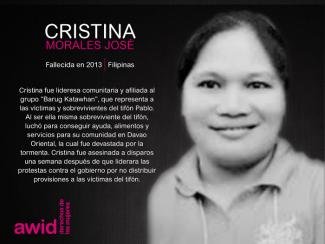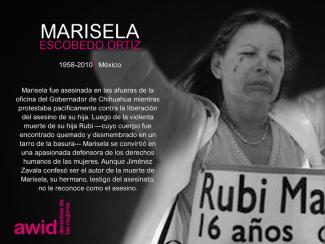
Marisela Escobedo Ortiz
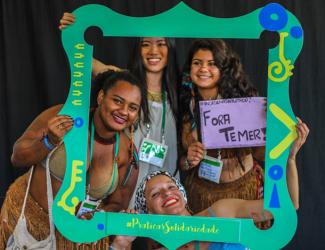
Young feminist activists play a critical role in women’s rights organizations and movements worldwide by bringing up new issues that feminists face today. Their strength, creativity and adaptability are vital to the sustainability of feminist organizing.
At the same time, they face specific impediments to their activism such as limited access to funding and support, lack of capacity-building opportunities, and a significant increase of attacks on young women human rights defenders. This creates a lack of visibility that makes more difficult their inclusion and effective participation within women’s rights movements.
AWID’s young feminist activism program was created to make sure the voices of young women are heard and reflected in feminist discourse. We want to ensure that young feminists have better access to funding, capacity-building opportunities and international processes. In addition to supporting young feminists directly, we are also working with women’s rights activists of all ages on practical models and strategies for effective multigenerational organizing.
We want young feminist activists to play a role in decision-making affecting their rights by:
Fostering community and sharing information through the Young Feminist Wire. Recognizing the importance of online media for the work of young feminists, our team launched the Young Feminist Wire in May 2010 to share information, build capacity through online webinars and e-discussions, and encourage community building.
Researching and building knowledge on young feminist activism, to increase the visibility and impact of young feminist activism within and across women’s rights movements and other key actors such as donors.
Promoting more effective multigenerational organizing, exploring better ways to work together.
Supporting young feminists to engage in global development processes such as those within the United Nations
Collaboration across all of AWID’s priority areas, including the Forum, to ensure young feminists’ key contributions, perspectives, needs and activism are reflected in debates, policies and programs affecting them.
Ven a conocer a Aura Roig, activista feminista visionaria, antropologa y directora-fundadora de la cooperativa Metzineres.
Dedicó las últimas dos décadas a la investigación, el diseño y la implementación de políticas con perspectivas de reducción de daños, derechos humanos y feminismo interseccional.
Después de experimentar y aprender de comunidades que usan drogas a través del mundo, volvió a Barcelona y creó la Xarxa de Dones que Usen Drogues (la Red de Mujeres que Usan Drogas, XADUD). XADUD era un espacio de apoyo mutuo y de solidaridad con la lucha por los derechos de los grupos marginalizados que, más tarde, se convirtió en la cooperativa Metzineres.
Actualmente, Aura está trabajando para expandir el modelo Metzineres y brindar apoyo a grupos más grandes, al mismo tiempo que documenta ampliamente su prolífico viaje y aprendizaje.
Нет, мы просим только один заполненный опрос от каждой группы.
Kagendo es cariñosamente recordada por su familia y amigxs como una férrea activista feminista africana, artista y realizadora cinematográfica
Dedicó más de 20 años a defender los derechos y la dignidad de las personas LGBTIQ y de género no normativo de África. Lxs colegas de Kagendo la recuerdan como alguien con una personalidad jovial, convicciones férreas y amor a la vida. Kagendo murió por causas naturales en su hogar de Harlem, el 27 de diciembre de 2017.
Al producirse su fallecimiento, la escritora y activista keniata Shailja Patel destacó «el compromiso de toda la vida de Kagendo para establecer una relación entre todas las formas de opresión, mostrando de qué manera el colonialismo alentó la homofobia en el continente africano, para convertir así a Kenia en un país donde las personas queer y las mujeres libres puedan vivir y progresar».
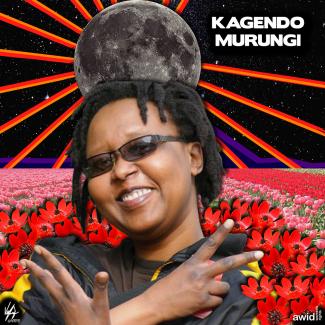
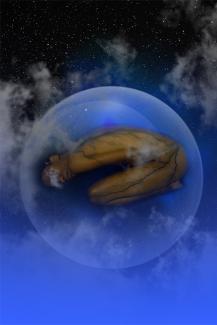
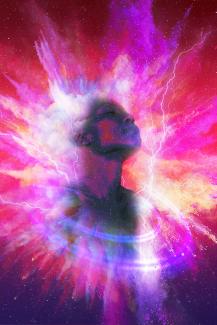
Cette œuvre est la collaboration photographique et illustrative réalisée par Siphumeze et Katia pendant le confinement. Elle se penche sur les récits de sexe et de plaisir des queers noirs, le bondage, le sexe protégé, les jouets, la santé mentale et le sexe et bien d'autres choses encore. Elle a été créée pour accompagner l'anthologie Touch.


Siphumeze Khundayi est une créatrice d'art, photographe et animatrice qui s'intéresse aux moyens créatifs de réunir le dialogue et la pratique artistique en relation avec l'identité queer africaine.
Elle est directrice créative de HOLAAfrica!, un collectif panafricaniste féministe en ligne.
Ses travaux de performance en solo et collaboratifs ont été présentés dans un certain nombre de festivals et d'espaces théâtraux tels que le festival Ricca Ricca au Japon.
Elle a mis en scène deux productions nominées aux Naledi Awards en 2017 et 2018. Elle a aussi mis en scène un spectacle qui a remporté un prix Standard Bank Ovation en 2020.
En tant que photographe, elle a participé à une exposition de groupe intitulée Flowers of my Soul (Fleurs de mon âme) en Italie, organisée par le Misfit Project. Elle a produit trois publications pour HOLAAfrica et a été publiée dans le deuxième volume, pour lequel elle a fourni la couverture: As You Like des Gerald Kraak Anthologies.

Katia Herrera est une artiste visuelle numérique de 21 ans originaire de la ville bruyante de Saint-Domingue, en République dominicaine. Bien que Herrera soit une introvertie autoproclamée, ses œuvres d'art sont remarquablement fortes dans un monde qui tente de faire taire les voix des personnes noires. Avec des titres comme Black Woman (Femme Noire), You Own the Moon (La Lune t’Appartient), Earth Goddess (Déesse de la Terre), Forever (Pour Toujours) et Universe Protector (Protecteur.rice de l’Univers), l'héritage de Herrera sera marqué par sa volonté passionnée de mettre en lumière l'endurance et la persévérance des Noir·e·s d'hier et d'aujourd'hui, afin de contrer le discours selon lequel la peau noire ne devrait être associée qu'à l'esclavage.
L'une de ses œuvres la plus belle et la plus vivante, Universe Protector, dépeint l'âme noire comme une entité divine pleine de force, de puissance et de grandeur. C’est dans sa jeunesse que son amour du graphisme a été stimulé grâce à l'art de ses parents et le Photoshop qu'ils avaient téléchargé sur leur ordinateur pour leur photographie professionnelle.
Si vous êtes de passage à Sao Paulo, au Brésil, visitez l'Occupation 9 de Julho et prenez un repas collaboratif. Vous pouvez aussi acheter leurs produits dans leur boutique en ligne depuis l'étranger.
Visitez la boutique en ligne de l'Association des Femmes Afro-Descendantes du Cauca du Nord où vous pouvez trouver de superbes produits faits à la main.
Il existe plusieurs façons de soutenir Metzineres : vous pouvez faire un don financier, offrir du matériel et des services, proposer une formation, un atelier ou une activité (pour plus d'informations, cliquez ici).

Somente no caso de problemas de acessibilidade e/ou se realizar o inquérito noutro idioma; caso contrário, encorajamo-lo a utilizar o KOBO para a recolha e análise padronizadas de dados do WITM.
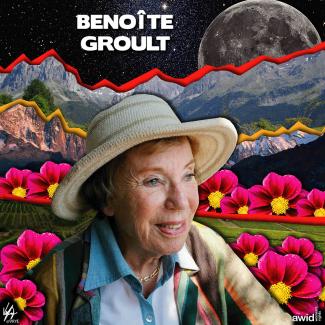
Benoîte était une journaliste, écrivaine et militante féministe française.
Elle a publié plus de 20 romans et de nombreux essais sur le féminisme
Son premier livre « Ainsi Soit-Elle » a été publié en 1975. Le livre explore l’histoire des droits des femmes ainsi que la misogynie et la violence à l’égard des femmes.
Son dernier livre, « Ainsi Soit Olympe de Gouges», a exploré la question des droits des femmes pendant la Révolution française, se concentrant sur la figure de l’ancienne féministe française Olympe de Gouges. De Gouges fut guillotinée en 1793 pour avoir défié l'autorité des hommes et publié la « Déclaration des droits de la femme et de la citoyenne » deux ans auparavant.
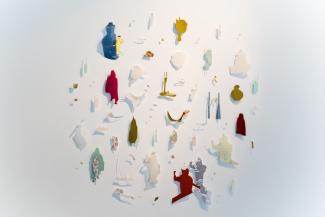
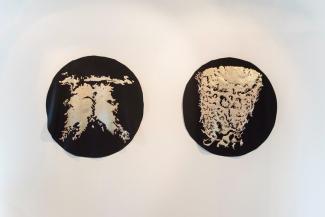

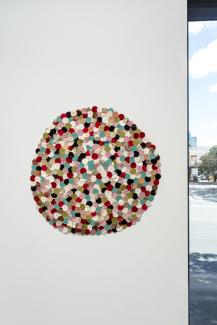
An exhibition by Nicole Barakat, embodying her reconnection with the diaspora of objects from her ancestral homelands in the South West Asia and North Africa (SWANA) region.
Barakat presents a collection of textile works as manifestations of her practice of engaging with displaced, and often stolen objects held within Western museum collections including the Louvre, British Museum and Nicholson Museum.
To by-pass the gatekeepers and breach the vitrines holding these ancestral objects, Barakat reclaims pre-colonial, non-linear, receptive forms of knowing that are often devalued and dismissed by colonial and patriarchal institutions - engaging with coffee cup divination, dream-work, intuitive listening and conversations with the objects themselves (source).

هنالك 47 سؤال في الاستطلاع، منها 27 سؤال اجباري* والعشرين الباقين هي أسئلة اختيارية. أغلب الأسئلة هي أسئلة متعددة الخيارات. ندعوكم/ن للإجابة على جميع الأسئلة.
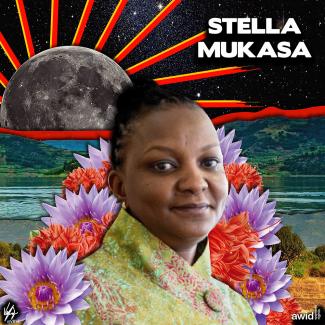
Stella began her career at the Ministry of Gender and Community Development in Uganda engaging with policymakers for law reform, including the 1995 Ugandan Constitution, which established some of the most progressive reforms for women in the region.
She is revered throughout the region for her tireless efforts to create and enforce gender-responsive laws and policies. She played a key role in drafting Uganda’s Domestic Violence Act and in mobilizing support for gender-responsive constitutions in both Uganda and in Rwanda.
Through her work with International Center for Research on Women (ICRW), she worked on violence against children, and worked to strengthen the capacities of grassroots organizations addressing gender-based violence. She was a lecturer on gender rights and the law at Makerere University and served on the boards of Akina Mama wa Afrika, ActionAid International Uganda and the Open Society Initiative for Eastern Africa.
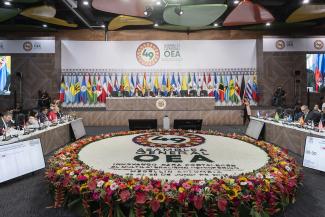
En la Comisión Africana y en el Sistema Interamericano, los actores antiderechos impulsan nociones esencialistas de cultura y género para impedir el avance de los derechos y socavar las responsabilidades. Como vemos, los actores anti-derechos están ejerciendo su influencia sobre los sistemas regionales de derechos humanos, así como en los espacios internacionales.
La Comisión Africana de Derechos Humanos y de los Pueblos ha comenzado a definir a los derechos sexuales y de las mujeres como un menoscabo a su capacidad de ocuparse de los «derechos reales» y como contrarios a los «valores africanos», con lo cual se establece un precedente anti-derechos preocupante. La anulación del estatus de observador de la Coalición de Lesbianas Africanas es un ejemplo de esta tendencia y muestra la forma en que el espacio para el involucramiento feminista panafricanista está siendo restringido.
En la Organización de Estados Americanos (OEA) y en el Sistema Interamericano de Protección de los Derechos Humanos, las estrategias anti-derechos incluyen la oenegización de grupos religiosos, la utilización de discursos seculares, y la cooptación de marcos de discriminación. La influencia antiderechos se ha materializado de diversas maneras, que incluyen la intimidación de activistas trans y la obstrucción de la introducción de lenguaje progresista en las resoluciones.
We are living in a world where the destruction of Nature fuels our current global economy. |
Even in times of climate crisis, governments continue to encourage large-scale agriculture industries to expand. These activities poison the land, threaten biodiversity, and destroy local food production and livelihoods. Meanwhile, while women produce the majority of our food in the world, they own almost none of the land. |
|
What if we perceived land and Nature not as private property to exploit, but as a whole to live in, learn from, and harmoniously coexist with? What if we repaired our relationships with the land and embraced more sustainable alternatives that nurture both the planet and its communities? Nous Sommes la Solution (We Are the Solution, NSS) is one of many women-led movements striving to do this. This is their story. |
|