Organizing creatively, facing an increasing threat
Young feminist activists play a critical role in women’s rights organizations and movements worldwide by bringing up new issues that feminists face today. Their strength, creativity and adaptability are vital to the sustainability of feminist organizing.
At the same time, they face specific impediments to their activism such as limited access to funding and support, lack of capacity-building opportunities, and a significant increase of attacks on young women human rights defenders. This creates a lack of visibility that makes more difficult their inclusion and effective participation within women’s rights movements.
A multigenerational approach
AWID’s young feminist activism program was created to make sure the voices of young women are heard and reflected in feminist discourse. We want to ensure that young feminists have better access to funding, capacity-building opportunities and international processes. In addition to supporting young feminists directly, we are also working with women’s rights activists of all ages on practical models and strategies for effective multigenerational organizing.
Our Actions
We want young feminist activists to play a role in decision-making affecting their rights by:
Fostering community and sharing information through the Young Feminist Wire. Recognizing the importance of online media for the work of young feminists, our team launched the Young Feminist Wire in May 2010 to share information, build capacity through online webinars and e-discussions, and encourage community building.
Researching and building knowledge on young feminist activism, to increase the visibility and impact of young feminist activism within and across women’s rights movements and other key actors such as donors.
Promoting more effective multigenerational organizing, exploring better ways to work together.
Supporting young feminists to engage in global development processes such as those within the United Nations
Collaboration across all of AWID’s priority areas, including the Forum, to ensure young feminists’ key contributions, perspectives, needs and activism are reflected in debates, policies and programs affecting them.
Related Content
CFA 2023 - Who, where, when - ES
Cuándo: del 2 al 5 de diciembre de 2024 Dónde: Bangkok, Tailandia, y en línea Quiénes: Aproximadamente unxs 2.500 feministas de todo el mundo participarán en persona, y otrxs 3.000 participarán de manera virtual
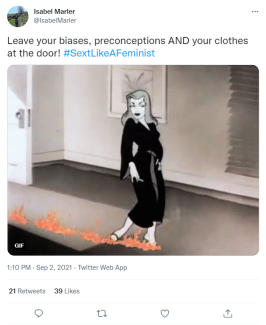
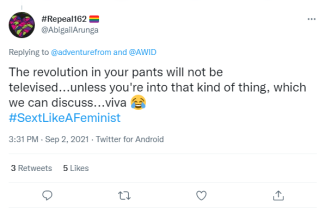
Sexting Like a Feminist: Humor in the Digital Feminist Revolution | Title Snippet
Sexting como feminista: el humor en la revolución digital feminista
Isabel Cabanillas de la Torre fue una activista joven y una artista feminista muy querida de Ciudad Juárez, México, conocida por sus hermosos diseños evocadores de indumentaria pintada a manoen los que los ojos eran una característica emblemática de su trabajo. Sus murales transformaron los edificios abandonados y vacíos del centro de Ciudad Juárez, al sumarles vida y crítica política a sus paredes.
A través de su arte y de su activismo político, Isabel buscó llamar la atención sobre la violencia de género que se extendía por su ciudad natal. Colaboró como voluntaria con la red Mesa de Mujeres en el proyecto «Observatorio Ciudadano de Género», que monitoreaba la actuación de jueces, fiscales y defensorxs públicxs en casos de femicidios y otras violaciones a los derechos basadas en el género. Integró también «Hijas De Su Maquilera Madre», una colectiva feminista cuyo nombre alude a las hijas de madres que son trabajadoras de la maquila. Algunas de estas madres fueron las primeras víctimas de femicidio en Ciudad Juárez.
El último proyecto de Isabel (todavía en curso) fue una instalación artística para protestar contra una compañía canadiense que quería extraer cobre de los Médanos de Samalayuca.
El 18 de enero de 2020 Isabel fue atacada a balazos mientras volvía a su casa del centro de Ciudad Juárez en bicicleta, víctima, aparentemente, de un asesinato selectivo. Su cuerpo fue encontrado junto a su bicicleta.
El asesinato de Isabel desató una nueva ola de indignación contra los femicidios de la región: cientos de personas marcharon hacia el puente de la frontera entre EEUU y México, y lo bloquearon durante horas mientras cantaban «Ni una más», que es la protesta continua de las colectivas feministas contra los asesinatos de las mujeres en todo México. Solamente en 2019, 3.142 mujeres y niñas fueron asesinadas en el país; muchas de ellas fueron atacadas específicamente por su género.
Amaba andar en bicicleta.
«La bicicleta era un símbolo de libertad para ella. Simbolizaba ser libre en las calles.» - Marisol, amiga de Isabel
Nuestro informe anual 2012 destaca los momentos clave de nuestro trabajo durante el año para contribuir al avance de los derechos de las mujeres y la igualdad de género de manera audaz, creativa y efectiva en todo el mundo.
¡Disfruta mirando videos, fotografías y relatos sobre nuestras contribuciones!
El Foro Internacional de AWID es un verdadero espacio de encuentro mundial que brinda, a quienes participan, la oportunidad de tejer redes, alianzas, de celebrar y aprender en una atmósfera estimulante, emotiva y segura.
Foro internacional de AWID, en Costa de Sauipe, Brasil, 2016
Como proceso, el Foro abarca mucho más que el momento en que nos reunimos. Durante todo el año estamos trabajando con organizaciones y grupos, profundizando nuestras relaciones con ellas, vinculándonos con movimientos locales para entender mejor sus problemas y crear soluciones juntxs.
Como evento, el Foro tiene lugar cada tres o cuatro años en una región diferente del mundo y cristaliza todas las alianzas que hemos venido construyendo como parte de nuestro trabajo.
El Foro de AWID disuelve nuestros límites internos y externos, alberga discusiones en profundidad, colabora con el crecimiento personal y profesional, y fortalece a los movimientos por los derechos de las mujeres y la justicia de género.
El Foro responde a la urgencia de promover una participación y acción más sólidas y coordinadas por parte de lxs feministas, defensorxs de los derechos de las mujeres y de la justicia social, sus organizaciones y movimientos. También creemos que el Foro es más que un evento, ya que puede facilitar procesos que influyen en las ideas y las agendas de los movimientos feministas y de otros actores con quienes nos vinculamos.
El Foro pasó de ser una conferencia nacional con 800 participantes a un encuentro que reúne alrededor de 2000 feministas, líderes comunitarixs, activistas por la justicia social y agencias de financiamiento de todo el mundo.
El próximo Foro de AWID tendrá lugar del 11 al 14 de enero de 2021 en Taipéi, Taiwán.
2016 - Futuros feministas: Construyendo poder colectivo por los derechos y la justicia (Costa de Sauipe, Brasil)
Participantes al Foro de los feminismos negros, en Brasil, 2016
Dado el complejo mundo que enfrentamos hoy, el Foro de AWID 2016 no se centró en un ‘tema’ en particular, sino en la creación de formas más efectivas de trabajar juntxs.
Pese a las dificultades del contexto en el que se celebró este Foro (la epidemia del virus del Zika, una huelga de lxs trabajadorxs del servicio exterior brasileño, el juicio político a la presidenta Dilma Rousseff y la crisis que le siguió), se logró congregar a más de 1800 participantes de 120 países y territorios de todas las regiones del mundo.
Lo que sucedió en el 13º Foro internacional de AWID:
Para el 96% de lxs participantes que respondieron a la encuesta de evaluación posterior al Foro, el evento fue una importante fuente de inspiración y energía.
El 98% de lxs participantes lo consideraron un importante espacio de convocatoria para los movimientos feministas, y manifestaron su esperanza de que AWID continúe organizado estos foros.
El 59% de quienes respondieron a la encuesta de evaluación del Foro declaró estar muy satisfechx con el Foro y el 34% algo satisfechx.
Se realizaron más de 150 sesiones en distintos formatos sobre diversos temas, desde la integridad y la libertad corporal, pasando por la violencia de género en el ámbito laboral, hasta estrategias de construcción de poder colectivo.
El primer Foro de Feminismos Negros, se celebró justo antes del Foro de AWID, y reunió a 250 feministas negrxs de todo el mundo, para crear colectivamente un espacio de poder desde donde construir y fortalecer las conexiones intergeneracionales y transnacionales.
Aquí puedes leer más sobre lo que logró el Foro de AWID 2016:
2012: Transformando el Poder Económico para Avanzar los Derechos de las Mujeres y la Justicia (Estambul, Turquía)
Foro Internacional AWID, Ciudad del Cabo, Sudáfrica, 2008
El 12° Foro de AWID se llevó a cabo en el año 2012 en Estambul, Turquía, bajo el título “Transformando el Poder Económico para Avanzar los Derechos de las Mujeres y la Justicia”. El Foro 2012 fue el más grande y diverso que hemos organizado hasta la fecha, con la participación de 2239 activistas por los derechos de las mujeres, de 141 países. El 65% provenía del sur global y casi el 15% eran mujeres jóvenes menores de 30 años, mientras que el 75% de las personas asistían a un Foro de AWID por primera vez.
El programa del Foro se enfocó en la transformación del poder económico para promover los derechos de las mujeres y la justicia. Se ofrecieron más de 170 sesiones de lo más diversas, incluyendo las sesiones de la caja de herramientas económicas feministas para forjar habilidades, sesiones interactivas que representaron los 10 temas del Foro, discusiones en profundidad y las mesas redondas de solidaridad.
Aprovechando el impulso del Foro, hemos transformado la página web en un centro de recursos y aprendizaje que se basa en el contenido generado por las participantes mediante recursos multimedia sobre todos los componentes del Foro.
📰 Solidaridad Feminista Transnacional: un Antídoto contra el Ecocidio
Esta publicación (zine) colaborativa surgió de una serie de círculos de intercambio que reunieron a feministas de todo el mundo durante 2022. El propósito fue intercambiar ideas y aprender mutuamente de qué manera las comunidades responden a la crisis climática en diversos contextos locales.
Aïssata Kane, surnommée affectueusement “Yaye Kadia” (Mère Kadia), a de tout temps été une féministe engagée dans la défense des droits des femmes africaines, et particulièrement mauritaniennes.
Au cours de sa carrière politique, en 1975, elle fut nommée ministre de la protection de la famille et des affaires sociales et travailla avec ardeur à l’amélioration du statut des femmes dans son pays; c’était la première fois qu'une femme occupait un tel poste.
Ce travail consista notamment à promouvoir l’éducation des filles et des femmes, à lutter contre la pratique du gavage sur les jeunes femmes, à faire pression pour l’inclusion d’une disposition sur les droits maritaux et à plaider en faveur de la création d’un quota de représentation féminine au Parlement.
“[Aïssata] a réalisé toutes ses passions avec humilité, courage et détermination. Elle ne voulait déranger personne avec ce combat qu’elle menait sur tous les fronts à la fois.” Ball Halimata Dem, la nièce d’Aïssata
Ayant fondé l'Union nationale des femmes de Mauritanie (UNFM), elle avait cocréé et publié pour elles le magazine Marienou, dédié à l’émancipation des femmes mauritaniennes. Aïssata dirigea également plusieurs organisations sous-régionales et locales, notamment en tant que présidente de l'Association internationale des femmes francophones (AIFF) et, en écologiste résolue, fut présidente de l'Association pour la protection de l'environnement en Mauritanie (APEM).
En 2018, on lui décerna le Prix de la Femme africaine pionnière. Ce prix honore son engagement à faire progresser le statut de la femme en Mauritanie et reconnaît son grand leadership et son sens de l'innovation.
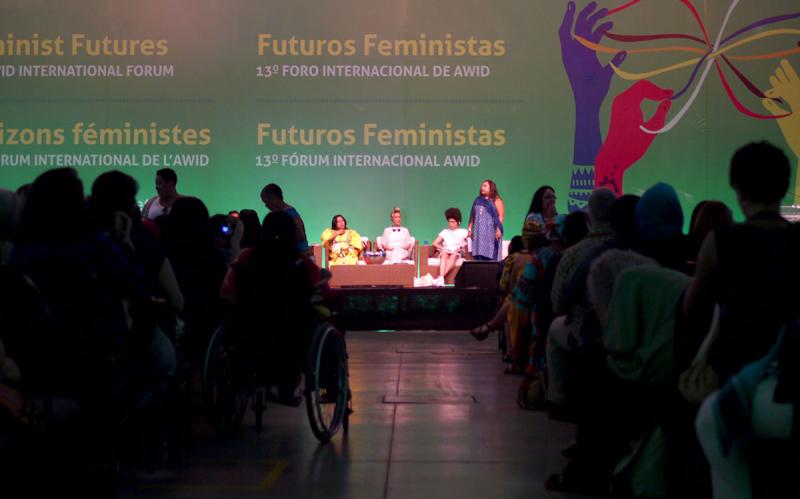
En 2016, nous nous sommes réuni-e-s pour le 13e forum international de l’AWID, à Bahia au Brésil, qui a accueilli 1 800 participant-e-s venu-e-s de 120 pays et territoires à travers le monde. Le Forum a servi d’espace essentiel pour la mise en place de stratégies et la constitution d’alliances au sein des mouvements féministes et d’autres mouvement de justice.
Nous savons que les droits des femmes et les mouvements féministes sont des éléments moteurs pour l’instauration d’un changement transformateur durable. Au sein de nos mouvements, l’organisation, la résistance et la réponse au difficile contexte se précisent, et dans ce monde de plus en plus connecté, le potentiel des actions collectives de mouvements divers s’est fortement accru. C’est précisément là le travail essentiel que l’AWID cherche à amplifier et à soutenir.
Nous cherchons à informer et outiller les organisations et mouvements de droits des femmes afin de les aider à être en mesure de répondre aux opportunités qui se présentent et de contrecarrer les menaces. Nous appuyons une visibilité accrue et une meilleure compréhension des initiatives pour les droits des femmes et les menaces auxquelles elles font face, et nous oeuvrons également à influer sur les acteur-trice-s et les institutions qui façonnent le devenir des droits de la personne et du développement.
Ce que nous avons réalisé en 2016
Élargissement de la solidarité et actions conjointes de divers mouvements
Le 13e forum international innovant de l’AWID s’est tenu du 8 au 11 septembre 2016 à Bahia, au Brésil, sur le thème : « Horizons féministes ; Construire un
pouvoir collectif pour les droits et la justice ».
Bien qu’une grande partie de l’énergie de l’AWID ait été investie en 2016 dans la tenue du Forum, la réflexion et l’énergie de près de 500 partenaires, intervenant-e-s, animateur-trice-s, artivistes, facilitateur-trice-s, écrivain-e-s, innovateur-trice-s en TI, performeur-euse-s, dont beaucoup sont des meneur-euse-s dans leur domaine, ont été mises à profit. Et en reconnaissance du passé et du combat de Bahia, nous avons accueilli deux jours de Forum des Féminismes Noirs , à l’initiative d’un groupe de travail de féministes Noires du monde entier.
Des connaissances approfondies des problématiques et des stratégies
À propos du défi au pouvoir corporatif : Nous avons publié Contester le pouvoir corporatif : Les luttes pour les droits des femmes, la justice économique et la justice de genre avec le Solidarity Center, qui dévoile la portée et l’ampleur du pouvoir corporatif et souligne comment la collusion qu’entretiennent les entreprises nationales et transnationales avec les élites et autres puissant- e-s acteur-trice-s influence les vies des femmes et des peuples opprimés. Ce rapport présente des clés de stratégies de résistances, en soulignant cinq combats qui se sont saisis de la collaboration entre mouvements pour contester le pouvoir corporatif.
Sur les économies féministes : Nous avons publié Propositions féministes pour une économie juste avec le Centre pour le leadership mondial des femmes (CWGL en anglais) et le Réseau de Développement et de Communication des Femmes Africaines FEMNET.
Sur l’opposition aux fondamentalismes : Le Diable est dans les détails : à la croisée du développement, des droits des femmes et des fondamentalismes religieux détaille la façon dont les fondamentalismes religieux entravent le développement et les droits des femmes en particulier, et offre des recommandations aux acteur-trice-s du développement pour le renforcement des droits des femmes.
Sur le thème de l’activisme des jeunes féministes : Avec FRIDA, nous avons lancé Courageuses, créatives, résilientes : les organisations de jeunes féministes dans le monde : un état de lieux à l’occasion du Pôle d’activisme des jeunes féministes lors du Forum de l’AWID. Ce projet de cartographie des jeunes féministes s’appuie sur les données collectées dans 1 360 demandes de subventions reçues par FRIDA entre 2012 et 2014, qui incluaient 694 interlocutrices issues de 118 pays différents !
Plaidoyer collectif
l’AWID, en partenariat avec d’autres organisations féministes et de droits des femmes, a lancé des actions de plaidoyer et de dialogue afin de rechercher de meilleures solutions pour les programmes de droits des femmes, dont le travail avec le consortium .Count Me In!
Amélioration de la visibilité des mouvements
Les expériences des femmes en situation de handicap, les femmes Noires et Afro-descendantes, les travailleuses du sexe, les femmes Autochtones, les personnes trans et intersexes, les travailleuses domestiques, et la manière dont leurs vies sont impactées par les nombreuses oppressions et la violence ont été placées au centre et au premier plan du processus du Forum.
Au cours des 16 jours d’activisme, et grâce aux contributions de nos incroyables membres, nous avons lancé l’Hommage aux défenseur-e-s des droits humains des femmes 2016 pour honorer la mémoire des défenseur-e-s qui nous ont quitté- e-s.
Notre partenariat avec The Guardian et Cash Mama : la section sur les droits des femmes et l’égalité de genre (en anglais) sur le portail du développement dans le monde du Guardian a permis d’attirer davantage d’attention sur les groupes et les problématiques qui ne font généralement pas l’objet d’une couverture médiatique adéquate.
Partout sur la planète, les défenseur·e·s féministes, des droits des femmes et de la justice de genre remettent en question les programmes des acteurs fascistes et fondamentalistes. Ces forces opprimantes prennent pour cibles les femmes, les personnes non conformes dans leur identité de genre, leur expression et/ou orientation sexuelle, ainsi que d’autres communautés opprimées.
Les idéologies discriminatoires sapent et s’emparent de nos systèmes et normes en termes de droits humains de manière à ce que seuls certains groupes aient l’exclusivité des droits. Face à cela, l’initiative Promotion des droits universels et de la justice (Advancing Universal Rights and Justice, AURJ) s’attache à promouvoir l’universalité des droits - le principe fondamental selon lequel les droits humains sont le bien de chaque être humain, quelle que soit son identité, et ce sans exception.
Nous créons un espace pour permettre aux mouvements et à nos allié·e·s féministes, en faveur des droits humains et de la justice de genre de se reconnaître, d’élaborer des stratégies et de recourir à des actions collectives afin de contrecarrer l’influence et l’impact des acteurs anti-droits. Nous cherchons également à faire avancer les cadres, les normes et les propositions féministes et relatifs aux droits des femmes, ainsi qu’à protéger et promouvoir l’universalité des droits.
Nos actions
A travers cette initiative, nous visons à :
Enrichir nos connaissances : Dans le cadre du rôle de premier plan que nous assurons sur la plateforme collaborative, l’Observatoire de l'universalité des droits (Observatory on the Universality of Rights, OURs), l’AWID soutient les mouvements féministes, en faveur des droits des femmes et de la justice de genre en diffusant et vulgarisant des connaissances et des messages clés concernant les acteurs anti-droits, leurs stratégies et leur impact au sein des organismes internationaux de protection des droits humains.
Promouvoir des programmes féministes : Nous faisons des alliances avec des partenaires au sein d’espaces internationaux dédiés aux droits humains, notamment le Conseil des droits de l’homme, la Commission de la population et du développement, la Commission de la condition de la femme et l’Assemblée générale de l’ONU.
Créer et élargir les alternatives : Nous impliquons nos membres afin de garantir que les engagements, les résolutions et les normes à l’échelle internationale sont reflétées et réintroduites dans l’organisation d’autres espaces à l’échelle locale, nationale et régionale.
Mobiliser des actions solidaires : Nous agissons aux côtés de défenseuses des droits humains (women human rights defenders, WHRD), y compris de défenseur·e·s trans et intersexes et de jeunes féministes, et oeuvrons à contester les fondamentalismes et les fascismes tout en attirant l’attention sur les situations à risque.
COP30: Reclaim climate action from corporate capture
As world leaders gather in Brazil, feminist movements are advocating, gathering and disrupting the status quo- at COP30 and beyond! We're heading alongside other feminists to Belém, Brazil for COP30, from 10 November – 21 November 2025, where we will continue to denounce false solutions.
Nous acceptons les candidatures dans toute la gamme des domaines thématiques et des intersections importantes pour les mouvements féministes et de justice de genre.
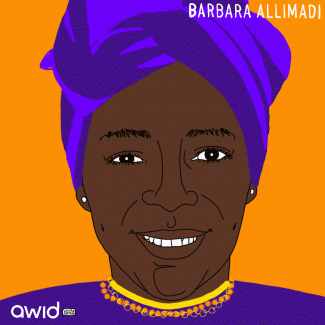
Barbara Allimadi was a political and human rights activist from Uganda. In 2012, she co-organized a protest against a televised police assault of Ingrid Turinawe, an opposition politician who had her breast squeezed by a police officer.
During the protest, Barbara, along with other fellow activists stripped to their bras in front of the Central Police Station in Kampala. This came to be known as the infamous ‘bra protest’ in Uganda.
“We settled on the bra protest. We thought it would be most appropriate for what had happened. It’s not like we were saying we don’t respect ourselves. We were disgusted by what had been done.” - Barbara Allimadi, 2013 (Daily Monitor)
With a Degree in Electronics and Communications Engineering from the London Metropolitan University, Barbara was a network engineer in the United Kingdom and an avid fan of reggae music. She returned to Uganda In 2007, when her mother passed away.
In 2019, she was appointed Coordinator for International and Diaspora Affairs at the Alliance for National Transformation (ANT), a political party launched that year by an opposition leader.
“We want security of life and property, not pain, injury and even death at the hands of security forces who are meant to protect us. Most importantly, we want a stable and enabling environment where we can realize our dreams and aspirations.” - Barbara Allimadi, ANT video
Barbara passed away on 27 April 2020.
Tributes:
“I was so proud of my sister for many things but in particular her fearless pursuit of peace, democracy, justice and equality in Uganda. At the height of her activism she led many marches on the streets of Kampala, to police stations, and Parliament.” - Doris Allimadi, Barbara’s sister
“It is with deep sadness that we have learnt of the untimely passing of Barbara Allimadi. She has been a valiant, relentless and courageous force for the liberation movement of Uganda. Our deepest condolences to her family. She will be sorely missed.” - Akina Mama wa Afrika (tweet on 28 April 2020)
“The passing on of Barbara is so sad for us and her entire family. She dedicated herself to fighting for justice, freedom and rights of others while serving in the civil society until she recently joined us at the party.” Maj Gen Mugisha Muntu, ANT national coordinator
“A beautiful, charming, funny, charismatic and inspirational sister. My children lost their aunty. Uganda lost a brave and courageous freedom fighter. Barbara once said, ‘As long as there is still breath in you, keep working towards your dreams.’” - Doris Allimadi, Barbara’s sister
En 2021, l’AWID, comme beaucoup d’autres organisations, a dû faire face aux répercussions de la pandémie mondiale en cours sur notre façon de travailler et notre rôle en ces temps particuliers. L’année nous a appris trois leçons essentielles sur la façon de traverser cette période en tant qu’organisation mondiale de soutien au mouvement féministe.
Grâce au dialogue et aux échanges indispensables à son travail, l’AWID a mis en relation des milliers de personnes avec des féministes du monde entier.
Notre expérience en 2021 nous a permis de constater que l’AWID jouait un rôle important et quelque peu unique dans la création et le maintien d’une communauté féministe mondiale transcendant les identités et les thèmes.
Enciende tu fuego feminista leyendo nuestras investigaciones y publicaciones varias sobre financiamiento, defensoras de derechos humanos, construcción de movimientos, fundamentalismos, justicia económica, seguimiento y evaluación feminista y más