
Diana Staubli

WHRDs are self-identified women and lesbian, bisexual, transgender, queer and intersex (LBTQI) people and others who defend rights and are subject to gender-specific risks and threats due to their human rights work and/or as a direct consequence of their gender identity or sexual orientation.
WHRDs are subject to systematic violence and discrimination due to their identities and unyielding struggles for rights, equality and justice.
The WHRD Program collaborates with international and regional partners as well as the AWID membership to raise awareness about these risks and threats, advocate for feminist and holistic measures of protection and safety, and actively promote a culture of self-care and collective well being in our movements.
WHRDs are exposed to the same types of risks that all other defenders who defend human rights, communities, and the environment face. However, they are also exposed to gender-based violence and gender-specific risks because they challenge existing gender norms within their communities and societies.
We work collaboratively with international and regional networks and our membership
We aim to contribute to a safer world for WHRDs, their families and communities. We believe that action for rights and justice should not put WHRDs at risk; it should be appreciated and celebrated.
Promoting collaboration and coordination among human rights and women’s rights organizations at the international level to strengthen responses concerning safety and wellbeing of WHRDs.
Supporting regional networks of WHRDs and their organizations, such as the Mesoamerican Initiative for WHRDs and the WHRD Middle East and North Africa Coalition, in promoting and strengthening collective action for protection - emphasizing the establishment of solidarity and protection networks, the promotion of self-care, and advocacy and mobilization for the safety of WHRDs;
Increasing the visibility and recognition of WHRDs and their struggles, as well as the risks that they encounter by documenting the attacks that they face, and researching, producing, and disseminating information on their struggles, strategies, and challenges:
Mobilizing urgent responses of international solidarity for WHRDs at risk through our international and regional networks, and our active membership.

Para reivindicar o seu poder como especialista sobre o estado dos recursos de movimentos feministas;

LA EXCLUSIÓN, ESTIGMA Y ABUSO INSTITUCIONAL
que las personas trans y travesti siguen enfrentando diariamente
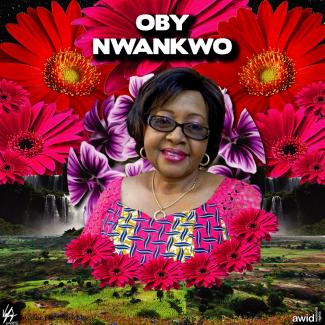
Avec une carrière juridique de plus de 30 ans à son actif, Oby était connue en Afrique et dans le monde comme une ardente défenseure de la justice de genre et des droits humains.
Elle a fondé le Centre de documentation et de développement des ressources civiles (CIRDDOC), une ONG nigériane qui sponsorise des formations et des activités de mise en réseau qui promeuvent les droits humains, la bonne gouvernance, l’accès à la justice et l’État de droit pour les membres de la société civile, les parlementaires, ainsi que d’autres parties prenantes concernées.
Au Nigeria, les activistes se souviennent d’Oby avec émotion, la qualifiant « d’activiste extraordinaire qui a fait preuve d’énergie et de passion pour lutter pour l’égalité de genre et la justice de genre au Nigéria et en Afrique »
Dans le contexte actuel, nous avons cerné cinq grandes menaces à la lutte pour des économies justes d’un point de vue féministe :
« La financiarisation fait référence à l'importance croissante des marchés financiers, des intérêts financiers, des institutions financières et des élites de la finance dans le fonctionnement de l'économie et de ses institutions de gouvernance, sur la scène nationale et internationale. » Gerald Epstein
Epstein Gerald A. 2006 ; Financialization and the World Economy, Editions Edward Elgar, en anglais seulement.
Les institutions financières exercent une forte influence sur la gouvernance économique et l’orientation des politiques de développement. La domination croissante du secteur des entreprises et des institutions financières internationales, dans le cadre de la définition des politiques publiques locales et mondiales, a abouti à la prise en otage de l'État dans l'intérêt du capital. Le système financier actuel, en ce compris les politiques controversées de crédit et d’endettement, font partie intégrante de l'expansion et de la reproduction des processus d'accumulation du capital.
Cela soulève des questions importantes sur la façon de réglementer et de repenser le système financier mondial, non seulement pour éviter les conséquences désastreuses des crises de la dette, mais également pour permettre des moyens de subsistance durables et la réalisation des droits économiques et sociaux sans périodes de recul.
Pour plus de détails, voir l'article de Balakrishnan et Heintz Debt, Power, and Crisis: Social Stratification and the Inequitable Governance of Financial Markets (Dette, pouvoir et crise : la stratification sociale et la gouvernance inéquitable des marchés financiers), disponible en anglais uniquement.
Au cours des 20 dernières années, les cadres des accords commerciaux (bilatéraux ou multilatéraux) ont été élargis, démontrant un intérêt accru pour les droits de propriété intellectuelle (DPI) à octroyer aux sociétés.
Les droits de propriété intellectuelle ont clairement bénéficié aux sociétés multinationales, causant d'énormes répercussions sur la capacité des nations et des peuples les plus pauvres à réaliser les droits humains, notamment :
En outre, la libéralisation de l'importation des produits agricoles a entraîné un afflux de produits bon marché et compromis l’emploi des agriculteur-trice-s indépendants dans les pays pauvres, ainsi que la sécurité alimentaire. Les dispositions de protection de l'investissement inscrites aux accords commerciaux limitent la marge de manœuvre des gouvernements nationaux leur permettant de créer et de faire respecter des règlements sur des questions aussi cruciales que la protection de l'environnement, le droit du travail et la durée des droits d'auteur.
En exposant les pièges de ces accords, les mouvements féministes ont été et sont toujours à la fine pointe de la résistance.
(Voir par exemple, les réactions de réseaux féministes du monde entier contre les négociations relatives au Partenariat transatlantique de commerce et d’investissement (PTCI) et au Partenariat transpacifique (PTP) (en anglais).
La marchandisation des ressources de la Terre, la dégradation environnementale et le changement climatique qui résultent de décennies d'industrialisation agressive, du pillage et de l'extraction liée aux ressources de la planète, ont endommagé la biodiversité et la résilience écologique. Ces dommages menacent maintenant l'existence de la société humaine elle-même.
La communauté internationale n'a pas réussi à modifier les modes de production et de consommation qui sont à la racine du problème. Au lieu de cela, les gouvernements, avec le soutien de grandes entreprises intéressées au profit, penchent en faveur d’une «économie verte». Cette approche favorise les « technologies économes en énergie » (y compris l'énergie nucléaire, les biocarburants, les organismes génétiquement modifiés et la géo-ingénierie) et les systèmes d’échanges de droits d’émission de carbone comme solutions miracles.
Les phénomènes d’accaparement des terres et de l'appropriation des ressources ne sont pas nouveaux et les résistances étaient déjà au cœur de l’histoire coloniale. Ce qui est nouveau, c’est la rapidité et la manière dont les terres et les ressources naturelles sont devenues des marchandises pour de nouveaux marchés.
Les institutions financières internationales jouent un rôle central dans la promotion des marchés fonciers dans les pays en développement. Ces institutions financent des réformes agraires qui permettent à de puissants acteurs financiers de faire main-basse sur des terres à des fins spéculatives en échange de maigres promesses d'emplois et de croissance. L'accaparement des terres a de profondes répercussions négatives sur l'accès des populations locales aux biens et services essentiels, sans compter les déplacements forcés et la dégradation de l'environnement qui y sont associés.
Les personnes qui résistent à l'accaparement des terres, parmi lesquelles des femmes défenseuses des droits humains, sont confrontées quotidiennement à diverses formes de violence, y compris les agressions physiques et les abus sexuels.
Ces fondements patriarcaux sont particulièrement hégémoniques dans les modèles néolibéraux actuels.
Les nombreuses manières dont l'économie politique et le développement sont liés à la sexualité ou au genre sont évidentes : pensez à la manière dont le capitalisme détermine ce qui est qualifié de travail et comment la ‘valeur humaine’ est fondée sur la productivité du travail salarié.
En règle générale, la position des femmes dans l'économie mondiale continue de reposer sur l’exploitation de leur travail fondée sur le genre : ce travail est sous-évalué et on retrouve essentiellement les femmes dans les emplois précaires, la sphère de la subsistance domestique et de la production non rémunérée et dans la sphère ‘reproductive’. Puisque le travail de reproduction est systématiquement associé au travail non rémunéré des femmes, il a fourni un immense soutien au capitalisme, en même temps qu’il est la source d'oppressions fondées sur le genre et l'assujettissement.
Cette situation est aggravée par le fait que dès lors où les mécanismes de protection sociale commencent à diminuer, le fardeau du travail des femmes augmente proportionnellement.
En outre, le phénomène de la migration mondiale, stimulé par des milliers de réfugiés économiques qui fuient la pauvreté endémique à travers le monde, n’est pas étranger au type de relations de pouvoir entre hommes et femmes du système capitaliste. Les fonds envoyés dans le pays d’origine deviennent une source importante de financement et de développement pour les familles et les communautés restées au pays. Ce phénomène a un coût important pour les femmes migrantes qui luttent pour gagner un salaire décent dans leur pays d’accueil.
Dans la même veine, nous avons vu comment les systèmes capitalistes patriarcaux font usage de la violence et de l'oppression pour maintenir le statu quo. La hausse des dépenses militaires mondiales et l’escalade de la violence perpétrée à la fois par des acteurs étatiques et non étatiques, sont des stratégies adoptées pour contrôler la dissidence, le corps et la voix des femmes et régler les différends économiques, politiques et sociaux.
Partout dans le monde, la violence, l'incarcération et la discrimination ciblent de manière disproportionnée :
Pour contester la violence structurelle et ses liens avec un système mondial capitaliste, nous devons procéder à une analyse intersectionnelle qui tienne compte du genre, de la race/de l'origine ethnique, de l'âge, des compétences, de la nationalité, de l'orientation sexuelle et de l'identité de genre des personnes, entre autres statuts.
La crise profonde du système actuel de gouvernance mondiale est également évidente lorsqu’on examine les maigres accords intergouvernementaux conclus et la façon dont ils manquent souvent de mécanismes de responsabilisation les plus fondamentaux. Le système multilatéral qui a servi la gouvernance mondiale par le passé ne parvient plus à répondre aux multiples crises actuelles. Ce même système continue d'être profondément antidémocratique, marqués par l’augmentation de la présence et de la puissance des sociétés qui occupent désormais les espaces précédemment réservés aux États.
Ces menaces nous forcent, nous les féministes, à repenser nos perspectives et nos stratégies, à renouveler et à réactiver notre engagement pour la construction d’un mouvement en faveur d’une économie juste, en partenariat avec d'autres mouvements.
Ces menaces nous incitent à envisager, d’une perspective féministe, de vastes programmes de transformation socioéconomique qui tiennent compte des réalités de la majorité des personnes démunies. Le temps est venu d’opérer les changements nécessaires pour mettre en place une économie juste et pour relever les défis systémiques persistants.
Écoutez l'histoire ici :
Marielle was a Brazilian politician, feminist, lesbian and human rights activist.
Marielle was an outspoken critic of police brutality and extrajudicial killings. Her openly feminist, Black and favela-centered politics were a source of hope for marginalized groups in Rio de Janeiro, currently governed by a conservative city government and an evangelical mayor.
On March 14, 2018, after delivering a speech in Rio de Janeiro, Franco and her driver were shot multiple times and killed. Following news of her death crowds took to the streets shouting "Marielle presente!" (Marielle is here!) and demanding justice be done.
Read more about Marielle and the situation in Brazil


(Disponível em inglês)
The COVID-19 pandemic showed the world how important essential workers are. We’re talking about cleaners, nurses, paramedics, domestic workers, transport workers, grocery shop workers, among others. Their work is to tend to and guarantee the wellbeing of others, and they make our economies function.
But while they take care of us…
Al momento de su muerte, luego de una corta pero denodada batalla contra el cáncer, Deborah era la Jefa de Comunicaciones y Participación en la Women’s Funding Network (WFN, Red de financiamiento para mujeres).
Deborah también trabajó para el Fondo Global de Mujeres entre 2008 y 2017. Era sumamente querida y respetada por el consejo asesor, el personal y lxs colaboradorxs de la organización.
Kavita Ramdas, anterior directora ejecutiva del Fondo, acertadamente señaló que Deborah era un «pequeño paquete que explotaba de calidez, generosidad, inteligencia, estilo y un apasionado compromiso por unir la belleza con la justicia. Ella entendía el poder de las historias. El poder de la voz de las mujeres. El poder de la experiencia vivida. El poder de levantarse de las cenizas y decirle a otrxs que era posible. Y todavía nos levantamos».
Musimbi Kanyoro, actual directora ejecutiva del Fondo Global de Mujeres, añadió: «Hemos perdido a una hermana y su vida ilumina valores que nos unen y nos inspiran. Al reunirnos para llorar el fallecimiento de Deborah, recordemos y celebremos su notable, audaz y apasionada vida».

Despite their rigidity in matters of doctrine and worldview, anti-rights actors have demonstrated an openness to building new kinds of strategic alliances, to new organizing techniques, and to new forms of rhetoric. As a result, their power in international spaces has increased.
There has been a notable evolution in the strategies of ultra conservative actors operating at this level. They do not only attempt to tinker at the edges of agreements and block certain language, but to transform the framework conceptually and develop alternative standards and norms, and avenues for influence.
Ultra conservative actors work to create and sustain their relationships with State delegates through regular training opportunities - such as the yearly Global Family Policy Forum - and targeted training materials.
These regular trainings and resources systematically brief delegates on talking points and negotiating techniques to further collaboration towards anti-rights objectives in the human rights system. Delegates also receive curated compilations of ‘consensus language’ and references to pseudo-scientific or statistical information to bolster their arguments.
The consolidated transmission of these messages explains in part why State delegates who take ultra-conservative positions in international human rights debates frequently do so in contradiction with their own domestic legislation and policies.
Anti-rights actors’ regional and international web of meetings help create closer links between ultra conservative Civil Society Organizations (CSOs), States and State blocs, and powerful intergovernmental bodies. The yearly international World Congress of Families is one key example.

These convenings reinforce personal connections and strategic alliances, a key element for building and sustaining movements. They facilitate transnational, trans-religious and dynamic relationship-building around shared issues and interests, which leads to a more proactive approach and more holistic sets of asks at the international policy level on the part of anti-rights actors.
States and State blocs have historically sought to undermine international consensus or national accountability under international human rights norms through reservations to human rights agreements, threatening the universal applicability of human rights.
The Convention on the Elimination of Discrimination Against Women (CEDAW) has received by far the most reservations, most of which are based on alleged conflict with religious law. It is well-established international human rights law that evocations of tradition, culture or religion cannot justify violations of human rights, and many reservations to CEDAW are invalid as they are “incompatible with the object and purpose” of CEDAW. Nevertheless, reference to these reservations is continually used by States to dodge their human rights responsibilities.
‘Reservations’ to UN documents and agreements that are not formal treaties - such as Human Rights Council and General Assembly resolutions - are also on the rise.
In an alarming development, regressive actors at the UN have begun to co-opt existing rights standards and campaign to develop agreed language that is deeply anti-rights.
The aim is to create and then propagate language in international human rights spaces that validates patriarchal, hierarchical, discriminatory, and culturally relativist norms.
One step towards this end is the drafting of declarative texts, such as the World Family Declaration and the San Jose Articles, that pose as soft human rights law. Sign-ons are gathered from multiple civil society, state, and institutional actors; and they are then used a basis for advocacy and lobbying.
As part of a strategic shift towards the use of non-religious discourses, anti-rights actors have significantly invested in their own ‘social science’ think tanks. Given oxygen by the growing conservative media, materials from these think tanks are then widely disseminated by conservative civil society groups. The same materials are used as the basis for advocacy at the international human rights level.
While the goals and motivation of conservative actors derive from their extreme interpretations of religion, culture, and tradition, such regressive arguments are often reinforced through studies that claim intellectual authority. A counter-discourse is thus produced through a heady mix of traditionalist doctrine and social science.
This is one of the most effective strategies employed by the religious right and represents a major investment in the future of anti-rights organizing.
Youth recruitment and leadership development, starting at the local level with churches and campuses, are a priority for many conservative actors engaged at the international policy level.
This strategy has allowed for infiltration of youth-specific spaces at the United Nations, including at the Commission on the Status of Women, and creates a strong counterpoint to progressive youth networks and organizations.

When it comes to authoritative expert mechanisms like the UN Special Procedures and Treaty Monitoring Bodies and operative bodies like the UN agencies, regressive groups realize their potential for influence is much lower than with political mechanisms[1].
In response, anti-rights groups spread the idea that UN agencies are ‘overstepping their mandate,’ that the CEDAW Committee and other Treaty Bodies have no authority to interpret their treaties, or that Special Procedures are partisan experts working outside of their mandate. Anti-rights groups have also successfully lobbied for the defunding of agencies such as the United Nations Population Fund (UNFPA).
This invalidation of UN mechanisms gives fuel to state impunity. Governments, when under international scrutiny, can defend their action on the basis that the reviewing mechanism is itself faulty or overreaching.
Conservative non-state actors increasingly invest in social media and other online platforms to promote their activities, campaign, and widely share information from international human rights spaces.
The Spanish organization CitizenGo, for example, markets itself as the conservative version of Change.org, spearheading petitions and letter-writing campaigns. One recent petition, opposing the establishment of a UN international day on safe abortion, gathered over 172,000 signatures.
By understanding the strategies employed by anti-rights actors, we can be more effective in countering them.
[1] The fora that are state-led, like the General Assembly, the Human Rights Council, and UN conferences like the Commission on the Status of Women and the Commission on Population and Development

Безусловно, мы хотим услышать ваше мнение и о вашем опыте привлечения ресурсов.