
Human Rights Council (HRC)
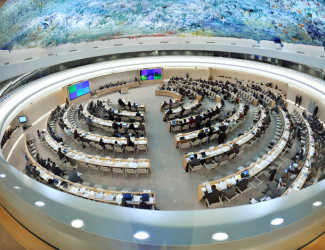
The Human Rights Council (HRC) is the key intergovernmental body within the United Nations system responsible for the promotion and protection of all human rights around the globe. It holds three regular sessions a year: in March, June and September. The Office of the UN High Commissioner for Human Rights (OHCHR) is the secretariat for the HRC.
The HRC works by:
-
Debating and passing resolutions on global human rights issues and human rights situations in particular countries
-
Examining complaints from victims of human rights violations or activist organizations on behalf of victims of human rights violations
-
Appointing independent experts (known as “Special Procedures”) to review human rights violations in specific countries and examine and further global human rights issues
-
Engaging in discussions with experts and governments on human rights issues
-
Assessing the human rights records of all UN Member States every four and a half years through the Universal Periodic Review
AWID works with feminist, progressive and human rights partners to share key knowledge, convene civil society dialogues and events, and influence negotiations and outcomes of the session.
With our partners, our work will:
◾️ Raise awareness of the findings of the 2017 and 2021 OURs Trends Reports.
◾️Support the work of feminist UN experts in the face of backlash and pressure
◾️Advocate for state accountability
◾️ Work with feminist movements and civil society organizations to advance rights related to gender and sexuality.
Related Content
Isabel Marler
Isabel es una feminista del Reino Unido con más de 10 años de experiencia en respuestas feministas a los fascismos, los fundamentalismos y las tendencias antiderechos. En AWID, su trabajo se centra en la construcción de conocimientos, y ha incluido la conducción de la producción de la serie Derechos en riesgo en colaboración con el Observatorio de la Universalidad de los Derechos. Posee una maestría en Estudios de Género de la Escuela de Estudios Orientales y Africanos (SOAS) y, con anterioridad, trabajó con Women Living Under Muslim Laws (Mujeres que viven bajo leyes musulmanas). Es una apasionada del trabajo entre movimientos, la construcción de conocimientos centrados en los movimientos y el uso de la expresión creativa para desmantelar los sistemas de opresión. Fuera del trabajo, Isabel se mantiene activa en distintos espacios dedicados a la justicia para las personas con discapacidad para el cuidado colectivo, el aprendizaje y la incidencia política.
Snippet - Homepage CSW69_EN
AWID at CSW69 Beijing+30 | #FreezeFascisms
Our collective presence disrupts institutional practices of exclusion in such spaces while supporting movements to organize around feminist alternatives to systems of oppression.
Join the conversations from March 10-21, 2025, as we collectively transform CSW69 into spaces for and about resistance and solidarity.
Mereani Naisua Senibici
Mereani Naisua Senibici, también llamada "Sua", fue, durante mucho tiempo, integrante del movimiento de la Asociación Cristiana de Mujeres Jóvenes de Fiji (YWCA, por sus siglas en inglés).
Trabajó con diversos grupos de mujeres en entornos multirraciales, rurales y urbanos y se comprometió a apoyar y promover los derechos de las mujeres y las jóvenes.
En el YWCA de Lautoka, Sua trabajó con mujeres de ascendencia india, y se convirtió en una figura destacada en el desarrollo del deporte y de la participación de atletas mujeres y personas trans en Lautoka.
"Sua es muy querida por lxs integrantes del YWCA de Fiji, a causa de su dedicación y apoyo persistente a todo lo que la organización se ha esforzado por hacer". - Tupou Vere
Mereani formaba parte de House of Sarah [La Casa de Sarah] (HoS, por sus siglas en inglés ), una iniciativa de la Asociación de Mujeres Anglicanas (AAW), lanzada en 2009, que tenía por objetivos tanto sensibilizar sobre los problemas relacionados con la violencia de género, como brindar apoyo a las mujeres que sufren violencia. Mereani empezó como una voluntaria comprometida y ofreció apoyo a las mujeres de todo el Pacífico.
Mereani falleció en 2019.
"Una persona con don de gente y una trabajadora todoterreno en el empoderamiento de las mujeres y construcción de movimientos a nivel comunitario. Descansa en paz, Sua". - Tupou Vere
CFA 2023 - breadcrumbs Menu _ cfa-forum-fr
#9 - Sexting like a feminist Tweets Snippet FR
C’est toujours bien de définir les règles.

Laisse tes préjugés, tes suppositions ET tes fringues à l’entrée!
Kalpana Chakma
Marianne Mesfin Asfaw
Marianne Mesfin Asfaw est une féministe panafricaine qui se consacre à la justice sociale et à la construction communautaire. Elle est titulaire d'une licence en études de genre et en relations internationales de l'Université de la Colombie-Britannique (UBC) et d'un master en études de genre et de droit de l'Université SOAS de Londres. Auparavant, elle travaillait dans l'administration universitaire et le soutien aux étudiant·e·s internationaux·ales, de même qu’à titre de chercheuse et d’animatrice dans des espaces féministes à but non lucratif. Elle a également travaillé et été bénévole auprès d'organisations non gouvernementales, notamment Plan International, dans des rôles administratifs. Avant d'occuper son poste actuel, elle a travaillé dans le soutien logistique et administratif à l'AWID. Elle est originaire d'Éthiopie, a grandi au Rwanda et est actuellement basée à Tkaronto/Toronto, au Canada. Elle aime lire, voyager et passer du temps avec sa famille et ses ami·e·s. Pendant les mois les plus chauds, on peut la trouver en train de se promener dans des quartiers familiers à la recherche de cafés et de librairies obscurs dans lesquels flâner.
Snippet - Section Two Funding Resources in One Place - EN
A Universe of Funders & Funding Commitments
Sylvia Robinson
« La vie... c’est vivre dans la joie, se lever avec un but, sentir son énergie créative, répondre à son appel. » – Sylvia Robinson
Sylvia Robinson, infatigable leader et organisatrice communautaire, fut la fondatrice et directrice générale de l’Emergence Community Arts Collective (ECAC) à Washington, D.C.
Cet espace de performances créatrices foisonnantes rassemblait des initiatives d’éducation, d’engagement citoyen, d’arts, de services sociaux et spirituels et de pratiques de développement durable. Sylvia considérait cet endroit comme une maison où « il existe un équilibre et une synergie avec les activités dont les gens ont besoin pour entretenir la vie ».
Elle comptait également parmi les membres fondateur·trice·s du Georgia Avenue Community Development Taskforce, dans le nord-ouest de la capitale, un groupe de quartier actif dans le domaine de la justice sociale et de l’organisation qui veillait à ce que la communauté ait son mot à dire dans le redéveloppement et l’embourgeoisement du secteur.
« Nous demandons des logements abordables. Nous demandons que les petits commerces qui sont ici depuis longtemps ne soient pas balayés par de nouvelles enseignes. Nous demandons des espaces verts et des lieux où les gens peuvent se rencontrer. Nous demandons à ce que le paysage urbain soit amélioré, avec des rues en meilleur état et des éclairages publics. » – Sylvia Robinson, à propos du travail de la Taskforce
Avant de devenir organisatrice, et après avoir obtenu son diplôme en informatique, Sylvia avait travaillé dans le domaine des systèmes de contrôle du trafic aérien pendant plus d’une décennie. Elle s’est ensuite orientée vers le conseil relatif à la consommation d’alcool et de drogue, s’impliquant davantage dans le travail communautaire.
« Cette implication dans la communauté, c’était ma vocation. » – Sylvia Robinson
Née à Washington D.C. le 14 août 1961, Sylvia est décédée le 18 septembre 2017 après avoir lutté contre le cancer.
« L’esprit et l’héritage de Sylvia continueront d’inspirer cette communauté pour de nombreuses années. » – ECAC
CFA 2023 - Submit application card - FR
Nous acceptons les candidatures dans toute la gamme des domaines thématiques et des intersections importantes pour les mouvements féministes et de justice de genre.
Ana Maria Marcela Yarce Viveros
Claudia Montserrat Arévalo Alvarado
Claudia is a feminist psychologist with a Masters degree in Development Equality and Equity. She has been a human rights activist for 30 years, and a women’s rights activist for the last 24.
Claudia works in El Salvador as the co-founder and Executive Director of Asociación Mujeres Transformando. For the past 16 years she has defended labour rights of women working within the textile and garment maquila sector. This includes collaborations to draft legislative bills, public policy proposals and research that aim to improve labour conditions for women workers in this sector. She has worked tirelessly to support organizational strengthening and empowerment of women workers in the textile maquilas and those doing embroidery piece-work from home.
She is an active participant in advocacy efforts at the national, regional and international levels to defend and claim labour rights for the working class in the global South from a feminist, anti-capitalist and anti-patriarchy perspective and class and gender awareness raising. She is a board member with the Spotlight Initiative and its national reference group. She is also part of UN Women’s Civic Society Advisory Group.
Snippet2 - WCFM Regional focus: - EN

Regional focus:
Filter for funders that support initiatives in your geographical area.
Sarah Maldoror
“I’m no adherent to the concept of the ‘Third World’. I make films so that people - no matter what race or color they are - can understand them. For me there are only exploiters and the exploited, that’s all. To make a film means to take a position.” - Sarah Maldoror
Her groundbreaking film and “revolutionary picture” Sambizanga (1972) follows Angolan militants’ anti-colonial liberation struggle, as well as captures a woman’s perspective in a historical moment she finds herself in.
“For many African filmmakers, cinema is a revolutionary tool, a political education to raise consciousness. It is inscribed in the evolution of a Third Cinema striving to decolonize thought and advocate radical changes in society.” - Sarah Maldoror
Throughout her career, Sarah - together with a number of African and Caribbean artists - co-founded (1956) the first Black theatre troupe in France. She made around 40 films, comprising important documentaries that amplify the lives and work of black artists, including her friend and poet Aimé Césaire who wrote to her:
“To Sarah Maldo
who, a camera in hand,
fights oppression, alienation
and flies in the face
of human bullshit.”
Sarah was also committed to giving African women more ownership of the filmmaking process. In an interview, she pointed out:
"African women must be everywhere. They must be in the images, behind the camera, in the editing room and involved in every stage of the making of a film. They must be the ones to talk about their problems."
Sarah left an incredibly powerful legacy to be carried forward.
Born 19 July 1929, Sarah passed away on 13 April 2020 from complications of the coronavirus.
Watch Sambizanga and read a film review in a 1973 New York Times article
CFA 2023 - Themes - thai

ธีมหัวข้อของกิจกรรม
เรายินดีรับข้อเสนอกิจกรรมจากหลากหลายสาขาที่เชื่อมโยงกับแนวคิดสตรีนิยมและความยุติธรรมทางเพศ ในแบบฟอร์มใบสมัครนั้น ท่านจะสามารถทำเครื่องหมายเลือกประเด็นหลักที่เหมาะกับกิจกรรมของท่านได้ มากกว่าหนึ่งหัวข้อ
- Free Bodies, Free Spirits: ปลดปล่อยร่างกายและจิตวิญญาณให้เป็นอิสระ: เป็นอิสระทาง ร่างกาย เพศวิถีและเพศสภาพ สิทธิและอนามัยการเจริญพันธุ์ การเป็นอิสระจากความรุนแรง ที่มาจากอคติทางเพศวิถี เสรีภาพที่จะใช้ชีวิตอย่างปลอดภัย ความพึงพอใจและ ความสุขในร่างกาย อัตลักษณ์ และชุมชนที่หลากหลายของเรา และอื่นๆ อีกมากมาย
- Resisting Anti-Right: การต่อต้านการละเมิดสิทธิ: นักสตรีนิยมเป็นผู้นำในการต่อต้าน การกดขี่ทุกรูปแบบทั้งในระดับท้องถิ่นและระดับโลก รวมถึงลัทธิฟาสซิสต์ ลัทธิรากฐานนิยม การยึดถือหลักความเชื่อถือเดิมอย่างเคร่งครัด และระบอบอำนาจนิยม เรามีอะไรมากมายที่จะ แลกเปลี่ยน แบ่งปันและวางแผนยุทธศาสตร์ร่วมกัน
- Movements and Organizing: การเคลื่อนไหวและการจัดตั้ง: มาทำความรู้จัก งานเคลื่อนไหว ของกันและกัน จากการค้นหาเส้นทางของอำนาจ (ภายในและภายนอก) ไปจนถึงยุทธศาสตร์ ในการปกป้อง คุ้มครองเมื่อสตรีและนักปกป้องสิทธิมนุษยชนที่มีความหลากหลายทางเพศ เผชิญกับ การกดขี่ การสร้างพันธมิตรไปจนถึงรูปแบบการรวมตัวที่สร้างสรรค์และประสบความสำเร็จ มาเรียนรู้และสร้างแรงบันดาลใจซึ่งกันและกัน
- Economic Justice and Feminist Economies: ความยุติธรรมทาง เศรษฐกิจ และ เศรษฐกิจสตรีนิยม: หัวข้อนี้ครอบคลุมความพยายามของนักสตรีนิยมทั้งหมด ในการเปลี่ยนแปลง เศรษฐกิจของพวกเรา โดยเริ่มจากการท้าทายรูปแบบที่ครอบงำ การปกป้องสิทธิ แรงงาน ไปจนถึงดำเนินชีวิตตามแนวปฏิบัติทางเศรษฐกิจของสตรีนิยม และทางเลือกในชีวิต ประจำวัน
- Funding/Resourcing Activitism: การจัดสรรเงินทุน/การจัดหาทรัพยากร: การจัดหาเงินทุน ที่ยั่งยืนถือเป็นความท้าทายร่วมกันสำหรับขบวนการเคลื่อนไหวทั่วโลก มาร่วมแสวงหาแหล่งทุน สำหรับนักสตรีนิยมตั้งแต่การวิเคราะห์เชิงวิพากษ์ ไปจนถึงประสบการณ์ตรง และแนวทางปฏิบัติ ใน การหาทุนให้กับการทำงานของนักสตรีนิยม
- Climate, Environment Justice, Land and Water: สภาพภูมิอากาศ ความยุติธรรม ด้านสิ่งแวดล้อมที่ดินและน้ำ: ความยุติธรรมทางนิเวศวิทยาและสภาพภูมิอากาศนั้นมีรากฐาน ที่หยั่งรากลึกในขบวนการเคลื่อนไหวและชุมชนต่างๆของเรา จากประเพณีโบราณไปจนถึงวิสัยทัศน์ แห่งอนาคต จากหมู่บ้านนิเวศวิทยาไปจนถึงการรณรงค์ยุติการขูดรีดทรัพยากรธรรมชาติและ ความยุติธรรมด้านสุขภาพ ขอเชิญท่านมาร่วมออกแบบกิจกรรมเต็มรูปแบบที่เกี่ยวข้องกับสภาพ ภูมิอากาศ และความยุติธรรมด้านสิ่งแวดล้อม
- Militarization, War and Conflict: การทหาร สงคราม และความขัดแย้ง: เรามุ่งเน้นย้ำไปที่ การแสดงถึงบทบาทเด่นของนักสิทธิสตรีในการจัดการ การวิเคราะห์ และประสบการณ์ในการรับมือ กับวิกฤต การดำรงรักษาชีวิต ชุมชน และความยุติธรรมในช่วงเวลาที่เลวร้ายที่สุดของสงคราม และ ความขัดแย้งที่ยืดเยื้อ Decolonization: การให้เอกราชและปลดปล่อยอาณานิคม: การให้เอกราชและปลดปล่อย อาณานิคมเป็นศูนย์กลางของแต่ละประเด็นหลักของเรา แต่ก็เป็นประเด็นเดี่ยวด้วยเพราะเป็นวาระ สำคัญของสตรีนิยมในการต่อต้านและการสร้างโลกในสภาวะอาณานิคมและหลังอาณานิคม
- Digital Realities and Feminist Tech: สภาวะจริงของโลกดิจิทัลและเทคโนโลยีสตรีนิยม: เรายินดีที่จะเปิดรับโอกาสในการเฉลิมฉลอง ความคิดริเริ่มของสตรีนิยมอันน่าทึ่ง ซึ่งเปลี่ยนแปลง โลกดิจิทัล การท้าทายโครงสร้างอำนาจทางเทคโนโลยีขนาดใหญ่ และทำให้เทคโนโลยีเป็นประชา- ธิปไตยอย่างแท้จริง โดยประชาชนและเพื่อประชาชน
- Healing Justice: การเยียวยาความยุติธรรม: มีแนวทางที่หลากหลายอย่างไม่น่าเชื่อ ในการดูแล ร่วมกันและรักษาความยุติธรรมทั่วโลก ผู้เยียวยาและขบวนการเคลื่อนไหวกำลังเรียกร้องความ ยุติธรรม ในฐานะหลักการทางการเมือง ชุดแนวทางปฏิบัติ หนทางแห่งการเรียนรู้ วิถีชีวิต และอื่นๆ อีกมากมาย
- และท่านสามารถเพิ่มประเด็นของท่านได้ที่นี่
Louise Malherbe | Title Snippet ES
Sobre lxs autorxs

Louise Malherbe es una comisaria y programadora cinematográfica y crítica de cine radicada en Berlín. Trabajó como programadora de cine para Metropolis Cinema Association de Beirut, y actualmente coordina el proyecto Reel Streams, el cual se orienta a apoyar la difusión del cine independiente en la región árabe. Es jefa de programación del Festival de Cine de Soura, un festival de cine queer enfocado en la región de Asia sudoccidental y Norte de África, escribe crítica de cine para Manifesto XXI y, recientemente, comenzó a desempeñarse como comisaria de cine y festivales para Cinema Akil.
Ummaya Gabbara
Sanyu Awori
Sanyu es una feminista que reside en Nairobi (Kenia). Ha dedicado los últimos 10 años a apoyar a los movimientos obreros, feministas y por los derechos humanos, promoviendo la rendición de cuentas empresarial, la justicia económica y la justicia de género. Ha trabajado con el Centro de Información sobre Empresas y Derechos Humanos, en International Women’s Rights Action Watch Asia y el Pacífico (IWRAW, Observatorio Internacional de los Derechos de las Mujeres) y la Iniciativa de Derechos Humanos de la Commonwealth. Posee una maestría en Leyes y Derechos Humanos y una licenciatura en Derecho de la Universidad de Nottingham. Sus escritos se han publicado en el Business and Human Rights Journal, Human Rights Law Review, y plataformas como Open Global Rights, Democracia Abierta, entre otras. En sus ratos libres, le gusta caminar por el bosque y perseguir mariposas.