Yusdiana
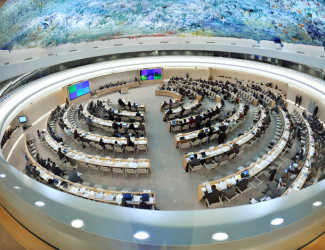
The Human Rights Council (HRC) is the key intergovernmental body within the United Nations system responsible for the promotion and protection of all human rights around the globe. It holds three regular sessions a year: in March, June and September. The Office of the UN High Commissioner for Human Rights (OHCHR) is the secretariat for the HRC.
Debating and passing resolutions on global human rights issues and human rights situations in particular countries
Examining complaints from victims of human rights violations or activist organizations on behalf of victims of human rights violations
Appointing independent experts (known as “Special Procedures”) to review human rights violations in specific countries and examine and further global human rights issues
Engaging in discussions with experts and governments on human rights issues
Assessing the human rights records of all UN Member States every four and a half years through the Universal Periodic Review
AWID works with feminist, progressive and human rights partners to share key knowledge, convene civil society dialogues and events, and influence negotiations and outcomes of the session.
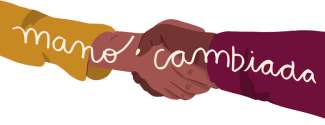
(« main échangée »)
Terme des communautés noires du Cauca du Nord pour la minga, le travail collaboratif dans les fermes, basé sur l'entraide et la solidarité.
Salome is a feminist activist from Tbilisi, Georgia, devoted to social and gender justice. She holds a Master's degree in gender studies, and has been engaged in feminist, queer and green movements for over twelve years, working amongst others on issues of gender based violence, domestic violence, sexual and reproductive health and rights, LGBTIQ rights, [women’s] Labor Rights, Healing Justice and holistic and digital security and rights.
Since 2014 she has been actively working on safety and security issues of activists and Women Human Rights Defenders, providing integrated security and digital security workshops specifically for activists from under-privileged groups (queer persons, ethnic and religious minorities, rural women and girls, etc) as well as bigger feminist organisations. Salome is a member of the Independent Group of Feminists - a non-formal, non-hierarchical and non-registered initiative that unites feminists with diverse backgrounds in Georgia. Currently, she is the Executive Director of the Women's Fund in Georgia, fully engaged in women's/feminist movement building, providing feminist funding, and encouraging local feminist philanthropy.
|
383 people |
L’AWID remercie chaleureusement les nombreuses personnes dont les idées, analyses et contributions ont permis de rédiger la recherche "Où est l’argent pour l’organisation des mouvements féministes?" et les actions de plaidoyer au fil des années.
En premier lieu, et avant tout, nos profonds remerciements aux membres et activistes de l’AWID ayant pris part aux consultations WITM et piloté cette enquête à nos côtés, partageant si généreusement leur temps, leurs analyses et ouvrant leur cœur.
Notre gratitude va également aux mouvements féministes, aux allié·es et aux fonds féministes, et notamment, sans s’y limiter, au Black Feminist Fund, au Pacific Feminist Fund, à ASTRAEA Lesbian Foundation for Justice, à FRIDA Young Feminist Fund, à Purposeful, au Kosovo Women’s Network, au Human Rights Funders Network, au Dalan Fund et à PROSPERA International Network of Women's Funds pour vos études et recherches rigoureuses sur l’état du financement de l’organisation des mouvements, vos analyses pointues et vos incessantes actions de plaidoyer en faveur de davantage de financement de meilleure qualité et de plus de pouvoir pour l’organisation des mouvements féministes et de genre dans tous les contextes.

Michelle es una feminista de Sudeste Asiático que disfruta de conspirar para congregar a las personas y suscitar conversaciones para el cambio social y el intercambio de conocimientos feministas, a través del arte, la poesía, la música y el juego. Con experiencia en promoción digital y desarrollo de estrategias de comunicación, ha contribuido a iniciativas de derechos digitales, investigaciones en derechos humanos y a la construcción de coaliciones de la sociedad civil a lo largo y ancho del Sudeste Asiático. Posee una licenciatura en Derecho de la Universidad Nacional de Singapur, disfruta de pasear al azar por las calles de la ciudad y le gusta un poquito demasiado el café.
 The Cover
|
 The Powerful
|
 The Ivy
|
 The Howl
|

Production and entrepreneurship |
 Artisana
|

Tout à fait, nous souhaitons connaître votre opinion et votre expérience du financement.
Eni Lestari est travailleuse domestique indonésienne à Hong Kong et militante des droits des migrant·e·s. Après avoir échappé à son employeur abusif, elle est passée de victime à mobilisatrice de travailleurs·ses domestiques en particulier, et de travailleurs·ses migrant·e·s plus globalement. En 2000, elle a fondé l'Association of Indonesian Migrant Workers (Association des travailleurs·ses migrant·e·s indonésien·ne·s, ATKI-Hong Kong) qui s'est ensuite étendue à Macao, à Taïwan et en Indonésie. Elle a été coordonnatrice et porte-parole de l'Asia Migrants Coordinating Body (Instance de coordination des migrant·e·s en Asie, AMCB) - une alliance d'organisations de terrain de migrant·e·s à Hong Kong venant d'Indonésie, des Philippines, de Thaïlande, du Népal et du Sri Lanka. Elle est également l'actuelle présidente de l’International Migrants Alliance (Alliance internationale des migrant·e·s), la toute première alliance mondiale de migrant·e·s, d'immigré·e·s, de réfugié·e·s et d'autres personnes déplacées.
Elle a occupé des postes importants dans diverses organisations, en tant que membre actuelle du conseil régional de l’Asia Pacific Forum on Women, Law and Development (Forum Asie-Pacifique sur les femmes, le droit et le développement, APWLD), ancienne membre du conseil d'administration de Global Alliance Against Traffic in Women (Alliance mondiale contre la traite des femmes, GAATW), porte-parole du Network of Indonesian Migrant Workers (Réseau des travailleurs·ses migrant·e·s indonésien·ne·s, JBMI), conseillère d’ATKI-Hong Kong et Macao ainsi que de l’Association of Returned Migrants and Families in Indonesia (Association des migrant·e·s et des familles retourné·e·s en Indonésie, KABAR BUMI). Elle a été une personne-ressource impliquée dans des forums organisés par des universitaires, des groupes interreligieux, des sociétés civiles, des syndicats et bien d'autres, à l’échelle nationale, régionale et internationale.
Elle a aussi participé activement aux assemblées/conférences des Nations Unies sur le développement et les droits des migrant·e·s et été choisie comme intervenante pour l'ouverture de l'Assemblée générale des Nations Unies sur les mouvements massifs de migrant·e·s et de réfugié·e·s en 2016 à New York, aux États-Unis. Des nominations et des prix lui ont par ailleurs été décernés, dont celui d’Inspirational Women de BBC 100 Women, ainsi que le prix Public Hero de RCTI, l’Indonesian Club Award et le Non-Profit Leader of Women of Influence de la Chambre américaine de Hong Kong, et celui de Changemaker de Cathay Pacific.
Jemimah Naburri-Kaheru es una consumada estratega internacional en recursos humanos con gran influencia en la región del Cuerno de África. Anteriormente, se desempeñó como gerente regional de Oficina y Recursos Humanos en Strategic Initiative for Women in the Horn of Africa (SIHA, Iniciativa Estratégica para las Mujeres del Cuerno de África). Su influencia se extiende a la dirección de los recursos humanos de más de 70 empleades regionales, debido a que los ingresos anuales de la organización registraron un veloz crecimiento del 40%. A lo largo de su carrera, Jemimah ha organizado iniciativas de reclutamiento sumamente fructíferas, introducido sistemas de desempeño basados en el mérito, y supervisado las relaciones entre el personal y las políticas de recursos humanos. Desempeñó una función crucial brindando apoyo a las estrategias de fuerzas de trabajo globales. Con antecedentes académicos en Estudios sobre el Desarrollo de la Universidad de Makerere (Uganda) y una maestría en Gestión de Recursos Humanos en curso, el compromiso de Jemimah con el desarrollo profesional es más que evidente. Su contribución al alto rendimiento de la fuerza laboral y liderazgo internacional en materia de recursos humanos la convierte en un activo invaluable en cualquier empresa global.