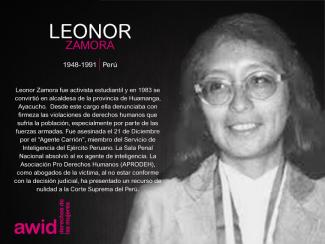
Leonor Zamora

The Human Rights Council (HRC) is the key intergovernmental body within the United Nations system responsible for the promotion and protection of all human rights around the globe. It holds three regular sessions a year: in March, June and September. The Office of the UN High Commissioner for Human Rights (OHCHR) is the secretariat for the HRC.
Debating and passing resolutions on global human rights issues and human rights situations in particular countries
Examining complaints from victims of human rights violations or activist organizations on behalf of victims of human rights violations
Appointing independent experts (known as “Special Procedures”) to review human rights violations in specific countries and examine and further global human rights issues
Engaging in discussions with experts and governments on human rights issues
Assessing the human rights records of all UN Member States every four and a half years through the Universal Periodic Review
AWID works with feminist, progressive and human rights partners to share key knowledge, convene civil society dialogues and events, and influence negotiations and outcomes of the session.
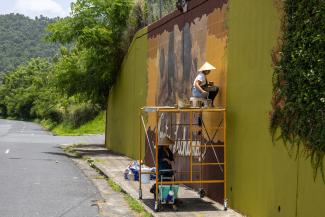
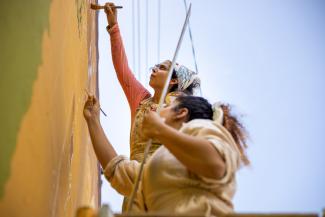
El Colectivo Moriviví es una colectiva de solo mujeres. Nuestra producción artística consiste en muralismo, muralismo comunitario y acciones/performances de protesta. Nuestro trabajo tiene como objetivo democratizar el arte y llevar a la esfera pública las narrativas de las comunidades de Puerto Rico, para generar espacios en donde sean validadas. Creemos que, a través del artivismo, podemos promover conciencia sobre temas sociales y fortalecer nuestra memoria colectiva.
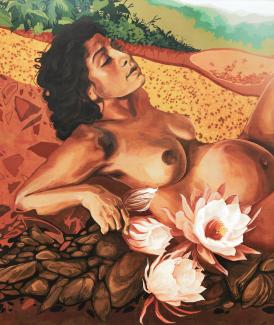
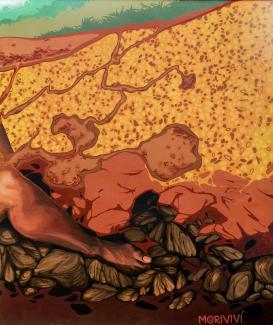
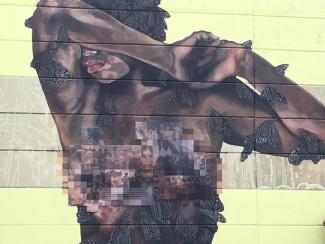
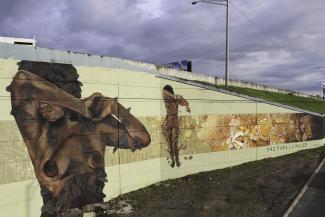

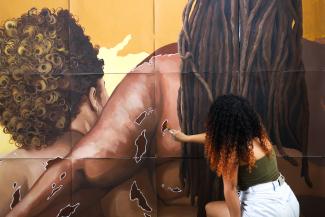
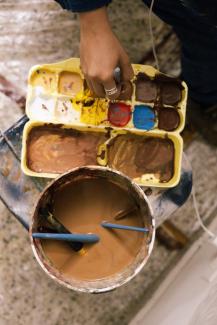
En el marco de su participación en el Grupo de Trabajo Artístico de AWID, el Colectivo Moriviví convocó a un grupo diverso de afiliadxs, asociadxs y personal de AWID y facilitó un proceso colaborativo de imaginación, configuración y decisión sobre el contenido para la creación de un mural comunitario, a través de un proceso de creación conjunta en múltiples etapas. El proyecto comenzó con una conceptualización remota con feministas de diferentes zonas del planeta reunidxs por AWID, y luego evolucionó hacia su recontextualización y realización en Puerto Rico. Nos honra haber contado con la contribución de las artistas locales Las Nietas de Nonó (@lasnietasdenono), la participación de mujeres locales en la Sesión de Pintura Comunitaria, el apoyo logístico de la Municipalidad de Caguas, y el apoyo adicional al colectivo, brindado por FRIDA Young Feminist Fund.
El mural explora la trascendencia de las fronteras, al presentar cuerpos como un mapa en un abrazo que realza la intersección de las distintas manifestaciones, prácticas y realidades feministas.
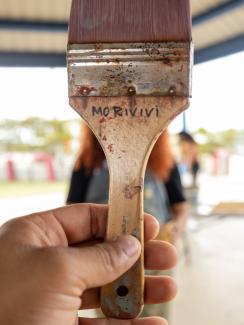
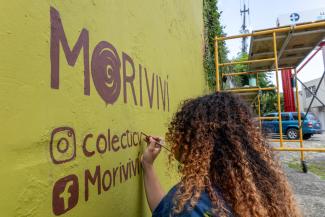
Agradecemos también a Kelvin Rodríguez, quien documentó y captó las diferentes etapas de este proyecto en Puerto Rico:




Sobre la base de nuestros 20 años de historia movilizando más y mejor financiamiento para el cambio social encabezado por los feminismos, AWID te invita a responder la nueva edición de nuestra encuesta insignia, WITM
Zita fue una activista por los derechos de las mujeres que defendió los derechos de las mujeres rurales en el Gran Kivu.
Fue la primera directora ejecutiva de UWAKI, una organización de mujeres muy conocida. A través de su trabajo con la Red de Mujeres por los Derechos y la Paz (RFDP) y el Foro de Mujeres por la Paz de Kivu del Sur, dedicó su vida a ayudar a restablecer la paz en la zona oriental de la República Democrática del Congo. Se manifestó firmemente en contra del uso de la violencia sexual como arma de guerra.
En 2006, se propuso como candidata en las primeras elecciones democráticas del país. Aunque no ganó, siguió defendiendo los derechos de las mujeres y la comunidad de Kivu del Sur la recuerda con cariño.

Te presentamos a Sabrina Sanchez, increíble mujer trans, migrante, trabajadora sexual, organizadora, transfeminista y una de las fundadoras del sindicato OTRAS.
Originaria de la Ciudad de México, emigró a España hace 17 años después de graduarse en comunicaciones y comenzó a trabajar como trabajadora sexual.
No pasó mucho tiempo antes de que se involucrara con el activismo trans y el activismo de trabajadoras sexuales en Barcelona. Después de unirse al colectivo Asociación de Profesionales del Sexo (Aprosex), comenzó a trabajar en su secretaría y fundó el sindicato español de trabajadoras sexuales OTRAS.
Actualmente vive en Ámsterdam, donde trabaja como coordinadora de la Alianza Europea de Trabajadoras Sexuales.
Dato divertido: ¡también es mecánica de automóviles y corredora!
En este Foro, vamos a celebrar y multiplicar las propuestas poderosas que nos rodean, en sus distintos estadios de evolución.
Les antidroits ont adopté une double stratégie : outre leurs attaques ouvertes sur le système multilatéral, ils et elles sapent les droits humains depuis l’intérieur. Leur implication vise à prendre le contrôle des processus, instaurer des normes régressives et fragiliser la redevabilité.

Leur implication dans les sphères des droits humains a un but essentiel : saper le système et sa capacité à respecter, protéger et assurer les droits humains de tout un chacun, et à tenir les États membres pour responsables de leurs enfreintes. Certaines tactiques antidroits en dehors de l’ONU visent à la délégitimer, exercer des pressions politiques pour limiter son financement ou se retirer d’accords internationaux sur les droits humains. Les acteur·rice·s antidroits gagnent cependant en influence au sein même de l’ONU. Leurs tactiques de l’intérieur incluent la formation de délégué·e·s, la dénaturation de cadres relatifs aux droits humains, la dilution de la substance d’accords sur les droits humains, l’infiltration de comités d’ONG, la demande du statut ECOSOC sous un nom neutre, l’infiltration des espaces des jeunes et la pression pour que des acteur·rice·s antidroits occupent des postes clés.
When people come together on a global scale, as individuals and movements, we generate a sweeping force. Join us in Bangkok, Thailand and online in December 2024.
Bessy también fue integrante de Arcoíris, una organización que apoya a la comunidad LGBTI+. También fue una persona de referencia para la Plataforma Derechos Aquí y Ahora de Honduras, y abogó enérgicamente por la ciudadanía plena de las personas trans, y por la aprobación de una ley de identidad de género que permitiera a las personas trans cambiar su identidad de género legalmente.
"Desde principios de año [2019] la comunidad trans ha sufrido una serie de ataques, por defender, por reivindicar derechos". - Rihanna Ferrera (hermana de Bessy)
Bessy era una trabajadora sexual, y a principios de julio de 2019, fue asesinada a tiros por dos hombres mientras trabajaba en las calles de Comayagüela. Quienes la asesinaron fueron posteriormente arrestados.
Bessy es una de las muchxs defensorxs de los derechos LGBTI+ en Honduras que fueron asesinadxs por su identidad y su trabajo. Otras compañeras han sido: Cynthia Nicole, Angy Ferreira, Estefanía "Nia" Zúñiga, Gloria Carolina Hernández Vásquez, Paola Barraza, Violeta Rivas y Sherly Montoya.
El caso de Bessy es emblemático por su injusticia y por reflejar un problema mucho más amplio, que es el de la violencia sistemática a la que se enfrenta la comunidad LGBTI+ en Honduras, ya que el Estado ni garantiza los derechos que ofrece y ni brinda protección. Esto ha creado una cultura de impunidad.
A pesar de los riesgos a los que se enfrentan lxs defensorxs LGBTI+ en Honduras, continúan a diario con su trabajo para desafiar y resistir la violencia, y luchar contra el estigma y la discriminación.
"Si muero, que sea por algo bueno y no por algo inútil. No quiero morir huyendo, como unx cobarde. Si muero, quiero que la gente diga que morí luchando por lo que es mío". - integrante de Arcoíris.

Lisez nos recherches sur le financement, sur les défenseuses des droits humains, sur la création de mouvements, sur les fondamentalismes, la justice économique et beaucoup plus

Obtén más información sobre los próximos eventos de la CSW69 que AWID está coorganizando
Membre de mouvements démocratiques, pacifistes et LGBT, Yelena était une féroce opposante au président Vladimir Poutine et son administration. Elle a notamment exprimé son opposition à l’annexion de la péninsule ukrainienne de la Crimée par la Russie ainsi que critiqué les mauvais traitements infligés aux détenu·e·s.
Yelena a fait part de sa bisexualité en 2019.
« Sa déclaration m’a surprise et je ne l’approuvais pas. Je lui ai dit : « Écoute, Lena, tu portes déjà une cible sur la poitrine du fait de ton activisme politique. Tu viens de t’en peindre une autre dans le dos », Olga Smirnova, compagne de lutte politique et amie.
Yelena a effectivement reçu plusieurs menaces de mort, et des proches ont déclaré que son nom figurait sur un site Web homophobe qui incitait ses visiteur·euse·s à tuer les personnes LGBT. Elle a fait part de ces menaces à la police, mais l’État russe ne l’a pas protégée.
Mais même dans une société où l’opposition politique, les activistes et les membres de la communauté LGBT, qui se battent pour leurs droits, font face à une violence croissante, Yelena continuait à défendre la justice sociale et l’égalité.
« Elle ne manquait pas une seule action militante. Et ils l’ont arrêtée plus de fois que je n’ai pu en compter », Olga Smirnova.
Yelena a été assassinée le 21 juillet 2019, à proximité de chez elle. Un suspect a été arrêté, mais certaines sources et plusieurs de ses ami·e·s et compagnes et compagnons de lutte pensent que ce suspect sert de bouc émissaire, et qu’en fait, il s’agit d’un assassinat politique ciblé.
Pour la famille et les ami·e·s de Yelena, son assassinat demeure irrésolu, bien que le suspect ait avoué.
En 2013, la Russie a passé une loi interdisant la propagation de ce qu’elle a appelé la « propagande gay ». En 2014, Human Rights Watch a publié un rapport à ce propos (en anglais et en russe).
by Rode Wanimbo
I was born and grew up in Agamua, the Central Highlands of West Papua. My father belongs to the Lani tribe and my mother comes from Walak. (...)
< artwork: “Offerings for Black Life” by Sokari Ekine
 |
Jurema Araújo est une enseignante-poète originaire de Rio de Janeiro. Elle a contribué au magazine Urbana, édité par les poètes Brasil Barreto et Samaral (paix à son âme) et au livre Amor e outras revoluções (L’amour et autres révolutions) avec plusieurs autres écrivain·e·s. En collaboration avec Angélica Ferrarez et Fabiana Pereira, elle a coédité O livro negro dos sentidos (Le livre noir des sens), une anthologie créative sur la sexualité des femmes noires au Brésil. Jurema a 54 ans ; elle a une fille, trois chiens, un chat et beaucoup d’ami·e·s. |

Tu la suces avec moi?La mangue est mon fruit préféré. |
Je vais être honnête : lorsque Angélica et Fabi m’ont proposé de créer une collection de textes érotiques écrits par des femmes noires, j’ignorais ce que c’était que de produire un recueil. Je maîtrisais le thème de l’érotisme, mais créer un recueil… J’ai souri, timide et flattée. Je crois que je les ai remerciées – du moins je l’espère! – et je me suis dit : mais qu’est-ce que c’est que ce truc, putain?! C’est quoi ce mot pompeux que je vais devoir intégrer tout en le mettant en pratique?
Aujourd’hui, je sais ce que c’est que de créer un recueil : c’est faire l’amour avec les écrits de quelqu’un d’autre, avec l’art de quelqu’un d’autre dans le but d’en faire un livre. Et c’est exactement ce que j’ai fait. J’ai dévêtu le texte de chaque autrice avec une lascivité littéraire. J’ai eu un rapport avec les mots et les sens d’autres personnes. J’ai été pénétrée par des poèmes que je n’avais pas écrits; des contes que je n’aurais jamais osé imaginer m’ont retournée, ont chamboulé mes sentiments, ma libido. Et c’était un orgasme inhabituel et merveilleux : éthéré, corporel, sublime, à la fois intellectuel et sensitif.
Ces textes pulsaient comme un clito durci par le désir, trempé, dégoulinant de joie à chaque lecture. Des mots dont la grivoiserie m’aspirait, me faisant plonger plus profondément dans cet univers humide.
Ces femmes noires sont allées au fond de leur excitation et ont transformé leurs fantasmes érotiques les plus profonds en art. Ces œuvres sont imprégnées de la manière dont chaque autrice vit la sexualité : libre, noire, individuelle, la sienne, son pouvoir retrouvé.
J’ai choisi de classer les textes en différentes parties dans le livre, chacune étant organisée en fonction du contenu le plus délicat, explosif, évident ou implicite qu’elle renfermait.

Pour ouvrir la porte à cette « envulvée noiressence », nous proposons la section Préliminaires, avec des textes qui introduisent le lecteur dans ce monde de délices. Il s’agit d’une caresse plus générale et délicate afin d’accueillir les sujets que les textes aborderont dans le reste du livre.
Puis vient la chaleur du Toucher, qui évoque les ressentis de la peau. Cette énergie qui brûle ou transite nos corps, fait bouillir nos hormones et éveille à leur tour nos autres sens. Et même si nous sommes nombreux·ses à être voyeurs·euses, le contact de la peau sur une bouche humide et chaude est excitant, comme si vous naviguiez dans la douceur de la personne qui se trouve avec vous. On est séduit par le contact ferme ou doux qui nous fait frissonner et ce picotement délicieux qui nous traverse du cou au bas du dos et qui ne disparaît que le lendemain. Et la chaleur des lèvres, la bouche, la langue humide sur la peau – ah! la langue dans l’oreille, mmmm – ou peau contre peau, les vêtements glissant sur les corps, comme s’ils se voulaient une extension de la main de l’autre. S’il n’y a pas d’urgence, l’excitation absolument sauvage d’une étreinte ferme, un peu de douleur – ou pourquoi pas, beaucoup?
La section Son – ou mélodie? – nous montre que l’attirance pour une personne passe également par l’ouïe : c’est la voix, les chuchotements, cette musique qui permet la connexion des corps et peut constituer la trame même du désir. Pour certain·e·s d’entre nous, la seule voix d’une personne ayant un joli timbre, qu’il soit rauque, traînant ou mélodieux, suffirait à nous donner un orgasme auditif. Elle n’aurait qu’à jurer grossièrement ou nous murmurer des mots doux à l’oreille pour nous faire frissonner du cou au coccyx.
Dans Saveur, nous confirmons que la langue est imbattable lorsqu’il s’agit d’aller goûter les endroits les plus enfouis et parcourir les corps pour se faire plaisir. Parfois, on l’utilise audacieusement pour goûter le nectar de l’autre. L’idée d’offrir sa fraise ou sa mangue délicieuse et juteuse à des morsures ou des coups de langue – ou des coups de langue et des morsures – nous désarme. Mais rien n’est plus délicieux que de goûter aux grottes et collines de la personne avec laquelle on est. Enfoncez votre langue bien profond pour goûter à ce bout de fruit… ou passez des heures à goûter le gland d’une queue dans votre bouche, passez votre langue sur des seins gourmands pour en goûter leurs tétons. Il s’agit de se souvenir d’une personne par la Saveur qu’elle nous a laissée.
Il y a aussi les textes où c’est le nez qui déclenche le désir. L’Odeur, mes chers·ères lecteurs·trices, est capable de nous éveiller aux délices du désir. Parfois, nous rencontrons des gens qui sentent si bon que nous voudrions les aspirer par le nez. Lorsque vous sillonnez le corps de l’autre avec le nez en commençant par le cou, sentez ce frisson délicieusement inconfortable qui parcourt votre colonne vertébrale et déshabille votre âme! Ce nez impudent se déplace ensuite vers la nuque où il capture le parfum de l’autre de telle sorte qu’en l’absence de cette personne, ce même parfum évoque, voire se répand en nous dans des souvenirs olfactifs qui ressuscitent l’odeur affolante de cette dernière.
Nous en venons au Regard – le plus traître des sens selon moi – où nous percevons le désir à partir d’un point de « vue ». Les textes présentent le désir et l’excitation par le biais de la vue, qui à son tour provoque les autres sens. Il suffit parfois d’un sourire pour nous rendre dingues. L’échange de regards? Celui qui dit : « J’ai envie de toi, là, maintenant ». Ce regard possédé qui s’éteint quand vous avez fini de baiser, ou pas. Celui-là est très particulier; il attire à lui l’autre qui ne pourra en détourner ses yeux très longtemps. Ou les regards du coin de l’œil – quand on détourne le regard au moment où l’autre va tourner la tête, comme un jeu du chat et de la souris? Pris·e·s en flagrant délit, il ne nous reste plus qu’à lui décocher un large sourire.
Pour finir, l’explosion. En se promenant à travers Tous les sens, les textes mêlent des sentiments qui prennent des allures d’alarme et nous entraînent vers le plaisir suprême : l’orgasme.

Bien sûr, ces différents contes et poèmes ne diffèrent d’aucune façon explicite. Certains sont subtils. L’excitation fait appel à tous nos sens et, plus fondamentalement, à notre tête. C’est là que ça se passe, c’est là que se fait la connexion à tout notre corps. J’ai organisé les poèmes selon la façon dont je les sentais à chaque lecture. Libre à vous de ne pas être d’accord! Mais pour moi, il existe un sens particulier par lequel le désir passe et puis explose. Et il y a quelque chose de délicieux à découvrir duquel il s’agit.
Pour pouvoir transformer l’excitation en art, nous devons nous libérer de tous nos préjugés, de nos prisons et des stigmates dans lesquels cette société centrée sur les Blancs nous a enfermé·e·s.
Chaque fois qu’une autrice noire transforme l’érotique en art, elle brise ces chaînes racistes et néfastes qui paralysent son corps, répriment sa sexualité et nous transforment en objet de convoitise d’un autre. Écrire de la poésie érotique, c’est reprendre le pouvoir sur son propre corps et parcourir sans crainte les délices du désir pour soi-même, pour les autres, pour la vie.
L’érotisme littéraire reflète ce que nous sommes lorsque nous en faisons de l’art. Nous montrons ici le meilleur de nous-mêmes, nos visions de l’amour trempées de plaisir, assaisonnées d’érogénéité, répandues dans nos corps et traduites par notre conscience artistique. Nous sommes multiples et nous partageons cette multiplicité de sensations dans des mots dégoulinants d’excitation. Oui, même nos mots dégoulinent de notre désir sexuel, mouillant nos vers, transformant nos pulsions sexuelles en paragraphes. Pour nous, jouir est révolutionnaire.
Nous devons noircir nos esprits, nos corps et notre sexualité, renouer avec notre plaisir et nous réapproprier nos orgasmes. Ce n’est qu’alors que nous serons libres. Tout ce processus est une révolution et il se fait dans la douleur. Mais il y a du bonheur à se découvrir très différent·e·s de ce que l’on attendait de nous.
Je sens que je suis à vous, je suis à nous. Goûtez, prenez plaisir, régalez-vous de ces mots merveilleux avec nous.
Ce texte est une adaptation des introductions de “O Livro Negro Dos Sentidos” [Le livre noir des sens], un recueil érotique de poèmes composés par 23 autrices noires.

Cette édition du journal, en partenariat avec Kohl : a Journal for Body and Gender Research (Kohl : une revue pour la recherche sur le corps et le genre) explorera les solutions, propositions et réalités féministes afin de transformer notre monde actuel, nos corps et nos sexualités.

نصدر النسخة هذه من المجلة بالشراكة مع «كحل: مجلة لأبحاث الجسد والجندر»، وسنستكشف عبرها الحلول والاقتراحات وأنواع الواقع النسوية لتغيير عالمنا الحالي وكذلك أجسادنا وجنسانياتنا.