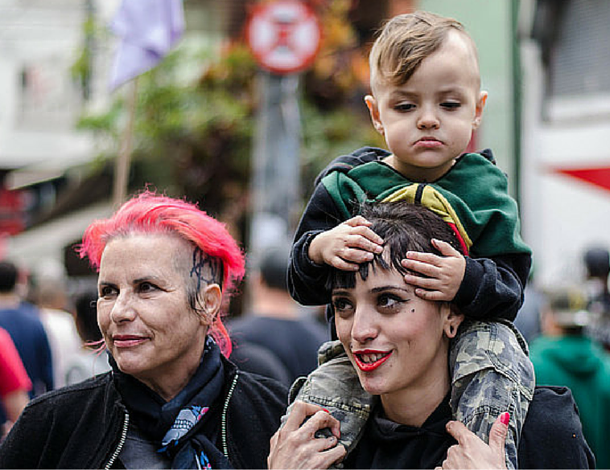
Flickr/Leonardo Veras (CC BY 2.0)

Protection of the Family

The Issue

Over the past few years, a troubling new trend at the international human rights level is being observed, where discourses on ‘protecting the family’ are being employed to defend violations committed against family members, to bolster and justify impunity, and to restrict equal rights within and to family life.

The campaign to "Protect the Family" is driven by ultra-conservative efforts to impose "traditional" and patriarchal interpretations of the family, and to move rights out of the hands of family members and into the institution of ‘the family’.

“Protection of the Family” efforts stem from:

  • rising traditionalism,
  • rising cultural, social and religious conservatism and
  • sentiment hostile to women’s human rights, sexual rights, child rights and the rights of persons with non-normative gender identities and sexual orientations.

Since 2014, a group of states have been operating as a bloc in human rights spaces under the name “Group of Friends of the Family”, and resolutions on “Protection of the Family” have been successfully passed every year since 2014.

This agenda has spread beyond the Human Rights Council. We have seen regressive language on “the family” being introduced at the Commission on the Status of Women, and attempts made to introduce it in negotiations on the Sustainable Development Goals.


Our Approach

AWID works with partners and allies to jointly resist “Protection of the Family” and other regressive agendas, and to uphold the universality of human rights.

In response to the increased influence of regressive actors in human rights spaces, AWID joined allies to form the Observatory on the Universality of Rights (OURs).  OURs is a collaborative project that monitors, analyzes, and shares information on anti-rights initiatives like  “Protection of the Family”.

Rights at Risk, the first OURs report, charts a map of the actors making up the global anti-rights lobby, identifies their key discourses and strategies, and the effect they are having on our human rights.   

The report outlines “Protection of the Family” as an agenda that has fostered collaboration across a broad range of regressive actors at the UN.  It describes it as: “a strategic framework that houses “multiple patriarchal and anti-rights positions, where the framework, in turn, aims to justify and institutionalize these positions.”
 

Related Content

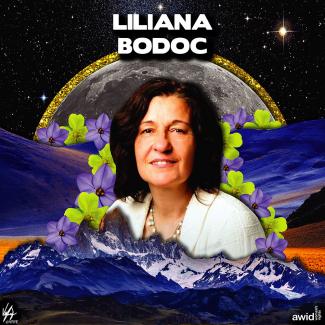
Liliana Bodoc

Liliana was a teacher, a weaver, and a well recognized writer from Argentina.

Her trilogy La saga de los confines received several awards and is unique in the fantasy genre for its use and re-imagining of South American Indigenous mythology.

Liliana’s commitment to feminism was expressed in the diverse, rich and strong women voices in her writing, and particularly in her extensive work for young readers. She also took public positions in favour of abortion, economic justice and gender parity.


Liliana Bodoc, Argentina

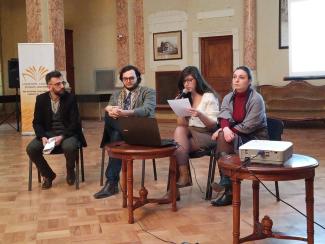
Snippet FEA collaborator and allies Photo 4 (ES)

La foto muestra a Sopo hablando en un evento público en el interior. Sostiene el micrófono mientras lee sus notas y está sentada en una silla entre otras tres personas que son oradores o moderadores.

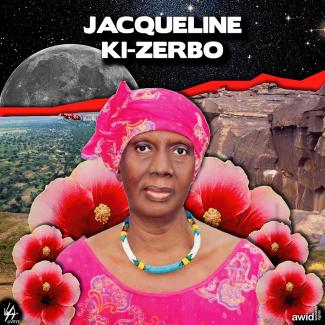
Jacqueline Coulibaly Ki-Zerbo

Jacqueline fue una feminista pionera malí-burkinesa, nacionalista y educadora.

Enseñó inglés en Senegal antes de ser convocada en 1961 como maestra de inglés en el Lycée Philippe Zinda Kaboré en Ouagadougou, Burkina Faso. Debido a su activismo, estuvo involucrada en el alzamiento popular del 3 de enero de 1966. Entre 1961 y 1966 fue responsable de la prensa del sindicato docente, Voces de lxs Maestrxs. Fue nombrada directora del Curso Normal para Niñas Jóvenes (ahora conocida como Escuela Secundaria Nelson Mandela), cargo que ocupó hasta 1974, dedicándose a la educación de las niñas y a la promoción de los derechos de las mujeres.

En 1984 recibió el Premio Paul G. Hoffmann por su destacado trabajo para el desarrollo nacional e internacional.


Jacqueline Coulibaly Ki-Zerbo, Mali/ Burkina Faso
Body

Snippet FEA Meet the Solidarity Network (FR)

SYNDICAT RÉSEAU SOLIDARITÉ

Nous vous présentons le syndicat Réseau Solidarité, un syndicat de la santé et des services dirigé majoritairement par des femmes. Émergeant en réponse à la précarité croissante, aux salaires insuffisants et aux environnements de travail hostiles auxquels les travailleur·euses géorgien·es sont confrontés quotidiennement, le Syndicat Réseau Solidarité se bat pour des lieux et des conditions de travail décents.

Son objectif? Créer un mouvement syndical national démocratique. Pour ce faire, il s'est associé à d'autres syndicats locaux et régionaux et a lentement constitué un réseau de syndicats, permettant à de plus en plus de travailleuses de devenir dirigeantes syndicales en cours de route.

Son approche politique est holistique. Pour le syndicat Réseau Solidarité, les questions relatives aux droits du travail sont directement liées aux programmes et réformes politiques et économiques nationaux plus larges. C'est pourquoi iels font pression pour la justice fiscale, les droits des femmes et des personnes LGBTQIA+, et luttent contre le démantèlement de l'État-providence géorgien.

Le syndicat Réseau Solidarité fait également partie de Grève Sociale Transnationale (Transnational Social Strike, TSS), une plate-forme et infrastructure politique inspirée par l'organisation des migrant·e·s, des femmes et des travailleur·euses essentiel·les qui s'efforcent de créer des liens entre les mouvements ouvriers à travers le monde et de fomenter la solidarité globale.

When development initiatives, religious fundamentalisms and the state of women’s rights collide

Our new research paper The Devil is in the Details addresses knowledge gaps around religious fundamentalisms within the development sector, and aims to improve understanding of how they constrain development and women’s rights in particular. It provides recommendations for ways development actors can avoid inadvertently strengthening and instead challenge fundamentalisms. [CTA download link: Read the full paper]


Seven pointers to consider


Graphic1 1. Control of women’s bodies, sexuality, and choice are “warning signs” of rising fundamentalisms.
2. Neoliberal economic policies have a particularly negative impact on women, and fuel the growth of religious fundamentalisms. Graphic2
Graphic3 3. Choosing religious organizations as default for partnerships builds their legitimacy and access to resources, and supports their ideology, including gender ideology.
4.Everyone has multiple identities and should be defined by more than just their religion. Foregrounding religious identities tends to reinforce the power of religious fundamentalists. Graphic4
Graphic5 5. Religion, culture, and tradition are constantly changing, being reinterpreted and challenged. What is dominant is always a question of power.
6. Racism, exclusion, and marginalization all add to the appeal of fundamentalists’ offer of a sense of belonging and a “cause”. Graphic6
Graphic7 7. There is strong evidence that the single most important factor in promoting women’s rights and gender equality is an autonomous women’s movement.


There has been a growth in the power and influence of religious fundamentalist actors globally.

The Devil is in the Details details the grave human rights violations, and violations of women’s rights in particular, caused by state-sponsored fundamentalism, as well as by fundamentalist non-state actors such as militias, religious community organizations, and individuals. Fundamentalist reinforcement of regressive, patriarchal social norms are leading to the rise of violence against women, girls, and women human rights defenders (WHRDs). The paper highlights these key insights for addressing the problem:

  • [icon] Religious fundamentalisms are gaining ground within communities
  • [icon] Political systems
  • [icon] International arenas with devastating effects for ordinary people, women in particular.


There is an urgent need to act for development actors.

Development actors are in a position to take a strong role in this. The collective capacity of development actors to recognize and collaboratively address religious fundamentalisms is vital for advancing social, economic, and gender justice and the human rights of all people in sustainable development. It is vital to promote intersectional feminist understandings of power and privilege, and to apply these to questions of religion and culture. Women’s organizations already have knowledge and strategies to counter fundamentalisms development actors should build on this, and invest in cross-issue coalitions to help them reach new heights.

Наша группа, организация и/или движение не получали и не мобилизовывали финансирование от внешних спонсоров – можем ли мы принять участие в опросе?

Да! Мы признаем и ценим различные причины, по которым феминистки(-ты), работающие в различных контекстах, не имеют внешнего финансирования. Эти причины могут разниться: от невозможности подавать заявки на гранты из-за несоответствия требованиями и/или невозможности получения денег из-за рубежа, до использования генерируемых автономно ресурсов, в качестве самостоятельной политической стратегии. Мы хотим услышать ваше мнение, независимо от наличия или отсутствия у вас опыта работы с внешним финансированием.

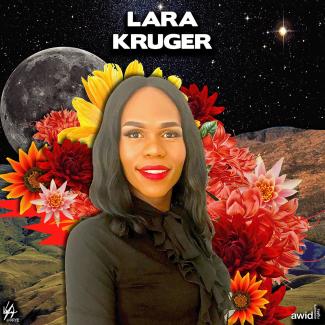
Lara Kruger

Lara était une DJ bien connue et appréciée de la Motsweding, une radio FM d’Afrique du Sud.

Lara a été l’un des premières animatrices ouvertement transgenre d’une radio grand public. Elle a œuvré sans relâche pour que lumière soit faite sur les questions LGBTI.

L’activisme de Lara a commencé très tôt, alors qu’elle revendiquait son droit de s’habiller et de se comporter afin de se sentir à l’aise auprès des membres de sa communauté qui ne comprenaient pas encore ce que signifiait être transgenre.


Lara Kruger, South Africa
Body

Snippet FEA Decent Pay (EN)

Illustration of a white-skinned hand holding pink money over a turquoise background.

DECENT PAY

Reason to join 1

Be part of an international feminist membership organization and community. Our members are based in all regions of the world, learning and supporting each other in a global network based on solidarity.

La industria: peligros para el medioambiente

¿Por qué las industrias como la minería son peligrosas para el medioambiente?

Estas industrias 'extraen' materias primas de la tierra: minería, gas, petróleo y madera son algunos ejemplos.

Este modelo económico explota desenfrenadamente la naturaleza e intensifica las desigualdades norte, donde sus grandes corporaciones se benefician y sur, de donde extraen los recursos.

Contaminación del agua, daño irreparable al medioambiente, deforestación de la amazonia, comunidades forzadas a desplazarse son algunas de las consecuencias inmediatas.

Lee nuestro reporte de INDUSTRIAS EXTRACTIVAS

Hay alternativas sostenibles para el medioambiente y los derechos humanos de la mujer. Empecemos por conseguir un tratado vinculante para que las corporaciones extractivas nos respeten.


Descubre además cómo nos afecta económicamente

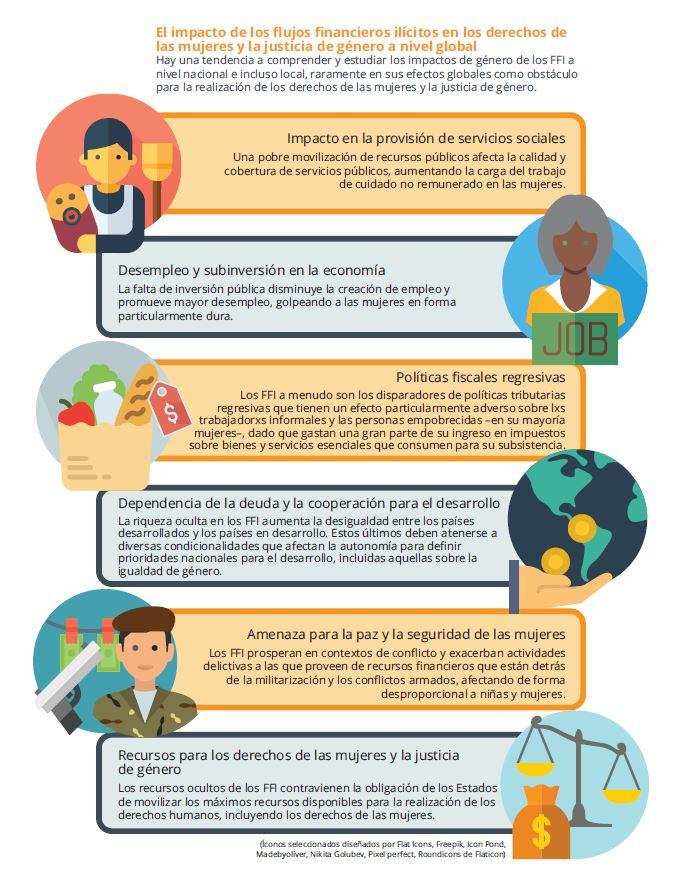
Conoce qué son los FLUJOS FINANCIEROS ILÍCITOS

Quais são os idiomas oficiais do inquérito WITM?

Por enquanto, o inquérito no KOBO está disponível em árabe, inglês, francês, português, russo e espanhol. Terá a oportunidade de selecionar um dos idiomas no início do inquérito.

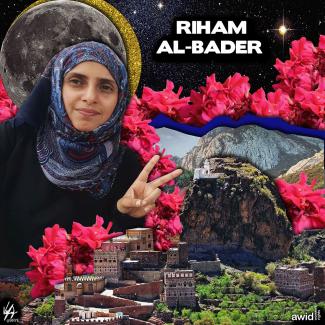
Riham Al-Bader

Riham was a lawyer and activist committed to monitoring rights violations in Yemen.

She worked with other activists to supply civilians trapped by Houthi militias in the outskirts of the city of Taiz with food and water.

Riham was killed in February 2018 and it is unconfirmed whether she was killed by a sniper or hit by an aircraft. Nobody has been held accountable for her murder. 


Riham Al Bader, Yemen
Body

Ressources en soutien aux mouvements féministes, aux décideur·euse·s et aux allié·e·s pour résister aux tendances antidroits.