

Safia Ahmed-Jan
Over the past few years, a troubling new trend at the international human rights level is being observed, where discourses on ‘protecting the family’ are being employed to defend violations committed against family members, to bolster and justify impunity, and to restrict equal rights within and to family life.
The campaign to "Protect the Family" is driven by ultra-conservative efforts to impose "traditional" and patriarchal interpretations of the family, and to move rights out of the hands of family members and into the institution of ‘the family’.
Since 2014, a group of states have been operating as a bloc in human rights spaces under the name “Group of Friends of the Family”, and resolutions on “Protection of the Family” have been successfully passed every year since 2014.
This agenda has spread beyond the Human Rights Council. We have seen regressive language on “the family” being introduced at the Commission on the Status of Women, and attempts made to introduce it in negotiations on the Sustainable Development Goals.
AWID works with partners and allies to jointly resist “Protection of the Family” and other regressive agendas, and to uphold the universality of human rights.
In response to the increased influence of regressive actors in human rights spaces, AWID joined allies to form the Observatory on the Universality of Rights (OURs). OURs is a collaborative project that monitors, analyzes, and shares information on anti-rights initiatives like “Protection of the Family”.
Rights at Risk, the first OURs report, charts a map of the actors making up the global anti-rights lobby, identifies their key discourses and strategies, and the effect they are having on our human rights.
The report outlines “Protection of the Family” as an agenda that has fostered collaboration across a broad range of regressive actors at the UN. It describes it as: “a strategic framework that houses “multiple patriarchal and anti-rights positions, where the framework, in turn, aims to justify and institutionalize these positions.”
The body is a powerful entity. As women, our bodies are controlled, oppressed and policed from the womb. The way we look, move, dress, walk, speak, gesture, laugh. I often wondered at what drives patriarchal fears around the power of female bodies. Where I come from sex work and sex workers were whispered of with simultaneous contempt, disgust, fascination, pity and condemnation.
Where I come from sex work and sex workers were whispered of with simultaneous contempt, disgust, fascination, pity and condemnation.

I first encountered sex work and sex workers at age 22. Simple conversations, sitting in circles, chatting over coffee and tea, we explored each other’s lives, experiences, thoughts and feelings.
For sex workers, sex work was the most worthwhile choice out of all other options to pay bills, to support family, to have more flexible working hours, to have sex. Just as I chose my job as the most worthwhile, to pay bills, to support family, to have more flexible working hours.
These individuals, women and men, taught me that I made my own decisions about my body… where I focus its life and energy, whether I use it for pleasure or pain, whether I trade it in or give it freely, and how I want to feel about my body. The awareness was as exciting as it was empowering.
Crear | Résister | Transform: a festival for feminist movements – 2021… you accompanied me through a series of life-changing moments (!!!)
We call these ‘events,’ though in truth, to me, your feminist learning spaces are, where I take a little of what’s inside me, a little of what your speakers say and some from the discussions to go deeper into our understanding.
Sharing… Partaking… Immersing…
in strength, in vulnerability, in pleasure.
Simply being the transformative feminist that I am, without pretentions, without misgivings…
Welcoming the transformative feminist that I have always been, without even knowing the term or acknowledging it in such a manner or in such terms…
Finding home for the fiercely transformative feminist living within me…
Despite the anger, rage and frustration of not being treated as equals and being treated with ‘less __ than,’
I did not always consider myself a feminist nor did I recognise myself within the feminist movement or discourse… Truly, I appreciate doors being held open, chairs being pulled out to be seated, acknowledgement as a woman, of my femininity.
At times I dismissed the patriarchy with annoyance, at times, I responded with frustration and anger but I did not address it… I did not notice its sinister, insidious toxicity… I was privileged enough to be able to work through it, to survive it, to overcome it, to excel in spite of it… I did not question enough, challenge enough, push my boundaries enough… I did not do enough…
connecting with sex workers, exploring sexuality, and the women for peace and security...
Until I became fully aware and understood the implications of both privilege and oppression that was intersectional.
Until I realised what it meant to fight for gender justice and not simply ‘equality for all.’
Practitioner and facilitator no longer, I am a transformative feminist practitioner and facilitator.
Being a feminist means that I will act
Plunging into uncertain, fragile, complex (and possibly quite violent) future…
I am deeply grateful for you and I promise to remain fierce in addressing and redressing problematic issues around gender, race, ethnicity, social class, sexual orientation and ability, and remain present and faithful to the struggle for inclusion, equity and justice.
Khin Khin
With up to 2,500 participants on-site and 3,000 virtual/hybrid participants, it will be the largest AWID Forum ever. We envision multiple spaces for meaningful connection, learning, exchange, strategic conversations, healing and celebration. It is the first time we gather in this space since the pandemic, and we can’t wait.
Alors que les fondamentalismes, les fascismes et autres systèmes d’oppression se métamorphosent et trouvent de nouvelles tactiques et stratégies pour consolider leur pouvoir et influence, les mouvements féministes persévèrent et célèbrent leurs victoires nationales, régionales et internationales.
Leah Tumbalang fue una mujer lumad de Mindanao, en Filipinas. La historia del pueblo indígena lumad abarca generaciones de resistencia contra la minería corporativa a gran escala, de protección de los territorios ancestrales, los recursos y la cultura, y de lucha por la autodeterminación.
Leah era una líder lumad, y dirigente de Kaugalingong Sistema Igpasasindog to Lumadnong Ogpaan (Kasilo), una organización lumad y campesina que lucha contra la instalación de corporaciones mineras en Bukidnon, en la provincia de Mindanao. Fue inclaudicable en su activismo anti minería, al emprender con fervor campañas contra los efectos devastadores de la extracción de minerales en el medio ambiente y las tierras de los pueblos indígenas. Era también una organizadora política de la lista electoral Bayan Muna, que integra el partido político de izquierda Makabayan.
Durante casi una década Leah (junto con otrxs integrantes de Kasilo) recibió amenazas debido a su oposición al despliegue de grupos paramilitares, que se cree son respaldados por intereses mineros.
«Como líder lumad de su comunidad, ella está en la primera línea de lucha por sus derechos a la tierra ancestral y a la autodeterminación.» - Kalumbay Regional Lumad Organization
Estar en la vanguardia de la resistencia también significa, a menudo, ser un blanco para la violencia y la impunidad, y Leah no solamente recibió numerosas amenazas de muerte, sino que fue asesinada el 23 de agosto de 2019 en la ciudad de Valencia, en Bukidnon.
Según un informe de Global Witness, «en números absolutos, Filipinas fue el país peor afectado» en lo que respecta a activistas ambientalistas asesinadxs en 2018.
Lee el informe de Global Witness, publicado en julio de 2019

En 2023, le budget annuel médian des organisations féministes et de défense des droits des femmes était de 22 000 USD. Cette médiane masque de profondes inégalités : quelques groupes accèdent à des ressources considérables, tandis que la grande majorité survit avec des budgets très limités.
Un examen plus attentif des budgets réels révèle une immense diversité et une grande disparité dans les revenus.
Explorez les données relatives à la taille des budgets féministes
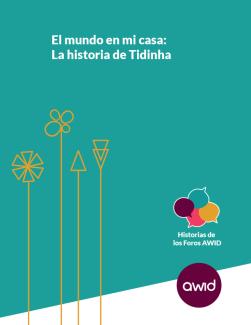
¿Cómo reaccionas cuando parece que el mundo desciende sobre ti? Tidinha se encontró en una situación en la que logró ser escuchada al cuestionar la elección de la sede, y al mismo tiempo descubrió visiones y sueños compartidos y se dio cuenta de que no está sola.
Si tu grupo u organización recibe financiamiento, es posible que desees discutir con tus donantes desde ahora si pueden apoyar tu viaje y participación en el Foro. Muchas instituciones planifican sus presupuestos para el próximo año a principios de 2023, por lo que es mejor no retrasar esta conversación para el próximo año.
Are you a UN policy maker and want to know the main anti-rights groups and discourses to look out for? Or a feminist looking for quick counter-arguments? This 8-page primer provides key information at a glance.

Sara Hegazy, une audacieuse activiste égyptienne des droits des LGBTQI+, vivait dans une société où les membres de sa communauté, leurs corps et leurs vies sont souvent victimes de préjugés mortels. La résistance de Sara puise ses racines dans le processus de déconstruction d'un système dominant, oppressif et patriarcal, et de ses acteurs antidroits.
« [En Égypte], toute personne qui n'est pas un homme, musulman, sunnite, hétéro et partisan du système, est rejetée, réprimée, stigmatisée, arrêtée, exilée ou tuée. Ce phénomène concerne le système patriarcal dans son ensemble, étant donné que l'État ne peut pratiquer sa répression contre les citoyens sans une oppression préexistant depuis l'enfance », écrivait Sara Hegazy le 6 mars 2020
La répression de la voix de Sara par le gouvernement égyptien atteignit son paroxysme en 2017, lorsqu’elle fut arrêtée pour avoir brandi un drapeau arc-en-ciel lors du concert de Mashrou' Leila (groupe libanais dont le chanteur principal est ouvertement gai) au Caire. Elle fut ensuite accusée d'avoir rejoint un groupe illégal et « d’incitation à la déviance sexuelle et à la débauche ».
« C’était un acte de soutien et de solidarité, non seulement envers le chanteur [de Mashrou' Leila] mais pour tou·te·s les opprimé·e·s… Nous étions fier·ère·s de porter le drapeau. Nous ne pouvions imaginer que la société et l’État égyptien réagiraient de cette façon. Ils m’ont vue comme une criminelle, quelqu’un qui cherchait à détruire la structure morale de la société ». - Sara Hegazy
Sara fut emprisonnée pendant trois mois, durant lesquels elle fut torturée et agressée sexuellement. En janvier 2018, après avoir été libérée sous caution, elle demanda l'asile au Canada où elle vécut en sécurité mais resta prisonnière des souvenirs de la violence et des sévices qu'elle avait subis dans son corps et son âme.
« Je suis sortie de cette expérience au bout de trois mois avec un cas très sévère et grave de SSPT [syndrome de stress post-traumatique]. La prison m'a tuée. Elle m'a détruite », déclara Sara Hegazy à la NPR (Radio d’État)
Sara s'est suicidée le 14 juin 2020, en laissant une note manuscrite en arabe :
« À mes frères et sœurs - j'ai essayé de trouver la rédemption et j'ai échoué, pardonnez-moi. »
« À mes amis - l'expérience [l’aventure] a été rude et je suis trop faible pour la supporter, pardonnez-moi. »
« Au monde - tu as été très cruel, mais je te pardonne. »
Son courage et son héritage seront perpétués par toutes les personnes qui l’aimaient et qui croient en ce pour quoi elle s’est battue.
« À Sara : repose-toi, repose-toi simplement, hors d’atteinte de cette violence implacable, de ce patriarcat étatique meurtrier. Dans la rage, dans le chagrin, dans l'épuisement, nous résisterons. » - Rasha Younes, chercheuse sur les droits LGBT à Human Rights Watch. Lisez le texte complet
Le chanteur de Mashrou’ Leila chante en hommage à Sara Hegazy

Get started with these resources.
COP30 Political Education Toolbox Play the Climate Justice Organizing Deckgame
Read the Feminist Economic Alternatives Brief Download the Climate Justice Zine
Effective as of 25 Apr 2023.
Please click here to view the previous version of our Privacy Policy.
This Privacy Policy describes how the Association for Women’s Rights in Development and our subsidiaries and affiliates (“AWID,” “we,” “us” or “our”) handles personal information that we collect through our website that links to this Privacy Policy (the “Site”), as well as through social media, our marketing activities, our live events and other activities described in this Privacy Policy (“Service”).
You can download a printable copy of this Privacy Policy here.
Index
Personal information we collect
How we use your personal information
How we share your personal information
Your choices
Other sites and services
Security
International data transfers
Children
Changes to this Privacy Policy
How to contact us
Notice to European users
Information you provide to us. Personal information you may provide to us through the Service or otherwise includes:
Automatic data collection. We, our service providers, and our business partners may automatically log information about you, your computer or mobile device, and your interaction over time with the Service, our communications and other online services, such as:
Cookies and similar technologies. Some of the automatic collection described above is facilitated by cookies, which are small text files that websites store on user devices and that allow web servers to record users’ web browsing activities and remember their submissions, preferences, and login status as they navigate a site. Cookies used on our sites include both “session cookies” that are deleted when a session ends, “persistent cookies” that remain longer, “first party” cookies that we place and “third party” cookies that our third-party business partners and service providers place.
We may use your personal information for the following purposes or as otherwise described at the time of collection:
Service delivery and business operations. We may use your personal information to:
Research and development. We may use your personal information for research and development purposes, including to analyze and improve the Service. As part of these activities, we may create aggregated, de-identified and/or anonymized data from personal information we collect. We make personal information into de-identified or anonymized data by removing information that makes the data personally identifiable to you. We may use this aggregated, de-identified or otherwise anonymized data and share it with third parties for our lawful business purposes, including to analyze and improve the Service and promote our business.
Marketing. We and our service providers may collect and use your personal information to send you direct marketing communications. You may opt-out of our marketing communications as described in the Opt-out of marketing section below.
Compliance and protection. We may use your personal information to:
With your consent. In some cases, we may specifically ask for your consent to collect, use or share your personal information, such as when required by law.
Cookies and similar technologies. In addition to the other uses included in this section, we may use the Cookies and similar technologies described above for the following purposes:
Retention. We generally retain personal information to fulfill the purposes for which we collected it, including for the purposes of satisfying any legal, accounting, or reporting requirements, to establish or defend legal claims, or for fraud prevention purposes. To determine the appropriate retention period for personal information, we may consider factors such as the amount, nature, and sensitivity of the personal information, the potential risk of harm from unauthorized use or disclosure of your personal information, the purposes for which we process your personal information and whether we can achieve those purposes through other means, and the applicable legal requirements.
When we no longer require the personal information we have collected about you, we may either delete it, anonymize it, or isolate it from further processing.
We may share your personal information with the following parties and as otherwise described in this Privacy Policy or at the time of collection.
Affiliates. Our corporate parent, subsidiaries, and affiliates, for purposes consistent with this Privacy Policy.
Service providers. Third parties that provide services on our behalf or help us operate the Service or our business (such as hosting, information technology, customer support, email delivery, marketing, consumer research and website analytics).
Payment processors. Any payment card information you use to make a purchase on the Service is collected and processed directly by our payment processors, such as Stripe. Stripe may use your payment data in accordance with its privacy policy, https://stripe.com/en-gb/privacy. You may also sign up to be billed by your mobile communications provider, who may use your payment data in accordance with their privacy policies.
Third parties designated by you. We may share your personal data with third parties where you have instructed us or provided your consent to do so. We will share personal information that is needed for these other companies to provide the services that you have requested. Moreover, you may choose to translate user-generated content using Google Translate. Google may use your user-generated content in accordance with its privacy policy, https://policies.google.com.Professional advisors. Professional advisors, such as lawyers, auditors, bankers and insurers, where necessary in the course of the professional services that they render to us.
Authorities and others. Law enforcement, government authorities, and private parties, as we believe in good faith to be necessary or appropriate for the compliance and protection purposes described above.
Other users. Your profile and other user-generated content data (except for messages) may be visible to other users of the Service. For example, other users of the Service may have access to your information if you chose to make your profile or other personal information available to them through the Service, such as when you provide comments, reviews, survey responses, or share other content. This information can be seen, collected and used by others, including being cached, copied, screen captured or stored elsewhere by others (e.g., search engines), and we are not responsible for any such use of this information.
In this section, we describe the rights and choices available to all users. Users who are located in the United Kingdom, Switzerland, and the European Economic Area can find additional information about their rights below.
Opt-out of marketing communications. You may opt-out of marketing-related emails by following the opt-out or unsubscribe instructions at the bottom of the email, or by contacting us. Please note that if you choose to opt-out of marketing-related emails, you may continue to receive service-related and other non-marketing emails.
Declining to provide information. We need to collect personal information to provide certain services. If you do not provide the information we identify as required or mandatory, we may not be able to provide those services.
Delete your content or end your membership. You can choose to delete certain content you have provided to us. If you wish to request to end your membership, please contact us.
The Service may contain links to websites, mobile applications, and other online services operated by third parties. In addition, our content may be integrated into web pages or other online services that are not associated with us. These links and integrations are not an endorsement of, or representation that we are affiliated with, any third party. We do not control websites, mobile applications or online services operated by third parties, and we are not responsible for their actions. We encourage you to read the privacy policies of the other websites, mobile applications and online services you use.
We employ a number of technical, organizational and physical safeguards designed to protect the personal information we collect. However, security risk is inherent in all internet and information technologies and we cannot guarantee the security of your personal information.
We are headquartered in the United States and may use service providers that operate in other countries. Your personal information may be transferred to the United States or other locations where privacy laws may not be as protective as those in your state, province, or country.
Users in the United Kingdom, Switzerland, and the European Economic Area should read the important information provided below about transfer of personal information outside of the European Union.
The Service is not intended for use by anyone under 18 years of age. If you are a parent or guardian of a child from whom you believe we have collected personal information in a manner prohibited by law, please contact us. If we learn that we have collected personal information through the Service from a child without the consent of the child’s parent or guardian as required by law, we will comply with applicable legal requirements to delete the information.
We reserve the right to modify this Privacy Policy at any time. If we make material changes to this Privacy Policy, we will notify you by updating the date of this Privacy Policy and posting it on the Service or other appropriate means. Any modifications to this Privacy Policy will be effective upon our posting the modified version (or as otherwise indicated at the time of posting). In all cases, your use of the Service after the effective date of any modified Privacy Policy indicates your acknowledgment that the modified Privacy Policy applies to your interactions with the Service and our business.
Where this Notice to European users applies. The information provided in this “Notice to European users” section applies only to individuals located in the EEA or the UK (EEA and UK jurisdictions are together referred to as “Europe”).
Personal information. References to “personal information” in this Privacy Policy should be understood to include a reference to “personal data” (as defined in the GDPR) – i.e., information about individuals from which they are either directly identified or can be identified. It does not include “anonymous data” (i.e., information where the identity of individual has been permanently removed). The personal information that we collect from you is identified and described in greater detail in the section “Personal information we collect”.
Our legal bases for processing. In respect of each of the purposes for which we use your personal information, the GDPR requires us to ensure that we have a “legal basis” for that use.
We have set out below, in a table format, the legal bases we rely on in respect of the relevant Purposes for which we use your personal information – for more information on these Purposes and the data types involved, see How we use your personal information above.
|
|
|
|
|
|
|
|
|
|
|
|
|
|
|
|
|
|
|
|
Retention. We retain personal information for as long as necessary to fulfill the purposes for which we collected it, including for the purposes of satisfying any legal, accounting, or reporting requirements, to establish or defend legal claims, or for compliance and protection purposes, unless specifically authorized to be retained longer.
To determine the appropriate retention period for personal information, we consider the amount, nature, and sensitivity of the personal information, the potential risk of harm from unauthorized use or disclosure of your personal information, the purposes for which we process your personal information and whether we can achieve those purposes through other means, and the applicable legal requirements.
When we no longer require the personal information, we have collected about you, we will either delete or anonymize it or, if this is not possible (for example, because your personal information has been stored in backup archives), then we will securely store your personal information and isolate it from any further processing until deletion is possible. If we anonymize your personal information (so that it can no longer be associated with you), we may use this information indefinitely without further notice to you.
Other information
No obligation to provide personal information. You do not have to provide personal information to us. However, where we need to process your personal information either to comply with applicable law or to deliver our Services to you, and you fail to provide that personal information when requested, we may not be able to provide some or all of our Services to you. We will notify you if this is the case at the time.
No Automated Decision-Making and Profiling. As part of the Services, we do not engage in automated decision-making and/or profiling, which produces legal or similarly significant effects. We will let you know if that changes by updating this Privacy Policy.
Security. We have put in place procedures designed to deal with breaches of personal information. In the event of such breaches, we have procedures in place to work with applicable regulators. In addition, in certain circumstances (including where we are legally required to do so), we may notify you of breaches affecting your personal information.
Your rights
General. European data protection laws give you certain rights regarding your personal information. If you are located in Europe, you may ask us to take any of the following actions in relation to your personal information that we hold:
Exercising These Rights. You may submit these requests by email. See the How to contact us section above for our contact details. We may request specific information from you to help us confirm your identity and process your request. Whether or not we are required to fulfill any request you make will depend on a number of factors (e.g., why and how we are processing your personal information), if we reject any request you may make (whether in whole or in part) we will let you know our grounds for doing so at the time, subject to any legal restrictions. Typically, you will not have to pay a fee to exercise your rights; however, we may charge a reasonable fee if your request is clearly unfounded, repetitive or excessive. We try to respond to all legitimate requests within a month. It may take us longer than a month if your request is particularly complex or if you have made a number of requests; in this case, we will notify you and keep you updated.
Your Right to Lodge a Complaint with your Supervisory Authority. In addition to your rights outlined above, if you are not satisfied with our response to a request you make, or how we process your personal information, you can make a complaint to the data protection regulator in your habitual place of residence.
The Information Commissioner’s Office
Water Lane, Wycliffe House
Wilmslow - Cheshire SK9 5AF
Tel. +44 303 123 1113
Website: https://ico.org.uk/make-a-complaint/
Data Processing outside Europe; we are a US-based company and many of our service providers, advisers, partners or other recipients of data are also based in the US. This means that, if you use the Services, your personal information will necessarily be accessed and processed in the US. It may also be provided to recipients in other countries outside Europe.
It is important to note that that the US is not the subject of an ‘adequacy decision’ under the GDPR – basically, this means that the US legal regime is not considered by relevant European bodies to provide an adequate level of protection for personal information, which is equivalent to that provided by relevant European laws.
Where we share your personal information with third parties who are based outside Europe, we try to ensure a similar degree of protection is afforded to it in accordance with applicable privacy laws by making sure one of the following mechanisms is implemented:
You may contact us if you want further information on the specific mechanism used by us when transferring your personal information out of Europe.
Nous sommes en communication avec les rassemblements régionaux et thématiques ainsi que les rencontres entre bailleurs de fonds prévus pour 2023-2024, afin d'assurer le bon déroulement des conversations et des connexions. Si vous organisez un événement et souhaitez le mettre en relation avec le Forum de l'AWID, n'hésitez pas à prendre contact avec nous !
El primer informe del Observatorio sobre la Universalidad de los Derechos funciona como un compendio de información sobre tendencias anti-derechos en espacios internacionales. Este informe permite conocer mejor a los principales actores anti-derechos religiosos, sus discursos y tácticas dentro de la ONU.

Movements marching globally for climate justice.
📅 Saturday, November 15, 2025
📍 Multiple Locations

El calendario nos invita a sumergirnos en el inspirador mundo del arte feminista. Conforme se despliega, cada mes brinda una vívida pieza de artistas feministas y queer de nuestras comunidades. Sus creaciones no son meras imágenes: son, en cambio, narraciones profundas que resuenan con las experiencias de lucha, de conquistas y de valentía imperecederas que definen nuestra búsqueda colectiva. Las historias visuales desbordantes de color y emoción sirven para acortar distancias y tejer juntxs nuestras experiencias diversas para acercarnos en nuestras misiones compartidas.
Con este calendario te hacemos un pedido: Úsalo, imprímelo, compártelo. Que sea una compañía diaria en tu viaje, un recordatorio constante de nuestra interconexión y nuestras visiones compartidas de un mundo mejor.
Deja que te inspire, como nos inspira a todxs nosotrxs, para continuar avanzando juntxs.

¡Consíguelo en tu idioma preferido! |
| English |
| Français |
| Español |
| Português |
| عربي |
| Русский |
| Thai |

con Manal Tamimi, Bubulina Moreno, Karolina Więckiewicz y Anwulika Ngozi Okonjo