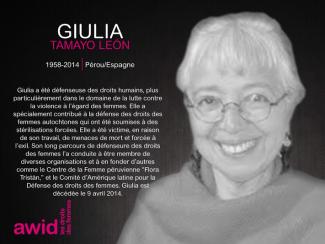
Giulia Tamayo
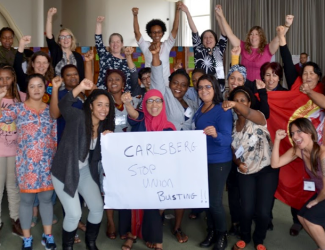
Dans le monde entier, les femmes défenseuses des droits humains défendent leurs terres, leurs moyens de subsistance et leurs communautés contre le pouvoir des entreprises et des industries extractives. Elles se mobilisent et défient de puissants intérêts économiques et politiques qui motivent la spoliation de terres, le déplacement de communautés, la perte des moyens de subsistance et la dégradation de l'environnement.
L’extractivisme est un modèle économique et politique de développement qui œuvre à la marchandisation de la nature et privilégie le profit au détriment des droits humains et de l'environnement. Enraciné dans l'histoire coloniale, il creuse les inégalités sociales et économiques au niveau local et mondial. Le plus souvent, les femmes rurales, noires ou autochtones sont les plus touchées par l’extractivisme et sont largement exclues des espaces de prise de décision en la matière. Les femmes se mobilisent pour défier ces forces patriarcales et néocoloniales et défendre les droits, les terres, les personnes et la nature.
Les femmes qui s’opposent aux industries extractives vivent une série de risques, de menaces et de violations de leurs droits comme la criminalisation, la stigmatisation, la violence et l'intimidation. Leurs histoires révèlent des aspects évidents de violences sexuelles et basées sur le genre. Parmi les auteurs de ces abus se trouvent les autorités locales et fédérales, les entreprises, la police, les militaires, les forces de sécurité paramilitaires et privées, et parfois mêmes leurs propres communautés.
L'AWID et la Coalition internationale des femmes défenseures des droits humains (WHRDIC) ont le plaisir d'annoncer la sortie de leur publication « Les défenseuses des droits humains résistent à l’extractivisme et aux pouvoir des entreprises », un rapport basé sur un projet de recherche transrégional qui relate les expériences vécues par des défenseuses en provenance d'Asie, d'Afrique et d'Amérique latine.
Nous encourageons les activistes, les membres de mouvements sociaux, la société civile, les donateurs et les décideurs à lire et à faire usage des documents suivants pour leur travail de plaidoyer, comme outil pédagogique et comme source d’inspiration :
« Les défenseuses des droits humains résistent aux industries extractives : Aperçu des principaux risques et des obligations en matière de droits humains » est une analyse de la situation d’un point de vue du genre. Ce rapport (en anglais, bientôt disponible en français) analyse les formes de violations et les types d'auteurs de ces violations, il reprend les obligations les plus pertinentes en matière de droits humains et formule une série de recommandations politiques à l’intention des États, des entreprises, de la société civile et des donateurs.
« Arrimer la résistance à l'action : Les stratégies des défenseuses des droits humains qui résistent aux industries extractives » est un guide pratique qui décrit des formes créatives et stratégiques d'action, des stratégies qui ont porté leurs fruits et des histoires de résistance inspirantes.
La vidéo « Protéger les personnes et la planète: les femmes qui résistent aux industries extractives. » met en lumière le courage des défenseur-e-s des droits humains d'Afrique, d'Asie et d'Amérique latine. Elles partagent leurs luttes pour la terre et la vie et parlent des risques et des défis auxquels elles sont confrontées dans leur activisme.
« Contester le pouvoir corporatif : Les luttes pour les droits des femmes, la justice économique et la justice de genre » est un rapport de recherche qui décrit les effets du pouvoir des entreprises et offre des perspectives sur des stratégies de résistance.
Faites-nous part de vos commentaires
C’est avec gratitude que l’AWID reconnaît les contributions précieuses de chaque défenseur-e des droits humains qui a participé à ce projet. Cette recherche a été rendue possible grâce à votre volonté à partager vos expériences. Votre courage, créativité et résilience est une source d’inspiration pour nous toutes et tous. Merci !
L’enquête s’adresse aux groupes, organisations et mouvements qui travaillent spécifiquement, ou principalement, à la défense des droits des femmes, des personnes LBTQI+ et pour la justice de genre dans tous les contextes, à tous les niveaux, dans toutes les régions. Si c’est un des principaux piliers du travail de votre groupe, collectif, réseau ou tout autre type d’organisation, que votre structure soit déclarée ou non, récemment constituée ou plus ancienne, nous vous invitons à participer à cette enquête.

*Nous ne collectons pas les réponses à titre individuel ou de fonds féministes et pour les femmes à l’heure actuelle.
En savoir plus sur l'enquête :
Consultez la foire aux questions
Fuente: Censo de População de Rua, Prefeitura de São Paulo
 |
Edificios abandonados/desocupados |
 |
||
Personas que viven en la calle |
||||
|
31,000 |
40.000 |
.

Pour revendiquer votre pouvoir en tant qu’experte sur la situation du financement des mouvements féministes.
 |
 |
 |
 |
 |
 |
 |
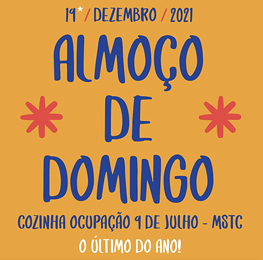 |
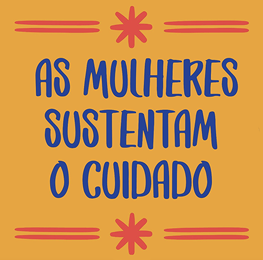
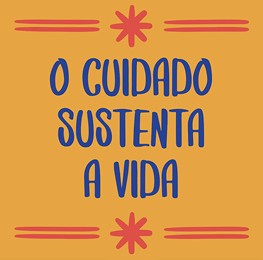
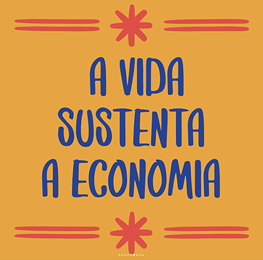
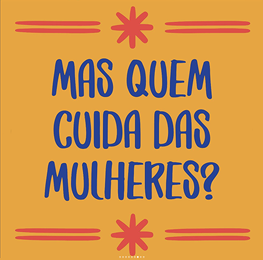
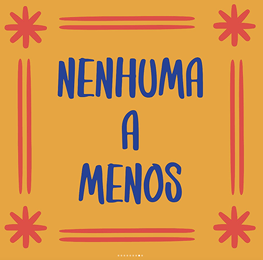
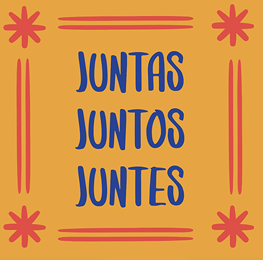
Les Femmes Maintiennent les Soins | Les Soins Soutiennent la Vie | La Vie Soutient l'Économie | Qui s'Occupe des Femmes ? | Pas Une de Moins1 | Ensemble | Déjeuner du Dimanche
1Nenhuna a menos se traduit littéralement par « pas une femme de moins » ou « ni una menos » en espagnol - un célèbre slogan féministe en Amérique latine qui a émergé en Argentine en réponse à l'augmentation de la violence sexiste.
全球和區域的合作夥伴已就論壇會前會的一些想法與我們聯繫,我們將很快分享有關這些想法的更多信息。
由諮詢小組組織,AWID資助的2016年黑人女權主義論壇(BFF)湧現出許多美好的事物。BFF產生了一些獨立組織包括巴西的黑人女權組織。儘管今年我們不會再舉辦BFF,但我們仍致力於與有興趣繼續圍繞黑人女權主義組織開展工作的任何人分享一些重要的經驗。
 La dotación de recursos de los movimientos feministas es fundamental para garantizar una presencia más justa y pacífica y un futuro en libertad. En las últimas décadas, los donantes comprometieron una cantidad más considerable de dinero para la igualdad de género; sin embargo, apenas el 1% del financiamiento filantrópico y para el desarrollo se ha destinado real y directamente a dotar de recursos al cambio social encabezado por los feminismos.
Para luchar por la abundancia y acabar con esta escasez crónica, la encuesta ¿Dónde está el dinero? es una invitación a lxs promotorxs feministas y por la justicia de género a sumarse al proceso de la construcción colectiva de razones fundadas y evidencias para movilizar más y mejores fondos y recobrar el poder en el ecosistema de financiamiento de hoy. En solidaridad con los movimientos que continúan invisibilizados, marginados y sin acceso a financiamiento básico, a largo plazo, flexible y fiduciario, la encuesta ¿Dónde está el dinero? pone de relieve el estado real de la dotación de recursos, impugna las falsas soluciones y señala cómo los modelos de financiamiento necesitan modificarse para que los movimientos prosperen y puedan hacer frente a los complejos desafíos de nuestro tiempo.
Meet Clemencia Carabalí Rodallega, an extraordinary Afro-Colombian feminist.
She has worked relentlessly for three decades towards the safeguarding of human rights, women’s rights and peace-building in conflict areas on the Pacific Coast of Colombia.
Clemencia has made significant contributions to the fight for truth, reparations and justice for the victims of Colombia’s civil war. She received the National Award for the Defense of Human Rights in 2019, and also participated in the campaign of newly elected Afro-Colombian and long-time friend, vice-president Francia Marquez.
Although Clemencia has faced and continues to face many hardships, including threats and assassination attempts, she continues to fight for the rights of Afro-Colombian women and communities across the country.
第十四屆AWID國際論壇將於西元2021年9月20日至23日在台北举行。
Identify and demonstrate opportunities to shift more and better funding for feminist organizing, expose false solutions and disrupt trends that make funding miss and/or move against gender justice and intersectional feminist agendas.
 |
 |
 |
 |
 |
|
|
|
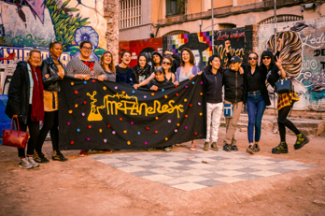
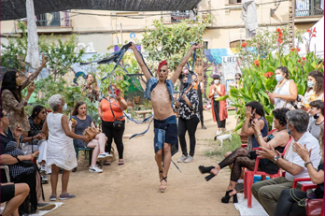
Activistas de Metzineres en acción |
