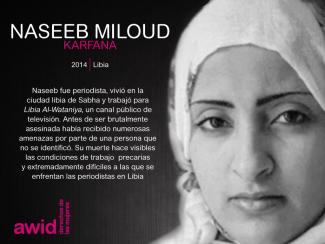
Naseeb Miloud Karfana
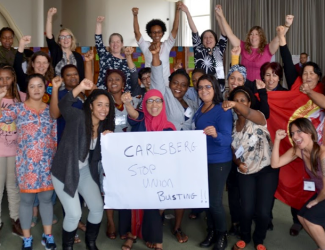
Dans le monde entier, les femmes défenseuses des droits humains défendent leurs terres, leurs moyens de subsistance et leurs communautés contre le pouvoir des entreprises et des industries extractives. Elles se mobilisent et défient de puissants intérêts économiques et politiques qui motivent la spoliation de terres, le déplacement de communautés, la perte des moyens de subsistance et la dégradation de l'environnement.
L’extractivisme est un modèle économique et politique de développement qui œuvre à la marchandisation de la nature et privilégie le profit au détriment des droits humains et de l'environnement. Enraciné dans l'histoire coloniale, il creuse les inégalités sociales et économiques au niveau local et mondial. Le plus souvent, les femmes rurales, noires ou autochtones sont les plus touchées par l’extractivisme et sont largement exclues des espaces de prise de décision en la matière. Les femmes se mobilisent pour défier ces forces patriarcales et néocoloniales et défendre les droits, les terres, les personnes et la nature.
Les femmes qui s’opposent aux industries extractives vivent une série de risques, de menaces et de violations de leurs droits comme la criminalisation, la stigmatisation, la violence et l'intimidation. Leurs histoires révèlent des aspects évidents de violences sexuelles et basées sur le genre. Parmi les auteurs de ces abus se trouvent les autorités locales et fédérales, les entreprises, la police, les militaires, les forces de sécurité paramilitaires et privées, et parfois mêmes leurs propres communautés.
L'AWID et la Coalition internationale des femmes défenseures des droits humains (WHRDIC) ont le plaisir d'annoncer la sortie de leur publication « Les défenseuses des droits humains résistent à l’extractivisme et aux pouvoir des entreprises », un rapport basé sur un projet de recherche transrégional qui relate les expériences vécues par des défenseuses en provenance d'Asie, d'Afrique et d'Amérique latine.
Nous encourageons les activistes, les membres de mouvements sociaux, la société civile, les donateurs et les décideurs à lire et à faire usage des documents suivants pour leur travail de plaidoyer, comme outil pédagogique et comme source d’inspiration :
« Les défenseuses des droits humains résistent aux industries extractives : Aperçu des principaux risques et des obligations en matière de droits humains » est une analyse de la situation d’un point de vue du genre. Ce rapport (en anglais, bientôt disponible en français) analyse les formes de violations et les types d'auteurs de ces violations, il reprend les obligations les plus pertinentes en matière de droits humains et formule une série de recommandations politiques à l’intention des États, des entreprises, de la société civile et des donateurs.
« Arrimer la résistance à l'action : Les stratégies des défenseuses des droits humains qui résistent aux industries extractives » est un guide pratique qui décrit des formes créatives et stratégiques d'action, des stratégies qui ont porté leurs fruits et des histoires de résistance inspirantes.
La vidéo « Protéger les personnes et la planète: les femmes qui résistent aux industries extractives. » met en lumière le courage des défenseur-e-s des droits humains d'Afrique, d'Asie et d'Amérique latine. Elles partagent leurs luttes pour la terre et la vie et parlent des risques et des défis auxquels elles sont confrontées dans leur activisme.
« Contester le pouvoir corporatif : Les luttes pour les droits des femmes, la justice économique et la justice de genre » est un rapport de recherche qui décrit les effets du pouvoir des entreprises et offre des perspectives sur des stratégies de résistance.
Faites-nous part de vos commentaires
C’est avec gratitude que l’AWID reconnaît les contributions précieuses de chaque défenseur-e des droits humains qui a participé à ce projet. Cette recherche a été rendue possible grâce à votre volonté à partager vos expériences. Votre courage, créativité et résilience est une source d’inspiration pour nous toutes et tous. Merci !
by Siufung Law
“97..! 98.. where is 98? 98! Please come back to the lineup!... 99! 100!...” The backstage lady relentlessly asked each athlete to queue up at the humid, sweaty, overcrowded backstage. (...)
< artwork: “When They See Us” by Lame Dilotsotlhe
Dear feminist movements,
You welcomed us with open arms when it was announced during the 2016 AWID Forum in Bahia that we would be AWID’s new Co-EDs. It was a moment that felt full of possibility, we were building a feminist oasis that would help sustain our collective struggles forward. We left Bahia with a sharp sense of responsibility, to do our best in your service and to lead AWID in ways that would be most supportive and impactful for you.
It is now time for us to step aside for new leadership!
Over five years into our journey, we are stepping down as AWID’s Co-EDs. Our decision comes as we wrap up the current strategic cycle. We see this as an ideal moment to step aside and support a leadership refresh. We believe that transformative feminist leadership is cyclical.
We so appreciate the opportunity we had to play a role in AWID’s 40 year history, holding and shepherding the organization through the difficult context of global pandemic, and so many spiraling crises.
Feminist movements, we know you will be part of our next journey, whatever that may be. You have consistently taught us about strength and resilience. We may move to different roles, but we will collectively continue to move together.
We have vivid memories of those of you in Indonesia, Malaysia, Nepal, Thailand, Taiwan and beyond who met us to co-create the AWID Forum with so much generosity and spark. Without a doubt, our greatest regret from the last five years is that we could not give you an in-person Forum.
Once we came to the difficult (albeit necessary) decision to cancel the AWID Forum, we focused on grappling with the existential questions so many of our organizations were facing: how do we shift our ways of working to be relevant, account for the exhaustion, sickness, and grief affecting all of us in different ways? How do we build meaningful relationships when we are limited to being online? There are still no straightforward answers to these questions, but feminist movements, you have shown the way.
We were so proud to see the ways feminists were leading responses to mitigate the impacts of COVID-19 on our communities. Feminists are frontline responders in crisis and we will continue to demand recognition and resources for this work. You often responded enthusiastically to our outreach, showing up in amazing ways in our Feminist Bailout campaign and later in the Crear Resister Transform festival. You jumped into collaborative advocacy with us – whether influencing human rights spaces, policy makers or funders.
We give a special shout-out of love and respect to the current and former AWID team (both our staff and Board members) whom we’ve had the honor to work with over these years. We’ve learned from each one of you and felt deep gratitude for everything you have contributed to AWID over the years.
We came into this role as AWID’s first pair of Co-Executive Directors. We learned from the many activist and community traditions of collective leadership and the feminist organizations who had done this before us. We know that we couldn’t have done this job without each other. We were able to leverage each other’s strengths and have each other’s backs to do the best job we could.
We came into role together and are leaving together, even as we will be staggering our departure dates. We are both committed to supporting a smooth transition and deliberate onboarding of the new leadership this year.
Feminist movements, you are in great hands with the AWID team. They’ve got this. And we are proud to be leaving the organization in such a strong and resilient place. Hopefully, we’ll see many of you at the AWID Forum in 2024 – you’ll recognize us as the kicked back, relaxed folks in the audience!
Love and appreciation for all that you’ve done with and for us. Your impact on our lives stretches well beyond the last 5 years, and no doubt will continue to stretch far into the future.
Cindy & Hakima
A conversation on international advocacy and global governance
✉️ By registration only. Register here
📅 Friday, March 14, 2025
🕒 2.30pm EST
🏢 Blue Gallery, The Blue Building, 222 East 46th Street
🎙️Facilitated by: Anissa Daboussi, Manager, Advancing Universal Rights and Justice team
Organizer: SRI, AWID
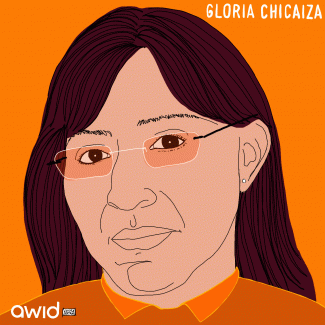
Gloria Chicaiza, an Ecuadorian social and environmental activist, was a fervent defender of land and water. She defied the status quo, fighting against a model of development based on extraction and worked tirelessly for ecological justice and the rights of communities affected by mining.
In diverse areas of Ecuador, Gloria was part of resistance actions in favour of protecting the ecosystem. With passion and dedication, Gloria supported the indigenous and environmental movement, its communities and organizations who oppose mining projects and protect their territories and collective life projects. She spoke out, in local and international foras, against the criminalization of dissent and resistance, the pressure and violence being enacted against community activists, in particular, women human rights defenders and in support of community led efforts for food sovereignty and sustainability.
She was the Mining Justice Coordinator at Acción Ecológica, member of the Latin American Network of Women Defenders of the Social and Environmental Rights and a Board member at the Observatory of Mining Conflicts of Latin America.
In October 2010, Gloria was accused by the mining company Curimining / Salazar Resources S.A. (with Headquarters in Vancouver, Canada) of sponsoring an act of terrorism, sabotage and illegal association to commit a crime. Acción Ecológica believed this to be “in retaliation for her work of denouncing the impacts of mining activities in the country.”
In 2014, Gloria supported the coordination of a delegation to the UN COP 20 Dialogue on Climate Change. The group consisted of 25 Indigenous women from Latin America.
Gloria passed away due to complications from a lung transplant on December 28, 2019. She is remembered for her resistance and tireless work.
"The fastest way to achieve sustainability is still resistance." - Gloria Chicaiza (2010 interview)
“Para GLORIA. GLORIA Agua. GLORIA Tierra. GLORIA Madre. GLORIA Revolución. GLORIA Hermana. GLORIA Cielo. GLORIAmiga. GLORIAstral. Thank you for weaving us together.” -Liliana Gutierrez
“Thank you Glorita, for sustaining hope, for keeping the fabric strong, for connecting the community, for the united hands, for solidarity, thank you Glorita for standing with us in the most difficult moments. Thank you for teaching us that throughout life, nobody gets tired.” (Chakana News)
“Gloria Chicaiza cherished and flourished in being one of many. And as humble as she was, she had an uncanny ability to lead and maintain a steady and thunderous beat, a life-affirming pulse that guided, mobilized, and inspired communities and networks in the protection of Mother Earth. She denounced all forms of violence against cuerpos-territorios. She endorsed el buen vivir.” - Gabriela Jiménez, Latin America Partnerships Coordinator, KAIROS
“Thank you Gloria Chicaiza from infinity we are sure that you will continue to support our struggle. You who continued to struggle with us despite your failing health. You will live on in the forests and the water that you defended with such courage. You will live on in our hearts.”- The community of Intag in Ecuador
por Akua Antiwiwaa
Delante mío hay una foto vieja, borrosa. En ella, estoy toda vestida de blanco, desde las perlas sujetas en mi cabello y apretadas contra mis orejas, hasta las que rodean holgadamente mis pequeñas muñecas. (...)
arte: «Cultura Negra», Astrid Milena González Quintero >
Estimados movimientos feministas:
En nombre de la Junta Directiva de AWID, me enorgullece presentarles a las próximas Co-directoras Ejecutivas: Faye Macheke e Inna Michaeli
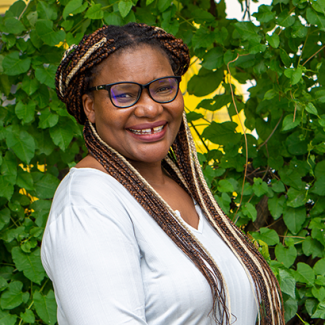 |
Faye Macheke es una apasionada feminista panafricana, que participa en movimientos por los derechos de las mujeres, la justicia racial, los derechos laborales y de las personas migrantes, y la justicia ambiental. Su activismo se ha alimentado del legado de la lucha contra el apartheid en Sudáfrica y del período posterior a la época del apartheid en Zimbabue. En 2019 Faye se incorporó a AWID como Directora de Finanzas, Operaciones y Desarrollo. Aporta una amplia experiencia en liderazgo feminista, estrategia y todos los aspectos del desarrollo organizativo. Faye es una comprometida integrante de la Junta Directiva de UAF-África y de otras organizaciones por los derechos de las mujeres. Vive en Ciudad del Cabo, Sudáfrica. |
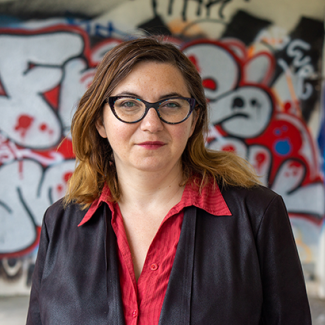 |
Inna Michaeli es una activista y socióloga feminista lesbiana queer, con muchos años de profundo compromiso con las luchas feministas y LGBTQI+, con educación política y activismo por y para mujeres migrantes y con la liberación de Palestina y la solidaridad con su pueblo. Inna se unió a AWID en 2016 y se desempeñó en diferentes funciones, más recientemente, como Directora de Programas. Contribuye con su extensa experiencia en investigación y construcción de conocimiento, promoción de políticas, y desarrollo organizativo. Inna integra la Junta Directiva de Jewish Voice for Peace (Alemania). Reside en Berlín, Alemania. |
Esta decisión es el resultado de un riguroso proceso que contó con la total participación de la Junta Directiva y el personal de AWID. La Junta reconoció y homenajeó las aptitudes y los talentos del personal de AWID, abriendo una búsqueda interna para la contratación. En consecuencia, se presentaron juntas, como equipo, dos candidatas brillantes que personifican la integridad, la ética del cuidado y los valores feministas interseccionales que impulsan el trabajo de AWID. Faye e Inna propusieron una valiente e interesante visión para enfrentar los desafíos de este momento: construir una comunidad feminista global, resistir y desestabilizar los sistemas de opresión y apoyar a los movimientos feministas para que prosperen.
Este año, en que AWID celebra sus 40 años, nos emociona que Inna y Faye co-lideren a AWID en sus estrategias y en una nueva fase de evolución y superación de las fronteras, apoyando a los movimientos feministas de todo el mundo.
Designar y apoyar a las Co-directoras Ejecutivas de AWID para que lideren la organización es una responsabilidad fiduciaria que, como Junta Directiva, tomamos muy seriamente. La forma en que desarrollamos esos procesos es también un reflejo de la brillante y diversa membresía de AWID, que elige a la Junta de AWID.
Al despedirnos de Cindy y Hakima, nosotrxs, la Junta Directiva, damos la bienvenida en forma unánime y entusiasta a Faye e Inna como nuestras próximas Co-directoras Ejecutivas a partir del 5 de septiembre de 2022. Manténganse atentxs a las actualizaciones sobre nuestra transición de liderazgo en los próximos meses.
Sobre todo, ¡gracias por su continuo apoyo!
Con solidaridad feminista y amor,
Margo Okazawa-Rey
Presidenta de la Junta Directiva de AWID
Boil them down to communications language preferences
No hay nada como estar en un espacio compartido, intercambiar energías corporales, mirar a alguien a los ojos y establecer conexiones, ver el mundo y hacer algo juntxs. Eventos como el Foro se encuentran entre los más fuertes del movimiento feminista mundial...
- Jac s m Kee, Malasia
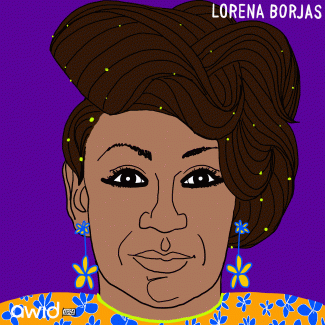
Lorena Borjas, una mujer trans latina y activista, vivía y trabajaba en el barrio de Jackson Heights de Queens, en la ciudad de Nueva York. En esas calles, cuidó de su comunidad durante años, defendiendo los derechos de las personas trans e inmigrantes, apoyando a lxs sobrevivientes del tráfico humano y del abuso, y haciendo campaña por los derechos de lxs trabajadorxs sexuales y de las personas que viven con VIH y SIDA.
Lorena era fuerte e incansable en su lucha por apoyar, defender y proteger a quienes son más marginalizadxs y discriminadxs por la transfobia, la misoginia y el racismo.
«Ella nos empujaba a brillar auténticamente, a convertirnos en un grito de subversión que dice “Aquí estoy, y merezco felicidad también”.» - Cecilia Gentili, activista trans amiga de Lorena
Luego de haber enfrentado ella misma numerosos traumas y dificultades como mujer trans inmigrante y víctima de tráfico humano, recabó conocimientos y memoria emocional de la fuente de sus propias experiencias para ayudar a construir y fortalecer la comunidad de la cual era parte, y que era parte de ella. Algunas de las formas en que llevó esto a cabo fue organizando y movilizando apoyo, que abarcaba desde proveer preservativos y conectar a las mujeres trans con distintos servicios sociales, hasta armar una clínica para el testeo de VIH en su propia casa.
«Era un alma tan bella que ayudaba a otrxs, aun cuando su propio camino era difícil y doloroso como inmigrante, como inmigrante trans. Creía que la comunidad trans necesitaba amor, aceptación, y compasión, y lo daba todo.» - Luchia Dragosh, supervisora de producción de QPTV de un documental sobre Lorena
En sus más de 25 años de activismo, también fundó con Chase Strangio (abogadx y activista por los derechos trans) el Lorena Borjas Community Fund. Este fondo ayuda a lxs diferentes integrantes de su comunidad (y en especial a las personas trans) que lidian con problemas de inmigración, para evitar el ciclo de arresto-cárcel-deportación.
Lorena falleció en marzo de 2020 por complicaciones derivadas del COVID-19.
Su enorme y hermoso legado será llevado adelante a través de las calles de Queens por la red y la comunidad que ella ayudó a crear.
« Continuaremos su trabajo desde donde ella lo dejó, un trabajo que es esencial para el bienestar de “mis pájaras”, como llamaba Lorena a las chicas trans de Queens que protegía bajo su ala.» - Cecilia Gentili
«Lorena nos trajo luz, cuando atravesábamos tiempos muy oscuros aquí en Nueva York. Nos trajo luz cuando tuvimos que enfrentar la epidemia del crack, cuando tuvimos que enfrentar la crisis del SIDA, cuando tuvimos que enfrentar los cambios en las políticas de inmigración.» - Cristina Herrera, fundadora y CEO de Translatina Network y amiga de Lorena
«Lorena ha hecho más que nadie que yo conozca para arrojar luz sobre la epidemia del tráfico en las comunidades transgénero y para ayudar a otras mujeres trans a escapar de la explotación.» - Lynly Egyes, representante de Borjas en nombre del Transgender Law Center
Mira un documental sobre Lorena Borjas (solo en inglés)
Lee un artículo publicado en The New Yorker sobre Lorena Borjas (solo en inglés)
Lee una nota de opinión de Cecilia Gentili publicada en The New York Times (solo en inglés)
Mobilisant des coiffeurs·ses transgenres de la classe ouvrière et des reines de beauté, les leaders dynamiques du seul parti politique LGBT au monde mènent une quête historique pour élire une femme trans au Congrès philippin.

Je t’appartiens depuis aussi longtemps que je peux me souvenir. Jeune fille, j’ignorais qu’il y avait un mot – féministe – pour nous toustes qui aspirons à vaincre et à démanteler le patriarcat, qui cherchons refuge dans les bras de l’inclusion et de l’intersectionnalité, qui traitons les gens comme des égaux, peu importent leur genre, leur race, leur sexualité, leur religion et leur ethnicité, qui apprenons constamment pour mieux faire, pour mieux être et pour nous servir de nos privilèges pour élever les autres.
Quand j’avais 14 ans, mon professeur de français au Collège, un trentenaire de 1,80 m, a agressé une élève de ma classe devant tout le monde. L’élève, une de mes amies d’enfance, et plusieurs autres filles de la classe sont allées voir la direction pour le dénoncer, les parents s’en sont mêlés et la classe entière, forte de ses trente élèves, a soutenu la fille. Mais toutes nos tentatives pour lui faire porter la responsabilité de son acte ont échoué, l’administration a gardé le silence sur l’histoire de la fille et il n’a jamais été renvoyé ni poursuivi. Les filles de ma classe et moi-même étions outrées, donc nous avons fait ce que toute jeune féministe en rage ferait : nous avons jeté des œufs sur sa voiture! Et bien que les œufs se lavent facilement et que la peinture utilisée pour écrire « Sale porc » et « Khamaj » (ordure) sur sa carrosserie pouvait être grattée, je n’oublierai jamais comment nous nous sentions après cela. [MB1] Libérées, enragées, heureuses, solidaires et puissantes. Ce même sentiment m’envahit à chaque nouvel événement féministe auquel je prends part depuis. L’adolescente féministe en moi a grandi et rejoint Women Deliver, l’AWID, Unootha, animé des ateliers féministes à l’université et même été poursuivie pour son affiliation féministe à 19 ans, mais ça, je le garde pour une autre lettre.
Les mouvements et les espaces féministes m’offrent la sécurité et l’autonomisation. Ce sont les mères que nous aurions aimé avoir et le lien dont nous avions besoin pour nous connecter et nous organiser, malgré nos différences contre un ennemi commun qui mine tout le monde, le patriarcat. C’est grâce à toi que j’ai appris à être résiliente et à mettre toutes mes forces et mes compétences au service des autres en les soutenant, en mettant la lumière sur les marginalisées et en tendant le micro à celles qu’on n’entend jamais.
Ce que j’aime le plus chez vous, les mouvements féministes, c’est que parfois vous merdez, vous négligez et marginalisez aussi, vous avez des biais - comme tout autre mouvement - mais ce qui vous rend différents, c’est que vous vous efforcez toujours de mieux faire. La redevabilité ne vous effraie pas, et vous êtes un collectif en constante évolution qui reflète la manière dont l’altruisme et la philanthropie dans l’effort vers l’équité de genre changent à mesure que le temps passe.
Puissiez-vous continuer à croître, puissiez-vous faire mieux, puissiez-vous être toujours enragés, puissiez-vous continuer à rugir, puissiez-vous toujours aimer, puissiez-vous toujours parler des langues différentes et puissiez-vous toujours avoir le pouvoir.
Avec amour, lumière et rage,
Lina
Du 2 au 5 décembre 2024, à Bangkok, en Thaïlande ! Nous nous rassemblerons au Centre national de convention de la Reine Sirikit (QSNCC) et aussi virtuellement en ligne.
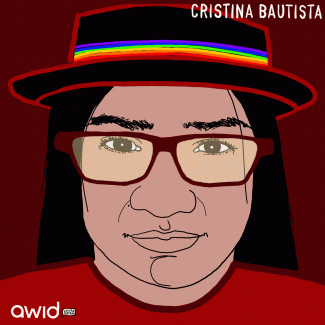
« Si nous nous taisons, ils nous tuent, et si nous parlons [ils nous tuent] aussi. Alors parlons. » - Cristina Bautista, 2019
Défenseuse infatigable des droits du peuple Nasa, Cristina s’est exprimée haut et fort contre la violence à l’égard de sa communauté. Dans un discours devant les Nations Unies, elle appelait à protéger les vies des femmes autochtones et à les impliquer dans différents domaines de la vie. En 2017, Cristina était membre du Bureau des Nations Unies pour les droits humains des personnes autochtones. Le Fonds de contributions volontaires des Nations Unies pour les populations autochtones lui a octroyé une subvention en 2019.
« J’aimerais mettre en lumière la situation actuelle du peuple autochtone en Colombie, le meurtre de leaders autochtones, la répression de la contestation sociale. Au lieu d’aider, l’accord de paix a renforcé la guerre et l’exploitation de territoires sacrés en Colombie… Actuellement, nous travaillons en tant que femmes, dans presque toutes les nations autochtones, à un avenir meilleur pour nos familles. Je ne veux pas voir plus de femmes vivre dans ces conditions en milieu rural. Il nous faut des opportunités qui permettent aux femmes autochtones de participer à la vie politique, à l’économie, à la société et à la culture. J’acquiers une réelle force aujourd’hui, en voyant toutes ces femmes ici, et en voyant que je ne suis pas seule. » - Cristina Bautista, 2019
Cristina a été assassinée le 29 octobre 2019, ainsi que quatre autres membres de la garde autochtone désarmée, dans une attaque potentiellement menée par des membres de « Dagoberto Ramos », un groupe dissident FARC.
D’après Global Witness, « le nombre d’assassinats de leaders communautaires et sociaux·les a terriblement augmenté en Colombie au cours de ces dernières années ».
« La communauté nasa a prévenu à maintes reprises les autorités au sujet des menaces qui pèsent sur leur sécurité. Malgré les efforts déployés par les gouvernements colombiens successifs, les peuples autochtones continuent de faire face à d'importants risques, surtout les dirigeants communautaires ou religieux comme Cristina Bautista.» - Point presse des Nations Unies, 1er novembre 2019
some text some text some text some text some text some text some text some text some text some text some text some text
some text some text some text some text some text some text some text some text some text some text some text some text