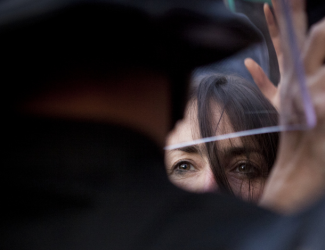
Philippe Leroyer | Flickr (CC BY-NC-ND 2.0)

Analyses Spéciales

L´AWID est une organisation féministe mondiale qui consacre ses efforts à la justice de genre, au développement durable et aux droits humains des femmes

Défenseur-e-s des droits humains

Les défenseuses des droits humains s’auto-identifient comme des femmes ou des personnes lesbiennes, bisexuelles, transgenres, queer, intersexes (LBT*QI) ou autres qui défendent les droits. Elles sont exposées à des risques et à des menaces de nature genrée à cause du travail qu’elles accomplissent en faveur des droits humains et/ou en conséquence directe de leur identité de genre ou de leur orientation sexuelle.

Les défenseuses des droits humains subissent une violence et une discrimination systématique du fait de leur identité, mais aussi à cause de la lutte indéfectible qu’elles mènent en faveur des droits, de l’égalité et de la justice.

Le programme Défenseuses des droits humains collabore avec des partenaires internationaux et régionaux ainsi qu’avec les membres de l’AWID pour éveiller les consciences à propos de ces risques et menaces, pour plaider en faveur de mesures féministes et holistiques de protection et de sécurité et enfin pour promouvoir activement une culture du souci de soi et du bien-être collectif au sein de nos mouvements.


Les risques et menaces qui planent sur les défenseuses

Les défenseuses des droits humains sont exposées aux mêmes types de risques que toutes les autres personnes qui défendent les droits humains, les communautés et l’environnement. Mais elles se heurtent également à des violences fondées sur le genre et à des risques spécifiques de nature genrée parce qu’elles remettent en cause les normes de genre en vigueur au sein de leur culture et de leur société.

En défendant les droits, les défenseuses des droits humains sont exposées aux risques suivants :

  • les agressions physiques et la mort
  • les tentatives d’intimidation et le harcèlement, y compris dans les espaces en ligne
  • le harcèlement judiciaire et la criminalisation
  • l’épuisement

Une approche holistique et collaborative de la sécurité

Nous travaillons en collaboration avec des réseaux internationaux et régionaux ainsi qu’avec nos membres pour :

  • éveiller les consciences à propos des violations des droits humains et abus dont sont victimes les défenseuses des droits humains ainsi que de la violence systémique et de la discrimination qu’elles subissent ;
  • renforcer les mécanismes de protection et faire en sorte que des réactions plus efficaces et plus rapides s’organisent quand des défenseuses sont en danger.

Nous travaillons à la promotion d’une approche holistique de la protection des défenseuses, qui suppose notamment :

  • de mettre l’accent sur l’importance du souci de soi et du bien-être collectif, et de reconnaître le fait que ces notions peuvent revêtir une signification différente dans chaque culture ;
  • de documenter les violations dont sont victimes les défenseuses des droits humains dans une perspective féministe intersectionnelle ;
  • de promouvoir la reconnaissance et la célébration du travail et de la résilience des défenseuses des droits humains dans la société ; et
  • de construire des espaces civiques propices au démantèlement des inégalités structurelles, sans restrictions ni obstacles.

Nos actions

Nous souhaitons contribuer à l’avènement d’un monde plus sûr pour les défenseuses des droits humains, leurs familles et leurs communautés. Nous pensons que le fait que les défenseuses œuvrent en faveur des droits et de la justice ne devrait pas leur faire courir de risques ; leur action devrait être appréciée et célébrée.

  • Promouvoir la collaboration et la coordination entre organisations de défense des droits humains et des droits des femmes au niveau international, et ce dans le but de d’apporter des réponses plus efficaces dans le domaine de la sureté et du bien-être des défenseuses des droits humains ;

  • Soutenir les réseaux régionaux de défenseur-es et les organisations, parmi lesquels l’Initiative mésoaméricaine des défenseuses des droits humains et la Coalition des défenseuses des droits humains du Moyen-Orient et d’Afrique du Nord, dans leur travail de promotion et de renforcement de l’action collective en faveur de la protection des défenseuses – en mettant en avant l’importance de la création de réseaux de solidarité et de protection, de la promotion du souci de soi ainsi que du plaidoyer et de la mobilisation en faveur de la sécurité des défenseuses ;

  • Faire en sorte que les défenseur-e-s des droits humains et les risques qui les menacent soient plus visibles et mieux reconnus, en rassemblant des informations sur les agressions dont elles sont victimes et en produisant et diffusant des documents sur leurs luttes, leurs stratégies et les difficultés qu’elles rencontrent ;

  • Organiser des réponses urgentes fondées sur la solidarité internationale dès que des défenseuses des droits humains sont en danger, par le biais de nos réseaux internationaux et régionaux mais aussi grâce à nos membres.

Contenu lié

Seven feminist policy recommendations to curb illicit financial flows

The growing dominance of international financial markets and institutions in defining global economic policies has resulted in the capture of people’s power in the interest of global elites and big corporations. 


Our policy brief on Illicit Financial Flows explores their disproportional gender impact and unveils the current legal and political frameworks that allow multinational corporations to benefit from tax abuse to the detriment of people and planet.

The brief concludes with these seven feminist policy recommendations to demand transparency and corporate accountability in order to curb illicit financial flows.


Our recommendations for advocacy

Illicit financial flows are gaining unprecedented attention: whether in development negotiations, like those leading to Agenda 2030 and the Addis Ababa Financing for Development Conference in 2015; or making headlines in mainstream media with the release of leaked documents on offshore finance known as the ‘Panama Papers’. In another example, the Ecuadorean people voted to bar politicians and civil servants from having assets, companies or capital in tax havens, in a referendum in February 2017. The Ecuadorian government is now a leading voice within the group of G77, in the United Nations, to create a UN global tax body to end tax havens.

This public attention potentially builds momentum for feminists, social movements and tax justice advocates to pressure for the transformation of the global financial system, which entrenches global inequalities, including gendered inequalities.

We offer below a set of seven policy asks as a contribution to growing advocacy efforts from social justice, feminist, women’s rights and gender equality actors:

1.  Address IFFs as a violation of human rights and women’s rights:

  • Illicit financial flows are hindering the fulfillment of the obligation of States to mobilise the maximum available resources for the realisation of human rights, including long agreed commitments on women’s rights and gender equality.
  • Strengthening corporate accountability is a possibility on the table at the UN Human Rights Council. An open-ended intergovernmental working group is in place to elaborate an international legally binding instrument to regulate, in international human rights law, the activities of transnational corporations and other business enterprises. This process has the potential to address corporate tax evasion as a violation of human rights, including women’s rights, and should be greater supported by countries in the global North and South.

2.  Ensure multinational corporations pay their share of taxes:

  • Develop international mechanisms that curb abusive tax practices and prevent corporate tax exemptions. UN member states should initiate negotiations to draft a UN convention to combat abusive tax practices. The convention should adopt a consolidation and apportionment system for taxing global corporate profits.
  • Revise specifically national regulations in wealthy countries that demand MNCs pay taxes only in the resident country, rather than in the countries of economic activity. This practice hinders developing countries the most, as they increasingly lose taxable base to low and zero tax jurisdictions. Proposals like the Unitary Taxation approach should be considered in this regard.

3.  Support the establishment of a United Nations intergovernmental tax body:

  • A UN tax body with equal voting rights and universal membership should have the power to review national, regional and global tax policy and ensure states comply with long agreed commitments on human rights, including women’s rights and gender equality.

4.  Promote transparency and gender-sensitive data gathering:

  • Greater efforts must be made at the global level to refine comparable data on tax abuse, for example with gender disaggregated data that shows the gender biases of certain tax systems.
  • Countries must ensure a framework for automatic information exchange, which guarantees public and global access to key data that affects the resources available for the realization of human rights.
  • Implement country-by-country reporting obligations for multinational corporations to publicly disclose, as part of annual reports, profits made and taxes paid for each country in which they operate.
  • Among other financial information, there must be greater cooperation from governments to share their national public registries that disclose beneficial owners of companies, trusts, foundations and similar legal structures.

5.  Promote tax justice through progressive fiscal policies at the national level:

  • Promote tax justice through progressive fiscal policies. This requires increasing the weight of direct taxes on income capital and highly profitable sectors of society, while reducing and removing the burden on women and poor people. Poor segments of society, of which women are overrepresented, should not end up paying more taxes, in relation to their income, than the richest segments that often benefit from government tax subsidies, tax holidays and reductions.
  • Governments must critically review the harmful trade and investment agreements that grant tax incentives and exemptions that perpetuate inequality and gender biases.

6.  Ensure participation of women’s rights organisations, social movements and progressive civil society broadly:

  • Economic and fiscal policy decisions often lack a gender sensitive perspective. Engagement between the ministries of Gender and Finance, and both with civil society and women human rights defenders, is key to better understand the impact that revenue decisions are having on women’s rights and gender equality.
  • An enabling environment should be in place to protect women human rights defenders and others (including whistle-blowers, tax justice activists) that expose tax abuse and report corruption.

7.  Stop the impunity of criminal activities associated with IFFs and ensure accountability:

  • Establish a global coordinated mechanism across national tax authorities, human rights and gender equality machineries, and intelligence units, to ensure criminal activities associated with IFFs do not continue with impunity.
  • Strengthen national and global justice systems to be able to hold individuals and entities to account for funding criminal activities through IFFs.

Read the full report

Snippet - WITM Why now_col 2 - PT

O financiamento dos movimentos feministas é fundamental para garantir uma presença mais justa e pacífica, e um futuro liberto.

Na última década, os financiadores investiram significativamente mais dinheiro na igualdade de género; no entanto, apenas 1% do financiamento filantrópico e de desenvolvimento foi efetivamente direcionado para apoiar diretamente mudanças sociais lideradas por feministas

Na busca da abundância, e para acabar com esta escassez crónica, o inquérito WITM é um convite para os defensores do feminismo e da justiça de género se envolverem no percurso da recolha coletiva de testemunhos e de casos para mobilizar mais recursos financeiros de melhor qualidade e recuperar o poder no ecossistema de financiamento neste momento. Em solidariedade com os movimentos que continuam invisibilizados, marginalizados e sem acesso a financiamento central, de longo prazo, flexível e baseado em fundos fiduciários, o inquérito WITM destaca o estado efetivo dos recursos, desafia soluções falsas e aponta.

Efua Dorkenoo

Affectionately known as “Mama Efua”, her work to end Female Genital Mutilation (FGM) movement spanned three decades and helped bring international attention and action to end this harmful practice.

In 1983 Efua co-founded FORWARD (The Foundation for Women’s Health, Research and Development), which became a leading organisation in the battle to raise awareness about FGM. Her 1994 book, “Cutting the Rose: Female Genital Mutilation,” is considered the first on FGM and, featured in Columbia University’s “Africa’s 100 Best Books for the 20th Century”.

Originally from Ghana and a nurse by training, Efua joined the WHO in 1995 and successfully pushed for FGM to go on the agendas of WHO member states. She also worked closely with the Nigerian government in formulating a comprehensive National Policy that laid the groundwork for Nigeria’s anti-FGM laws, still in place today.

Her ground breaking work culminated in an Africa-led campaign, “The Girl Generation,” which is committed to ending FGM within a generation. Efua demonstrated how one person can become the unifying voice for a movement, and her wise words - “shared identity can help bring activists from different backgrounds together with a common sense of purpose” – are more relevant than ever.


Efua Dorkenoo, Ghana
Body

The Devil is in the Details

Free ebook on Women's rights and Religious fundamentalisms

Religious fundamentalisms have particularly high costs for women and girls

Download ebook

In a global picture of rising religious fundamentalisms, this ebook details the grave human rights violations, and violations of women’s rights in particular, caused by state-sponsored fundamentalism, as well as by fundamentalist non-state actors such as militias, religious community organizations, and individuals.

It is vital to promote intersectional feminist understandings of power and privilege, and to apply these to questions of religion and culture.

Read more on women's rights

Snippet - WITM FAQ - AR

الأسئلة الأكثر شيوعاً

Diakite Fatoumata Sire

Diakite estuvo activamente comprometida con la defensa de las mujeres en la vida política y pública de Mali.

Trabajó para apoyar la capacitación de candidatas electorales y habló en contra de la práctica de la mutilación genital femenina (MGF). Fue una firme defensora de la salud y los derechos reproductivos.


Diakite Fatoumata Sire, Mali

Snippet FEA collaborator and allies Photo 5 (EN)

This photo represents a group of 15 workers sitting together in a living room with white walls. Some are sleeping, others are standing, talking with each other, or watching their phones.
Body

Resources to support feminist movements, policy-makers, and allies!

框架與主題

第十四屆AWID國際論壇的主題是:“女性主義理念實現:行動的力量”。

在第十四屆論壇上,我們將表揚與彰顯在我們身邊,處於各種發展階段的女性主義理念實現行動。

我們希望將本次論壇變成我們的女性主義理念實現行動:在這裡你可以進入在一個不同的世界,帶著你的勝利佳績、你所設計的解決方案前來,分享讓你更加強大、充滿希望、做好前行準備的事物。本次盛會有別於您之前參加過的其他會議。

請您務必共襄盛舉,攜手創造世界。絕對值得​!


每個論壇都有一個主題,該主題反映了我們成員和運動的需求,並回應我們對當前背景脈絡的分析。

全球背景脈絡

當前,全球各地的法西斯主義、基本教義主義、威權主義以及不受約束的企業權力方興未艾。我們看到,這些威脅與國家協力形塑了公共規範、敘事論述和政策,在公共論述中深植了恐懼和仇恨的文化,並煽動暴力。國家,曾經是我們權利倡議和主張權利的對象,但在許多情況下,國家不再覺得需要負責,甚至在某些情況下,國家自己也不再具有維護權利的權力了。

這個動盪、複雜和充滿不確定性的時代,更需要發揮創造力,組織各種運動,保持需求的連貫性並大膽提出主張。

從女性主義的將來到女性主義的理念實現

2016年的AWID論壇以女性主義的未來及付諸實現所需的條件為中心。無論是當時還是現在都很明顯不過,對於許多社會正義運動來說,若想跳出當前的體制之外去思考結構性的解決方案是一個艱鉅挑戰。長期的不平等和壓迫的經驗會限縮想像力。但是當時我們周遭的所見所聞顯示女性主義運動確實生機勃發,以各種大小規模都有的方式推動了權利和正義為導向理念實現與解決方案。

我們確實看到了對於動員的迫切需求,但動員的起點不是從最低的共同點開始,動員應源於希望。這分希望源自於肯定,世界各地的經驗與實踐體現了更加正義的生存方式,儘管不盡完美,從這些經驗出發,藉由分享、加強與壯大,我們可以幫助其擴大影響力。

這些並非不可能實現的夢想,而是以實現的生活。凡事皆有可能的感受啟發我們去重新審視和重新欣賞我們的工作具備的轉化面向。


全球女性主義理念實現的一些例子

在AWID,我們知道鮮活的女性主義理念實現典範是,代表一個有望實現的世界。這些多元的理念實現經驗蘊含再現了希望和力量。深植於多種生活思考與實踐的方式,向我們證明有不一樣的可能:從我們日常生活和彼此之間的關係的日常表達到治理和正義的替代制度。女性主義理念實現經驗抵制諸如父權制度、資本主義和白人至上的宰制權力制度。

以上皆為強而有力的主張,引導我們看到具備可能性的願景,並證明了女性主義組織是如何在世界各地的運動和社群中開疆拓土,開闢通往正義的道路。 

  • 在美國密西西比州傑克遜城一個被深度邊緣化的黑人社區透過傑克遜合作(Cooperation Jackson)平台,展開了社區團結和合作經濟的實驗,這項計劃雄心勃勃,有別於資本主義的生產方式,要建立社群共有精神。

  • 在西非,女性農民對抗圈地並拒絕工業化的農業計畫,勇敢主張「我們就是解決方案(We Are The Solution)」,此運動旨在建立農業生態解決方案,以女性農民及其知識為中心,讓社群可以獲得溫飽並減緩氣候變遷

  • 同樣,在印度有5000名婦女根據地方知識,共同建立了以社群為基礎的糧食主權制度,包括穀物和種子銀行

  • 墨西哥的婦女開創了一個無錢交易的經濟計畫,該計畫由婦女主導,並為其他婦女以及她們所認識的每個人服務。在El Cambalache計畫中,一切交換物都具有相同的價值:人們用不再需要的東西去交換他們想要的東西,也包括想分享的知識、能力和互助。El Cambalache計畫建立在當地社會運動的反制度、反資本主義價值觀之上

  • 在羅賈瓦,庫德人在沒有國家的情況下建立了民主制度。庫爾德婦女將女性學(Jineology)作為挑戰父權制度、資本主義和國家機器的框架,創建了將這一框架付諸實踐的制度和機構

  • 在英國,Anarcho Agony Aunts是一個關於性和約會的諮詢節目,涵蓋了女性主義者、反法西斯主義者和無政府主義者的各種觀點。主持人羅文和馬里亞姆正在從另類右派中奪回空間,讓人們(主要是男人)在不受批判的空間內提出棘手問題

  • 非洲女性主義判決計畫起草並廣傳了一系列關於重大非洲里程碑司法案件的另類判決。該計畫的核心精神提出了女性主義司法實踐和替代性的女性主義判決,對非洲法學、法律實務和司法決貢獻卓著。

  • 印度的烏沙合作社(Usha Cooperative)是在主流銀行拒絕向Sonagachi地區的性工作者提供服務時成立的。性工作者自發組織起來,優先解決其經濟問題並建立自己的金融機構。烏沙合作社是一家合作銀行,服務2萬多名性工作者,並在一年內提供7231名性工作者470萬美元的貸款。該銀行完全由性工作者組成,為合作社的治理和管理帶來了真正的所有權和影響力,為個人和社群服務,開創了建立經濟實力的自主先驅模式

  • 在波多黎各,一個社區土地信託基金協助了非正式居住區轉型為永續的社區,該社區處於受到污染的易氾濫河道。該基金為改善城市中的非正式定居區域點提供了一種新模式,如果沒有她們的幫助,當地的原始居民根本負擔不起

  • 在幾個拉丁美洲國家,社運人士提供了醫療人工流產提同儕的諮詢和陪伴,奪回女性身體的自主權和獲得醫療知識的權利。(出於安全原因,此處未提供相關的鏈接)


第十四屆AWID國際論壇

AWID論壇將按照6大主軸安排:

  • 社群、運動和經濟正義的資源
  • 治理、當責與正義
  • 數位化的現實
  • 身體、愉悅和健康
  • 女性主義星球與生命
  • 組織女性主義運動

主軸詳情請見此

基於這些理念實現的經驗,我們希望2020年的論壇能夠:

  • 鞏固女性主義理念實現的力量:通過點名、表揚、壯大和貢獻等方式,從這些經驗及主張出發,累積動能,凸顯可能性並豐富我們的集體想像力。
  • 補充希望和能量的泉源:為人權與正義社會運動及韌性提供必要的能量。
  • 加強聯繫、互惠和團結:服務各種多元的女性主義運動以及其他權利和正義為本的社會運動。

論壇是一個協作過程

該論壇不僅僅是一個四天的會議,是女性主義理念實現的運動茁壯旅程的一個中繼站,我們已經出發,論壇結束後也會繼續前行。

加入我們的旅程吧!

أنا ناشط/ة فردي/ة ولا أعمل مع أي مجموعة، منظمة و\ أو حركة في الوقت الحالي. هل عليّ تعبئة الاستطلاع؟

كلا. نقدّر عملك لكننا لا نطلب من الأفراد تعبئة الاستطلاع في الوقت الحالي.

Andaiye

Andaiye' en swahili significa 'una hija vuelve a casa'. Nació como Sandra Williams el 11 de septiembre de 1942 en Georgetown, Guyana, y cambió su nombre por el de 'Andaiye' en 1970, cuando los movimientos del Black Power [Poder Negro] arrasaron en su país y en la región del Caribe. 

Andaiye fue considerada una figura transformadora al frente de las luchas por la liberación y la libertad. Fue una de lxs primerxs integrantes y líder activa de la Working People’s Alliance [Alianza de la Gente Trabajadora] (WPA, por sus siglas en inglés), un partido socialista de la Guyana que luchó contra el régimen autoritario existente y continuó,  a lo largo de su vida, centrando su activismo en la justicia para la clase trabajadora y los derechos de las mujeres rurales, y en la superación de las barreras étnicas entre las mujeres Indo y Afro-Guyanesas.

Andaiye fue cofundadora de la Red Thread Women [Hilo Rojo Mujeres], una organización que aboga para que el trabajo de cuidados de las mujeres fuese remunerado justamente, también trabajó en la Universidad de West Indies y con el CARICOM. Andaiye señaló, sin ningún temor a desafiar a los gobiernos, los desequilibrios de género en las juntas estatales, la discriminación de lxs trabajadorxs sexuales en las leyes existentes, reclamó el derecho al aborto en Jamaica, y se pronunció abiertamente contra los acuerdos comerciales como el Caribbean Single Market and Economy [Mercado y Economía Únicos del Caribe] (CSME, por sus siglas en inglés) que permitía la libre circulación de las trabajadoras domésticas migrantes, pero no otorgaba esos mismos derechos a sus hijxs. 

Andaiye publicó varios ensayos académicos, escribió columnas de prensa y también editó  los últimos libros de Walter Rodney, un activista político guyanés y líder de la AMP, que fue asesinado en 1980. Andaiye sobrevivió a un cáncer y fue una de lxs fundadorxs de la Guyana Cancer Society [Sociedad de Guyana Contra el Cáncer] y del Cancer Survivors’ Action Group [Grupo de Acción de Sobrevivientes del Cáncer]. También fue integrante de la Junta Directiva de la Caribbean Association for Feminist Research and Action [Asociación Caribeña para la Investigación y la Acción Feminista] (CAFRA, por sus siglas en inglés), y Directora del Help and Shelter [Ayuda y Refugio] e integrante de la Junta Directiva de la Guyana National Commission on Women [Comisión Nacional de Guyana sobre las Mujeres]. Andaiye recibió varios premios a lo largo de su vida, entre ellos, la Flecha de Oro de los Logros de Guyana (el cuarto premio nacional más importante del país).

Andaiye falleció el 31 de mayo de 2019 a la edad de 77 años. Los homenajes que posteriormente le rindieron activistas, amigxs y personas inspiradas por su vida dan cuenta, elocuentemente, de su asombroso legado y su hermosa humanidad.

Algunos ejemplos:

"Andaiye tuvo un profundo efecto en mí... fue tantas cosas: una educadora, una luchadora; me enseñó a ser autocrítica, a pensar con más claridad, me enseñó sobre la supervivencia, sobre lo increíble que puede ser el coraje, sobre la compasión, a ir más allá de las apariencias externas y a tratar a la gente como personas y no dejarse distraer por su estatus, clase, raza... o cualquier otra cosa". Peggy Antrobus, activista feminista, autora, académica, Barbados.

"El tipo de idealismo convencido que Andaiye expresó, su voluntad de confrontar el mundo y su creencia obstinada en  que realmente lo puedes cambiar... Esa política de la esperanza... ¿De qué otra forma podemos rendir homenaje a su vida, legado y memoria si no es haciendo nuestro trabajo de forma ética y con una autocrítica continua? Y situando el trabajo de cuidados de las mujeres en el centro de todo esto." - Tonya Haynes, Barbados.

"Puedo escuchar sus ocurrencias en nuestro entusiasmo colectivo. Así, a través de las lágrimas, puedo reír. Mis más profundas reverencias a ti, querida Andaiye, gracias por todo. Te deseo amor y luz para el viaje de tu espíritu. Saluda a Walter y a todxs lxs ancestrxs". - Carol Narcisse, Jamaica.

Leer otros tributos a Andaiye (en inglés)

Snippet FEA lines of work Against (ES)

Ilustración un libro rosa que dice "Derechos laborales" con una X roja

VIOLACIONES DE DERECHOS LABORALES

Body

Why did AWID choose Taipei as the location for the Forum?

AWID spent close to two years working to identify a Forum location in the Asia Pacific region (the Forum location rotates regions).

Building on initial desk research and consultations with allies that led us to rule out many other options in the region, we organized a thorough round of site visits to Nepal, Malaysia, Sri Lanka, Thailand, Indonesia and (later) Taiwan. 

Each site visit included not just scoping the logistical infrastructure but meeting with local feminist groups and activists to better understand the context, and their sense of potential opportunities and risks of an AWID forum in their context.

In our site visits, we found incredibly vibrant, diverse local feminist movements.

They often expressed conflicted feelings about the opportunities and risk that the visibility of an event like the Forum could bring to them. In one, during the first 30 minutes of our meeting we heard unanimously from the activists gathered that an AWID Forum would be subject to huge backlash, that LGBTQ rights were a particular political hot-button and that fundamentalist groups would turn out in full force to interrupt the event. When our response was “ok, then you don’t feel it’s a good idea”, again the unanimous response was “of course it is, we want to change the narrative!”.

It was difficult to hear and see in some of these places how many feminist activists wanted to leverage the opportunity of a visible big event and were prepared to face the local risks; but our considerations as hosts of close to 2,000 people from around the world impose a different calculation of risk and feasibility.

We also grappled with questions of what it means to organize a feminist forum that is aligned to principles around inclusion, reciprocity and self-determination, when state policy and practice is usually directly counter to that (although officials in the ministries of Tourism work very hard to smooth that over).

We weighed considerations of infrastructure, with potential opportunity to tip momentum on some national level feminist agendas, and national political context.

In many of these places, monitoring the context felt like an exercise on a pendulum that could swing from open and safe for feminist debates in one moment to stark repression and xenophobia the next, sacrificing feminist priorities as political bargaining chips to pacify right wing, anti-rights forces.

The process has been a sobering reflection on the incredibly challenging context for women’s rights and gender justice activism globally.

Our challenges in Asia Pacific led us to consider: would it be easier if we moved the Forum to a different region? Yet today, we would not be able to organize an AWID Forum in Istanbul as we did in 2012; nor would we be able to do one in Brazil as we did in 2016.

With all of this complexity, AWID selected Taipei as the Forum location because:

  • It offers a moderate degree of stability and safety for the diversity of Forum participants we will convene.
  • it also has strong logistical capacities, and is accessible for many travellers (with a facilitated e-visa process for international conferences).
  • The local feminist movement is welcoming of the Forum and keen to engage with feminists from across the globe.

In organizing the AWID Forum, we are trying to build and hold space as best we can for the diverse expressions of solidarity, outrage, hope and inspiration that are at the core of feminist movements.

At this moment, we see Taipei as the location in the Asia Pacific region that will best allow us to build that safe and rebelious space for our global feminist community.

The fact is, there is no ideal location in today’s world for a Forum that centers Feminist Realities. Wherever we go, we must build that space together!

Могу ли я заполнить опрос не на платформе KOBO, а поделиться с вами ответами по электронной почте?

Если у вас нет проблем с доступом к платформе, и/или вы не заполняете анкету на других языках, мы настоятельно рекомендуем вам использовать KOBO для стандартизированного сбора и анализа данных.