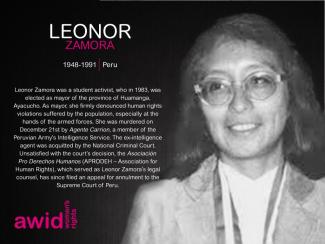
Leonor Zamora
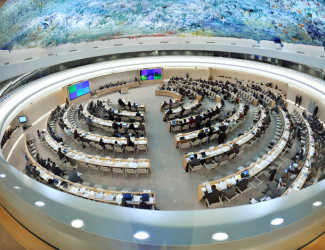
Le Conseil des droits de l'homme (CDH) est un organe intergouvernemental clé du système des Nations Unies, responsable de la promotion et la protection des droits humains autour du globe. Il se réunit trois fois par an en session ordinaire, en Mars, Juin et Septembre. Le Bureau du Haut-Commissariat des Nations Unies aux Droits de l’Homme (HCDH) constitue le secrétariat pour le CDH.
Débat et adopte des résolutions sur les questions globales des droits humains ainsi que sur la situation des droits humains dans des pays particuliers
Examine les plaintes des victimes de violations des droits humains et des organisations activistes, au nom des victimes de violations des droits humains
Nomme des experts indépendants (que l'on connaît sous le nom de « Procédures Spéciales ») pour réviser les cas de violation des droits humains dans des pays spécifiques, ainsi que pour examiner et suivre des questions globales relatives aux droits humains
Prend part à des discussions avec les experts et les gouvernements sur les questions de droits humains
Évalue les bilans des États membres de l'ONU en matière de droits humains tous les quatre ans et demi, dans le cadre de l'examen périodique universel.
La prochaine session du CDH a lieu à Genève, en Suisse, du 30 juin au 17 juillet 2020.
AWID travaille avec des partenaires féministes, progressistes et du domaine des droits humains pour partager nos connaissances clé, convoquer dialogues et évènements avec la société civile, et influencer les négociations et les résultats de la session.
سنقوم بتحليل الردود على الاستطلاع للوصول للاستنتاجات الأساسية والنتائج خلال المنتدى العالمي ل AWID في بانكوك، وعن طريق الانترنت في ديسمبر (كانون الأول) 2024. الرجاء التسجيل هنا لحضور المنتدى.
Les interviews génèrent des renseignements détaillés que vous aurez du mal à obtenir à travers un sondage. Le sondage est surtout axé sur les données quantifiables et les questions fermées,par contre les interviews permettent d’obtenir les opinions d’expert-e-s comme des activistes et des donateurs, tout en utilisant des questions ouvertes qui précisent le contexte entourant les données résultant du sondage.
Dans cette section
- Conseils d’ordre général
1. Avant de mener vos interviews
2. Pendant les interviews- Interviews spécialisées
1. Interviews auprès des donateurs
2. Interviews auprès des activistes et des organisations de droits des femmes- Résultats préliminaires
Envoyez aux personnes que vous allez interviewer une note de synthèse qui décrit les objectifs des interviews et de l’ensemble de votre recherche, en plus d’une liste de questions.
Ces personnes pourront ainsi préparer leurs réponses aux questions plus complexes et obtenir les renseignements qu’elles n’ont peut-être pas sous la main.
Ne fondez pas vos questions sur des hypothèses au sujet des connaissances de la personne interviewée.
Tentez plutôt de préciser ce qu’elle sait, ce qui produit également des informations
- NE DEMANDEZ PAS : « Compte tenu des tendances actuelles de financement en Suisse, est-ce que vous êtes au courant de certaines occasions de collaboration ? » Cette question présume que la personne interviewée connaît les tendances de financement et que sa compréhension de ces tendances est identique à la vôtre.
- DEMANDEZ : En premier lieu, « Quelle est votre compréhension des tendances de financement actuelles en Suisse ? », suivie de « Est-ce que vous êtes au courant de certaines occasions de collaboration ? » Ceci révèlera ce que la personne comprend, vous donnant encore plus d’informations que la première question.
Les interviews auprès des donateurs vous permettront d’approfondir vos relations avec eux, ce qui sera utile lorsque vous entreprendrez les activités de plaidoyer qui succèderont à votre recherche. Vous en tirerez également une connaissance plus poussée des processus de prises de décisions adoptés par les bailleurs de fonds.
Suggestions de thèmes à aborder lors des interviews avec les donateurs :
Les interviews auprès d’activistes et d’organisations de droits des femmes vous renseigneront sur leurs réalités sur le terrain. Ici encore, ces interviews vous permettront d’approfondir vos relations qui peuvent être intégrées aux plaidoyers, particulièrement en vue de favoriser la collaboration entre donateurs et activistes.
Suggestions de thèmes à aborder lors des interviews avec les activistes et les organisations de droits des femmes :
Pendant votre recherche WITM, nous vous recommandons de procéder à l’analyse des résultats préliminaires. La présentation de vos résultats préliminaires offre l’occasion de mener d’autres interviews et de recueillir des réactions sur votre processus de recherche et sur les résultats initiaux. Ces réactions peuvent être intégrées à votre recherche finale.
L’AWID organise des « rencontres WITM » pour partager les résultats préliminaires issus des données de sondage et des interviews. Ces rencontres permettent aux personnes qui y prennent part (activistes, organisations de droits des femmes et donateurs) de débattre et de discuter des résultats, de préciser le contexte, de rehausser le sentiment d’appropriation parmi les membres du mouvement et de fournir plus de commentaires en vue de la recherche finale.
Par exemple, l’AWID a profité du Pôle de mobilisation des ressources (RMH) pour les droits des femmes autochtones, dans le cadre du World Summit on Indigenous Philanthropy (Sommet mondial sur la philanthropie autochtone) pour lancer une présentation de ses résultats préliminaires.
Voir la présentation donnée lors du RMH (en anglais)
4. Recueillez et analysez vos données

• 1,5 - 3 mois
• 1 personne (ou plus) chargée de la recherche
• Liste d’organisations, de donateurs et d’activistes agissant à titre consultatif
• Questions d'interview que vous aurez préparées
• Note conceptuelle (Vous pouvez utiliser de cadre de référence que vous avez déjà préparé)
• Exemples d’interviews auprès des donateurs
• Exemples d’interviews auprès d’activistes et d’organisations de droits des femmes
4. Recueillez et analysez vos données
6. Menez une recherche documentaire
Estamos encantadxs de anunciar el lanzamiento del nuevo podcast de AWID: ESE FUEGO FEMINISTA. Esta serie narrativa revela más de 40 años de movimientos feministas e imagina nuevos caminos a seguir.
En nuestra temporada piloto, escucharán cinco historias cautivadoras que forman parte de la actual constelación de activismo feminista. Presentado por nuestra Gopika Bashi, subdirectora de programas de AWID, cada episodio explora realidades feministas únicas pero interconectadas que están logrando una mayor justicia de género y asegurando derechos humanos.
ESE FUEGO FEMINISTA es producido en asociación con lxs ganadorxs de Webby, Hueman Group Media. Puedes suscribirte al podcast y escuchar nuestro primer episodio aquí.
Encuéntranos en Apple Podcasts, Spotify o donde sea que obtengas tus podcasts. ¡Comparte con tu red! Ayúdanos a difundir historias que enciendan nuestro fuego feminista y nos muevan a la acción.
por Marta Plaza Fernández
Tejer redes en las que nos sostenemos unas a otras: esa potencia es la realidad feminista que quiero compartirles. (...)
arte: «Healing Together» [Sanar juntxs], Upasana Agarwal >
« J’ai constaté la discrimination dans la rue, que ce soit par des taquineries ou des agressions verbales qui y ont lieu. Je me suis aussi faite plein d’ami·e·s et j’y ai rencontré plusieurs personnes. Il se peut que ce soit dangereux là-bas, mais je suis une survivante, et pour le moment, c’est là où je suis. » - Sainimili Naival
Elle a demandé aux responsables et acteurs politiques de fournir des politiques et des services adaptés au handicap, comme la construction de rampes dans les villes et les villages afin d'accroître leur accessibilité. Les barrières physiques n’étaient pas les seules qu’elle aspirait à modifier. Sur la base de sa propre expérience, elle savait que des changements plus difficiles devaient être menés dans les sphères économiques et sociales. Bon nombre des défis avec lesquels sont aux prises les personnes handicapées trouvent leurs racines dans les attitudes discriminantes et stigmatisantes.
Survivante et combattante, Sainimili a contribué à co-créer des réalités féministes qui renforcent l’inclusion et font évoluer les attitudes par rapport à l’égalité des personnes handicapées. Elle a été membre de la Spinal Injury Association of Fiji (SIA) ainsi que participé à la formation « Démarrez votre entreprise » de l’Organisation internationale du Travail à Suva via le projet « Pacific Enable » (le Pacifique rend possible) du Forum Asie-Pacifique sur le handicap. Elle a ainsi pu transformer ses idées en une entreprise qui lui était propre. Elle était commerçante sur l’étal de marché 7 de Suva, offrant des services de manucure, tout en gérant un stand au marché des femmes SIA pour y vendre de l’artisanat, des suls et des objets historiques. Sainimili planifiait d’élargir son commerce et de devenir une employeuse majeure de personnes handicapées.
Outre son activisme, elle était également médaillée de tennis de table et une récente championne.
Avec sa personnalité vive, Sainimili était unique. On savait toujours lorsqu’elle était dans la pièce car ses rires et ses histoires étaient la première chose qu’on pouvait remarquer. - Michelle Reddy
Sainmili est décédée en 2019.
Cette communauté est un endroit de connexions, où l’on comprend nos combats individuels comme faisant partie de luttes mondiales, et où l’on peut même parfois danser ! Il n’existe aucun endroit de la sorte en ligne, où être en contact avec des activistes de terrain, qui viennent du monde entier, et forger de la solidarité et de la sororité..- Paz Romero, Argentina
We believe that the economy, the market, the financial system and the premises upon which they are built are critical areas of feminist struggle. Thus, our vision for a just economy goes beyond promoting women’s rights and empowerment in the market, to evaluating the role of gendered oppressions in shaping economic arrangements and transforming these to ensure gender and economic justice.
We are neither starting from zero, nor alone in this attempt to put forward feminist propositions for a just economy. Many of the propositions herein have been advanced or exist in practice within diverse communities challenging and resisting the mainstream market and growth-based economic systems.
It is also very important to note that there is growing awareness of the fact that micro solutions are not always the answer to macro problems, even if they represent important spaces for resistance and movement building and that there may be limitations to particular alternatives to address the injustices of the current capitalist system at a global scale.
However, feminist alternatives for a just economy are critical to create dents in the system and draw lessons for transformative systemic change. Here we cannot presume to offer a comprehensive nor a complete account on how to create a just feminist economic model, or even models. But we can, but rather draw from cross-movement dialogue with trade unions, environmental, rural and peasants movements, to articulate the propositions for the journey towards this vision.
The neoliberal model driving the global economy has repeatedly demonstrated its inability to address the root causes of poverty, inequalities, and exclusion. Neoliberalism, and has in fact contributed to the very creation and exacerbation of these injustices.
Characterized by globalisation, liberalization, privatisation, financialisation and conditional aid, mainstream development policies over the past 3 decades have wreaked havoc on livelihoods over the past 3 decades. These policies have also sustained a trajectory of deepening inequalities, gendered injustices, and environmental destruction that the world can no longer afford to endure.
While there are people those who assert that economic growth, facilitated by giving free reign to corporations and businesses, can sustain a tide that will (eventually) raise all boats.
However, the notion of development that has prevailed for the past decades, built for the most part upon the premise of limitless economic growth, is going through an ideological crisis.
The myth of economic growth as a panacea for our problems is being debunked.
What does an AWID Forum mean to those who have been there? What is this magic that happens when feminists from around the world gather to celebrate, strategize, learn and share joy?
AWID spoke to over forty Forum participants to hear their stories of the transformations that happened to them as activists, to their organizations and to the movements they are part of. We also learned about what we should keep and build on that makes an AWID Forum different and how we can improve.
This report holds lessons and advice invaluable to anyone planning in-person regional and thematic convenings and for us as we plan for the 15th AWID International Forum.
par Judyannet Muchiri
Je suis partie pour le Kenya en octobre de l'année dernière, pour entamer ce que j'en suis venue à considérer comme mon travail le plus important à ce jour. (...)
illustration : « Guérir ensemble », par Upasana Agarwal >
“But when was the master
ever seduced from power?
When was a system ever broken
by acceptance?
when will the BOSS hand you power with love?
At Jo’Burg, at Cancun or the U.N?
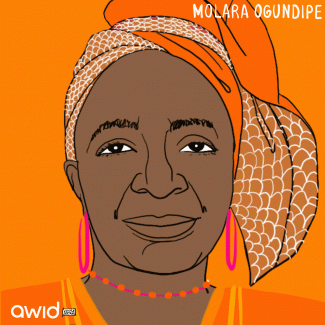
– Molara Ogundipe
Across the different continents and countries, Professor Ogundipe taught comparative literature, writing, gender, and English studies using literature as a vehicle for social transformation and re-thinking gender relations.
A feminist thinker, writer, editor, social critic, poet, and activist Molara Ogundipe succeeded in combining theoretical work with creativity and practical action. She is considered to be one of the leading critical voices on African feminism(s), gender studies and literary theory.
Molara famously coined the concept of “stiwanism’ from the acronym STIWA – Social Transformations in Africa Including Women recognizing the need to move “away from defining feminism and feminisms in relation to Euro-America or elsewhere, and from declaiming loyalties or disloyalties.”
In her seminal work ‘Re-creating Ourselves’ in 1994, Molara Ogundipe (published under Molara Ogundipe-Leslie) left behind an immense body of knowledge that decolonized feminist discourse and “re-centered African women in their full, complex narratives...guided by an exploration of economic, political and social liberation of African women and restoration of female agency across different cultures in Africa.”
In speaking about the challenges she faced as a young academic she said:
”When I began talking and writing feminism in the late sixties and seventies, I was seen as a good and admirable girl who had gone astray, a woman whose head has been spoilt by too much learning".
Molara Ogundipe stood out for her leadership in combining activism and academia; in 1977 she was among the founding members of AAWORD, the Association of Women in Research and Development. In 1982 she founded WIN (Women In Nigeria) to advocate for full “economic, social and political rights” for Nigerian women. She then went on to establish and direct the Foundation for International Education and Monitoring and spent many years on the editorial board of The Guardian.
Growing up with the Yoruba people, their traditions, culture, and language she once said :
“I think the celebration of life, of people who pass away after an achieved life is one of the beautiful aspects of Yoruba culture.”
Molara’s Yoruba ‘Oiki’ praise name was Ayike. She was born on 27 December 1940 and at the age of 78, Molara passed away on 18 June 2019 in Ijebu-Igbo, Ogun State, Nigeria.
#FreezeFascisms
A 30 años de la adopción de la Declaración y Plataforma de Acción de Beijing, existe una ola creciente de fascismos que ejercen gran poder e influencia en los espacios multilaterales, todo un retroceso para las conquistas de igualdad de género y la protección de los derechos humanos en el mundo entero.
En torno a la CSW69, estamos organizando, en conjunto y de forma horizontal, una serie de valientes espacios sobre el terreno y en línea a fin de compartir estrategias y forjar un poder feminista más allá de Beijing +30. Nuestra presencia colectiva trastorna las prácticas institucionales de exclusión en dichos espacios y, a la vez, apoya los procesos de organización de los movimientos en torno a las alternativas feministas a los sistemas de opresión.
Súmate a las conversaciones desde el 10 al 21 de marzo de 2025, mientras transformamos de forma colectiva la CSW69 en espacios para y sobre la resistencia y la solidaridad.
La búsqueda de medios alternativos de producción alimentaria a partir de la sostenibilidad ambiental está ganando terreno en todas las regiones. Esta búsqueda mundial presenta una característica común: la necesidad de involucrar a la población rural y sobre todo a las mujeres, teniendo en cuenta sus prioridades y conocimientos locales, aplicando el principio de la agroecología.
La agroecología es una forma de practicar la agricultura o de utilizar tecnologías sin dañar el ambiente. Se propone quebrar el modelo hegemónico de desarrollo rural basado en los latifundios y monocultivos que beneficia sobre todo a las empresas agrícolas y afianza la exclusión social.
En la agricultura familiar, la agroecología se manifiesta como resistencia al modelo actual de desarrollo y sus problemas sociales, culturales, ambientales y económicos. Se opone a la falta de autonomía de la población campesina en cuanto a capital financiero y encarna una forma de resistencia al modelo de agronegocios actual.
Las iniciativas que se basan solo en la agroecología pueden no ser suficientes para resolver todos los problemas de marginación e invisibilidad de las mujeres. Por eso, una perspectiva feminista es fundamental para analizar las normas asociadas con la idea de familia que actualmente se postula como institución perfecta, así como con las condiciones de subordinación de las mujeres.
En términos más simples: para que la agroecología pueda liberar su potencial emancipatorio, es importante que los debates en torno a ella incluyan una reflexión sobre los roles de género socialmente construidos.

Our first Feminist Film Club program is now available to view: “Tenderness is the Sharpest Resistance” is a film series on Asian/Pacific Feminist Realities curated by Jess X Snow