
Important et urgent : les femmes africaines s’unissent contre l’extraction destructive des ressources
Nous sommes en quête d’une alternative de développement post-extractiviste et éco-féministe.
Les femmes des communautés Somkhele et Fulani du KwaZulu-Natal, en Afrique du Sud, ont décidé de prendre les choses en main. En tant que pourvoyeuses majeures de soins et principales sources de moyens de subsistance, elles ont été, en nombre et en gravité, les plus touchées par la crise de l’eau engendrée par le double problème de sécheresse et d’extraction intensive du charbon qui sévit à proximité de leurs domiciles.
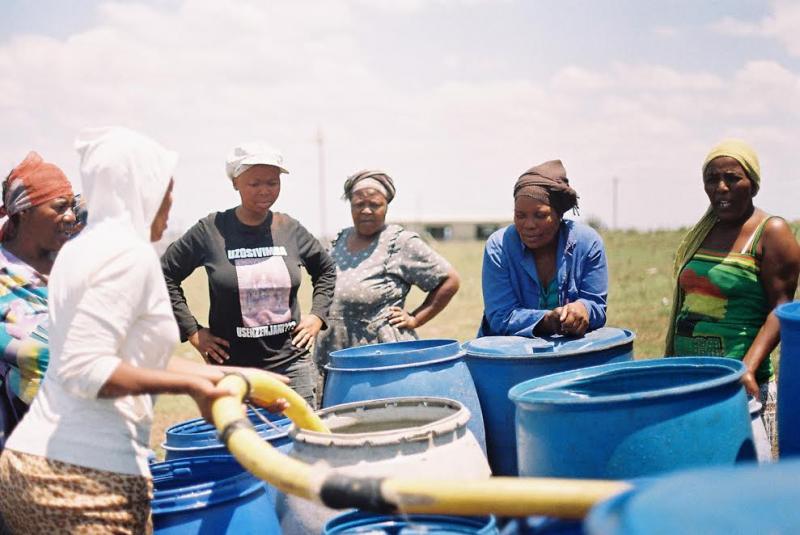
« Cette mine nous a de prime abord gêné-e-s par son lieu d’implantation, celui où ils extraient le charbon et l’emplacement de leurs bureaux. Ils se sont installés là où nous vivions. Là où nous cultivions nos terres et tirions notre eau. A leur arrivée, ils ont bloqué le cours de nos rivières ; nous sommes désormais dans l’incapacité d’aller puiser de l’eau. Aujourd’hui, nous n’avons plus d’eau nulle part et sommes obligé-e-s d’acheter des bouteilles. »
– Smangele Nkosi de Somkhele dans « No Good Comes from the Mine », un film documentaire de WoMin.
Avec le soutien et la participation de WoMin, une alliance africaine spécialisée dans les thèmes de l’égalité des genres et des extractions, les femmes de ces deux communautés se sont réunies pour renforcer collectivement leur organisation et leur résistance aux activités minières, et plus particulièrement à celle de la mine de Tendele.
Pour WoMin, ce type d’organisation locale menée par la classe ouvrière communautaire et les femmes paysannes devrait être ajouté à l’ordre du jour de la 61ème session de la Commission de la condition de la femme, qui se déroule actuellement au siège des Nations Unies à New York. Cela est essentiel si l’on veut « analyser à quoi devrait ressembler l’autonomisation des femmes dans un monde du travail en pleine mutation » et avoir une idée claire et précise des contextes actuels, ce qui permettra au travail réalisé par nos mouvements de renforcer son influence.
Effets différenciés selon les genres
« Les conséquences de l’extractivisme sur les corps, la sexualité et l’autonomie des femmes ne peuvent pas être sous-estimées… Les industries extractivistes ont un impact considérable sur la qualité de la terre et de l’eau, qui constituent les ressources communales sur lesquelles les femmes comptaient pour garantir des moyens de subsistance à leurs familles et leurs communautés. »
WoMin explique que « l’inégalité et les divisions genrées du travail » contraignent les femmes à assumer un rôle social de reproduction (travail non rémunéré) au sein des communautés ouvrières et parmi les femmes paysannes. En tant que telles, elles sont durement touchées par les industries extractives.
L’alliance souligne par ailleurs que l’analyse de la politique régionale a totalement négligé l’impact des industries extractives, en particulier le lien qui existe entre l’exploitation minière, l’extractivisme et la violence à l’encontre des femmes
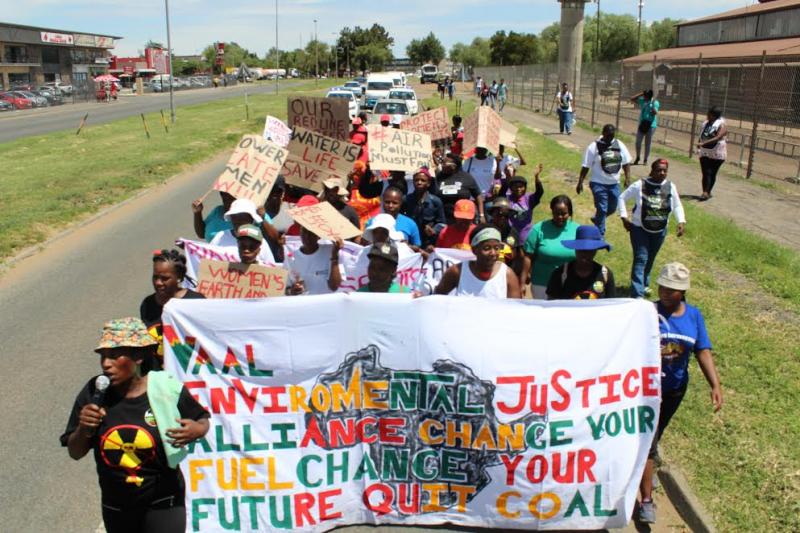
Cette violence se traduit de différentes manières. Elle se manifeste par exemple par le conflit, lorsque les entreprises et les Etats mettent à exécution la tactique du « diviser pour mieux régner » afin de forcer des prises de décisions communautaires en faveur de l’extraction. Ou encore par la dépossession des terres, qui oblige les communautés à quitter leurs terres pour faire place aux intérêts extractivistes et les laisse subvenir à leurs besoins et assurer leurs moyens de subsistance avec des ressources très limitées. Il existe donc une nécessité de créer des alternatives de développement qui s’attaquent aux niveaux élevés de violence interpersonnelle envers les femmes au sein de leurs familles et de leurs communautés, et fassent le lien avec les actes de violence commis sur les lieux d’activité des industries extractives et soutenus par l’Etat et les entreprises. L’une des autres répercussions induites par l’industrialisation basée sur les ressources minérales est le changement climatique, provoquant une sécheresse et un manque d’eau, ce qui a par ailleurs aussi des retombées négatives sur la production agricole. Enfin, les divisions genrées du travail et le rôle reproductif des femmes ont un impact négatif démesuré sur ces dernières.
« Si l’on prend le point de vue des femmes et celui des communautés, il semblerait souvent que les coûts de l’extraction des ressources minérales et du pétrole l’emportent sur les avantages, dont profitent essentiellement l’élite dirigeante locale, les sociétés et les investisseurs. »
Important et urgent – Les femmes doivent piloter et définir le changement
Le travail de WoMin est à la fois important et urgent dans le contexte mondial actuel. L’alliance s’applique à dénoncer l’incidence négative que l’activité minière a sur les femmes, mais elle s’efforce aussi d’offrir des alternatives de développement éco-féministes et post-extractivistes.
« Le paradigme de développement actuel n’est pas conçu pour prendre en considération les voix des femmes, et encore moins les communautés les plus directement touchées par l’industrialisation basée sur les ressources minérales et autres industries extractives (y compris l’agriculture industrielle). »
Les femmes issues des organisations locales et des mouvements communautaires « doivent piloter et définir le changement et les alternatives. » C’est un élément clé du travail poursuivi par WoMin, qui œuvre en collaboration avec les organisations, les communautés et les mouvements locaux dans des pays tels que l’Afrique du Sud, le Kenya, le Zimbabwe, l’Ouganda, la République Démocratique du Congo (RDC) et le Nigéria. Les communautés de ces pays font certes face à différentes formes d’industries extractives, mais « elles s’accordent pour constater l’impunité des entreprises et la collusion de l’Etat qui viole constamment le droit à la vie et aux moyens de subsistance des communautés et des femmes ».
Résistance et résilience
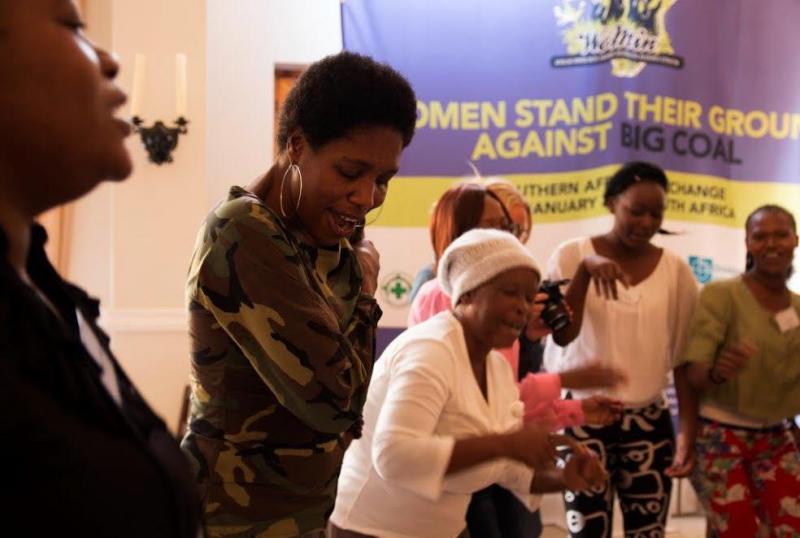
Dans le but de développer une organisation locale résiliente et efficace, créer des stratégies pour l’ « aujourd’hui » et renforcer l’analyse pour planifier la transition vers une société post-extractiviste, WoMin s’efforce d’élaborer des campagnes et des projets à l’échelle nationale et régionale.
Les cahiers (en anglais) Women Building Power offrent des solutions pratiques aux communautés rencontrant des problèmes liés à l’énergie qui leur permettent de se nourrir, tout en proposant une organisation en faveur de changements à plus grande échelle, tels que la justice climatique. Ces sept guides pratiques sont à la fois des cahiers de recherche, des brochures d’information et des outils.
Ils sont aussi le préambule à la campagne régionale que les femmes africaines mèneront prochainement sur les thèmes de l’Energie, les combustibles fossiles et la justice climatique. « La campagne vise à construire un mouvement de femmes capable d’induire des changements en profondeur sur la façon dont l’énergie est produite et distribuée dans nos pays, et plus généralement en Afrique ».
Pour mettre en valeur la forte résistance des femmes Somkhele et Fulani, des femmes des communautés ougandaises et éventuellement celles du Nigéria et de la RDC, WoMin travaille actuellement sur « No Good Comes from the Mine », un documentaire (en anglais) panafricain centré sur des personnages.
« Il nous raconte les histoires de femmes dont les vies sont négativement affectées par les activités minières et autres activités extractives. Il nous parle aussi de leur combat pour protéger et revendiquer leur terre, leur subsistance, leurs corps et leurs vies. Le film nous livre leur réalité quotidienne et la façon dont elles se mobilisent pour résister et protester contre les injustices… »
Le profil de ce membre a été publié en corrélation avec la 61ème session de la Commission de la condition de la femme (CSW) et le thème phare de cette année : « L’autonomie économique des femmes dans un monde du travail en pleine évolution ».
La bande annonce du documentaire (en anglais) :