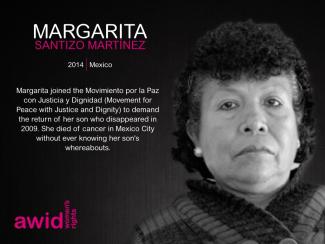
Margarita Santizo Martínez
Esta sección de análisis especial ofrece un análisis feminista crítico y acceso a los recursos clave relacionados con la «protección de la familia» en los espacios internacionales de derechos humanos.
Durante los últimos años, venimos observando una nueva y preocupante tendencia en el ámbito internacional de derechos humanos, donde se están empleando discursos sobre la «protección de la familia» para defender violaciones cometidas contra miembros de la familia, de modo de reforzar y justificar la impunidad y para coartar la igualdad de derechos en el seno de la familia y la vida familiar.
La campaña para «proteger a la familia» es impulsada por proyectos conservadores que tienen como fin imponer interpretaciones «tradicionales» y patriarcales de familia; quitando los derechos de las manos de sus miembros para ponerlos en las de la institución «familia».
Desde 2014 un grupo de estados opera como bloque en espacios de derechos humanos, bajo el nombre «Group of Friends of the Family» [Grupo de amigos de la familia], y a partir de entonces se han aprobado resoluciones sobre la «Protección de la familia» todos los años.
Esta agenda se ha extendido más allá del Consejo de Derechos Humanos (HRC, por sus siglas en inglés). Hemos visto cómo el lenguaje regresivo sobre «la familia» se ha introducido en la Comisión de la Condición Jurídica y Social de las Mujeres (CSW, por sus siglas en inglés), y hemos asistido a intentos por incluir este lenguaje en las negociaciones sobre los Objetivos de Desarrollo Sostenible.
AWID trabaja con asociadxs y aliadxs para resistir conjuntamente las agendas regresivas de «Protección de la familia» y otras, y para defender la universalidad de los derechos humanos.
En respuesta a la creciente influencia de actores regresivos en los espacios de derechos humanos, AWID se ha unido con aliadxs para formar el Observatorio de la Universalidad de los Derechos (OURs, por sus siglas en inglés). OURs es un proyecto colaborativo que monitorea, analiza y comparte información sobre iniciativas anti-derechos tales como la «Protección de la familia».
Derechos en Riesgo, el primer informe de OURs, traza un mapa de los actores que conforman el cabildeo global anti-derechos e identifica sus discursos y estrategias principales, señalando los efectos que estos discursos y estrategias están teniendo sobre nuestros derechos humanos.
El informe expone a la «Protección de la familia» como una agenda que ha promovido la colaboración entre una amplia gama de actores regresivos en las Naciones Unidas. La describe como un marco estratégico que aloja «múltiples posiciones patriarcales y anti-derechos, cuyo marco, a su vez, apunta a justificar e institucionalizar estas posiciones».
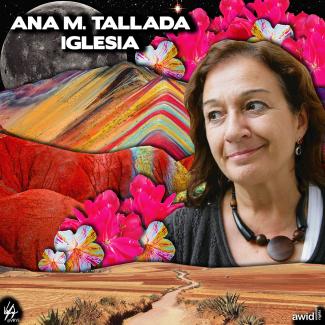
Ana était un ardente défenseure des droits des femmes et travaillait avec un large éventail de femmes au sein d’organisations de terrain ainsi que dans le secteur privé.
Elle croyait en la construction de ponts entre les secteurs. Ana était membre du Réseau national de promotion de la femme (RNPM) et participait activement à l'élaboration de nombreux programmes sociaux traitant de questions telles que la santé et les droits sexuels et reproductifs.
We take a position in solidarity with each other and diverse struggles for justice and freedoms. We strive to mobilize and strengthen collective action and practice meaningful ways of working with each other.
Claro que sim! Encorajamo-lo a compartilhar a ligação do nosso inquérito com as suas redes. Quanto mais perspetivas diversas recolhermos, melhor será a nossa compreensão do cenário financeiro para a organização feminista.

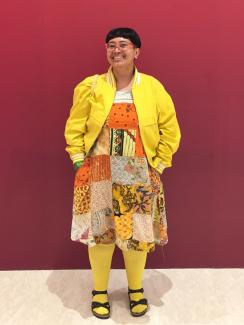
En Indonesia, la bunga [flor] está a menudo asociada a las mujeres. Esto significa que una flor también puede ser asociada a las mujeres transgénero, porque las mujeres transgénero son mujeres. Son igual de bellas, igual de fuertes, y tanto las flores como las mujeres trans no viven solo esperando ser «recogidas», sino que crecen y florecen y mueren como quieren. Esta obra es un tributo a mis amigas mujeres transgénero, en el Día Internacional de la Visibilidad Transgénero.
Just like women have learned to avoid dark streets for their safety, women journalists are forced to avoid reporting certain stories as a result of online harassment.
Harassment is not part of the job description and should be called out and challenged at every turn to ensure these important voices are not silenced.
This tribute to journalists was made on behalf of IFEX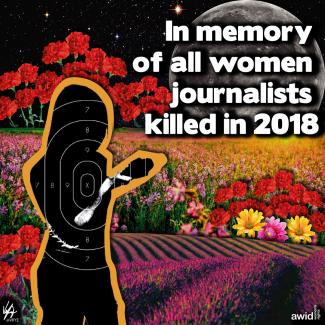
Trabajamos por un mundo basado en la justicia social, ambiental y económica; y por la interdependencia, la solidaridad y el respeto. Trabajamos para desmantelar los sistemas de poder opresivo y contra todas sus manifestaciones, incluidos el patriarcado, los fundamentalismos, los militarismos, los fascismos y el poder corporativo que amenazan nuestras vidas y nuestro mundo. Queremos un mundo justo en el que los recursos y el poder sean compartidos en formas que permitan que todas las personas prosperen.
Tengo la convicción de que las mujeres empoderadas dotan de empoderamiento a otras mujeres, y es por ello que la he pasado tan bien como afiliada de AWID. Todo lo que sé y lo que entiendo de feminismo e interseccionalidad se ha ampliado gracias a los contactos que tuve como parte del Equipo de la Calle de la Comunidad AWID. Espero que más mujeres se sumen y compartan temas e ideas que ayuden a otras mujeres.- Loyiso Lindani, Sudáfrica.
par Esra Özban
Dans un monde obsédé par le produit final, donner la priorité au processus est une méthode fondamentalement féministe. Les processus sont importants, et la sélection d’œuvres artistiques n’y fait pas exception. Alors que nous décidions quels films de la région d’Asie du Sud-Ouest et Afrique du Nord (SWANA) représenteraient et s’inscriraient le mieux dans le thème des Réalités féministes, la pandémie à laquelle nous sommes toujours confronté·e·s continue à transformer radicalement nos vies. Le simple fait de penser, d’écrire ou de m’exprimer est devenu un combat de tous les jours. Je n’arrivais à respecter aucune de mes échéances, j’envoyais les uns après les autres des courriels d’excuses à Kamee Abrahamian avec qui je travaillais en tant que commissaire indépendante pour le projet de Ciné-Club Féministe de l’AWID. Le soutien indéfectible de Kamee, sa compréhension et ses précieuses suggestions me rappelaient que, même dans deux parties différentes du monde, en tant que collègues qui ne se côtoient jamais en chair et en os, nous pouvons cocréer des microversions des Réalités féministes pour lesquelles nous vivons et auxquelles nous aspirons.
Pour moi, les Réalités féministes ont beaucoup à voir avec les sororités. Des sororités qui aident les femmes à déminer la région d’Artsakh/Haut-Karabakh. Des sororités nourries dans le Vegan Inclusive Trans Cake préparé par de jeunes féministes trans à Ankara, qui rappellent aux cis-ta qu’elles ne sont pas les bienvenues pour la génération Z. Des sororités qui poussent parmi les brins de menthe sur le toit de Dragica Alafandi dans le camp de réfugié·e·s de Dheisheh en Palestine occupée, dans Sowing Seeds of Resistance. Des sororités qui englobent et accueillent des proximités intimes, sexuelles et révolutionnaires dans le parc Gezi avec #resistayol. Des sororités qui mettent à jour une rencontre imaginée entre deux générations de femmes en exil, dans les rues de Haïfa, avec Your father was born 100 years old and so was the Nakba. Des sororités entre espèces qui construisent un (courageux) espace fictif, créé par Mounia Akl dans son Submarine, où la rebelle Hala, qui refuse de quitter une ville qui croule sous les déchets, est abandonnée à son sort avec un chien pour seul ami.
Cette sélection regroupe des petits morceaux de nombreuses Réalités féministes réalisées dans la région de SWANA ces dernières années. Nous continuerons à imaginer, apprendre et partager des incarnations féministes d’espoir et de pouvoir. En attendant, continuons à nous plonger dans les puissantes alternatives auxquelles ces cinéastes et personnages donnent vie dans ces films. Nous pouvons cocréer chacune des étapes, chacun des gestes et chacune des tentatives, en continuant de cohabiter dans ce monde avec d’autres qui vivent des Réalités féministes et continuent à donner vie à leurs rêves.
De Emily Mkrtichian et Jesse Soursourian
« Avec de beaux visuels associés à des scènes de vérité convaincantes, Motherland est une démonstration de camaraderie et de force entre femmes… Ce film est un témoignage de femmes du monde entier qui sont prêtes à travailler plus dur pour surmonter les obstacles qu'elles rencontrent. »
- Nosarieme Garrick, réalisatrice primée
« Motherland est une visualisation inspirante de solidarité, de courage et de cran… »
- Collectif Hers is Ours (La sienne est nôtre), organisateur du Festival Outsider Moving Art & Film
Motherland from jesse soursourian on Vimeo.
Emily Mkrtichian, à propos des Réalités féministes et d’Artsakh/HK
Nous avons filmé le court-métrage Motherland en République d’Artsakh, en 2018. Chacune de ces femmes me fascinait, par sa force, sa résilience et son humour – malgré le contexte dans lequel elles vivent. Ce contexte, en 2018, était celui du lendemain de la guerre brutale des années 1990, suite à laquelle leur pays est demeuré un territoire non reconnu (ou contesté, aux yeux de la communauté internationale), qui n’a pas reçu l’autonomie et l’indépendance dont bénéficient de très nombreux autres pays. L’Artsakh a également fortement souffert des conséquences visibles dans tous les lieux ayant subi de violents affrontements, et qui frappent bien souvent sur les femmes : troubles de stress post-traumatiques (TSPT), taux élevés d’alcoolisme, taux élevés de violence conjugale, une moindre égalité et moins de libertés pour les femmes, peu – voire pas – de représentation des femmes en politique et aux fonctions publiques. Face à tous ces défis, ce film tente de saisir et rendre compte du feu et du pouvoir des femmes d’Artsakh, qui pourraient ne pas correspondre au paradigme du féminisme occidental traditionnel mais qu’elles ont créé pour elles-mêmes grâce à des liens communautaires forts, l’attention pour leur famille, un dur labeur et la capacité à en rire ensemble. La République d’Artsakh est aujourd’hui à nouveau ravagée par une autre guerre qui lui a arraché 70 % des terres que ces femmes avaient fait grandir en les considérant leurs. Mais je peux vous promettre que ces femmes, et des milliers d’autres, continuent à tenir leurs familles, leurs communautés et leur culture debout avec les mêmes réseaux de soins, d’engagement à travailler dur et d’éclats de rire révoltés face à un avenir incertain.
De Baladi-Rooted Resistance
« Un film opportun à voir après avoir été témoin du dernier bombardement de Gaza par les forces de défense israéliennes. Un aperçu de la manière dont les femmes des communautés palestiniennes survivent à l'oppression structurelle, à travers l'histoire d'une bibliothèque de semences traditionnelles... et des femmes qui les maintiennent comme une forme de rébellion florissante. »
- Jessica Horn, stratège féministe panafricain·e, écrivain·e et cocréateur·rice de The temple of her skin (Le temple de sa peau)
« Regarder des femmes se rassembler et travailler collectivement pour l'autonomie alimentaire est, à mes yeux, à la fois thérapeutique et autonomisant. »
- Collectif Hers is Ours (La sienne est nôtre), organisateur du Festival Outsider Moving Art & Film
L’équipe de Baladi-Rooted Resistance, à propos des Réalités féministes
« Comment parler de Résistances féministes quand on vit à Deheisheh, un camp de réfugié·e·s palestinien·ne·s construit il y a 70 ans en Cisjordanie occupée pour abriter 3 000 réfugié·e·s, et qui en compte aujourd’hui 15 000?Ou quand la terre que l’on cultive est constamment menacée par des colons illégaux?
Quand on est une femme en Palestine occupée, on doit se battre non seulement contre le patriarcat mais également contre le colonialisme et une occupation militaire brutale. »
Dragiča et Vivien se battent contre ces multiples systèmes de domination, à leur manière.
Vivien se sert de semences indigènes pour aider les Palestinien·ne·s à préserver leur identité. Cultiver les aliments traditionnels, selon des méthodes traditionnelles, est porteur de sens : « Si on n’est plus productrice, on reste consommatrice, et quelle meilleure manière de réduire quelqu’une en esclavage qu’en en faisant sa consommatrice? Cela a lieu dans le monde entier, mais ici c’est doublé de l’occupation militaire. »
En Cisjordanie, 31,5 % des ménages souffrent d’insécurité alimentaire. Grâce à son jardin de comestibles sur son toit, Dragiča est parvenue à renforcer l’autonomie alimentaire de sa famille. Dans le camp bondé, où l’armée israélienne fait régulièrement des incursions la nuit pour arrêter et harceler les résident·e·s, le toit de Dragiča nourrit non seulement sa famille, mais nourrit surtout son âme. »
De Rüzgâr Buşki
Rüzgâr Buşki, à propos des Réalités féministes
« Je ne sais pas quoi dire à propos des Réalités féministes, mais en tant qu’artiste trans, en tant qu’activiste en Turquie, je sais que nos réalités sont rudes. Nous vivons dans la violence : physique, psychologique, économique et sexuelle! C’est la raison pour laquelle nous devons construire nos propres réseaux, et cocréer des microréalités les unes pour les autres est une Réalité féministe pour moi. #resistayol est mon premier film. Au début, je prévoyais de faire un film par/avec/pour des personnes trans qui ne tente pas de convaincre quiconque du fait que les personnes trans sont des personnes humaines, et qui ne soit pas centré sur la sensibilisation aux questions trans. Mais le soulèvement de Gezi, l’un des plus gros soulèvements de l’histoire de la Turquie, a eu lieu et le film s’est transformé en autre chose.
Je crois que le processus de production influence vraiment le devenir d’un film. Nous avons véritablement essayé de faire travailler des femmes, des personnes trans et non binaires à chacune des étapes du film. Le film est fait par des personnes qui se sont rassemblées dans un esprit de camaraderie, par amitié. Kanka Productions est fondé sur un esprit de camaraderie transféministe. Je veux que ce film donne espoir, qu’il soigne parce que nous portons toutes et tous de nombreux traumatismes dans nos corps; c’est ce qui nous constitue et ce qui nous relie. La guérison est un processus interminable et nous devons créer des espaces où respirer. #resistayol est une heure de respiration collective. »
Boysan Yakar dans #resistayol
« Alors, des lubunyas (queer) étaient assis·es dans le parc, et tout à coup, des bulldozers sont arrivés et tout le monde s’est senti frustré. Bref, c’est ce qui s’est passé. C’est le parc des Lubunyas et nous avions trente jours pour expliquer cela à cette immense ville. Tout le monde a reconnu que la nuit, des ibnes (pédés) baisent dans ce parc... Le Bloc LGBTI y a déplacé notre communauté. Nous ne faisions déjà absolument pas confiance à l’État, ni à la police, et ne disposions d’aucune sécurité. Nous avons défini nos propres manières de faire les choses, nos propres lois et coutumes pour survivre... Nous avons rapidement instauré la loi à Gezi... dans le souci de créer une langue et une compréhension communes entre tous ces groupes. La langue LGBTI du vivre-ensemble s’est propagée dans tout le parc. C’était la marche des Fiertés tous les jours, tout le monde lançait sans cesse des « ayol ». Nous avons égayé la langue nauséabonde et obsolète de la gauche. Je pense que nous avons eu une telle influence parce qu’on nous a renié·e·s pendant tant d’années. Des plus radicaux·ales aux plus conservateur·trice·s et nationalistes, tout le monde avait besoin de nous parce que tout le monde s’est habitué à se confronter à tout, tout le temps. Ils et elles n’avaient pas l’habitude de voir tant d’énergie, notre énergie. C’est pour ça que c’était un espace politique génial pour nous. Chaque jour,nous nous faisions un devoir de reprendre notre plus gros combat là-bas, le principal, qui est notre combat pour la visibilité et la reconnaissance. C’est pour cela que nous avons eu si mal de devoir quitter Gezi. »
De Pembe Hayat
« ... une déclaration variée, montrant la joie qui existe dans les amitiés au sein de la communauté queer en Turquie comme manifestation de rébellion et de résistance. »
- Nosarieme Garrick, réalisatrice primée
«... amusant, léger et aléatoire. Dans un monde constamment marqué et meurtri par la violence contre la communauté trans, rien, aucune action n'est (malheureusement) privée de sens. Il en va aussi de la joie, de l'amour et du hasard signifiant! »
- Collectif Hers is Ours (La sienne est nôtre), organisateur du Festival Outsider Moving Art & Film
Cayan Azadi dans Vegan Inclusive Trans Cake
« Salut les Barbie, les Ken, les poupées en porcelaine, les Craquinoux. Les copines de Chucky, les sœurs de Chucky, les beaux-frères de Chucky, et sans oublier les beaux-frères amants.
Alors, pourquoi avons-nous fait ce gâteau?
Nous avons entendu dire qu’une travailleuse du sexe trans avait tenté de se suicider, suite à des violences de gardiens et de policiers dans la rue. Elle est toujours au poste de police, et c’est la raison même pour laquelle nous avons fait ce gâteau. Ce gâteau travesti a été préparé pour montrer que nous existons à tous les moments de la vie, que nous persistons à exister, et ce gâteau illustre que cela ne sera pas effacé ou ignoré par la société.
Oui, il y a de la violence dans nos vies. Oui, il y a aussi beaucoup d’ombres, mais malgré cela, nous pouvons quand même nous amuser et profiter de la vie autant que possible. Bon appétit, sœurette! »
De Razan AlSalah
De Mounia Akl
« Il est réalisé comme un poème qu’on écrit… simple, un peu abstrait et émouvant. »
- Collectif Hers is Ours (La sienne est nôtre), organisateur du Festival Outsider Moving Art & Film
Esra Ozban:
Esra Ozban est programmateur·rice et réalisateur·rice de films originaire de Turquie. Son travail artistique, curatorial et universitaire se trouve à la croisée entre autres des pratiques archivistiques critiques, du travail du sexe, de la pornographie et des cultures cinématographiques féministes/queer.
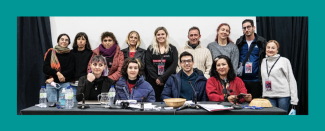
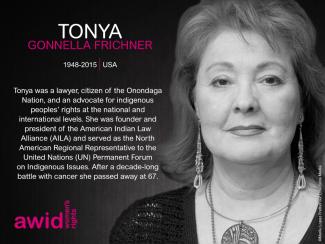
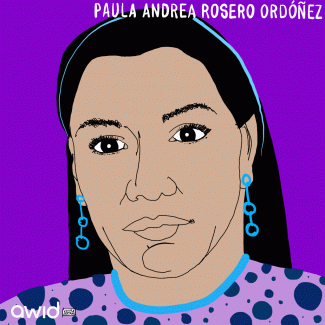
“[She] was a person who was characterized by her hard work in favor of the defense of human rights and the construction of peace in Nariño, especially in the municipality of Samaniego-Nariño.”
- Jorge Luis Congacha Yunda for Página10
She focused on civil and political rights, issues of impunity and justice, and contributed to uncovering the abuse of power, including corruption. She also participated in peacebuilding projects in her hometown Samaniego, such as the Municipal Peace Council and the Municipal Women’s Board.
Paula received death threats after exposing the irregular handling of resources and complaining about acts of corruption at the Lorencita Villegas Hospital in the Nariñense municipality. She was murdered on 20 May 2019, when two men approached and shot her at close range.
Le Forum de l’AWID n’est qu’une étape dans l’aventure des Réalités féministes. Parcourons ce chemin ensemble et explorons notre pouvoir en action !
"We believe that this is the time for us to continue to organize from a place of solidarity, hope and radical imaginations."
- Beijing+30 & CSW: Feminist meaning-making at a time of polycrisis
Alors que les fondamentalismes, les fascismes et autres systèmes d’oppression se métamorphosent et trouvent de nouvelles tactiques et stratégies pour consolider leur pouvoir et influence, les mouvements féministes persévèrent et célèbrent leurs victoires nationales, régionales et internationales.
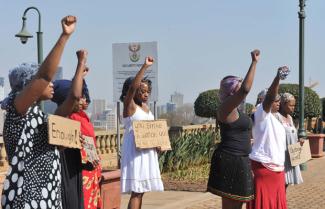
La reconnaissance en 2019 par le Conseil des droits de l’Homme du droit à l’intégrité et à l’autonomie corporelles, par exemple, a marqué une étape cruciale. Des résolutions du Conseil sur la discrimination envers les femmes et les filles admettent cependant un recul lié à des groupes de pression rétrogrades, des conceptions idéologiques ou un détournement de la culture ou la religion pour s’opposer à l’égalité de leurs droits. Des avancées féministes sont aussi notées dans le travail des Procédures spéciales, qui soulignent notamment l’obligation des États de contrer les doctrines de l’idéologie du genre, rappellent à l’ordre les antidroits qui détournent des références à la « culture », et signalent que les convictions religieuses ne peuvent pas servir à justifier la violence ou la discrimination.