Piera Oria
Esta sección de análisis especial ofrece un análisis feminista crítico y acceso a los recursos clave relacionados con la «protección de la familia» en los espacios internacionales de derechos humanos.
Durante los últimos años, venimos observando una nueva y preocupante tendencia en el ámbito internacional de derechos humanos, donde se están empleando discursos sobre la «protección de la familia» para defender violaciones cometidas contra miembros de la familia, de modo de reforzar y justificar la impunidad y para coartar la igualdad de derechos en el seno de la familia y la vida familiar.
La campaña para «proteger a la familia» es impulsada por proyectos conservadores que tienen como fin imponer interpretaciones «tradicionales» y patriarcales de familia; quitando los derechos de las manos de sus miembros para ponerlos en las de la institución «familia».
Desde 2014 un grupo de estados opera como bloque en espacios de derechos humanos, bajo el nombre «Group of Friends of the Family» [Grupo de amigos de la familia], y a partir de entonces se han aprobado resoluciones sobre la «Protección de la familia» todos los años.
Esta agenda se ha extendido más allá del Consejo de Derechos Humanos (HRC, por sus siglas en inglés). Hemos visto cómo el lenguaje regresivo sobre «la familia» se ha introducido en la Comisión de la Condición Jurídica y Social de las Mujeres (CSW, por sus siglas en inglés), y hemos asistido a intentos por incluir este lenguaje en las negociaciones sobre los Objetivos de Desarrollo Sostenible.
AWID trabaja con asociadxs y aliadxs para resistir conjuntamente las agendas regresivas de «Protección de la familia» y otras, y para defender la universalidad de los derechos humanos.
En respuesta a la creciente influencia de actores regresivos en los espacios de derechos humanos, AWID se ha unido con aliadxs para formar el Observatorio de la Universalidad de los Derechos (OURs, por sus siglas en inglés). OURs es un proyecto colaborativo que monitorea, analiza y comparte información sobre iniciativas anti-derechos tales como la «Protección de la familia».
Derechos en Riesgo, el primer informe de OURs, traza un mapa de los actores que conforman el cabildeo global anti-derechos e identifica sus discursos y estrategias principales, señalando los efectos que estos discursos y estrategias están teniendo sobre nuestros derechos humanos.
El informe expone a la «Protección de la familia» como una agenda que ha promovido la colaboración entre una amplia gama de actores regresivos en las Naciones Unidas. La describe como un marco estratégico que aloja «múltiples posiciones patriarcales y anti-derechos, cuyo marco, a su vez, apunta a justificar e institucionalizar estas posiciones».
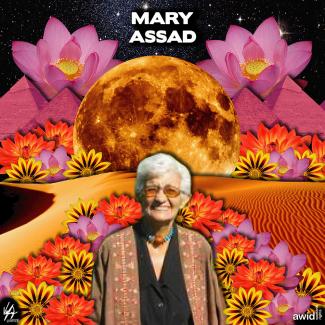
An expert on social development and anthropologist by training, Mary was best known as a pioneer in the battle against Female Genital Mutilation (FGM).
Born in Cairo Egypt in 1922, Mary’s work in development started early, as she joined the Youth Women’s Christians’ Association (YWCA). Mary was a member of the World Council of Churches and became increasingly concerned with issues regarding women’s health. Her long struggle against FGM proved fruitful in 2008, when Egypt finally criminalized the practice.
She is remembered as a mentor to many Egyptian feminists and activists.
يشمل التمويل الخارجي المنح والأشكال الأخرى من التمويل من المؤسسات الخيرية، الحكومات، الجهات ثنائية الاتجاه أو متعددة الاتجاهات أو الممولين/ات من الشركات أو الممولين/ات الأفراد، إن كان ذلك من دولتكم/ن أو من الخارج. لا يشمل هذا الموارد التي تنتجها المجموعات، المنظمات أو الحركات بشكل مستقل مثل رسوم العضوية، تطوع الطاقم أو الأعضاء/ العضوات أو الداعمين/ات، تجنيد الأموال المجتمعي، تأجير الأماكن أو بيع الخدمات أو المنتجات. لتسهيل عملية تعبئة الاستطلاع، تم شمل تعريف أنواع التمويل ووصفها بشكل قصير في الاستطلاع نفسه.
L’information contenue dans cette communication est confidentielle et exclusivement destinée à la personne à qui elle s’adresse.
Cette communication peut contenir des informations dont l’Association pour les Droits des Femmes dans le Développement (AWID) est propriétaire, et qui ne peuvent être reproduites ou partagées, en totalité ou en partie, sans le consentement écrit de l’AWID.
L’AWID ne garantit pas que toutes les informations contenues ici soient complètes ou correctes. Cette communication n’est ni une offre pour conclure un accord ni une confirmation d’accord présenté ici, sauf si le contexte l’indique clairement.
L’AWID ne vous conseillera pas vis-à-vis d’un accord pouvant être proposé ici. Cette communication ne constitue en rien une recommandation, une orientation ou une proposition pour conclure un quelconque accord.
L’AWID ne garantit en aucun cas les résultats attendus d’un accord. Cette communication peut contenir des perspectives et des opinions qui ne reflètent pas nécessairement celles de l’AWID.
Vous ne pouvez pas vous fier aux informations contenues dans cette communication dans l’optique de conclure un accord proposé ou autre.
Luchar contra viento y marea: la historia de la victoria sin precedentes de la Red de Solidaridad
En enero de 2022, la Red de Solidaridad organizó una huelga con 400 trabajadorxs. ¿Su principal demanda? Aumentar los salarios. La huelga fue convocada después de meses de conversaciones fracasadas con el Ministerio de Asuntos Sociales de Georgia como parte de un conflicto laboral.
Después de semanas de protestar, negociar, hablar con la prensa, resistir represalias y soportar el frío del invierno georgiano, lxs trabajadorxs obtuvieron concesiones sin precedentes del gobierno: aumento de los salarios, prestaciones por maternidad, cobertura de los costos de transporte, el cese de despidos, la compensación por los días de huelga, y más.
La huelga no solo resultó en ganancias materiales, sino que también hizo que lxs trabajadorxs se sintieran unidxs y empoderadxs para defenderse y luchar por condiciones de trabajo dignas ahora y en el futuro. Se convirtieron en una fuente de inspiración para todxs lxs trabajadorxs del país.
Puedes leer más sobre su victoria aquí.
Expande tus fronteras. Lxs afiliadxs de AWID representan de forma creciente una intersección diversa y vibrante de feministas que trabajan, entre otras cosas, en temáticas asociadas a la tierra, los derechos de lxs trabajadorxs, los derechos sexuales y la autonomía corporal. Al afiliarte, puedes conectar tus luchas con las de otros movimientos.
Mridula fue una firme promotora de la salud de las mujeres en una época en la que el tema de la salud sexual y reproductiva de las mujeres se consideraba tabú en Fiji.
Mridula orientó los primeros trabajos del movimiento por los derechos de las mujeres en Fiji sobre derechos sexuales y reproductivos y, en septiembre de 1999, el Fondo de Población de las Naciones Unidas le otorgó un premio regional sobre salud y derechos reproductivos. Fue una activista férrea, comprometida e incansable y apasionada por la salud y el empoderamiento de las mujeres.
Fue una valiosa integrante del movimiento de mujeres y del movimiento feminista de Fiji y sus aportes se recordarán por siempre. Falleció en 2017 por causas naturales.

Да, опрос доступен людям с различными нарушениями слуха, зрения, движений и когнитивных способностей.
Nos pensées vont actuellement aux nombreuses personnes à travers le monde qui sont les plus affectées par les conséquences de la pandémie mondiale de la COVID-19, et notamment aux communautés marginalisées, historiquement opprimées.
Nous invitons ici les artistes et les activistes qui font preuve de créativité à rejoindre un espace virtuel pour se connecter, créer une communauté et se soutenir les un·e·s les autres durant ces moments difficiles. Ainsi, nous avons créé une nouvelle communauté Slack qui nous permettra de partager en toute sécurité des réflexions, des apprentissages, des astuces de la vie de tous les jours, des ressources, des conseils, des craintes et des angoisses, des élans d’espoir et de bonheur, et de discuter plus généralement de nos activités.
Après avoir rempli le formulaire, nous vous enverrons votre invitation personnelle pour rejoindre la communauté.

Pour les personnes qui ne connaissent pas Slack, nous aurons des sessions et des tutoriels d’introduction une fois que vous êtes inscrit·e·s.
Nous travaillons en trois langues (français, anglais, espagnol), et nous vous encourageons donc à écrire dans la langue dans laquelle vous sentez le plus à l’aise et à utiliser des outils de traduction en ligne (Google Traduction ou autres) pour participer aux discussions.
Merci de lire les règles de la communauté
La cocréation de nos réalités féministes commence par nous-mêmes, et nos façons de nous traiter les un·e·s les autres. Nous nous efforçons de créer et de protéger des espaces qui sécurisent et soutiennent nos communautés, à la fois en ligne et en personne. Nous envisageons aussi les espaces sécurisés et accueillants, tout comme cocréés, et dont la possession est partagée. Nous attendons de nos membres d’agir de façon éthique, responsable et cohérente vis-à-vis des valeurs de l’AWID, et d’assumer une responsabilité collective pour garantir un environnement de respect mutuel et de solidarité.
Dans le cadre de nos échanges continus, nous partagerons un sujet hebdomadaire dans Slack dans le but de faciliter le dialogue et d’inspirer des processus de création artistique. Il pourra s’agir d’un processus introspectif, mais pour tirer le maximum de cette communauté, nous vous encourageons à interagir avec d’autres membres de la communauté, et de partager vos réflexions dans le cadre de discussions. L’objectif est d’inviter les gens à répondre librement et progressivement en écrivant ou en réalisant de l’art, de la manière qui leur convient le mieux.
Nous espérons tenir avec vous des échanges pertinents et vivants, et nous vous invitons donc à partager vos suggestions et vos commentaires. De manière générale, les thèmes se concentreront sur les expériences et les perspectives d’artistes, d’écrivain·e·s et de créateurs·rices -- lesquellesfourniront un espace aux gens pour concevoir à travers et au-delà du contexte mondial actuel via le prisme des réalités féministes.
L’Organisation Sindicale des Travailleur·euses du Sexe (Organización Sindical de Trabajadoras del Sexo, OTRAS) est le premier syndicat de travailleur·euses du sexe de l'histoire de l'Espagne. Le syndicat est née de la nécessité de garantir les droits sociaux, juridiques et politiques des travailleur·euses du sexe dans un pays où les mouvements d'extrême droite se renforcent au jour le jour.
Après des années de lutte contre le système juridique espagnol et les groupes abolitionnistes du travail du sexe qui ont appelé à sa fermeture, OTRAS a finalement obtenu son statut légal de syndicat en 2021.
Son objectif? Décriminaliser le travail du sexe et garantir des conditions et des environnements de travail décents pour tous·tes les travailleur·euses du sexe.
Le syndicat représente plus de 600 travailleur·euses du sexe, dont beaucoup de personnes immigrantes, racialisées, trans, queer, ou de genre non-conforme.
Nous célébrons le droit de chacun·e à choisir son identité, ses relations, ses objectifs, son travail, ses rêves et ses plaisirs, et ce qu'iel fait de son esprit, de son corps et de son âme. Nous croyons qu'il est nécessaire de travailler à l'accès aux ressources, aux informations et à des environnements sûrs et favorables qui permettent d'atteindre cet objectif.
Amal était une femme politique et une parlementaire de premier plan en Libye.
Membre du corps professoral de l'Université de Benghazi de 1995 jusqu’à sa mort en 2017, elle militait par ailleurs au sein de la société civile et était membre de diverses initiatives sociales et politiques. Elle a aidé les familles des martyrs et des disparus et a été l'une des membres fondateurs-trices d'une initiative de jeunesse intitulée « Jeunesse de Benghazi en Libye ».
Lors des élections législatives de 2014, Amal avait été élue à la Chambre des représentants avec plus de 14 000 voix (le plus grand nombre de voix jamais obtenues aux élections de 2014). Amal restera dans les mémoires de beaucoup comme une femme politique qui a œuvré pour assurer un avenir meilleur dans l'un des contextes les plus difficiles et les plus conflictuels de la région.

O tempo estimado para preencher o inquérito é 30 minutos.