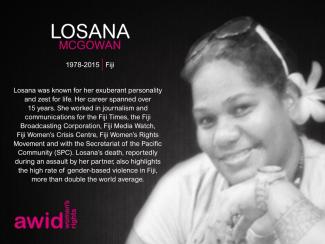
Losana McGowan
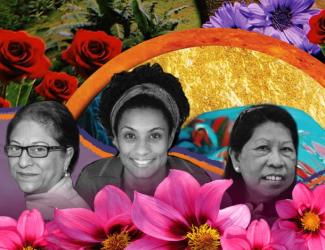
El Tributo de AWID es una exhibición de arte que honra a feministas, a activistas por los derechos de las mujeres y de la justicia social de todo el mundo que ya no están con nosotrxs.
El Tributo de este año cuenta y comparte las historias y narraciones de quienes crearon conjuntamente realidades feministas, ofrecieron visiones de alternativas a los sistemas y actores que nos oprimen, y propusieron nuevas formas de organizarnos, de movilizarnos, de luchar, de trabajar, de vivir y de aprender.
Se agregan a la galería 49 retratos nuevos de feministas y defensorxs de derechos humanos. Aunque muchxs feministas y defensorxs han fallecido debido a edad avanzada o enfermedad, muchísimxs han sido asesinadxs debido a su trabajo y por ser quienes eran.
Esta violencia creciente (de parte de Estados, empresas transnacionales, crimen organizado, sicarios no identificados, etc.) no se dirige solo a activistas individuales sino a nuestro trabajo común y a las realidades feministas.
Visita nuestra exhibición en línea
Lors retratos de 2020 fueron diseñados por la ilustradora y animadora galardonada, Louisa Bertman.
En AWID nos gustaría agradecer a las familias y organizaciones que nos compartieron sus historias personales, y así haber contribuido a este memorial. Nos unimos a ellxs para continuar el extraordinario trabajo de estxs activistas y defensorxs, y en el esfuerzo para asegurarnos de que se logre justicia en los casos que permanecen en la impunidad
"Ellos trataron de enterrarnos pero no sabían que éramos semillas."‐ Proverbio Mexicano
Primero tomó forma como una exposición física de retratos y biografías de feministas y activistas que habían fallecido, en el 12º Foro Internacional de AWID, en Turquía. Ahora vive como una galería en línea, que actualizamos cada año.
Desde 2012 hemos presentado más de 467 feministas y defensorxs.
Notre force collective, notre sagesse et notre engagement sont illimités... mais pas nos comptes en banque.
Cette synthèse s’appuie sur les réponses de 1 174 organisations féministes, de défense des droits des femmes, LBTQI+ et alliées (désignées ci-après comme « organisations féministes et de défense des droits des femmes ») issues de 128 pays, ayant participé à l’enquête Où est l’argent pour l’organisation des mouvements féministes ?
Tendemos a pensar en la comunicación del deseo como algo circunscrito a la intimidad de la alcoba y nuestras relaciones personales. Sin embargo, ¿podemos también pensar este tipo de comunicación como una estructura, una práctica que nutre nuestro trabajo, y cómo somos, y cómo actuamos en el mundo?
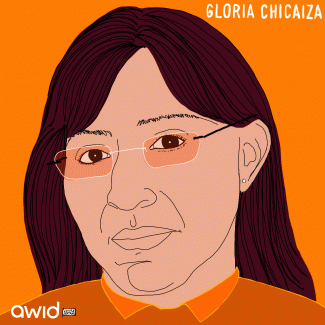
Gloria Chicaiza, an Ecuadorian social and environmental activist, was a fervent defender of land and water. She defied the status quo, fighting against a model of development based on extraction and worked tirelessly for ecological justice and the rights of communities affected by mining.
In diverse areas of Ecuador, Gloria was part of resistance actions in favour of protecting the ecosystem. With passion and dedication, Gloria supported the indigenous and environmental movement, its communities and organizations who oppose mining projects and protect their territories and collective life projects. She spoke out, in local and international foras, against the criminalization of dissent and resistance, the pressure and violence being enacted against community activists, in particular, women human rights defenders and in support of community led efforts for food sovereignty and sustainability.
She was the Mining Justice Coordinator at Acción Ecológica, member of the Latin American Network of Women Defenders of the Social and Environmental Rights and a Board member at the Observatory of Mining Conflicts of Latin America.
In October 2010, Gloria was accused by the mining company Curimining / Salazar Resources S.A. (with Headquarters in Vancouver, Canada) of sponsoring an act of terrorism, sabotage and illegal association to commit a crime. Acción Ecológica believed this to be “in retaliation for her work of denouncing the impacts of mining activities in the country.”
In 2014, Gloria supported the coordination of a delegation to the UN COP 20 Dialogue on Climate Change. The group consisted of 25 Indigenous women from Latin America.
Gloria passed away due to complications from a lung transplant on December 28, 2019. She is remembered for her resistance and tireless work.
"The fastest way to achieve sustainability is still resistance." - Gloria Chicaiza (2010 interview)
“Para GLORIA. GLORIA Agua. GLORIA Tierra. GLORIA Madre. GLORIA Revolución. GLORIA Hermana. GLORIA Cielo. GLORIAmiga. GLORIAstral. Thank you for weaving us together.” -Liliana Gutierrez
“Thank you Glorita, for sustaining hope, for keeping the fabric strong, for connecting the community, for the united hands, for solidarity, thank you Glorita for standing with us in the most difficult moments. Thank you for teaching us that throughout life, nobody gets tired.” (Chakana News)
“Gloria Chicaiza cherished and flourished in being one of many. And as humble as she was, she had an uncanny ability to lead and maintain a steady and thunderous beat, a life-affirming pulse that guided, mobilized, and inspired communities and networks in the protection of Mother Earth. She denounced all forms of violence against cuerpos-territorios. She endorsed el buen vivir.” - Gabriela Jiménez, Latin America Partnerships Coordinator, KAIROS
“Thank you Gloria Chicaiza from infinity we are sure that you will continue to support our struggle. You who continued to struggle with us despite your failing health. You will live on in the forests and the water that you defended with such courage. You will live on in our hearts.”- The community of Intag in Ecuador
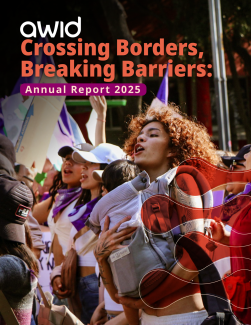
2025 was the year many of the storms we had long anticipated arrived all at once. From an avalanche of funding cuts, to intensified militarization and authoritarianism; from growing border violence to climate crises.
We asked what feminist movements will need not only to survive this moment, but to grow our collective strength and to shape our future. Our answer focused our work around three pillars: infrastructure, leadership and sustainability.
This is also the work of reinventing what it means for us at AWID to be global, to build solidarity and belonging across borders, to support movement and to mobilize action. There is no doubt that this is a time for courage, experimentation and collective imagination.

Là où les organisations de terrain pilotent et les multinationales sont tenues responsables.
📅 Mardi 11 novembre 2025
📍 En ligne et à l'Universidade Federal do Pará, Belém
Más que una divertida excentricidad para explorar las sensaciones, el BDSM puede ser una forma de abordar el dolor y el trauma emocionales. Ha sido un medio de sanación sexual para mí, pues me ha permitido una forma radical de liberación.
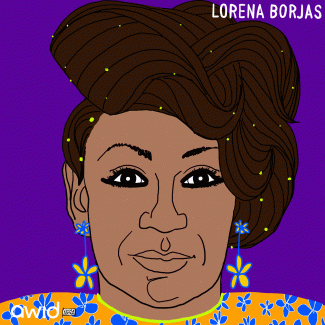
Lorena Borjas, una mujer trans latina y activista, vivía y trabajaba en el barrio de Jackson Heights de Queens, en la ciudad de Nueva York. En esas calles, cuidó de su comunidad durante años, defendiendo los derechos de las personas trans e inmigrantes, apoyando a lxs sobrevivientes del tráfico humano y del abuso, y haciendo campaña por los derechos de lxs trabajadorxs sexuales y de las personas que viven con VIH y SIDA.
Lorena era fuerte e incansable en su lucha por apoyar, defender y proteger a quienes son más marginalizadxs y discriminadxs por la transfobia, la misoginia y el racismo.
«Ella nos empujaba a brillar auténticamente, a convertirnos en un grito de subversión que dice “Aquí estoy, y merezco felicidad también”.» - Cecilia Gentili, activista trans amiga de Lorena
Luego de haber enfrentado ella misma numerosos traumas y dificultades como mujer trans inmigrante y víctima de tráfico humano, recabó conocimientos y memoria emocional de la fuente de sus propias experiencias para ayudar a construir y fortalecer la comunidad de la cual era parte, y que era parte de ella. Algunas de las formas en que llevó esto a cabo fue organizando y movilizando apoyo, que abarcaba desde proveer preservativos y conectar a las mujeres trans con distintos servicios sociales, hasta armar una clínica para el testeo de VIH en su propia casa.
«Era un alma tan bella que ayudaba a otrxs, aun cuando su propio camino era difícil y doloroso como inmigrante, como inmigrante trans. Creía que la comunidad trans necesitaba amor, aceptación, y compasión, y lo daba todo.» - Luchia Dragosh, supervisora de producción de QPTV de un documental sobre Lorena
En sus más de 25 años de activismo, también fundó con Chase Strangio (abogadx y activista por los derechos trans) el Lorena Borjas Community Fund. Este fondo ayuda a lxs diferentes integrantes de su comunidad (y en especial a las personas trans) que lidian con problemas de inmigración, para evitar el ciclo de arresto-cárcel-deportación.
Lorena falleció en marzo de 2020 por complicaciones derivadas del COVID-19.
Su enorme y hermoso legado será llevado adelante a través de las calles de Queens por la red y la comunidad que ella ayudó a crear.
« Continuaremos su trabajo desde donde ella lo dejó, un trabajo que es esencial para el bienestar de “mis pájaras”, como llamaba Lorena a las chicas trans de Queens que protegía bajo su ala.» - Cecilia Gentili
«Lorena nos trajo luz, cuando atravesábamos tiempos muy oscuros aquí en Nueva York. Nos trajo luz cuando tuvimos que enfrentar la epidemia del crack, cuando tuvimos que enfrentar la crisis del SIDA, cuando tuvimos que enfrentar los cambios en las políticas de inmigración.» - Cristina Herrera, fundadora y CEO de Translatina Network y amiga de Lorena
«Lorena ha hecho más que nadie que yo conozca para arrojar luz sobre la epidemia del tráfico en las comunidades transgénero y para ayudar a otras mujeres trans a escapar de la explotación.» - Lynly Egyes, representante de Borjas en nombre del Transgender Law Center
Mira un documental sobre Lorena Borjas (solo en inglés)
Lee un artículo publicado en The New Yorker sobre Lorena Borjas (solo en inglés)
Lee una nota de opinión de Cecilia Gentili publicada en The New York Times (solo en inglés)
Inna is a feminist queer activist and sociologist with many years of deep engagement in feminist and LGBTQI+ struggles, political education and organizing by and for migrant women, and Palestine liberation and solidarity. She joined AWID in 2016 and served in different roles, most recently as Director of Programs. She is based in Berlin, Germany, grew up in Haifa, Palestine/Israel, was born in St. Petersburg, Russia, and carries these political geographies and resistance to colonial past and present into her feminism and transnational solidarity.
Inna is the author of “Women's Economic Empowerment: Feminism, Neoliberalism, and the State” (Palgrave Macmillan, 2022), based on the dissertation which earned her a doctoral degree from the Humboldt University of Berlin. As an academic, she taught courses on globalization, knowledge production, identity and belonging. Inna holds an MA in Cultural Studies from the Hebrew University of Jerusalem. She is a Board Member of the Jewish Voice for a Just Peace in the Middle East (Germany), and previously of +972 Advancement of Citizen Journalism. Previously Inna worked with the Coalition of Women for Peace and she is passionate about mobilizing resources for grassroots activism.
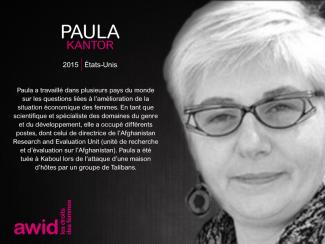
*Website in French
5 pm, tonight.


The handwriting on the invitation—
coily and brusque—
I’ve seen it five times in five years.
My body rouses,
feverish.
I need to fuck myself first.
The tide is high tonight and
I get
off.
I want to slow everything down,
taste time and space, etch them
into memory.
*
I’ve never been to this part of town before.
Unknown places excite me,
the way limbs and veins and bones
resist decay,
their fate uncertain.
At the door, I think twice.
The hallway is pitch black
and it makes me pause.
On the other side,
a portal of smell and color
opens like a curse,
into a sunny afternoon.


The breeze
makes my hair dance,
piques its curiosity,
compels it to move.
I hear the wheelchair whirring,
shaping the shadows.
Then I see them:
a lynx face
and a body like mine
and I find myself desiring both
again.
The creature motions me closer.
Their gestures write a sentence;
as I move toward them,
I notice its details:
wither, flesh, bliss
On their command, the vine that covers the hallway
hugging warm stones,
snakes up the wall.
It becomes a verb,
“to climb,”
and I’m reorientated when their claws point
to the vine-bed in the center.
I hear the wheels behind me,
then that sound.
It reverberates
like no other.
Their long black wings
elevate toward the ceiling
then they lunge forward.
The feline vision scans every detail,
every change,
every longing.
Can desire liquefy your muscles?
Can it act sweeter than the strongest
of tranquilizers?


A lynx sews the world
across our differences,
weaving lace around my knees.
Can desire crush the distance of the world,
compressing the seconds?
They come closer still,
lynx eye meeting human eye,
sniffing the air,
turning body into
urgency.
They beat down their wings.
Stirred,
the vines tangle around my waist/waste.
Their tongue thins time,
shifting grounds,
soothes, with their magic,
what stirs beneath.
I see the world in you, and the
world is exhausted.
Then they plead:
Let me feast on you.
« Si nous nous taisons, ils nous tuent, et si nous parlons [ils nous tuent] aussi. Alors parlons. » - Cristina Bautista, 2019
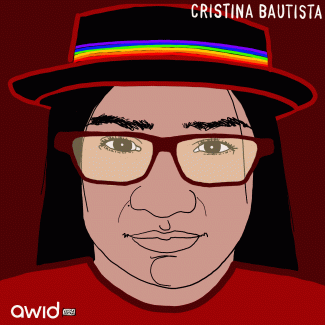
Défenseuse infatigable des droits du peuple Nasa, Cristina s’est exprimée haut et fort contre la violence à l’égard de sa communauté. Dans un discours devant les Nations Unies, elle appelait à protéger les vies des femmes autochtones et à les impliquer dans différents domaines de la vie. En 2017, Cristina était membre du Bureau des Nations Unies pour les droits humains des personnes autochtones. Le Fonds de contributions volontaires des Nations Unies pour les populations autochtones lui a octroyé une subvention en 2019.
« J’aimerais mettre en lumière la situation actuelle du peuple autochtone en Colombie, le meurtre de leaders autochtones, la répression de la contestation sociale. Au lieu d’aider, l’accord de paix a renforcé la guerre et l’exploitation de territoires sacrés en Colombie… Actuellement, nous travaillons en tant que femmes, dans presque toutes les nations autochtones, à un avenir meilleur pour nos familles. Je ne veux pas voir plus de femmes vivre dans ces conditions en milieu rural. Il nous faut des opportunités qui permettent aux femmes autochtones de participer à la vie politique, à l’économie, à la société et à la culture. J’acquiers une réelle force aujourd’hui, en voyant toutes ces femmes ici, et en voyant que je ne suis pas seule. » - Cristina Bautista, 2019
Cristina a été assassinée le 29 octobre 2019, ainsi que quatre autres membres de la garde autochtone désarmée, dans une attaque potentiellement menée par des membres de « Dagoberto Ramos », un groupe dissident FARC.
D’après Global Witness, « le nombre d’assassinats de leaders communautaires et sociaux·les a terriblement augmenté en Colombie au cours de ces dernières années ».
« La communauté nasa a prévenu à maintes reprises les autorités au sujet des menaces qui pèsent sur leur sécurité. Malgré les efforts déployés par les gouvernements colombiens successifs, les peuples autochtones continuent de faire face à d'importants risques, surtout les dirigeants communautaires ou religieux comme Cristina Bautista.» - Point presse des Nations Unies, 1er novembre 2019
Dr. Margo Okazawa-Rey ocupa la Cátedra Distinguida Barbara Lee en Liderazgo de Mujeres y es Profesora visitante de Estudios de Mujeres, Género y Sexualidad, y de Políticas Públicas en Mills College, en Oakland, California. También es Profesora Emérita en la Universidad Estatal de San Francisco.
Sus principales áreas de investigación y activismo durante los últimos 25 años han sido el militarismo, los conflictos armados y la violencia contra las mujeres, examinados de manera interseccional. La profesora Okazawa-Rey participa en el Consejo Consultivo Internacional de Du Re Bang en Uijongbu, Corea del Sur; en la Junta Internacional de Mujeres de Paz en el Mundo (PeaceWomen Across the Globe) en Berna, Suiza; y es co-presidente de la Junta del Centro Highlander para la Investigación y Educación en New Market, Tennessee, EE. UU.
Sus publicaciones recientes incluyen “Nation-izing” Coalition and Solidarity Politics for US Anti-militarist Feminists [«Coalición “nacio-nalizadora” y políticas de solidaridad para las feministas antimilitaristas de EE. UU.»], en prensa; “No Freedom without Connections: Envisioning Sustainable Feminist Solidarities” [«No hay libertad sin conexiones: contemplando solidaridad feminista sostenible»] (2018) in Feminist Freedom Warriors: Genealogies, Justice, Politics, and Hope [«Guerreras feministas por la libertad: genealogías, justicia, política y esperanza»], Chandra Talpade Mohanty and Linda Carty (eds.); Between a Rock and Hard Place: Southeast Asian Women Confront Extractivism, Militarism, and Religious Fundamentalisms [«Entre la espada y la pared: Las mujeres del sudeste asiático enfrentan el extractivismo, el militarismo y los fundamentalismos religiosos»] (2018); “Liberal Arts Colleges Partnering with Highlander Research and Education Center: Intergenerational Learning for Student Campus Activism and Personal Transformation,” Feminist Formations Special Issue on Feminist Social Justice Pedagogy (2018) [«Las universidades de artes liberales se asocian con el Centro Highlander para la Investigación y Educación: aprendizaje intergeneracional para el activismo estudiantil y la transformación personal», número especial de Formaciones Feministas sobre pedagogía de la justicia social feminista]
A hands-on deckgame for collectives to explore feminist economic alternatives and systems of care as crisis response. This deckgame is for all movements navigating global climate crises through play and strategy based on real-life scenarios. A creative avenue to strategize in meetings, workshops, and community gatherings!
Ce qui m’a aidée, c’est que j’adorais le travail qui consiste à aller dans les terres et à documenter les connaissances des gens. Donc j’ai quitté le confort...
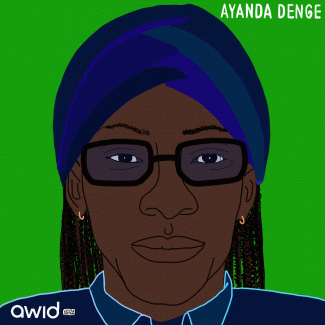
“I am a wonder… Therefore I have been born by a mother! As I begin to stutter, my life has been like no other…” - Ayanda Denge (read the whole poem below)
As a committed and fervent social justice activist, she fought for the rights of sex workers, trans persons, and for those of people living with HIV and AIDS. She was also a motivational speaker on cancer awareness, and campaigned for affordable and social housing, especially for poor and working-class people. Ayanda stood tall as a mountain against different and often abusive faces of discrimination.
“Being transgender is not a double dose, but it’s a triple dose of stigmatisation and discrimination. You are discriminated against for your sexual identity, you are discriminated against for your work, and you are discriminated against for your HIV status.” - Ayanda Denge, 2016
She was acting chairperson at the Sex Workers Education and Advocacy Taskforce (SWEAT) and also worked as an Outreach Coordinator at Sisonke, a national sex workers’ movement in South Africa.
“From us, from our regional head office, to SWEAT where I sit on the board, to Sisonke, a movement of sex workers in Cape Town. We all amalgamate, we have one cry and it’s a cry that is recognised internationally by international sex workers. We want decriminalisation of sex work.” - Ayanda Denge, 2016
She lived in the Ahmed Kathrada House, which was being occupied by the Reclaim the City campaign for social housing. In 2018, Ayanda was elected house leader. On 24 March 2019, she was stabbed to death in her room. The year prior, another resident was killed.
Reclaim the City draws a connection between the safety of the house residents and the Provincial Government withholding electricity and the human right to water:
“We cannot separate the safety of women and LGBTQI people living in the occupation from the refusal by the Western Cape Provincial Government to turn the electricity and water back on at Ahmed Kathrada House.
The house is pitch black at night. We need lights to keep each other safe. It is as if the Province wishes to punish poor and working class people, whose only crime is that we needed a home. While they may disagree with our reasons for occupying, they should be ashamed of themselves for putting politics before the safety and dignity of residents of this city.
Rest in Peace comrade Ayanda Denge, we shall remember you as we carry the torch forward in the struggle for decent well-located housing.”
Poem by Ayanda:
I am a wonder…
Therefore I have been born by a mother!
As I begin to stutter,
My life has been like no other.
Born in pain
Nourished by rain
For me to gain
Was living in a drain.
As I shed a tear
I stand up and hold my spear.
Voices echo, do not fear
Challenges within a year,
Challenges of hurt are on my case;
Community applauds as they assume I have won my race;
But in reality my work strides at a tortoise pace;
On bended knee I bow and ask for grace.
For the Lord
Is my Sword;
To remind humanity
That he provides sanity.
Why Lord am I this wonder?
The Lord answers me with the rain and thunder,
For questioning my father
Who has in the book of lambs
A name called Ayanda.
From the streets my life was never sweet
The people I had to meet;
At times I would never greet;
Even though I had to eat;
I’d opt to take a bow
Rather than a seat
Listen to the poem in Ayanda’s voice
“For my life represents that of a lotus flower, that out of murky and troubled waters I bloomed to be beautiful and strong...” - Ayanda Denge, watch and listen
“Ayanda, I want to say to you that you are still a survivor, in our hearts and minds. You are gone but you are everywhere, because you are love. How beautiful it is to be loved, and to give love. And Ayanda, that is the gift that you have given us. Thank you for all of the love, we truly did need you. Going forward, I promise to you that we will all commit to continue with the struggle that you have dedicated so much energy and your time to. And we will commit ourselves to pursuing justice in this awful ending to your life.” - Transcript of a message, in a farewell Tribute to Ayanda
“Ayanda was an activist by nature. She knew her rights and would not mind fighting for the rights of others. For me, it was no shock that she was involved with many organizations and it was known that she was a people’s person. It did not need to be the rights of LGBTI but just the rights of everyone that she stood for.” - Ayanda’s sister