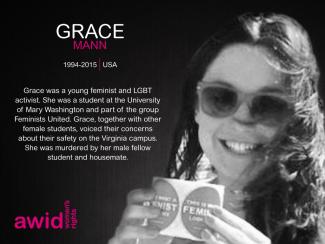
Grace Mann
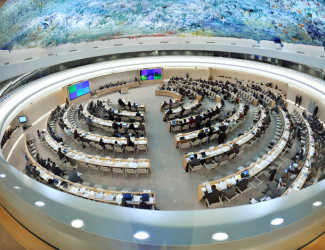
El Consejo de Derechos Humanos (CDH) es el cuerpo intergubernamental del sistema de las Naciones Unidas responsable de la promoción y protección de todos los derechos humanos en todo el mundo. El HRC se reúne en sesión ordinaria tres veces al año, en marzo, junio y septiembre. La La Oficina del Alto Comisionado para los Derechos Humanos (ACNUDH) es la secretaría del Consejo de Derechos Humanos.
Debate y aprueba resoluciones sobre cuestiones mundiales de derechos humanos y el estado de los derechos humanos en determinados países
Examina las denuncias de víctimas de violaciones a los derechos humanos o las de organizaciones activistas, quienes interponen estas denuncias representando a lxs víctimas.
Nombra a expertos independientes que ejecutarán los «Procedimientos Especiales» revisando y presentado informes sobre las violaciones a los derechos humanos desde una perspectiva temática o en relación a un país específico
Participa en discusiones con expertos y gobiernos respecto a cuestiones de derechos humanos.
A través del Examen Periódico Universal, cada cuatro años y medio, se evalúan los expedientes de derechos humanos de todos los Estados Miembro de las Naciones Unidas
Se está llevarando a cabo en Ginebra, Suiza del 30 de junio al 17 de julio de 2020.
AWID trabaja con socios feministas, progresistas y de derechos humanos para compartir conocimientos clave, convocar diálogos y eventos de la sociedad civil, e influir en las negociaciones y los resultados de la sesión.
✉️ Sur inscription pour les grands groupes. Espace ouvert pour les petits groupes. Inscrivez-vous ici
📅 Mercredi 12 mars 2025
🕒 14.00h-16.00h EST
🏢 Chef's Kitchen Loft with Terrace, 216 East 45th St 13th Floor, New York
Organisé par : AWID
In 2022, AWID celebrates 40 years since our founding. We’re using this moment to reflect on our past and learn from the road traveled as we prepare to look forward, and to forge the journey ahead. As we move through cycles of progress and pushback, we know that struggles for women’s rights and gender justice are iterative and non-linear. In collaboration with artist Naadira Patel, we created a scrapbook that highlights a handful of snapshots from AWID’s last four decades of feminist movement support.
We have not done all this on our own. We share this with deep appreciation for the constellation of feminist activists and groups that have made this work possible. In this context of so many converging crises, we embrace the opportunity to celebrate the power and resilience of feminist movements around the world.
You can also explore in full-screen mode.
Download the Scrapbook
«No adhiero al concepto de “Tercer Mundo”. Hago películas para que las personas (no importa de qué raza o color sean) puedan entenderlas. Para mí, solamente existen explotadores y explotadxs, eso es todo. Hacer una película significa tomar una posición.» - Sarah Maldoror
La innovadora Sambizanga (1972), su «película revolucionaria», sigue la lucha de liberación anticolonial de lxs militantes de Angola y capta la perspectiva de una mujer en el momento histórico en que se encuentra.
«Para muchxs cineastas africanxs, el cine es una herramienta revolucionaria, una educación política para crear consciencia. Se inscribe en la evolución de un Tercer Cine, que se orienta a descolonizar el pensamiento y promover cambios radicales en la sociedad.» - Sarah Maldoror
A lo largo de su carrera, Sarah (junto con otrxs artistas africanxs y caribeñxs) cofundó, en 1956, la primera troupe de teatro negra de Francia. Realizó alrededor de cuarenta películas, incluidos importantes documentales que difundieron la vida y la obra de artistas negrxs, entre lxs cuales se encuentra su amigo y poeta, Aimé Césaire, quien le escribió:
«A Sarah Maldo
que, cámara en mano,
lucha contra la opresión, la alienación
y se planta de cara
frente a la estupidez humana.»
Sarah estaba también dedicada a lograr que las mujeres africanas se apropiaran más del proceso de filmación. En una entrevista, señaló:
«Las mujeres africanas deben estar en todos lados. Deben estar en las imágenes, detrás de la cámara, en la sala de edición, y participar en todas las etapas de la realización de una película. Ellas deben ser quienes hablen sobre sus problemas.»
Sarah dejó un legado formidable para que sea continuado.
Nacida el 19 de julio de 1929, Sarah falleció el 13 de abril de 2020 debido a complicaciones por el coronavirus.
Mira Sambizanga y lee una reseña de la película en un artículo del New York Times de 1973 (solo en ingles)
por Ana María Belique
El Batey Naranjo es una comunidad un poco retirada de la ciudad, pero repleta de personas trabajadoras, llenas de entusiasmo. (...)
< arte: «Tejedoras de sueños», Diana Mar
In response to these challenges, we collaborated with Impactmapper to co-create a comprehensive resource that combines two powerful tools to strengthen the funding ecosystem for social justice movements.
Por Nkhensani Manabe
El título de la conversación «¿Pansexual, ginosexual o abrosexual? Una exploración de lo queer, el placer y la positividad sexual» da mucho para pensar. Tiffany Kagure Mugo (escritora, educadora y curadora de HOLAAfrica) comienza la sesión con una lectura de Touch [Tocar/Tacto], una compilación recientemente publicada de ensayos de ficción y no ficción sobre sexo, sexualidad y placer. En este fragmento, la autora propone la idea de que el placer es constante y continuo, que está presente en las actividades cotidianas, y que no se circunscribe a las relaciones sexuales.
Esta idea de que el placer es parte de la vida diaria (al igual que tantas otras cosas) atraviesa la conversación, que también abarca temas sobre el deseo, la atracción y la orientación sexual.

Desde el comienzo, existe una sensación de esperanza y posibilidad. Tiffany presenta opciones y explica alternativas, dándonos un nuevo lenguaje para hablar sobre quiénes somos, qué nos gusta, y cómo lo queremos. Esto se refiere al deseo y al sexo, pero se trata primordialmente de autoconocimiento y empoderamiento. Tiffany habla apasionadamente sobre tomar decisiones desde un lugar de poder: aprender sobre la propia identidad para poder elegir lo mejor para unx mismx.
En una conversación abierta y libre, que representa la actitud que Tiffany propone que todxs adoptemos, aprendemos que el conocimiento sobre sexo y sexualidad está en permanente cambio, que los límites se están desplazando. Lo que podemos haber aprendido o, más fundamentalmente, aquello que se nos ocultó durante la infancia o la adultez es exactamente el lugar desde donde deberíamos comenzar a desaprender y reprogramarnos. Tiffany señala que, actualmente, las personas jóvenes necesitan herramientas para comprender las experiencias que ya están teniendo, un recordatorio para no subestimar jamás lo que lxs niñxs y adolescentes saben sobre la clase de placer/es que quieren procurarse en la vida.
La conversación abrió mi mente a esto: conocerme a mí misma me ayudará a desarrollar mi confianza; podré encarar relaciones con cuidado no solo de mí misma sino de otras personas también. Aprender el lenguaje de orientación, atracción, deseo y placer contribuirá a profundizar mis futuras conexiones. Valoré el espacio para pensar sobre este aspecto de mi vida: las partes privadas e íntimas a las que no accedo habitualmente. El entusiasmo de Tiffany sobre el placer y la identidad desplazó mis propias barreras, permitiéndome considerar nuevas posibilidades personales.
La idea de aprender a establecer conexiones holísticas no es algo común todavía. En general, vivimos en una cultura de conexiones instantáneas y pasajeras. Casi no hay tiempo para reflexionar verdaderamente sobre cómo y por qué buscamos relaciones o parejas... al menos, no hasta que llega un momento de crisis.
Por supuesto, existen espacios privilegiados que están abiertos a preguntas y conversaciones, tales como el festival «Crear Résister Transform» de AWID y otras plataformas o publicaciones en línea que promueven la libertad de pensamiento. Pero el acceso a la información de fuentes útiles y sin prejuicios es algo que todavía debe ser descifrado. Esto puede deberse en parte al hecho de que la gente no se siente segura en el lenguaje de la sexualidad y el placer.
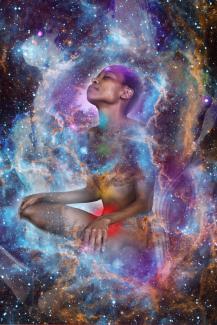
La idea del lenguaje y las herramientas se repite durante toda la presentación de Tiffany. Ella y sus colegas están haciendo el trabajo de hablar, enseñar y nutrir, viendo qué es lo que cada persona necesita, dónde están esas personas, qué quieren para sí mismxs, y caminando junto con ellxs mientras construyen sus mundos ideales, brindándoles nuevas palabras y definiciones para ayudarlxs a configurar sus identidades en las diferentes etapas de sus vidas.
Esta es la clase de conversaciones que se necesita, incluso en una sociedad que permanentemente difunde un sinfín de mensajes sobre el cuidado de la salud, con diferentes grados de detalle. A veces la gente debe retrotraerse de las instancias de perspectiva global, y sentirse alentada a aprender sobre sus opiniones y deseos individuales. Esto es lo que hace la ponencia de Tiffany: genera un espacio para cada persona, dentro del rompecabezas general.
Sexual: el deseo expreso de tener relaciones sexuales con una o varias personas
Sensual: el deseo de tocar a una o varias personas, de estar físicamente cerca, sin necesariamente incluir una relación sexual
Romántica: el deseo de salir con una o varias personas, o de estar en una relación con una o varias personas
Platónica: el deseo de construir amistades profundas
Estética: el deseo de mirar a una o varias personas, sintiendo placer por su apariencia
Estos cinco tipos o niveles de atracción ofrecen una forma abreviada para definir el deseo y el placer, y ayudan a contextualizar las distintas clases de placer que pueden experimentar las personas.
Pensar la atracción más allá de lo físico o sexual ofrece una nueva perspectiva sobre la conexión. Es una oportunidad para restar presión a las relaciones, abriendo oportunidades para asociaciones diferentes, más esclarecidas y satisfactorias.
Esta libertad y este conocimiento que propone Tiffany configuran una hoja de ruta hacia el futuro. La presentación ofreció una nueva perspectiva sobre aquello que es posible.
Tal como lo expresa el fragmento de apertura, el placer es continuo. A la luz de la ponencia de Tiffany, también resulta claro que el placer es dinámico y apasionante. Siempre hay más para aprender.
Esto puede parecer abrumador al comienzo, pero del otro lado del titubeo se encuentran la esperanza, el potencial y la libertad.
María Digna Montero était une défenseuse Garifuna (d’origine africaine et autochtone) du droit à la terre et membre de l’Organisation fraternelle noire hondurienne (OFRANEH), une organisation communautaire oeuvrant à protéger les communautés Garifunas, leurs droits, leur culture, leurs ressources et leur territoire ancestraux.
María a également enseigné dans l'école locale et été membre du groupe de travail sur l'éducation bilingue interculturelle de l'OFRANEH.
Le 12 octobre 2019, jour de la Résistance autochtone, des inconnus ont tiré à plusieurs reprises sur María, alors qu’elle se trouvait dans l’arrière-cour de sa maison.
Elle est l'une des six défenseuses Garifunas à avoir été assassinées entre septembre et octobre 2019 et selon OFRANEH, ces crimes n’ont fait l’objet d’aucune enquête de la part des autorités. Dans une déclaration officielle, l'organisation a également souligné le lien entre la violence à l’encontre des dirigeants Garifunas et le développement des industries extractives qui exploitent les ressources naturelles de leurs communautés, affirmant que cette violence s’inscrivait dans une "stratégie d'intimidation et d'expulsion systématique" menée par l'État hondurien.
“La tension accrue et les risques croissants pour la sécurité et les droits humains des dirigeants des communautés et des territoires ancestraux sont le résultat de la dépossession, du déplacement et de la criminalisation des communautés et des mégaprojets d'extraction promus par l'État en collaboration avec les entreprises nationales et internationales". - Communiqué de l'OFRANEH, 12 octobre 2019
El Foro es un ejemplo vivo de lo que el más grande NOSOTRXS podemos hacer. Vamos al Foro, somos semillas, luego nos sembramos. Esto lo tenemos que celebrar.
- Sara Abu Ghazal, Líbano
Notre programme final du Feminist Film Club est maintenant disponible: « Films from Nuestramérica » est une série de films sur les réalités féministes d'Amérique latine et d'Amérique centrale organisée par Alejandra Laprea (Venezuela).

Search for funders based on their requirements for groups to be registered.
Chers êtres splendides,
Je sais que vous y êtes presque. Vous le sentez, non? La manière dont les choses doivent changer et que vous devez recentrer.
Ceci est une lettre pour vous dire de le faire. Choisissez votre guérison. Choisissez d’aller bien. Mieux que bien. Choisissez d’être entières, être heureuses. De pleurer pour vous-même et pour personne d’autre. Choisissez de laisser le monde dehors et de lui dire « Je reviens dans cinq minutes ». Ou dans cinq jours. Ou dans cinq ans.

Ou jamais.
Choisissez de ne pas tout prendre. Choisissez de ne rien en prendre. Parce que rien de tout cela n’est à vous. Et ça ne l’a jamais été. On vous dit depuis votre naissance que c’est à vous. Les problèmes de votre famille. Les problèmes de votre amoureuxse. Les problèmes du quartier. Les problèmes du monde. Cette petite voix constante qui vous dit que ces problèmes vous appartiennent. Ils sont à vous. C’est à vous de les tenir, à vous de les supporter. À vous de les régler.
C’était un mensonge.
Un bobard.
Une arnaque.
Une escroquerie.
Les problèmes de l’univers ne sont pas les vôtres.
Les seuls problèmes qui sont à vous sont les vôtres. Tout le reste peut aller se faire voir.
Permettez-vous de tout lâcher et de partir en courant dans la jungle. Faites connaissance avec une nymphe vêtue de marguerites, ouvrez une petite librairie dans les racines d’un arbre. Dansez toute nue et hurlez à la lune. Discutez avec Ochun sur les berges de la rivière.
Ou buvez simplement une tasse de thé quand vous avez besoin de prendre le temps de vous poser.
Donnez-vous la permission de disparaître dans la brume et réapparaissez trois pays plus loin en tant que mystérieuse chocolatière au passé un peu trouble avec un penchant pour les habits excentriques et les cigares.
Ou arrêtez de prendre les appels du travail cette fin de semaine.
Nagez jusqu’à une île déserte avec votre amoureuxse et habillez-vous de noix de coco avec lesquelles vous aurez fait un rhum que vous savourerez au coucher du soleil.
Ou dites non quand vous n’avez pas la capacité de faire de la place à quelqu’un.
Les options pour vous retenir sont innombrables.
Quoi que vous fassiez, sachez que le monde continuera de tourner. C’est là toute la beauté et la douleur de l’expérience. Qui ou quoi que vous choisissiez plutôt que vous-même et votre âme, le monde continuera toujours de tourner.
Donc, choisissez-vous.
Le matin, quand la première lueur apparaît, choisissez-vous. Quand arrive midi et qu’il est l’heure de pleurer pendant vos heures de travail, choisissez-vous. Le soir, quand vous réchauffez des restes parce que vous n’avez pas eu le temps de cuisiner, choisissez-vous. Quand l’anxiété vous réveille et que l’existence fait silence à 3 h 45 du matin.
Choisissez-vous.
Parce que le monde continuera toujours à tournoyer, de guingois, et que vous méritez d’avoir quelqu’un·e qui essaie toujours de le redresser pour vous.
Avec amour,
Votre nymphe de la jungle vêtue excentriquement
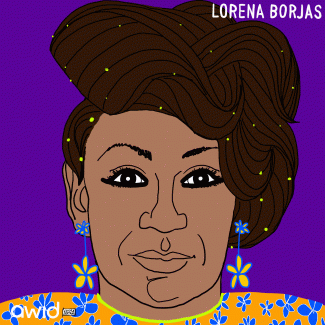
Lorena Borjas, a trans Latina woman and activist, lived and worked in the Jackson Heights neighborhood of Queens, New York City. In those streets, she looked after her community for years, advocating for trans and immigrant rights, supporting survivors of human trafficking and abuse, campaigning for sex workers’ rights and those of people living with HIV and AIDS.
Lorena was strong and tireless in her fight to support, defend, and have the back of those most marginalized and discriminated by transphobia, misogyny and racism.
“She pushed us to shine authentically, to become a scream of subversion that says, ‘I am here, and I deserve happiness, too.’” - Cecilia Gentili, a trans activist and Lorena’s friend
Having faced numerous traumas and hardships herself, as a trans immigrant woman and victim of human trafficking, Lorena pulled knowledge and emotional memory from the well of her experiences in order to help build and strengthen the community she was part of and which was part of her. Some of the ways she did this was to organize and mobilize support ranging from providing condoms and connecting trans women to different services, to setting up an HIV testing clinic in her own home.
"She was such a beautiful soul who helped others when her journey was difficult and painful as an immigrant, as a trans immigrant. She believed the trans community needed love, acceptance, and compassion, and she gave it all.” - Luchia Dragosh, QPTV Supervising producer of a documentary about Lorena
In more than 25 years of activism, she also founded the Lorena Borjas Community Fund together with Chase Strangio (lawyer and trans rights activist). The Fund helps the many different members of her community (and especially trans persons) dealing with immigration challenges to avoid the cycle of arrest-jail-deportation.
Lorena passed away in March 2020 of complications from COVID-19.
Her enormous and beautiful legacy will be taken forward through the streets of Queens by the network and community she co-created.
“We will pick up her work where she left it, work that is essential to the well-being of “mis pajaras” as she called the trans girls of Queens under her wing.” - Cecilia Gentili
"Lorena brought light to us when we were living through a very dark time here in New York. She brought us light when we were dealing with the crack epidemic, when we were dealing with the AIDS crisis, dealing with changes in immigration policies." - Cristina Herrera, founder and CEO of Translatina Network and Lorena’s friend
"Lorena has done more than anyone else I know to shine a light on the epidemic of trafficking in transgender communities and to help other trans women escape exploitation." - Lynly Egyes (represented Borjas on behalf of the Transgender Law Center)
Watch a documentary about Lorena Borjas
Read a postscript in The New Yorker about Lorena Borjas
Read an opinion piece in the New York Times by Cecilia Gentilin
Le Forum international de l’AWID est un événement phare que l’association organise tous les trois ou quatre ans. C'est la plus importante manifestation au monde entièrement consacrée aux mouvements féministes et de justice de genre dans toute leur diversité. Il s'agit d'un rassemblement mondial qui réunit activistes féministes, mouvements alliés, universitaires, bailleurs de fonds et décideur·e·s politiques. Les forums se tiennent successivement dans différentes régions et différents pays du sud mondial.
Check out the AWID Feminist Film Club program “Holding up the Skies” - a film series on Feminist Realities from Africa and the African Diaspora curated by Gabrielle Tesfaye
→Region
→Level of organizing
→Registration status
→Priorities and Agendas