AWID es un organización feminista internacional de membresía, que brinda apoyo a los movimientos que trabajan para lograr la justicia de género y los derechos de las mujeres en todo el mundo.
Una organización creativa, frente a una creciente amenaza
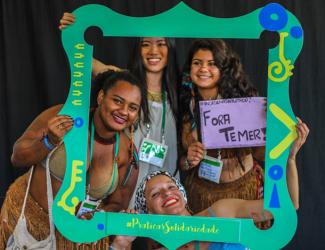
El activismo joven feminista juega un papel fundamental en las organizaciones y los movimientos por los derechos de las mujeres a nivel mundial, ya que aborda los nuevos problemas a los que las feministas se enfrentan en la actualidad. Esta fuerza, creatividad y adaptabilidad son esenciales para la sostenibilidad de la organización feminista.
A la vez, enfrentan obstáculos específicos para ejercer su activismo, como acceso limitado al financiamiento y al apoyo, falta de oportunidades de capacitación, un incremento considerable de los ataques contra las jóvenes defensoras de los derechos humanos. Esto crea una falta de visibilidad que hace más complicada su inclusión y participación efectiva en los movimientos por los derechos de las mujeres.
Un enfoque multigeneracional
El programa de activismo joven feminista fue creado para garantizar que las voces de las jóvenes sean escuchadas y se vean reflejadas en el discurso feminista. Queremos garantizar que las jóvenes feministas tengan un mejor acceso al financiamiento, a las oportunidades de desarrollo de las capacidades y a los procesos internacionales.
Además de apoyar directamente a las jóvenes feministas, estamos trabajando con activistas por los derechos de las mujeres de todas las edades, con modelos y estrategias prácticas para procesos efectivos de organización intergeneracionales.
Nuestras acciones
Queremos que las activistas jóvenes feministas jueguen un papel en el proceso de toma de decisiones que afectan sus derechos a través de:
Fomento de la comunidad e intercambio de información a través de la Conexión Joven Feminista. Dada la importancia de los medios virtuales para el trabajo de las jóvenes feministas, nuestro equipo lanzó la Conexión Joven Feminista en mayo de 2010 para compartir información, construir capacidades a través de seminarios web y discusiones electrónicas y para alentar la construcción de la comunidad.
Investigación y generación de conocimientos sobre el activismo joven feminista, que aumenten la visibilidad y el impacto del activismo joven feminista en los movimientos por los derechos de las mujeres y otros actores clave, como los donantes.
Promoción de procesos más efectivos de organización intergeneracional, explorando mejores formas de trabajar en conjunto.
Apoyo a la participación de las jóvenes feministas en los procesos globales de desarrollo, por ejemplo en los procesos de Naciones Unidas.
Colaboración con todas las áreas prioritarias de AWID, incluyendo el Foro, para garantizar así que las contribuciones clave de las jóvenes feministas, así como sus perspectivas, necesidades y activismo se reflejen en los debates, políticas y programas que las afectan.
Olivia was the spiritual leader of the Shipibo Konibo indigenous peoples.
A wise Indigenous woman and grandmother, she was known for cultivating traditional medicine and the sacred songs of her people (Íkaros). Olivia Arevalo was an active defender of the cultural and environmental rights of her people. Olivia’s murder occurred in a context of territorial conflict between the Shipibo community and companies that desire to take over their land to cultivate palm oil.
Members of her community have said: “Her death is an aggression against the entire Shipibo community. She was the living memory of her people”.
J’ai répondu aux questions de l’enquête mais j’ai changé d’avis et souhaite annuler notre participation, comment puis-je faire?
Si, quelle qu’en soit la raison, vous souhaitez que votre participation soit annulée et vos réponses supprimées, vous en avez le droit. Merci de nous contacter par le biais de ce formulaire, en indiquant « Enquête WITM (Où est l’argent?) » dans l’objet de votre message. Nous annulerons votre participation et supprimerons vos réponses.
Merci d'avoir participé à la création de nos Horizons féministes
Un grand MERCI d'avoir pris part au 13ème Forum international de l'AWID !
Toute l'équipe de l'AWID vous remercie de nous avoir rejoint pour ces quatre jours d'apprentissage et de célébrations, pour envisager, rêver et co-créer nos Horizons féministes.
Nous avons été incroyablement inspiré-e-s et enthousiasmé-e-s par tout ce travail collectif que nous avons accompli ensemble !
Pour plus d'images, d'inspiration et de ressources :
De la India, Janette era enérgica, extraordinaria, compasiva y amorosa.
Su intolerancia de la injusticia y su firme compromiso de defender los derechos de todas las personas la llevaron a trabajar en TARSHI (una ONG que trabaja en temas de la sexualidad y la salud y derechos sexuales y reproductivos) durante más de 15 años. Janette dirigió con destreza las finanzas, los recursos humanos y los aspectos operativos del trabajo de TARSHI, atravesando hábilmente la laberíntica burocracia a la que están sometidas las ONG indias.
Lxs integrantes de su equipo recuerdan que «Ella se quedaba vigilando, de manera que pudiéramos seguir el rumbo en aguas abiertas. Mujer de muchos talentos, Janette no sólo nos ayudó a conseguir nuestra propia oficina sino que también la diseñó para una utilización óptima». Amaba viajar y a los animales, y estaba interesada en la terapia asistida por animales.
Can I contact someone if I have questions or concerns?
If you have any questions or concerns, please contact us via the form here, indicating “WITM Survey” as the title of your message. You can also write to us at witm@awid.org.
Agroecology and Food Sovereignty
Context
The search for alternative means of food production based on environmental sustainability is gaining ground across regions. This worldwide search comes with a common characteristic: the need to involve rural people and particularly women, building on their local priorities and knowledge by employing the principle of agroecology.
Definition
Agroecology is a way of practicing agriculture or using technologies that do not harm the environment. It proposes breaking with the hegemonic rural development model based on large landed estates and single-crop plantations that benefit mostly agricultural businesses and entrenches social exclusion.
In family farming, agroecology manifests as a resistance to the current development model and its social, cultural, environmental, and economic problems. It opposes the lack of the farmer’s financial capital autonomy; and it symbolizes a resistance to the current agribusiness model.
Feminist perspective
Efforts based solely on agroecology may not be sufficient to solve all problems of women’s marginalization and invisibility. A feminist perspective is then crucial to analyze the norms associated with the idea of family as currently constituted as the perfect institution, as well as with the condition of women’s subordination.
In simpler terms, it is important to include in this debate a reflection on socially constructed gender roles to advance the emancipatory potential of agroecology.
« Mes rêves et mes objectifs ont toujours été les mêmes que ceux de Lohana Berkins : que la coopérative continue à exister et non à fermer. Continuez à offrir cet endroit à nos collègues travesti, à leur donner du travail et un lieu de soutien»
Membre de la communauté autochtone maya ixil, Juana était infirmière professionnelle et coordinatrice du Comité de développement des agriculteurs (CODECA)
CODECA est une organisation de défense des droits humains composée d'agriculteurs autochtones et vouée à la promotion des droits à la terre et du développement rural pour les familles autochtones dans la microrégion de Nebaj Quiché. Elle a d'abord rejoint le CODECA en tant que membre de la Juventud de CODECA (branche de la jeunesse).
Au moment de son décès, elle venait d’être élue membre du Comité exécutif du Mouvement de libération des peuples (MLP).
Le corps de Juana a été retrouvé par des voisins au bord d’une petite rivière sur la route située près de Nebaj et du village d’Acambalam, au Guatemala. Selon le CODECA, son corps portait des traces de torture.
Para partilhar a sua experiência vivida com o financiamento da sua organização;
AWID Members Engaging at CSW61
Member states and women's rights advocates and organisations are gathering at the United Nations Headquarters in New York from 13 - 24 March for the 61st Commission on the Status of Women to address ‘women’s economic empowerment’ in the context of Sustainable Development Goal 5.
Whilst AWID is looking forward to physically meeting those of you who will be in New York, we want to engage with all those who cannot attend CSW, and as much as possible, amplify your voices in relevant spaces.
Continue reading to find out how to engage with AWID around CSW, whether you are attending physically or not.
Participate in an artistic takeover!
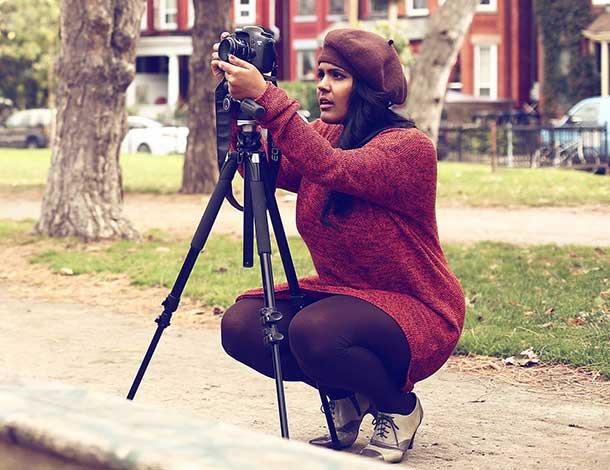
We are thrilled that AWID member Nayani Thiyagarajah is attending CSW this year and will take over the AWID Instagram. She will be available onsite to connect with other members for a possible feature on our Instagram. She will also explore possibilities of including some AWID members in a short film on the theme, ‘The personal is political’, a story of Nayani’s participation in this year’s CSW.
Nayani Thiyagarajah
Who is Nayani?
Nayani Thiyagarajah is a director, producer, and writer, dedicated to stories for the screen. A daughter of the Tamil diaspora, she calls Toronto home. For over 10 years, Nayani has worked in the arts and cultural industries. Her first independent feature documentary Shadeism: Digging Deeper (2015) had its World Premiere at the 2015 Zanzibar International Film Festival, where it won a Special Jury Prize. Nayani recently launched [RE]FRAME, with her producing partner Camaro West, a production company based out of Atlanta and Toronto, focused on re-framing the narratives around Black, Indigenous, and other people of colour through storytelling on screen.
On a more serious note, it should be noted that Nayani has a strange laugh, she's quite awkward, and her head is always in the clouds. She feels blessed beyond belief to create stories for the screen and play make believe for a living. Above all else, she believes in love.
Interested in meeting Nayani and being considered for inclusion in the film?
Send an email to membership@awid.org with the subject line “CSW Artistic Takeover”
By 13 March 2017
Please include your full name and country information.
Can't attend? Voice it!
If you are not able to attend CSW61 because of a travel ban, either due to the one imposed by the Trump administration or one you are facing from your own government, please share your story with us.
Send us messages you want heard in the United Nations spaces concerning funding, the impact of the reinstatement of the Global Gag Rule, and the need to push back against all types of religious fundamentalisms. You can send these in the following formats:
Video: no longer than two minutes and sent through a file sharing folder (for example dropbox, google drive)
Audio: no longer than two minutes and sent through a file sharing folder (for example dropbox, google drive)
Image: you can share a photo or a poster of your message
Text: no longer than 200 words and sent in the body of an email or in a word document
AWID members tell us that connecting with other members at CSW is valuable. In such a huge advocacy space, it is useful to connect with others including activists working on similar issues, or originating from the same country or region. Recognising the importance of connecting for movement building, we invite you to:
Interested in connecting with other members @CSW61?
If you are attending the CSW, we’d love to see what’s going on through your eyes!
Show us by capturing a moment you find speaks to the energy in the CSW space, be it on or off site. We hope to publish some of your ‘images’ on our social media channels and share on awid.org.
You can send us:
colour and/ or black and white photographs with a title (if you wish) and
a caption (no longer than 100 words) about the story your image tells.
Please also include:
your full name and country of origin and
let us know if we can publish the information you shared (in part or in full).
Madiha was a prominent Professor of Sociology who actively engaged with civil society as an advocate for women’s rights in the Arab region.
She chaired the Alliance for Arab Women and was a member of the Committee on Civil Society and the Committee on the Development of Minia Governorate with the National Council for Women. She produced numerous papers that shed light on, and analyzed, gender inequalities and discrimination against women.
She is remembered fondly by colleagues, students and friends.