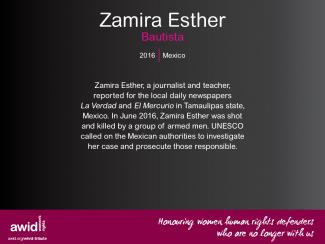
Dr. Nuzhat Amin

El activismo joven feminista juega un papel fundamental en las organizaciones y los movimientos por los derechos de las mujeres a nivel mundial, ya que aborda los nuevos problemas a los que las feministas se enfrentan en la actualidad. Esta fuerza, creatividad y adaptabilidad son esenciales para la sostenibilidad de la organización feminista.
A la vez, enfrentan obstáculos específicos para ejercer su activismo, como acceso limitado al financiamiento y al apoyo, falta de oportunidades de capacitación, un incremento considerable de los ataques contra las jóvenes defensoras de los derechos humanos. Esto crea una falta de visibilidad que hace más complicada su inclusión y participación efectiva en los movimientos por los derechos de las mujeres.
El programa de activismo joven feminista fue creado para garantizar que las voces de las jóvenes sean escuchadas y se vean reflejadas en el discurso feminista. Queremos garantizar que las jóvenes feministas tengan un mejor acceso al financiamiento, a las oportunidades de desarrollo de las capacidades y a los procesos internacionales.
Además de apoyar directamente a las jóvenes feministas, estamos trabajando con activistas por los derechos de las mujeres de todas las edades, con modelos y estrategias prácticas para procesos efectivos de organización intergeneracionales.
Queremos que las activistas jóvenes feministas jueguen un papel en el proceso de toma de decisiones que afectan sus derechos a través de:
Fomento de la comunidad e intercambio de información a través de la Conexión Joven Feminista. Dada la importancia de los medios virtuales para el trabajo de las jóvenes feministas, nuestro equipo lanzó la Conexión Joven Feminista en mayo de 2010 para compartir información, construir capacidades a través de seminarios web y discusiones electrónicas y para alentar la construcción de la comunidad.
Investigación y generación de conocimientos sobre el activismo joven feminista, que aumenten la visibilidad y el impacto del activismo joven feminista en los movimientos por los derechos de las mujeres y otros actores clave, como los donantes.
Promoción de procesos más efectivos de organización intergeneracional, explorando mejores formas de trabajar en conjunto.
Apoyo a la participación de las jóvenes feministas en los procesos globales de desarrollo, por ejemplo en los procesos de Naciones Unidas.
Colaboración con todas las áreas prioritarias de AWID, incluyendo el Foro, para garantizar así que las contribuciones clave de las jóvenes feministas, así como sus perspectivas, necesidades y activismo se reflejen en los debates, políticas y programas que las afectan.

Esta edición en alianza con Kohl: una publicación para Body and Gender Research analizará soluciones, propuestas y realidades feministas para transformar nuestro mundo actual, nuestros cuerpos y nuestras sexualidades.
Cette année, aux côtés de militant.e.s féministes du monde entier, nous serons à la CSW68 à New York. Nous serons là pour contester les discours capitalistes et néolibéraux et les fausses solutions autour de la pauvreté, du développement et de la finance. À travers des événements en présentiel, des lives sur nos réseaux sociaux, un stand d'exposition et bien plus encore, nous visons à nous rassembler, amplifier et soutenir les voix et la participation de nos membres et allié.e.s.
Apprenez-en davantage sur notre programme cette année ci-dessous.
Antes de comenzar a aplicar la metodología de investigación WITM, es importante que te prepares y que sepas con qué te vas a encontrar.
Antes de implementar la metodología de investigación WITM de AWID, te recomendamos que leas el Manual completo.
Si bien el propósito de este Manual es democratizar las investigaciones sobre WITM, tu organización podrá usar esta metodología en la medida de su capacidad, es decir, sus recursos y experiencia en investigación.
Utiliza la Planilla «¿Estoy listx?» para evaluar en qué medida estás preparadx para comenzar la investigación WITM. Cuantas más preguntas de la planilla puedas responder, más preparadx estarás para embarcarte en la investigación.
Antes de comenzar cualquier investigación, te recomendamos evaluar los lazos que tiene tu organización con la comunidad y la confianza que ha generado en ella.
En muchos contextos, algunas organizaciones tal vez no quieran compartir abiertamente información financiera por distintos motivos que van desde la preocupación acerca de cómo se utilizará la información hasta el miedo frente a la «competencia» por el financiamiento o la ansiedad ante las restricciones cada vez mayores que impone el gobierno a las organizaciones de la sociedad civil.
Cuando desarrolles vínculos con otras organizaciones y te pongas en contacto con ellas de manera informal en el estadio previo a dar inicio a la investigación, ser clarx acerca de tus objetivos te ayudará a generar confianza. La transparencia permitirá que quienes participen en la investigación sepan por qué estás recogiendo información y qué beneficios podrá esperar la comunidad de tu trabajo.
Recomendamos asegurarte de que la información se recoja de manera confidencial, preservando el anonimato de quienes respondan. Esto permitirá que lxs participantes se sientan más cómodxs compartiendo información delicada contigo.
También recomendamos que consultes la Planilla «¿Estoy listx?» para evaluar tus avances.
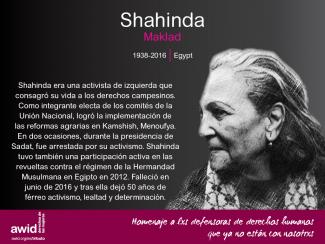


El Nemrah
Esta sección te guiará para garantizar que los resultados de la investigación sean representativos y confiables.
En esta sección:
- Recoge la información
1. Antes de difundir la encuesta
2. La presentación
3. Mientras la encuesta está abierta- Prepara la información para ser analizada
1. Limpia la información
2. Codifica las respuestas abiertas
3. Elimina la información innecesaria
4. Protege la información- Genera el informe de resultados
- Analiza la información
1. Programas estadísticos
2. Puntos sugeridos para el análisis
Si también piensas recoger información de las solicitudes que se envían a las financiadoras, este es un buen momento para ponerte en contacto con ellas.
Considera qué clase de solicitudes quieres analizar. El marco de investigación te ayudará a tomar esta decisión.
Tal vez no necesites ver todas las solicitudes enviadas a una financiadora en particular y te resulte más útil y eficiente consultar solo las que cumplen con los requisitos para ser financiadas (más allá de que finalmente las hayan apoyado o no).
También puedes pedirles a las financiadoras que compartan su información contigo.
Ver un modelo de carta para enviar a las financiadoras
Terminó el plazo para responder la encuesta y cuentas con mucha información. Lo que necesitas ahora es garantizar que sea lo más precisa posible.
Según el tamaño de la muestra y la cantidad de encuestas respondidas, este paso puede tomarte bastante tiempo. Para acelerar el proceso, lo mejor será contar con una buena cantidad de personas con capacidad de prestar atención a los detalles que se puedan encargar de esta tarea, garantizando así una mayor precisión en esta etapa.
Junto con las encuestas, probablemente también hayas recogido información de solicitudes enviadas a las financiadoras. Utiliza este mismo paso para organizar también esa información. No te desalientes si no puedes comparar estos dos conjuntos de datos entre sí. Las financiadoras recogen información que es diferente de la que tú habrás conseguido con las encuestas. En el informe y los productos finales sobre la investigación, podrás analizar y presentar por separado ambos conjuntos de información (la encuesta y la que te proporcionaron las financiadoras).
Existen dos clases de respuestas abiertas que requieren ser codificadas.
Preguntas con respuestas abiertas
Para estas preguntas, necesitarás codificar las respuestas para poder encontrar tendencias.
Algunos problemas que podrás enfrentar en este paso son los siguientes:
Si más de una persona analiza y codifica, tendrás que garantizar la consistencia de la codificación. Por eso recomendamos que incluyas solo una cantidad limitada de preguntas abiertas y que las estas pidan respuestas lo más concretas posibles.
Por ejemplo, si la pregunta abierta es «¿Qué desafíos específicos enfrentaste este año para movilizar recursos?» y algunas respuestas comunes son «falta de personal» o «la recesión económica», tendrás que codificar cada una de ellas para que puedas analizar cuántas veces fueron mencionadas.
Preguntas cerradas
Si ofreciste la posibilidad de agregar comentarios a las respuestas en preguntas cerradas, también necesitarás codificar esas respuestas.
Tal vez en varias preguntas de la encuesta hayas ofrecido la opción de «Otra», que muchas veces viene acompañada de un espacio en blanco para explicar la respuesta.
Tendrás que codificar esas respuestas y para esto dispones de dos opciones:
Analiza la frecuencia de los resultados
Para cada pregunta cuantitativa, puedes optar por eliminar el 5% o el 1% superior o inferior para impedir que los resultados se vean distorsionados por los valores atípicos*. También puedes controlar el efecto distorsionador de los valores atípicos* utilizando la mediana en lugar del promedio. Calcula la mediana ordenando las respuestas y luego eligiendo los valores que queden en el medio. Pero ten en cuenta que los valores atípicos tienen su utilidad. Pueden darte una idea del rango y la diversidad de participantes en la encuesta y tal vez te interese hacer estudios de caso en torno a algunos de esos valores atípicos.
* Los valores atípicos son puntos de referencia mucho mayores o mucho menores que la mayoría. Por ejemplo, imagina que vives en un barrio de clase media donde también vive una familia multimillonaria, y quieres averiguar cuál es el rango de ingresos para las familias de clase media en el barrio. Para eso, tendrás que eliminar el ingreso de la familia multimillonaria del conjunto de datos, porque se trata de un valor atípico. Si no lo haces, el promedio de ingresos de las familias de clase media que viven en el barrio aparecerá como mucho más elevado de lo que es en realidad.
Si encuentras respuestas de grupos que no corresponden a la población que quieres estudiar, elimina sus encuestas. En general puedes identificar a estos grupos por sus nombres o por sus respuestas a las preguntas cualitativas.
Para garantizar la confidencialidad de la información aportada por lxs participantes, en este paso puedes reemplazar los nombres de las organizaciones por un nuevo conjunto de números que identifiquen a cada organización y crear un archivo separado en el que figure la correspondencia entre cada código y la organización a la que identifica.
Junto con el equipo, decide cómo guardar y proteger el documento con los códigos y la información en general.
Una opción podría ser guardar toda la información en una computadora protegida por una clave o en un servidor al que solo pueda acceder el equipo de investigación.
En el informe con los principales resultados, detallarás los porcentajes de respuestas recibidas para cada pregunta de la encuesta. Esto te permite ver la suma total de respuestas.
Consejos:
Ahora que la información está limpia y ordenada, lo que sigue es entender su significado. Esta es la parte más entretenida, en la que comienzas a analizar tendencias.
¿Hay algún tipo de financiadora que se destaca (los gobiernos por encima de las empresas, por ejemplo)? ¿Hay regiones que están recibiendo más financiamiento? La información que recogiste te revelará algunos datos interesantes.
Las muestras más pequeñas (menos de 150 respuestas) las puede analizar la propia organización utilizando una planilla de Excel.
Las muestras más grandes (más de 150 respuestas) las puede analizar la propia organización utilizando Excel si solo van a calcular el total de respuestas, los promedios o cualquier otro análisis simple.
Si piensas hacer análisis más avanzados, como los de variables múltiples, te recomendamos utilizar programas estadísticos como SPSS, Stata o R.
NOTA: SPSS y Stata son caros, pero R es gratis.
Estos tres tipos de programas exigen conocimientos por parte del personal y no es fácil aprender rápido cómo usarlos.
Intenta conseguir pasantes o personal temporario de universidades locales. Muchxs estudiantes deben aprender análisis estadístico como parte de su carrera y tal vez tengan acceso gratuito a programas como SPSS o Stata a través de su universidad. Tal vez también conozcan el R, que se puede descargar y utilizar gratis.

• 1 persona (o más) de investigación
• Traductores de ofrecer encuesta en varios idiomas
• 1 persona (o más) para ayudar en la difusión de la encuesta a la población objetivo
• 1 persona (o más) para la análisis de los datos

Contenido relacionado
Huffington Post: Muere Simone Veil, la moral de Francia hecha mujer
El Mundo: Muere Simone Veil, superviviente del Holocauso e icono de los derechos de la mujer

Je vais être honnête : lorsque Angélica et Fabi m’ont proposé de créer une collection de textes érotiques écrits par des femmes noires, j’ignorais ce que c’était que de produire un recueil. Je maîtrisais le thème de l’érotisme, mais créer un recueil…
📅 Throughout | April 27 - 30
🏢 Melbourne Convention and Exhibition Centre, Booth B17
Les résultats de votre recherche façonneront également vos plaidoyers. Par exemple, vos résultats auront cerné les secteurs qui accordent le plus de financements et les secteurs qui vous semblent nécessiter une certaine sensibilisation auprès des donateurs.
Dans cette section
- Élaborez votre stratégie de plaidoyer
- Prenez contact avec votre réseau
- Adaptez votre stratégie au secteur
1. Organisations de droits des femmes
2. Agences bilatérales et multilatérales
3. Fondation privées
4. Fonds pour les femmes
5. Secteur privé et nouveaux donateurs
Dans la section Établir le cadre de référence de votre recherche de cette boîte à outils, nous vous recommandons de fixer les objectifs que vous voulez atteindre à travers votre recherche. Ces objectifs vous permettront d’élaborer une stratégie de plaidoyer lorsque votre recherche sera terminée.
Une stratégie de plaidoyer représente un plan de distribution des résultats de votre recherche de manière à ce que vous atteigniez vos objectifs. Cette démarche s’inscrit dans le but plus vaste de promouvoir auprès des secteurs clés des changements positifs dans le domaine des ressources destinées aux efforts d’organisation liés aux droits des femmes.
À l’aide des objectifs définis dans le cadre de référence de votre recherche :
De cette liste, la plus complète possible, choisissez les éléments qui sont les plus efficaces pour atteindre vos objectifs (voir plus loin les exemples de publics spécifiques et les méthodes de plaidoyer).
Lorsque votre stratégie est achevée, vous pouvez commencer la diffusion.
Pour diffuser vos résultats, contactez d’abord les personnes ou les organisations à qui vous avez distribué votre sondage, ainsi que toutes les personnes interviewées.
N’oubliez pas d’identifier clairement une personne-contact et demandez une confirmation lorsque le rapport aura été affiché.
Cela vous permettra non seulement de savoir qui a diffusé votre rapport, mais vous aurez aussi l’occasion de renforcer vos relations au sein de votre réseau.
À titre d’exemple, nous proposons ci-dessous une liste de secteurs que mobilise l’AWID dans ses efforts de plaidoyer.
La liste des organisations et des individus qui vous ont conseillé-e-s sera également utile. Ces personnes peuvent non seulement vous aider à diffuser votre rapport dans divers espaces, mais aussi vous faire connaitre de nouvelles organisations ou sphères de plaidoyer.
Exemple d’objectifs : informer les organisations de droits des femmes des nouvelles tendances de financement ; à l’aide des résultats de la recherche, proposer des séances de réflexion sur les efforts collaboratifs en matière de mobilisation des ressources ; influencer la manière dont elles approchent la mobilisation des ressources.
Exemples de méthodes de plaidoyer :
Offrez des séminaires, des cafés d’apprentissage ou d’autres activités dans toute votre région, dans la langue qui convient, sur les résultats de votre recherche.
Si vous ne pouvez atteindre tout le monde physiquement, pensez à organiser un webinaire et à concevoir des présentations en ligne.
Présentez vos résultats lors de rencontres d’envergure, comme les sessions de la Commission de la condition de la femme des Nations Unies (CSW).
Au-delà des bulletins et sites Web de votre organisation, rédigez des articles sur diverses plateformes que fréquente votre public cible.
Exemples : World Pulse, OpenDemocracy (principalement en anglais), feministing (en anglais).
Exemple d’objectif : sensibiliser le public à la manière dont les financements actuels ne respectent pas les engagements convenus et à la manière dont ce secteur doit améliorer ses mécanismes de financement soutenant les efforts d’organisation liés aux droits des femmes.
Déterminez les agences bilatérales et multilatérales qui ont le plus d’influence sur les financements, y compris les ambassades locales.
Exemples de méthodes de plaidoyer :
Exemple d’objectif : Améliorer la qualité et la quantité de soutien aux organisations de droits des femmes.
Exemples de méthodes de plaidoyer :
Exemple d’objectif : Les encourager à poursuivre leur travail à plus grande échelle.
Exemples de méthodes de plaidoyer :
Exemple d’objectif : Améliorer leur compréhension du domaine et les encourager à renforcer la cohérence entre leurs intérêts philanthropiques et leurs pratiques commerciales.
Exemples de méthodes de plaidoyer :
Assurez-vous d’adapter vos présentations, propositions et vos demandes à chaque groupe ciblé.
8. Finalisez et mettez en forme
Nous vous recommandons fortement de rempli vous-même la Fiche de travail « Êtes-vous prêts-tes ? » afin d’évaluer votre propre niveau de préparation.

• 1-2 ans, selon votre plan de plaidoyer
• 1 personne (ou plus) responsable de la communication
• Liste des espaces de publication
• Liste de blogs et de magazines en ligne où vous pourrez publier des articles à propos de vos résultats de recherche
• Liste de vos conseillers-ères
• Vos produits de recherche WITM
• Exemple : Plan des activités de plaidoyer
8. Finalisez et mettez en forme
Télécharger la Boîte à outils en PDF