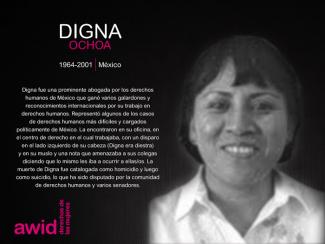
Uma Singh

El activismo joven feminista juega un papel fundamental en las organizaciones y los movimientos por los derechos de las mujeres a nivel mundial, ya que aborda los nuevos problemas a los que las feministas se enfrentan en la actualidad. Esta fuerza, creatividad y adaptabilidad son esenciales para la sostenibilidad de la organización feminista.
A la vez, enfrentan obstáculos específicos para ejercer su activismo, como acceso limitado al financiamiento y al apoyo, falta de oportunidades de capacitación, un incremento considerable de los ataques contra las jóvenes defensoras de los derechos humanos. Esto crea una falta de visibilidad que hace más complicada su inclusión y participación efectiva en los movimientos por los derechos de las mujeres.
El programa de activismo joven feminista fue creado para garantizar que las voces de las jóvenes sean escuchadas y se vean reflejadas en el discurso feminista. Queremos garantizar que las jóvenes feministas tengan un mejor acceso al financiamiento, a las oportunidades de desarrollo de las capacidades y a los procesos internacionales.
Además de apoyar directamente a las jóvenes feministas, estamos trabajando con activistas por los derechos de las mujeres de todas las edades, con modelos y estrategias prácticas para procesos efectivos de organización intergeneracionales.
Queremos que las activistas jóvenes feministas jueguen un papel en el proceso de toma de decisiones que afectan sus derechos a través de:
Fomento de la comunidad e intercambio de información a través de la Conexión Joven Feminista. Dada la importancia de los medios virtuales para el trabajo de las jóvenes feministas, nuestro equipo lanzó la Conexión Joven Feminista en mayo de 2010 para compartir información, construir capacidades a través de seminarios web y discusiones electrónicas y para alentar la construcción de la comunidad.
Investigación y generación de conocimientos sobre el activismo joven feminista, que aumenten la visibilidad y el impacto del activismo joven feminista en los movimientos por los derechos de las mujeres y otros actores clave, como los donantes.
Promoción de procesos más efectivos de organización intergeneracional, explorando mejores formas de trabajar en conjunto.
Apoyo a la participación de las jóvenes feministas en los procesos globales de desarrollo, por ejemplo en los procesos de Naciones Unidas.
Colaboración con todas las áreas prioritarias de AWID, incluyendo el Foro, para garantizar así que las contribuciones clave de las jóvenes feministas, así como sus perspectivas, necesidades y activismo se reflejen en los debates, políticas y programas que las afectan.
Écoutez cette histoire ici :
Nous demandons ces données pour faciliter l’examen des réponses, éviter les doublons et pouvoir vous contacter si votre groupe n’a pas pu terminer le questionnaire et/ou vous répondre si vous avez des doutes ou des questions. Des informations sur la manière dont nous utilisons les informations personnelles collectées lors de notre travail sont disponibles ici.
Ce kit inclut des messages types adaptés pour Twitter, Facebook LinkedIn et Instagram ainsi que des images qui peuvent être utilisées pour accompagner ces messages.
L’utilisation de ce kit est simple, il vous suffit de suivre les étapes suivantes :
Choisissez ci-dessous vos messages favoris :
Twitter
Facebook
LinkedIn
Faites correspondre vos messages préférés avec les images types adaptés pour Twitter
Rejoignez-moi au #AWIDForum, LE lieu pr se connecter ac D mouvements 2 droits D femmes & 2 justice sociale http://forum.awid.org/forum16/fr
Hâte 2 repenser les #HorizonsFéministes ac D activistes D droits D femmes & 2 la justice sociale au #AWIDForum ! http://forum.awid.org/forum16/fr
Je suis tellement ravie 2 participer au #AWIDForum en mai prochain. Nous pouvons désorms ns inscrire. Rejoignez-moi ! http://forum.awid.org/forum16/fr
Inscriptions désormais ouvertes pour le #AWIDForum! Costa do Sauípe, Brésil, 8-11 sept. 2016 http://forum.awid.org/forum16/fr
Participez au #AWIDForum, 1 rassemblement historique mondial d'activistes 2 la justice sociale & D droits D femmes http://forum.awid.org/forum16/fr
Participez au #AWIDForum pour célébrer les acquis de nos mouvements & analyser les leçons tirées pour aller de l’avant : http://forum.awid.org/forum16/fr
#AWIDForum : bien plus qu’un simple événement, la possibilité de rompre l’oppression & faire avancer la justice http://forum.awid.org/forum16/fr
Participez au #AWIDForum pour célébrer, repenser et renouveler nos mouvements & nos réflexions. http://forum.awid.org/forum16/fr
Créons ensemble des #HorizonsFéministes. Inscrivez-vous au #AWIDForum 2016. Costa do Sauípe, Brésil http://forum.awid.org/forum16/fr
Rejoignez-nous pour ré-imaginer & co-créer des #HorizonsFéministes au #AWIDForum 2016. Inscrivez-vous: http://forum.awid.org/forum16/fr
#HorizonsFéministes: saisir l'opportunité au #AWIDForum de faire avancer nos visions pour un monde juste http://forum.awid.org/forum16/fr
Nous serons 2000 activistes D mouvements sociaux au #AWIDForum, élaborant des stratégies sur nos #HorizonsFéministes http://forum.awid.org/forum16/fr
Nous sommes bien plus qu’une lutte à enjeu unique. Rejoignez-nous au #AWIDForum: http://forum.awid.org/forum16/fr
Participez au #AWIDForum, un espace de stratégies entre mouvements et d’influence pour notre pouvoir collectif: http://forum.awid.org/forum16/fr
Mobiliser la solidarité & le pouvoir collectif à travers les mouvements sociaux au #AWIDForum: http://forum.awid.org/forum16/fr
Briser les cloisons entre nos mouvements. Ré-imaginer & co-créer nos futurs. Tou-te-s au #AWIDForum http://forum.awid.org/forum16/fr
« Etre solidaire » est un verbe. Mettons-le en action au #AWIDForum: http://forum.awid.org/forum16/fr
Les bailleurs qui s’engagent avec les mouvements sociaux & de droits des femmes au #AWIDForum: http://forum.awid.org/forum16/fr
Médias et mouvements: amplifier les #HorizonsFéministes au #AWIDForum: http://forum.awid.org/forum16/fr
Faites correspondre vos messages préférés avec les images types adaptés pour Facebook
Vous pouvez aussi envoyer ces messages via les messages privés de Twitter qui n’ont pas de limite de caractères.
Téléchargez vos images préférées pour Instagram
She represented the International Disability and Development Consortium during the negotiation of the United Nations Convention on the Rights of Persons with Disabilities (2001-2006).
Her work was devoted to the implementation of the goal of the Convention - realization of universal human rights by, for and with persons with disabilities for an inclusive, accessible and sustainable world.
In her words, her leadership was about “...serving the disability community, starting with small tasks that others may not wish to do”.
She passed away on October 27, 2017 in her hometown of Rosario, Argentina.
Read more about María Verónica Reina in her own words

IN NUMBERS
We will analyze the survey responses, derive insights and trends, and present the results during the 15th AWID International Forum in Bangkok, and online, in December 2024. Register to attend the Forum here!
Después de haber evaluado la capacidad de la organización y fijado los objetivos de la investigación, tal vez decidas realizar una encuesta como uno de los métodos de recolección de datos para analizar.
En esta sección:
- ¿Por qué realizar una encuesta?
- Define la población a la que vas a entrevistar
1. Encuesta en línea
2. Encuesta en papel- Elabora las preguntas
1. Preguntas claras y breves
2. Lenguaje simple y universal
3. Preguntas «cerradas» y «abiertas»
4. Estructura lógica
5. Duración: menos de 20 minutos
6. Simple e interesante- Prueba la encuesta y tradúcela
1. Lxs consultorxs
2. Borrador y puesta a prueba
3. Traducción- Dirígela a la población adecuada
1. Tamaño de la muestra
2. Grado de participación
3. Base de datos y lista de contactos
Una encuesta es una excelente forma de reunir información sobre organizaciones específicas para identificar tendencias a nivel colectivo.
Por ejemplo, el tamaño del presupuesto de una organización no te dice demasiado acerca de una tendencia en el financiamiento para los derechos de las mujeres, pero si conoces los presupuestos de 1000 organizaciones por los derechos de las mujeres e incluso de 100, puedes comenzar a darte una idea de la situación del financiamiento para los derechos de las mujeres en su conjunto.
Cuando elabores las preguntas de la encuesta, ten presente el marco de investigación que elaboraste en la sección previa.
Recuerda: El marco te ayuda a decidir qué información intentarás obtener a través de la encuesta. La información que recojas de ella debería permitirte cumplir con las metas, responder a las preguntas principales y generar los productos finales.
Este es un paso importante: cuanta más claridad tengas acerca de las poblaciones a las que quieres encuestar, más podrás refinar las preguntas.
Según cuáles sean los objetivos de la investigación, tal vez quieras crear encuestas separadas para organizaciones por los derechos de las mujeres, fondos de mujeres y donantes. O tal vez quieras centrar la encuesta en los grupos de mujeres y hacer entrevistas con los fondos de mujeres y lxs donantes, dado que hacer una encuesta con cada una de esas poblaciones podría demandar demasiados recursos.
Las preguntas que formules a los grupos de mujeres pueden ser diferentes que las dirigidas a los fondos de mujeres. Si piensas encuestar a más de una población, te sugerimos que adaptes la recolección de datos a cada una de ellas.
Al mismo tiempo, algunas de las principales preguntas para cada población pueden y deben ser comunes, para poder hacer análisis comparativos de las respuestas.
Si puedes llegar a través de Internet a la población que quieres entrevistar, te será útil y eficiente generar una encuesta en línea.
Te recomendamos dos herramientas en línea que tienen versiones gratuitas:
Survey Gizmo te permite convertir la información para el SPSS, un programa estadístico que se usa para análisis avanzado de información.
La persona o el equipo que analice la información podrá determinar qué herramienta es la mejor para la encuesta, según la capacidad humana de tu organización y cómo piensan analizar los datos.
Para hacerla más accesible, piensa en producir una versión en PDF de la encuesta que puedas enviar por correo electrónico. Con esto te asegurarás de que las organizaciones con conexión inestable a Internet o las que deben pagar su conexión por minuto puedan descargar la encuesta y completarla sin tener que estar conectadas en forma permanente.
Tal vez decidas que la encuesta en línea no resulta lo suficientemente accesible o incluyente para la población a la que quieres relevar.
En ese caso, tendrás que crear una encuesta en papel y métodos para contactarte con la o las poblaciones relevantes (mediante eventos muy concurridos o por correo, incluyendo sobres con estampillas para que puedan enviarte la respuesta sin que hacerlo les ocasione gastos).
Haz que a lxs participantes les resulte fácil responder la encuesta.
Si las preguntas son confusas o requieren respuestas complejas, corres el riesgo de que lxs participantes la dejen sin completar o que las respuestas que obtengas te resulten inútiles para el análisis.
Asegúrate de que cada una de las preguntas pida solo una información.
Por ejemplo:
- ¿Cuál es el presupuesto de la organización para este año?
Pregunta fácil de responder: es una información que lxs participantes pueden encontrar con facilidad y solo pide una información.
- ¿Para qué porcentaje del presupuesto has identificado probables fuentes de financiamiento para tu organización pero todavía no las tienes confirmadas?
Pregunta confusa y difícil de responder: ¿estás pidiendo una lista de las fuentes de financiamiento aún sin confirmar, o de los financiamientos que son probables pero todavía no están confirmados?
Esta información es difícil de obtener: La persona que completa la encuesta tendrá que calcular el porcentaje, y tal vez no tenga esta información a mano. Con esto, se incrementa el riesgo de que abandone la encuesta sin haberla completado.
Muchas palabras y siglas que a ti te resultan familiares pueden no serlo para las personas que responden la encuesta, como por ejemplo «movilización de recursos», «M&E» o «IVE», así que asegúrate de utilizar un lenguaje más universal en la redacción de las preguntas.
Si no tienes más remedio que utilizar la jerga de tu sector — frases o palabras que tú y tus colegas manejan pero no la población en general — entonces ofrecer una definición hará que resulte más fácil entender las preguntas de la encuesta.
Asegúrate de explicar las siglas que utilices. Por ejemplo, si escribes «IVE», aclara que se trata de «Interrupción voluntaria del embarazo».
Preguntas cerradas:
Solo admiten una respuesta (por ejemplo «sí», «no» o una cifra). No es posible responder con las propias palabras, sino que se debe optar entre categorías predeterminadas o ingresar una cifra específica. Las respuestas a las preguntas cerradas son más fáciles de cuantificar como un todo y suelen ser cuantitativas.
Ejemplo de pregunta cerrada: ¿Cuál es el presupuesto de tu organización?
Preguntas abiertas:
Son preguntas cualitativas y muchas veces son descriptivas. Se responden con las propias palabras. Son más adecuadas para entrevistas que para encuestas.
Resultan más difíciles de analizar como un todo, en comparación con las preguntas cerradas, sobre todo si tienes una muestra grande. Pero si formulas las preguntas abiertas en forma muy precisa, te resultará más fácil analizar las respuestas.
Siempre que te sea posible, diseña las preguntas de la encuesta de forma tal que quienes la respondan deban optar por una o más opciones de una lista en lugar de ofrecerles preguntas abiertas. Esto te ahorrará tiempo y esfuerzo en la limpieza y el análisis de la información.
Ejemplo de pregunta abierta: ¿Qué desafíos específicos enfrentaron este año para movilizar recursos?
Familiarízate con los distintos tipos de preguntas
Existen diferentes formas de formular preguntas cerradas. A continuación te ofrecemos algunos ejemplos para que los estudies y decidas cuál encaja mejor con el tipo de información que quieres obtener:
Si piensas realizar esta investigación a intervalos regulares (por ejemplo, una vez cada dos años), te recomendamos elaborar una encuesta de línea de base que puedas repetir y que te permita seguir la evolución de las tendencias a lo largo del tiempo.
Grupo 1: Preguntas-filtro
Las preguntas-filtro determinan si la persona/organización que responde forma parte de la población que quieres encuestar.
Las opciones de encuestas en línea que te proporcionamos te permiten poner fin a la encuesta si quien la responde no cumple con los criterios de elegibilidad que fijaste. En ese caso, quien responde pasará directamente a una página que le agradecerá su interés pero le explicará que esta encuesta está destinada a una población diferente.
Imagina que solo quieres que respondan la encuesta los grupos por los derechos de las mujeres de una zona determinada. Las preguntas-filtro te pueden ayudar a saber dónde está ubicada la organización que responde e impedir que las ubicadas en otras zonas sigan adelante con la encuesta.
Grupo 2: Preguntas estandarizadas y básicas sobre características de la población encuestada
Estas preguntas recogen información específica sobre cada organización que responde la encuesta, tal como su nombre y dónde está ubicada. Pueden superponerse con las preguntas-filtro.
Si cuentas con los recursos necesarios, puedes guardar estas respuestas en una base de datos y pedir que las respondan solo el primer año que cada organización participe de la encuesta.
Así, cuando repitas la encuesta en los años subsiguientes, las organizaciones podrán responder la encuesta en menos tiempo, lo que incrementa la probabilidad de que la completen.
Grupo 3: Preguntas estandarizadas y de respuesta obligatoria sobre financiamiento
Estas preguntas te permitirán indagar acerca de los ingresos y la sostenibilidad en términos de financiamiento. Si formulas estas preguntas una vez por año, o una vez cada dos años, podrás identificar tendencias a lo largo de los años.
Grupo 4: Preguntas sobre temas especiales
Estas preguntas tienen que ver con el contexto. Pueden referirse a cambios en el clima político o económico, o también pueden ser preguntas de respuesta no obligatoria sobre financiamiento, como por ejemplo acerca de las actitudes frente a la movilización de recursos.
Por ejemplo, la Encuesta Global WITM 2011 de AWID incluyó preguntas sobre la nueva tendencia a «invertir en las mujeres y las niñas» por parte del sector privado.
Cuanto más corta, mejor: responder tu encuesta no debería llevar más de 20 minutos. Esto garantizará que quienes comiencen a responderla la completen y también es una señal de respeto al tiempo de esas personas.
Es natural apasionarse y dejarse llevar pensando en todas las preguntas que podrías formular y en toda la información que podrías obtener. Pero las encuestas largas cansan, hacen que las personas dejen la encuesta sin terminar o que no quieran tener nada más que ver con tu organización.
Cada pregunta que agregues a la encuesta, implicará también más tiempo y esfuerzo para su análisis posterior.
Consejos generales
- Pide los presupuestos exactos en lugar de solicitar que elijan dónde se ubica el suyo dentro de un rango determinado (nuestra experiencia nos indica que las cantidades específicas son más útiles para el análisis).
- ¡Especifica la moneda! Si es necesario, pide que conviertan las cantidades a una moneda determinada o que digan claramente en qué moneda están expresados los montos para las preguntas referidas a finanzas.
- Asegúrate de recoger la suficiente información sobre las características de cada organización que responda la encuesta para contextualizar los resultados y poder extraer tendencias que reflejen más matices.
Por ejemplo, si estás analizando dónde está el dinero para un país determinado, te resultará útil saber de qué región proviene cada organización o en qué ámbito (rural, urbano, nacional, local) trabaja para poder identificar tendencias importantes como por ejemplo si hay más financiamiento disponible para los grupos urbanos o para temáticas determinadas.
Involucrar desde el comienzo a las organizaciones con las que te asocias para la investigación te permitirá construir un vínculo más profundo con ellas y te garantizará una investigación más incluyente, de mejor calidad.
Estas organizaciones y también personas a título individual (lxs «consultorxs») te harán llegar comentarios sobre la versión borrador de la encuesta, la responderán como parte del piloto y revisarán el análisis preliminar de los resultados de la encuesta y de los otros tipos de información que hayas recogido.
También difundirán la encuesta en sus ámbitos de acción una vez que esté lista. Si planeas difundir la encuesta en varios idiomas, asegúrate de asociarte con organizaciones que utilicen esos idiomas en su trabajo.
Si decides hacer tanto una encuesta como entrevistas, lxs consultorxs-organizaciones asociadas que te hayan asesorado en el diseño de la encuesta también podrán ser tus entrevistadas.
Una vez que tengas lista la versión borrador de la encuesta, ponla a prueba con las organizaciones con las que te has asociado antes de difundirla entre la población a la que quieres entrevistar. Esto te permitirá identificar los problemas técnicos o las preguntas confusas de la encuesta.
También te dará una idea realista del tiempo que lleva completar la encuesta.
Una vez que cuentes con una versión final de la encuesta y la hayas puesto a prueba, puedes traducirla.
Asegúrate de poner a prueba las versiones traducidas de la encuesta. Por lo menos algunas de las personas con las que la pruebes deben ser hablantes nativxs de los idiomas en los que la encuesta se tradujo, para garantizar su claridad.
El tamaño de la muestra es la cantidad de personas que responden la encuesta.
La muestra a la que le apliques la encuesta debe reflejar las características de la población a la que intentas analizar.
Por ejemplo, supongamos que quieres analizar los millones de grupos por los derechos de las mujeres que existen en Valyria (país imaginario) pero no tienes tiempo ni recursos para entrevistar a cada uno de ellos. Entonces puedes entrevistar a una cantidad más reducida – que será el tamaño de tu muestra – que, tomada como un todo, refleje las características de los grupos por los derechos de las mujeres en ese país.
Tamaño recomendado de la muestra
Aunque no es necesario que decidas el tamaño exacto de la muestra antes de comenzar a difundir la encuesta, tener un tamaño en mente te permitirá decidir en qué momento ya cuentas con una cantidad suficiente de respuestas y si deberás o no extender el plazo si consideras que todavía no alcanzaste la cantidad ideal.
Todavía más importante que el tamaño de la muestra es en qué medida la población meta a la que quieres estudiar tiene la posibilidad de responder la encuesta.
Si segmentos grandes o importantes de esa población están sistemáticamente excluidos (por razones de idioma, accesibilidad, tiempo, problemas con la base de datos, acceso a Internet u otro factor), resultará imposible evaluar con precisión la confiabilidad estadística de la información proporcionada por la encuesta.
En nuestro ejemplo: necesitarás asegurarte de que todos los grupos de mujeres de Valyria tengan la oportunidad de participar en la encuesta.
Si un segmento de los grupos de mujeres de Valyria no utiliza Internet, y la encuesta solo se puede responder en línea, te estarás perdiendo a un segmento importante y la muestra definitiva no representará en forma adecuada a todos los grupos de mujeres de Valyria.
Si la muestra no incluye a segmentos de la población que quieres estudiar, no podrás derivar de ella conclusiones apropiadas; garantizar una muestra representativa te permitirá no cometer ese error.
Para darte una idea de cómo es el panorama de los grupos de mujeres dentro del área que estás investigando (por región, población, temática, etc.), te puede resultar útil estudiar bases de datos.
Si tienes claro el panorama general de los grupos de mujeres a los que vas a estudiar, podrás darte una idea de cómo tendrá que ser la muestra, que debería ser una versión más pequeña de esa población en general.
Una vez que cuentes con respuestas a la encuesta, podrás evaluar si la población a la que llegaste (el tamaño de la muestra) refleja la composición general de la población que estás estudiando. Si no lo refleja, puedes salir a buscar a los sectores que consideras que están ausentes o extender el período durante el cual será posible responder a la encuesta.
Si no tienes certeza de cuán representativa es tu muestra, no te paralices: intenta de la mejor manera expandirla lo máximo que puedas, en todos los sentidos.
2. Prepara el marco para la investigación

• 1 persona (o más) de investigación
• Traductores si ofrecer encuesta en varios idiomas
• 1 persona (o más) para ayudar en la difusión de la encuesta a la población objetivo
• 1 persona (o más) para la análisis de los datos
• Lista de asesores deseados: organizaciones, donantes y activistas
• Opcional:incentivo(sà para convencer a la gente para completar la encuesta
• Opcional: incentivo(s) para asesores
• Survey Monkey o Survey Gizmo (en inglés)
• Encuesta Global WITM de AWID
2. Prepara el marco para la investigación
4. Recoge la información y analízala
Asma fue una destacada activista pakistaní por los derechos humanos, valiente crítica de la interferencia de los militares en la política, y firme defensora del estado de derecho.
Fue la fundadora y presidenta de la Human Rights Commission of Pakistan [Comisión de Derechos Humanos de Pakistán, un grupo independiente], y una de las administradoras del International Crisis Group. Obtuvo premios internacionales, y fue Relatora Especial de Naciones Unidas sobre derechos humanos y ejecuciones extrajudiciales.
Es recordada con afecto por sus colegas y amigxs de AWID
«Con su vida, Asma reescribió la historia que a muchas nos contaron, como mujeres. Asma cambió el mundo. Lo cambió en Pakistán, y lo cambió en nuestras imaginaciones.»

Las Realidades Feministas proclaman y personifican la esperanza y el poder.
Las encontramos en todo lo que nos muestra que existen otras formas de vivir, de pensar y de hacer, desde las expresiones cotidianas que se evidencian en cómo nos relacionamos con otrxs hasta los sistemas alternativos de gobernanza y de justicia. Las realidades feministas son formas de resistencia a sistemas de poder como el patriarcado, el capitalismo y la supremacía blanca.
Son propuestas poderosas que nos orientan hacia la idea de lo que es posible y nos muestran cómo los procesos de organización feminista están abriendo caminos hacia la justicia en movimientos y comunidades de todo el mundo.
Descargar la revista completa (PDF)

الاستطلاع هذا مخصّص للمجموعات، المنظمات والحركات التي تعمل بالأساس أو فقط على حقوق النساء، أفراد مجتمع الميم - عين، والحقوق الجندرية، في جميع السياقات، على جميع المستويات، وفي جميع المناطق. إن كان واحد من هذه المبادئ اساسًا لمجموعتكم/ن، تنظيمكم/ن أو شبكتكم/ن، أو أي نوع تنظيم آخر، إن كان مسجلاً أم لا، جديداً أو طويل العمر، ندعوكم/ن للإجابة على الاستطلاع.

*في الوقت الحالي، لا نطلب من الأفراد أو الصناديق النسوية أو النسائية تعبئة الاستطلاع.
تعرف على المزيد حول الاستطلاع: راجع/ي الأسئلة الشائعة
Le produit de l’ensemble de votre recherche est maintenant organisé et révisé. Vous désirez maintenant que les résultats soient visuellement accessibles et attrayants afin d’en faciliter la diffusion.
Dans cette section
- Mettez en forme votre rapport final pour publication
1. Pensez comme pense votre public
2. Collaborez avec un-e graphiste professionnel-le
3. Veillez à la cohérence- Contrôlez la qualité des traductions
Pensez à élaborer des produits plus courts qui accompagnent le rapport complet.
Comme il a été mentionné à la section Synthétisez les résultats de votre recherche, l’AWID tire fréquemment des produits plus succincts du long rapport de recherche. Cela facilite une distribution plus vaste, particulièrement destinée à des publics clés.
Ne perdez jamais de vue votre population cible : qui lira votre rapport ?
Exemples de produits plus courts tirés du long rapport de recherche :
Les gens sont constamment submergés d’information. Votre produit devra être visuellement percutant afin de maintenir l’intérêt de votre public. Ici encore, le fait d’avoir une idée précise de ce que vous souhaitez accomplir et de ceux et celles que vous voulez toucher permettra à la-au graphiste de créer des produits ciblés.
Un très long rapport en format PDF pourrait sembler être la seule façon de présenter votre recherche. Cependant, ce genre de document peut rebuter la plupart des gens, particulièrement s’il est affiché en ligne.
Si vous voulez partager votre produit avec une communauté en ligne, pensez à créer des mèmes (symboles culturels transmis de façon virale) et des infographies à diffuser dans les médias sociaux, les blogs et les plateformes Web.
Lorsque vous devez décider de créer ou non des produits plus courts, considérez la possibilité de diviser vos résultats en produits plus succincts que vous pourrez partager avec les populations ciblées ou encore à différents moments de l’année, pour susciter un intérêt renouvelé à l’égard de votre produit.
Si avez peu de temps et un peu de ressources financières, nous vous recommandons d’embaucher une entreprise de conception graphique.
Pour des raisons économiques, il peut sembler tentant d’avoir recours au personnel interne pour mettre en forme votre produit. Cependant, un-e graphiste professionnel-le peut avoir d’énormes incidences sur l’aspect de votre produit final et sur les retombées qu’il peut avoir !
La-le graphiste (interne ou embauché-e) doit pouvoir :
Ce dont la-le graphiste aura besoin de votre part :
Les graphistes sont des spécialistes du design visuel. Ils/Elles n’ont pas forcément de connaissances dans le domaine des droits des femmes et ne sont pas au fait des résultats de votre recherche, particulièrement si vous travaillez avec un prestataire externe. Indiquez-leur clairement quels sont les éléments importants du rapport et le public que vous ciblez.
En fonction de ces détails, la personne chargée du graphisme suggérera des moyens de mettre en exergue ces éléments et rendra l’ensemble du produit attrayant.
Lorsque vous créez une série de produits plus succincts, n’oubliez pas de les lier les uns aux autres :
Il est également important d’assurer la participation du personnel afin que ses membres puissent garantir que tous les produits dérivés demeurent fidèles aux résultats de la recherche.
Si vous avez modifié le texte une fois que la conception graphique et la mise en forme du rapport de votre recherche ont été finalisées, assurez-vous de faire parvenir ces changements aux traducteurs-trices.
Si vous créez des produits plus succincts, vous devrez aussi les traduire lorsqu’ils auront été conçus et mis en forme. Ces traductions doivent être suffisamment claires pour permettre à la personne chargée du graphisme de la mettre en page, même si elle ne parle pas la langue.
Après la traduction du produit et avant de le partager, assurez-vous de faire revoir le document par une personne dont la langue maternelle est celle dans laquelle le produit est présenté.
7. Synthétisez les résultats de votre recherche

• 2-3 mois
• 1 personne (ou plus) chargée de la recherche
• 1 éditeur-trice (ou plus)
• Graphiste
• Traducteur(s)-trice(s), si nécessaire
• Liste des espaces de publication
7. Synthétisez les résultats de votre recherche
9. Parlez-en au monde entier !
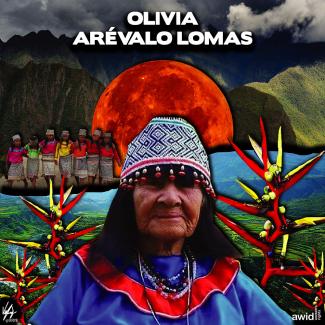
Olivia était la cheffe spirituelle des peuples autochtones Shipibo Konibo.
Sage femme et grand-mère autochtone, elle était connue pour sa préservation de la médecine traditionnelle et des chants sacrés de son peuple (les íkaros). Olivia Arévalo était une défenseure engagée en faveur des droits culturels et environnementaux de son peuple. L’assassinat d’Olivia s’est produit dans un contexte de conflit territorial entre la communauté Shipibo et les entreprises qui souhaitent s’accaparer leurs terres pour cultiver de l’huile de palme.
Les membres de sa communauté ont déclaré: « Sa mort est une agression contre toute la communauté Shipibo. Elle était la mémoire vivante de son peuple ».
Un an seulement après sa fondation, les membres de Nadia Echazú ont commencé à travailler dans la haute couture et ont organisé un défilé de mode dans l'historique hôtel Bauen.
Elles ont montré cinq modèles et quelques travailleuses de la coopérative textile ont même défilé avec leurs propres créations.
C'était révolutionnaire non seulement parce qu'elles concevaient des alternatives à la mode grand public, mais aussi parce qu'elles créaient des vêtements accessibles et inclusifs pour les corps trans et travesti.
Il n'y a pas d'économies féministes sans vêtements qui nous font nous sentir incroyables et confortables!