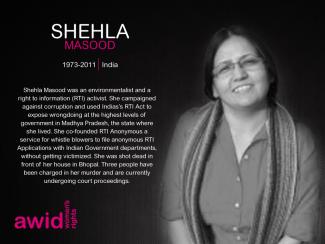
Shehla Masood
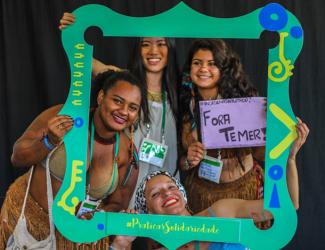
Young feminist activists play a critical role in women’s rights organizations and movements worldwide by bringing up new issues that feminists face today. Their strength, creativity and adaptability are vital to the sustainability of feminist organizing.
At the same time, they face specific impediments to their activism such as limited access to funding and support, lack of capacity-building opportunities, and a significant increase of attacks on young women human rights defenders. This creates a lack of visibility that makes more difficult their inclusion and effective participation within women’s rights movements.
AWID’s young feminist activism program was created to make sure the voices of young women are heard and reflected in feminist discourse. We want to ensure that young feminists have better access to funding, capacity-building opportunities and international processes. In addition to supporting young feminists directly, we are also working with women’s rights activists of all ages on practical models and strategies for effective multigenerational organizing.
We want young feminist activists to play a role in decision-making affecting their rights by:
Fostering community and sharing information through the Young Feminist Wire. Recognizing the importance of online media for the work of young feminists, our team launched the Young Feminist Wire in May 2010 to share information, build capacity through online webinars and e-discussions, and encourage community building.
Researching and building knowledge on young feminist activism, to increase the visibility and impact of young feminist activism within and across women’s rights movements and other key actors such as donors.
Promoting more effective multigenerational organizing, exploring better ways to work together.
Supporting young feminists to engage in global development processes such as those within the United Nations
Collaboration across all of AWID’s priority areas, including the Forum, to ensure young feminists’ key contributions, perspectives, needs and activism are reflected in debates, policies and programs affecting them.
Jemimah Naburri-Kaheru es una consumada estratega internacional en recursos humanos con gran influencia en la región del Cuerno de África. Anteriormente, se desempeñó como gerente regional de Oficina y Recursos Humanos en Strategic Initiative for Women in the Horn of Africa (SIHA, Iniciativa Estratégica para las Mujeres del Cuerno de África). Su influencia se extiende a la dirección de los recursos humanos de más de 70 empleades regionales, debido a que los ingresos anuales de la organización registraron un veloz crecimiento del 40%. A lo largo de su carrera, Jemimah ha organizado iniciativas de reclutamiento sumamente fructíferas, introducido sistemas de desempeño basados en el mérito, y supervisado las relaciones entre el personal y las políticas de recursos humanos. Desempeñó una función crucial brindando apoyo a las estrategias de fuerzas de trabajo globales. Con antecedentes académicos en Estudios sobre el Desarrollo de la Universidad de Makerere (Uganda) y una maestría en Gestión de Recursos Humanos en curso, el compromiso de Jemimah con el desarrollo profesional es más que evidente. Su contribución al alto rendimiento de la fuerza laboral y liderazgo internacional en materia de recursos humanos la convierte en un activo invaluable en cualquier empresa global.
เราจับตาดูเรื่องนี้และความเสี่ยงอื่นๆอย่างระมัดระวัง และจะนำเสนอข้อมูลด้านสุขภาพและความปลอดภัยที่คลอบคลุมเมื่อมีการเปิดให้ลงทะเบียน เพื่อให้คุณสามารถตัดสินใจได้อย่างมีข้อมูล มากกว่านั้นการจัดประชุมแบบสองรูปแบบ(ออนไลน์และกายภาพ)ถูกออกแบบให้ให้เกิดการมีส่วนร่วมอย่างมีความหมายสำหรับผู้เข้าร่วมที่เลือกจะไม่เดินทาง หรือผู้เข้าร่วมที่ไม่สามารถเดินทางได้
Et si nous ré-imaginons différentes manières de prendre soin de nos communautés?
Et si l'économie n'était pas basée sur le profit d’une petite élite mais sur notre bien-être individuel et collectif, et celui de la Nature?
Les histoires que vous allez découvrir portent sur les collectifs créés par et pour les personnes historiquement et actuellement exclues, privées de leurs droits et déshumanisées par l'État et la société.
Voici les histoires des féministes qui centrent les soins dans l’économie.
Originaire de la cordillère des Andes, Brenda Salas est un·e stratège féministe queer. Iel œuvre à changer les discours et mobiliser les ressources pour soutenir les mouvements de justice raciale et climatique dans le monde entier. Brenda a produit de nombreux projets de communication pour exalter le pouvoir des migrant·e·s et dénoncer les interventions militaires américaines en Amérique latine avec Deep Dish TV et le Portland Central America Solidarity Committee (Comité de Solidarité avec l’Amérique centrale de Portland). Fier·ère d’être membre de l’Audre Lorde Project, iel est titulaire d’un diplôme du mouvement United World Colleges (UWC).

Co-create the The 15th AWID International Forum in Bangkok, Thailand.
Contenu lié
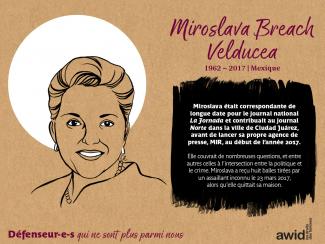
RFI: Une journaliste tuée au Mexique, la troisième en moins d’un mois
It is a community hub, where one can take courses and train in creative income-generation activities like local hairdressing, cooking and artmaking. Children can also enjoy cultural and educational activities. The MSTC doesn't work alone. It collaborates with institutions and art collectives to produce cultural, athletic and educational experiences, alongside critical access to health care. Since its inception, this participatory project has been led and carried out by mostly women, under the leadership of Afro-Brazilian activist Carmen Silva, who was once a homeless person herself.
Rachel est une experte en finance, avec plus de vingt ans d’expérience. Elle a supervisé des opérations financières et des projets pour des entités privées et publiques, des organisations à but non lucratif et des organisations non gouvernementales internationales. Comptable agréée et titulaire d’un master global en administration des affaires, elle est également membre de l’Institut sud-africain des comptables agréés. Pendant son temps libre, Rachel conçoit des œuvres d’art typographiques, elle aime voyager et passer du temps avec ses proches autour d’une bouteille de vin.
Jour 2
La organización comunitaria de mujeres negras en la región del Norte del Cauca en Colombia se remonta al pasado colonial del país, que está marcado por el racismo, el patriarcado y el capitalismo que sustentaron la esclavitud como un medio para explotar los ricos suelos de la región.
Estas organizadoras son las heroínas de un amplio movimiento por la autonomía negra, que lucha por el uso sostenible de los bosques y los recursos naturales de la región como elementos vitales para su cultura y sustento.
Durante 25 años, la Asociación de Mujeres Afrodescendientes del Norte del Cauca (ASOM) se ha dedicado a impulsar la organización de mujeres afrocolombianas en el Norte del Cauca. Se establecieron en 1997 como respuesta a las continuas violaciones de derechos humanos, la ausencia de políticas públicas, el manejo inadecuado de los recursos naturales y la falta de oportunidades para las mujeres en el territorio.
Han forjado la lucha para asegurar los derechos étnico-territoriales, para poner fin a la violencia contra las mujeres y obtener el reconocimiento del papel de las mujeres en la construcción de la paz en Colombia.
Contenido relacionado
Greenpeace USA: El precio del activismo (página 8)