Organizing creatively, facing an increasing threat
Young feminist activists play a critical role in women’s rights organizations and movements worldwide by bringing up new issues that feminists face today. Their strength, creativity and adaptability are vital to the sustainability of feminist organizing.
At the same time, they face specific impediments to their activism such as limited access to funding and support, lack of capacity-building opportunities, and a significant increase of attacks on young women human rights defenders. This creates a lack of visibility that makes more difficult their inclusion and effective participation within women’s rights movements.
A multigenerational approach
AWID’s young feminist activism program was created to make sure the voices of young women are heard and reflected in feminist discourse. We want to ensure that young feminists have better access to funding, capacity-building opportunities and international processes. In addition to supporting young feminists directly, we are also working with women’s rights activists of all ages on practical models and strategies for effective multigenerational organizing.
Our Actions
We want young feminist activists to play a role in decision-making affecting their rights by:
Fostering community and sharing information through the Young Feminist Wire. Recognizing the importance of online media for the work of young feminists, our team launched the Young Feminist Wire in May 2010 to share information, build capacity through online webinars and e-discussions, and encourage community building.
Researching and building knowledge on young feminist activism, to increase the visibility and impact of young feminist activism within and across women’s rights movements and other key actors such as donors.
Promoting more effective multigenerational organizing, exploring better ways to work together.
Supporting young feminists to engage in global development processes such as those within the United Nations
Collaboration across all of AWID’s priority areas, including the Forum, to ensure young feminists’ key contributions, perspectives, needs and activism are reflected in debates, policies and programs affecting them.
Related Content
Snippet - COP30 Intro - ES
Súmate al movimiento feminista abocado a recuperar la acción por el clima del control corporativo
Con 1773 cabilderos de los combustibles fósiles presentes en la COP29 del año pasado, nos dirigimos, junto con otres feministas a Belém (Brasil) del 10 al 21 de noviembre de 2025. Allí continuaremos denunciando las soluciones falsas, llamando la atención sobre la captura corporativa, y exigiendo que los Estados cumplan sus compromisos bajo las Responsabilidades Comunes pero Diferenciadas y las Capacidades Respectivas(en inglés) para impulsar las alternativas económicas feministas.
USD 2,7 billones para gasto militar. USD 300.000 millones para la justicia climática. Estamos aquí para dar vuelta el relato.
Love letter to feminist movements: A Letter from Inna and Faye
Dear feminist movements,
Love is what keeps our feminist fire burning. Along with care for our communities, anger and rage in the face of injustice, and the courage to take action.
In September 2022, we stepped with great excitement into our leadership roles at AWID, as Co-Executive Directors. We felt the warmth and embrace of the feminist sisterhood as you welcomed us.
Reflecting on our most precious memories as feminists, we recall powerful moments of togetherness at street protests, sharp analysis, and brave voices shaking the status quo at gatherings. We held those intimate conversations into the night, laughed for hours, and danced at parties together.
Feminist fires need to be fed, especially in difficult times when there is no lack of external challenges, from the climate crisis and the rise of right-wing forces to exploitative economies and persisting patterns of oppression within our own social movements. It's these fires, burning ablaze everywhere, that light our ways and keep us warm, but we can’t disregard the exhausting effects of political violence and repression directed against many of our struggles, movements, and communities.
We understand the desire to change the world as an essential ingredient of feminist organizing. We can never forget that we are the ones we have been waiting for, in building alternatives and shaping our future. Yet, vibrant feminist energy cannot be taken for granted and must be safeguarded in many ways. In this, we will continue to be vigilant. Greater and equal access to care and wellbeing, to healing and pleasure, are not only instruments to prevent burnout and sustain our movements, though that is an important function; first and foremost, they are the way in which we hope to live our lives.
We are thrilled to roll up our sleeves and work with you. AWID’s new strategic plan “Fierce Feminisms: Together We Rise” reflects our conviction that now is the time for us to be fierce and unapologetic in our agendas while making an effort to connect across movements and truly get to know each other’s realities, so that we may rise together - because, for us, this is the only way.
Our plans include the long-awaited AWID Forum! We look forward to meeting you all in person and online in 2024. We are hearing from you the need to connect and recharge, to rest and heal, to be challenged and inspired, to share good food, and to laugh and dance together. Few things in this world are as powerful and transformative, as feminists from all parts of the world coming together, and we truly hold our breath for this moment, because we know the magic that we can create together.
Our membership engagement has taken on a life of its own through the AWID Community (our online platform for members), and our focus on building connection and solidarity resonates with many of you. Please join and connect with us and others in feminist movements around the world. We know the importance of connection in a time and space where the rules are not made for us, and we hold close our community, where each of us matters.
Together with our fantastic AWID colleagues, we promise to do our best to support feminist movements, as is the mission and purpose of AWID. Please hold us to account.
For the past 40 years, you - feminist movements - have shaped AWID’s history, and pushed us to be braver, creative, and radical. 40 is a fabulous age, and we look forward to another 40 years with you all. We are looking forward to the partnerships, calls to justice, collaboration, policy influencing, and badass feminist power that you all bring in navigating the ever-increasing backlash on gender, racial and environmental justice. We have so much to learn from you and from each other, as we collectively build the worlds we believe in.
Cindy Clark and Hakima Abbas, thank you for paving the way for us and preparing us to fill your enormous shoes. We always appreciate all those on whose shoulders we stood and continue to stand. We understand ourselves to be part of a broader movement landscape, feminist histories, presents, and daring futures.
AWID’s Board of Directors, we are grateful to you for the support and feminist love you show us, and for your commitment to Global South leadership and the co-leadership model. We send our love and respect to each and every AWID colleague, we feel honoured to be working with such an exceptional feminist team of dedicated professionals.
This is our first time writing a love letter together, how could we conclude it without expressing love, care, and respect for each other? It’s a pretty intense relationship we’ve stepped into! We both bring our different and diverse perspectives and skills to our work, and as individuals, we also bring our lived experiences and authentic selves.
Together with you all, we are a story in the making, a part of a beautiful woven - and often beautifully challenging - tapestry that continues into the future. We had fun starting this journey together with each other and with you, and we very much hope to keep the romance alive.
In solidarity, with love and care
Inna and Faye
Save the date!
21 February 2023, Member Mixer 5 on Feminist Politics with Faye and Inna.
Aïssata Kane, surnommée affectueusement “Yaye Kadia” (Mère Kadia), a de tout temps été une féministe engagée dans la défense des droits des femmes africaines, et particulièrement mauritaniennes.
Au cours de sa carrière politique, en 1975, elle fut nommée ministre de la protection de la famille et des affaires sociales et travailla avec ardeur à l’amélioration du statut des femmes dans son pays; c’était la première fois qu'une femme occupait un tel poste.
Ce travail consista notamment à promouvoir l’éducation des filles et des femmes, à lutter contre la pratique du gavage sur les jeunes femmes, à faire pression pour l’inclusion d’une disposition sur les droits maritaux et à plaider en faveur de la création d’un quota de représentation féminine au Parlement.
“[Aïssata] a réalisé toutes ses passions avec humilité, courage et détermination. Elle ne voulait déranger personne avec ce combat qu’elle menait sur tous les fronts à la fois.” Ball Halimata Dem, la nièce d’Aïssata
Ayant fondé l'Union nationale des femmes de Mauritanie (UNFM), elle avait cocréé et publié pour elles le magazine Marienou, dédié à l’émancipation des femmes mauritaniennes. Aïssata dirigea également plusieurs organisations sous-régionales et locales, notamment en tant que présidente de l'Association internationale des femmes francophones (AIFF) et, en écologiste résolue, fut présidente de l'Association pour la protection de l'environnement en Mauritanie (APEM).
En 2018, on lui décerna le Prix de la Femme africaine pionnière. Ce prix honore son engagement à faire progresser le statut de la femme en Mauritanie et reconnaît son grand leadership et son sens de l'innovation.
Aïssata est décédée le 10 août 2019.
En quoi ce Forum sera-t-il différent ?
Avec jusqu'à 2 500 participant·e·s sur place et 3 000 participant·e·s virtuel·e·s/hybrides, il s'agira du plus grand Forum de l'AWID jamais organisé. Nous envisageons de mettre en place de multiples espaces qui vous permettront d'établir des liens significatifs, d'apprendre, d'échanger, d'avoir des échanges stratégiques, de guérir et de fêter. C'est la première fois que nous nous réunissons dans cet espace depuis la pandémie, et nous brûlons d’impatience.
ours chapter 3
Capítulo 3
Discursos anti-derechos
Los discursos anti-derechos continúan evolucionando. Además de utilizar argumentos relacionados con la religión, la cultura y la tradición, los actores antiderechos cooptan el lenguaje de la justicia social y los derechos humanos para ocultar sus verdaderas agendas y ganar legitimidad.
Snippet - COP30 - International Eco-Socialist Encounter - ES
Encuentro Ecosocialista Internacional
Paneles, talleres, plenarias y espacios de intercambio entre colectivos, activistas y organizaciones que luchamos para recorrer de forma colectiva el camino hacia una agenda y un programa de lucha por el ecosocialismo.
📅 8 - 11 de noviembre de 2025
📍 Buenos Aires, Argentina
Nunca supe que tenía una familia cercana que me ama y que quiere que crezca. Mi mamá siempre ha estado presente para mí, pero nunca imaginé que tendría miles de familias por otros sitios, con las que no estoy relacionada por lazos de sangre.
Descubrí que la familia no son solo las personas relacionadas por lazos sanguíneos, sino la gente que te ama de forma incondicional, a quienes no les importa tu orientación sexual, ni tu estado de salud, ni tu estatus social, ni tu raza.
Al pensar en los momentos invaluables en que escuché a mis hermanas de todo el mundo que son firmes feministas –gente a quien no he conocido físicamente, pero quienes me apoyan, me enseñan, luchan por mí– me faltan las palabras: las palabras no pueden expresar cuánto las amo a ustedes, mis mentoras, y a las demás feministas. Ustedes son una madre, una hermana, una amiga para millones de chicas jóvenes.
Ustedes son maravillosas, ustedes luchan por personas a quienes no conocen –y eso es lo que las hace tan especiales–.
Mi corazón se alegra de expresar esto por escrito.
Las amo a todas y seguiré amándolas. Nunca he visto a ninguna de ustedes en forma física, pero parece que nos conociéramos desde hace décadas.
Somos feministas y estamos orgullosas de ser mujeres.
Vamos a seguir diciéndole al mundo que nuestra valentía es nuestra corona.
Una carta de amor de FAITH ONUH, una joven feminista de Nigeria
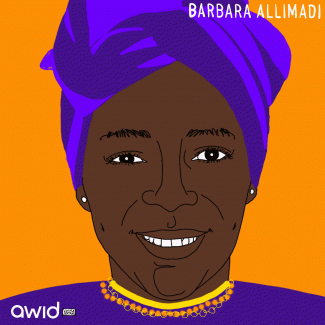
Barbara Allimadi was a political and human rights activist from Uganda. In 2012, she co-organized a protest against a televised police assault of Ingrid Turinawe, an opposition politician who had her breast squeezed by a police officer.
During the protest, Barbara, along with other fellow activists stripped to their bras in front of the Central Police Station in Kampala. This came to be known as the infamous ‘bra protest’ in Uganda.
“We settled on the bra protest. We thought it would be most appropriate for what had happened. It’s not like we were saying we don’t respect ourselves. We were disgusted by what had been done.” - Barbara Allimadi, 2013 (Daily Monitor)
With a Degree in Electronics and Communications Engineering from the London Metropolitan University, Barbara was a network engineer in the United Kingdom and an avid fan of reggae music. She returned to Uganda In 2007, when her mother passed away.
In 2019, she was appointed Coordinator for International and Diaspora Affairs at the Alliance for National Transformation (ANT), a political party launched that year by an opposition leader.
“We want security of life and property, not pain, injury and even death at the hands of security forces who are meant to protect us. Most importantly, we want a stable and enabling environment where we can realize our dreams and aspirations.” - Barbara Allimadi, ANT video
Barbara passed away on 27 April 2020.
Tributes:
“I was so proud of my sister for many things but in particular her fearless pursuit of peace, democracy, justice and equality in Uganda. At the height of her activism she led many marches on the streets of Kampala, to police stations, and Parliament.” - Doris Allimadi, Barbara’s sister
“It is with deep sadness that we have learnt of the untimely passing of Barbara Allimadi. She has been a valiant, relentless and courageous force for the liberation movement of Uganda. Our deepest condolences to her family. She will be sorely missed.” - Akina Mama wa Afrika (tweet on 28 April 2020)
“The passing on of Barbara is so sad for us and her entire family. She dedicated herself to fighting for justice, freedom and rights of others while serving in the civil society until she recently joined us at the party.” Maj Gen Mugisha Muntu, ANT national coordinator
“A beautiful, charming, funny, charismatic and inspirational sister. My children lost their aunty. Uganda lost a brave and courageous freedom fighter. Barbara once said, ‘As long as there is still breath in you, keep working towards your dreams.’” - Doris Allimadi, Barbara’s sister
Does AWID provide scholarships to attend the Forum?
Our Access Fund will offer a limited number of scholarships to fund the participation of activists who cannot otherwise make it, and don’t have relationships with funders who could cover their participation. So if you have other possibilities, please explore them. We will do our best to offer as many scholarships as we can, and will share more information about this process and how to apply in early 2024.
Résumé : Identifiez les principaux groupes et réfutez leurs arguments
Résumé :
Identifiez les principaux groupes et réfutez leurs arguments
Décideur·se politique à l’ONU, vous souhaitez apprendre à repérer les principaux groupes et discours antidroits au sein de l’institution ? Vous êtes un·e féministe, à la recherche de contre-arguments éclairs ? Ce résumé vous propose les informations essentielles en 8 pages seulement.
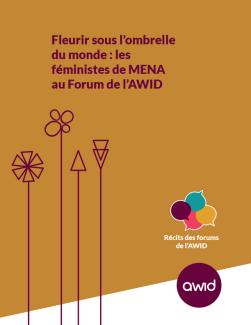
Fleurir sous l’ombrelle du monde : les féministes de MENA au Forum de l'AWID
Dans le monde entier et au sein des mouvements sociaux, les personnes désireuses d’innover ont tendance à se sentir seules et impuissantes face au « statu quo du mouvement ». Historiquement, les Forums de l’AWID ont joué un rôle dans le soutien de ces innovateur·trices en leur offrant une plateforme où leurs idées et pratiques sont accueillies et renforcées par les pensées et actions d’autres personnes de différentes régions et communautés qui les ont déjà explorées. Sara Abu Ghazal, féministe palestinienne au Liban, nous parle de ce qu’ont représenté les Forums pour toute une nouvelle génération de féministes de la région MENA (Moyen-Orient et Afrique du Nord) qui ont introduit de nouvelles façons de s’organiser, de nouvelles conceptions du féminisme et de nouvelles questions dans le paysage régional des droits des femmes.
¿Habrá encuentros regionales, temáticos o de otro tipo previos al Foro?
¡Creemos que sí! Todavía estamos en las etapas iniciales del proceso de planificación, así que mantente atentx mientras les vamos dando a estos planes.
Animation: Calling all Feminist Superheroes!
Animation:
Calling all Feminist Superheroes!
Follow our Superhero as she embarks on a quest to reclaim the narrative from anti-rights actors across the globe.
🎯 Jeu de cartes : S’organiser. Créer des stratégies. Se mobiliser.
Un jeu de cartes pratique destiné aux collectives, qui permet d’explorer les alternatives économiques féministes et les systèmes de soins comme réponse aux crises. Pensé pour tous les mouvements qui évoluent au sein des crises climatiques mondiales, ce jeu de cartes propose de jouer et d’élaborer des stratégies en s’appuyant sur des scénarios de la vie réelle. Un moyen créatif de réfléchir aux stratégies lors de réunions, d’ateliers et de rassemblements de la communauté !
Política de privacidad de AWID, tus derechos a la privacidad y las cookies
Esta política rige para todas las páginas alojadas en https://www.awid.org/ y para cualquier otro sitio web bajo el control de AWID (el «Sitio web») y para las suscripciones a estos sitios. No se aplica a páginas alojadas por otras organizaciones distintas a AWID, hacia las cuales podemos dirigir un hipervínculo y cuyas políticas de privacidad pueden ser diferentes. Por favor, lee la siguiente política para que puedas comprender nuestra política de privacidad en cuanto a su naturaleza, propósito, uso y divulgación de tu información personal e identificable que es recogida a través de este sitio web.
1 Tipos de información recogidos en este sitio:
En general, puedes navegar este sitio web sin enviarnos información personal. Sin embargo, en algunas circunstancias, te pediremos esa información personal.
1.1 Información que nos brindas
Cuando te encuentras en el sitio web y se te pide información personal, estás compartiendo esa información sólo con AWID.
1.1.1 La información que nos das para recibir actualizaciones de AWID:
Cuando te registras para usar el sitio (por ejemplo, te suscribes para recibir correos electrónicos o para solicitar membresía) nos das la información necesaria acerca de ti, como tu nombre, país, idioma, para recibir actualizaciones por correo electrónico. Nos das esta información a través de formularios seguros y es almacenada en servidores seguros.
1.1.2 La información de pago que nos das para hacerte miembrx o para anotarte en algún evento:
Además, puede ser necesario que nos des información sobre el pago cuando te haces miembrx o cuando te anotas para eventos. AWID no almacena en sus servidores ninguna información relativa a tarjetas de crédito y usa portales seguros para procesar la información relativa a pagos.
1.1.3 La información opcional que decidiste darnos (con consentimiento)
Cuando te comunicas con AWID o nos das información opcional a través de formularios en el sitio web o utilizas el sitio para comunicarte con otrxs miembrxs, recogemos información sobre tu comunicación y cualquier otra información que elijas dar.
1.1.4 Información que nos das a través de los formularios de contacto o cuando te comunicas directamente con nosotrxs
Cuando te comunicas con nosotrxs, recogemos tu comunicación y toda otra información que decidas darnos.
1.2 Información que es recogida automáticamente (cookies de tercerxs):
Además, cuando interactúas con el Sitio web, nuestros servidores pueden llevar un registro de actividad que no te identifica personalmente («Información no personal»). Por lo general, recogemos las siguientes categorías de información no personal:
Podemos recoger ciertos datos demográficos, como año de nacimiento o género, como parte de la recolección de información personal;
Recolectamos y guardamos cierta información sobre tu computadora, teléfono móvil u otro aparato que uses para ingresar al Sitio web. Esta información puede incluir la dirección de IP, la información de geolocalización, identificadores únicos del aparato, tipo de navegador, idioma del navegador y otra información transaccional;
Automáticamente registramos cierta información de tu uso del Sitio web. Esta información incluye el historial de las páginas que viste. Usamos esta información para darte una experiencia más personalizada en el Sitio web;
Recogemos y almacenamos «datos de tráfico» adicionales, como la fecha y hora de acceso, informes de fallas en el software, número de identificación de la sesión, duración del acceso y consultas a direcciones del sitio web; y
Recogemos y almacenamos tus términos de búsqueda y los resultados de las búsquedas.
También recolectamos y almacenamos cierta otra información relativa al uso del Sitio web que hacen nuestrxs usuarixs de manera que tercerxs puedan brindarnos informes y análisis en relación a los patrones de uso y de navegación en el Sitio web.
Para más información sobre las cookies, por favor consulta All about cookies.
Si no deseas recibir cookies puedes cambiar fácilmente tu navegador web para que rechace las cookies o notificarte cuando recibes una nueva cookie. Puedes mirar aquí cómo hacerlo.
2.0 Uso de la información recogida en este sitio web
AWID utiliza la información que recogemos acerca de ti para:
Mejor comprender cómo utilizas nuestro sitio web y qué podemos hacer para mejorar tu experiencia.
Comunicarnos contigo por correo electrónico para compartir recursos y análisis en el campo de los derechos de las mujeres; conectarnos contigo y brindarle oportunidades de participar en nuestro trabajo; mantenerlx actualizadx sobre los desarollos en AWID y con nuestrxs asociadxs.
Cumplir con nuestras obligaciones legales de:
- Detectar y prevenir fraudes, spam, abuso, incidentes de seguridad y otra actividad perjudicial.
- Llevar a cabo investigaciones de seguridad y evaluaciones de riesgo.
- Verificar o autenticar la información que nos brindas (como verificar tu autorización para actuar como agente en nombre de una organización sin fines de lucro).
- Realizar controles utilizando bases de datos y otras fuentes de información, en tanto esté permitido por las leyes correspondientes.
- Resolver controversias con cualquiera de nuestrxs usuarixs o clientes y hacer cumplir nuestros acuerdos con tercerxs.
- Hacer cumplir nuestras Condiciones de uso y otras políticas.
3.0 Distribución de información
Si te has subscrito a los boletines electrónicos de AWID o a nuestras actualizaciones por correo electrónico o si te has hecho miembrx, te enviaremos comunicaciones regularmente en la forma especificada en el área correspondiente del sitio web. Puedes cancelar la suscripción de cualquiera de los boletines electrónicos o actualizaciones de correo electrónico en cualquier momento siguiendo los pasos indicados para ello en nuestros correos.
4.0 Tener acceso a la información, modificarla o eliminarla
Es importante para AWID que tu información de identificación individual sea precisa. Siempre estamos buscando cómo hacer más fácil que puedas revisar y corregir la información que AWID tiene acerca de ti en nuestro sitio web. Si cambias tu dirección de correo electrónico, o si cualquier otra información que tengamos es incorrecta o desactualizada, por favor escríbenos a esta dirección.
Si le has dado a AWID tu consentimiento para usar tus datos personales, puedes retirarlo en cualquier momento enviándonos una comunicación y especificando cuál es el consentimiento que estás retirando. Por favor, ten en cuenta que retirar el consentimiento no afecta la legalidad de cualquier actividad de procesamiento basada en ese consentimiento que se haya realizado antes de que fuera retirado.
Cuando corresponda, también puedes tener derecho a recibir una copia de tus datos personales en lenguaje de computadora. Si quisieras tener una copia de los datos personales tuyos que tenemos o si piensas que los que tenemos son incorrectos, por favor escríbenos.
También tienes derecho a pedirnos que eliminemos tus datos personales o a restringir su utilización. Puede haber excepciones al derecho a eliminar datos debido a razones legales específicas, las cuales, si corresponde, podemos enviarte en respuesta a tu solicitud.
En cualquier momento, independientemente de la legislación correspondiente, puedes objetar que procesemos tu información personal para propósitos directos de publicidad. Puedes solicitar a AWID que deje de procesar tus datos para estos propósitos directos de publicidad en cualquier momento, poniéndote en contacto con nosotrxs.
5.0 Compartir información
Con excepción de lo explicado más abajo, AWID no revelará ninguna información personal acerca de ti que sea identificable, y no venderá ni alquilará a tercerxs listados conteniendo tu información. AWID podrá revelar información cuando tenga tu permiso para hacerlo o bajo circunstancias especiales, por ejemplo cuando crea de buena fe que la ley se lo exige.
6.0 Seguridad de la información
De manera permanente implementamos y actualizamos las medidas administrativas, técnicas y de seguridad física para proteger tu información de accesos no autorizados, pérdida, destrucción o alteración. Algunas de las salvaguardas que usamos para proteger tu información son cortafuegos, encriptación de datos y controles de acceso a la información. Si sabes o tiene razones para creer que tus credenciales de membresía a AWID se han perdido, han sido robadas, malversadas o comprometidas de alguna forma o en caso de que sepas o sospeches de uso no autorizado de tu cuenta de membresía a AWID, por favor ponte en contacto con nosotrxs a través de nuestra página.
7.0 Cambios a esta política y página de contacto
Esta política puede cambiar periódicamente. La política modificada será publicada en este sitio web y al final del texto se actualizará la fecha de Última actualización. Se enviará un correo electrónico con la actualización de la política revisada y si no estás de acuerdo con ella tendrás la opción de cancelar tu suscripción o suscripciones con nosotrxs. También puedes escribirnos aquí. ¡Agradecemos tus opiniones!
Última actualización: mayo de 2019
Je suis un bailleur de fonds ou un donateur individuel. Comment puis-je soutenir le Forum de l'AWID ?
Nous vous invitons à prendre contact avec nous pour trouver des moyens d’apporter un soutien significatif au Forum.