Flickr/Leonardo Veras (CC BY 2.0)

Protection of the Family

The Issue

Over the past few years, a troubling new trend at the international human rights level is being observed, where discourses on ‘protecting the family’ are being employed to defend violations committed against family members, to bolster and justify impunity, and to restrict equal rights within and to family life.

The campaign to "Protect the Family" is driven by ultra-conservative efforts to impose "traditional" and patriarchal interpretations of the family, and to move rights out of the hands of family members and into the institution of ‘the family’.

“Protection of the Family” efforts stem from:

  • rising traditionalism,
  • rising cultural, social and religious conservatism and
  • sentiment hostile to women’s human rights, sexual rights, child rights and the rights of persons with non-normative gender identities and sexual orientations.

Since 2014, a group of states have been operating as a bloc in human rights spaces under the name “Group of Friends of the Family”, and resolutions on “Protection of the Family” have been successfully passed every year since 2014.

This agenda has spread beyond the Human Rights Council. We have seen regressive language on “the family” being introduced at the Commission on the Status of Women, and attempts made to introduce it in negotiations on the Sustainable Development Goals.


Our Approach

AWID works with partners and allies to jointly resist “Protection of the Family” and other regressive agendas, and to uphold the universality of human rights.

In response to the increased influence of regressive actors in human rights spaces, AWID joined allies to form the Observatory on the Universality of Rights (OURs).  OURs is a collaborative project that monitors, analyzes, and shares information on anti-rights initiatives like  “Protection of the Family”.

Rights at Risk, the first OURs report, charts a map of the actors making up the global anti-rights lobby, identifies their key discourses and strategies, and the effect they are having on our human rights.   

The report outlines “Protection of the Family” as an agenda that has fostered collaboration across a broad range of regressive actors at the UN.  It describes it as: “a strategic framework that houses “multiple patriarchal and anti-rights positions, where the framework, in turn, aims to justify and institutionalize these positions.”


Related Content

Avril 2015: tienen lugar las audiencias interactivas con empresarios y sociedad civil

  • El 8 y 9 de abril de 2015, en la sede de la ONU en Nueva York se realizaron audiencias interactivas oficiosas con el sector empresarial y la sociedad civil, respectivamente.
  • Las organizaciones por los derechos de las mujeres y otras organizaciones de la sociedad civil (OSC) plantearon sus preocupaciones acerca de la participación limitada de los Estados Miembros durante las audiencias con las OSC, por lo cual el CSO Coordinating Group [Grupo Coordinador de las OSC, ACG en inglés] envió una carta a los facilitadores sobre este asunto.
  • La segunda sesión redactora del Documento Final de la Conferencia de Adís Abeba tuvo lugar del 13 al 17 de abril de 2015 en la sede de la ONU. Sus discusiones tuvieron como base el Borrador Cero.
  • En las diferentes sesiones oficiales y eventos paralelos, el WWG presentó recomendaciones sobre las áreas temáticas de la FpD a los Estados Miembros. Algunas de las principales preocupaciones de las mujeres giraban en torno al hecho de que el Borrador Cero no ponía suficiente énfasis en los impactos enormes y negativos de la crisis financiera producto de la inestabilidad en los sistemas financieros internacionales sobre el desarrollo, la igualdad y los derechos humanos, particularmente los derechos de las mujeres.

So'oalo Roger

So'oalo fue una ferviente defensora de los derechos humanos, especialmente de los derechos de la comunidad LGBTQI en el Pacífico.

Fue integrante de la Asociación Fa’afafine de Samoa (SFA) y una apasionada activista por el reconocimiento de un tercer género en el país insular. Bajo su liderazgo, la SFA luchó por el reconocimiento de la validez y los derechos de la comunidad fa’afafine.

También fue pionera en articular los vínculos entre derechos humanos, explotación de lxs fa’afafines en Samoa y el Pacífico y la salud, el bienestar y la seguridad de la comunidad LGBTQI.

Fue fuente de inspiración, visionaria y su dedicación a la lucha por los derechos de su comunidad es admirable y será recordada  por siempre.


So'oalo Roger, Samoa

Snippets FEA EoS The Cover (FR)

Illustration of a pink house with a yellow background

La Couverture
Soin et guérison

Наша группа, организация и/или движение не получали и не мобилизовывали финансирование от внешних спонсоров – можем ли мы принять участие в опросе?

Да! Мы признаем и ценим различные причины, по которым феминистки(-ты), работающие в различных контекстах, не имеют внешнего финансирования. Эти причины могут разниться: от невозможности подавать заявки на гранты из-за несоответствия требованиями и/или невозможности получения денег из-за рубежа, до использования генерируемых автономно ресурсов, в качестве самостоятельной политической стратегии. Мы хотим услышать ваше мнение, независимо от наличия или отсутствия у вас опыта работы с внешним финансированием.

WHRDs from Sub-Saharan Africa

In our 2015 Online Tribute to Women Human Rights Defenders No Longer With Us we are commemorating four women from Sub-Saharan Africa, three of whom were murdered due to their work and/or who they were in their gender identity and sexual orientation. Their deaths highlight the violence LGBT persons often face in the region and across the globe. Please join AWID in honoring these women, their activism and legacy by sharing the memes below with your colleagues, networks and friends and by using the hashtags #WHRDTribute and #16Days. 


Please click on each image below to see a larger version and download as a file


Quels sont les enjeux de ce processus pour les droits des femmes ?

Le financement du développement est, pour les droits des femmes et les droits humains de  toutes et tous, un champ qui comporte des menaces et des possibilités spécifiques. Le financement du développement et des politiques à visées transformatrices peut être un facteur déterminant dans la mise en œuvre des changements systémiques nécessaires pour garantir le respect, la protection et la réalisation des droits humains des femmes.

L’année 2015 est une année importante pour le processus sur le FdD. La troisième Conférence internationale sur le FdD (site en anglais) a eu lieu du 13 au 16 juillet à Addis Abeba, en Éthiopie. En outre, les gouvernements mettent actuellement la dernière main au programme de développement pour l'après-2015 et notamment aux accords qui détermineront les modalités de financement des nouveaux objectifs pour le développement durable.

L’étape actuelle du processus sur le FdD est une occasion importante pour définir un cadre de financement susceptible de garantir le financement efficace de la mise en œuvre du programme de développement de l’après-2015 et des Objectifs pour le développement durable (ODD). Elle pourrait également permettre d’aborder les conditions structurelles et les changements systémiques nécessaires à la pleine réalisation d’autres priorités et engagements,  tels que les conventions sur les droits humains et le Programme d'action de Beijing.

Au cours de ces treize dernières années, les organisations féministes et de défense des droits des femmes se sont résolument engagées dans le processus sur le FdD.

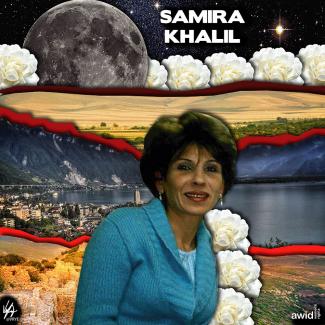
Samira Khalil

Samira était une activiste syrienne sous le régime de Bachar al-Asad.

Dès son plus jeune âge, Samira s'est opposée à toutes les formes de despotisme et en particulier au régime autoritaire dans lequel elle vivait. Samira a été kidnappée en 2013 avec trois autres activistes de premier plan. Elle aurait été enlevée au Centre de documentation sur les violations à Douma, une ville située en périphérie rurale de Damas.

Le principal suspect associé à sa disparition est le groupe rebelle syrien Jaych al-Islam (l'armée de l'islam), qui nie son implication. Aucune enquête officielle n’a été ouverte sur la disparition de Samira et elle n’a plus donné de nouvelles depuis lors. Samira était attachée à son pays et refusait de quitter la Syrie tant qu'elle estimait que son rôle en faveur de l'émancipation des femmes et la documentation des crimes était utile et nécessaire.


Samira Khalil, Syria

Snippet FEA Land and Agroecology

LAND AND 

AGROECOLOGY

Rural Women Caring for Nature and Communities

Quais são os idiomas oficiais do inquérito WITM?

Por enquanto, o inquérito no KOBO está disponível em árabe, inglês, francês, português, russo e espanhol. Terá a oportunidade de selecionar um dos idiomas no início do inquérito.

Research methology

Over eight years, we did four global surveys and built a research methodology.

In 2013, we published three global reports. These reports confirm that women’s rights organizations are doing the heavy lifting to advance women’s rights and gender equality by using diverse, creative and long-term strategies, all while being underfunded.

Our 2010 global survey showed that the collective income of 740 women’s organizations around the world totaled only USD 104 million. Compare this with Greenpeace International, one organization with a 2010 budget of USD 310 million1. Imagine the impact these groups could have if they were able to access all the financial resources they need and more?

AWID’s WITM research has catalyzed increased funding for women’s rights organizing. WITM research was a driving force behind the Catapult crowdfunding platform, which has raised USD 6.5 million for women’s rights. The Dutch Government cited WITM research as a reason for its unprecedented MDG 3 Fund of EU 82 million. WITM research has also led to the creation of several new funds: FRIDA – The Young Feminist Fund, the Indigenous Women’s Fund, Fundo Elas, the Mediterranean Women’s Fund and the Rita Fund.

Funding trends analyses

While the WITM research has shed important light on the global funding landscape, AWID and partners have identified the need to dig deeper, to analyze funding trends by region, population and issue. In response, organizations are now using AWID’s WITM research methodology to do their own funding trends analyses. For example, in November 2013, Kosova Women’s Network and Alter Habitus – Institute for Studies in Society and Culture published Where is the Money for Women’s Rights? A Kosovo Case Study.

At the same time, AWID continues to collaborate with partners in Where is the Money for Indigenous Women’s Rights (with International Indigenous Women’s Forum and International Funders for Indigenous Peoples) and our upcoming Where is the Money for Women’s Rights in Brazil? (with Fundo Elas).

Several organizations have also conducted their own independent funding trends research, deepening their understanding of the funding landscape and politics behind it. For example, the South Asian Women’s Fund was inspired by AWID’s WITM research to conduct funding trends reports for each country in South Asia, as well as a regional overview. Other examples of research outside of AWID include the collaboration between Open Society Foundations, Mama Cash, and the Red Umbrella Fund to produce the report Funding for Sex Workers Rights, and the first-ever survey on trans* and intersex funding by Global Action for Trans* Equality and American Jewish World Service.


Estoy tratando de presentar una propuesta, pero el formulario en línea no funciona

En caso de tener preguntas relacionadas con el Llamado a Proponer Actividades, por favor escríbenos utilizando nuestro formulario de contacto. Seleccione «llamado de actividad» como asunto de mensaje.

Contáctanos

Florence Adong-Ewoo

Florence was a disability rights activist who worked with several disabled women’s organizations in Uganda.

She also held the position of Chairperson of the Lira District Disabled Women Association, as well as the Lira District Women Councilors’ caucus. Trained as a counsellor for persons with disabilities and parents of children with disabilities, she supported many projects that called for greater representation of persons with disabilities.

She died of a motorcycle accident. 


Florence Adong-Ewoo, Uganda

Snippet FEA Audio Land and Agroecology (EN)

Listen to the story here:

هل عليّ القيام بأي تجهيزات قبل تعبئة الاستطلاع؟

يركّز استطلاع "أين المال" على وقائع التمويل للتنظيمات النسوية، تسأل أغلبية الأسئلة عن تمويل مجموعتكم/ن بين الأعوام 2021-2023. سوف تحتاجون أن تكون لديكم/ن معلومات معيّنة عند تعبئة الاستطلاع مثل ميزانيتكم/ن السنوية ومصادر التمويل الأساسية.

7. Synthesize your research findings

Now that you have analyzed all your data – from your survey, interviews, desk research and potentially other sources – you can create your final product.

In this section:

Create your final product

Your final product will be the document that will summarize, analyze and criticize your data. That will be the piece that you will share with your community to present and explain your research to your audience.

At AWID, we often write a comprehensive written report that analyzes each set of data and synthesizes all of our findings, then later create smaller products, such as infographics and summaries (explained in the subsequent section “Finalize and format”).

1. Write clearly

  • Organize your data as you would like to tell a story. You can follow the order of your survey. Or you can regroup some questions to lead to your conclusion in a smooth and progressive way.
  • Adapt your language to your audience. Use universal language and avoid jargon or too technical terms.

Importance of the editor

An editor will proofread, ensure concise writing, conduct fact-checking, point out inconsistencies that need to be resolved, arrange the flow of the document and possibly suggest titles.

Your editor should preferably be someone who understands and knows your WITM work but who was not directly involved in the research. This will bring in a fresh perspective.

2. Make it pretty

  • Use the data collected to create graphs and tables. These type of visuals are a compelling way to highlight the main findings of your research and validate your analysis.

  • Source relevant images that can illustrate your report.

  • Highlight key-numbers and/or powerful testimonials.

Remember: The more accessible your product is, the more people will want to read (and share!) it.

Back to top


Gather review & inputs

At this point, you have collected all your data, analyzed it and transformed it into your final product, likely in a long report.

1. Polish your results

Before moving on to the next steps – you should share your final research product with your advisor organizations, activists, and donors.

This is a great moment to check the following points:

  • Are there any key points missing in your analysis of the present funding landscape and trends?
  • Are there any key points missing in your conclusions?
  • Are there any inaccuracies in the data that need to be corrected?
  • General suggestions on strengthening the report to achieve your goals as listed in your research framing.

Once you have inputted all feedback from your advisors, be sure to run it by your editor once more.

This will now be the final, completed version of your report.  If you intend to publish the final report in other languages, now is the time to send it for translation.

2. Facilitate the feedback

  • Your advisors are likely busy with their regular responsibilities. Be sure to request feedback within a reasonable deadline.
  • Keep your request for feedback brief and specific, so it is easy for them to respond. If you like, you can simply copy and paste the bullet points we have provided.
  • If you are publishing in multiple languages, ensure you have advisors who can also review the final translated versions of your product(s).

This is a significant contribution from your advisors. Consider offering them some form of recognition.

Back to top


Previous step

6. Conduct desk research

Next step

8. Finalize and format


Estimated time:

• 2 - 5 months

People needed:

• 1 or more research person(s)
• 1 Editor (or web-editor if you create an online product)
• Translator(s), if done in more than one language

Resource needed:

• List of advisor organizations, activists, and donors.
• Concept note (from “Frame your research” section)
• Survey topline results
• Prepared interview questions
• Interview results
• Desk research data
• All other data used in report


Previous step

6. Conduct desk research

Next step

8. Finalize and format


Ready to Go? Worksheet

Download the toolkit in PDF
¿Cuánto cuesta inscribirse?

Esta información estará disponible recién cuando abramos el proceso de inscripción.


Nadine Ramaroson

Nadine fue un ejemplo para muchxs por su trabajo en apoyo de las mujeres y lxs más vulnerables de su comunidad. Estaba comprometida con ayudar a l pobres, especialmente a las personas sin techo. 

Aunque su muerte se informó como accidente, la familia Ramaroson, encabezada por su padre, André Ramaroson, llevó adelante una investigación que arrojó evidencias de que había sido asesinada. Se informó que había muerto en un accidente fatal ocurrido entre Soanierano - Ivongo y Ste Marie, una historia que fue desmentida por su familia. Ella había recibido numerosas amenazas de muerte por sus audaces posiciones políticas. Su caso todavía está en la corte de Antananarivo (la capital de Madagascar).


Nadine Ramaroson, Madagascar