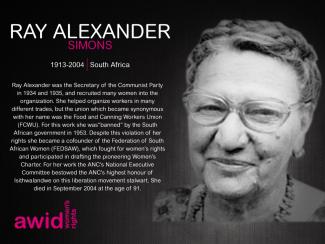
Ray Alexander Simons
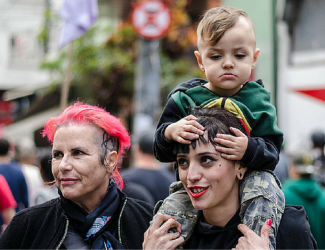
Over the past few years, a troubling new trend at the international human rights level is being observed, where discourses on ‘protecting the family’ are being employed to defend violations committed against family members, to bolster and justify impunity, and to restrict equal rights within and to family life.
The campaign to "Protect the Family" is driven by ultra-conservative efforts to impose "traditional" and patriarchal interpretations of the family, and to move rights out of the hands of family members and into the institution of ‘the family’.
Since 2014, a group of states have been operating as a bloc in human rights spaces under the name “Group of Friends of the Family”, and resolutions on “Protection of the Family” have been successfully passed every year since 2014.
This agenda has spread beyond the Human Rights Council. We have seen regressive language on “the family” being introduced at the Commission on the Status of Women, and attempts made to introduce it in negotiations on the Sustainable Development Goals.
AWID works with partners and allies to jointly resist “Protection of the Family” and other regressive agendas, and to uphold the universality of human rights.
In response to the increased influence of regressive actors in human rights spaces, AWID joined allies to form the Observatory on the Universality of Rights (OURs). OURs is a collaborative project that monitors, analyzes, and shares information on anti-rights initiatives like “Protection of the Family”.
Rights at Risk, the first OURs report, charts a map of the actors making up the global anti-rights lobby, identifies their key discourses and strategies, and the effect they are having on our human rights.
The report outlines “Protection of the Family” as an agenda that has fostered collaboration across a broad range of regressive actors at the UN. It describes it as: “a strategic framework that houses “multiple patriarchal and anti-rights positions, where the framework, in turn, aims to justify and institutionalize these positions.”
Comparte tus historias y conoce las de otrxs. Al conectar nuestras experiencias, relatos y propuestas ayudamos a crear en conjunto y amplificar las Realidades Feministas.
المجموعات، المنظمات والحركات التي تعمل خصوصاً وبالأساس على حقوق النساء، حقوق الفتيات، العدالة الجندرية، حقوق مجتمعات الميم - عين وحلفائها/يفاتها في جميع المناطق وعلى جميع المستويات، إن كانت مجموعات جديدة أو قديمة.
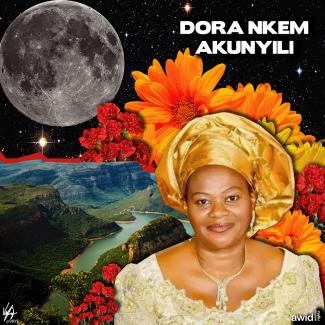
Née dans l'État de Benue, au Nigeria, Dora était une pharmacienne experte et érudite ainsi qu’une dirigeante communautaire de renommée mondiale.
Lorsqu'elle est devenue directrice générale de l'Agence nationale pour la gestion et le contrôle des aliments et drogues (NAFDAC) entre 2001 et 2008, son travail d’envergure révolutionnaire a initié un changement de paradigme au sein de la fonction publique nigériane. Au cours de son mandat, elle a mené des réformes dans l'application des politiques et des réglementations qui ont permis de réduire de manière radicale le nombre de faux médicaments qui ont affecté le secteur pharmaceutique nigérian.
Après avoir incarné la réalité d’une femme courageuse et compétente qui a défié les maux d’une société à dominante patriarcale et qui a conduit au changement, elle est devenue une icône de l’émancipation des femmes. Entre 2008 et 2010 elle a été nommée ministre de l'Information et de la Communication.
Elle est décédée des suites d'un cancer et laisse dans le deuil son mari, ses six enfants et ses trois petits-enfants.
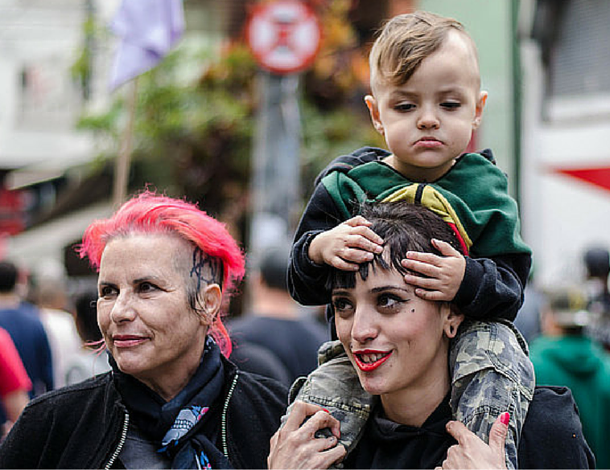
Syndicat OTRAS
En savoir plus sur les réalités féministes
N'hésitez pas à nous contacter.
nous estimons que pour être transformateurs et forts, les mouvements féministes doivent continuer à travailler au-delà de leurs similitudes et de leurs différences. Nous devons également interroger le pouvoir et les privilèges, tant au sein qu'à l'extérieur de nos mouvements.
Внешнее финансирование включает гранты и другие формы финансирования от благотворительных фондов, правительств, двусторонних, многосторонних или корпоративных спонсоров и индивидуальных доноров – как внутри вашей страны, так и из-за рубежа. Сюда не входят ресурсы, которые группы, организации и/или движения генерируют самостоятельно, такие как, например, членские взносы, добровольные взносы "сотрудниц(-ков), участниц(-ков) и/или сторонниц(-ков), сборы через сообщество, сдача помещений в аренду или продажа услуг. Для удобства в опрос включены определения различных видов финансирования и краткие описания различных доноров.
Nadine was a role model to many for her work supporting women and the most vulnerable in her community. She was committed to helping the poor and homeless in particular.
Though her death was reported as an accident, the Ramaroson family, led by her father, André Ramaroson led an investigation that pointed to evidence that she had been murdered. She is reported to have died in a fatal accident occurred between Soanierano - Ivongo and Ste Marie - a story that has been refuted by her family.
She received numerous death threats for her bold political positions. Her case remains in court in Antananarivo (the capital of Madagascar).

The information contained in this communication is confidential and is intended solely for the addressee.
This communication may contain information proprietary to the Association for Women’s Rights in Development (AWID), and may not be reproduced or disseminated in whole or in part without AWID's written consent.
AWID does not warrant that any information contained herein is complete or correct. This communication is not an offer to enter into any agreement and is not a confirmation of any agreement described herein unless the context clearly indicates the contrary.
AWID is not acting as your adviser in any agreement that may be proposed herein, and this communication does not constitute a recommendation, guidance or proposal to enter into any agreement.
AWID does not guarantee or otherwise assure the expected results of any agreement. This communication may contain views or opinions that are not necessarily those of AWID.
You shall not be entitled to place any reliance on the information contained in this communication for the purposes of entering into any proposed agreement or otherwise.
"I participated in a member-only activity and I was particularly moved to see how there was space for everyone to share and that there was no judgment whatsoever. The entire session was energetic and vibrant."
- Kirthi Jayakumar, Founder, The Gender Security Project, India
A AWID compromete-se a alcançar a justiça linguística e lamentamos que, neste momento, não seja viável disponibilizar um inquérito do WITM em mais idiomas. No entanto, caso precise de apoio com traduções ou queira preencher o inquérito em qualquer outro idioma, entre em contacto connosco através de witm@awid.org.
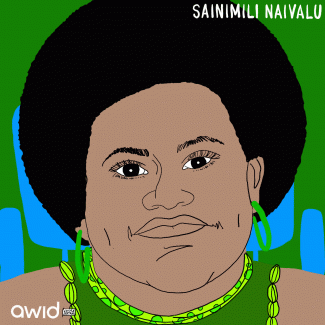
“I’ve witnessed discrimination on the streets, being teased on the streets and verbally abused on the streets. I have also made numerous friends and have met a lot of people. There may be dangers out there but I am a survivor and this is where I will be for now.”
- Sainimili Naivalu
She demanded policy makers and stakeholders provide disability friendly policies and services such as the construction of ramps in towns and cities to increase accessibility. Physical barriers were not the only ones she strived to change. From her own experience, she knew that more difficult changes need to take place in social and economic spheres. Many of the challenges disabled people face are rooted in attitudes that carry discrimination and stigma.
A survivor and a fighter, Sainimili contributed to co-creating feminist realities that foster inclusion and shift attitudes towards disabled people. As a member of the Spinal Injury Association of Fiji (SIA) and through Pacific Disability Forum’s Pacific Enable project she attended the International Labour Organisation “Start Your Business” training in Suva, enabling her to transform her ideas into her own business. She was an entrepreneur at the Suva Market Stall 7, offering manicure services, as well as running SIA’s women’s market stall selling handicrafts, sulus and artifacts. Sainimili’s plan was to expand her business and become a major employer of disabled people.
In addition to her activism, she was also a table tennis medalist and youth champion.
A vivacious personality, Sainimili was one of a kind. You would always know that Sainimili is in a room because her laughter and her stories would be the first thing that you would notice.
- Michelle Reddy
Sainmili passed away in 2019.
Linda Porn es una otra heroína de la organización sindical feminista y del activismo de las trabajadoras sexuales a nivel nacional (en España) y transnacional.
Originaria de México, vive en España desde los años 2000. Es trabajadora sexual, activista, madre soltera y artista multidisciplinar.
Partiendo de estas diferentes identidades, utiliza la performance, el videoarte y el teatro para visibilizar las luchas en las intersecciones del transfeminismo, el trabajo sexual, la migración, el colonialismo y la maternidad. Combina el arte y el trabajo sexual mientras cuida a su hija como madre soltera.
Linda también pertenece a colectivos de trabajadoras sexuales que luchan por sus derechos, como el sindicato OTRAS y CATS Murcia. También cofundó el grupo 'Madrecitas' - que visibiliza y denuncia la violencia institucional racista contra las familias migrantes. Violencia de la que ella y su hija fueron objeto por ser trabajadora sexual y madre soltera migrante.
¡No te pierdas su trabajo artístico aquí!