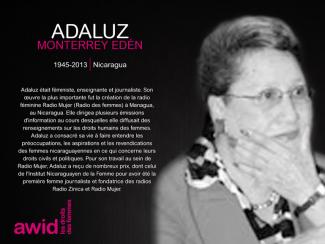
Adaluz Monterrey Eden
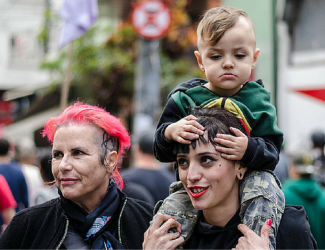
Over the past few years, a troubling new trend at the international human rights level is being observed, where discourses on ‘protecting the family’ are being employed to defend violations committed against family members, to bolster and justify impunity, and to restrict equal rights within and to family life.
The campaign to "Protect the Family" is driven by ultra-conservative efforts to impose "traditional" and patriarchal interpretations of the family, and to move rights out of the hands of family members and into the institution of ‘the family’.
Since 2014, a group of states have been operating as a bloc in human rights spaces under the name “Group of Friends of the Family”, and resolutions on “Protection of the Family” have been successfully passed every year since 2014.
This agenda has spread beyond the Human Rights Council. We have seen regressive language on “the family” being introduced at the Commission on the Status of Women, and attempts made to introduce it in negotiations on the Sustainable Development Goals.
AWID works with partners and allies to jointly resist “Protection of the Family” and other regressive agendas, and to uphold the universality of human rights.
In response to the increased influence of regressive actors in human rights spaces, AWID joined allies to form the Observatory on the Universality of Rights (OURs). OURs is a collaborative project that monitors, analyzes, and shares information on anti-rights initiatives like “Protection of the Family”.
Rights at Risk, the first OURs report, charts a map of the actors making up the global anti-rights lobby, identifies their key discourses and strategies, and the effect they are having on our human rights.
The report outlines “Protection of the Family” as an agenda that has fostered collaboration across a broad range of regressive actors at the UN. It describes it as: “a strategic framework that houses “multiple patriarchal and anti-rights positions, where the framework, in turn, aims to justify and institutionalize these positions.”
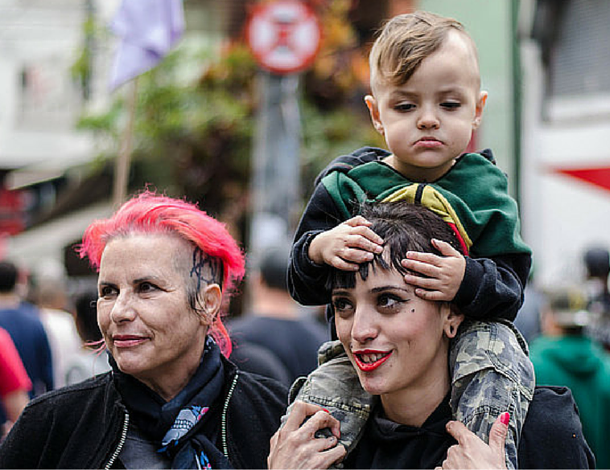
L'exposition #MeToo en Chine a été organisée pour la première fois en 2019 et a effectué une tournée dans 5 villes. L'objectif de l'exposition est de mettre davantage en avant les expériences personnelles des victimes et des activistes et, en prenant part à ces histoires, d'inspirer notre public à se joindre à la lutte. L'exposition est elle-même devenue une partie de la lutte #MeToo; elle a fait face à d’innombrables défis lors de sa tournée à travers la Chine et a même risqué la fermeture à plus d'une occasion.
Nicole Barakat is a queer femme, SWANA artist born and living on Gadigal Country (so-called Sydney, Australia). She works with deep listening and intuitive processes with intentions to transform the conditions of everyday life. Her work engages unconventional approaches to art-making, creating intricate works that embody the love and patience that characterises traditional textile practices.
Second High-level Dialogue on Financing for Development
Este proyecto se desarrolla en colaboración con:
Si votre activité est acceptée, l’équipe de l’AWID vous contactera pour évaluer et répondre aux besoins d’interprétation et d’accessibilité pour votre activités.
El Quinto Diálogo de Alto Nivel sobre la Financiación para el Desarrollo, realizado el 7 y 8 de diciembre de 2011, marcó el comienzo de las conversaciones en torno a la Agenda de Desarrollo Post-2015 y sus relaciones con la financiación para el desarrollo. Esta conferencia puso especial énfasis en incrementar la ayuda para financiar los ODM. En sus observaciones finales, el Presidente en Funciones de la Asamblea General pidió a los Estados Miembros que comenzaran a pensar en el marco para el desarrollo post-2015.
Manal Tamimi Palestine
Bubulina Moreno, Colombia
Karolina Więckiewicz, Poland
Anwulika Ngozi Okonjo, Nigeria
ฟอรัมแต่ละครั้งถูกจัดขึ้นในภูมิภาคต่างๆทั่วโลก และครั้งนี้ AWID ฟอรัมกลับมาจัดที่เอีเชียอีกครั้ง! เราได้ผ่านการไปเยี่ยมเยือนประเทศต่างๆในเอเชียเพื่อหารือกับขบวนการเฟมินิสต์เพื่อประเมินรายละเอียดด้านโลจิสติกส์ การเข้าถึงง่าย ความปลอดภัย วีซ่า และความพร้อมด้านอื่นๆ โดยคณะกรรมการ AWID ของเรา อนุมัติให้จัดที่กรุงเทพอย่างกระตือรือร้นในฐานะทางเลือกที่ดีที่สุด เราตื่นเต้นที่ได้กลับมากรุงเทพที่ที่เราเคยได้จัด AWID ฟอรัมในปีพ.ศ. 2548
Kay Thi Win, Asia Pacific Network of Sex Workers (APNSW)
Thin Pa Pa Htun, Aye Myanmar Association
Xiao Shuang, Northeast Transgender Support Network
Cathy Ketepa, Friends Frangipani Inc. PNG
Rajeshwari Prajapati, Society for Women Awareness Nepal (SWAN)

Other useful links to stay informed:
Como parte de nuestro compromiso de lograr una interacción más profunda con artistas y la práctica de la creación conjunta de las Realidades Feministas, AWID colaboró con un grupo de trabajo de artisvistas para promover y fortalecer las agendas y realidades feministas en sus comunidades y movimientos a través de sus expresiones creativas. Nuestra intención en este punto es reunir a creativxs feministas en un espacio pujante y valiente donde puedan desarrollarse y vivir en libertad, y donde puedan romper las narrativas tóxicas para sustituirlas por alternativas transformadoras.