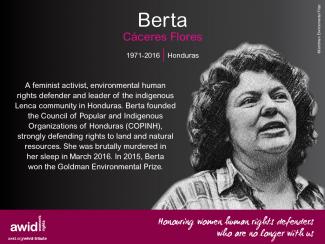
Berta Cáceres Flores
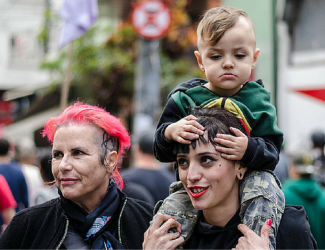
Over the past few years, a troubling new trend at the international human rights level is being observed, where discourses on ‘protecting the family’ are being employed to defend violations committed against family members, to bolster and justify impunity, and to restrict equal rights within and to family life.
The campaign to "Protect the Family" is driven by ultra-conservative efforts to impose "traditional" and patriarchal interpretations of the family, and to move rights out of the hands of family members and into the institution of ‘the family’.
Since 2014, a group of states have been operating as a bloc in human rights spaces under the name “Group of Friends of the Family”, and resolutions on “Protection of the Family” have been successfully passed every year since 2014.
This agenda has spread beyond the Human Rights Council. We have seen regressive language on “the family” being introduced at the Commission on the Status of Women, and attempts made to introduce it in negotiations on the Sustainable Development Goals.
AWID works with partners and allies to jointly resist “Protection of the Family” and other regressive agendas, and to uphold the universality of human rights.
In response to the increased influence of regressive actors in human rights spaces, AWID joined allies to form the Observatory on the Universality of Rights (OURs). OURs is a collaborative project that monitors, analyzes, and shares information on anti-rights initiatives like “Protection of the Family”.
Rights at Risk, the first OURs report, charts a map of the actors making up the global anti-rights lobby, identifies their key discourses and strategies, and the effect they are having on our human rights.
The report outlines “Protection of the Family” as an agenda that has fostered collaboration across a broad range of regressive actors at the UN. It describes it as: “a strategic framework that houses “multiple patriarchal and anti-rights positions, where the framework, in turn, aims to justify and institutionalize these positions.”
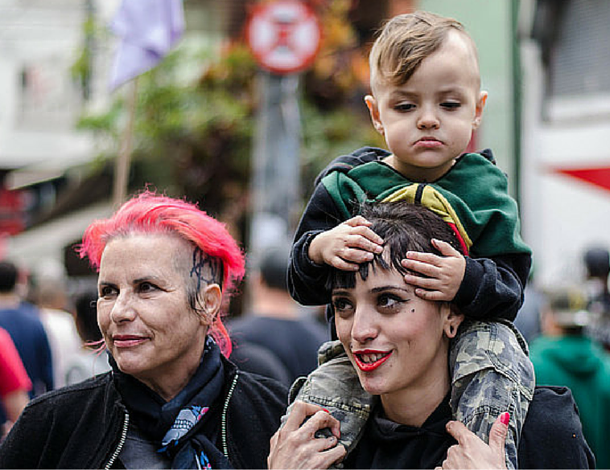
Paneles, talleres, plenarias y espacios de intercambio entre colectivos, activistas y organizaciones que luchamos para recorrer de forma colectiva el camino hacia una agenda y un programa de lucha por el ecosocialismo.
📅 8 - 11 de noviembre de 2025
📍 Buenos Aires, Argentina
Nos membres forment un réseau dynamique de personnes dans le monde entier. Ce sont des chercheur-euse-s, des universitaires, étudiant-e-s, éducateur-trice-s, militant-e-s, femmes et hommes d’affaires, des responsables politiques, des praticien-ne-s du développement, des bailleurs de fonds. Nos membres, de tous âges, font de l’AWID une association féministe mondiale unique.
Nous proposons divers types d’adhésions en fonction du niveau de revenus et selon que vous êtes une personne ou une organisation. À l’heure actuelle, nous comptons plus de 5 000 membres, individuel-lle-s et institutionel-lle-s, issu-e-s de 164 pays.
Nous collaborons aux plaidoyers sur des problématiques spécifiques ; nos membres votent à l’élection des membres de notre conseil d’administration et peuvent également participer à nos actions prioritaires par le truchement de webinaires, d’enquêtes, d’actions urgentes, pour ne citer que quelques exemples.
Nos membres institutionnel-le-s représentent des organisations qui souhaitent faire progresser la justice de genre et les droits humains des femmes. Il s’agit d’organisations de droits des femmes, de l’échelle locale à la scène mondiale, de réseaux communautaires, de grandes institutions internationales, de ministères gouvernementaux, de programmes universitaires, et bien plus encore. Quelque 63 % de nos membres proviennent des pays du Sud et 38 % ont moins de 30 ans.

“My mission in life is not merely to survive, but to thrive; and to do so with some passion, some compassion, some humor, and some style.” - Maya Angelou
The AWID International Forum is both a global community event and a space of radical personal transformation. A one-of-a-kind convening, the Forum brings together feminist, women’s rights, gender justice, LBTQI+ and allied movements, in all our diversity and humanity, to connect, heal and thrive. The Forum is a place where Global South feminists and historically marginalized communities take center stage, strategizing with each other and allied movements, funders and policy-makers, in order to shift power, make alliances, and usher in a different, better world.
When people come together on a global scale, as individuals and movements, we generate a sweeping force. Join us in Bangkok, Thailand in 2024. Come dance, sing, dream and rise with us.
When: 2–5 December 2024
Where: Bangkok, Thailand; and online
Who: Approximately 2,500 feminists from all over the world participating in-person, and 3,000 participating virtually
Learn more about the forum:
Read our Frequently Asked Questions
with Naike Ledan and Fédorah Pierre-Louis.
The information contained in this communication is confidential and is intended solely for the addressee.
This communication may contain information proprietary to the Association for Women’s Rights in Development (AWID), and may not be reproduced or disseminated in whole or in part without AWID's written consent.
AWID does not warrant that any information contained herein is complete or correct. This communication is not an offer to enter into any agreement and is not a confirmation of any agreement described herein unless the context clearly indicates the contrary.
AWID is not acting as your adviser in any agreement that may be proposed herein, and this communication does not constitute a recommendation, guidance or proposal to enter into any agreement.
AWID does not guarantee or otherwise assure the expected results of any agreement. This communication may contain views or opinions that are not necessarily those of AWID.
You shall not be entitled to place any reliance on the information contained in this communication for the purposes of entering into any proposed agreement or otherwise.

*Sites web en anglais
A number of men who share our commitment to feminism and women’s human rights are members of AWID.
The Forum theme––Rising Together––is an invitation to engage with our whole selves, to connect with each other in focused, caring and brave ways, so that we can feel the heartbeat of global movements and rise together to meet the challenges of these times.
Feminist, women’s rights, gender justice, LBTQI+ and allied movements around the world are at a critical juncture, facing a powerful backlash on previously-won rights and freedoms. Recent years have brought the rapid rise of authoritarianisms, the violent repression of civil society and criminalization of women and gender-diverse human rights defenders, escalating war and conflict in many parts of our world, the continued perpetuation of economic injustices, and the intersecting health, ecological and climate crises.
Our movements are reeling and, at the same time, seeking to build and maintain the strength and fortitude required for the work ahead. We can't do this work alone, in our silos. Connection and healing are essential to transforming persistent power imbalances and fault lines within our own movements. We must work and strategize in interconnected ways, so that we can thrive together. The AWID Forum fosters that vital ingredient of interconnectedness in the staying power, growth and transformative influence of feminist organizing globally.
On September 2nd, 2021, the amazing feminist and social justice activists of AWID’s Crear | Résister | Transform festival came together not only to share resistance strategies, co-create, and transform the world, but also to talk dirty on Twitter.
The exercise was led by Nana Darkoa Sekyiamah, co-founder of the blog Adventures From The Bedrooms of African Women and author of The Sex Lives of African Women, who paired up with the Pan-Africanist digital queer womanist platform AfroFemHub, to ask the question: How can we safely and consensually explore our pleasure, desires, and fantasies via text?
I believe this is a critically important question because it looks at the larger issue of how one navigates the online world with a feminist understanding. Under capitalism, discourse around bodies and sex can be dehumanizing and distorting, and navigating sexual pleasure in virtual spaces can feel performative. So seeking out avenues where we can explore how we share our desire in ways that are affirming and enthusiastic can push back against dominant models of presentation and consumption to reclaim these spaces as sites for authentic engagement, proving that all sexting should be just that: feminist.
Plus, allowing feminist discourse to embody its playful side in online discourse helps reframe a popular narrative that feminist engagement is joyless and dour. But as we know, having fun is part of our politics, and an inherent part of what it means to be feminist.
Using the hashtag #SextLikeAFeminist, scholars and activists from all over the world chimed in with their thirstiest feminist tweets, and here are my top ten.
As these tweets show, it turns out that sexting like a feminist is sexy, funny – and horny. Yet, it never loses sight of its commitment to equity and justice.
Our thoughts are with the many people all around the world who are most affected by the repercussions of the global COVID-19 pandemic, especially marginalised communities that are historically oppressed.
This is an invitation for artists and creative activists to join a virtual space to connect, build community, and support each other through these challenging times. For this we have created a new Slack community to safely share insights, learnings, life-hacks, resources, advice, fears and anxieties, hopeful and joyful reminders, and in general chat about how we’re doing.
After filling out the form, we will send you a personal invitation to the community.

For those who are new to Slack, we’ll have orientation sessions and materials available after you sign up.
Since we are working in three languages (English, Spanish, French) we invite you to write in the language you are the most comfortable with and use online translation tools (Google Translate or others) to participate in discussions.
Please refer to the Community Guidelines
The co-creation of our feminist realities starts with ourselves and how we treat each other. We are dedicated to creating and protecting safe and supportive spaces for our communities both online and in person. We also consider that safe and welcoming spaces are co-owned and co-created. We expect our members to act in a manner that is ethical, responsible and consistent with the values of AWID and assume collective responsibility to ensure an atmosphere of mutual respect and solidarity.
As part of our ongoing discussions, we will offer weekly prompts in Slack with the intention to gently facilitate dialogue and inspire art-making processes. This can be an introspective process, but to make the most out of this community, we welcome you to interact with other community members and share thoughts as part of our discussions. The intention is to invite folks to respond freely and gradually by writing or making art in whatever way feels best.
We hope to have relevant and timely discussions with you, so we invite your suggestions and feedback. In general, the themes will center the experiences and perspectives of artists, writers, and creators -- and they will make space for folks to vision into and beyond the current global climate through the lens of feminist realities.
Un jeu de cartes pratique destiné aux collectives, qui permet d’explorer les alternatives économiques féministes et les systèmes de soins comme réponse aux crises. Pensé pour tous les mouvements qui évoluent au sein des crises climatiques mondiales, ce jeu de cartes propose de jouer et d’élaborer des stratégies en s’appuyant sur des scénarios de la vie réelle. Un moyen créatif de réfléchir aux stratégies lors de réunions, d’ateliers et de rassemblements de la communauté !
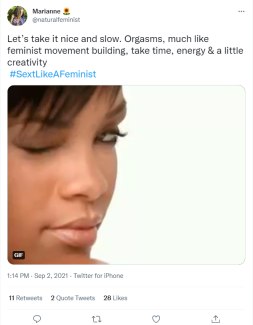
Vamos despacio y con amabilidad. Los orgasmos, como la construcción de los movimientos feministas, llevan tiempo, energía y un poquito de creatividad.
por Gabrielle Tesfaye
Cuando creé mi cortometraje animado The Water Will Carry Us Home [El agua nos llevará a casa], mi mente estaba conectada con un mundo mágico de resiliencia intrépida y sirenas ancestrales que transformaban sus cicatrices más profundas en una nueva generación de vida. Ambientada durante la época del comercio de esclavxs transatlántico, sentí el impulso de mostrar esta historia de esclavización africana en forma diferente de cómo se la ha mostrado siempre en pantalla. Quería dar a mis ancestrxs la conmemoración que nunca recibieron. Mi motivación era recuperar la historia que continúa pintándonos como víctimas impotentes. Esencialmente, quería contar la verdad. Recuperar y reimaginar nuestra historia y nuestra perspectiva significa sanar simultáneamente nuestros traumas generacionales, que existen todavía hoy. Este importante trabajo es lo que están haciendo hoy tantas mujeres a través del continente africano y la diáspora africana, encendiendo nuestras realidades feministas colectivas.
Para hacer la película investigué religiosamente y, en lo que estaba escrito, vi lo que faltaba. Muchas veces sentí que estaba chocando contra una pared, al tratar de encontrar algo que no estaba ahí, y fue en esos espacios anulados en los que me di cuenta de que lxs narradorxs de hoy están llenando esos vacíos. Encontré las historias más útiles en las artes visuales, la cinematografía y el folklore de la diáspora africana contemporáneos.
The Water Will Carry Us Home viajó por el mundo hasta los corazones de la diáspora africana. También me trajo aquí, como curadora de las proyecciones de películas de África y la diáspora de la iniciativa de AWID «Creación conjunta de realidades feministas». Para organizar esta colección de películas, busqué historias que fueran totalmente únicas, crudas, y representativas del poder feminista en acción. Esta serie de tres cortometrajes y un largometraje revela historias provenientes de muchas comunidades de África y la diáspora, incluyendo Etiopía, Uganda, la República Democrática del Congo, Sudáfrica y Kenia. Las películas reposicionan a las mujeres africanas como lo que verdaderamente son: personas autónomas y empoderadas a través de la lente sin filtros de su trabajo.
«Una narración increíblemente hermosa, atenta y de fina observación sobre la conexión entre África y su Diáspora, constituida por el comercio transatlántico de esclavxs. El universo visual que crea es magnífico... un eco de la fusión de las tradiciones espirituales y el tiempo no lineal que habla de cómo todavía seguimos experimentando los momentos del pasado que formaron “nuevos” mundos de negritud diaspórica.»
- Jessica Horn, activista feminista panafricana, escritora y co-creadora del sitio web the temple of her skin
«... una representación cruda y realmente única del poder feminista en acción.»
- Hers is Ours Collective, organizadorxs del Outsider Moving Art & Film Festival
El cortometraje documental Women Hold Up the Sky [Las mujeres sostienen el cielo], creada por la WoMin African Alliance, cuenta la historia de mujeres activistas de Uganda y la República Democrática del Congo que están reclamando activamente sus derechos sobre la tierra, que se ven amenazados en sus hogares por la minería y otras industrias extractivas. La película no solo expone la corrupción del extractivismo, sino que finalmente muestra lo que nos ha estado faltando en las pantallas: cómo las mujeres africanas de las bases se están organizando activamente, formulando estrategias y realizando análisis dentro de sus comunidades para crear alternativas centradas en las mujeres e impulsadas por la comunidad. Margaret Mapondera de WoMin explica con gran belleza que ellas son «las custodias de tierras, bosques, aguas, ríos y territorios, las formas en que las mujeres guardan y transmiten las historias/herstorias [historias de ellas] de nuestro pasado y nuestros futuros; las formas de ser, poderosas y transformadoras, que las mujeres corporizan en sus relaciones con las demás, con el medio ambiente, y consigo mismas.»
«Una pieza cinematográfica refrescante y muy necesaria, que muestra los muchos modos en los que las mujeres africanas se están uniendo para crear alternativas lideradas por mujeres e impulsadas por la comunidad... La lucha continúa, y las mujeres tienen la clave.»
- Hers is Ours Collective, organizadorxs del Outsider Moving Art & Film Festival
Pumzi, creada por la cineasta aclamada por la crítica, Wanuri Kahiu, vincula África con la ciencia ficción en torno al clima y el ambientalismo. Pumzi imagina un mundo futurista en el cual la humanidad ha sido forzada a establecerse en otro planeta. Si bien Pumzi parece superficialmente afrofuturista y nueva para África, Kahiu muestra la verdad: que la ciencia ficción y la fantasía siempre existieron en la narrativa africana, pero nunca fueron reconocidos. Kahiu crea un mundo donde las mujeres son las buscadoras de la verdad y las heroínas que nos abren el camino hacia un nuevo mundo, lo opuesto a las imágenes que colocan a lxs africanxs como víctimas de la guerra y la destrucción. Por el contrario, Pumzi escribe la narrativa de mujeres africanas que son sus propias salvadoras, que resuelven sus propios problemas y que no se detienen ante nada con tal de seguir las crípticas visiones que canalizan en sus sueños.
«Una pionera película africana de ciencia ficción, que sitúa a las mujeres como escribas del futuro y expande nuestras visiones sobre otros mundos, otros universos, que podríamos ocupar como africanxs. Este es siempre un ejercicio importante para imaginar nuestra salida de las crisis actuales.»
- Jessica Horn, activista feminista panafricana, escritora y co-creadora del sitio web the temple of her skin
El largometraje de nuestro programa, Finding Sally [Encontrando a Sally], está ambientado en la Etiopía de la década de 1970, en la época de la guerra del Terror Rojo, y documenta la impactante historia de Sally Dawit, la tía activista de la directora Tamara Mariam Dawit. A lo largo de la película, vemos el increíble viaje de Sally, como activista joven y valiente que transita uno de los períodos más violentos de la historia de Etiopía. La historia de Sally no solo revela la gravedad de esta época: refleja también su propia evolución personal como mujer joven. De manera intencional, Dawit realiza la película a través de la perspectiva de las mujeres, sin utilizar voces masculinas. Dado que la mayor parte de la historia etíope es contada por varones, esta potente historia preservó su realidad, honrando la perspectiva feminista. Dawit explica que «en las revoluciones y las guerras, las mujeres a menudo son incluidas solamente como la esposa de alguien o como la persona que cocinaba o escribía a máquina. Yo quería mirar el activismo relacionado con la revolución solo a través de los recuerdos y las voces de las mujeres.» Finding Sally manifiesta la recuperación de la historia que actualmente buscan lxs cineastas. Es un estallido de poder feminista y de nuestras realidades conectadas a través del tiempo.
«Sobre nosotrxs recae la responsabilidad de recordar a aquellas mujeres que nos precedieron y a su brillante trabajo, para que no queden en el olvido como los miles de mujeres ya han sido olvidadas, mientras libraban batallas justas. Sally es una de esas mujeres, y no debemos olvidarla jamás.»
- Hers is Ours Collective, organizadorxs del Outsider Moving Art & Film Festival
Inscríbete aquí para ver esta película del 18 al 22 de junio
Estas películas se han convertido en parte de mi propia psiquis, empoderándome para continuar construyendo alternativas poderosas, para lograr la justicia desde adentro. Afirman que soy una mujer en un mundo de mujeres, que sostienen los cielos y crean activamente realidades feministas indestructibles. Estas películas son más que historias de mujeres africanas: permiten identificarse con ellas, inspirarse en ellas, y son ejemplos de realidades feministas para todxs nosotrxs, en todo el mundo.
Facebook: @AWIDWomensRights
Instagram: @awidwomensrights
Twitter ENG: @awid
Twitter ES: @awid_es
Twitter FR: @awid_fr
LinkedIn: Association for Women's Rights in Development (AWID)
¿Cuánto sabes sobre financiamiento feminista? 📊 Pon a prueba tu conocimiento sobre la movilización de recursos para el financiamiento de la organización feminista, respondiendo al cuestionario "¿Dónde está el dinero?":
Completa el quiz en línea Descarga la versión para imprimir
Queremos expresar nuestro más sincero agradecimiento a todos los diversos grupos, colectivos y organizaciones feministas de todo el mundo que respondieron a la encuesta WITM. Su participación y sus puntos de vista han sido inestimables y enriquecerán enormemente nuestra comprensión colectiva de los recursos feministas a nivel mundial.