Protection of the Family
The Issue
Over the past few years, a troubling new trend at the international human rights level is being observed, where discourses on ‘protecting the family’ are being employed to defend violations committed against family members, to bolster and justify impunity, and to restrict equal rights within and to family life.
The campaign to "Protect the Family" is driven by ultra-conservative efforts to impose "traditional" and patriarchal interpretations of the family, and to move rights out of the hands of family members and into the institution of ‘the family’.
“Protection of the Family” efforts stem from:
- rising traditionalism,
- rising cultural, social and religious conservatism and
- sentiment hostile to women’s human rights, sexual rights, child rights and the rights of persons with non-normative gender identities and sexual orientations.
Since 2014, a group of states have been operating as a bloc in human rights spaces under the name “Group of Friends of the Family”, and resolutions on “Protection of the Family” have been successfully passed every year since 2014.
This agenda has spread beyond the Human Rights Council. We have seen regressive language on “the family” being introduced at the Commission on the Status of Women, and attempts made to introduce it in negotiations on the Sustainable Development Goals.
Our Approach
AWID works with partners and allies to jointly resist “Protection of the Family” and other regressive agendas, and to uphold the universality of human rights.
In response to the increased influence of regressive actors in human rights spaces, AWID joined allies to form the Observatory on the Universality of Rights (OURs). OURs is a collaborative project that monitors, analyzes, and shares information on anti-rights initiatives like “Protection of the Family”.
Rights at Risk, the first OURs report, charts a map of the actors making up the global anti-rights lobby, identifies their key discourses and strategies, and the effect they are having on our human rights.
The report outlines “Protection of the Family” as an agenda that has fostered collaboration across a broad range of regressive actors at the UN. It describes it as: “a strategic framework that houses “multiple patriarchal and anti-rights positions, where the framework, in turn, aims to justify and institutionalize these positions.”
Related Content
A Joy to the World: Six Questions with Naike Ledan | Small Snippet AR
الفرح للعالم: ستّة أسئلة مع نايكي ليدان
ما ساعدني في ذلك هو حبّي للعمل في كافة أنحاء البلاد، وتوثيق معارف الناس. لذلك تركت مساحتى المريحة، وأصبحت مديرة قطرية لمنظّمة إقليمية كويرية. تركَّز معظم عملي على إيجاد الموارد وبناء قدرات المجتمع المدني.
2009: The UN holds Conference on the impact of the economic crisis
2009 UN Conference on the World Financial and Economic Crisis and its Impacts on Development
- The 2009 conference was an outcome of the 2008 Doha conference. The Doha Declaration had mandated that the United Nations hold a conference, to be organized by the President of the General Assembly, on the world financial and economic crisis and its impact on development.
- During the conference women’s groups, through the WWG, highlighted the impact of the global financial crisis on vulnerable groups. In their statement to the members, the WWG proposed necessary actions to be taken by member states to redress the effects of the crisis to women. They stated that other social groups affected by the crisis are key to a response that is harmonized with international standards and commitments to gender equality, women’s rights and human rights and empowerment.
Moving Conversation | Small Snippet EN
Moving Conversation
"We were finally experiencing that other form of love – that pleasure of being together and listening to each other. For me, these kinds of chats are among the expressions of love that life had only recently allowed me to enjoy..."
Sakine Cansiz
Enero 2015: 1a sesión para redactar el documento final de la 3a Conferencia sobre FpD
Primera sesión para redactar el Documento Final de la tercera Conferencia Internacional sobre la Financiación para el Desarrollo
- En enero de 2015, en la sede de la ONU en Nueva York comenzó una serie de sesiones para redactar el Documento Final.
- Antes de la primera sesión, los facilitadores del proceso preparatorio de la Conferencia de Adís Abeba presentaron los “Elementos” para el llamado “Borrador Cero” del documento, que constituyeron la base para las negociaciones entre gobiernos en torno al Documento Final.
- En esas sesiones, las organizaciones por los derechos de las mujeres subrayaron la necesidad de que, en los procesos post-2015, la FpD y los medios para su implementación se traten por separado, ya que la FpD brinda a los Estados una oportunidad única de ocuparse de las causas estructurales de la desigualdad.
Snippet Kohl - Plenary: The revolution will be feminist | AR

جلسة عامة | ستكون الثورة نسوية وإلّا لن تكون ثورة
مع منال التميمي وبوبولينا مورينو وكارولينا فيكيفيتش وأنووليكا نوجوزي أوكونجو
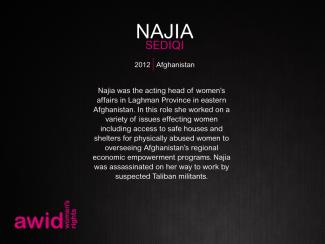
Nahia Sediqi
Juillet 2015
Forum des femmes sur le financement de l’égalité des genres
- Le Forum a eu lieu le 10 juillet 2015, à Addis-Abeba. Il a rassemblait des féministes, des femmes venant de la base, des défenseuses de l’égalité des genres, des universitaires et des représentant-e-s des organisations/réseaux de défense des droits des femmes. Un certain nombre de représentant-e-s de l’ONU et d’autres responsables politiques ont été invité-e-s à apporter leur contribution.
- Les objectifs du Forum des femmes sont les suivants : échanger des informations sur l’état d’avancement des dernières négociations relatives au FdD, analyser conjointement le panorama et le suivi du FdD, adopter une position commune concernant la défense des droits des femmes et, enfin, élaborer des stratégies visant à permettre aux organisations de femmes de contribuer de manière significative et considérable à la Conférence d’Addis Abeba sur le FdD, et ce dans une perspective féministe.
- Le Forum des femmes est organisé par le WWG on FfD, en collaboration avec FEMNET, le Fonds de développement pour la femme africaine (AWDF) et la Post-2015 Women's Coalition. Il bénéficie également du soutien de l’ONU Femmes.
- Le Forum des OSC sur le FdD a eu lieu à Addis-Abeba les 11 et 12 juillet 2015. Ses objectifs sont les suivants : informer les OSC participantes de l’état d’avancement des processus officiels et coordonner la participation de la société civile pendant la troisième Conférence sur le FdD ; élaborer une Déclaration collective des OSC et les messages des OSC à destination des participant-e-s aux tables rondes de la Conférence sur le FdD, mettre en place des manifestations parallèles organisées par le groupe des OSC sur le FdD et tout autre événement qui pourrait se présenter ; enfin, planifier et organiser les futurs domaines d’engagement des OSC dans le secteur du financement du développement, au-delà de la troisième Conférence sur le FdD.
- Pour plus d’informations, vous pouvez consulter le site internet du Groupe des OSC sur le FdD (en anglais) ou prendre contact avec le Groupe de coordination des OSC pour Addis-Abeba (addiscoordinatinggroup@gmail.com).
La troisième Conférence internationale des Nations Unies sur le financement du développement
- La troisième Conférence internationale des Nations Unies sur le financement du développement a eu lieu à Addis-Abeba, en Éthiopie, du 13 au 16 juillet 2015. Ses objectifs principaux étaient les suivants : évaluer les progrès accomplis dans la mise en œuvre du Consensus de Monterrey (2002) et de la Déclaration de Doha (2008) ; traiter des problèmes nouveaux et de ceux qu’il faudra anticiper, y compris dans le contexte de récentes initiatives multilatérales visant à encourager la coopération internationale pour le développement et en tenant compte des éléments suivants : l’évolution actuelle du cadre de la coopération pour le développement, les interrelations entre les différentes sources de financement du développement, les synergies existantes entre les différents objectifs de financement propres aux trois dimensions du développement durable (économique, sociale et environnementale) et la nécessité de soutenir le programme de développement des Nations Unies au-delà de 2015, et, enfin, la redynamisation et le renforcement du processus de suivi relatif au financement du développement.
- Le Programme d’action d’Addis-Abeba a été adopté le 15 juillet 2015 par les chefs d’États et de gouvernements ainsi que les hauts-représentants de l’ONU.
- Cependant, les pays en développement, les OSC et plus particulièrement les organisations de femmes, estiment que le Programme d’action d’Addis-Abeba n’a pas atteint son objectif. Le Groupe de Femmes sur le Financement du Développement a exprimé une vive déception et exigé des changements structurels sur le plan de la gouvernance économique mondiale et sur celui de l’architecture du développement. Consultez leur réaction au document final. Des centaines d’organisations et de réseaux de la société civile du monde entier ont aussi manifesté de vives préoccupations et de sérieuses réserves. Lisez leurs réactions au document final.
Sexting Like a Feminist: Humor in the Digital Feminist Revolution Snippet Small | AR
الصياغات النسوية للرسائل النصّية ذات المحتوى الجنسي:الدُّعابة الجنسانيّة في فضاء الثورة النسوية الرقمية
تشينيلو أونوالو
في الثاني من أيلول/ سبتمير 2021، التمّ شمل مجموعة رائعة من الناشطات النسويات والمناديات بالعدالة الاجتماعية ضمن فعاليات مهرجان (AWID Crear | Résister | Transform). لم يقتصر هدف اجتماعهنّ على مشاركة استراتيجيات المقاومة وعمليات الابتكار الخلّاقة المشتركة التي ترمي إلى تغيير العالم. لقد اجتمعت الناشطات ليتبادلن الغزَل الإباحي على «تويتر».
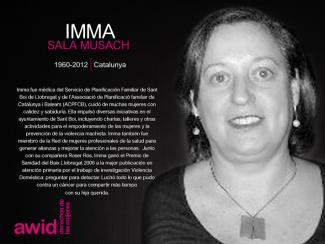
Imma Sala
Is the virtual submission process different from the in-person?
It is exactly the same process and same deadline. Please use the same form to submit your activity, whether it is in-person, online, or both (hybrid).
第14屆AWID論壇的主題是什麼?
第十四屆論壇的主題是“女權主義現實實踐:我們的行動力量”。
我們將女權主義現實實踐理解為不同方式和形式的存在,向我們展示了儘管有主導的權力系統但仍舊存在各種可能性去反抗和抵抗它們。我們將這些女權主義現實實踐理解為希望和力量的開墾與體現,並且是多維的、動態的和植根於特定背景和歷史時刻的。
Pleasure Garden
Pleasure Garden
The artwork is a photography and illustration collaboration between Siphumeze and Katia during lockdown. The work looks at black queer sex and plesure narratives, bondage, safe sex, toys, mental health and sex and many more. It was created to accompany the Anthology Touch.
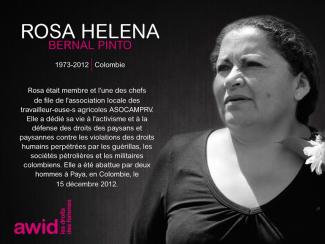
Rosa Helena Bernal Pinto
¿Habrá medidas de accesibilidad en el Foro?
En síntesis, ¡sí! En este momento AWID está trabajando con un Comité de Accesibilidad, para garantizar que el Foro sea lo más accesible posible. También estamos realizando una auditoría de accesibilidad en la sede del Foro, los hoteles circundantes y el transporte. Antes de que se abra el proceso de inscripción incluiremos en esta sección información detallada sobre la accesibilidad del Foro de AWID. Mientras tanto, si tienes alguna pregunta por favor contáctanos.
這次論壇有什麼不同?
我們一直努力確保論壇是由合作夥伴、運動和我們的優先群體共同來開發。
對於即將舉行的論壇,我們旨在加深和增強共同創造與合作的精神和實踐。我們還認識到有必要在多樣的聲音和體驗之間取得平衡,讓參與者和工作人員有調整呼吸、休息和享受一些空閒時間的空間。
該論壇將在以下方面有所不同:
- 特別有組織條理的論壇活動大幅減少,因為我們希望人們有時間去參與、體驗、消化資訊和彼此交談等。這是溝通的關鍵:您可以參加論壇、積極活躍參與,不必協助推動特別有組織的活動(或「場次」)。
- 我們將擁有開放空間(至少會有一個下午沒有任何有組織的活動),而且整個論壇過程中都將有可供使用的物理空間鼓勵人們自己組織會議等。
- 我們有一個內容和方法委員會,由來自不同地區的女權主義者組成,他們在參與式方法上頗有建樹,以創新和吸引人的方式參與並支持我們的論壇活動。
Nicole Barakat Snippet ES
Nicole Barakat
Nicole Barakat es una artista femme queer de SWANA, que nació y vive en las tierras de Gadigal (llamadas Sydney) en Australia. Trabaja con procesos intuitivos y de escucha profunda, con la intención de transformar las condiciones de la vida cotidiana. Su obra se desarrolla a través de métodos artísticos no convencionales, creando objetos intrincados que plasman el amor y la paciencia característicos de las prácticas textiles tradicionales.
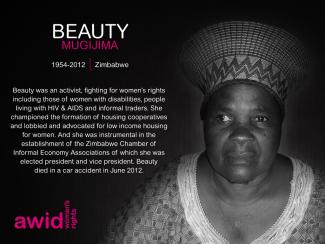
Beauty Mugijima
หากฉันเป็นแหล่งทุนหรือ ผู้บริจาคแบบปัจเจก ฉันสามารถสนับสนุนฟอรัมนี้ได้อย่างไร
เราขอเชิญชวนให้คุณติดต่อเราเพื่อสามารถสร้างการมีส่วนร่วมอย่างมีความหมายต่อฟอรัม